FOR MY STUDENTS:
SET YOUR GOAL, PLAN YOUR STRATEGY AND STUDY CONSISTENTLY
For Muslim Students:
Always Doa and Ask Allah’s Guidance and Help
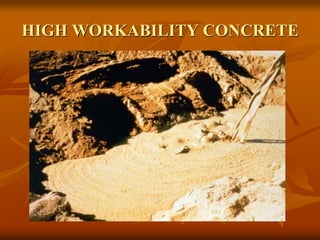
HIGH WORKABILITY CONCRETE
High Workability Concrete
 Also known as self compacting concrete, self-
placing concrete, self levelling concrete, self-
consolidating concrete (SCC).
 The constructability of highly congested
reinforced concrete elements requires the fresh
concrete mixtures to be very fluid.
 Developed in Japan in the mid 1980’s
 SCC has high fluidity and high cohesiveness.
SELF COMPACTING CONCRETE
can be defined as
“a flowing concrete that can be cast into place
without the use of vibrators to form a product
free of honeycombs (i.e. no unfilled space
within the formwork) and bug holes (i.e. no
entrapped air voids).”
 SCC owns over three key properties that is:
a) Filling Ability
Ability of to fill a formwork completely
under its own weight
b) Passing Ability
Ability to overcome obstacles under its own
weight without hindrance. Obstacles are
e.g. reinforcement and small openings etc.
c) Segregation Resistance
Homogeneous composition of concrete
during and after the process of transport and
placing.
The Important Properties
 Self compactibility
 Avoidance of bleeding and segregation
 Low shrinkage
 Low permeability
 Strength as needed
 Aesthetically pleasing appearance
 Thorough coating of reinforcement and
optimal filling of formwork
The Making of SCC
 Ordinary SCC designed for 0.45 to 0.50 w/cm
 Higher cementitious material
 Lower coarse aggregate content (19 or 25mm
max. size)
 Increased fine aggregate
 Viscosity modifying admixture
 Mineral admixture of fine particle size
 Superplasticizer
 it is generally necessary to use superplasticizer
in order to obtain high mobility
 Adding a large volume of powdered material
or viscosity modifying admixture can
eliminate segregation.
 The powdered materials that can be added are
fly ash, silica fume, lime stone powder, glass
filler and quartzite filler.
 Incorporation of viscosity – modifying
admixtures (VMA) in concrete mix enables the
mixture to be cohesive even without the use of
high content of fine particles of cement and
mineral admixtures.
 VMA are generally composed of 2 basic
chemicals that is hydrolyzed starches and bio
polymers such as welum gum.
 Normally acquire 28-day strength at 40 MPa
 The SCC mixture can be categorized to 2 types:
a) those which contain a high powder content
(more than 400 kg/m3 cement + fly ash +
pulverized slag or limestone)
b)those which contain a viscosity – modifying
chemical admixture such as welum gum,
hydrolyzed starch, silica fume and ultrafine
amporphous colloidal silica known as
nanosilica.
What’s Different From
Normal Concrete???
 Segregation resistance from mortar viscosity,
not aggregate grading
- How the mortar viscosity is obtained???
i) High cement content
ii) High content of fly ash, slag
iii) High Viscosity Modifying Admixture
 Workability through admixtures, not water
content
How To Check Suitability??
 There are many new tests: V-funnel, L-box, U-
box, Fill-box, Orimet, GTM Screen + Slump
Flow and J-ring
 While, several of these may be used in mix
development, only the latter will find site use
Testing For SCC
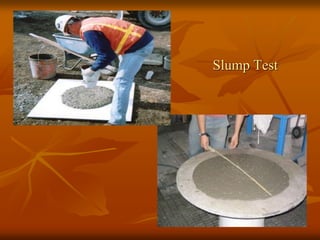
 Slump Flow Test is a test method for
evaluating the flowability of SCC, where the
slump flow of SCC with coarse aggregates
having the maximum size of less than 40 mm
is measured.
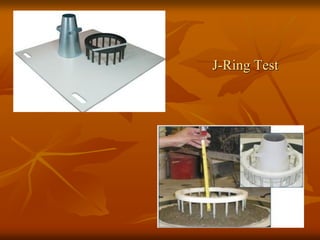
 J-Ring Test is conducted to determine the
passing ability of concrete
Slump Test
J-Ring Test
Advantages
 Faster construction
 Reduced noise and increased safety because
vibrators are not used
 Less labor required or less dependent on skills
at site
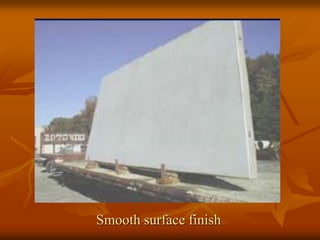
 Smoother surface finish or better appearance
 Readily available
 Easy to deliver
 Ease of placement
 Will not settle
 Increased rate of production and safety
 Easily flow into complex shapes
 Reduced equipment needs
 Requires no on-site storage
 Makes use of waste by-product
 Reduced field inspection
 Product versatility
 Strong and durable
 Improved working comfort & safety at worksites
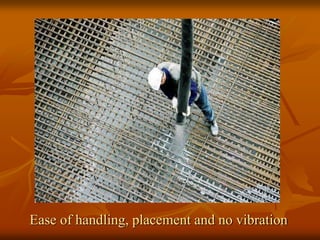
Ease of handling, placement and no vibration
Smooth surface finish
Disadvantage
 The shortcomings of SCC is
a)drying shrinkage is high
b)thermal shrinkage is high when the concrete
contains a relatively large proportion of
Portland cement and other reactive powders
(e.g., finely ggbfs or ASTM Class F fly ash)
c)higher cost – especially if higher strength is
not needed
Application
 Underwater concreting
 Construction of heavily reinforced structures
 Backfills and Structural fills
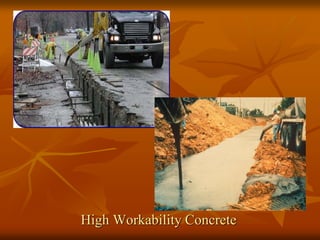
 Pavement bases
 Conduit bedding
 Erosion control
 Void filling
 Filling of complex formwork
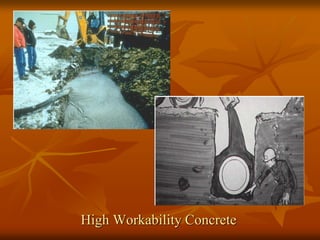
High Workability Concrete

High workability concrete

  • 1.
    FOR MY STUDENTS: SETYOUR GOAL, PLAN YOUR STRATEGY AND STUDY CONSISTENTLY
  • 2.
    For Muslim Students: AlwaysDoa and Ask Allah’s Guidance and Help
  • 3.
  • 4.
    High Workability Concrete Also known as self compacting concrete, self- placing concrete, self levelling concrete, self- consolidating concrete (SCC).  The constructability of highly congested reinforced concrete elements requires the fresh concrete mixtures to be very fluid.  Developed in Japan in the mid 1980’s  SCC has high fluidity and high cohesiveness.
  • 5.
    SELF COMPACTING CONCRETE canbe defined as “a flowing concrete that can be cast into place without the use of vibrators to form a product free of honeycombs (i.e. no unfilled space within the formwork) and bug holes (i.e. no entrapped air voids).”
  • 6.
     SCC ownsover three key properties that is: a) Filling Ability Ability of to fill a formwork completely under its own weight b) Passing Ability Ability to overcome obstacles under its own weight without hindrance. Obstacles are e.g. reinforcement and small openings etc. c) Segregation Resistance Homogeneous composition of concrete during and after the process of transport and placing.
  • 7.
    The Important Properties Self compactibility  Avoidance of bleeding and segregation  Low shrinkage  Low permeability  Strength as needed  Aesthetically pleasing appearance  Thorough coating of reinforcement and optimal filling of formwork
  • 8.
    The Making ofSCC  Ordinary SCC designed for 0.45 to 0.50 w/cm  Higher cementitious material  Lower coarse aggregate content (19 or 25mm max. size)  Increased fine aggregate  Viscosity modifying admixture  Mineral admixture of fine particle size  Superplasticizer
  • 9.
     it isgenerally necessary to use superplasticizer in order to obtain high mobility  Adding a large volume of powdered material or viscosity modifying admixture can eliminate segregation.  The powdered materials that can be added are fly ash, silica fume, lime stone powder, glass filler and quartzite filler.
  • 10.
     Incorporation ofviscosity – modifying admixtures (VMA) in concrete mix enables the mixture to be cohesive even without the use of high content of fine particles of cement and mineral admixtures.  VMA are generally composed of 2 basic chemicals that is hydrolyzed starches and bio polymers such as welum gum.
  • 11.
     Normally acquire28-day strength at 40 MPa  The SCC mixture can be categorized to 2 types: a) those which contain a high powder content (more than 400 kg/m3 cement + fly ash + pulverized slag or limestone) b)those which contain a viscosity – modifying chemical admixture such as welum gum, hydrolyzed starch, silica fume and ultrafine amporphous colloidal silica known as nanosilica.
  • 12.
    What’s Different From NormalConcrete???  Segregation resistance from mortar viscosity, not aggregate grading - How the mortar viscosity is obtained??? i) High cement content ii) High content of fly ash, slag iii) High Viscosity Modifying Admixture  Workability through admixtures, not water content
  • 13.
    How To CheckSuitability??  There are many new tests: V-funnel, L-box, U- box, Fill-box, Orimet, GTM Screen + Slump Flow and J-ring  While, several of these may be used in mix development, only the latter will find site use
  • 14.
    Testing For SCC Slump Flow Test is a test method for evaluating the flowability of SCC, where the slump flow of SCC with coarse aggregates having the maximum size of less than 40 mm is measured.  J-Ring Test is conducted to determine the passing ability of concrete
  • 15.
  • 16.
  • 17.
    Advantages  Faster construction Reduced noise and increased safety because vibrators are not used  Less labor required or less dependent on skills at site  Smoother surface finish or better appearance  Readily available  Easy to deliver  Ease of placement
  • 18.
     Will notsettle  Increased rate of production and safety  Easily flow into complex shapes  Reduced equipment needs  Requires no on-site storage  Makes use of waste by-product  Reduced field inspection  Product versatility  Strong and durable  Improved working comfort & safety at worksites
  • 19.
    Ease of handling,placement and no vibration
  • 20.
  • 21.
    Disadvantage  The shortcomingsof SCC is a)drying shrinkage is high b)thermal shrinkage is high when the concrete contains a relatively large proportion of Portland cement and other reactive powders (e.g., finely ggbfs or ASTM Class F fly ash) c)higher cost – especially if higher strength is not needed
  • 22.
    Application  Underwater concreting Construction of heavily reinforced structures  Backfills and Structural fills  Pavement bases  Conduit bedding  Erosion control  Void filling  Filling of complex formwork
  • 23.
  • 24.