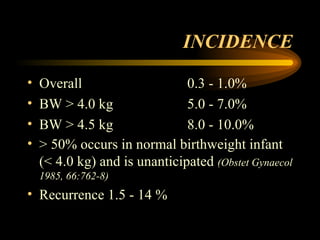
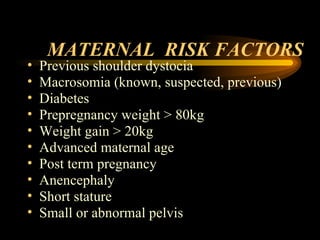
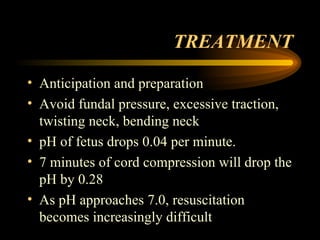
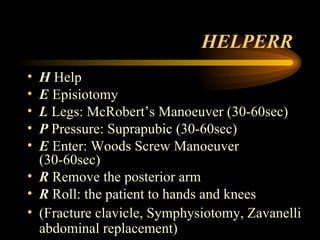
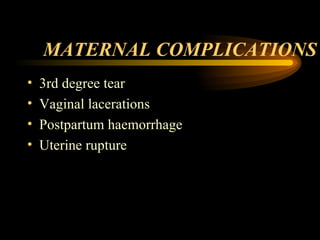
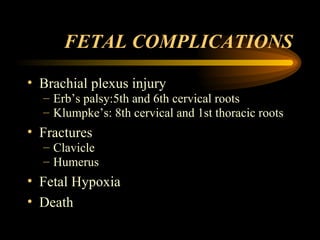
Shoulder dystocia occurs when the baby's anterior shoulder becomes lodged behind the mother's pubic bone during childbirth after the head is delivered. It can cause life-threatening complications if not resolved quickly. Risk factors include macrosomia, diabetes, previous shoulder dystocia, and prolonged second stage of labor. The HELPER mnemonic outlines steps for management: Help, Episiotomy, Legs, Pressure, Enter, Remove, Roll. Complications can include injuries to the baby like brachial plexus injury and fractures, as well as maternal issues like third degree tears and postpartum hemorrhage.