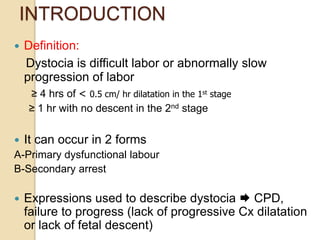
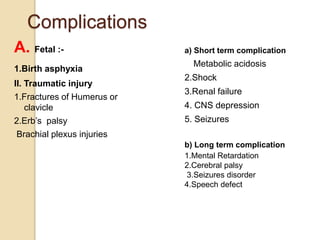
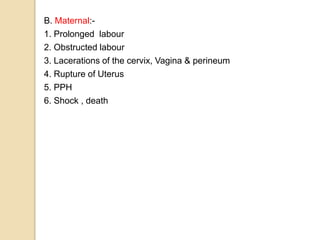
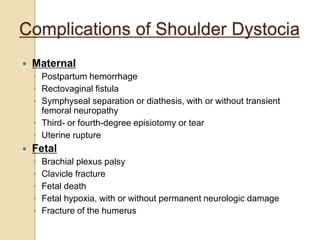
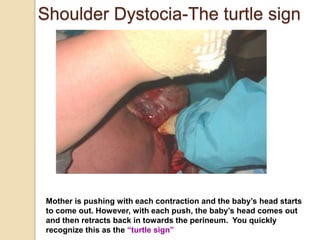
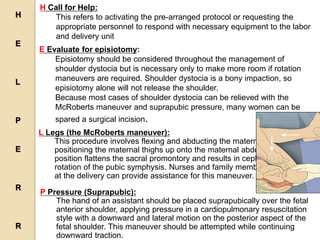
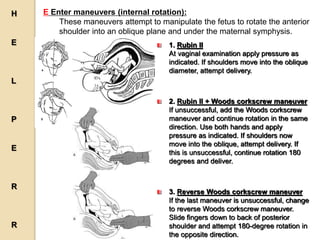
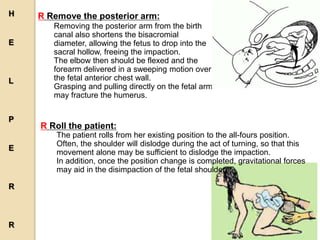
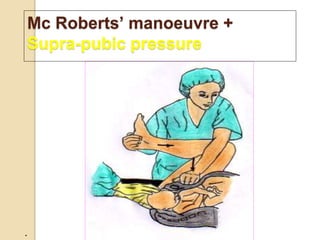
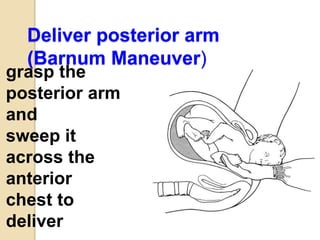
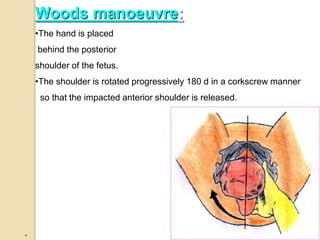
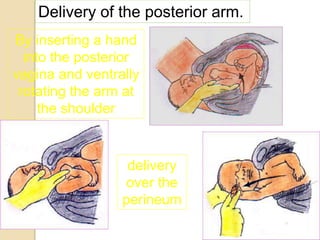
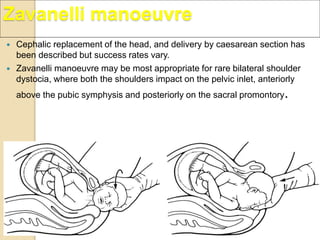
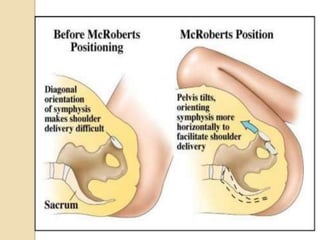
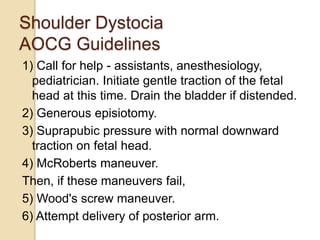
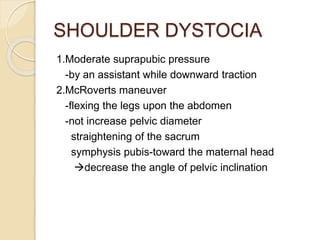
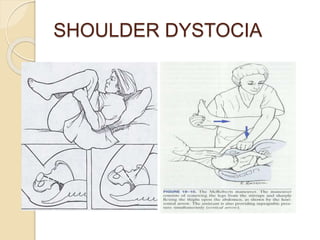
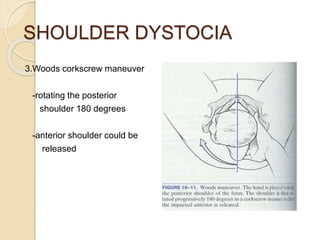
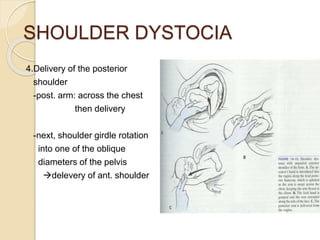
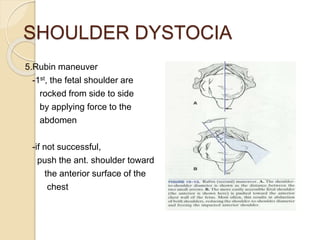
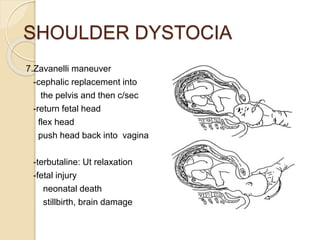
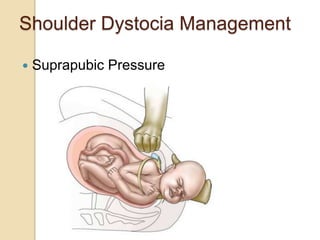
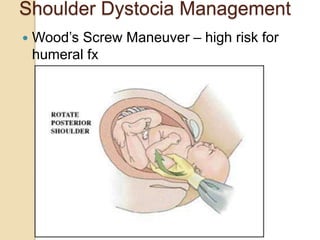
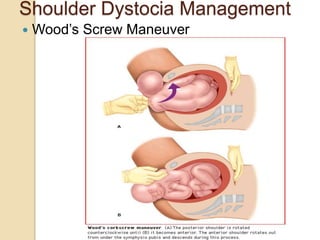
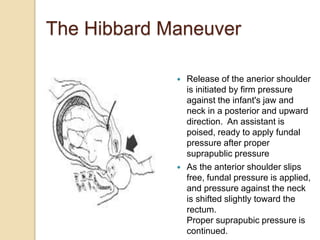
Shoulder dystocia occurs when the fetal shoulders become lodged in the birth canal during delivery after the head has been delivered, requiring additional obstetric maneuvers to assist delivery. It has an incidence between 0.23-2.09% of deliveries and can cause injuries to the baby such as brachial plexus injuries and fractures. The document outlines various maneuvers to manage shoulder dystocia including the McRoberts maneuver, suprapubic pressure, internal rotation maneuvers like Woods corkscrew and Rubins, and as a last resort, the Zavanelli maneuver which involves replacing the baby's head for c-section delivery. Advanced maneuvers should only be considered if initial maneuvers like McRobert

























![7-Shoulder_dystocia[1].pptx5555555555555555555555](https://cdn.slidesharecdn.com/ss_thumbnails/7-shoulderdystocia1-240901140722-b7a2771f-thumbnail.jpg?width=640&height=640&fit=bounds)


![Cells and Organs of immune system [Autosaved].pptx](https://cdn.slidesharecdn.com/ss_thumbnails/cellsandorgansofimmunesystemautosaved-260123152717-ea0cb261-thumbnail.jpg?width=640&height=640&fit=bounds)
