Download as PDF, PPTX

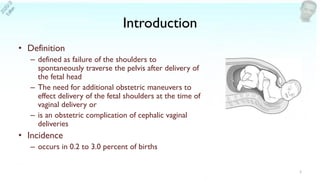
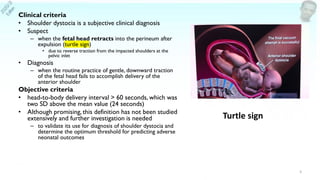
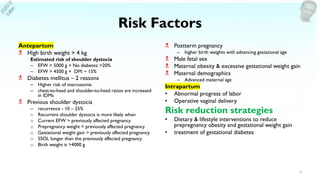
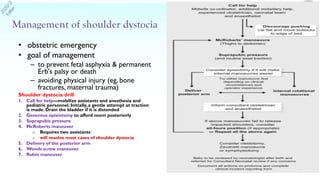




Shoulder dystocia is a complication of vaginal deliveries, characterized by the inability of the fetal shoulders to pass through the pelvis after the head is delivered, with an incidence of 0.2 to 3.0 percent. Diagnosis relies on clinical signs, particularly the 'turtle sign', and management involves various maneuvers to prevent fetal asphyxia and other complications. Risk factors include high birth weight, maternal diabetes and obesity, and previous instances of shoulder dystocia, while complications can affect both maternal and neonatal health, including brachial plexus injuries.


![7-Shoulder_dystocia[1].pptx5555555555555555555555](https://cdn.slidesharecdn.com/ss_thumbnails/7-shoulderdystocia1-240901140722-b7a2771f-thumbnail.jpg?width=640&height=640&fit=bounds)


