SHOTS AND ANGLES 
By Kiera Herbert
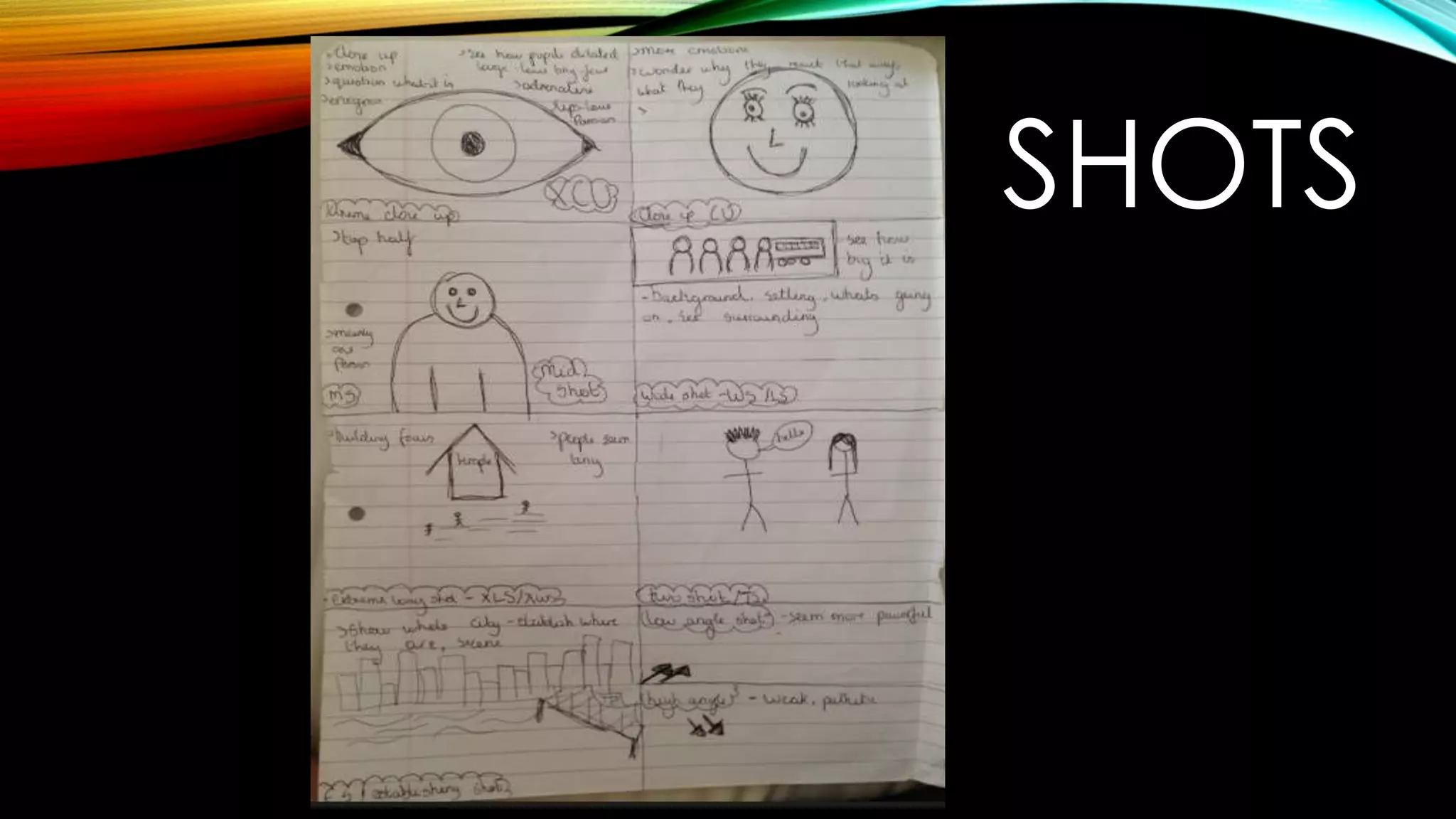
SHOTS
EXTREME CLOSE UP 
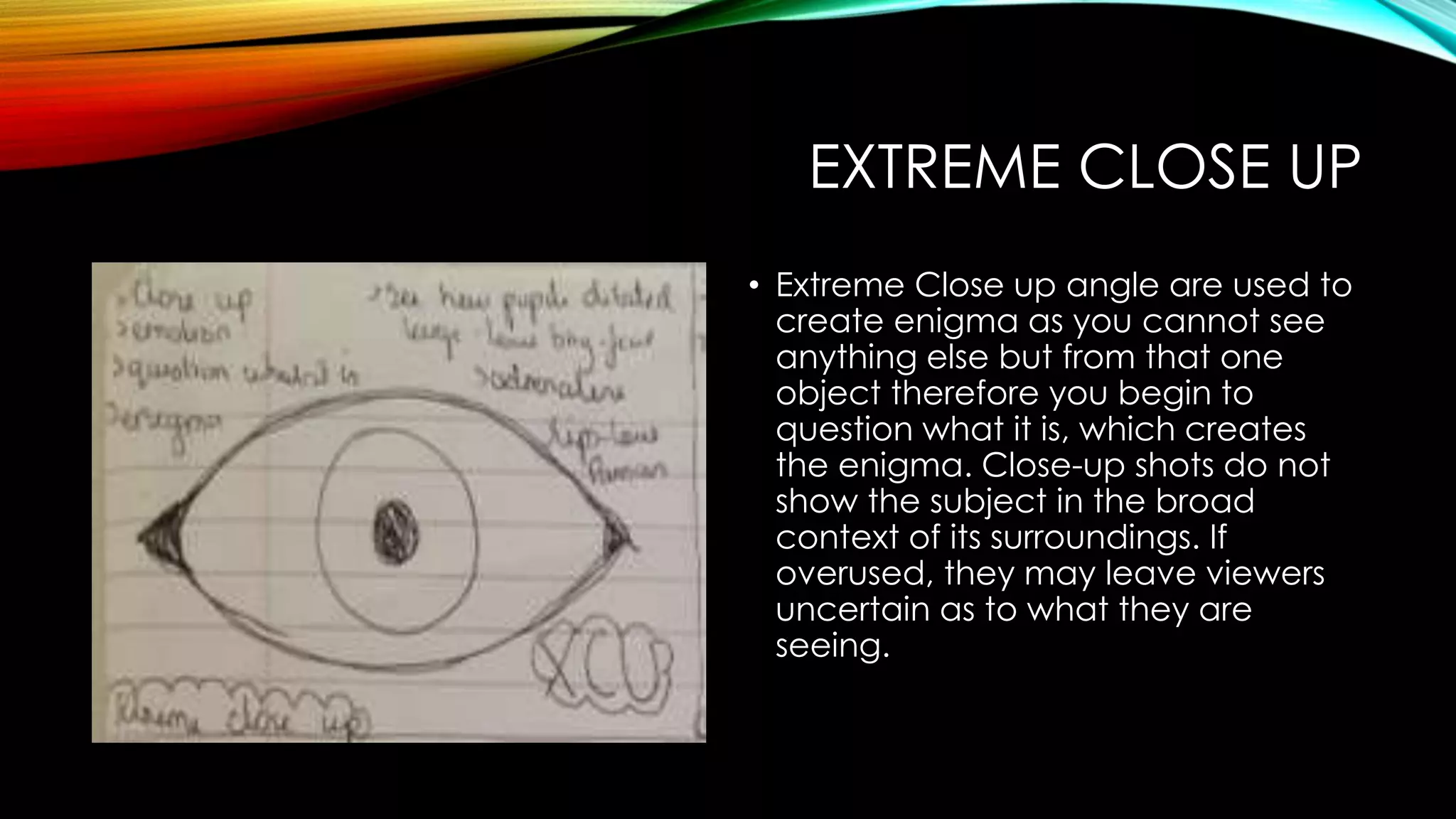
• Extreme Close up angle are used to 
create enigma as you cannot see 
anything else but from that one 
object therefore you begin to 
question what it is, which creates 
the enigma. Close-up shots do not 
show the subject in the broad 
context of its surroundings. If 
overused, they may leave viewers 
uncertain as to what they are 
seeing.
CLOSE-UP 
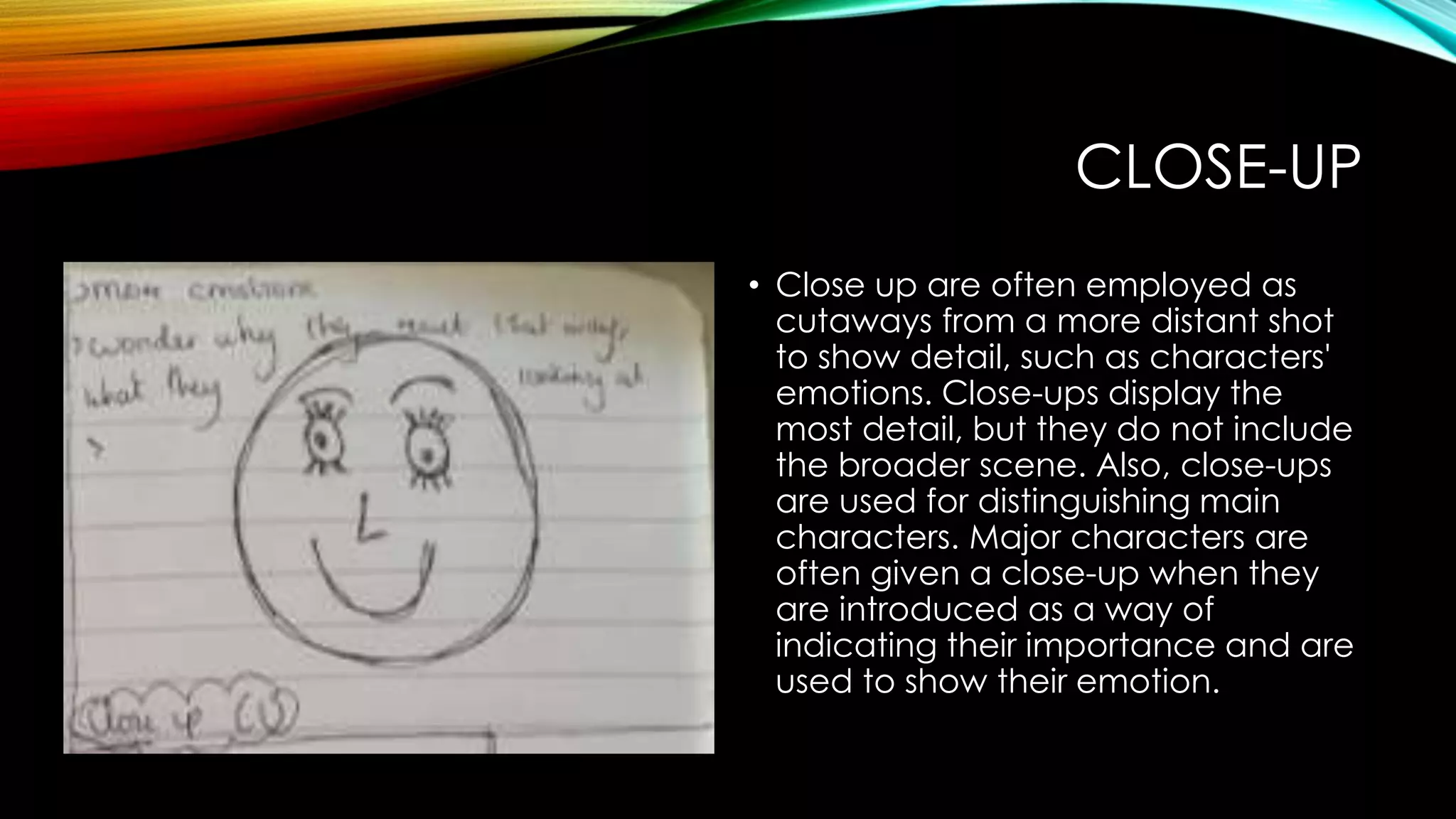
• Close up are often employed as 
cutaways from a more distant shot 
to show detail, such as characters' 
emotions. Close-ups display the 
most detail, but they do not include 
the broader scene. Also, close-ups 
are used for distinguishing main 
characters. Major characters are 
often given a close-up when they 
are introduced as a way of 
indicating their importance and are 
used to show their emotion.
MID SHOT 
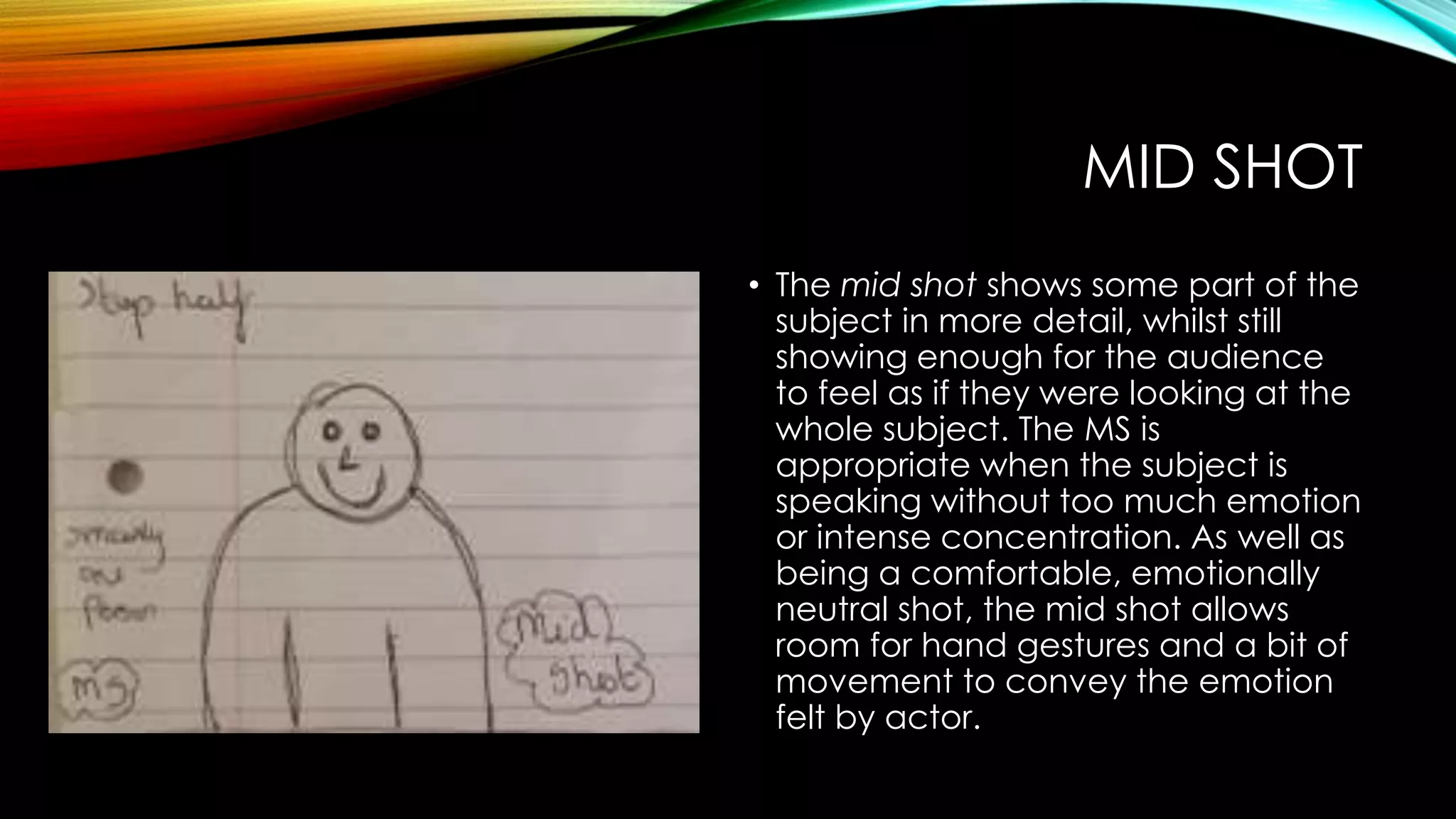
• The mid shot shows some part of the 
subject in more detail, whilst still 
showing enough for the audience 
to feel as if they were looking at the 
whole subject. The MS is 
appropriate when the subject is 
speaking without too much emotion 
or intense concentration. As well as 
being a comfortable, emotionally 
neutral shot, the mid shot allows 
room for hand gestures and a bit of 
movement to convey the emotion 
felt by actor.
WIDE/LONG SHOT 
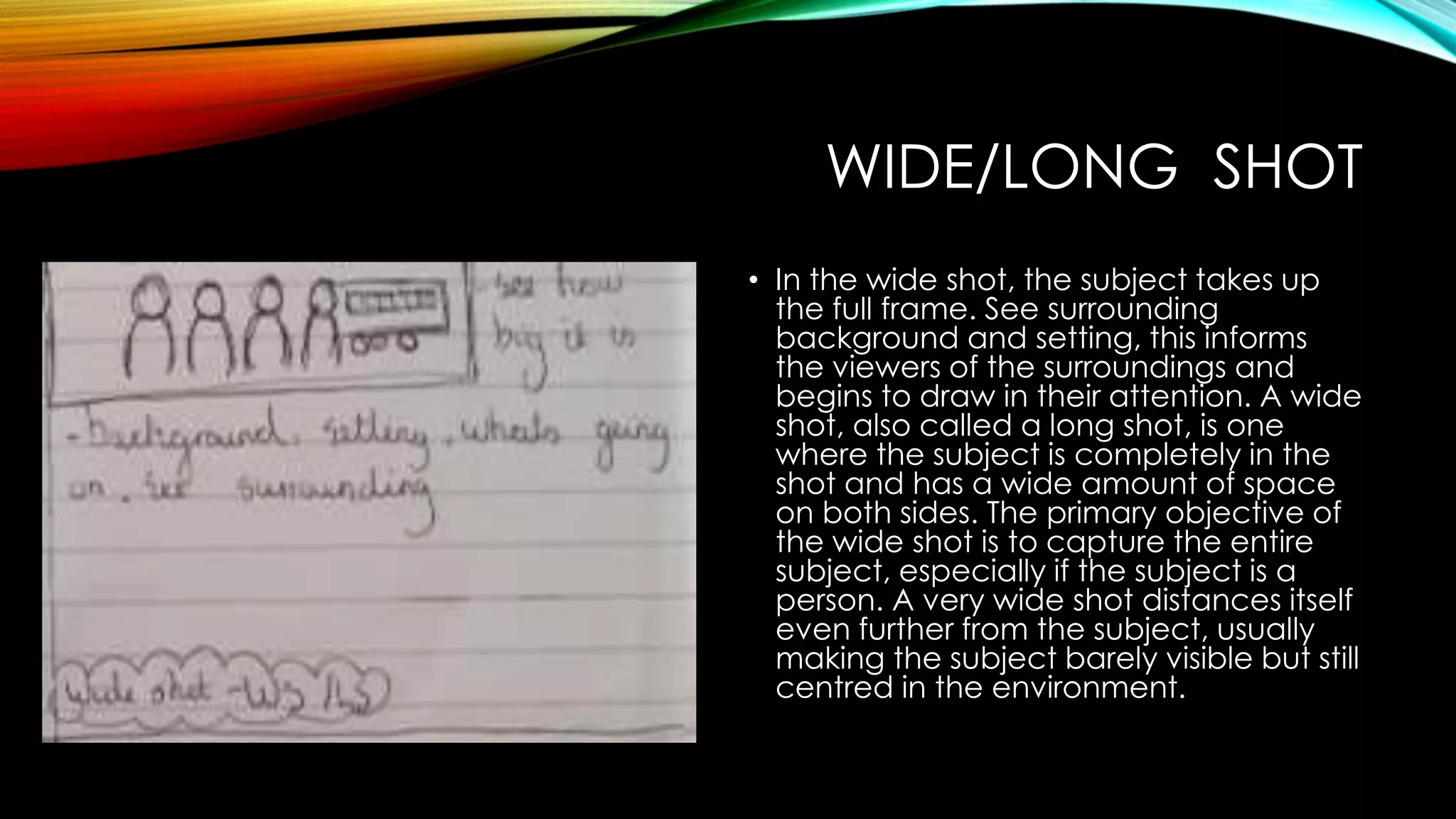
• In the wide shot, the subject takes up 
the full frame. See surrounding 
background and setting, this informs 
the viewers of the surroundings and 
begins to draw in their attention. A wide 
shot, also called a long shot, is one 
where the subject is completely in the 
shot and has a wide amount of space 
on both sides. The primary objective of 
the wide shot is to capture the entire 
subject, especially if the subject is a 
person. A very wide shot distances itself 
even further from the subject, usually 
making the subject barely visible but still 
centred in the environment.
EXTREME WIDE/LONG SHOT 
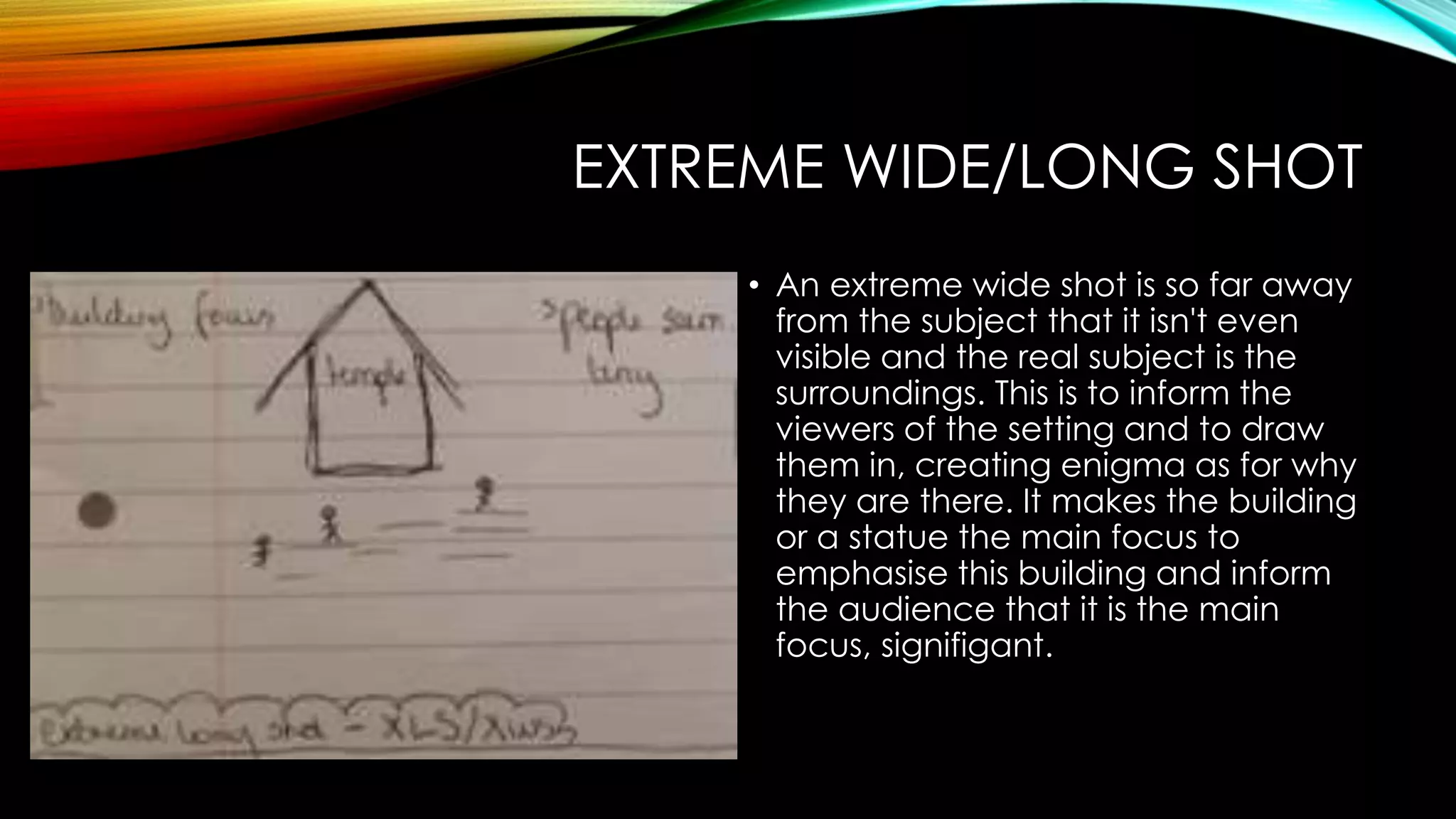
• An extreme wide shot is so far away 
from the subject that it isn't even 
visible and the real subject is the 
surroundings. This is to inform the 
viewers of the setting and to draw 
them in, creating enigma as for why 
they are there. It makes the building 
or a statue the main focus to 
emphasise this building and inform 
the audience that it is the main 
focus, signifigant.
TWO SHOT 
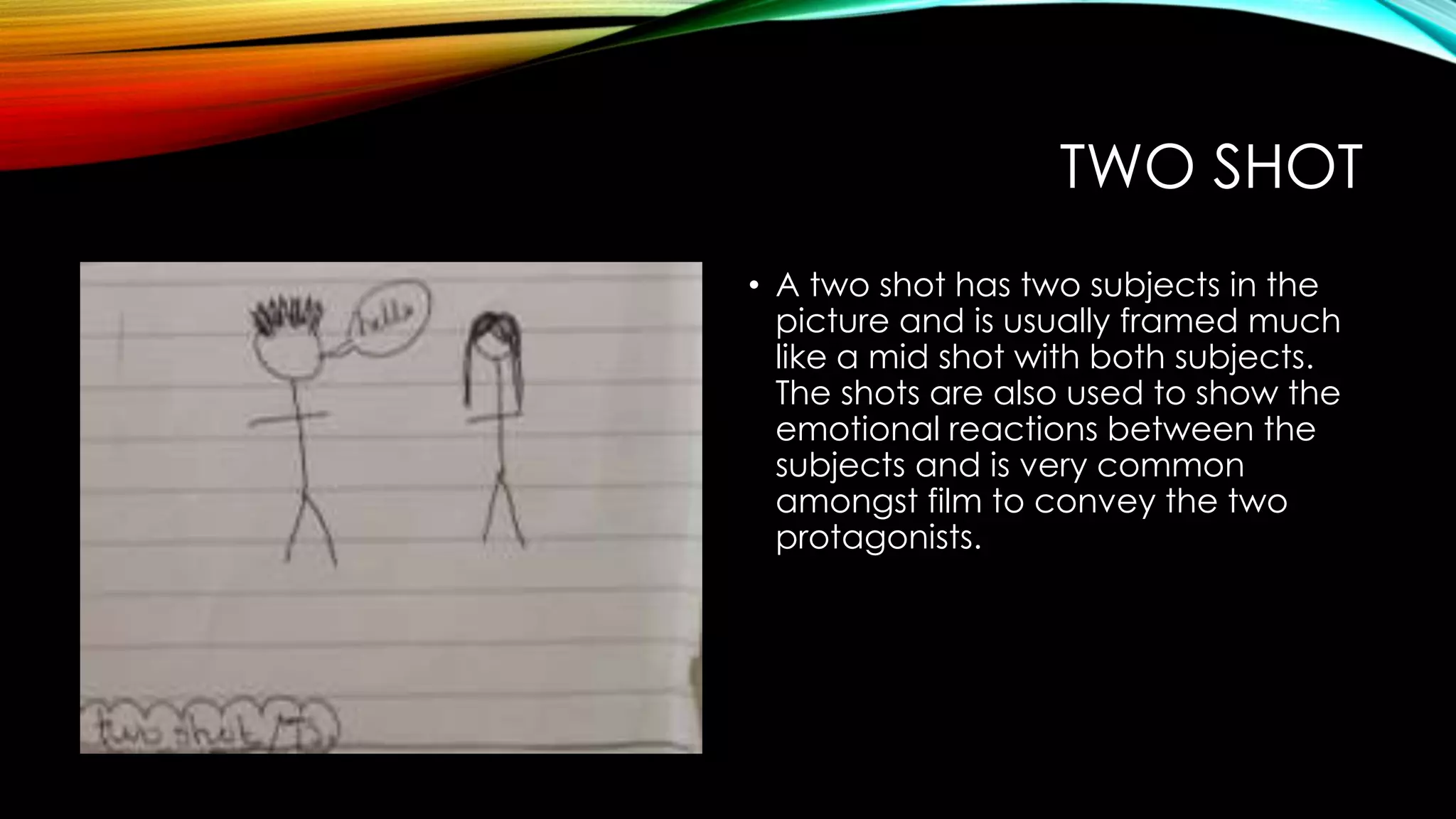
• A two shot has two subjects in the 
picture and is usually framed much 
like a mid shot with both subjects. 
The shots are also used to show the 
emotional reactions between the 
subjects and is very common 
amongst film to convey the two 
protagonists.
ESTABLISHING SHOT 
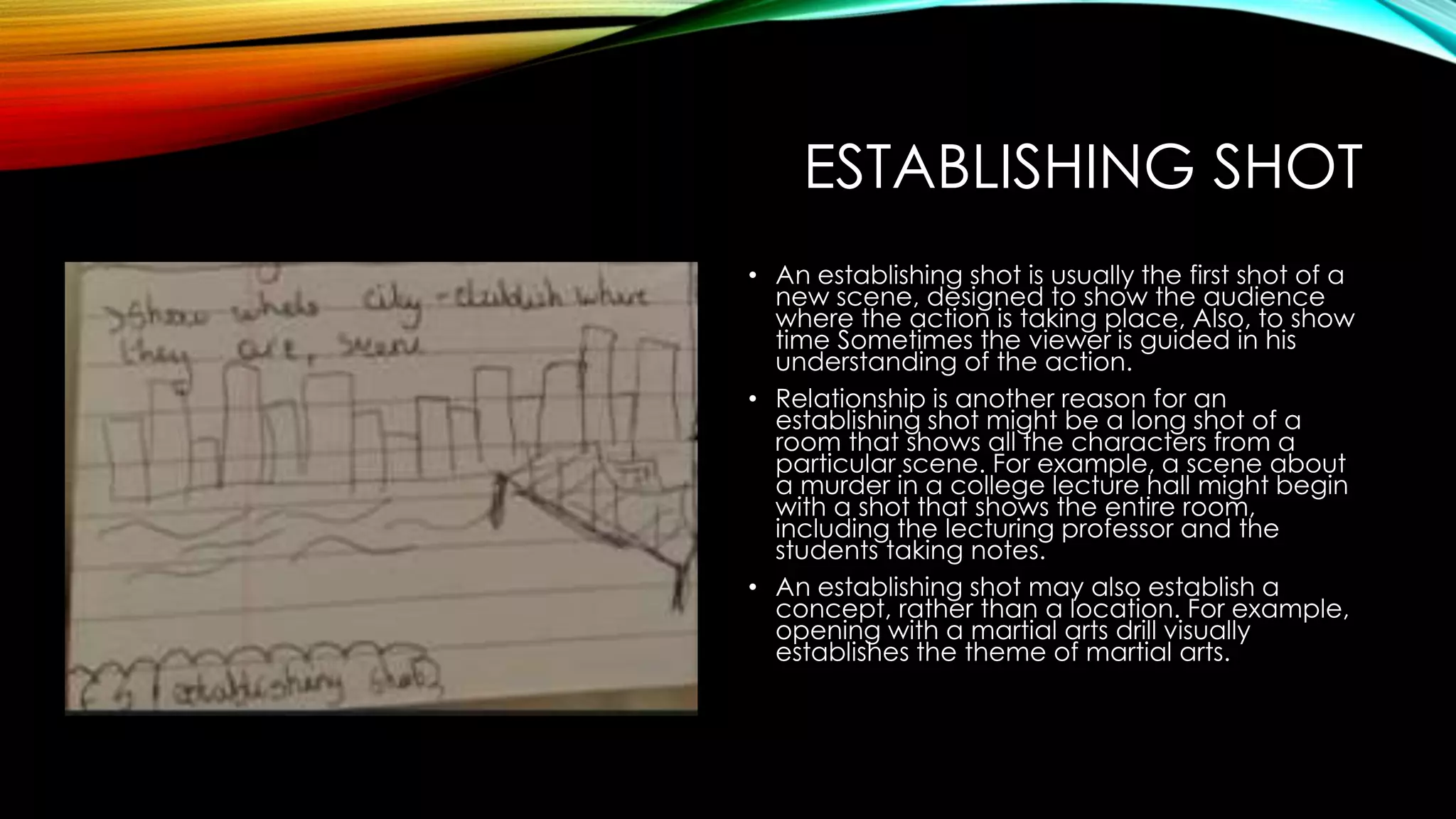
• An establishing shot is usually the first shot of a 
new scene, designed to show the audience 
where the action is taking place, Also, to show 
time Sometimes the viewer is guided in his 
understanding of the action. 
• Relationship is another reason for an 
establishing shot might be a long shot of a 
room that shows all the characters from a 
particular scene. For example, a scene about 
a murder in a college lecture hall might begin 
with a shot that shows the entire room, 
including the lecturing professor and the 
students taking notes. 
• An establishing shot may also establish a 
concept, rather than a location. For example, 
opening with a martial arts drill visually 
establishes the theme of martial arts.

Shots and angles

  • 1.
    SHOTS AND ANGLES By Kiera Herbert
  • 2.
  • 3.
    EXTREME CLOSE UP • Extreme Close up angle are used to create enigma as you cannot see anything else but from that one object therefore you begin to question what it is, which creates the enigma. Close-up shots do not show the subject in the broad context of its surroundings. If overused, they may leave viewers uncertain as to what they are seeing.
  • 4.
    CLOSE-UP • Closeup are often employed as cutaways from a more distant shot to show detail, such as characters' emotions. Close-ups display the most detail, but they do not include the broader scene. Also, close-ups are used for distinguishing main characters. Major characters are often given a close-up when they are introduced as a way of indicating their importance and are used to show their emotion.
  • 5.
    MID SHOT •The mid shot shows some part of the subject in more detail, whilst still showing enough for the audience to feel as if they were looking at the whole subject. The MS is appropriate when the subject is speaking without too much emotion or intense concentration. As well as being a comfortable, emotionally neutral shot, the mid shot allows room for hand gestures and a bit of movement to convey the emotion felt by actor.
  • 6.
    WIDE/LONG SHOT •In the wide shot, the subject takes up the full frame. See surrounding background and setting, this informs the viewers of the surroundings and begins to draw in their attention. A wide shot, also called a long shot, is one where the subject is completely in the shot and has a wide amount of space on both sides. The primary objective of the wide shot is to capture the entire subject, especially if the subject is a person. A very wide shot distances itself even further from the subject, usually making the subject barely visible but still centred in the environment.
  • 7.
    EXTREME WIDE/LONG SHOT • An extreme wide shot is so far away from the subject that it isn't even visible and the real subject is the surroundings. This is to inform the viewers of the setting and to draw them in, creating enigma as for why they are there. It makes the building or a statue the main focus to emphasise this building and inform the audience that it is the main focus, signifigant.
  • 8.
    TWO SHOT •A two shot has two subjects in the picture and is usually framed much like a mid shot with both subjects. The shots are also used to show the emotional reactions between the subjects and is very common amongst film to convey the two protagonists.
  • 9.
    ESTABLISHING SHOT •An establishing shot is usually the first shot of a new scene, designed to show the audience where the action is taking place, Also, to show time Sometimes the viewer is guided in his understanding of the action. • Relationship is another reason for an establishing shot might be a long shot of a room that shows all the characters from a particular scene. For example, a scene about a murder in a college lecture hall might begin with a shot that shows the entire room, including the lecturing professor and the students taking notes. • An establishing shot may also establish a concept, rather than a location. For example, opening with a martial arts drill visually establishes the theme of martial arts.