Camera Shots
Distance Shots 
Distance between the camera and the 
subject 
In general, the mid shot and close-ups 
are used to convey character driven 
scenes. 
Long shot and wide shots are used to 
show more of the actions and themes.
Mid Shots 
Commonly used shot, 
showing the background but 
still focusing on the subject. If 
it is a person, usually from 
waist upwards. 
The effect of this shot is to 
reveal the back ground of the 
subject, with the constant 
focus of the character. 
Therefore, able to understand 
the themes and 
circumstances of the stage of 
the film.
Long Shots 
Usually used as an establishing 
shot, to set the scene in a film. 
It will be of the whole body. 
This enables the audience to 
create their own judgments 
on the characters from the 
appearance. 
It creates the atmosphere that 
will stay with the audience 
for the rest of the film.
Close ups 
This enables the audience to be able to 
take in the appearance of the character 
then able to assess the expression to 
get a sense of the status and position of 
the person in the film. 
It can help the audience to relate to the 
character, depending when this 
technique is used, e.g. during an 
emotional scene. 
Focuses on the 
detail/reaction/expression of a 
subject. It shows the head or 
head and shoulders. Helps us 
to relate with the expression or 
to mark significance of an 
object if not human.
ECU- extreme close ups 
Frames small parts of the 
body/object. One thing and 
emphasises its significance it 
can make small things look 
bigger and more significant. 
As this technique frames small 
parts of the character, it creates 
the significance of the part that 
is shown, leading the audience 
to believe that it is connected 
heavily to the film, or it can 
reveal a clue to what has been 
going on e.g. an iconic tattoo or 
mark on the body.
Wide Shots 
Used wide angles lens. Lots 
and visual information for 
the audience to “set the 
scene” 
This allows the audience to be able to 
set the scene and able to come to 
their own conclusions before the film 
has started, knowing the location and 
then the lighting being used will 
indicate the genre, being low or high 
key, then also the time of day, being 
at night it can specify the setting of 
the film.
Aerial Shot 
Taken from a 
helicopter/ airplane, 
used for a birds eye 
view. 
The sensation flying or 
extreme long distance 
relationships. 
This is shown at the 
beginning of a film, in order 
to establish setting and 
movement.
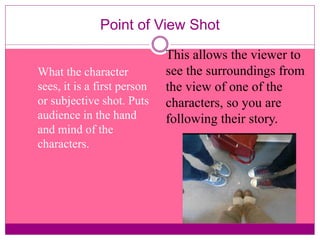
Point of View Shot 
What the character 
sees, it is a first person 
or subjective shot. Puts 
audience in the hand 
and mind of the 
characters. 
This allows the viewer to 
see the surroundings from 
the view of one of the 
characters, so you are 
following their story.
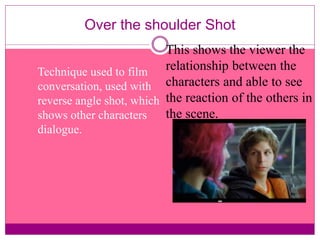
Over the shoulder Shot 
Technique used to film 
conversation, used with 
reverse angle shot, which 
shows other characters 
dialogue. 
This shows the viewer the 
relationship between the 
characters and able to see 
the reaction of the others in 
the scene.
Two Shot 
Shows the relationship 
between the characters. 
It usually shows 
dialogue. 
The effect of the shot is that 
you are able to see two 
characters and the reactions 
to their surroundings, and 
the dialogue between them 
both.
Establishing shot 
This is usually an opening shot to a new 
scene. This is made so that the audience 
know where the following scene is 
taking place, e.g. the establishing shot 
will be of a sun set, telling the audience 
the scene is late afternoon. 
It is useful after a time or location shift. 
Directors these days tend to 
use them minimally or not at 
all. This is to keep the pace of 
the Movie/Tv Drama and to 
avoid boring viewers.
Master Shot 
The Master Shot is a single 
shot from beginning to end. 
In filming the master shot was 
considered as the MOST 
important as it bring together 
crucial component elements and 
relationships in such a way as to 
allow the audience to make sense 
of the action follows

Camera shots

  • 1.
  • 2.
    Distance Shots Distancebetween the camera and the subject In general, the mid shot and close-ups are used to convey character driven scenes. Long shot and wide shots are used to show more of the actions and themes.
  • 3.
    Mid Shots Commonlyused shot, showing the background but still focusing on the subject. If it is a person, usually from waist upwards. The effect of this shot is to reveal the back ground of the subject, with the constant focus of the character. Therefore, able to understand the themes and circumstances of the stage of the film.
  • 4.
    Long Shots Usuallyused as an establishing shot, to set the scene in a film. It will be of the whole body. This enables the audience to create their own judgments on the characters from the appearance. It creates the atmosphere that will stay with the audience for the rest of the film.
  • 5.
    Close ups Thisenables the audience to be able to take in the appearance of the character then able to assess the expression to get a sense of the status and position of the person in the film. It can help the audience to relate to the character, depending when this technique is used, e.g. during an emotional scene. Focuses on the detail/reaction/expression of a subject. It shows the head or head and shoulders. Helps us to relate with the expression or to mark significance of an object if not human.
  • 6.
    ECU- extreme closeups Frames small parts of the body/object. One thing and emphasises its significance it can make small things look bigger and more significant. As this technique frames small parts of the character, it creates the significance of the part that is shown, leading the audience to believe that it is connected heavily to the film, or it can reveal a clue to what has been going on e.g. an iconic tattoo or mark on the body.
  • 7.
    Wide Shots Usedwide angles lens. Lots and visual information for the audience to “set the scene” This allows the audience to be able to set the scene and able to come to their own conclusions before the film has started, knowing the location and then the lighting being used will indicate the genre, being low or high key, then also the time of day, being at night it can specify the setting of the film.
  • 8.
    Aerial Shot Takenfrom a helicopter/ airplane, used for a birds eye view. The sensation flying or extreme long distance relationships. This is shown at the beginning of a film, in order to establish setting and movement.
  • 9.
    Point of ViewShot What the character sees, it is a first person or subjective shot. Puts audience in the hand and mind of the characters. This allows the viewer to see the surroundings from the view of one of the characters, so you are following their story.
  • 10.
    Over the shoulderShot Technique used to film conversation, used with reverse angle shot, which shows other characters dialogue. This shows the viewer the relationship between the characters and able to see the reaction of the others in the scene.
  • 11.
    Two Shot Showsthe relationship between the characters. It usually shows dialogue. The effect of the shot is that you are able to see two characters and the reactions to their surroundings, and the dialogue between them both.
  • 12.
    Establishing shot Thisis usually an opening shot to a new scene. This is made so that the audience know where the following scene is taking place, e.g. the establishing shot will be of a sun set, telling the audience the scene is late afternoon. It is useful after a time or location shift. Directors these days tend to use them minimally or not at all. This is to keep the pace of the Movie/Tv Drama and to avoid boring viewers.
  • 13.
    Master Shot TheMaster Shot is a single shot from beginning to end. In filming the master shot was considered as the MOST important as it bring together crucial component elements and relationships in such a way as to allow the audience to make sense of the action follows