Establishing shot 
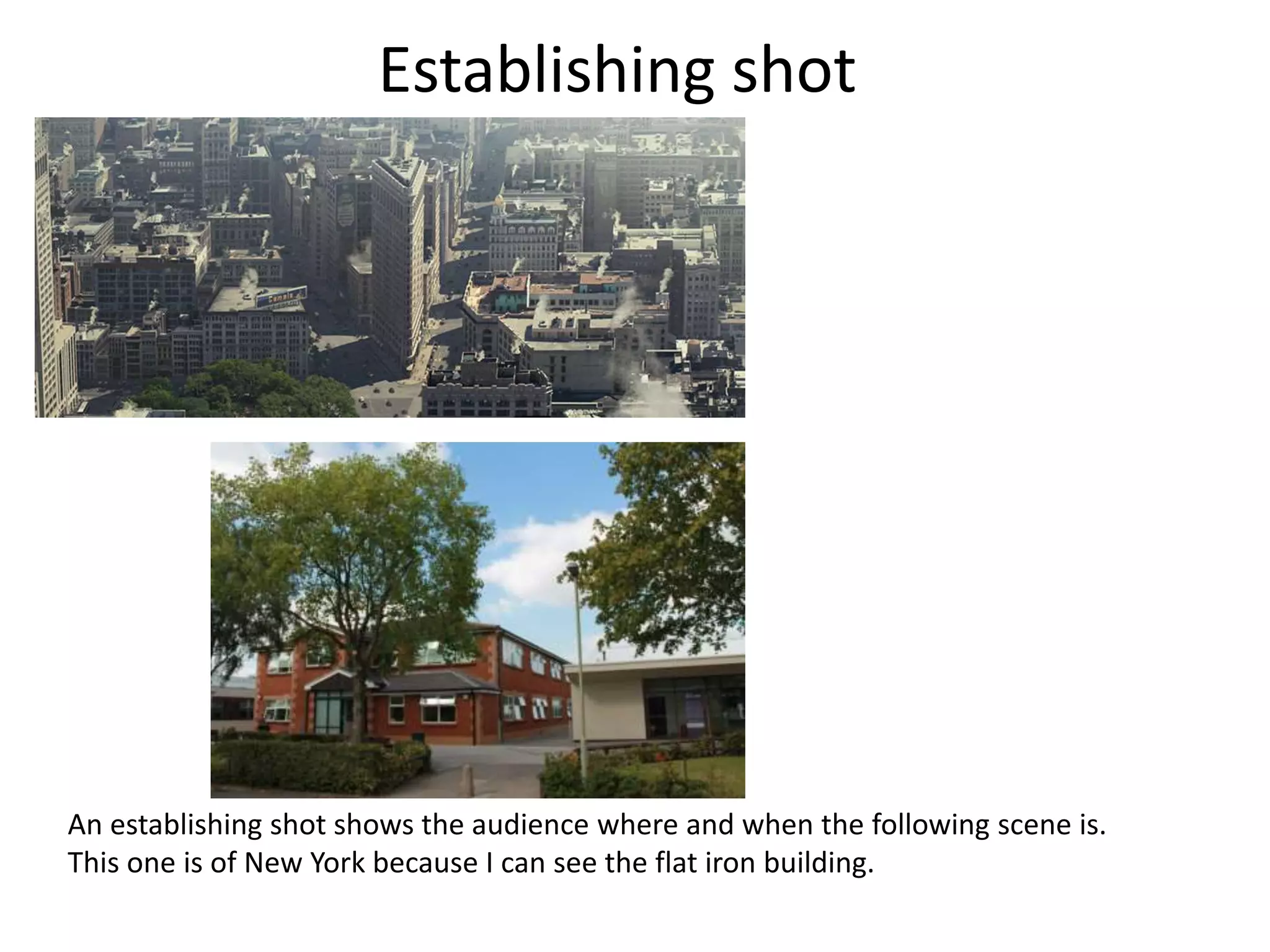
An establishing shot shows the audience where and when the following scene is. 
This one is of New York because I can see the flat iron building.
Wide shot 
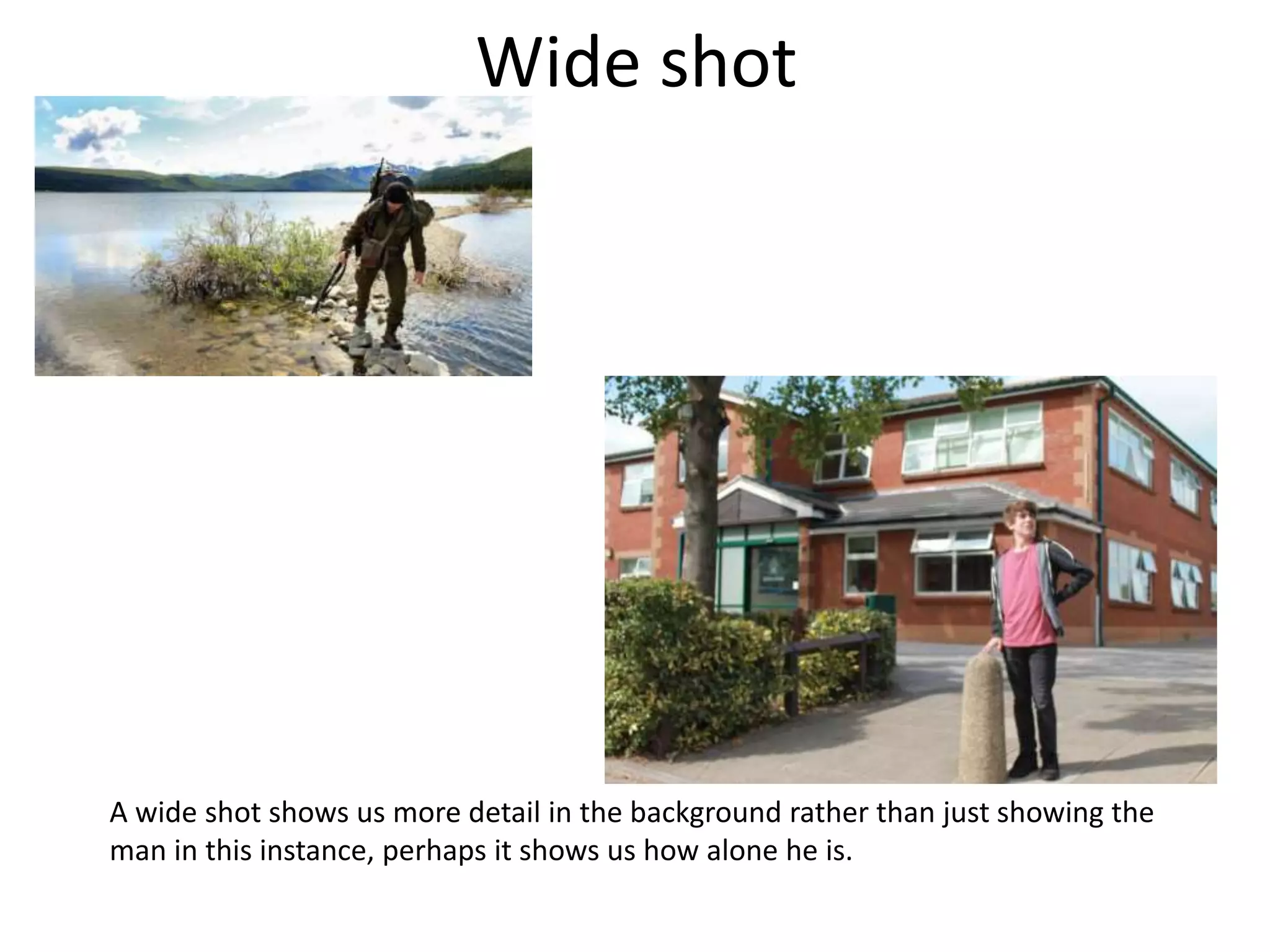
A wide shot shows us more detail in the background rather than just showing the 
man in this instance, perhaps it shows us how alone he is.
Medium shot 
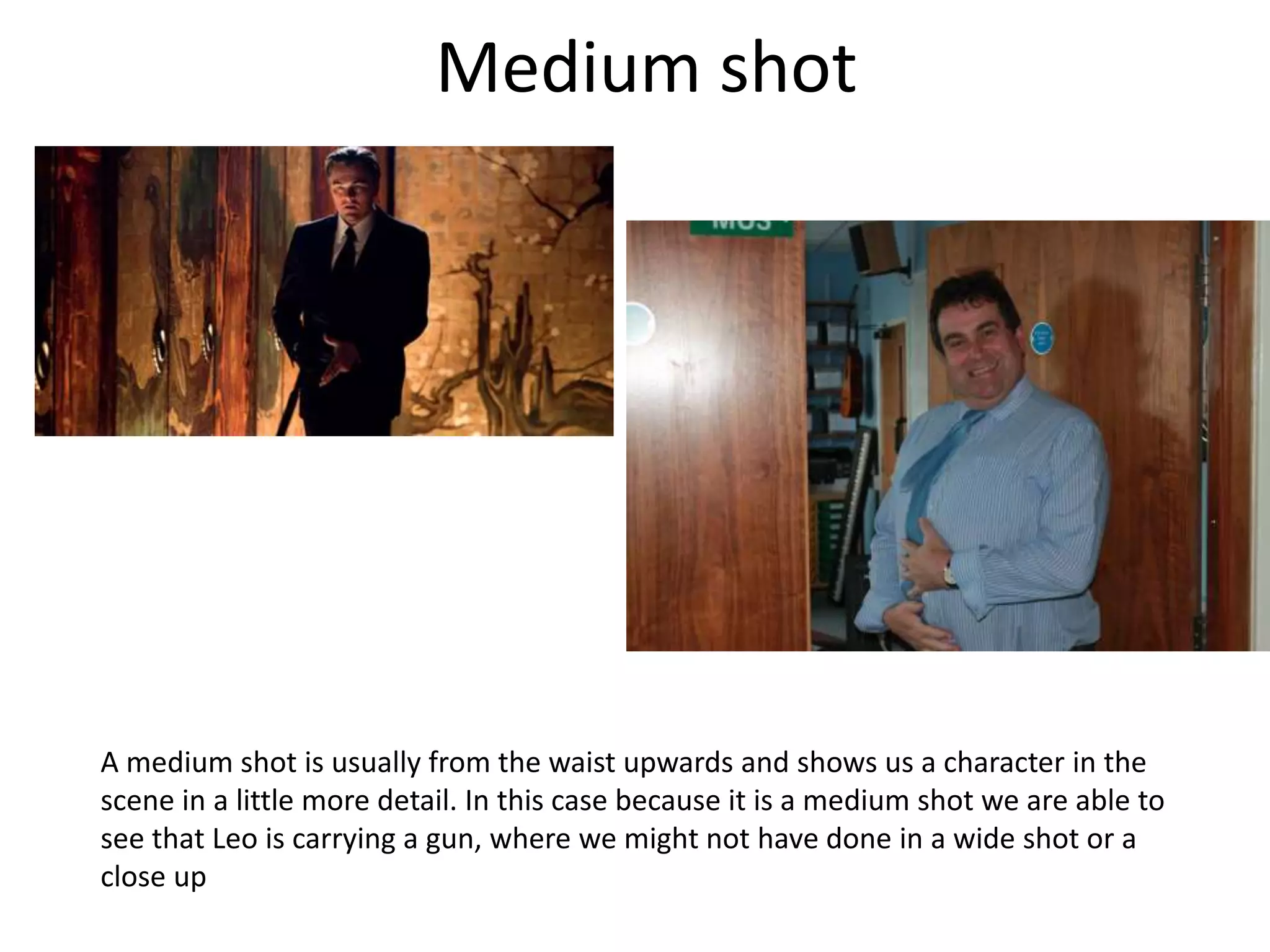
A medium shot is usually from the waist upwards and shows us a character in the 
scene in a little more detail. In this case because it is a medium shot we are able to 
see that Leo is carrying a gun, where we might not have done in a wide shot or a 
close up
Close up 
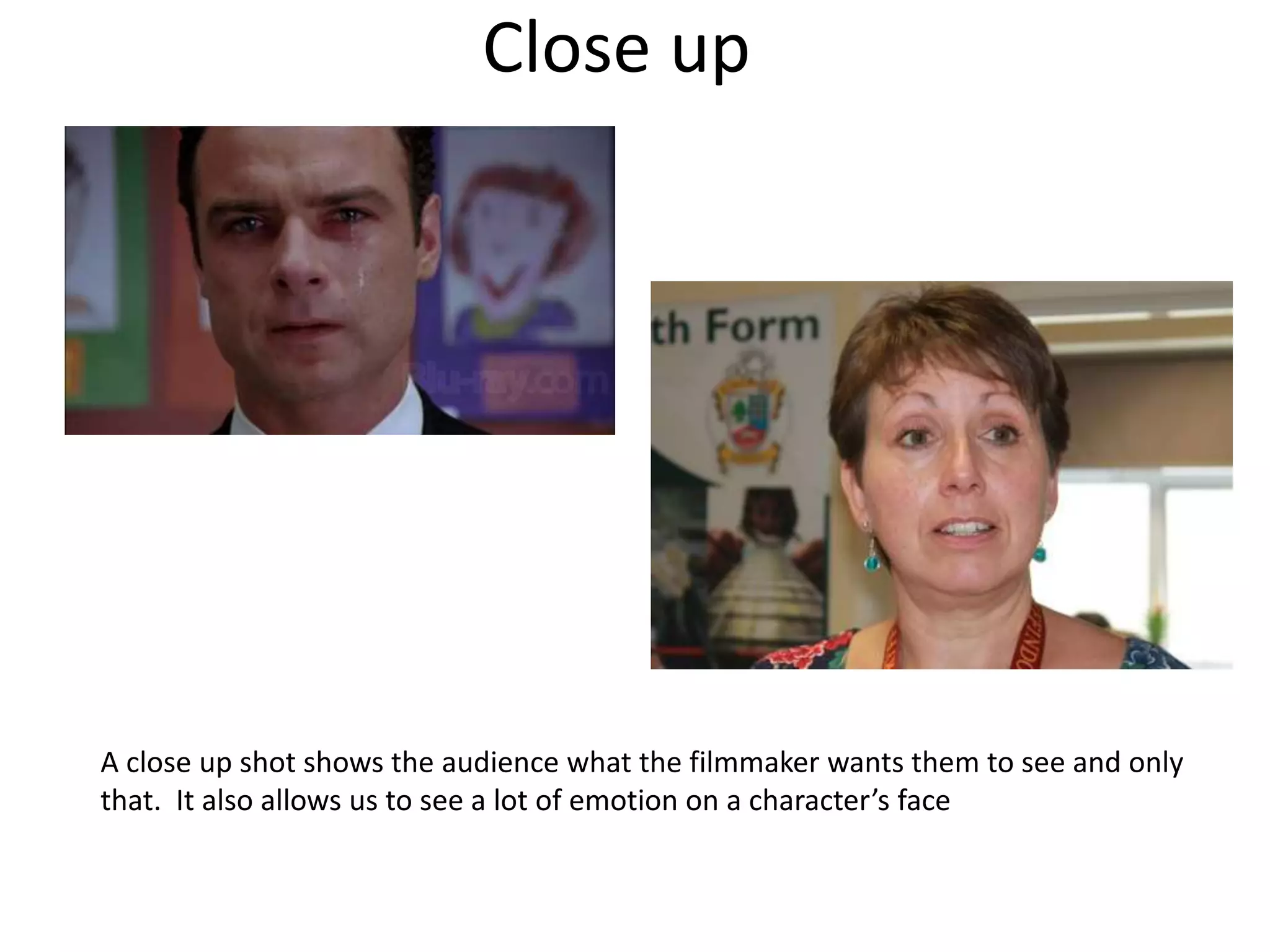
A close up shot shows the audience what the filmmaker wants them to see and only 
that. It also allows us to see a lot of emotion on a character’s face
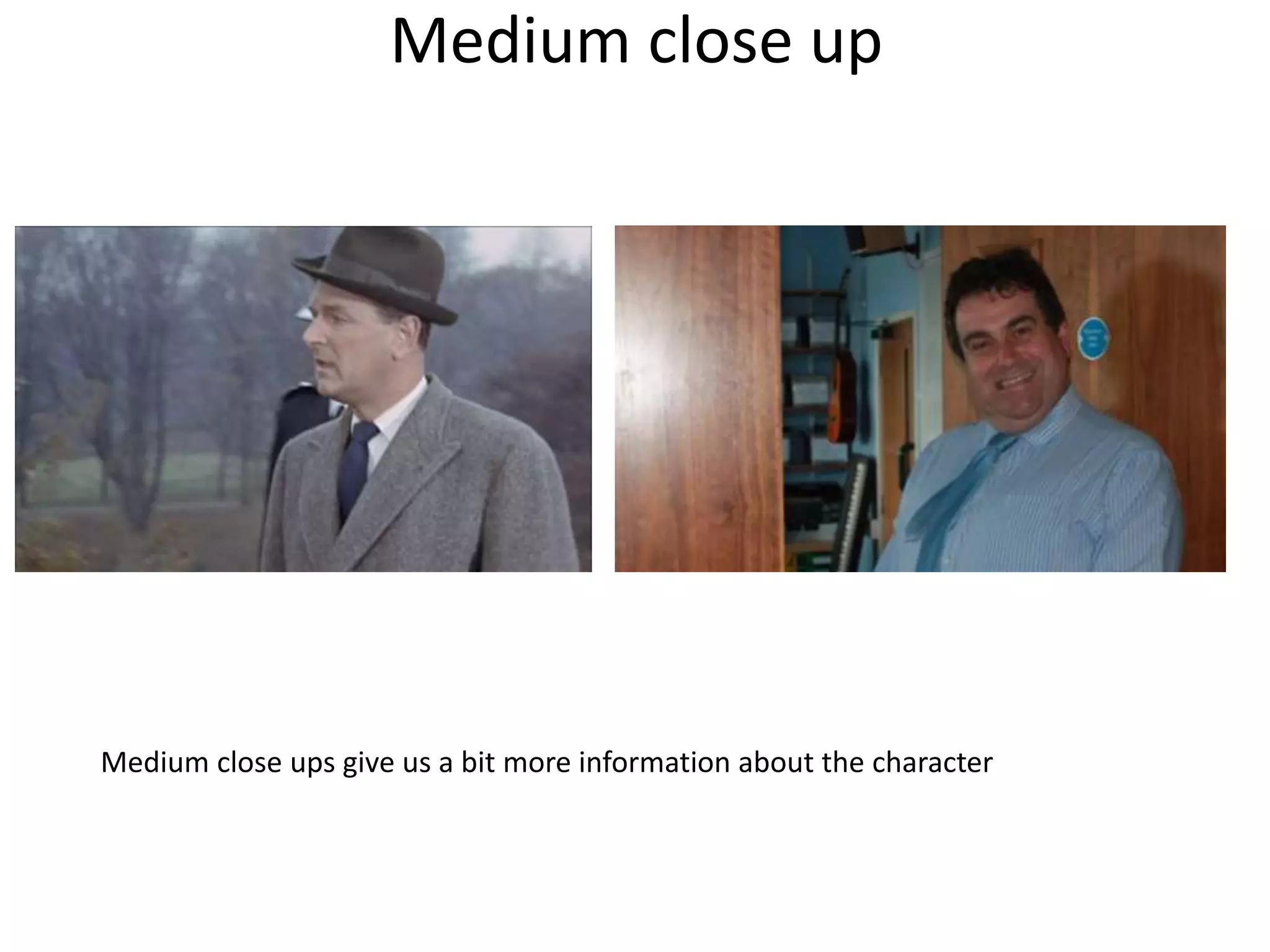
Medium close up 
Medium close ups give us a bit more information about the character
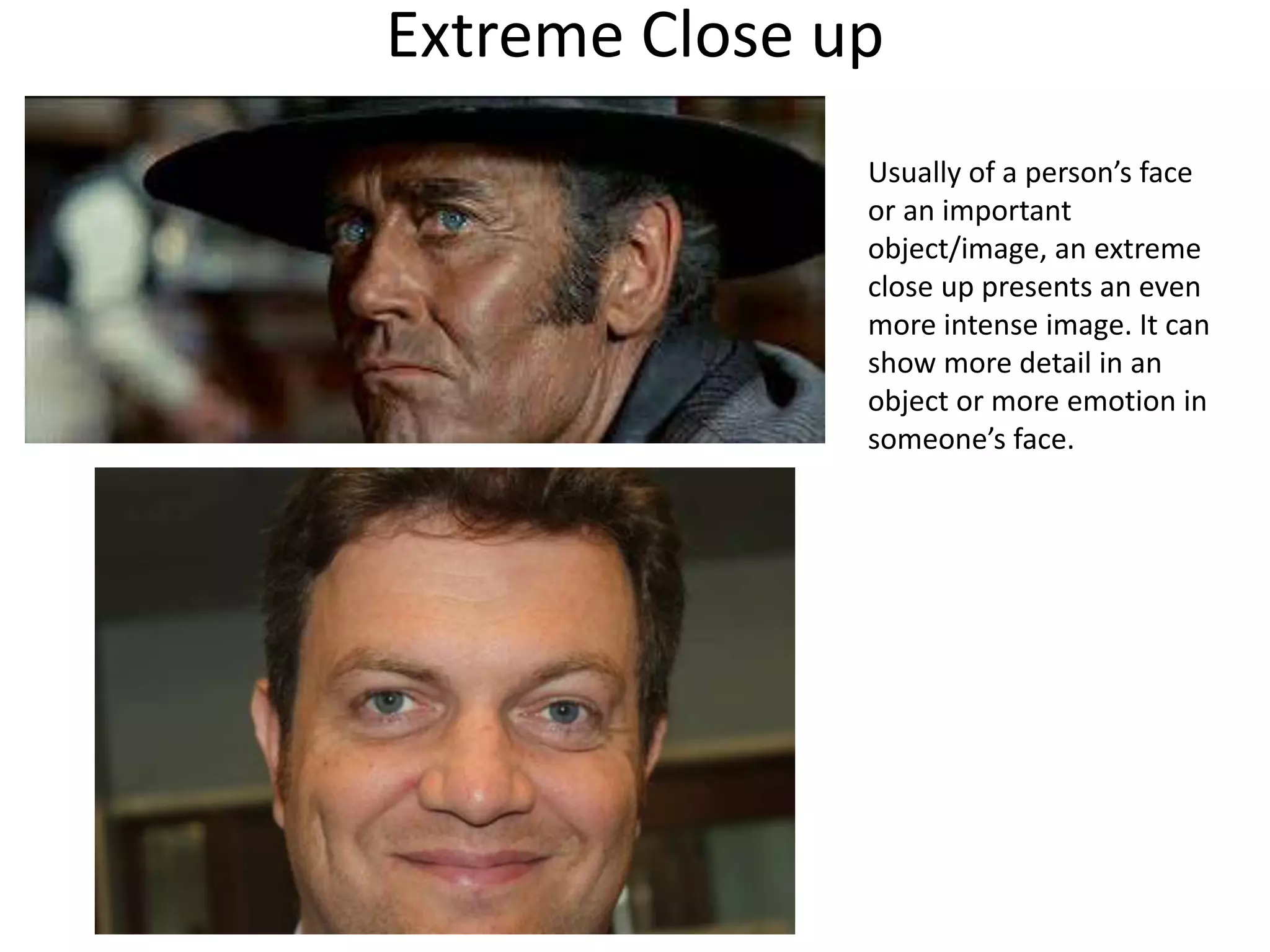
Extreme Close up 
Usually of a person’s face 
or an important 
object/image, an extreme 
close up presents an even 
more intense image. It can 
show more detail in an 
object or more emotion in 
someone’s face.
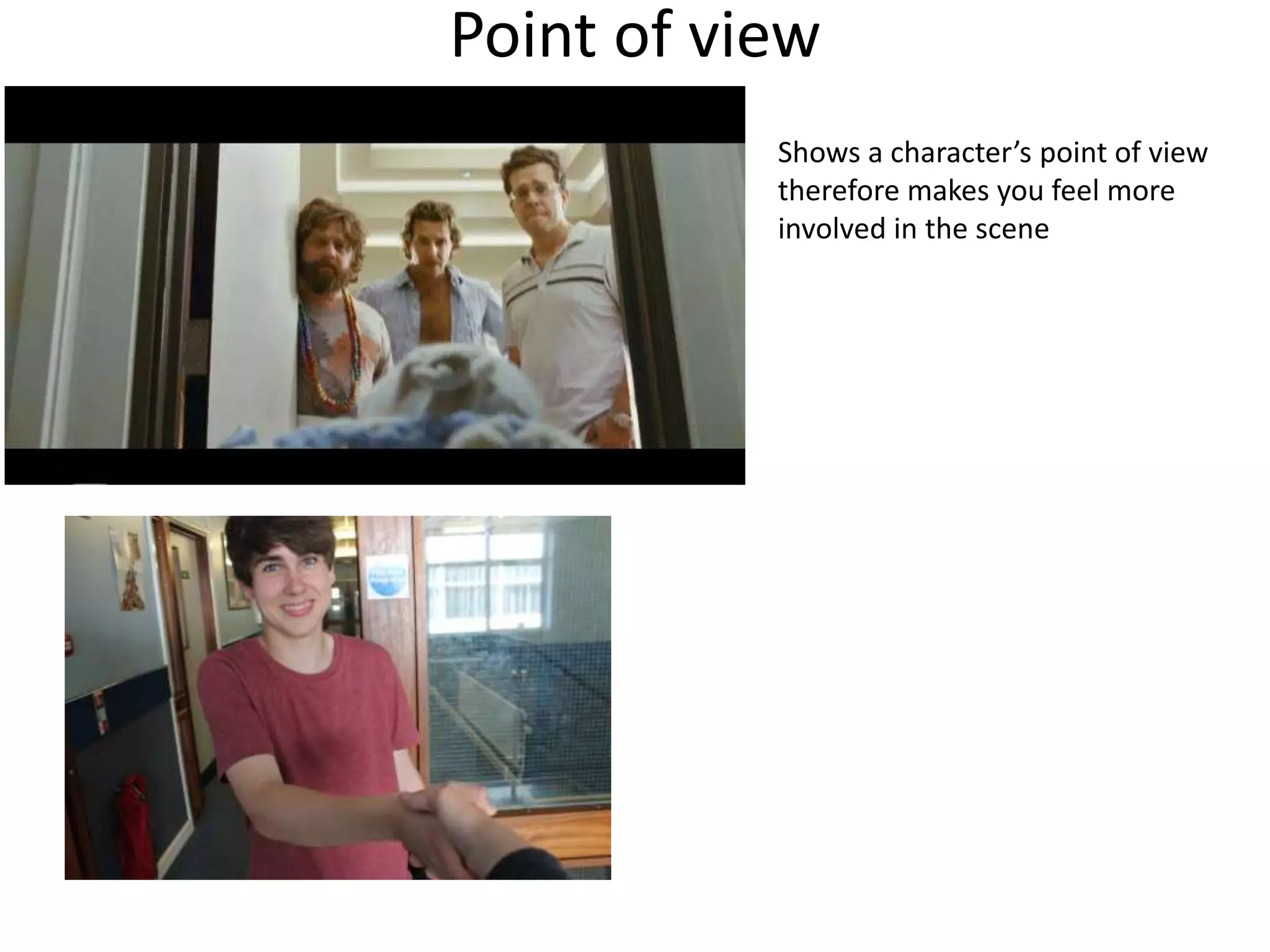
Point of view 
Shows a character’s point of view 
therefore makes you feel more 
involved in the scene
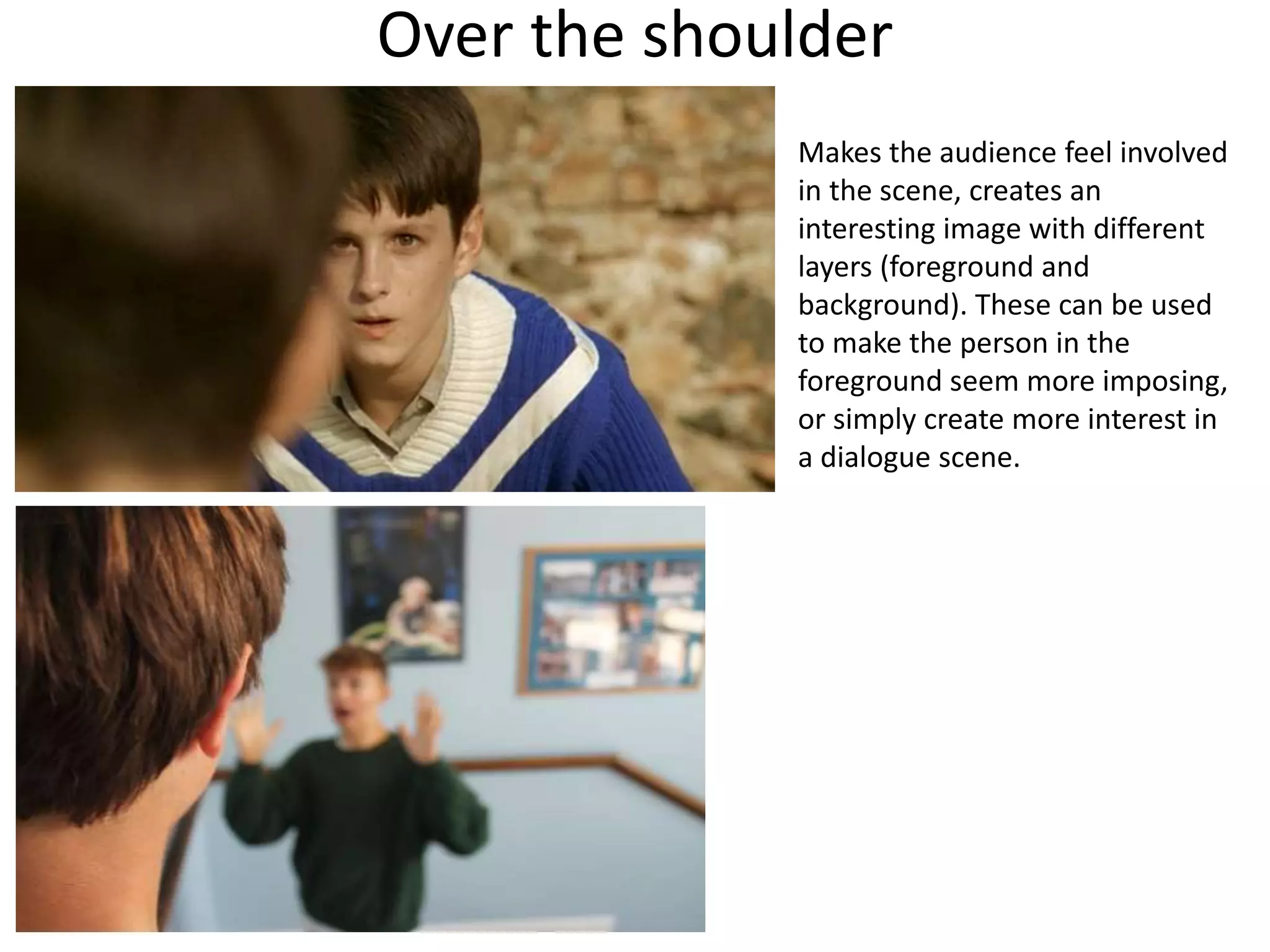
Over the shoulder 
Makes the audience feel involved 
in the scene, creates an 
interesting image with different 
layers (foreground and 
background). These can be used 
to make the person in the 
foreground seem more imposing, 
or simply create more interest in 
a dialogue scene.
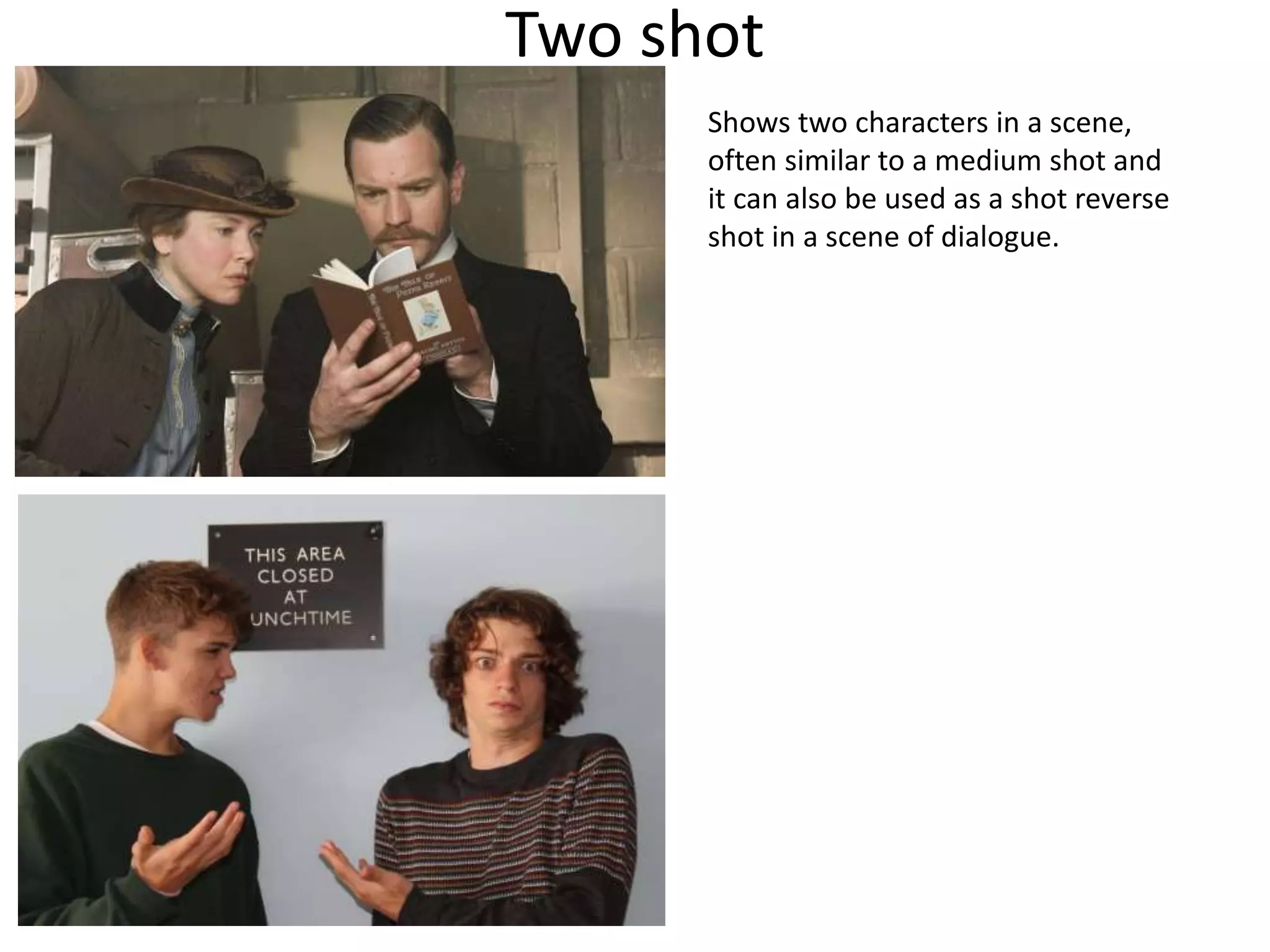
Two shot 
Shows two characters in a scene, 
often similar to a medium shot and 
it can also be used as a shot reverse 
shot in a scene of dialogue.
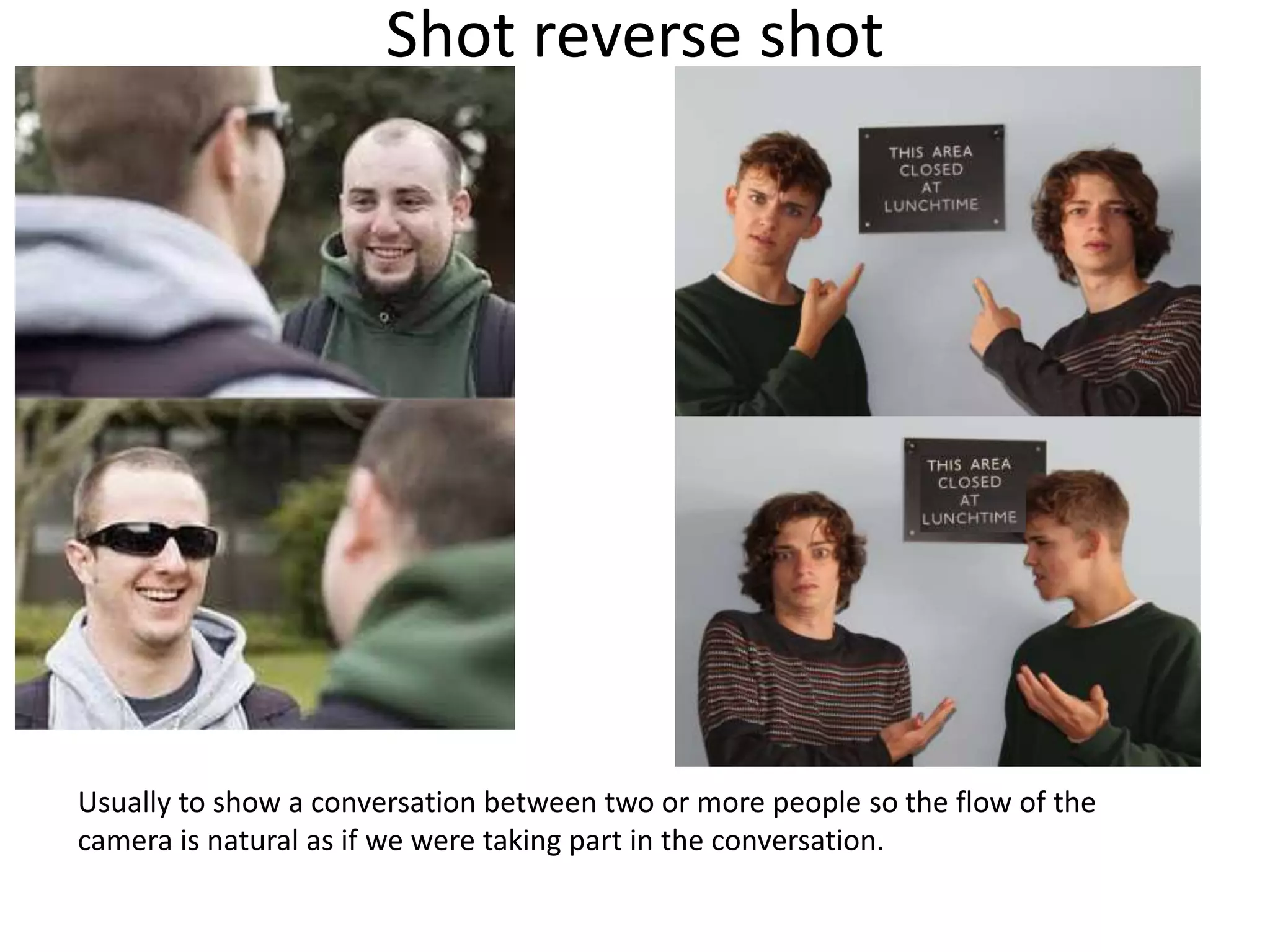
Shot reverse shot 
Usually to show a conversation between two or more people so the flow of the 
camera is natural as if we were taking part in the conversation.
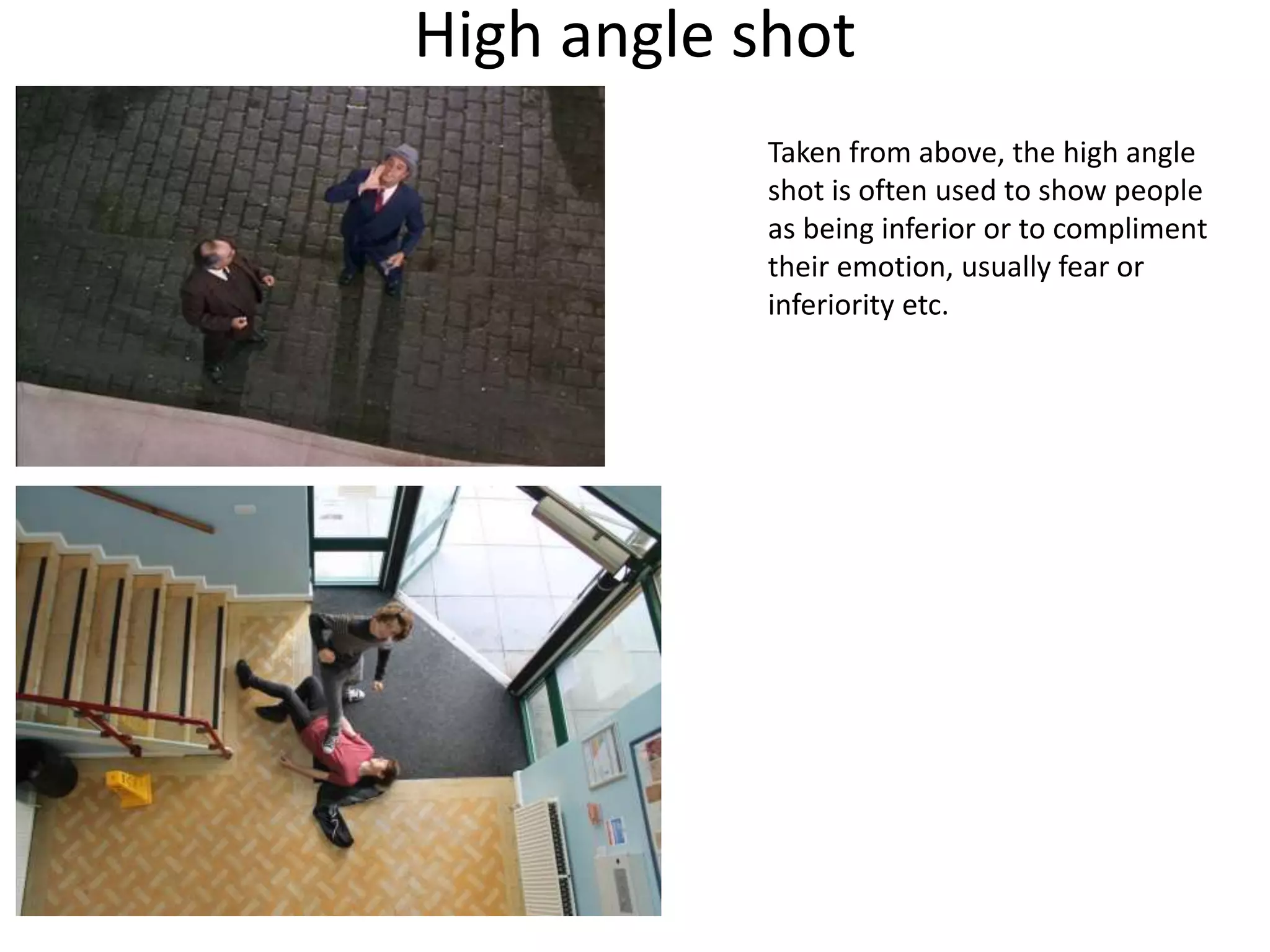
High angle shot 
Taken from above, the high angle 
shot is often used to show people 
as being inferior or to compliment 
their emotion, usually fear or 
inferiority etc.
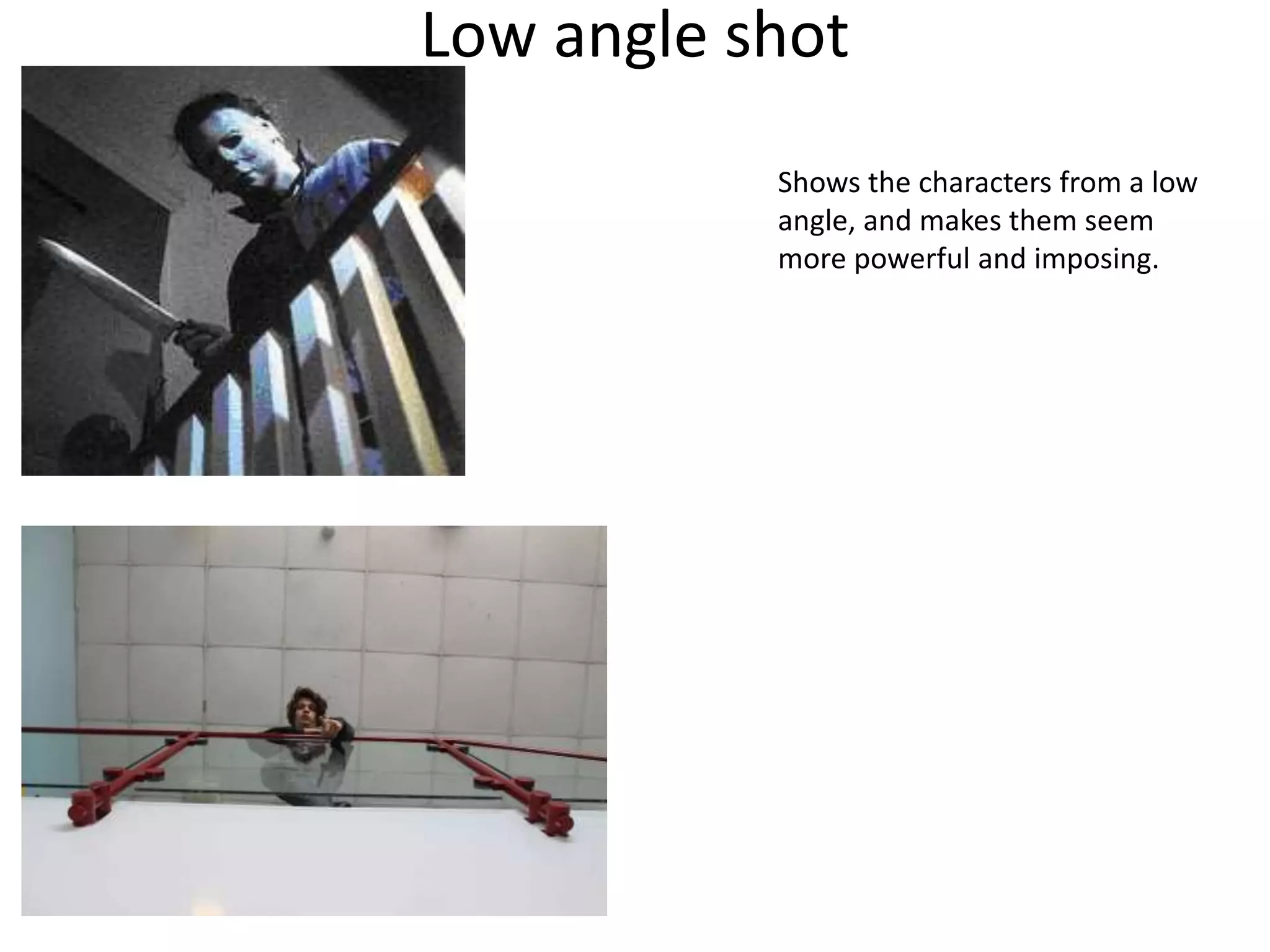
Low angle shot 
Shows the characters from a low 
angle, and makes them seem 
more powerful and imposing.

Types of shot

  • 1.
    Establishing shot Anestablishing shot shows the audience where and when the following scene is. This one is of New York because I can see the flat iron building.
  • 2.
    Wide shot Awide shot shows us more detail in the background rather than just showing the man in this instance, perhaps it shows us how alone he is.
  • 3.
    Medium shot Amedium shot is usually from the waist upwards and shows us a character in the scene in a little more detail. In this case because it is a medium shot we are able to see that Leo is carrying a gun, where we might not have done in a wide shot or a close up
  • 4.
    Close up Aclose up shot shows the audience what the filmmaker wants them to see and only that. It also allows us to see a lot of emotion on a character’s face
  • 5.
    Medium close up Medium close ups give us a bit more information about the character
  • 6.
    Extreme Close up Usually of a person’s face or an important object/image, an extreme close up presents an even more intense image. It can show more detail in an object or more emotion in someone’s face.
  • 7.
    Point of view Shows a character’s point of view therefore makes you feel more involved in the scene
  • 8.
    Over the shoulder Makes the audience feel involved in the scene, creates an interesting image with different layers (foreground and background). These can be used to make the person in the foreground seem more imposing, or simply create more interest in a dialogue scene.
  • 9.
    Two shot Showstwo characters in a scene, often similar to a medium shot and it can also be used as a shot reverse shot in a scene of dialogue.
  • 10.
    Shot reverse shot Usually to show a conversation between two or more people so the flow of the camera is natural as if we were taking part in the conversation.
  • 11.
    High angle shot Taken from above, the high angle shot is often used to show people as being inferior or to compliment their emotion, usually fear or inferiority etc.
  • 12.
    Low angle shot Shows the characters from a low angle, and makes them seem more powerful and imposing.