Different Camera Angles & Shots
Extreme Close Up
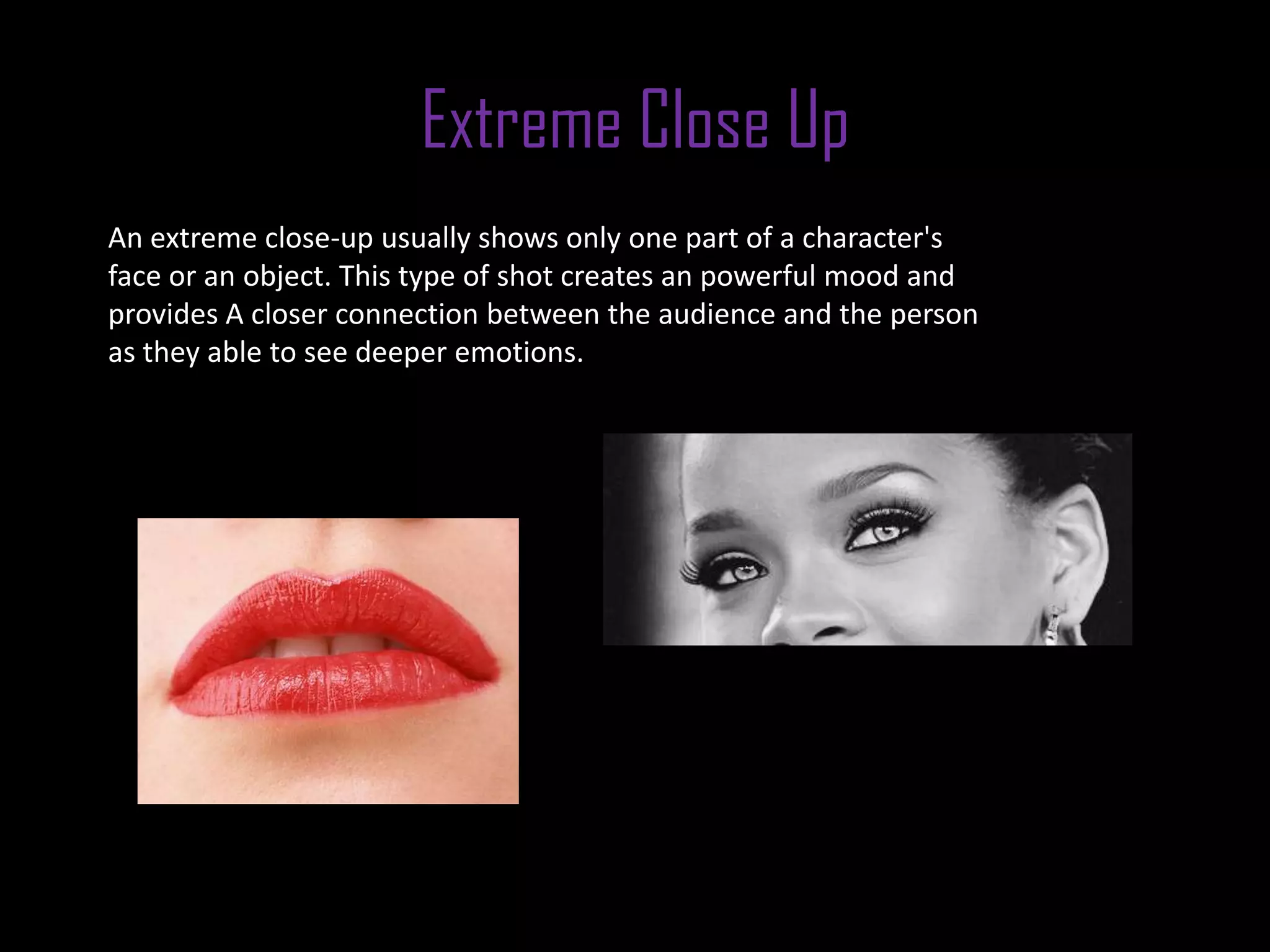
An extreme close-up usually shows only one part of a character's
face or an object. This type of shot creates an powerful mood and
provides A closer connection between the audience and the person
as they able to see deeper emotions.
Close Up
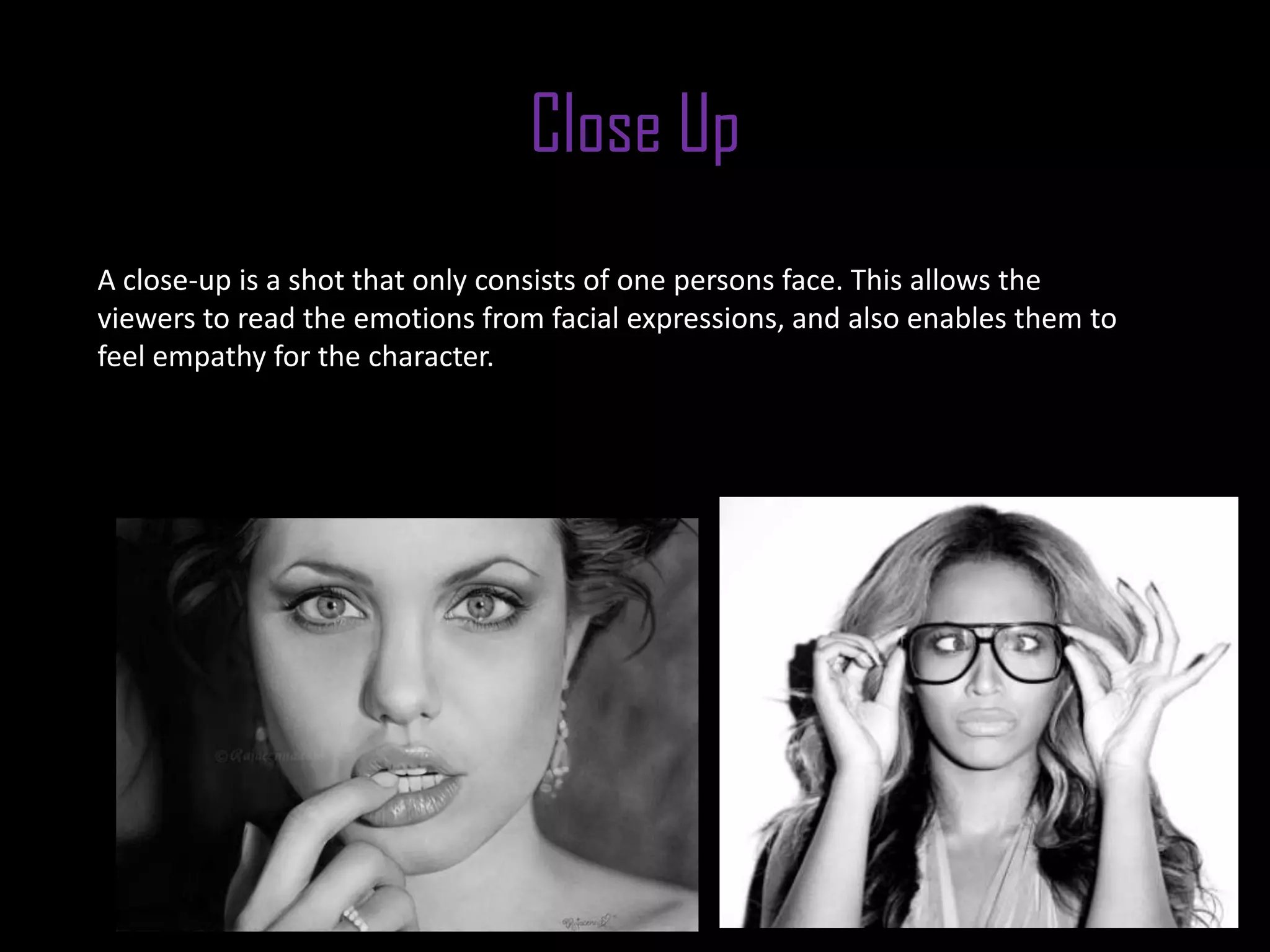
A close-up is a shot that only consists of one persons face. This allows the
viewers to read the emotions from facial expressions, and also enables them to
feel empathy for the character.
Mid Shot
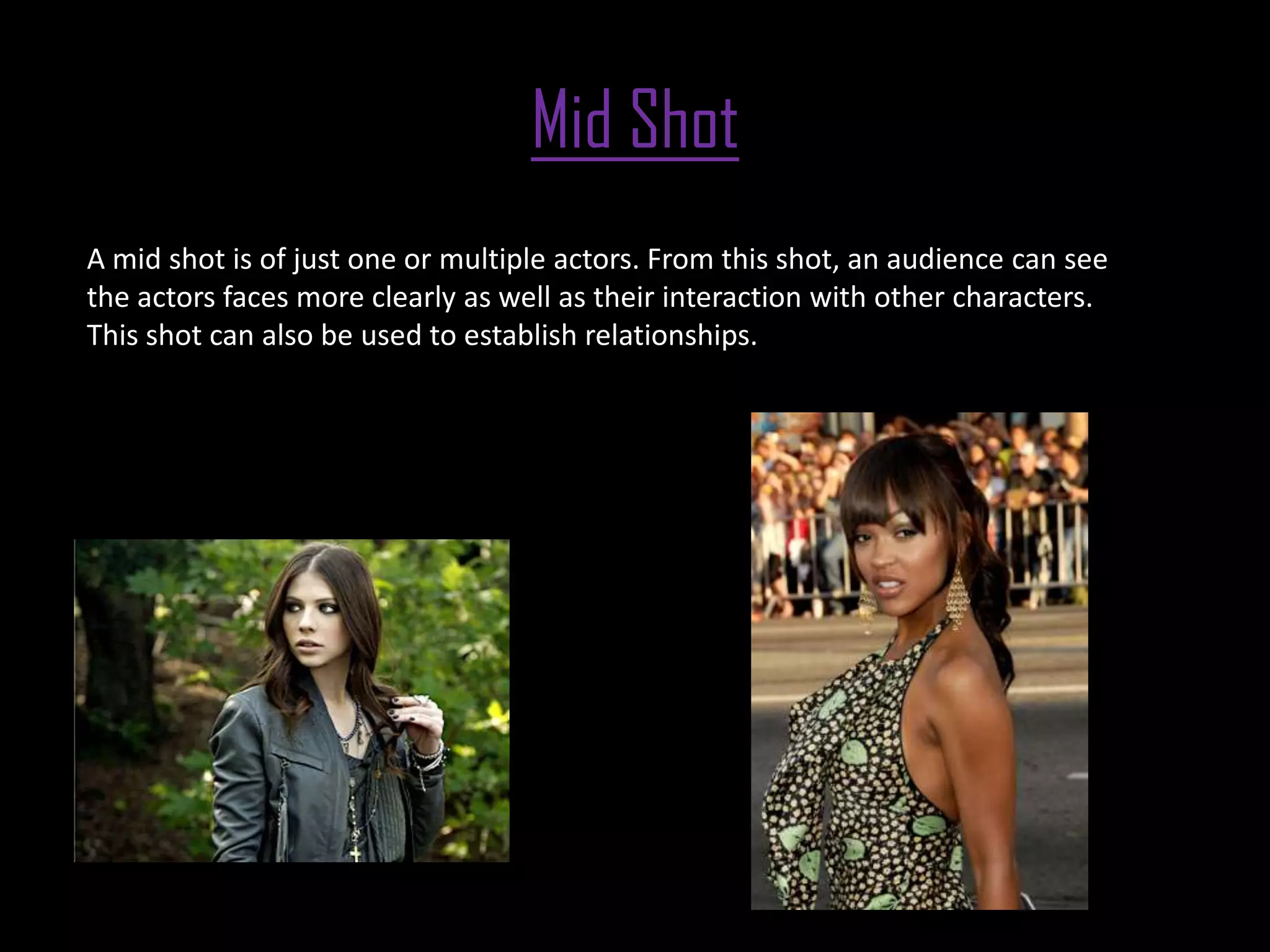
A mid shot is of just one or multiple actors. From this shot, an audience can see
the actors faces more clearly as well as their interaction with other characters.
This shot can also be used to establish relationships.
Long Shot
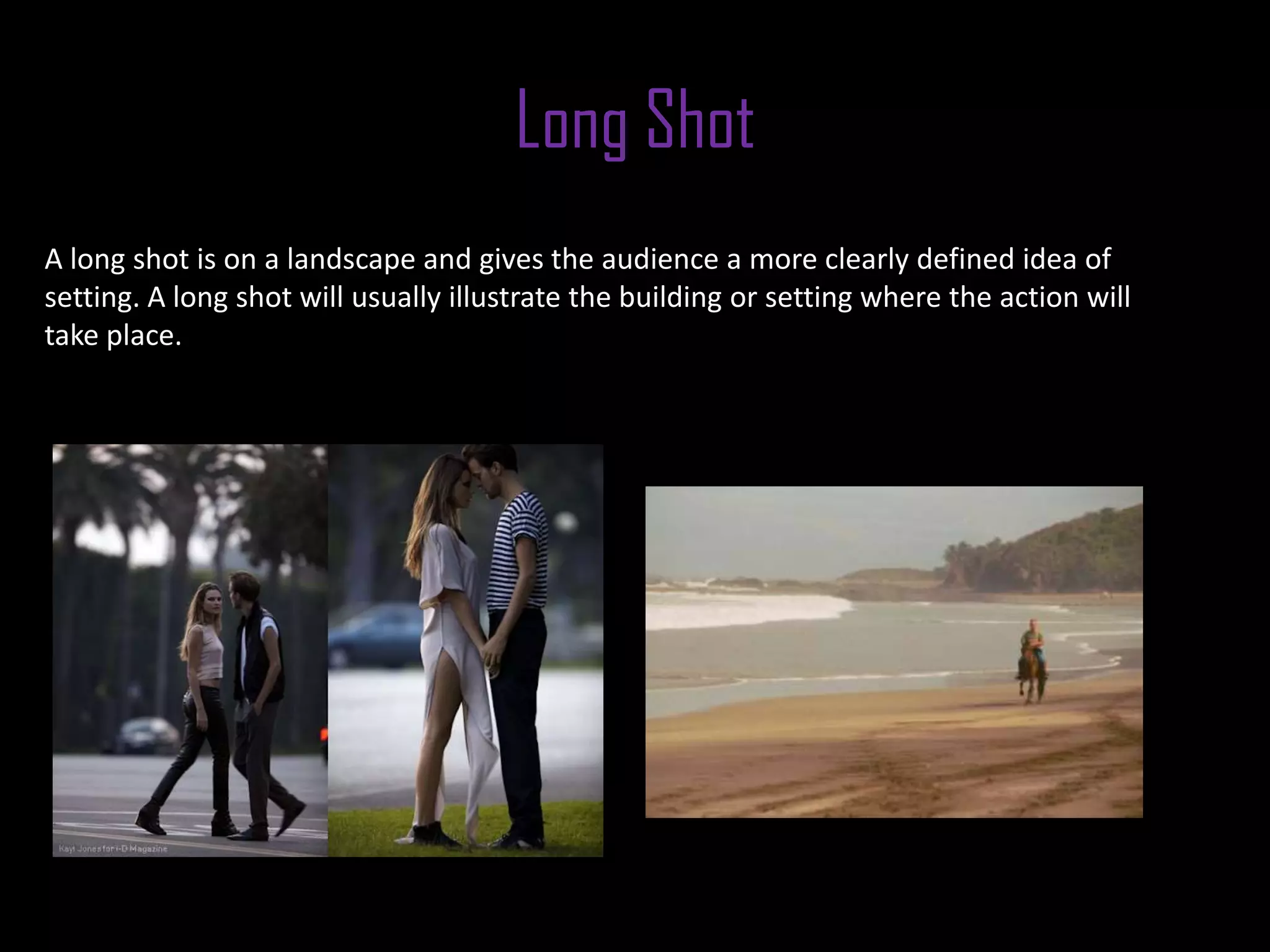
A long shot is on a landscape and gives the audience a more clearly defined idea of
setting. A long shot will usually illustrate the building or setting where the action will
take place.
Extreme Long Shot
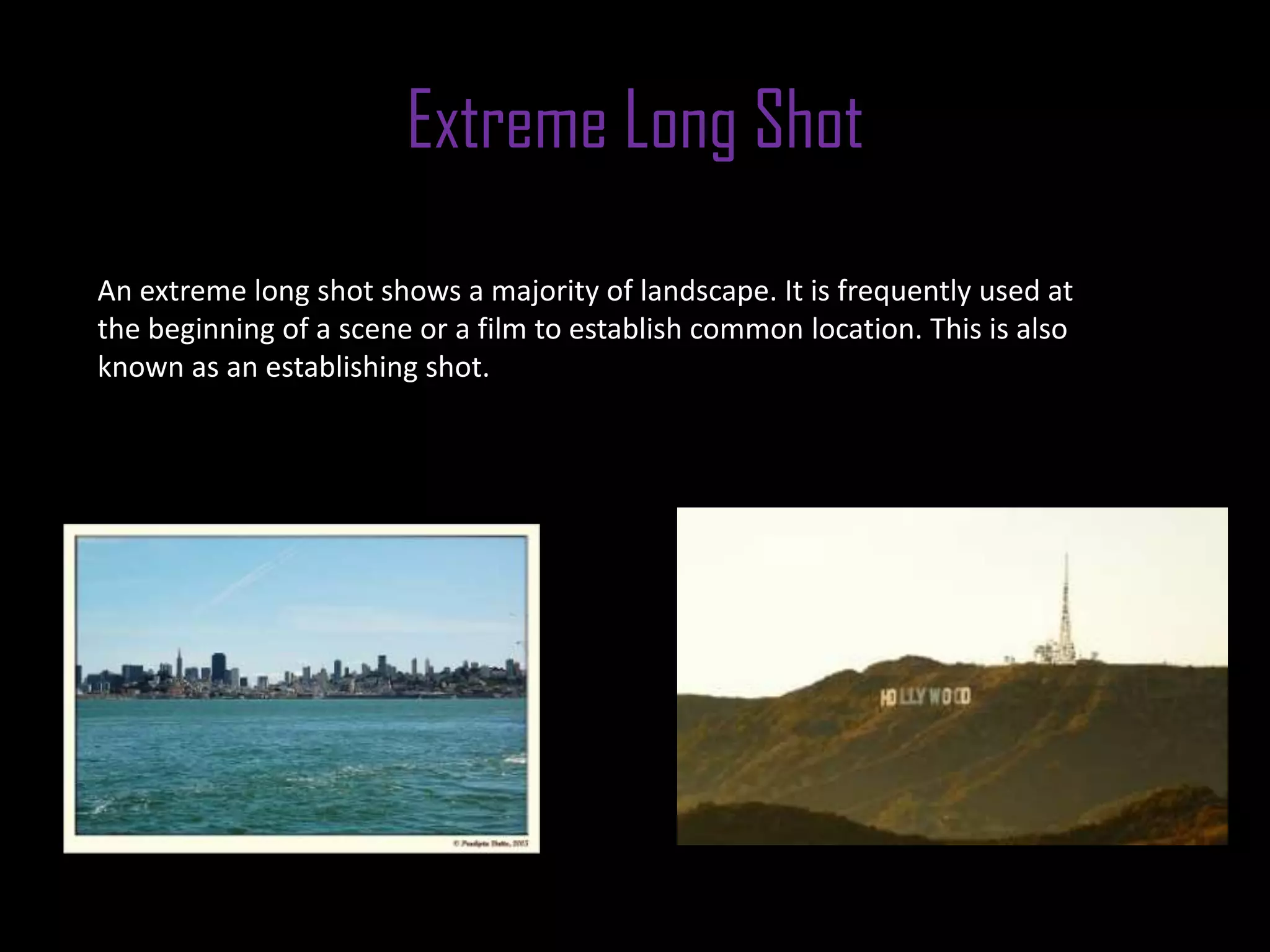
An extreme long shot shows a majority of landscape. It is frequently used at
the beginning of a scene or a film to establish common location. This is also
known as an establishing shot.
High Angle Shot
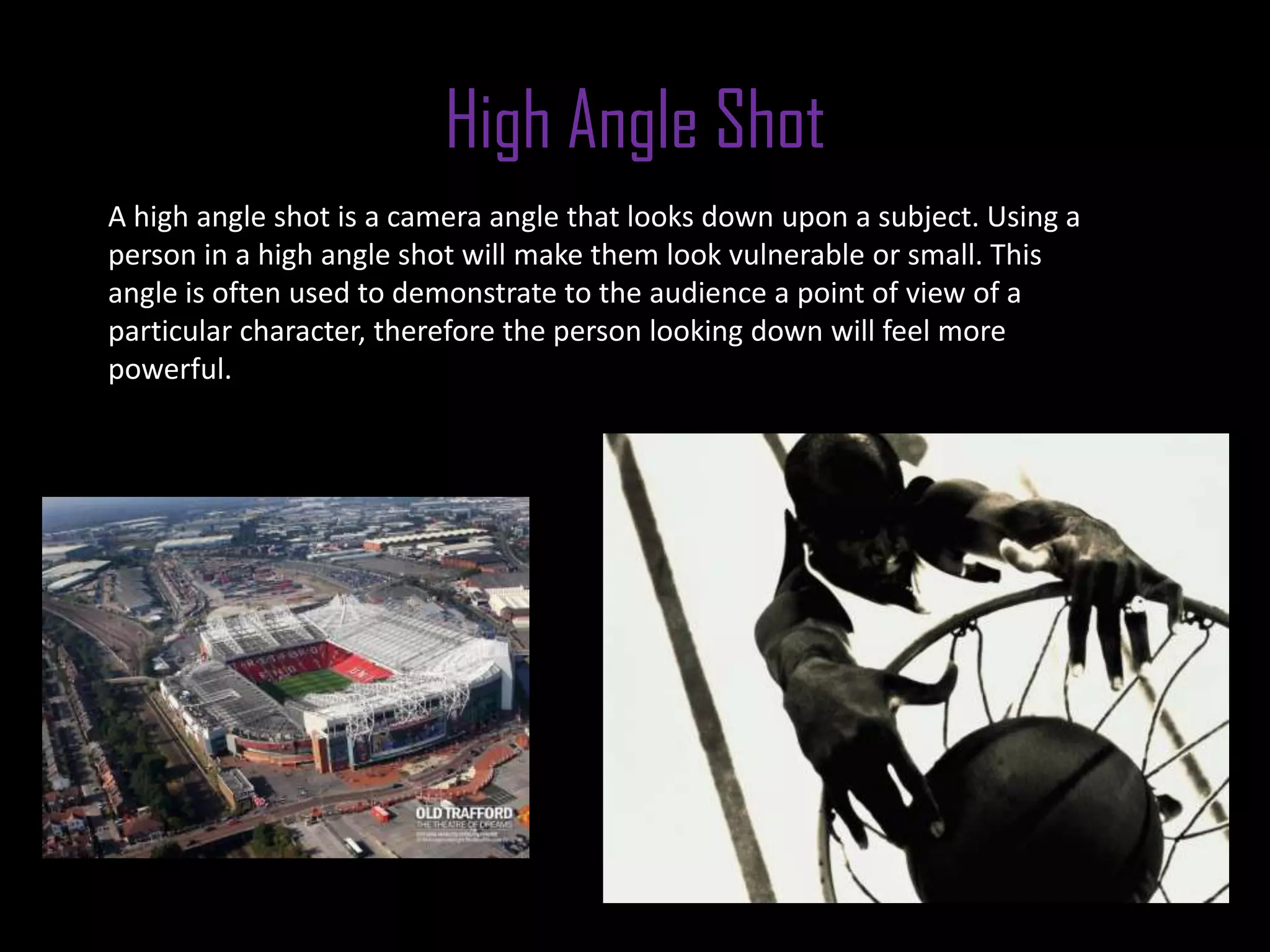
A high angle shot is a camera angle that looks down upon a subject. Using a
person in a high angle shot will make them look vulnerable or small. This
angle is often used to demonstrate to the audience a point of view of a
particular character, therefore the person looking down will feel more
powerful.
Low Angle Shot
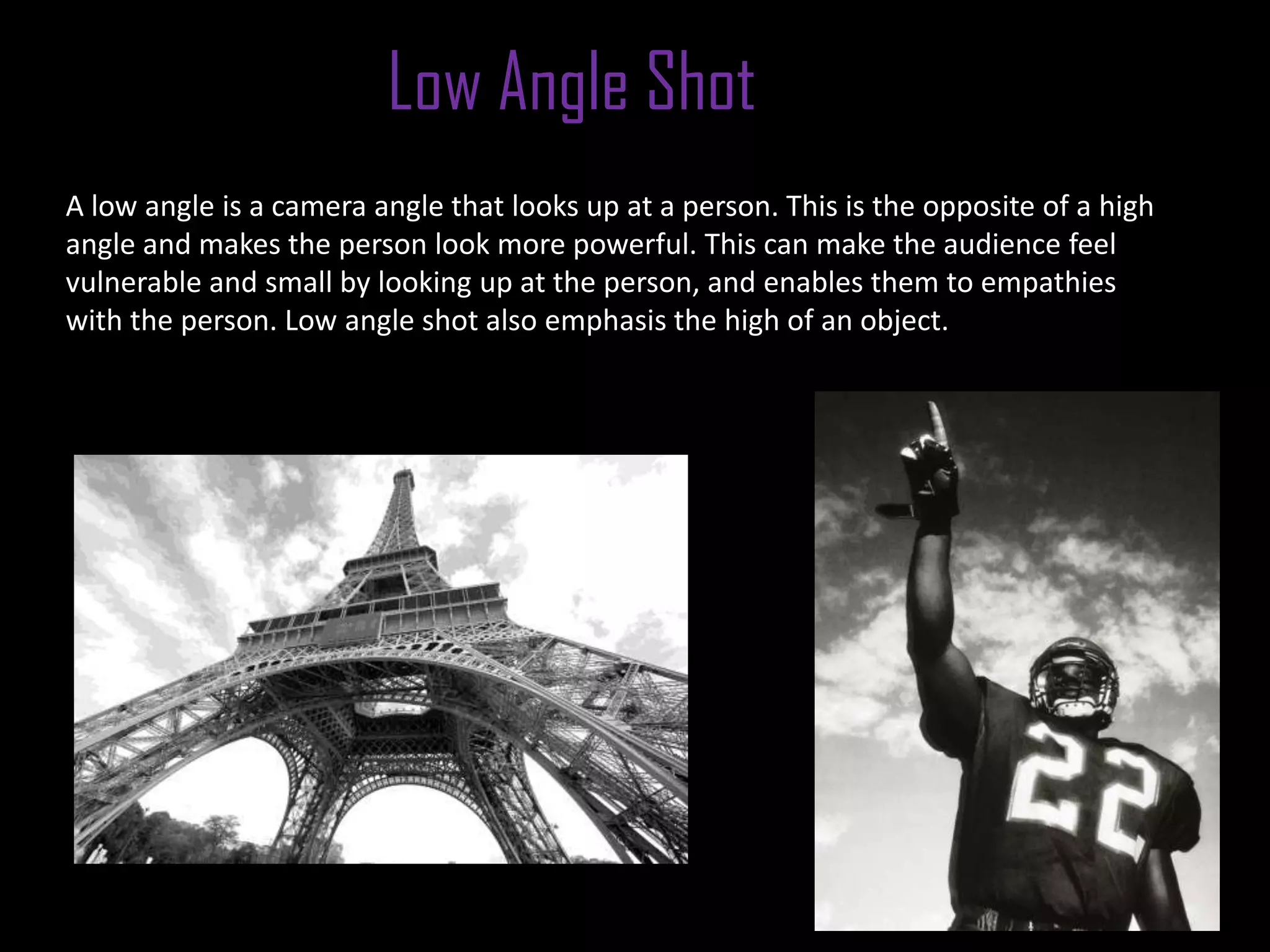
A low angle is a camera angle that looks up at a person. This is the opposite of a high
angle and makes the person look more powerful. This can make the audience feel
vulnerable and small by looking up at the person, and enables them to empathies
with the person. Low angle shot also emphasis the high of an object.
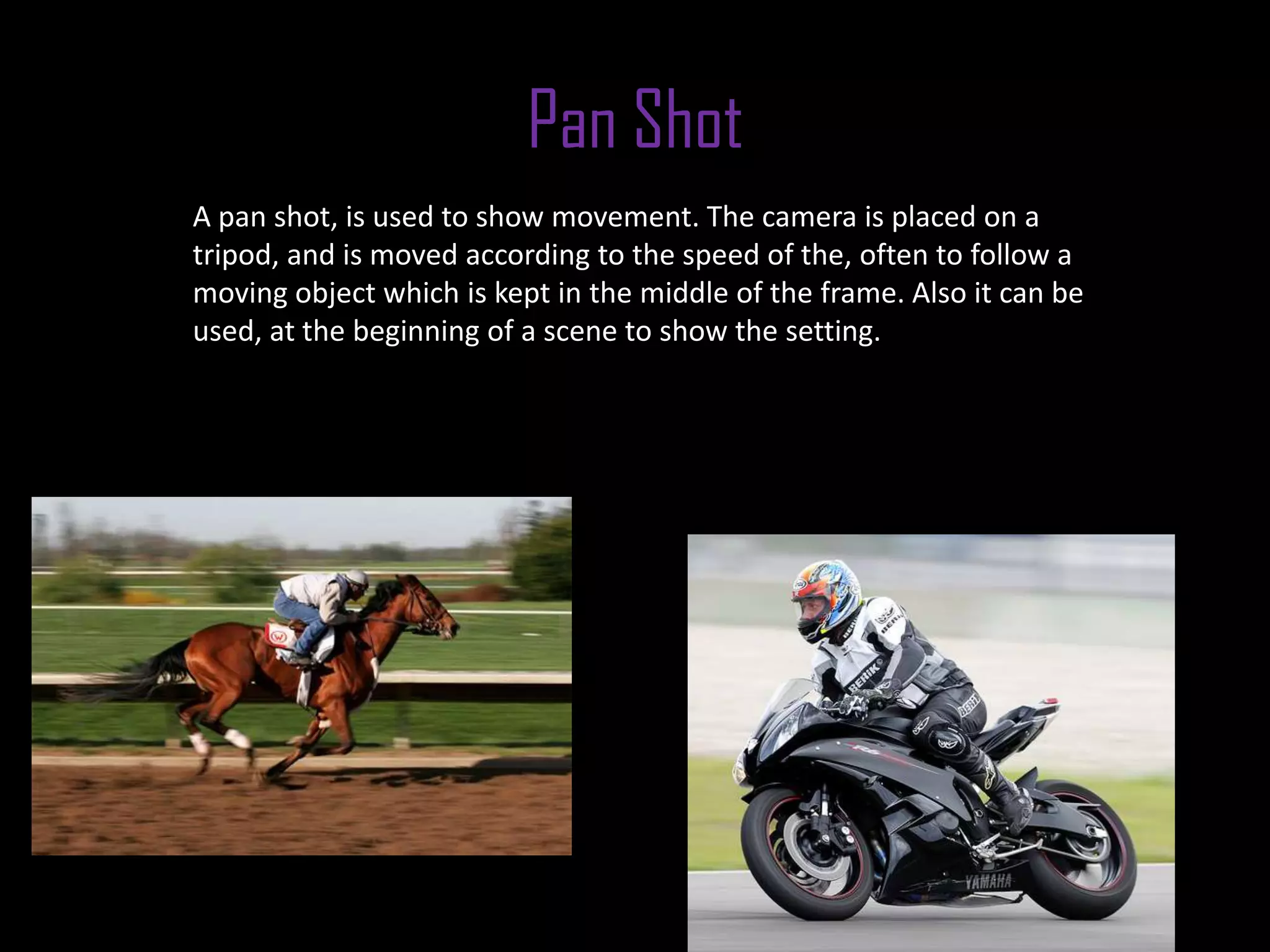
Pan Shot
A pan shot, is used to show movement. The camera is placed on a
tripod, and is moved according to the speed of the, often to follow a
moving object which is kept in the middle of the frame. Also it can be
used, at the beginning of a scene to show the setting.
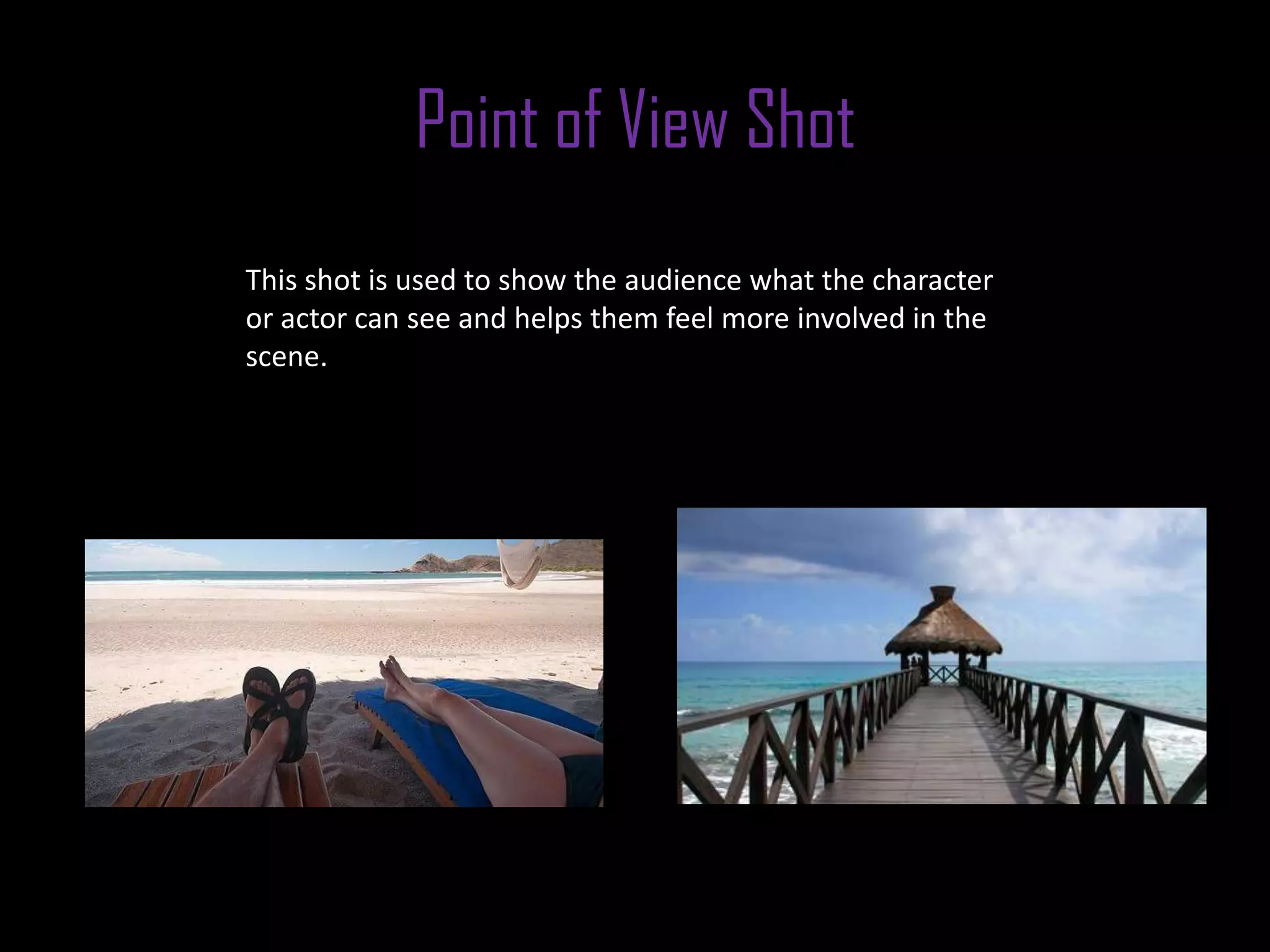
Point of View Shot
This shot is used to show the audience what the character
or actor can see and helps them feel more involved in the
scene.

Camera angles

  • 1.
  • 2.
    Extreme Close Up Anextreme close-up usually shows only one part of a character's face or an object. This type of shot creates an powerful mood and provides A closer connection between the audience and the person as they able to see deeper emotions.
  • 3.
    Close Up A close-upis a shot that only consists of one persons face. This allows the viewers to read the emotions from facial expressions, and also enables them to feel empathy for the character.
  • 4.
    Mid Shot A midshot is of just one or multiple actors. From this shot, an audience can see the actors faces more clearly as well as their interaction with other characters. This shot can also be used to establish relationships.
  • 5.
    Long Shot A longshot is on a landscape and gives the audience a more clearly defined idea of setting. A long shot will usually illustrate the building or setting where the action will take place.
  • 6.
    Extreme Long Shot Anextreme long shot shows a majority of landscape. It is frequently used at the beginning of a scene or a film to establish common location. This is also known as an establishing shot.
  • 7.
    High Angle Shot Ahigh angle shot is a camera angle that looks down upon a subject. Using a person in a high angle shot will make them look vulnerable or small. This angle is often used to demonstrate to the audience a point of view of a particular character, therefore the person looking down will feel more powerful.
  • 8.
    Low Angle Shot Alow angle is a camera angle that looks up at a person. This is the opposite of a high angle and makes the person look more powerful. This can make the audience feel vulnerable and small by looking up at the person, and enables them to empathies with the person. Low angle shot also emphasis the high of an object.
  • 9.
    Pan Shot A panshot, is used to show movement. The camera is placed on a tripod, and is moved according to the speed of the, often to follow a moving object which is kept in the middle of the frame. Also it can be used, at the beginning of a scene to show the setting.
  • 10.
    Point of ViewShot This shot is used to show the audience what the character or actor can see and helps them feel more involved in the scene.