THE 11 CAMERA ANGLES
       By Gaia
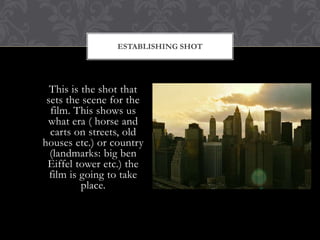
ESTABLISHING SHOT


  This is the shot that
 sets the scene for the
  film. This shows us
 what era ( horse and
  carts on streets, old
houses etc.) or country
  (landmarks: big ben
 Eiffel tower etc.) the
  film is going to take
          place.
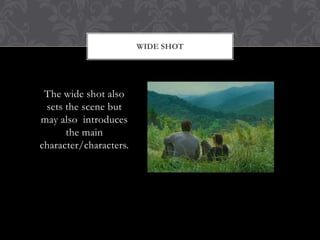
WIDE SHOT


 The wide shot also
 sets the scene but
may also introduces
      the main
character/characters.
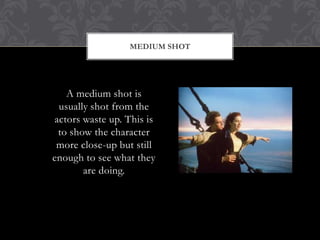
MEDIUM SHOT


   A medium shot is
 usually shot from the
actors waste up. This is
 to show the character
 more close-up but still
enough to see what they
       are doing.
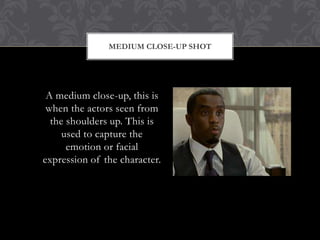
MEDIUM CLOSE-UP SHOT


 A medium close-up, this is
 when the actors seen from
  the shoulders up. This is
     used to capture the
      emotion or facial
expression of the character.
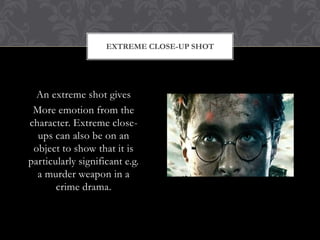
EXTREME CLOSE-UP SHOT


  An extreme shot gives
 More emotion from the
character. Extreme close-
  ups can also be on an
 object to show that it is
particularly significant e.g.
  a murder weapon in a
       crime drama.
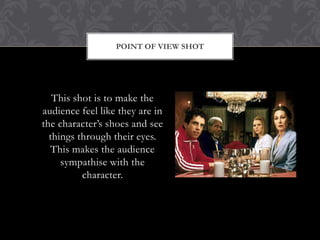
POINT OF VIEW SHOT


   This shot is to make the
audience feel like they are in
the character’s shoes and see
  things through their eyes.
  This makes the audience
     sympathise with the
          character.
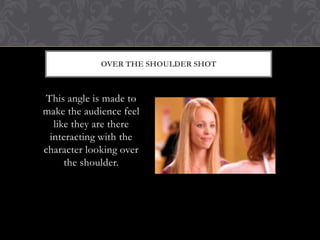
OVER THE SHOULDER SHOT


This angle is made to
make the audience feel
  like they are there
 interacting with the
character looking over
     the shoulder.
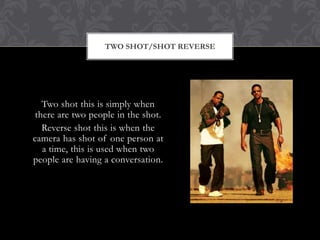
TWO SHOT/SHOT REVERSE


   Two shot this is simply when
 there are two people in the shot.
   Reverse shot this is when the
camera has shot of one person at
   a time, this is used when two
people are having a conversation.
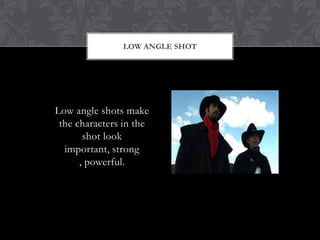
LOW ANGLE SHOT


Low angle shots make
 the characters in the
       shot look
  important, strong
      , powerful.
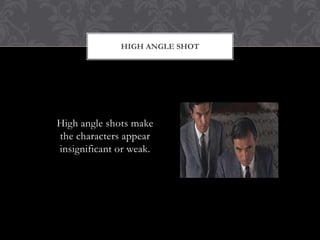
HIGH ANGLE SHOT


High angle shots make
the characters appear
insignificant or weak.

The 11 camera angles

  • 1.
    THE 11 CAMERAANGLES By Gaia
  • 2.
    ESTABLISHING SHOT This is the shot that sets the scene for the film. This shows us what era ( horse and carts on streets, old houses etc.) or country (landmarks: big ben Eiffel tower etc.) the film is going to take place.
  • 3.
    WIDE SHOT Thewide shot also sets the scene but may also introduces the main character/characters.
  • 4.
    MEDIUM SHOT A medium shot is usually shot from the actors waste up. This is to show the character more close-up but still enough to see what they are doing.
  • 5.
    MEDIUM CLOSE-UP SHOT A medium close-up, this is when the actors seen from the shoulders up. This is used to capture the emotion or facial expression of the character.
  • 6.
    EXTREME CLOSE-UP SHOT An extreme shot gives More emotion from the character. Extreme close- ups can also be on an object to show that it is particularly significant e.g. a murder weapon in a crime drama.
  • 7.
    POINT OF VIEWSHOT This shot is to make the audience feel like they are in the character’s shoes and see things through their eyes. This makes the audience sympathise with the character.
  • 8.
    OVER THE SHOULDERSHOT This angle is made to make the audience feel like they are there interacting with the character looking over the shoulder.
  • 9.
    TWO SHOT/SHOT REVERSE Two shot this is simply when there are two people in the shot. Reverse shot this is when the camera has shot of one person at a time, this is used when two people are having a conversation.
  • 10.
    LOW ANGLE SHOT Lowangle shots make the characters in the shot look important, strong , powerful.
  • 11.
    HIGH ANGLE SHOT Highangle shots make the characters appear insignificant or weak.