Shots, Angles
and Framing
An Introduction
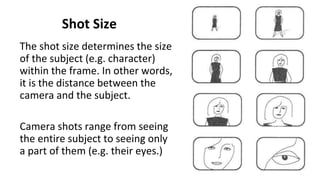
Shot Size
The shot size determines the size
of the subject (e.g. character)
within the frame. In other words,
it is the distance between the
camera and the subject.
Camera shots range from seeing
the entire subject to seeing only
a part of them (e.g. their eyes.)
SHOT SIZE
Extreme Long Shot
An extreme long shot shows the
landscape of a film.
It is often used to give information
about where the action is taking
place and to signal the
atmosphere of the film.
Long Shot
A long shot includes the full length
of the subject and some of the
surroundings.
This shot shows the link between
the characters and their
environment.
SHOT SIZE
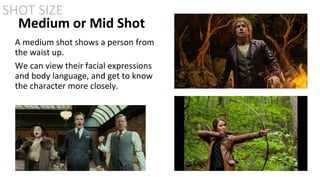
Medium or Mid Shot
A medium shot shows a person from
the waist up.
We can view their facial expressions
and body language, and get to know
the character more closely.
SHOT SIZE
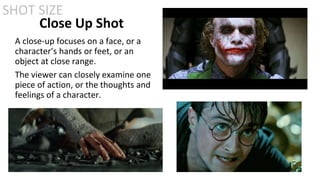
Close Up Shot
A close-up focuses on a face, or a
character’s hands or feet, or an
object at close range.
The viewer can closely examine one
piece of action, or the thoughts and
feelings of a character.
SHOT SIZE
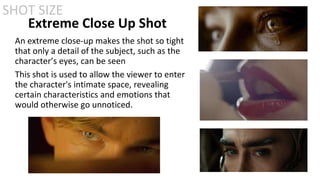
Extreme Close Up Shot
An extreme close-up makes the shot so tight
that only a detail of the subject, such as the
character’s eyes, can be seen
This shot is used to allow the viewer to enter
the character's intimate space, revealing
certain characteristics and emotions that
would otherwise go unnoticed.
SHOT SIZE
SHOT SIZE
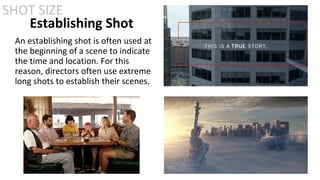
Establishing Shot
An establishing shot is often used at
the beginning of a scene to indicate
the time and location. For this
reason, directors often use extreme
long shots to establish their scenes.
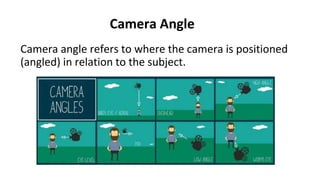
Camera Angle
Camera angle refers to where the camera is positioned
(angled) in relation to the subject.
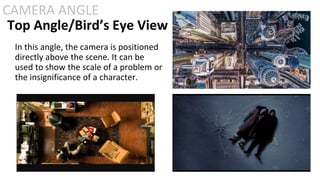
Top Angle/Bird’s Eye View
In this angle, the camera is positioned
directly above the scene. It can be
used to show the scale of a problem or
the insignificance of a character.
CAMERA ANGLE
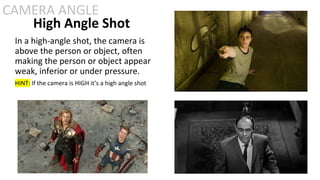
High Angle Shot
In a high-angle shot, the camera is
above the person or object, often
making the person or object appear
weak, inferior or under pressure.
HINT: If the camera is HIGH it’s a high angle shot
CAMERA ANGLE
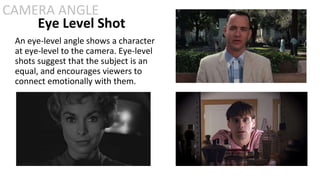
Eye Level Shot
An eye-level angle shows a character
at eye-level to the camera. Eye-level
shots suggest that the subject is an
equal, and encourages viewers to
connect emotionally with them.
CAMERA ANGLE
Low Angle Shot
In a low-angle shot, the camera is
below the person or object, usually
making that person or object seem
powerful and important.
HINT: If the camera is LOW it’s a low angle shot
CAMERA ANGLE
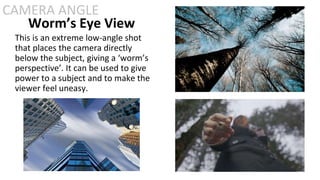
Worm’s Eye View
This is an extreme low-angle shot
that places the camera directly
below the subject, giving a ‘worm’s
perspective’. It can be used to give
power to a subject and to make the
viewer feel uneasy.
CAMERA ANGLE
Dutch Angle/Titled Shot
The camera is set at an angle. This
can create a sense of uneasiness,
disorientation or madness. It can also
be used to increase the tension in an
action scene.
CAMERA ANGLE
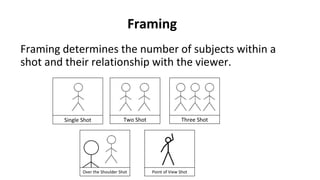
Framing
Framing determines the number of subjects within a
shot and their relationship with the viewer.
Single Shot Two Shot Three Shot
Over the Shoulder Shot Point of View Shot
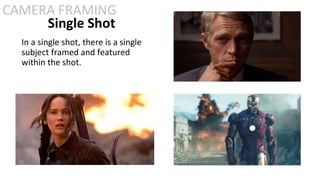
Single Shot
In a single shot, there is a single
subject framed and featured
within the shot.
CAMERA FRAMING
Two Shot
In a two shot, there are two
subjects framed and featured
within the shot.
CAMERA FRAMING
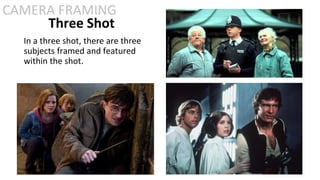
Three Shot
In a three shot, there are three
subjects framed and featured
within the shot.
CAMERA FRAMING
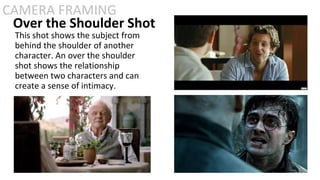
Over the Shoulder Shot
This shot shows the subject from
behind the shoulder of another
character. An over the shoulder
shot shows the relationship
between two characters and can
create a sense of intimacy.
CAMERA FRAMING
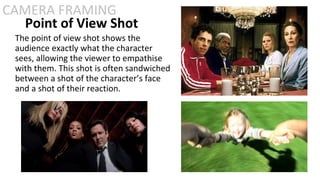
Point of View Shot
The point of view shot shows the
audience exactly what the character
sees, allowing the viewer to empathise
with them. This shot is often sandwiched
between a shot of the character’s face
and a shot of their reaction.
CAMERA FRAMING

Camera shots and angles.pptx

  • 1.
  • 2.
    Shot Size The shotsize determines the size of the subject (e.g. character) within the frame. In other words, it is the distance between the camera and the subject. Camera shots range from seeing the entire subject to seeing only a part of them (e.g. their eyes.)
  • 3.
    SHOT SIZE Extreme LongShot An extreme long shot shows the landscape of a film. It is often used to give information about where the action is taking place and to signal the atmosphere of the film.
  • 4.
    Long Shot A longshot includes the full length of the subject and some of the surroundings. This shot shows the link between the characters and their environment. SHOT SIZE
  • 5.
    Medium or MidShot A medium shot shows a person from the waist up. We can view their facial expressions and body language, and get to know the character more closely. SHOT SIZE
  • 6.
    Close Up Shot Aclose-up focuses on a face, or a character’s hands or feet, or an object at close range. The viewer can closely examine one piece of action, or the thoughts and feelings of a character. SHOT SIZE
  • 7.
    Extreme Close UpShot An extreme close-up makes the shot so tight that only a detail of the subject, such as the character’s eyes, can be seen This shot is used to allow the viewer to enter the character's intimate space, revealing certain characteristics and emotions that would otherwise go unnoticed. SHOT SIZE
  • 8.
    SHOT SIZE Establishing Shot Anestablishing shot is often used at the beginning of a scene to indicate the time and location. For this reason, directors often use extreme long shots to establish their scenes.
  • 9.
    Camera Angle Camera anglerefers to where the camera is positioned (angled) in relation to the subject.
  • 10.
    Top Angle/Bird’s EyeView In this angle, the camera is positioned directly above the scene. It can be used to show the scale of a problem or the insignificance of a character. CAMERA ANGLE
  • 11.
    High Angle Shot Ina high-angle shot, the camera is above the person or object, often making the person or object appear weak, inferior or under pressure. HINT: If the camera is HIGH it’s a high angle shot CAMERA ANGLE
  • 12.
    Eye Level Shot Aneye-level angle shows a character at eye-level to the camera. Eye-level shots suggest that the subject is an equal, and encourages viewers to connect emotionally with them. CAMERA ANGLE
  • 13.
    Low Angle Shot Ina low-angle shot, the camera is below the person or object, usually making that person or object seem powerful and important. HINT: If the camera is LOW it’s a low angle shot CAMERA ANGLE
  • 14.
    Worm’s Eye View Thisis an extreme low-angle shot that places the camera directly below the subject, giving a ‘worm’s perspective’. It can be used to give power to a subject and to make the viewer feel uneasy. CAMERA ANGLE
  • 15.
    Dutch Angle/Titled Shot Thecamera is set at an angle. This can create a sense of uneasiness, disorientation or madness. It can also be used to increase the tension in an action scene. CAMERA ANGLE
  • 16.
    Framing Framing determines thenumber of subjects within a shot and their relationship with the viewer. Single Shot Two Shot Three Shot Over the Shoulder Shot Point of View Shot
  • 17.
    Single Shot In asingle shot, there is a single subject framed and featured within the shot. CAMERA FRAMING
  • 18.
    Two Shot In atwo shot, there are two subjects framed and featured within the shot. CAMERA FRAMING
  • 19.
    Three Shot In athree shot, there are three subjects framed and featured within the shot. CAMERA FRAMING
  • 20.
    Over the ShoulderShot This shot shows the subject from behind the shoulder of another character. An over the shoulder shot shows the relationship between two characters and can create a sense of intimacy. CAMERA FRAMING
  • 21.
    Point of ViewShot The point of view shot shows the audience exactly what the character sees, allowing the viewer to empathise with them. This shot is often sandwiched between a shot of the character’s face and a shot of their reaction. CAMERA FRAMING