SHOT TYPES Alex
ALL THE SHOTS ON THE 
PRESENTATION WERE TAKEN 
BY ME TO PRACTICE THE 
SHOT TYPES.
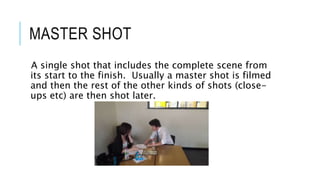
MASTER SHOT 
A single shot that includes the complete scene from 
its start to the finish. Usually a master shot is filmed 
and then the rest of the other kinds of shots (close-ups 
etc) are then shot later.
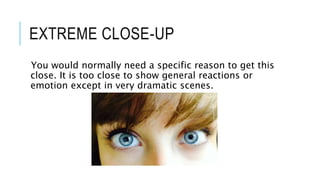
EXTREME CLOSE-UP 
You would normally need a specific reason to get this 
close. It is too close to show general reactions or 
emotion except in very dramatic scenes.
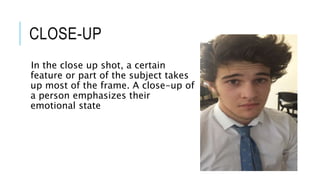
CLOSE-UP 
In the close up shot, a certain 
feature or part of the subject takes 
up most of the frame. A close-up of 
a person emphasizes their 
emotional state
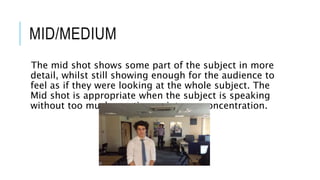
MID/MEDIUM 
The mid shot shows some part of the subject in more 
detail, whilst still showing enough for the audience to 
feel as if they were looking at the whole subject. The 
Mid shot is appropriate when the subject is speaking 
without too much emotion or intense concentration.
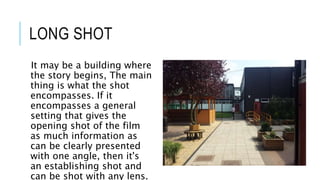
LONG SHOT 
It may be a building where 
the story begins, The main 
thing is what the shot 
encompasses. If it 
encompasses a general 
setting that gives the 
opening shot of the film 
as much information as 
can be clearly presented 
with one angle, then it's 
an establishing shot and 
can be shot with any lens.
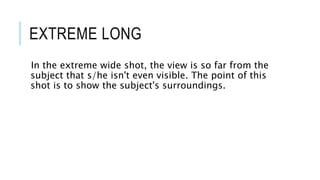
EXTREME LONG 
In the extreme wide shot, the view is so far from the 
subject that s/he isn't even visible. The point of this 
shot is to show the subject's surroundings.
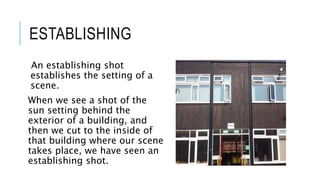
ESTABLISHING 
An establishing shot 
establishes the setting of a 
scene. 
When we see a shot of the 
sun setting behind the 
exterior of a building, and 
then we cut to the inside of 
that building where our scene 
takes place, we have seen an 
establishing shot.
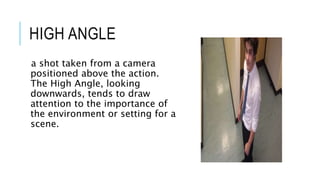
HIGH ANGLE 
a shot taken from a camera 
positioned above the action. 
The High Angle, looking 
downwards, tends to draw 
attention to the importance of 
the environment or setting for a 
scene.
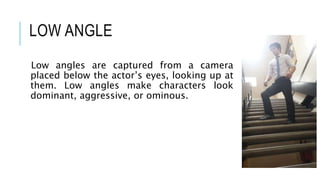
LOW ANGLE 
Low angles are captured from a camera 
placed below the actor’s eyes, looking up at 
them. Low angles make characters look 
dominant, aggressive, or ominous.
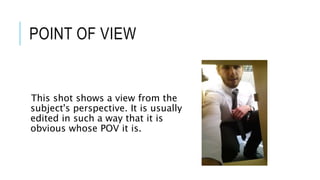
POINT OF VIEW 
This shot shows a view from the 
subject's perspective. It is usually 
edited in such a way that it is 
obvious whose POV it is.
WIDE SHOT 
In the wide shot, the subject takes up the full frame. In 
this case, Obviously the subject doesn't take up the 
whole width and height of the frame, since this is as 
close as we can get without losing any part of it.
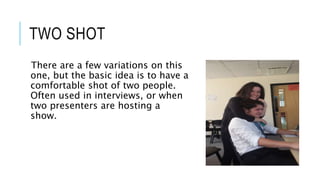
TWO SHOT 
There are a few variations on this 
one, but the basic idea is to have a 
comfortable shot of two people. 
Often used in interviews, or when 
two presenters are hosting a 
show.
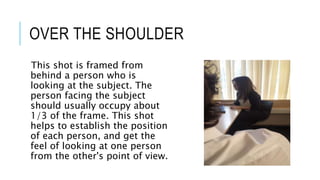
OVER THE SHOULDER 
This shot is framed from 
behind a person who is 
looking at the subject. The 
person facing the subject 
should usually occupy about 
1/3 of the frame. This shot 
helps to establish the position 
of each person, and get the 
feel of looking at one person 
from the other's point of view.
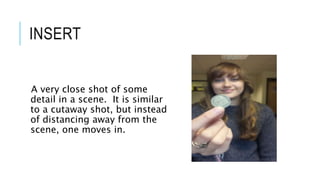
INSERT 
A very close shot of some 
detail in a scene. It is similar 
to a cutaway shot, but instead 
of distancing away from the 
scene, one moves in.

Shot types used in media

  • 1.
  • 2.
    ALL THE SHOTSON THE PRESENTATION WERE TAKEN BY ME TO PRACTICE THE SHOT TYPES.
  • 3.
    MASTER SHOT Asingle shot that includes the complete scene from its start to the finish. Usually a master shot is filmed and then the rest of the other kinds of shots (close-ups etc) are then shot later.
  • 4.
    EXTREME CLOSE-UP Youwould normally need a specific reason to get this close. It is too close to show general reactions or emotion except in very dramatic scenes.
  • 5.
    CLOSE-UP In theclose up shot, a certain feature or part of the subject takes up most of the frame. A close-up of a person emphasizes their emotional state
  • 6.
    MID/MEDIUM The midshot shows some part of the subject in more detail, whilst still showing enough for the audience to feel as if they were looking at the whole subject. The Mid shot is appropriate when the subject is speaking without too much emotion or intense concentration.
  • 7.
    LONG SHOT Itmay be a building where the story begins, The main thing is what the shot encompasses. If it encompasses a general setting that gives the opening shot of the film as much information as can be clearly presented with one angle, then it's an establishing shot and can be shot with any lens.
  • 8.
    EXTREME LONG Inthe extreme wide shot, the view is so far from the subject that s/he isn't even visible. The point of this shot is to show the subject's surroundings.
  • 9.
    ESTABLISHING An establishingshot establishes the setting of a scene. When we see a shot of the sun setting behind the exterior of a building, and then we cut to the inside of that building where our scene takes place, we have seen an establishing shot.
  • 10.
    HIGH ANGLE ashot taken from a camera positioned above the action. The High Angle, looking downwards, tends to draw attention to the importance of the environment or setting for a scene.
  • 11.
    LOW ANGLE Lowangles are captured from a camera placed below the actor’s eyes, looking up at them. Low angles make characters look dominant, aggressive, or ominous.
  • 12.
    POINT OF VIEW This shot shows a view from the subject's perspective. It is usually edited in such a way that it is obvious whose POV it is.
  • 13.
    WIDE SHOT Inthe wide shot, the subject takes up the full frame. In this case, Obviously the subject doesn't take up the whole width and height of the frame, since this is as close as we can get without losing any part of it.
  • 14.
    TWO SHOT Thereare a few variations on this one, but the basic idea is to have a comfortable shot of two people. Often used in interviews, or when two presenters are hosting a show.
  • 15.
    OVER THE SHOULDER This shot is framed from behind a person who is looking at the subject. The person facing the subject should usually occupy about 1/3 of the frame. This shot helps to establish the position of each person, and get the feel of looking at one person from the other's point of view.
  • 16.
    INSERT A veryclose shot of some detail in a scene. It is similar to a cutaway shot, but instead of distancing away from the scene, one moves in.