CAMERA 
SHOT/ANGLES
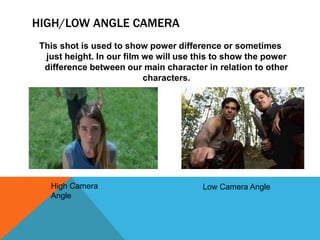
HIGH/LOW ANGLE CAMERA 
This shot is used to show power difference or sometimes 
just height. In our film we will use this to show the power 
difference between our main character in relation to other 
characters. 
High Camera 
Angle 
Low Camera Angle
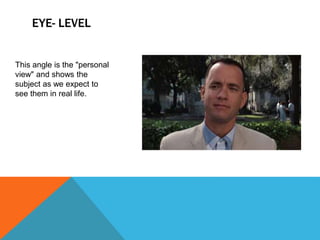
EYE- LEVEL 
This angle is the "personal 
view" and shows the 
subject as we expect to 
see them in real life.
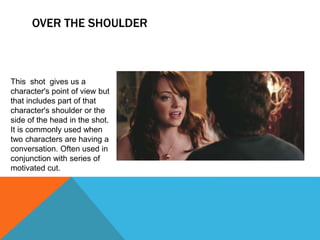
OVER THE SHOULDER 
This shot gives us a 
character's point of view but 
that includes part of that 
character's shoulder or the 
side of the head in the shot. 
It is commonly used when 
two characters are having a 
conversation. Often used in 
conjunction with series of 
motivated cut.
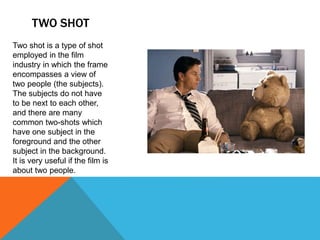
TWO SHOT 
Two shot is a type of shot 
employed in the film 
industry in which the frame 
encompasses a view of 
two people (the subjects). 
The subjects do not have 
to be next to each other, 
and there are many 
common two-shots which 
have one subject in the 
foreground and the other 
subject in the background. 
It is very useful if the film is 
about two people.
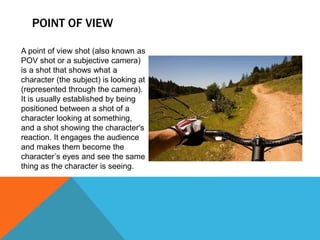
POINT OF VIEW 
A point of view shot (also known as 
POV shot or a subjective camera) 
is a shot that shows what a 
character (the subject) is looking at 
(represented through the camera). 
It is usually established by being 
positioned between a shot of a 
character looking at something, 
and a shot showing the character's 
reaction. It engages the audience 
and makes them become the 
character’s eyes and see the same 
thing as the character is seeing.
CAMERA MOVEMENT
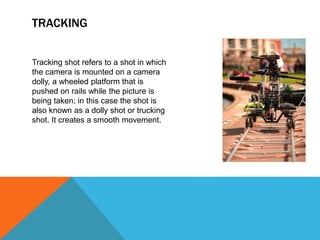
TRACKING 
Tracking shot refers to a shot in which 
the camera is mounted on a camera 
dolly, a wheeled platform that is 
pushed on rails while the picture is 
being taken; in this case the shot is 
also known as a dolly shot or trucking 
shot. It creates a smooth movement.
HAND-HELD 
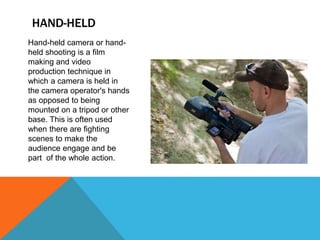
Hand-held camera or hand-held 
shooting is a film 
making and video 
production technique in 
which a camera is held in 
the camera operator's hands 
as opposed to being 
mounted on a tripod or other 
base. This is often used 
when there are fighting 
scenes to make the 
audience engage and be 
part of the whole action.
ZOOMING 
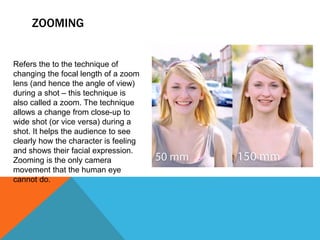
Refers the to the technique of 
changing the focal length of a zoom 
lens (and hence the angle of view) 
during a shot – this technique is 
also called a zoom. The technique 
allows a change from close-up to 
wide shot (or vice versa) during a 
shot. It helps the audience to see 
clearly how the character is feeling 
and shows their facial expression. 
Zooming is the only camera 
movement that the human eye 
cannot do.
PANNING 
panning refers to the 
rotation in a horizontal 
plane of a video camera. 
Panning a camera 
results in a motion 
similar to that of 
someone shaking their 
head from side to side. 
Panning is often 
combined with Point of 
View or establishing 
shot.

Shot types

  • 2.
  • 3.
    HIGH/LOW ANGLE CAMERA This shot is used to show power difference or sometimes just height. In our film we will use this to show the power difference between our main character in relation to other characters. High Camera Angle Low Camera Angle
  • 4.
    EYE- LEVEL Thisangle is the "personal view" and shows the subject as we expect to see them in real life.
  • 5.
    OVER THE SHOULDER This shot gives us a character's point of view but that includes part of that character's shoulder or the side of the head in the shot. It is commonly used when two characters are having a conversation. Often used in conjunction with series of motivated cut.
  • 6.
    TWO SHOT Twoshot is a type of shot employed in the film industry in which the frame encompasses a view of two people (the subjects). The subjects do not have to be next to each other, and there are many common two-shots which have one subject in the foreground and the other subject in the background. It is very useful if the film is about two people.
  • 7.
    POINT OF VIEW A point of view shot (also known as POV shot or a subjective camera) is a shot that shows what a character (the subject) is looking at (represented through the camera). It is usually established by being positioned between a shot of a character looking at something, and a shot showing the character's reaction. It engages the audience and makes them become the character’s eyes and see the same thing as the character is seeing.
  • 8.
  • 9.
    TRACKING Tracking shotrefers to a shot in which the camera is mounted on a camera dolly, a wheeled platform that is pushed on rails while the picture is being taken; in this case the shot is also known as a dolly shot or trucking shot. It creates a smooth movement.
  • 10.
    HAND-HELD Hand-held cameraor hand-held shooting is a film making and video production technique in which a camera is held in the camera operator's hands as opposed to being mounted on a tripod or other base. This is often used when there are fighting scenes to make the audience engage and be part of the whole action.
  • 11.
    ZOOMING Refers theto the technique of changing the focal length of a zoom lens (and hence the angle of view) during a shot – this technique is also called a zoom. The technique allows a change from close-up to wide shot (or vice versa) during a shot. It helps the audience to see clearly how the character is feeling and shows their facial expression. Zooming is the only camera movement that the human eye cannot do.
  • 12.
    PANNING panning refersto the rotation in a horizontal plane of a video camera. Panning a camera results in a motion similar to that of someone shaking their head from side to side. Panning is often combined with Point of View or establishing shot.