ESTABLISHING SHOT 
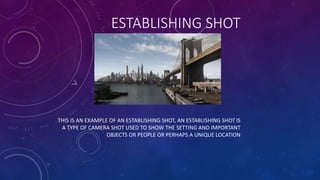
THIS IS AN EXAMPLE OF AN ESTABLISHING SHOT, AN ESTABLISHING SHOT IS 
A TYPE OF CAMERA SHOT USED TO SHOW THE SETTING AND IMPORTANT 
OBJECTS OR PEOPLE OR PERHAPS A UNIQUE LOCATION
(EWS) EXTREME WIDE SHOT 
This an (EWS) extreme wide shot In an extreme wide shot, the view is far 
away enough that a person isn't even visible. This shot is used to show 
the person's surroundings. An EWS is often used as an establishing shot
VERY WIDE SHOT (VWS) 
a wide shot is a lot closer to the person than in an extreme wide 
shot, but also a lot further away than a wide shot. The person can 
be seen but hardly. This shot is also often used as an establishing 
shot.
WIDE SHOT (WS) 
In a wide shot the persons full body is seen/ they take up the whole 
frame. A wide shot is often mistaken for wider shots e.g. a very 
wide shot.
MID SHOT (MS) 
The mid shot shows some part of a person in more detail, while 
still showing enough of them for the audience to feel as if they 
were looking at the whole person. This gives the effect that the 
audience are actually engaging with the person in the flesh.
CUTAWAY 
A cutaway or CA is a shot that is not involved in the 
current action, e.g. the shot of a cat whilst two 
people are arguing in the background.
BRIDGING SHOT 
A bridging shot is used to show that time has passed, e.g an aeroplane crossing a map, this is also useful if 
there needs to be a change in .setting
EYE-LEVEL 
• Eye level is the most common type of camera angle, as it is the real world angle people are used to, it 
shows people as we would expect to see them in real life, it’s a fairly neutral shot
HIGH ANGLE 
This is an example of a high angle; a high angle is when a 
person is shot from above, meaning that the camera is 
angled downwards to the subject, this is often used to 
make the subject look submissive or powerless
BIRDS EYE 
A birds eye shot is directly from above The scene is shown 
from directly above. This is a completely different and 
somewhat unnatural point of view which can be used for 
dramatic effect or for showing a different spatial 
perspective. 
In drama it can be used to show the positions and motions 
of different characters and objects, enabling the viewer to 
see things the characters can't.
SLANTED 
• A slanted angle is where the camera is tilted to one side on purpose so the distance/horizon is at angle. 
This creates an odd but interesting effect. This is also known as the Dutch angle, it is used to portray 
uneasiness or tension
DOLLY 
• A camera is mounted on a cart(dolly) which then moves smoothly around the a track in order to film 
something quickly or in order to film something moving e.g. a model train, car etc
PAN 
• A pan is just a horizontal movement from left to right
TRACK 
A track is similar to the dolly shot, but is often defined as a movement which stays a constant distance 
from the action going on in the scene, especially when side to side movements are used.
ZOOM 
• A zoom is when a camera makes it seem as if you are closer to the background/ zooming in
HANDHELD SHOT 
• A shot in which the camera operator holds the camera during motion to create a jerky, immediate feel.
LOCKED DOWN SHOT 
• The locked down shot is where the camera is fixed into one position whilst the action continues off-screen.
FULL SHOT 
• A full shot contains a complete view of the characters in a film/scene. From this shot, viewers can see all 
the costumes of characters and may also help to demonstrate the relationships between the characters
ELS EXTRA LONG SHOT 
• This shot shows the landscape of the film or A character who is hardly visible in the distance of a 
background.
CRANE SHOT 
A crane shot is a shot where a camera is mounted to a crane

Camera shots

  • 1.
    ESTABLISHING SHOT THISIS AN EXAMPLE OF AN ESTABLISHING SHOT, AN ESTABLISHING SHOT IS A TYPE OF CAMERA SHOT USED TO SHOW THE SETTING AND IMPORTANT OBJECTS OR PEOPLE OR PERHAPS A UNIQUE LOCATION
  • 2.
    (EWS) EXTREME WIDESHOT This an (EWS) extreme wide shot In an extreme wide shot, the view is far away enough that a person isn't even visible. This shot is used to show the person's surroundings. An EWS is often used as an establishing shot
  • 3.
    VERY WIDE SHOT(VWS) a wide shot is a lot closer to the person than in an extreme wide shot, but also a lot further away than a wide shot. The person can be seen but hardly. This shot is also often used as an establishing shot.
  • 4.
    WIDE SHOT (WS) In a wide shot the persons full body is seen/ they take up the whole frame. A wide shot is often mistaken for wider shots e.g. a very wide shot.
  • 5.
    MID SHOT (MS) The mid shot shows some part of a person in more detail, while still showing enough of them for the audience to feel as if they were looking at the whole person. This gives the effect that the audience are actually engaging with the person in the flesh.
  • 6.
    CUTAWAY A cutawayor CA is a shot that is not involved in the current action, e.g. the shot of a cat whilst two people are arguing in the background.
  • 7.
    BRIDGING SHOT Abridging shot is used to show that time has passed, e.g an aeroplane crossing a map, this is also useful if there needs to be a change in .setting
  • 8.
    EYE-LEVEL • Eyelevel is the most common type of camera angle, as it is the real world angle people are used to, it shows people as we would expect to see them in real life, it’s a fairly neutral shot
  • 9.
    HIGH ANGLE Thisis an example of a high angle; a high angle is when a person is shot from above, meaning that the camera is angled downwards to the subject, this is often used to make the subject look submissive or powerless
  • 10.
    BIRDS EYE Abirds eye shot is directly from above The scene is shown from directly above. This is a completely different and somewhat unnatural point of view which can be used for dramatic effect or for showing a different spatial perspective. In drama it can be used to show the positions and motions of different characters and objects, enabling the viewer to see things the characters can't.
  • 11.
    SLANTED • Aslanted angle is where the camera is tilted to one side on purpose so the distance/horizon is at angle. This creates an odd but interesting effect. This is also known as the Dutch angle, it is used to portray uneasiness or tension
  • 12.
    DOLLY • Acamera is mounted on a cart(dolly) which then moves smoothly around the a track in order to film something quickly or in order to film something moving e.g. a model train, car etc
  • 13.
    PAN • Apan is just a horizontal movement from left to right
  • 14.
    TRACK A trackis similar to the dolly shot, but is often defined as a movement which stays a constant distance from the action going on in the scene, especially when side to side movements are used.
  • 15.
    ZOOM • Azoom is when a camera makes it seem as if you are closer to the background/ zooming in
  • 16.
    HANDHELD SHOT •A shot in which the camera operator holds the camera during motion to create a jerky, immediate feel.
  • 17.
    LOCKED DOWN SHOT • The locked down shot is where the camera is fixed into one position whilst the action continues off-screen.
  • 18.
    FULL SHOT •A full shot contains a complete view of the characters in a film/scene. From this shot, viewers can see all the costumes of characters and may also help to demonstrate the relationships between the characters
  • 19.
    ELS EXTRA LONGSHOT • This shot shows the landscape of the film or A character who is hardly visible in the distance of a background.
  • 20.
    CRANE SHOT Acrane shot is a shot where a camera is mounted to a crane