By Gabriella ,Ewelina and Nikol
Establishing Shot 
Establishing Shot – Shows you where 
the scene is set. 
Purpose : to establish a location and 
give the viewer a rough idea of where 
the scene is set.
Long and wide Shots 
Long Shot 
A shot that depicts an entire 
character or object from head 
to foot. Not as long as an 
establishing shot. 
Purpose: 
This allows the viewer to 
understand the relationship 
between the characters and 
their environment. 
Wide Shot : Shows you 
more information about 
a event or a object. 
Purpose: 
To allow the viewer to 
see more detail/
Mid/Medium Shot 
Medium Shot 
This shows half of the body. 
The shot is taken from above 
the head to just below the 
waist. 
Purpose: 
This allows you to get to 
know the character more 
closely by viewing their facial 
expressions and body 
language.
Close up and Extreme close up shot 
Close Up 
This is a shot taken of a person’s head from just 
above the head to the top of the upper chest. It 
can also be used to film an object at close 
range. It contains little or no background. 
Purpose: 
This used to introduce a character and allows 
the character to show emotions. It can be used 
to heighten tension. 
Extreme close up shot 
This is a very close shot showing the 
detail of an object or the physical 
features of a person. 
Purpose: 
To make the viewer aware of some 
specific detail in the film. It can be 
used to heighten tension.
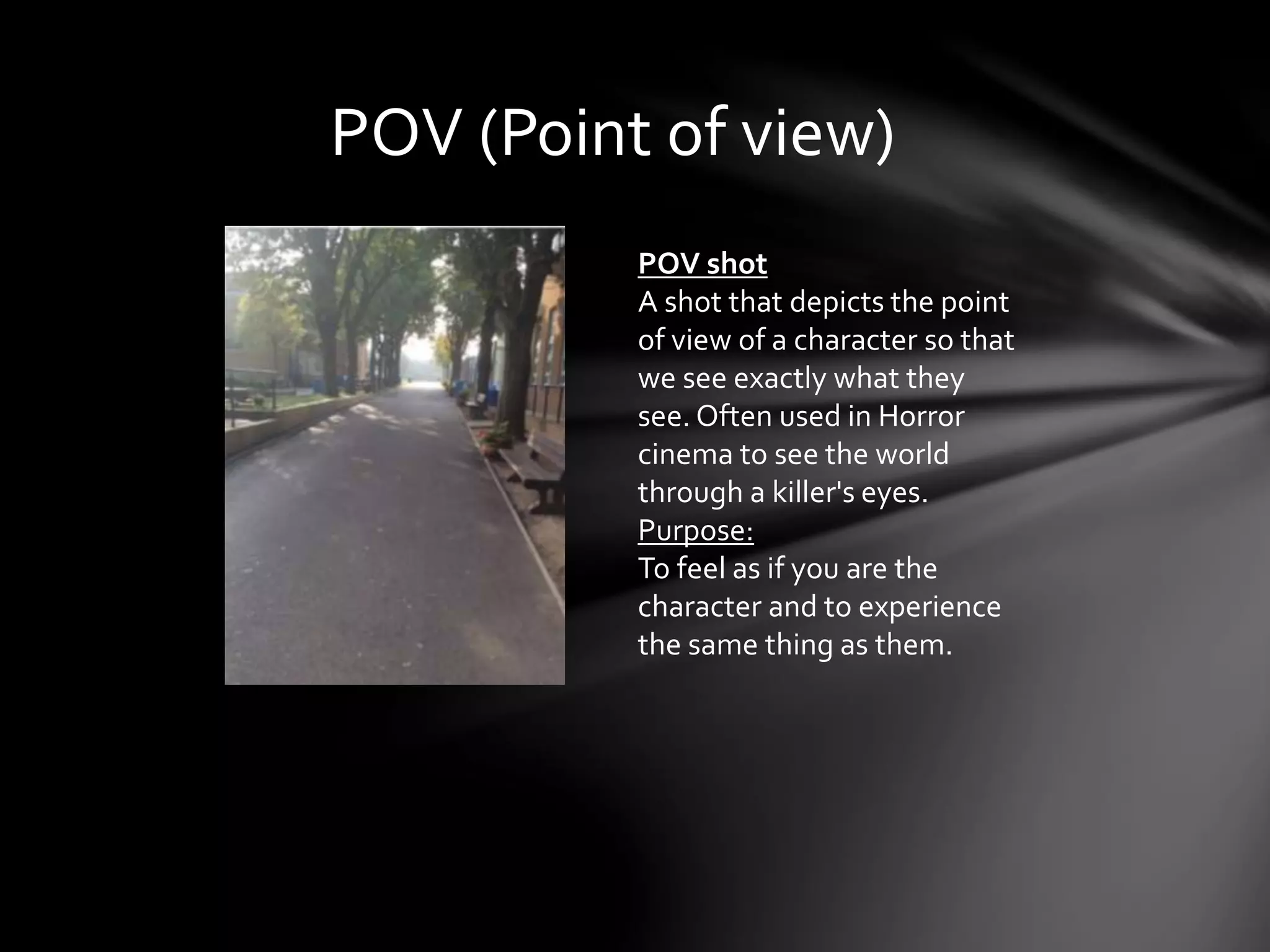
POV (Point of view) 
POV shot 
A shot that depicts the point 
of view of a character so that 
we see exactly what they 
see. Often used in Horror 
cinema to see the world 
through a killer's eyes. 
Purpose: 
To feel as if you are the 
character and to experience 
the same thing as them.
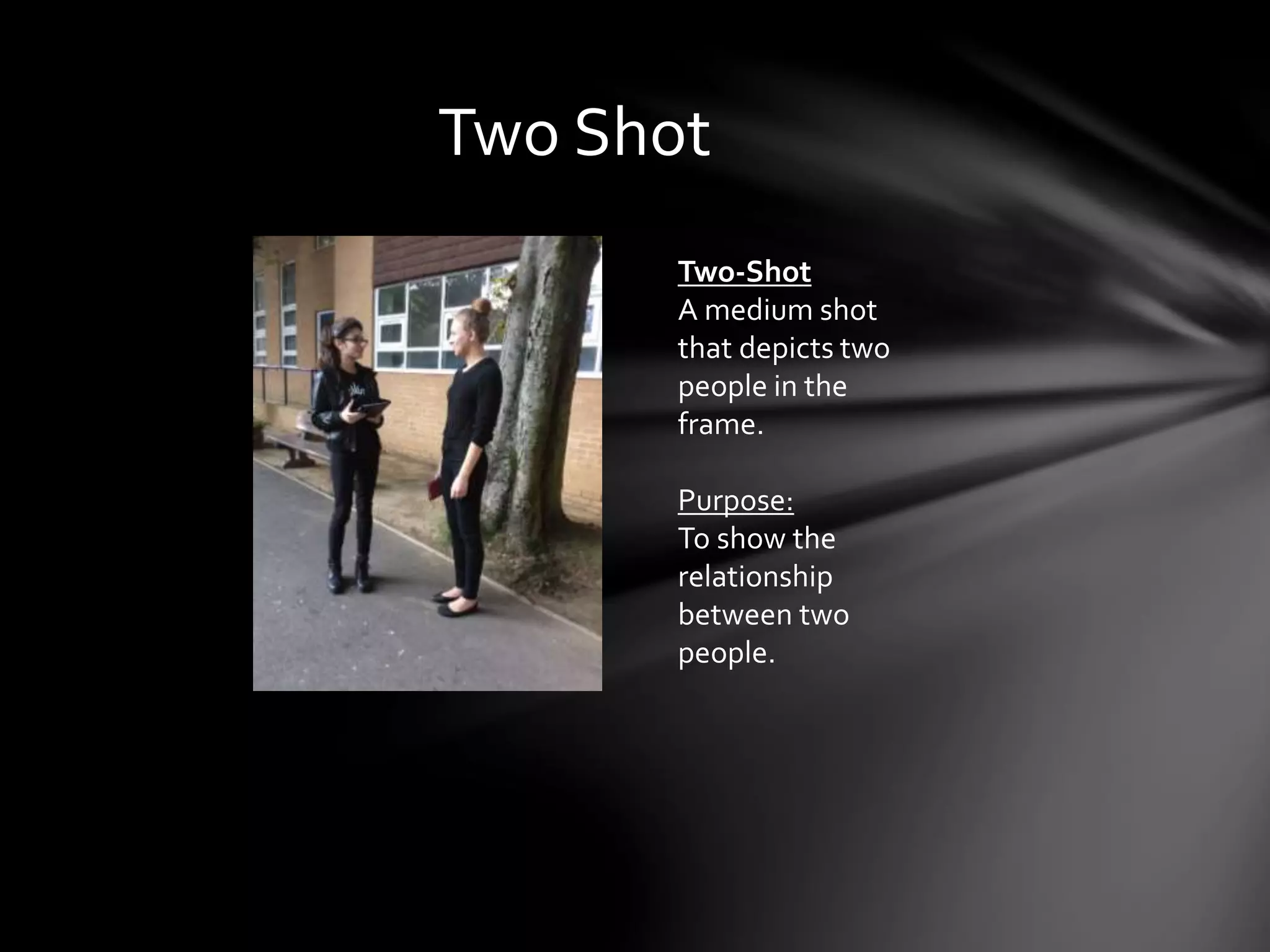
Two Shot 
Two-Shot 
A medium shot 
that depicts two 
people in the 
frame. 
Purpose: 
To show the 
relationship 
between two 
people.
Overhead and over the shoulder shots 
Overhead shot 
The camera is placed overhead or directly 
above the object or scene. 
Purpose: 
Characters and objects are made to look 
small and vulnerable. A character or 
object could be followed at a different 
speed or pace. 
Over-The-Shoulder Shot 
A shot where the camera is positioned 
behind one subject's shoulder, usually 
during a conversation. It implies a 
connection between the speakers as 
opposed to the single shot that suggests 
distance. 
Purpose: 
To show dominance for example, the 
person that is taking up most of the 
screen is the dominant one.
CAM Angles 
High ,Low and Canted/Oblique 
High Angle Shot 
The camera is placed above 
and looks down on the 
subject or object. 
Purpose: 
It is used to make the 
character look small and 
also indicate that the 
character is weak or 
inferior. 
Low Angle Shot 
The camera is placed 
looking up on the subject 
or object. 
Purpose: 
It is used to make the 
character look big and 
indicates that the 
character is powerful and 
dominant. 
Canted / oblique 
Camera angle which 
makes the shot seem 
tilted.
CAM Movement 
Pan 
Panning (movement) 
A shot where the camera 
moves continuously right to 
left or left to right. 
Purpose: 
It is often used in the 
opening scene of a movie or 
can be used to show the 
landscape from the view of 
the characters.
Tilt 
Tilt (movement) 
A shot where the 
camera moves 
continuously Up to 
Down or Down To Up 
Purpose: 
It is used to show the 
character from head to 
toe and can emphasize 
size. It can also indicate 
speed and reaction.
Track 
Tracking (movement) 
The camera moves along with the actors or 
the action. The camera is usually on wheels. 
Purpose: 
It engages the viewer in the action where 
they can feel part of it.
Zoom and reverse zoom 
Zoom and Reverse zoom 
The camera moves towards or away from a particular 
object. 
Purpose: 
It is used to make objects appear closer or further away.
Dolly 
Dolly (movement) 
The camera moves towards or away 
from the character. The camera is often 
placed on wheels to allow for a smooth 
movement. 
Purpose: 
It allows you to follow the characters or 
the action, from one place to another.
Composition 
Shallow focus and Deep focus 
Shallow focus (composition) 
The opposite of deep focus, where the depth 
of field is smaller keeping only one plane in 
sharp focus. 
Deep Focus (composition) 
A shot that keeps the foreground, middle 
ground and background ALL in sharp 
focus.
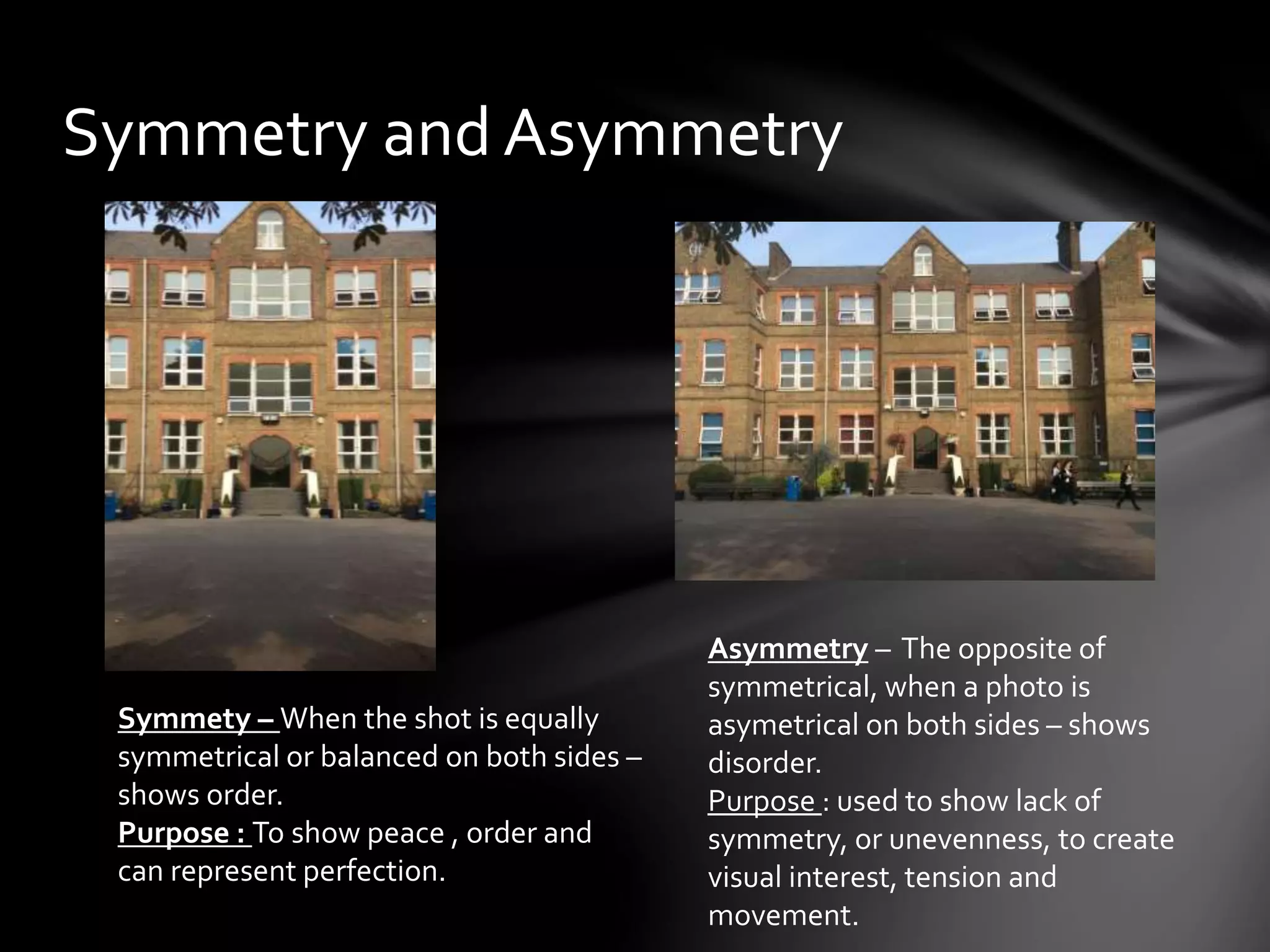
Symmetry and Asymmetry 
Asymmetry – The opposite of 
symmetrical, when a photo is 
asymetrical on both sides – shows 
disorder. 
Purpose : used to show lack of 
symmetry, or unevenness, to create 
visual interest, tension and 
movement. 
Symmety – When the shot is equally 
symmetrical or balanced on both sides – 
shows order. 
Purpose : To show peace , order and 
can represent perfection.
Balance and Rule of thirds 
The rule of thirds 
(composition) 
Is a concept in video and 
film production in which 
the frame is divided into 
into nine imaginary 
sections.. This creates 
reference points which act 
as guides for framing the 
image 
Balance 
The way we carefully place 
objects or subjects in a 
frame to show balance. 
Eg. Putting colours that 
look well together into a 
frame.
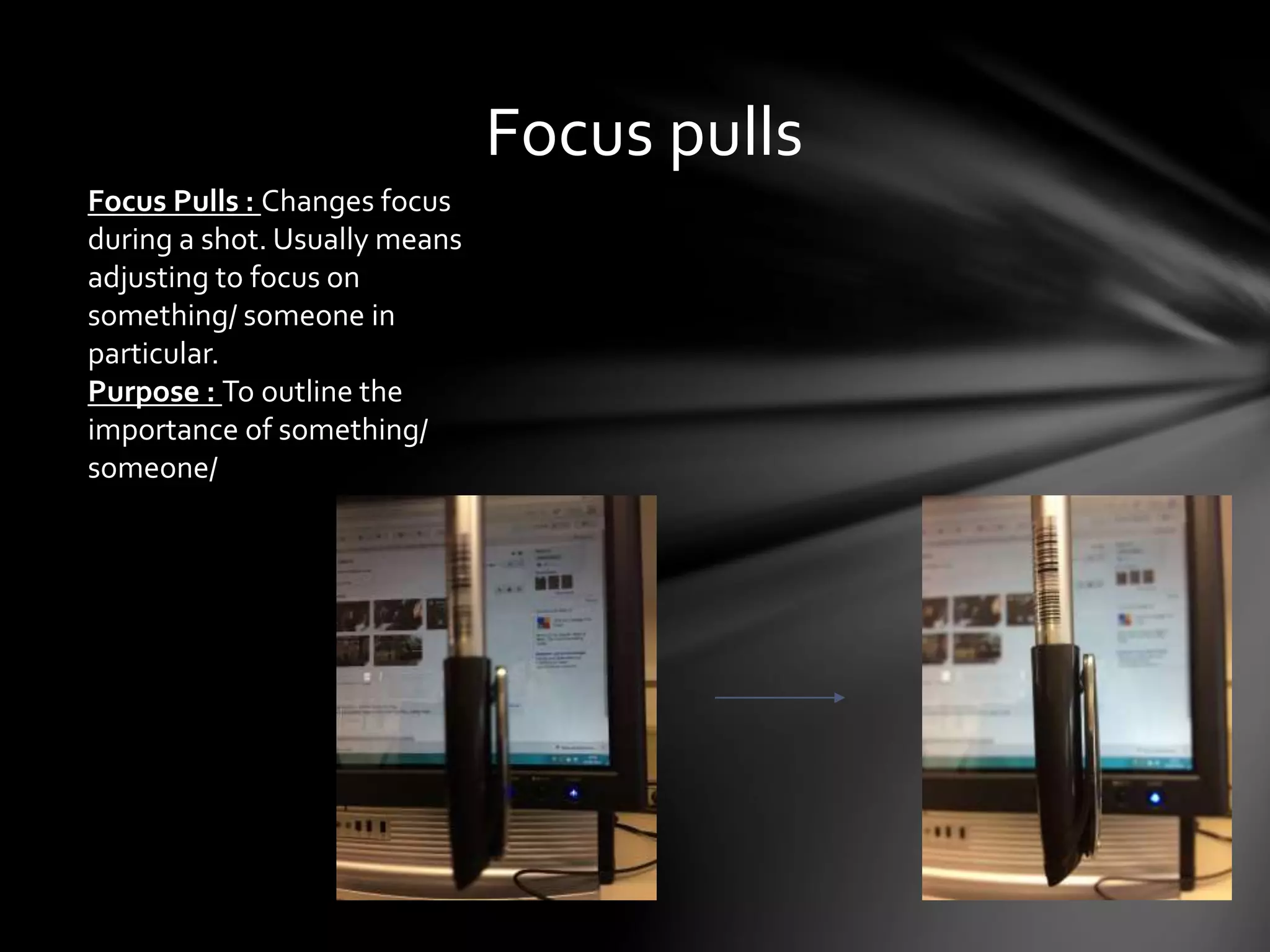
Focus pulls 
Focus Pulls : Changes focus 
during a shot. Usually means 
adjusting to focus on 
something/ someone in 
particular. 
Purpose : To outline the 
importance of something/ 
someone/

Cam samc powerpoint media

  • 1.
  • 2.
    Establishing Shot EstablishingShot – Shows you where the scene is set. Purpose : to establish a location and give the viewer a rough idea of where the scene is set.
  • 3.
    Long and wideShots Long Shot A shot that depicts an entire character or object from head to foot. Not as long as an establishing shot. Purpose: This allows the viewer to understand the relationship between the characters and their environment. Wide Shot : Shows you more information about a event or a object. Purpose: To allow the viewer to see more detail/
  • 4.
    Mid/Medium Shot MediumShot This shows half of the body. The shot is taken from above the head to just below the waist. Purpose: This allows you to get to know the character more closely by viewing their facial expressions and body language.
  • 5.
    Close up andExtreme close up shot Close Up This is a shot taken of a person’s head from just above the head to the top of the upper chest. It can also be used to film an object at close range. It contains little or no background. Purpose: This used to introduce a character and allows the character to show emotions. It can be used to heighten tension. Extreme close up shot This is a very close shot showing the detail of an object or the physical features of a person. Purpose: To make the viewer aware of some specific detail in the film. It can be used to heighten tension.
  • 6.
    POV (Point ofview) POV shot A shot that depicts the point of view of a character so that we see exactly what they see. Often used in Horror cinema to see the world through a killer's eyes. Purpose: To feel as if you are the character and to experience the same thing as them.
  • 7.
    Two Shot Two-Shot A medium shot that depicts two people in the frame. Purpose: To show the relationship between two people.
  • 8.
    Overhead and overthe shoulder shots Overhead shot The camera is placed overhead or directly above the object or scene. Purpose: Characters and objects are made to look small and vulnerable. A character or object could be followed at a different speed or pace. Over-The-Shoulder Shot A shot where the camera is positioned behind one subject's shoulder, usually during a conversation. It implies a connection between the speakers as opposed to the single shot that suggests distance. Purpose: To show dominance for example, the person that is taking up most of the screen is the dominant one.
  • 9.
    CAM Angles High,Low and Canted/Oblique High Angle Shot The camera is placed above and looks down on the subject or object. Purpose: It is used to make the character look small and also indicate that the character is weak or inferior. Low Angle Shot The camera is placed looking up on the subject or object. Purpose: It is used to make the character look big and indicates that the character is powerful and dominant. Canted / oblique Camera angle which makes the shot seem tilted.
  • 10.
    CAM Movement Pan Panning (movement) A shot where the camera moves continuously right to left or left to right. Purpose: It is often used in the opening scene of a movie or can be used to show the landscape from the view of the characters.
  • 11.
    Tilt Tilt (movement) A shot where the camera moves continuously Up to Down or Down To Up Purpose: It is used to show the character from head to toe and can emphasize size. It can also indicate speed and reaction.
  • 12.
    Track Tracking (movement) The camera moves along with the actors or the action. The camera is usually on wheels. Purpose: It engages the viewer in the action where they can feel part of it.
  • 13.
    Zoom and reversezoom Zoom and Reverse zoom The camera moves towards or away from a particular object. Purpose: It is used to make objects appear closer or further away.
  • 14.
    Dolly Dolly (movement) The camera moves towards or away from the character. The camera is often placed on wheels to allow for a smooth movement. Purpose: It allows you to follow the characters or the action, from one place to another.
  • 15.
    Composition Shallow focusand Deep focus Shallow focus (composition) The opposite of deep focus, where the depth of field is smaller keeping only one plane in sharp focus. Deep Focus (composition) A shot that keeps the foreground, middle ground and background ALL in sharp focus.
  • 16.
    Symmetry and Asymmetry Asymmetry – The opposite of symmetrical, when a photo is asymetrical on both sides – shows disorder. Purpose : used to show lack of symmetry, or unevenness, to create visual interest, tension and movement. Symmety – When the shot is equally symmetrical or balanced on both sides – shows order. Purpose : To show peace , order and can represent perfection.
  • 17.
    Balance and Ruleof thirds The rule of thirds (composition) Is a concept in video and film production in which the frame is divided into into nine imaginary sections.. This creates reference points which act as guides for framing the image Balance The way we carefully place objects or subjects in a frame to show balance. Eg. Putting colours that look well together into a frame.
  • 18.
    Focus pulls FocusPulls : Changes focus during a shot. Usually means adjusting to focus on something/ someone in particular. Purpose : To outline the importance of something/ someone/