SHOCK
By : Dr. S.KRISHNA REDDY(JR).
MODERATOR : Dr. R. ASHOK REDDY M.S.
Prof and HOD dept of General Surgery.
OVERVIEW
â—Ź Definition.
â—Ź Physiology .
â—Ź Pathophysiology.
â—Ź Types of shock.
â—Ź Approach to a shock patient.
Why do we need to know about shock??
â—Ź SHOCK IS MOST COMMON AND MOST IMPORTANT
CAUSE OF DEATH IN SURGICAL PATIENTS.
DEFINITION
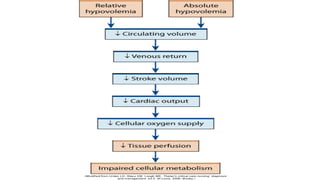
Shock is a systemic state of low tissue
perfusion that is inadequate for normal
cellular respiration.
PHYSIOLOGY
â—Ź Cell is the structural and functional unit of the body.
â—Ź For the functioning of cell - oxygen and glucose is required.
â—Ź Perfusion depends on - pump,vessels,Volume.
Pathophysiology
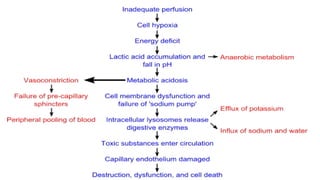
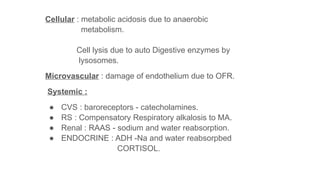
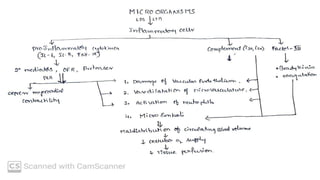
Cellular : metabolic acidosis due to anaerobic
metabolism.
Cell lysis due to auto Digestive enzymes by
lysosomes.
Microvascular : damage of endothelium due to OFR.
Systemic :
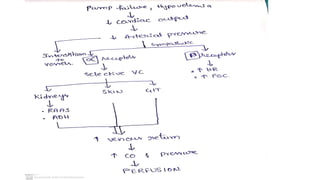
â—Ź CVS : baroreceptors - catecholamines.
â—Ź RS : Compensatory Respiratory alkalosis to MA.
â—Ź Renal : RAAS - sodium and water reabsorption.
â—Ź ENDOCRINE : ADH -Na and water reabsorpbed
CORTISOL.
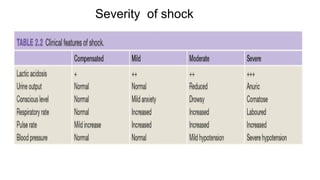
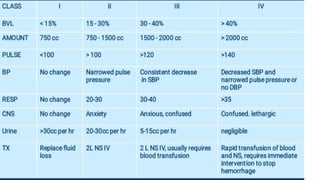
Severity of shock
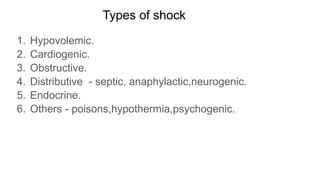
Types of shock
1. Hypovolemic.
2. Cardiogenic.
3. Obstructive.
4. Distributive - septic, anaphylactic,neurogenic.
5. Endocrine.
6. Others - poisons,hypothermia,psychogenic.
HYPOVOLEMIC SHOCK
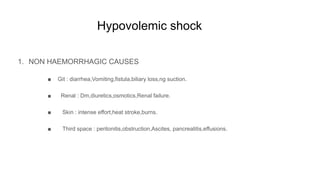
Hypovolemic shock
1. NON HAEMORRHAGIC CAUSES
â–  Git : diarrhea,Vomiting,fistula,biliary loss,ng suction.
â–  Renal : Dm,diuretics,osmotics,Renal failure.
â–  Skin : intense effort,heat stroke,burns.
â–  Third space : peritonitis,obstruction,Ascites, pancreatitis,effusions.
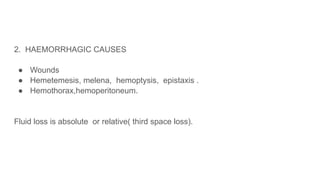
2. HAEMORRHAGIC CAUSES
â—Ź Wounds
â—Ź Hemetemesis, melena, hemoptysis, epistaxis .
â—Ź Hemothorax,hemoperitoneum.
Fluid loss is absolute or relative( third space loss).
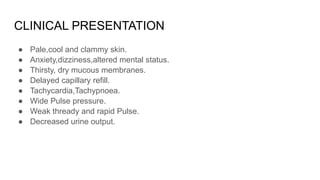
CLINICAL PRESENTATION
â—Ź Pale,cool and clammy skin.
â—Ź Anxiety,dizziness,altered mental status.
â—Ź Thirsty, dry mucous membranes.
â—Ź Delayed capillary refill.
â—Ź Tachycardia,Tachypnoea.
â—Ź Wide Pulse pressure.
â—Ź Weak thready and rapid Pulse.
â—Ź Decreased urine output.
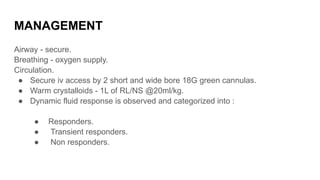
MANAGEMENT
Airway - secure.
Breathing - oxygen supply.
Circulation.
â—Ź Secure iv access by 2 short and wide bore 18G green cannulas.
â—Ź Warm crystalloids - 1L of RL/NS @20ml/kg.
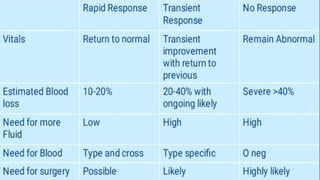
â—Ź Dynamic fluid response is observed and categorized into :
â—Ź Responders.
â—Ź Transient responders.
â—Ź Non responders.
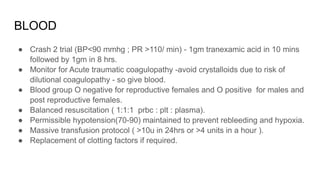
BLOOD
â—Ź Crash 2 trial (BP<90 mmhg ; PR >110/ min) - 1gm tranexamic acid in 10 mins
followed by 1gm in 8 hrs.
â—Ź Monitor for Acute traumatic coagulopathy -avoid crystalloids due to risk of
dilutional coagulopathy - so give blood.
â—Ź Blood group O negative for reproductive females and O positive for males and
post reproductive females.
â—Ź Balanced resuscitation ( 1:1:1 prbc : plt : plasma).
â—Ź Permissible hypotension(70-90) maintained to prevent rebleeding and hypoxia.
â—Ź Massive transfusion protocol ( >10u in 24hrs or >4 units in a hour ).
â—Ź Replacement of clotting factors if required.
STOP BLEEDING
â—Ź External - pressure, splinting, binders,tourniquet.
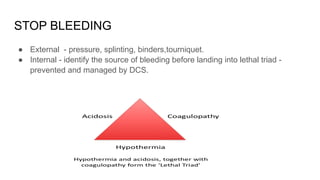
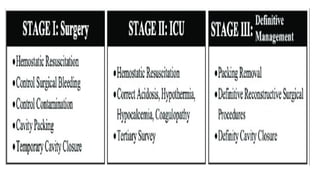
â—Ź Internal - identify the source of bleeding before landing into lethal triad -
prevented and managed by DCS.
CARDIOGENIC SHOCK
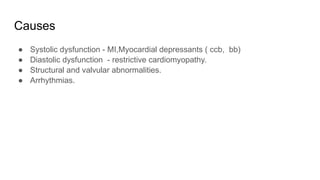
Causes
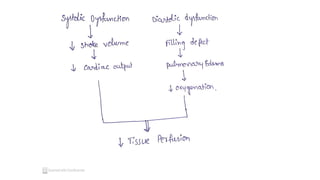
â—Ź Systolic dysfunction - MI,Myocardial depressants ( ccb, bb)
â—Ź Diastolic dysfunction - restrictive cardiomyopathy.
â—Ź Structural and valvular abnormalities.
â—Ź Arrhythmias.
Clinical presentation
â—Ź Pallor,cold and clammy skin.
â—Ź Central and peripheral cyanosis.
â—Ź Tachypnoea, tachycardia, hypotension.
â—Ź Increased jvp,dyspnoea.
â—Ź Confused,agitated.
â—Ź Decreased urine output.
MANAGEMENT
â—Ź Oxygen therapy.
â—Ź Inotropes
Norepinephrine - increase DBP there by increasing coronary perfusion.
Dopamine .
Dobutamine.
â—Ź Refractory cases - IABP,Ventricular assist device.
â—Ź Diuretics - helps in decreasing preload.
OBSTRUCTIVE SHOCK
Cause and management
â—Ź Cardiac tamponade.
â—Ź Constrictive pericarditis.
â—Ź Tension pneumothorax.
â—Ź Massive pulmonary embolism.
â—Ź Aortic stenosis.
â—Ź Pericardiocentesis.
â—Ź Pericardial stripping.
â—Ź Needle/icd.
â—Ź Thrombolysis / embolectomy
â—Ź Trans aortic valve repair.
SEPTIC SHOCK
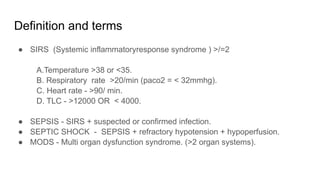
Definition and terms
â—Ź SIRS (Systemic inflammatoryresponse syndrome ) >/=2
A.Temperature >38 or <35.
B. Respiratory rate >20/min (paco2 = < 32mmhg).
C. Heart rate - >90/ min.
D. TLC - >12000 OR < 4000.
â—Ź SEPSIS - SIRS + suspected or confirmed infection.
â—Ź SEPTIC SHOCK - SEPSIS + refractory hypotension + hypoperfusion.
â—Ź MODS - Multi organ dysfunction syndrome. (>2 organ systems).
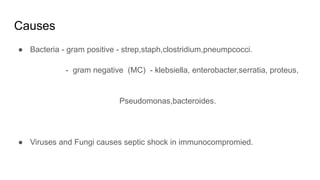
Causes
â—Ź Bacteria - gram positive - strep,staph,clostridium,pneumpcocci.
- gram negative (MC) - klebsiella, enterobacter,serratia, proteus,
Pseudomonas,bacteroides.
â—Ź Viruses and Fungi causes septic shock in immunocompromied.
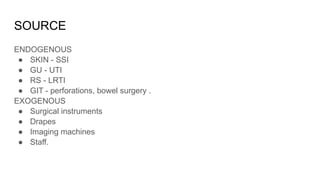
SOURCE
ENDOGENOUS
â—Ź SKIN - SSI
â—Ź GU - UTI
â—Ź RS - LRTI
â—Ź GIT - perforations, bowel surgery .
EXOGENOUS
â—Ź Surgical instruments
â—Ź Drapes
â—Ź Imaging machines
â—Ź Staff.
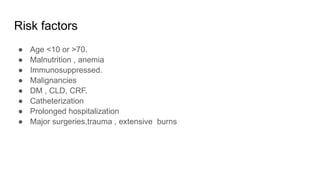
Risk factors
â—Ź Age <10 or >70.
â—Ź Malnutrition , anemia
â—Ź Immunosuppressed.
â—Ź Malignancies
â—Ź DM , CLD, CRF.
â—Ź Catheterization
â—Ź Prolonged hospitalization
â—Ź Major surgeries,trauma , extensive burns
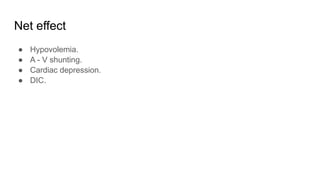
Net effect
â—Ź Hypovolemia.
â—Ź A - V shunting.
â—Ź Cardiac depression.
â—Ź DIC.
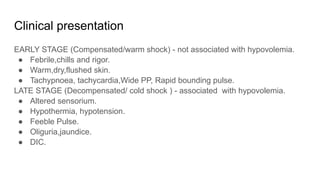
Clinical presentation
EARLY STAGE (Compensated/warm shock) - not associated with hypovolemia.
â—Ź Febrile,chills and rigor.
â—Ź Warm,dry,flushed skin.
â—Ź Tachypnoea, tachycardia,Wide PP, Rapid bounding pulse.
LATE STAGE (Decompensated/ cold shock ) - associated with hypovolemia.
â—Ź Altered sensorium.
â—Ź Hypothermia, hypotension.
â—Ź Feeble Pulse.
â—Ź Oliguria,jaundice.
â—Ź DIC.
Investigations
â—Ź Localise septic focus by thorough examination.
â—Ź Blood /sputum /urine /wound /endocervical /csf - culture and sensitivity.
â—Ź Chest/abdominal X-Ray.
â—Ź Usg.
â—Ź CT scan.
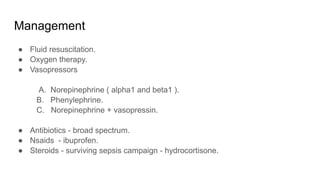
Management
â—Ź Fluid resuscitation.
â—Ź Oxygen therapy.
â—Ź Vasopressors
A. Norepinephrine ( alpha1 and beta1 ).
B. Phenylephrine.
C. Norepinephrine + vasopressin.
â—Ź Antibiotics - broad spectrum.
â—Ź Nsaids - ibuprofen.
â—Ź Steroids - surviving sepsis campaign - hydrocortisone.
â—Ź OFR Scavengers - sod,vit-c,allopurinol, alpha tocopherol.
â—Ź Glycemic control.
â—Ź Prophylaxis - AT III , Recombinant human activated protein- C.
â—Ź Removing septic focii - debridement, drainage, definitive surgery.
Complications
â—Ź ARDS.
â—Ź ARF.
â—Ź DIC.
â—Ź ENCEPHALOPATHY.
â—Ź LIVER FAILURE.
â—Ź MODS.
â—Ź DEATH.
Poor prognostic factors
â—Ź Advanced age.
â—Ź Immunosuppression.
â—Ź Resistant organism.
â—Ź Level of IL-6.
â—Ź Need for inotropes >24 hrs.
â—Ź Mods despite Treatment.
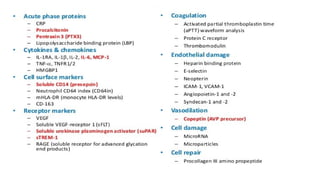
Markers of sepsis
â—Ź Procalcitonin
a. Value of >2.0 IU/ml suggests severe sepsis.
b. Best marker of sepsis.
c. Best guide of antibiotic treatment.
â—Ź CRP. - highly sensitive.
â—Ź qSOFA Score : quick sequential organ failure assessment score.
A. Respiratory rate - > 22 / min.
B. Confused mental status.
C. BP - < 100 mmhg.
A score of >2 suggests poor outcome.
SURVIVING SEPSIS GUIDELINES : Parameters to be met in first 6 hrs.
â—Ź CVP - 8 to 12.
â—Ź MAP - >/= 65 mmhg.
â—Ź URINE OUTPUT - >/= O.5 ml/kg/hr.
â—Ź MVOS - 65%.
â—Ź SVC Oxygen saturation - 70%.
Prevention
â—Ź Early recognition.
â—Ź Prompt treatment of infection.
â—Ź Meticulous surgical technique.
â—Ź Pre-op antibiotics.
â—Ź Aseptic techniques.
â—Ź Sterilization of equipment.
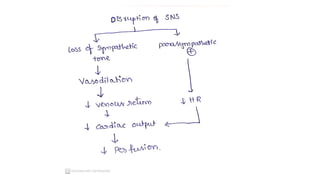
NEUROGENIC SHOCK
Causes
â—Ź High cervical spinal cord injury.
â—Ź Cephalad migration of spinal anesthesia.
â—Ź Deep GA (Depress vasomotor tone).
â—Ź Head injury.
Clinical presentation
â—Ź Paralysis.
â—Ź Hypotension.
â—Ź Bradycardia.
â—Ź Hypothermia.
â—Ź Warm and dry skin.
Management
â—Ź Spinal cord stability.
â—Ź Vasopressors.
â—Ź Atropine.
â—Ź Monitor hypothermia.
ENDOCRINE SHOCK
â—Ź Hypothyroidism - decrease cardiac output - levothyroxine.
â—Ź Hyperthyroidism - reversible cardiomyopathy - methimazole,ptu.
â—Ź Acute adrenal insufficiency - steroids.
A. Not tapered.
B. Surgery for pt on corticosteroid.
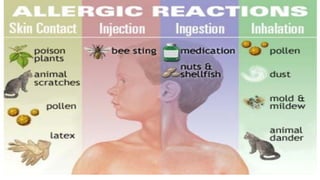
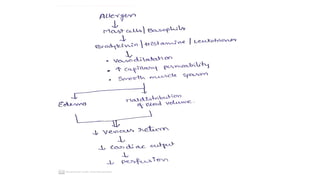
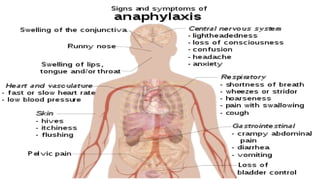
ANAPHYLACTIC SHOCK
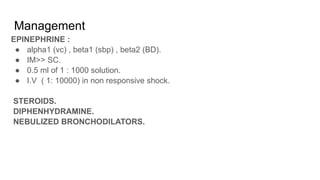
Management
EPINEPHRINE :
â—Ź alpha1 (vc) , beta1 (sbp) , beta2 (BD).
â—Ź IM>> SC.
â—Ź 0.5 ml of 1 : 1000 solution.
â—Ź I.V ( 1: 10000) in non responsive shock.
STEROIDS.
DIPHENHYDRAMINE.
NEBULIZED BRONCHODILATORS.
Approach to a shock patient
â—Ź History.
â—Ź Physical examination .
â—Ź Investigations .
â—Ź Diagnosis and management.
â—Ź Parameters.
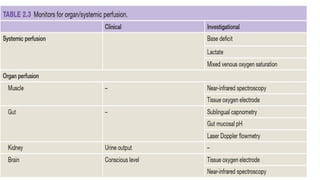
â—Ź Monitoring of shock.
â—Ź End points of resuscitation.
HISTORY
â—Ź Trauma
â—Ź Bleeding
â—Ź Fluid loss
â—Ź Fever and hypothermia.
â—Ź Chest pain, sob
â—Ź Allergen exposure
â—Ź Drugs
â—Ź Menstrual
PHYSICAL EXAMINATION
â—Ź GPE.
â—Ź GCS.
â—Ź Peripheries.
â—Ź Vital signs.
â—Ź Jvp.
â—Ź CVS
â—Ź RS
â—Ź Abdomen
â—Ź Rectal
â—Ź CNS
INVESTIGATIONS
â—Ź CBP, BGT, SCREENING.
â—Ź RFT.
â—Ź LFT.
â—Ź URINALYSIS .
â—Ź COAGULATION STUDIES .
â—Ź Glucose,lactate,calcium.
â—Ź ECG.
â—Ź CHEST X-RAY.
â—Ź PREGNANCY TEST.
â—Ź ABG.
â—Ź E- FAST.
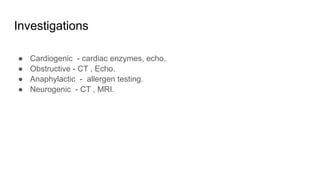
Investigations
â—Ź Cardiogenic - cardiac enzymes, echo.
â—Ź Obstructive - CT , Echo.
â—Ź Anaphylactic - allergen testing.
â—Ź Neurogenic - CT , MRI.
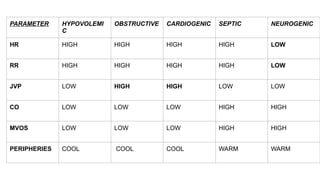
PARAMETER HYPOVOLEMI
C
OBSTRUCTIVE CARDIOGENIC SEPTIC NEUROGENIC
HR HIGH HIGH HIGH HIGH LOW
RR HIGH HIGH HIGH HIGH LOW
JVP LOW HIGH HIGH LOW LOW
CO LOW LOW LOW HIGH HIGH
MVOS LOW LOW LOW HIGH HIGH
PERIPHERIES COOL COOL COOL WARM WARM
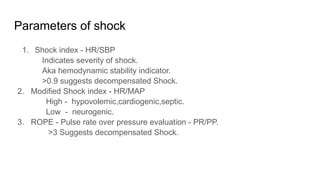
Parameters of shock
1. Shock index - HR/SBP
Indicates severity of shock.
Aka hemodynamic stability indicator.
>0.9 suggests decompensated Shock.
2. Modified Shock index - HR/MAP
High - hypovolemic,cardiogenic,septic.
Low - neurogenic.
3. ROPE - Pulse rate over pressure evaluation - PR/PP.
>3 Suggests decompensated Shock.
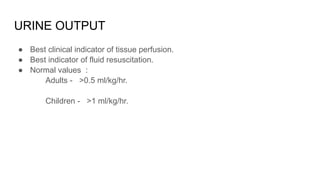
URINE OUTPUT
â—Ź Best clinical indicator of tissue perfusion.
â—Ź Best indicator of fluid resuscitation.
â—Ź Normal values :
Adults - >0.5 ml/kg/hr.
Children - >1 ml/kg/hr.
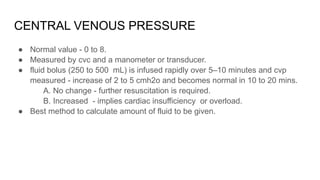
CENTRAL VENOUS PRESSURE
â—Ź Normal value - 0 to 8.
â—Ź Measured by cvc and a manometer or transducer.
● fluid bolus (250 to 500 mL) is infused rapidly over 5–10 minutes and cvp
measured - increase of 2 to 5 cmh2o and becomes normal in 10 to 20 mins.
A. No change - further resuscitation is required.
B. Increased - implies cardiac insufficiency or overload.
â—Ź Best method to calculate amount of fluid to be given.
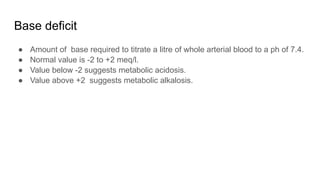
Base deficit
â—Ź Amount of base required to titrate a litre of whole arterial blood to a ph of 7.4.
â—Ź Normal value is -2 to +2 meq/l.
â—Ź Value below -2 suggests metabolic acidosis.
â—Ź Value above +2 suggests metabolic alkalosis.
Serum Lactate
â—Ź Best lab value to monitor tissue perfusion.
â—Ź Normal lactate value is 0.5 to 1 mmol/l.
â—Ź Value of <2 ~ good resuscitation.
â—Ź Value of >5 ~ bad resuscitation.
â—Ź Best to look for git and muscle perfusion.
Mixed venous oxygen saturation
â—Ź The percentage saturation of oxygen returning to the heart from the body is a
measure of the oxygen delivery and extraction by the tissues.
â—Ź Measured in blood drawn from Central lines in right atrium or SVC.
â—Ź Normal range - 50 to 70 %.
â—Ź Low Mvos - hypovolemic and cardiogenic shocks.
â—Ź High Mvos - septic and neurogenic.
END POINTS OF RESUSCITATION
â—Ź State of normal vital signs and continued underper fusion is termed -occult
hypoperfusion.
â—Ź Time spent in this state proportional to morbidity and mortality.
â—Ź Base deficit,lactate, Mvos are best measures to end resuscitation rather than
relying on vital signs.
Shock is a momentary
pause in the act of death.
SHOCk ppt new surgery class from baily updated

SHOCk ppt new surgery class from baily updated

  • 1.
    SHOCK By : Dr.S.KRISHNA REDDY(JR). MODERATOR : Dr. R. ASHOK REDDY M.S. Prof and HOD dept of General Surgery.
  • 2.
    OVERVIEW â—Ź Definition. â—Ź Physiology. â—Ź Pathophysiology. â—Ź Types of shock. â—Ź Approach to a shock patient.
  • 3.
    Why do weneed to know about shock?? â—Ź SHOCK IS MOST COMMON AND MOST IMPORTANT CAUSE OF DEATH IN SURGICAL PATIENTS.
  • 4.
    DEFINITION Shock is asystemic state of low tissue perfusion that is inadequate for normal cellular respiration.
  • 5.
    PHYSIOLOGY â—Ź Cell isthe structural and functional unit of the body. â—Ź For the functioning of cell - oxygen and glucose is required. â—Ź Perfusion depends on - pump,vessels,Volume.
  • 6.
  • 9.
    Cellular : metabolicacidosis due to anaerobic metabolism. Cell lysis due to auto Digestive enzymes by lysosomes. Microvascular : damage of endothelium due to OFR. Systemic : â—Ź CVS : baroreceptors - catecholamines. â—Ź RS : Compensatory Respiratory alkalosis to MA. â—Ź Renal : RAAS - sodium and water reabsorption. â—Ź ENDOCRINE : ADH -Na and water reabsorpbed CORTISOL.
  • 10.
  • 11.
    Types of shock 1.Hypovolemic. 2. Cardiogenic. 3. Obstructive. 4. Distributive - septic, anaphylactic,neurogenic. 5. Endocrine. 6. Others - poisons,hypothermia,psychogenic.
  • 12.
  • 13.
    Hypovolemic shock 1. NONHAEMORRHAGIC CAUSES â–  Git : diarrhea,Vomiting,fistula,biliary loss,ng suction. â–  Renal : Dm,diuretics,osmotics,Renal failure. â–  Skin : intense effort,heat stroke,burns. â–  Third space : peritonitis,obstruction,Ascites, pancreatitis,effusions.
  • 14.
    2. HAEMORRHAGIC CAUSES â—ŹWounds â—Ź Hemetemesis, melena, hemoptysis, epistaxis . â—Ź Hemothorax,hemoperitoneum. Fluid loss is absolute or relative( third space loss).
  • 17.
    CLINICAL PRESENTATION â—Ź Pale,cooland clammy skin. â—Ź Anxiety,dizziness,altered mental status. â—Ź Thirsty, dry mucous membranes. â—Ź Delayed capillary refill. â—Ź Tachycardia,Tachypnoea. â—Ź Wide Pulse pressure. â—Ź Weak thready and rapid Pulse. â—Ź Decreased urine output.
  • 18.
    MANAGEMENT Airway - secure. Breathing- oxygen supply. Circulation. â—Ź Secure iv access by 2 short and wide bore 18G green cannulas. â—Ź Warm crystalloids - 1L of RL/NS @20ml/kg. â—Ź Dynamic fluid response is observed and categorized into : â—Ź Responders. â—Ź Transient responders. â—Ź Non responders.
  • 20.
    BLOOD â—Ź Crash 2trial (BP<90 mmhg ; PR >110/ min) - 1gm tranexamic acid in 10 mins followed by 1gm in 8 hrs. â—Ź Monitor for Acute traumatic coagulopathy -avoid crystalloids due to risk of dilutional coagulopathy - so give blood. â—Ź Blood group O negative for reproductive females and O positive for males and post reproductive females. â—Ź Balanced resuscitation ( 1:1:1 prbc : plt : plasma). â—Ź Permissible hypotension(70-90) maintained to prevent rebleeding and hypoxia. â—Ź Massive transfusion protocol ( >10u in 24hrs or >4 units in a hour ). â—Ź Replacement of clotting factors if required.
  • 21.
    STOP BLEEDING â—Ź External- pressure, splinting, binders,tourniquet. â—Ź Internal - identify the source of bleeding before landing into lethal triad - prevented and managed by DCS.
  • 23.
  • 24.
    Causes â—Ź Systolic dysfunction- MI,Myocardial depressants ( ccb, bb) â—Ź Diastolic dysfunction - restrictive cardiomyopathy. â—Ź Structural and valvular abnormalities. â—Ź Arrhythmias.
  • 26.
    Clinical presentation â—Ź Pallor,coldand clammy skin. â—Ź Central and peripheral cyanosis. â—Ź Tachypnoea, tachycardia, hypotension. â—Ź Increased jvp,dyspnoea. â—Ź Confused,agitated. â—Ź Decreased urine output.
  • 27.
    MANAGEMENT â—Ź Oxygen therapy. â—ŹInotropes Norepinephrine - increase DBP there by increasing coronary perfusion. Dopamine . Dobutamine. â—Ź Refractory cases - IABP,Ventricular assist device. â—Ź Diuretics - helps in decreasing preload.
  • 28.
  • 29.
    Cause and management â—ŹCardiac tamponade. â—Ź Constrictive pericarditis. â—Ź Tension pneumothorax. â—Ź Massive pulmonary embolism. â—Ź Aortic stenosis. â—Ź Pericardiocentesis. â—Ź Pericardial stripping. â—Ź Needle/icd. â—Ź Thrombolysis / embolectomy â—Ź Trans aortic valve repair.
  • 30.
  • 31.
    Definition and terms â—ŹSIRS (Systemic inflammatoryresponse syndrome ) >/=2 A.Temperature >38 or <35. B. Respiratory rate >20/min (paco2 = < 32mmhg). C. Heart rate - >90/ min. D. TLC - >12000 OR < 4000. â—Ź SEPSIS - SIRS + suspected or confirmed infection. â—Ź SEPTIC SHOCK - SEPSIS + refractory hypotension + hypoperfusion. â—Ź MODS - Multi organ dysfunction syndrome. (>2 organ systems).
  • 32.
    Causes â—Ź Bacteria -gram positive - strep,staph,clostridium,pneumpcocci. - gram negative (MC) - klebsiella, enterobacter,serratia, proteus, Pseudomonas,bacteroides. â—Ź Viruses and Fungi causes septic shock in immunocompromied.
  • 33.
    SOURCE ENDOGENOUS â—Ź SKIN -SSI â—Ź GU - UTI â—Ź RS - LRTI â—Ź GIT - perforations, bowel surgery . EXOGENOUS â—Ź Surgical instruments â—Ź Drapes â—Ź Imaging machines â—Ź Staff.
  • 34.
    Risk factors â—Ź Age<10 or >70. â—Ź Malnutrition , anemia â—Ź Immunosuppressed. â—Ź Malignancies â—Ź DM , CLD, CRF. â—Ź Catheterization â—Ź Prolonged hospitalization â—Ź Major surgeries,trauma , extensive burns
  • 36.
    Net effect â—Ź Hypovolemia. â—ŹA - V shunting. â—Ź Cardiac depression. â—Ź DIC.
  • 37.
    Clinical presentation EARLY STAGE(Compensated/warm shock) - not associated with hypovolemia. â—Ź Febrile,chills and rigor. â—Ź Warm,dry,flushed skin. â—Ź Tachypnoea, tachycardia,Wide PP, Rapid bounding pulse. LATE STAGE (Decompensated/ cold shock ) - associated with hypovolemia. â—Ź Altered sensorium. â—Ź Hypothermia, hypotension. â—Ź Feeble Pulse. â—Ź Oliguria,jaundice. â—Ź DIC.
  • 38.
    Investigations â—Ź Localise septicfocus by thorough examination. â—Ź Blood /sputum /urine /wound /endocervical /csf - culture and sensitivity. â—Ź Chest/abdominal X-Ray. â—Ź Usg. â—Ź CT scan.
  • 39.
    Management â—Ź Fluid resuscitation. â—ŹOxygen therapy. â—Ź Vasopressors A. Norepinephrine ( alpha1 and beta1 ). B. Phenylephrine. C. Norepinephrine + vasopressin. â—Ź Antibiotics - broad spectrum. â—Ź Nsaids - ibuprofen. â—Ź Steroids - surviving sepsis campaign - hydrocortisone.
  • 40.
    â—Ź OFR Scavengers- sod,vit-c,allopurinol, alpha tocopherol. â—Ź Glycemic control. â—Ź Prophylaxis - AT III , Recombinant human activated protein- C. â—Ź Removing septic focii - debridement, drainage, definitive surgery.
  • 41.
    Complications â—Ź ARDS. â—Ź ARF. â—ŹDIC. â—Ź ENCEPHALOPATHY. â—Ź LIVER FAILURE. â—Ź MODS. â—Ź DEATH.
  • 42.
    Poor prognostic factors â—ŹAdvanced age. â—Ź Immunosuppression. â—Ź Resistant organism. â—Ź Level of IL-6. â—Ź Need for inotropes >24 hrs. â—Ź Mods despite Treatment.
  • 43.
    Markers of sepsis â—ŹProcalcitonin a. Value of >2.0 IU/ml suggests severe sepsis. b. Best marker of sepsis. c. Best guide of antibiotic treatment. â—Ź CRP. - highly sensitive.
  • 45.
    â—Ź qSOFA Score: quick sequential organ failure assessment score. A. Respiratory rate - > 22 / min. B. Confused mental status. C. BP - < 100 mmhg. A score of >2 suggests poor outcome.
  • 46.
    SURVIVING SEPSIS GUIDELINES: Parameters to be met in first 6 hrs. â—Ź CVP - 8 to 12. â—Ź MAP - >/= 65 mmhg. â—Ź URINE OUTPUT - >/= O.5 ml/kg/hr. â—Ź MVOS - 65%. â—Ź SVC Oxygen saturation - 70%.
  • 47.
    Prevention â—Ź Early recognition. â—ŹPrompt treatment of infection. â—Ź Meticulous surgical technique. â—Ź Pre-op antibiotics. â—Ź Aseptic techniques. â—Ź Sterilization of equipment.
  • 48.
  • 49.
    Causes â—Ź High cervicalspinal cord injury. â—Ź Cephalad migration of spinal anesthesia. â—Ź Deep GA (Depress vasomotor tone). â—Ź Head injury.
  • 51.
    Clinical presentation â—Ź Paralysis. â—ŹHypotension. â—Ź Bradycardia. â—Ź Hypothermia. â—Ź Warm and dry skin.
  • 52.
    Management â—Ź Spinal cordstability. â—Ź Vasopressors. â—Ź Atropine. â—Ź Monitor hypothermia.
  • 53.
  • 54.
    â—Ź Hypothyroidism -decrease cardiac output - levothyroxine. â—Ź Hyperthyroidism - reversible cardiomyopathy - methimazole,ptu. â—Ź Acute adrenal insufficiency - steroids. A. Not tapered. B. Surgery for pt on corticosteroid.
  • 55.
  • 59.
    Management EPINEPHRINE : â—Ź alpha1(vc) , beta1 (sbp) , beta2 (BD). â—Ź IM>> SC. â—Ź 0.5 ml of 1 : 1000 solution. â—Ź I.V ( 1: 10000) in non responsive shock. STEROIDS. DIPHENHYDRAMINE. NEBULIZED BRONCHODILATORS.
  • 60.
    Approach to ashock patient
  • 61.
    â—Ź History. â—Ź Physicalexamination . â—Ź Investigations . â—Ź Diagnosis and management. â—Ź Parameters. â—Ź Monitoring of shock. â—Ź End points of resuscitation.
  • 62.
    HISTORY â—Ź Trauma â—Ź Bleeding â—ŹFluid loss â—Ź Fever and hypothermia. â—Ź Chest pain, sob â—Ź Allergen exposure â—Ź Drugs â—Ź Menstrual
  • 63.
    PHYSICAL EXAMINATION â—Ź GPE. â—ŹGCS. â—Ź Peripheries. â—Ź Vital signs. â—Ź Jvp. â—Ź CVS â—Ź RS â—Ź Abdomen â—Ź Rectal â—Ź CNS
  • 64.
    INVESTIGATIONS â—Ź CBP, BGT,SCREENING. â—Ź RFT. â—Ź LFT. â—Ź URINALYSIS . â—Ź COAGULATION STUDIES . â—Ź Glucose,lactate,calcium. â—Ź ECG. â—Ź CHEST X-RAY. â—Ź PREGNANCY TEST. â—Ź ABG. â—Ź E- FAST.
  • 65.
    Investigations â—Ź Cardiogenic -cardiac enzymes, echo. â—Ź Obstructive - CT , Echo. â—Ź Anaphylactic - allergen testing. â—Ź Neurogenic - CT , MRI.
  • 66.
    PARAMETER HYPOVOLEMI C OBSTRUCTIVE CARDIOGENICSEPTIC NEUROGENIC HR HIGH HIGH HIGH HIGH LOW RR HIGH HIGH HIGH HIGH LOW JVP LOW HIGH HIGH LOW LOW CO LOW LOW LOW HIGH HIGH MVOS LOW LOW LOW HIGH HIGH PERIPHERIES COOL COOL COOL WARM WARM
  • 67.
    Parameters of shock 1.Shock index - HR/SBP Indicates severity of shock. Aka hemodynamic stability indicator. >0.9 suggests decompensated Shock. 2. Modified Shock index - HR/MAP High - hypovolemic,cardiogenic,septic. Low - neurogenic. 3. ROPE - Pulse rate over pressure evaluation - PR/PP. >3 Suggests decompensated Shock.
  • 70.
    URINE OUTPUT â—Ź Bestclinical indicator of tissue perfusion. â—Ź Best indicator of fluid resuscitation. â—Ź Normal values : Adults - >0.5 ml/kg/hr. Children - >1 ml/kg/hr.
  • 71.
    CENTRAL VENOUS PRESSURE ●Normal value - 0 to 8. ● Measured by cvc and a manometer or transducer. ● fluid bolus (250 to 500 mL) is infused rapidly over 5–10 minutes and cvp measured - increase of 2 to 5 cmh2o and becomes normal in 10 to 20 mins. A. No change - further resuscitation is required. B. Increased - implies cardiac insufficiency or overload. ● Best method to calculate amount of fluid to be given.
  • 72.
    Base deficit â—Ź Amountof base required to titrate a litre of whole arterial blood to a ph of 7.4. â—Ź Normal value is -2 to +2 meq/l. â—Ź Value below -2 suggests metabolic acidosis. â—Ź Value above +2 suggests metabolic alkalosis.
  • 73.
    Serum Lactate â—Ź Bestlab value to monitor tissue perfusion. â—Ź Normal lactate value is 0.5 to 1 mmol/l. â—Ź Value of <2 ~ good resuscitation. â—Ź Value of >5 ~ bad resuscitation. â—Ź Best to look for git and muscle perfusion.
  • 74.
    Mixed venous oxygensaturation â—Ź The percentage saturation of oxygen returning to the heart from the body is a measure of the oxygen delivery and extraction by the tissues. â—Ź Measured in blood drawn from Central lines in right atrium or SVC. â—Ź Normal range - 50 to 70 %. â—Ź Low Mvos - hypovolemic and cardiogenic shocks. â—Ź High Mvos - septic and neurogenic.
  • 75.
    END POINTS OFRESUSCITATION â—Ź State of normal vital signs and continued underper fusion is termed -occult hypoperfusion. â—Ź Time spent in this state proportional to morbidity and mortality. â—Ź Base deficit,lactate, Mvos are best measures to end resuscitation rather than relying on vital signs.
  • 76.
    Shock is amomentary pause in the act of death.