Gasket
By: Varun Patel, B.E- Mechanical, PMP®
1
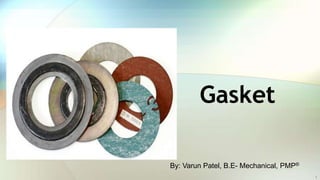
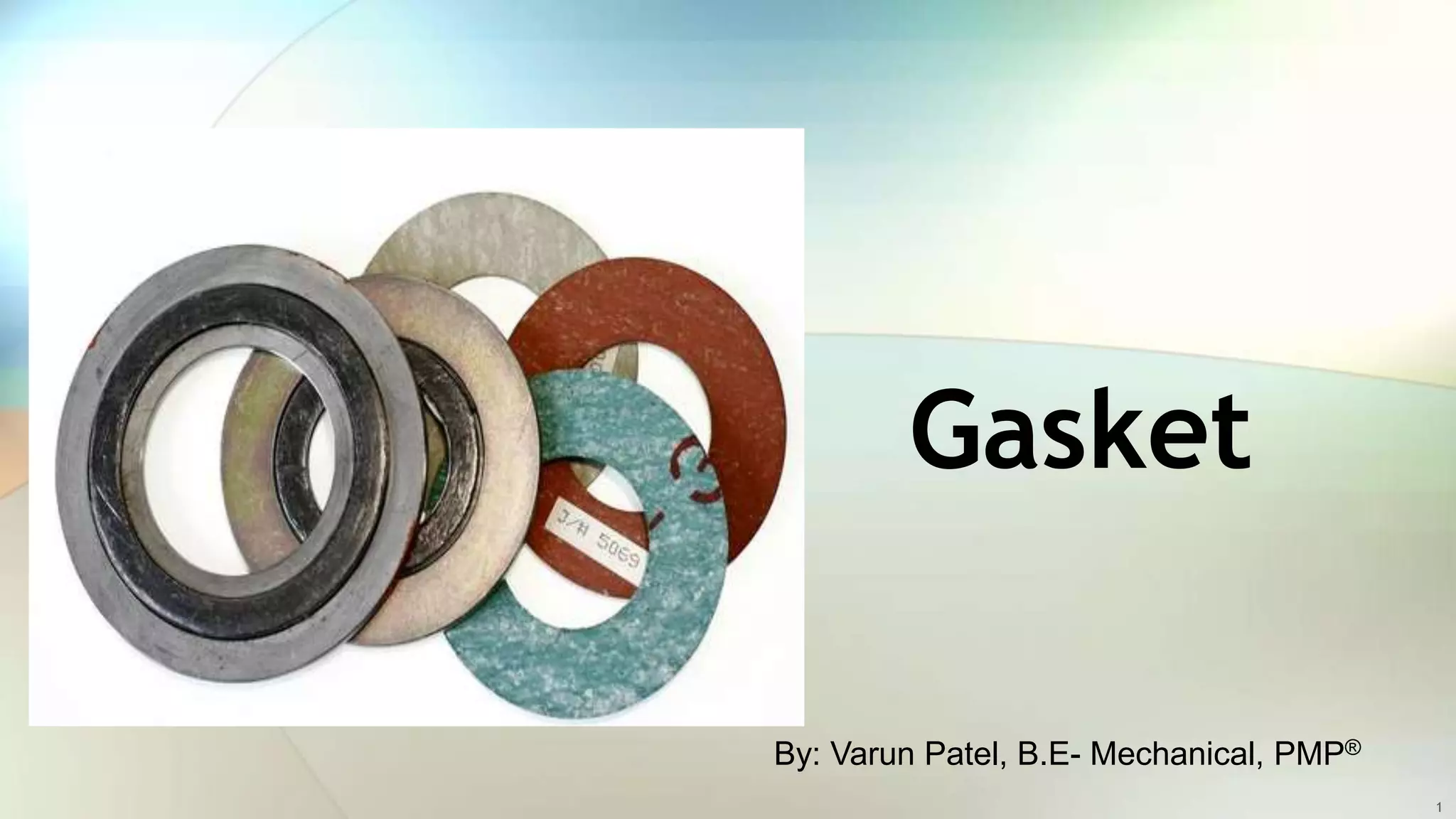
Gasket
• Gasket is sealing material
placed between connecting
Flanges
• create a static seal
• Maintain leakage proof sealing
in all operating conditions
2
Gasket Selection Criteria
• Temperature
• Pressure
• Corrosion resistance
• Types of fluid
• Robustness
• Availability
• Cost
3
Gasket Types
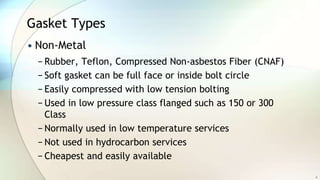
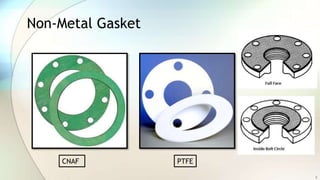
• Non-Metal
− Rubber, Teflon, Compressed Non-asbestos Fiber (CNAF)
− Soft gasket can be full face or inside bolt circle
− Easily compressed with low tension bolting
− Used in low pressure class flanged such as 150 or 300
Class
− Normally used in low temperature services
− Not used in hydrocarbon services
− Cheapest and easily available
4
Non-Metal Gasket
CNAF PTFE
5
Gasket Types
• Metal
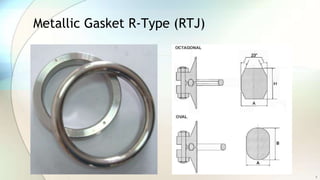
− Also known as ring gasket or RTJ
− Soft iron, Low Carbon steel, Stainless Steel, Monel,
inconel
− Used in high pressure class flanges, normally above 900
Class
− High tension bolting required
− Very robust
− Most costly
6
Metallic Gasket R-Type (RTJ)
7
Gasket Types
• Composite
− Combination of metal and non-metal
− Spiral wound, Metal Jacketed, Kamprofile
− Graphite or PTFE used as filler material
− Stainless steel or other exotic material can be used as
winding material
− Used in wide range of pressure and temperature
− Careful handling required
− Cost effective
8
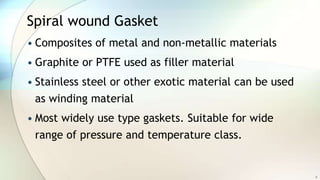
Spiral wound Gasket
• Composites of metal and non-metallic materials
• Graphite or PTFE used as filler material
• Stainless steel or other exotic material can be used
as winding material
• Most widely use type gaskets. Suitable for wide
range of pressure and temperature class.
9
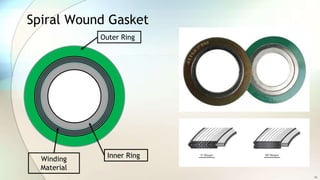
Spiral Wound Gasket
Outer Ring
Inner RingWinding
Material
10
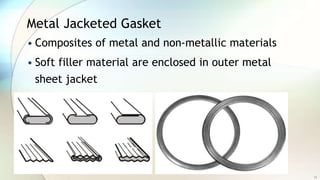
Metal Jacketed Gasket
• Composites of metal and non-metallic materials
• Soft filler material are enclosed in outer metal
sheet jacket
11
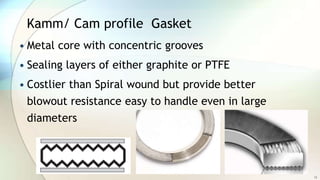
Kamm/ Cam profile Gasket
• Metal core with concentric grooves
• Sealing layers of either graphite or PTFE
• Costlier than Spiral wound but provide better
blowout resistance easy to handle even in large
diameters
12
What we have learned?
• Types of Gasket
• Various Construction
13
To learn more about pipe and pipe fittings take my online course at 90% discount
click on https://www.udemy.com/process-pipe-fittings-for-oil-gas-
career/?couponCode=FB10
How to be an Expert in Pipe &
Fittings for Oil & Gas career
14
Click hear to Enrolled Now

Pipe gasket. RTJ, Sprial, Metal Jacketed

  • 1.
    Gasket By: Varun Patel,B.E- Mechanical, PMP® 1
  • 2.
    Gasket • Gasket issealing material placed between connecting Flanges • create a static seal • Maintain leakage proof sealing in all operating conditions 2
  • 3.
    Gasket Selection Criteria •Temperature • Pressure • Corrosion resistance • Types of fluid • Robustness • Availability • Cost 3
  • 4.
    Gasket Types • Non-Metal −Rubber, Teflon, Compressed Non-asbestos Fiber (CNAF) − Soft gasket can be full face or inside bolt circle − Easily compressed with low tension bolting − Used in low pressure class flanged such as 150 or 300 Class − Normally used in low temperature services − Not used in hydrocarbon services − Cheapest and easily available 4
  • 5.
  • 6.
    Gasket Types • Metal −Also known as ring gasket or RTJ − Soft iron, Low Carbon steel, Stainless Steel, Monel, inconel − Used in high pressure class flanges, normally above 900 Class − High tension bolting required − Very robust − Most costly 6
  • 7.
  • 8.
    Gasket Types • Composite −Combination of metal and non-metal − Spiral wound, Metal Jacketed, Kamprofile − Graphite or PTFE used as filler material − Stainless steel or other exotic material can be used as winding material − Used in wide range of pressure and temperature − Careful handling required − Cost effective 8
  • 9.
    Spiral wound Gasket •Composites of metal and non-metallic materials • Graphite or PTFE used as filler material • Stainless steel or other exotic material can be used as winding material • Most widely use type gaskets. Suitable for wide range of pressure and temperature class. 9
  • 10.
    Spiral Wound Gasket OuterRing Inner RingWinding Material 10
  • 11.
    Metal Jacketed Gasket •Composites of metal and non-metallic materials • Soft filler material are enclosed in outer metal sheet jacket 11
  • 12.
    Kamm/ Cam profileGasket • Metal core with concentric grooves • Sealing layers of either graphite or PTFE • Costlier than Spiral wound but provide better blowout resistance easy to handle even in large diameters 12
  • 13.
    What we havelearned? • Types of Gasket • Various Construction 13
  • 14.
    To learn moreabout pipe and pipe fittings take my online course at 90% discount click on https://www.udemy.com/process-pipe-fittings-for-oil-gas- career/?couponCode=FB10 How to be an Expert in Pipe & Fittings for Oil & Gas career 14 Click hear to Enrolled Now