ECOSYSTEM
Mukul Gaur
ECOSYSTEM
BY
:
MUKUL
GAUR
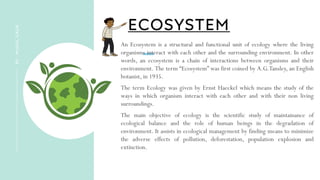
An Ecosystem is a structural and functional unit of ecology where the living
organisms interact with each other and the surrounding environment. In other
words, an ecosystem is a chain of interactions between organisms and their
environment. The term “Ecosystem” was first coined by A.G.Tansley, an English
botanist, in 1935.
The term Ecology was given by Ernst Haeckel which means the study of the
ways in which organism interact with each other and with their non living
surroundings.
The main objective of ecology is the scientific study of maintainance of
ecological balance and the role of human beings in the degradation of
environment. It assists in ecological management by finding means to minimize
the adverse effects of pollution, deforestation, population explosion and
extinction.
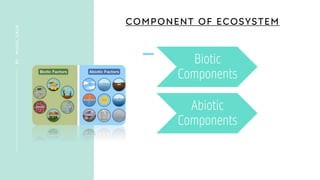
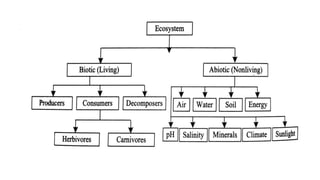
COMPONENT OF ECOSYSTEM
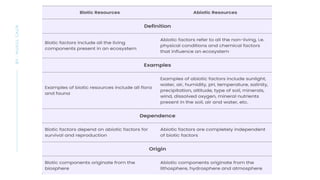
Biotic
Components
Abiotic
Components
BY
:
MUKUL
GAUR
BY
:
MUKUL
GAUR
BY
:
MUKUL
GAUR
BIOTIC COMPONENT
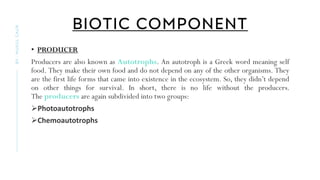
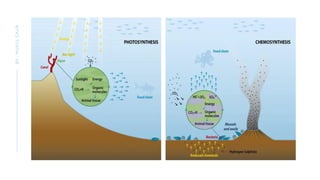
• PRODUCER
Producers are also known as Autotrophs. An autotroph is a Greek word meaning self
food. They make their own food and do not depend on any of the other organisms. They
are the first life forms that came into existence in the ecosystem. So, they didn’t depend
on other things for survival. In short, there is no life without the producers.
The producers are again subdivided into two groups:
➢Photoautotrophs
➢Chemoautotrophs
BY
:
MUKUL
GAUR
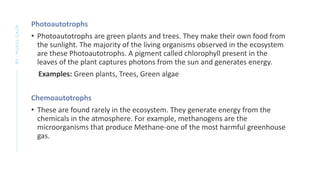
Photoautotrophs
• Photoautotrophs are green plants and trees. They make their own food from
the sunlight. The majority of the living organisms observed in the ecosystem
are these Photoautotrophs. A pigment called chlorophyll present in the
leaves of the plant captures photons from the sun and generates energy.
Examples: Green plants, Trees, Green algae
Chemoautotrophs
• These are found rarely in the ecosystem. They generate energy from the
chemicals in the atmosphere. For example, methanogens are the
microorganisms that produce Methane-one of the most harmful greenhouse
gas.
BY
:
MUKUL
GAUR
BY
:
MUKUL
GAUR
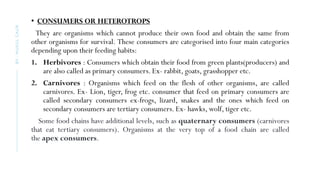
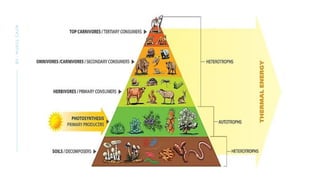
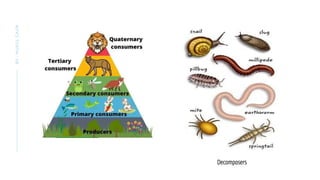
• CONSUMERS OR HETEROTROPS
They are organisms which cannot produce their own food and obtain the same from
other organisms for survival. These consumers are categorised into four main categories
depending upon their feeding habits:
1. Herbivores : Consumers which obtain their food from green plants(producers) and
are also called as primary consumers. Ex- rabbit, goats, grasshopper etc.
2. Carnivores : Organisms which feed on the flesh of other organisms, are called
carnivores. Ex- Lion, tiger, frog etc. consumer that feed on primary consumers are
called secondary consumers ex-frogs, lizard, snakes and the ones which feed on
secondary consumers are tertiary consumers. Ex- hawks, wolf, tiger etc.
Some food chains have additional levels, such as quaternary consumers (carnivores
that eat tertiary consumers). Organisms at the very top of a food chain are called
the apex consumers.
BY
:
MUKUL
GAUR
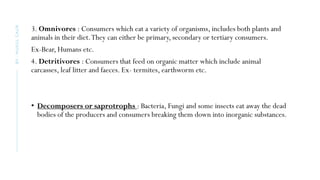
3. Omnivores : Consumers which eat a variety of organisms, includes both plants and
animals in their diet.They can either be primary, secondary or tertiary consumers.
Ex-Bear, Humans etc.
4. Detritivores : Consumers that feed on organic matter which include animal
carcasses, leaf litter and faeces. Ex- termites, earthworm etc.
• Decomposers or saprotrophs : Bacteria, Fungi and some insects eat away the dead
bodies of the producers and consumers breaking them down into inorganic substances.
BY
:
MUKUL
GAUR
BY
:
MUKUL
GAUR
BY
:
MUKUL
GAUR
Decomposers
FUCTION OF ECOSYSTEM
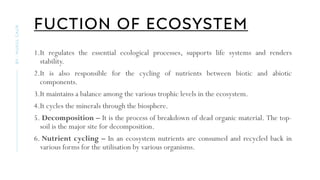
1.It regulates the essential ecological processes, supports life systems and renders
stability.
2.It is also responsible for the cycling of nutrients between biotic and abiotic
components.
3.It maintains a balance among the various trophic levels in the ecosystem.
4.It cycles the minerals through the biosphere.
5. Decomposition – It is the process of breakdown of dead organic material. The top-
soil is the major site for decomposition.
6. Nutrient cycling – In an ecosystem nutrients are consumed and recycled back in
various forms for the utilisation by various organisms.
BY
:
MUKUL
GAUR
TYPES OF ECOSYSTEM
BY
:
MUKUL
GAUR
BY
:
MUKUL
GAUR
BY
:
MUKUL
GAUR
BY
:
MUKUL
GAUR
BY
:
MUKUL
GAUR
BY
:
MUKUL
GAUR
BY
:
MUKUL
GAUR
BY
:
MUKUL
GAUR
BY
:
MUKUL
GAUR
BY
:
MUKUL
GAUR
BY
:
MUKUL
GAUR
BY
:
MUKUL
GAUR
BY
:
MUKUL
GAUR
BY
:
MUKUL
GAUR
BY
:
MUKUL
GAUR
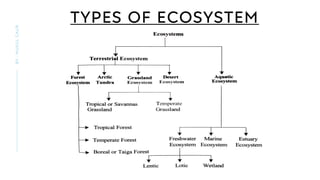
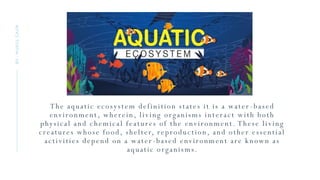
The aquatic ecosystem definition states it is a water -based
environment, wherein, living organisms interact with both
physical and chemical features of the environment. These living
creatures whose food, shelter, reproduction, and other essential
activities depend on a water -based environment are known as
aquatic organisms.
BY
:
MUKUL
GAUR
Freshwater Ecosystem
• Freshwater ecosystems only cover about 1 percent of the earth's surface.
• Lakes, ponds, rivers and streams, marshes, swamps, bogs, and ephemeral pools are all
examples of freshwater.
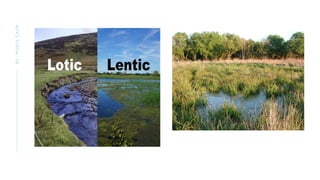
• Lentic: Slow-moving or still water like pools, lakes or ponds.
• Lotic: Fast-moving water such as streams and rivers.
• Wetlands: Places in which the soil is inundated or saturated for some lengthy period
of time
BY
:
MUKUL
GAUR
BY
:
MUKUL
GAUR
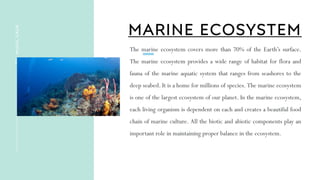
MARINE ECOSYSTEM
The marine ecosystem covers more than 70% of the Earth’s surface.
The marine ecosystem provides a wide range of habitat for flora and
fauna of the marine aquatic system that ranges from seashores to the
deep seabed. It is a home for millions of species. The marine ecosystem
is one of the largest ecosystem of our planet. In the marine ecosystem,
each living organism is dependent on each and creates a beautiful food
chain of marine culture. All the biotic and abiotic components play an
important role in maintaining proper balance in the ecosystem.
BY
:
MUKUL
GAUR
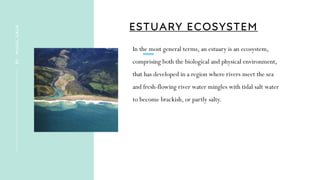
ESTUARY ECOSYSTEM
In the most general terms, an estuary is an ecosystem,
comprising both the biological and physical environment,
that has developed in a region where rivers meet the sea
and fresh-flowing river water mingles with tidal salt water
to become brackish, or partly salty.
BY
:
MUKUL
GAUR

Ecosystem and their types ||Environmental Science||.pdf

  • 1.
  • 2.
    ECOSYSTEM BY : MUKUL GAUR An Ecosystem isa structural and functional unit of ecology where the living organisms interact with each other and the surrounding environment. In other words, an ecosystem is a chain of interactions between organisms and their environment. The term “Ecosystem” was first coined by A.G.Tansley, an English botanist, in 1935. The term Ecology was given by Ernst Haeckel which means the study of the ways in which organism interact with each other and with their non living surroundings. The main objective of ecology is the scientific study of maintainance of ecological balance and the role of human beings in the degradation of environment. It assists in ecological management by finding means to minimize the adverse effects of pollution, deforestation, population explosion and extinction.
  • 3.
  • 4.
  • 5.
  • 6.
    BIOTIC COMPONENT • PRODUCER Producersare also known as Autotrophs. An autotroph is a Greek word meaning self food. They make their own food and do not depend on any of the other organisms. They are the first life forms that came into existence in the ecosystem. So, they didn’t depend on other things for survival. In short, there is no life without the producers. The producers are again subdivided into two groups: ➢Photoautotrophs ➢Chemoautotrophs BY : MUKUL GAUR
  • 7.
    Photoautotrophs • Photoautotrophs aregreen plants and trees. They make their own food from the sunlight. The majority of the living organisms observed in the ecosystem are these Photoautotrophs. A pigment called chlorophyll present in the leaves of the plant captures photons from the sun and generates energy. Examples: Green plants, Trees, Green algae Chemoautotrophs • These are found rarely in the ecosystem. They generate energy from the chemicals in the atmosphere. For example, methanogens are the microorganisms that produce Methane-one of the most harmful greenhouse gas. BY : MUKUL GAUR
  • 8.
  • 9.
    • CONSUMERS ORHETEROTROPS They are organisms which cannot produce their own food and obtain the same from other organisms for survival. These consumers are categorised into four main categories depending upon their feeding habits: 1. Herbivores : Consumers which obtain their food from green plants(producers) and are also called as primary consumers. Ex- rabbit, goats, grasshopper etc. 2. Carnivores : Organisms which feed on the flesh of other organisms, are called carnivores. Ex- Lion, tiger, frog etc. consumer that feed on primary consumers are called secondary consumers ex-frogs, lizard, snakes and the ones which feed on secondary consumers are tertiary consumers. Ex- hawks, wolf, tiger etc. Some food chains have additional levels, such as quaternary consumers (carnivores that eat tertiary consumers). Organisms at the very top of a food chain are called the apex consumers. BY : MUKUL GAUR
  • 10.
    3. Omnivores :Consumers which eat a variety of organisms, includes both plants and animals in their diet.They can either be primary, secondary or tertiary consumers. Ex-Bear, Humans etc. 4. Detritivores : Consumers that feed on organic matter which include animal carcasses, leaf litter and faeces. Ex- termites, earthworm etc. • Decomposers or saprotrophs : Bacteria, Fungi and some insects eat away the dead bodies of the producers and consumers breaking them down into inorganic substances. BY : MUKUL GAUR
  • 11.
  • 12.
  • 13.
    FUCTION OF ECOSYSTEM 1.Itregulates the essential ecological processes, supports life systems and renders stability. 2.It is also responsible for the cycling of nutrients between biotic and abiotic components. 3.It maintains a balance among the various trophic levels in the ecosystem. 4.It cycles the minerals through the biosphere. 5. Decomposition – It is the process of breakdown of dead organic material. The top- soil is the major site for decomposition. 6. Nutrient cycling – In an ecosystem nutrients are consumed and recycled back in various forms for the utilisation by various organisms. BY : MUKUL GAUR
  • 14.
  • 15.
  • 16.
  • 17.
  • 18.
  • 19.
  • 20.
  • 21.
  • 22.
  • 23.
  • 24.
  • 25.
  • 26.
  • 27.
  • 28.
  • 29.
    The aquatic ecosystemdefinition states it is a water -based environment, wherein, living organisms interact with both physical and chemical features of the environment. These living creatures whose food, shelter, reproduction, and other essential activities depend on a water -based environment are known as aquatic organisms. BY : MUKUL GAUR
  • 30.
    Freshwater Ecosystem • Freshwaterecosystems only cover about 1 percent of the earth's surface. • Lakes, ponds, rivers and streams, marshes, swamps, bogs, and ephemeral pools are all examples of freshwater. • Lentic: Slow-moving or still water like pools, lakes or ponds. • Lotic: Fast-moving water such as streams and rivers. • Wetlands: Places in which the soil is inundated or saturated for some lengthy period of time BY : MUKUL GAUR
  • 31.
  • 32.
    MARINE ECOSYSTEM The marineecosystem covers more than 70% of the Earth’s surface. The marine ecosystem provides a wide range of habitat for flora and fauna of the marine aquatic system that ranges from seashores to the deep seabed. It is a home for millions of species. The marine ecosystem is one of the largest ecosystem of our planet. In the marine ecosystem, each living organism is dependent on each and creates a beautiful food chain of marine culture. All the biotic and abiotic components play an important role in maintaining proper balance in the ecosystem. BY : MUKUL GAUR
  • 33.
    ESTUARY ECOSYSTEM In themost general terms, an estuary is an ecosystem, comprising both the biological and physical environment, that has developed in a region where rivers meet the sea and fresh-flowing river water mingles with tidal salt water to become brackish, or partly salty. BY : MUKUL GAUR