Downloaded 73 times

The document discusses key concepts in ecosystems and environmental science, including open and closed systems, stability in systems, populations and communities, habitats and niches. It provides examples of different systems and ecosystems, and how organisms' needs are met within their communities and habitats. The document is a presentation on fourth grade environmental science concepts presented by Brent Daigle.
Brent Daigle presents content relevant to fourth grade education.
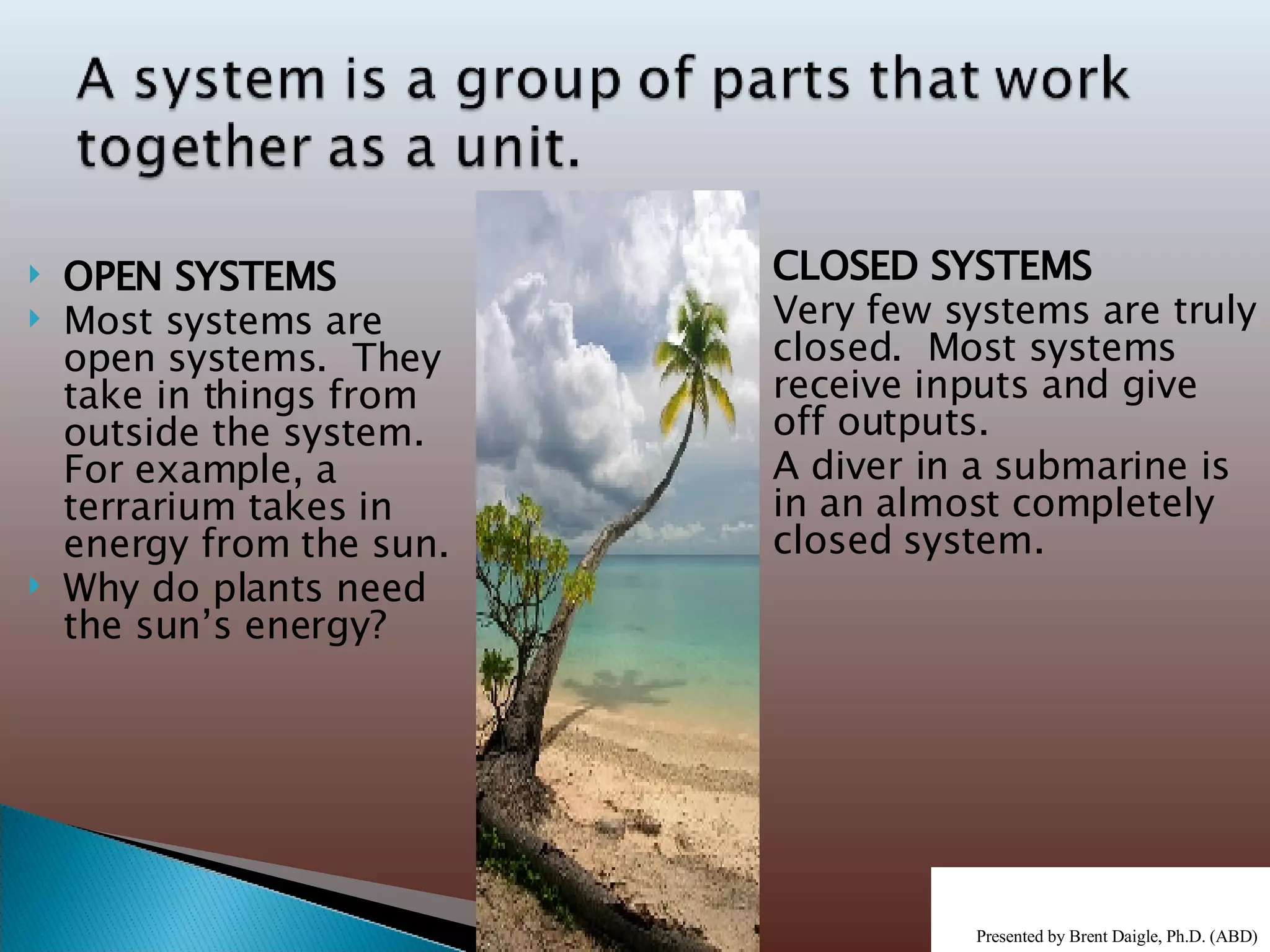
Differences between open systems (like terrariums) and closed systems (like submarines) are explored.
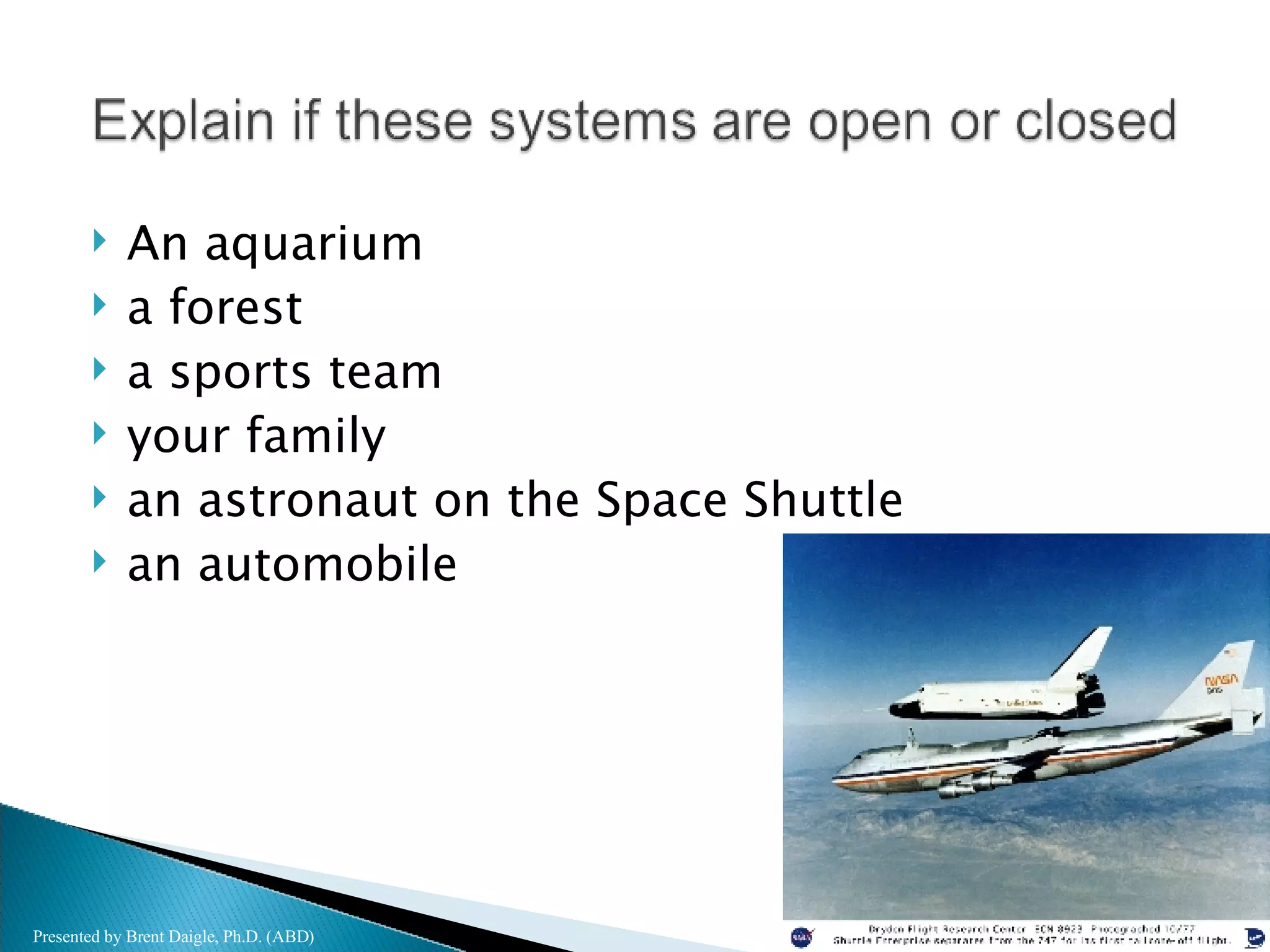
Examples of systems include aquariums, forests, sports teams, families, astronauts, and automobiles.
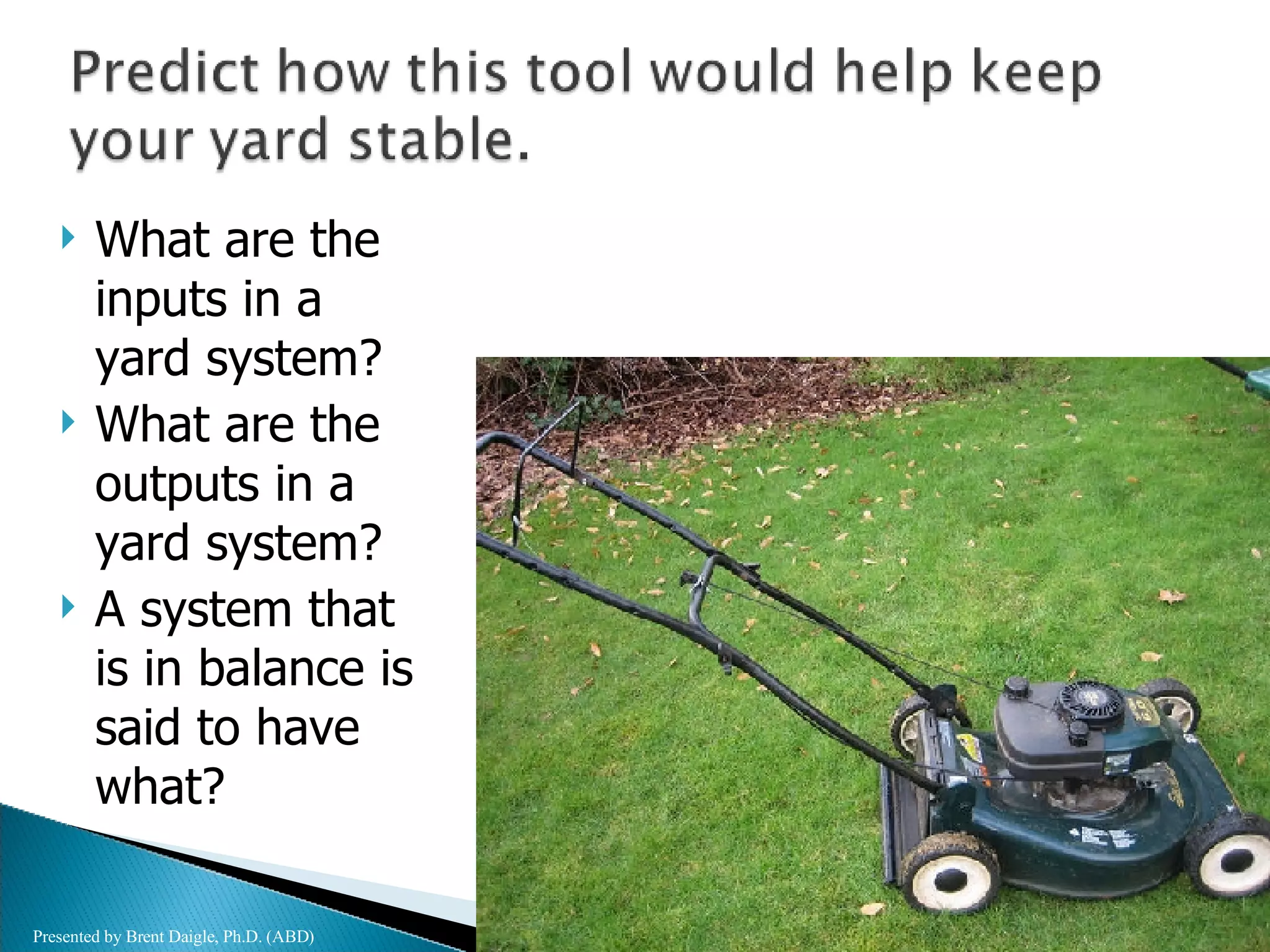
Stability refers to balance in systems where changes offset each other. Example: grass in a yard.
Discussion on inputs and outputs in a yard system and what defines a balanced system.
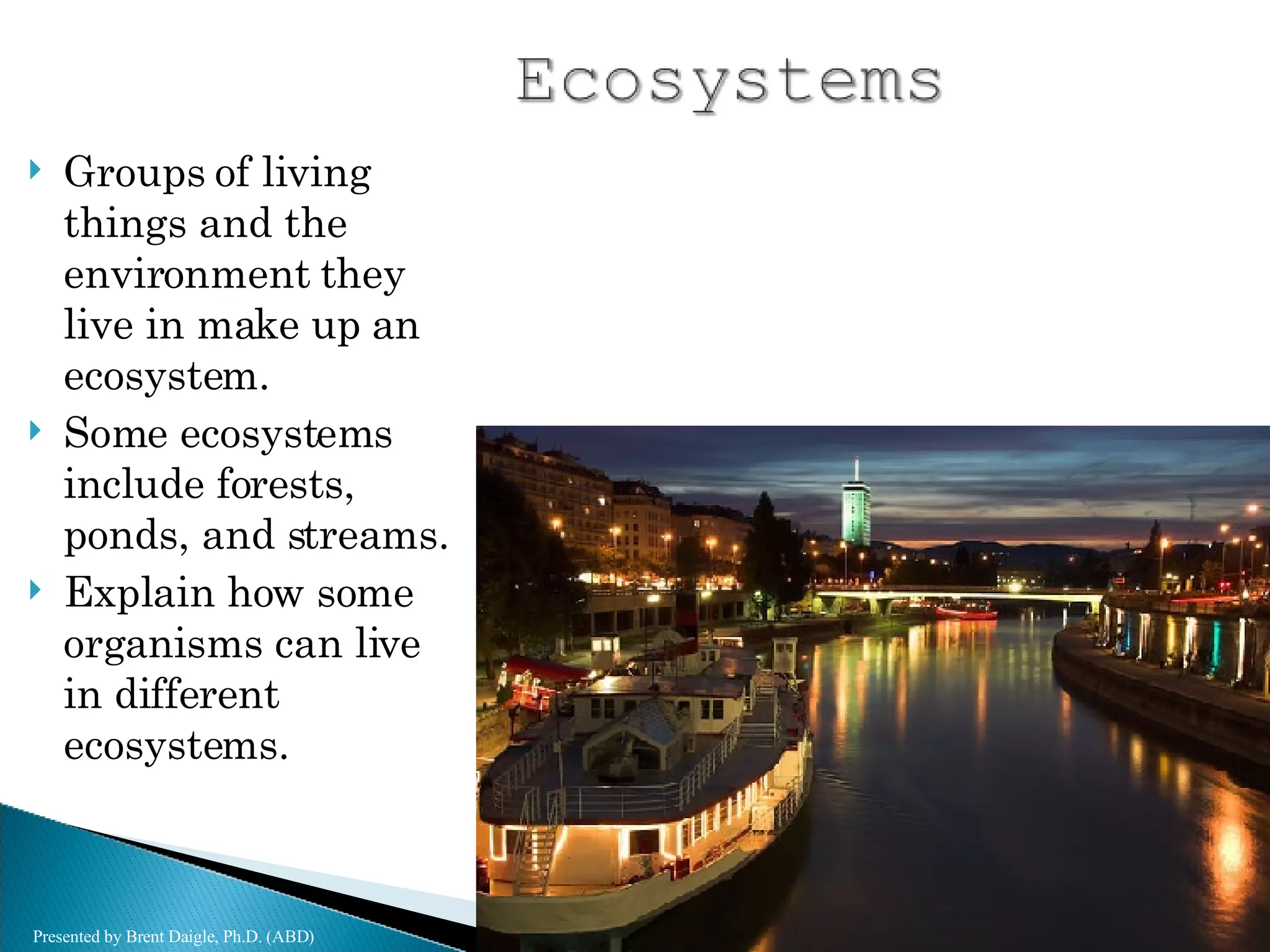
Ecosystems consist of living organisms and their environments, including forests, ponds, and streams.
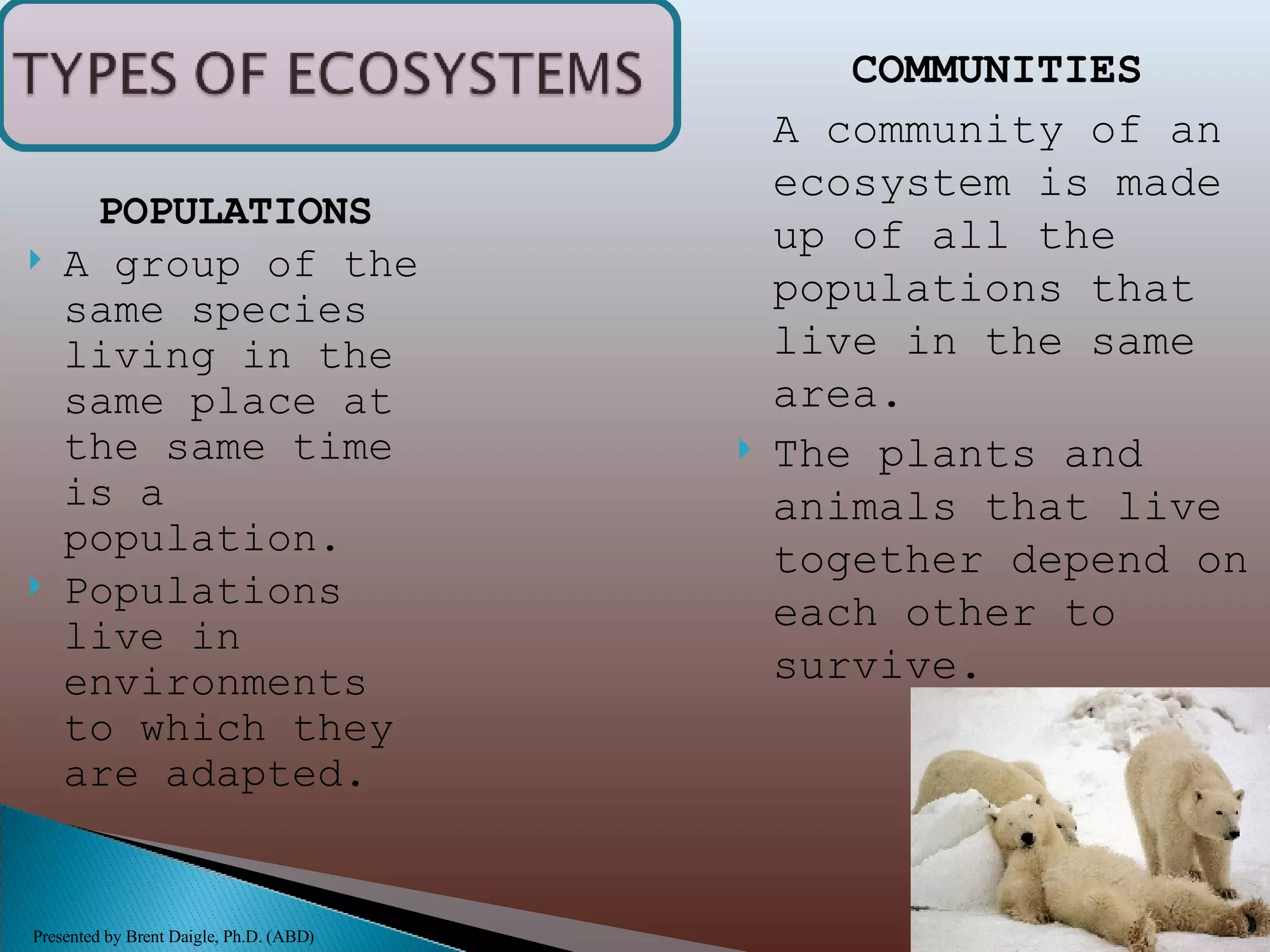
Definitions of populations (same species) and communities (all populations) and their interdependence.
Activity to compare how living things' needs are met in communities versus plants and animals.
Discussion on non-native organisms in ecosystems and potential impacts, with examples.
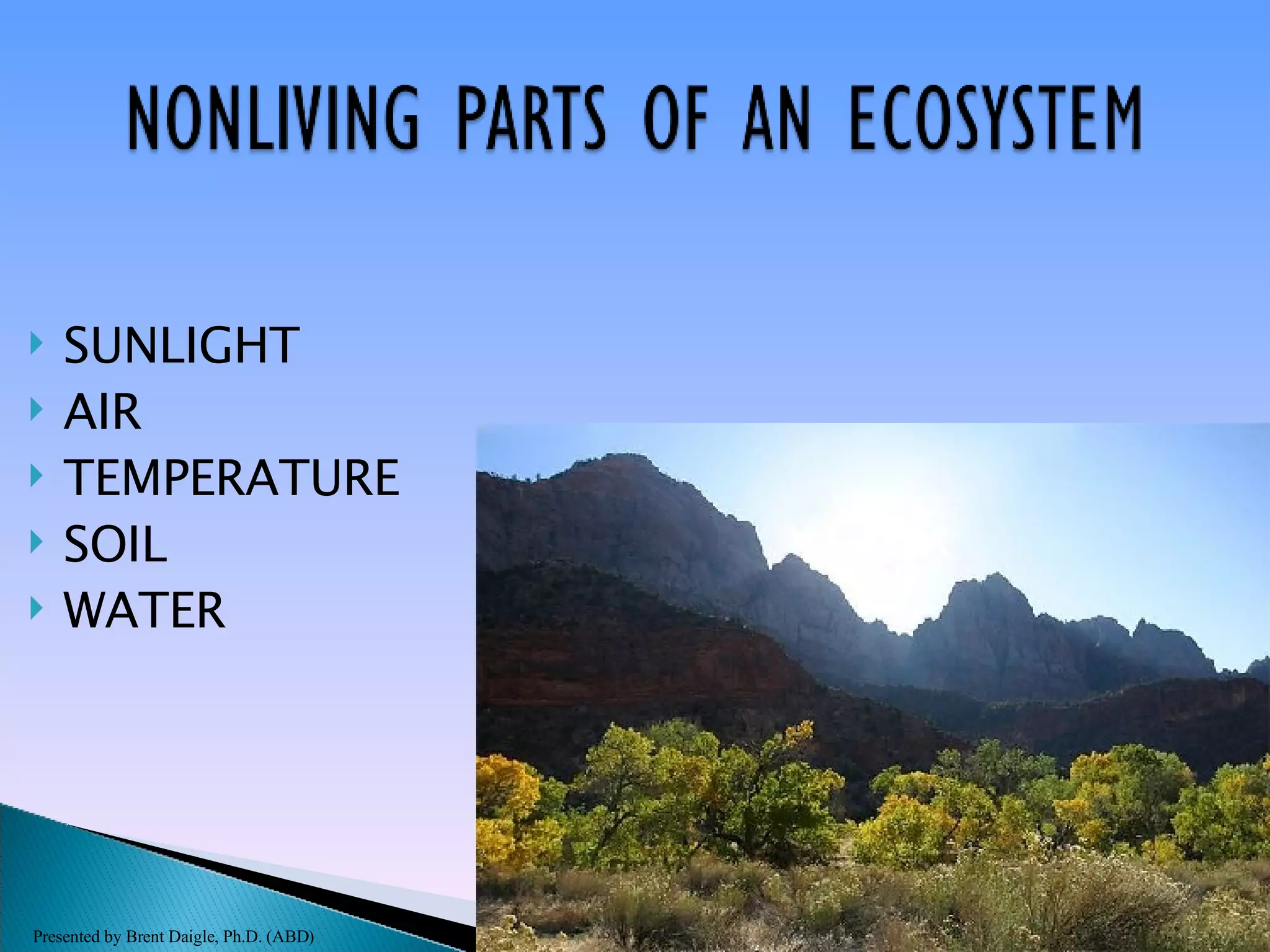
Key elements for ecosystems including sunlight, air, temperature, soil, and water.
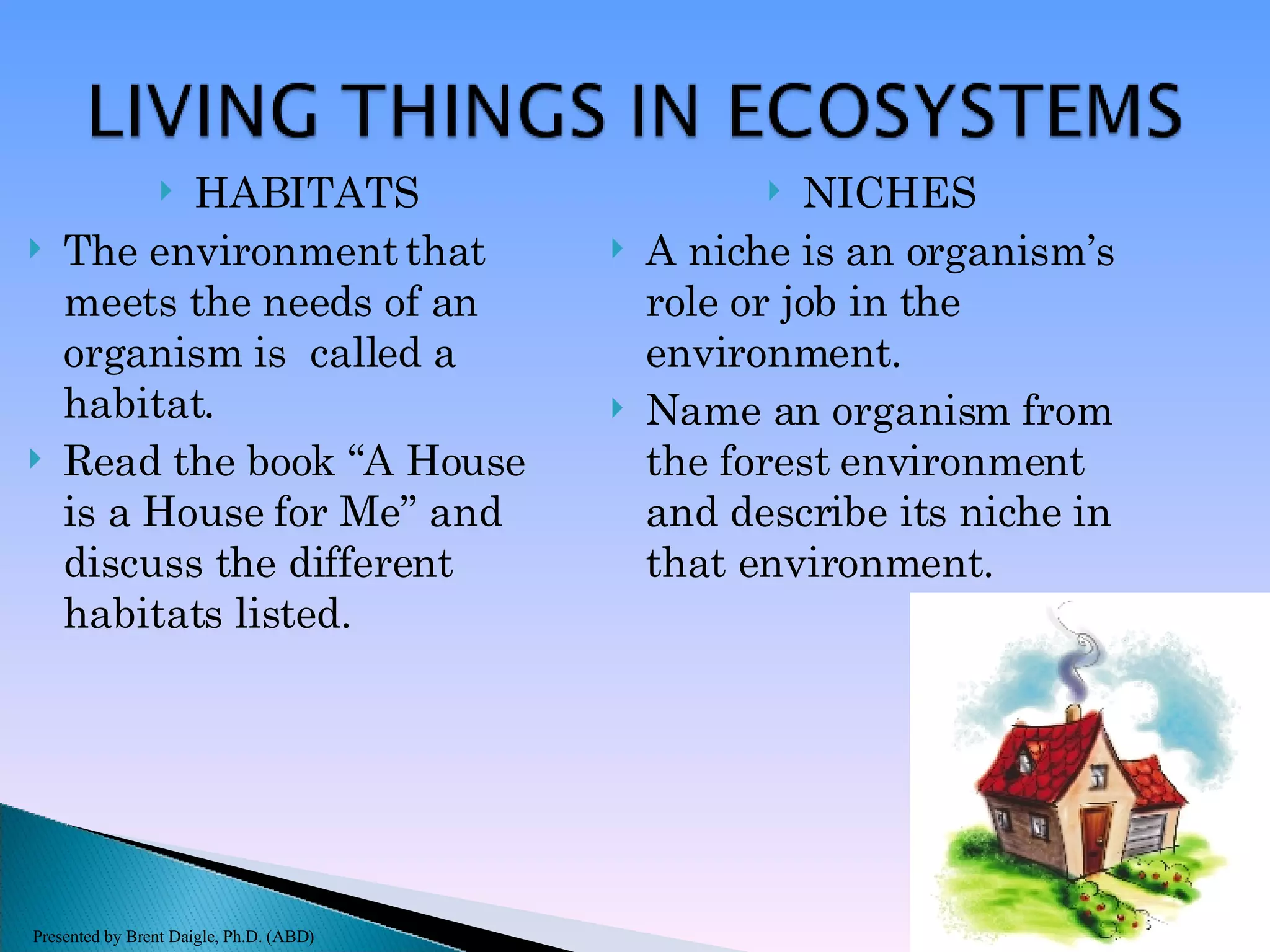
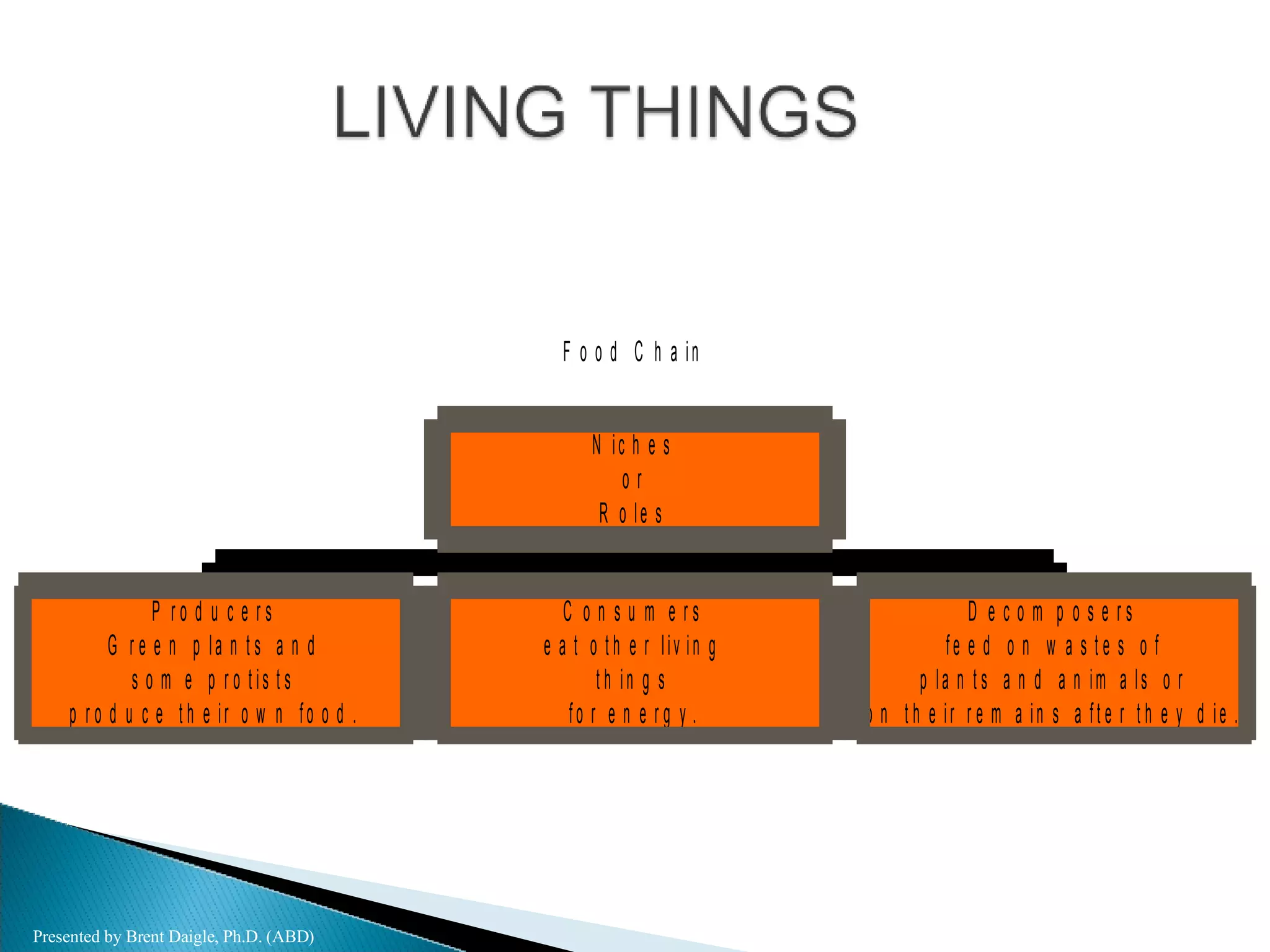
Definition of habitats (organism's environment) and niches (role in the environment) with examples.
Reinforcement of habitat and niche concepts, highlighting their impact on ecosystems.


