The Shang Dynasty
 1650-1027 B.C.E.
    Textbook pages 77-80
Chinese Civilization
           Begins
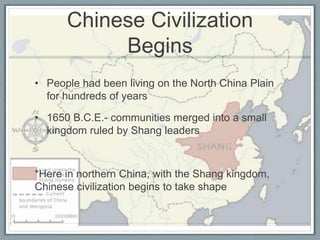
• People had been living on the North China Plain
  for hundreds of years

• 1650 B.C.E.- communities merged into a small
  kingdom ruled by Shang leaders


*Here in northern China, with the Shang kingdom,
Chinese civilization begins to take shape
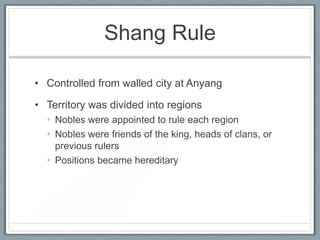
Shang Rule

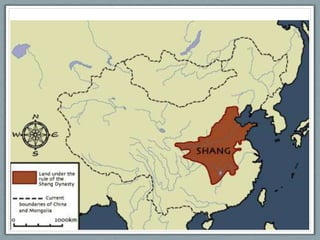
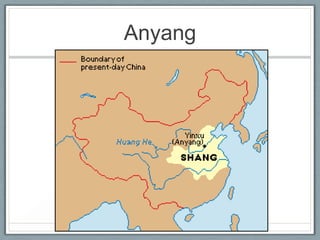
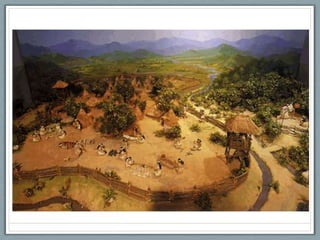
• Controlled from walled city at Anyang

• Territory was divided into regions
  • Nobles were appointed to rule each region
  • Nobles were friends of the king, heads of clans, or
    previous rulers
  • Positions became hereditary
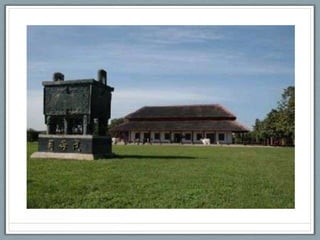
Anyang
Upper Class

• Shang Kings and Nobles
  • Lived in large timber or stone houses
  • Could afford to buy art, so artisans gathered around
    the capital at Anyang
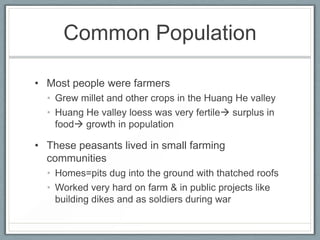
Common Population

• Most people were farmers
  • Grew millet and other crops in the Huang He valley
  • Huang He valley loess was very fertile surplus in
    food growth in population

• These peasants lived in small farming
  communities
  • Homes=pits dug into the ground with thatched roofs
  • Worked very hard on farm & in public projects like
    building dikes and as soldiers during war
Art and Culture

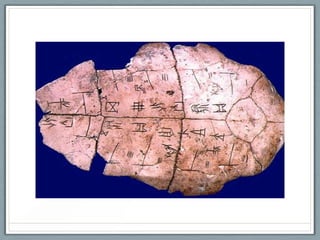
• Developed an early form of writing

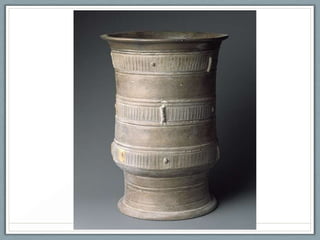
• Fine pottery

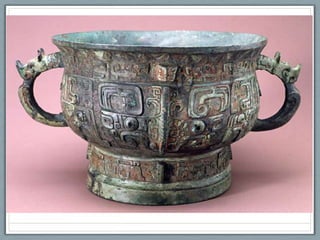
• Skilled metal workers particularly using valuable
  bronze (religious ceremonies and weapons)

• Silk making advanced technology
Burial Practices

• Believed in an afterlife

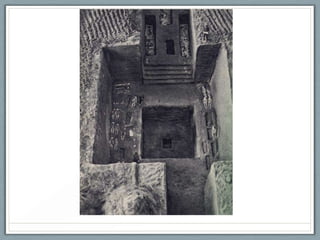
• Rulers were buried in deep pits, with
  bronze, stone, jade, potty, and bone

• Sometimes tombs were 10 metres deep
  • Servants were sacrificed and buried with kings
Shang Beliefs

• Believed in many gods
  • Di, Lord on High good harvests, successful
    battles, weather

• Believed in a connection between live and dead
  family members
  • Gave offerings to dead family members for
    protection
Shang Beliefs

• King acted as priest
  • Thought to be able to better communicate with
    important ancestors and gods
  • Consulted ancestors before making important
    decisions
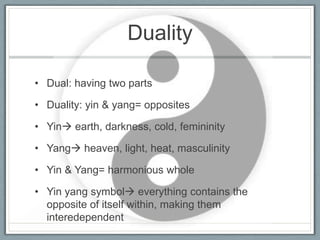
Duality

• Dual: having two parts

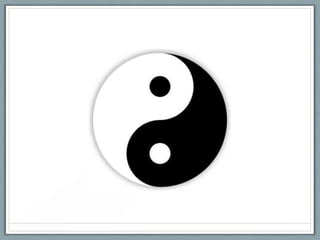
• Duality: yin & yang= opposites

• Yin earth, darkness, cold, femininity

• Yang heaven, light, heat, masculinity

• Yin & Yang= harmonious whole

• Yin yang symbol everything contains the
  opposite of itself within, making them
  interedependent
Five Elements

• Shang believed the earth was made-up of five
  elements:
  •   Wood
  •   Metal
  •   Fire
  •   Water
  •   Earth

• Everything on earth was a combination of these
  forces
Qi

• Qi: an essential life force governing the universe
  • Travelling beneath earth’s surface in currents
  • Did not want to disturb this life force
  • Fengshui- before building anything, a fengshui
    expert would need to be consulted so that there
    would be no negative influences
End of the Shang Dynasty

• Shang kings constantly at war with surrounding
  kingdoms

• Zhou kingdom defeated Shang

Shang Dynasty PPT

  • 1.
    The Shang Dynasty 1650-1027 B.C.E. Textbook pages 77-80
  • 2.
    Chinese Civilization Begins • People had been living on the North China Plain for hundreds of years • 1650 B.C.E.- communities merged into a small kingdom ruled by Shang leaders *Here in northern China, with the Shang kingdom, Chinese civilization begins to take shape
  • 4.
    Shang Rule • Controlledfrom walled city at Anyang • Territory was divided into regions • Nobles were appointed to rule each region • Nobles were friends of the king, heads of clans, or previous rulers • Positions became hereditary
  • 5.
  • 6.
    Upper Class • ShangKings and Nobles • Lived in large timber or stone houses • Could afford to buy art, so artisans gathered around the capital at Anyang
  • 8.
    Common Population • Mostpeople were farmers • Grew millet and other crops in the Huang He valley • Huang He valley loess was very fertile surplus in food growth in population • These peasants lived in small farming communities • Homes=pits dug into the ground with thatched roofs • Worked very hard on farm & in public projects like building dikes and as soldiers during war
  • 10.
    Art and Culture •Developed an early form of writing • Fine pottery • Skilled metal workers particularly using valuable bronze (religious ceremonies and weapons) • Silk making advanced technology
  • 14.
    Burial Practices • Believedin an afterlife • Rulers were buried in deep pits, with bronze, stone, jade, potty, and bone • Sometimes tombs were 10 metres deep • Servants were sacrificed and buried with kings
  • 16.
    Shang Beliefs • Believedin many gods • Di, Lord on High good harvests, successful battles, weather • Believed in a connection between live and dead family members • Gave offerings to dead family members for protection
  • 17.
    Shang Beliefs • Kingacted as priest • Thought to be able to better communicate with important ancestors and gods • Consulted ancestors before making important decisions
  • 18.
    Duality • Dual: havingtwo parts • Duality: yin & yang= opposites • Yin earth, darkness, cold, femininity • Yang heaven, light, heat, masculinity • Yin & Yang= harmonious whole • Yin yang symbol everything contains the opposite of itself within, making them interedependent
  • 20.
    Five Elements • Shangbelieved the earth was made-up of five elements: • Wood • Metal • Fire • Water • Earth • Everything on earth was a combination of these forces
  • 21.
    Qi • Qi: anessential life force governing the universe • Travelling beneath earth’s surface in currents • Did not want to disturb this life force • Fengshui- before building anything, a fengshui expert would need to be consulted so that there would be no negative influences
  • 22.
    End of theShang Dynasty • Shang kings constantly at war with surrounding kingdoms • Zhou kingdom defeated Shang