FoundationsExam Key Terms
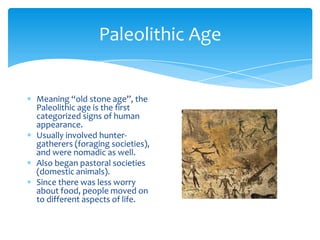
Paleolithic AgeMeaning “old stone age”, the Paleolithic age is the first categorized signs of human appearance.Usually involved hunter-gatherers (foraging societies), and were nomadic as well.Also began pastoral societies (domestic animals).Since there was less worry about food, people moved on to different aspects of life.
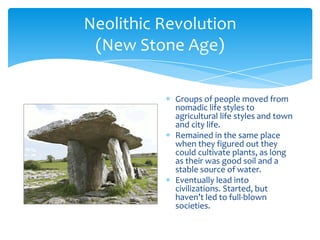
Neolithic Revolution(New Stone Age)Groups of people moved from nomadic life styles to agricultural life styles and town and city life.Remained in the same place when they figured out they could cultivate plants, as long as their was good soil and a stable source of water.Eventually lead into civilizations. Started, but haven’t led to full-blown societies.
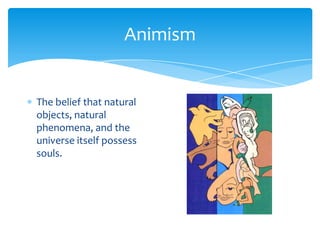
AnimismThe belief that natural objects, natural phenomena, and the universe itself possess souls.
PolytheismThe doctrine or belief in more than one god.(Think Egyptian, Greek [Roman], Buddhism)
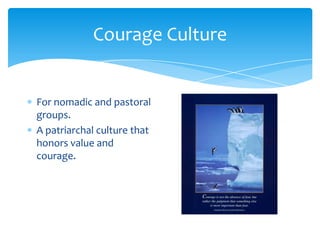
Courage CultureFor nomadic and pastoral groups.A patriarchal culture that honors value and courage.
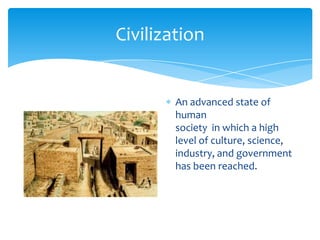
CivilizationAn advanced state of human society  in which a high level of culture, science, industry, and government has been reached.
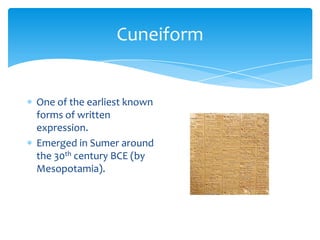
CuneiformOne of the earliest known forms of written expression.Emerged in Sumer around the 30th century BCE (by Mesopotamia).
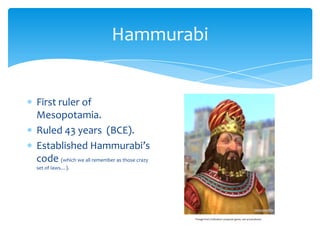
HammurabiFirst ruler of Mesopotamia.Ruled 43 years  (BCE).Established Hammurabi’s code (which we all remember as those crazy set of laws…).*Image from Civilization computer game, not actual photo!
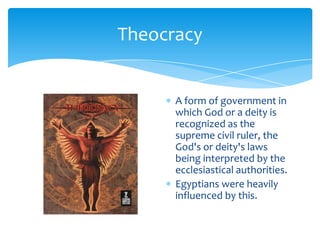
TheocracyA form of government in which God or a deity is recognized as the supreme civil ruler, the God's or deity's laws being interpreted by the ecclesiastical authorities.Egyptians were heavily influenced by this.
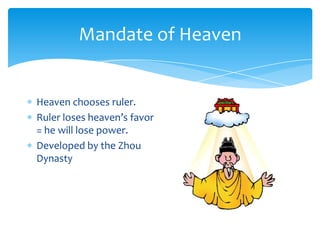
Mandate of HeavenHeaven chooses ruler. Ruler loses heaven’s favor = he will lose power.Developed by the Zhou Dynasty
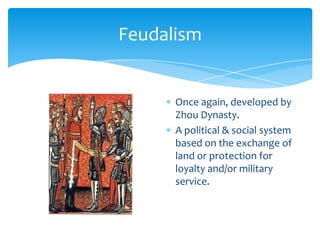
FeudalismOnce again, developed by Zhou Dynasty.A political & social system based on the exchange of land or protection for loyalty and/or military service.
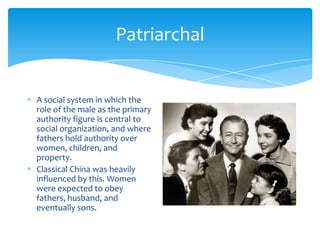
PatriarchalAsocial system in which the role of the male as the primary authority figure is central to social organization, and where fathers hold authority over women, children, and property.Classical China was heavily influenced by this. Women were expected to obey fathers, husband, and eventually sons.
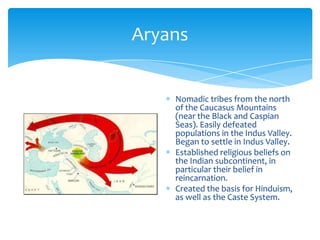
AryansNomadic tribes from the north of the Caucasus Mountains (near the Black and Caspian Seas). Easily defeated populations in the Indus Valley. Began to settle in Indus Valley.Established religious beliefs on the Indian subcontinent, in particular their belief in reincarnation.Created the basis for Hinduism, as well as the Caste System.
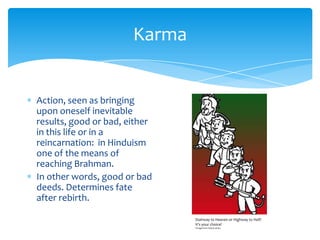
KarmaAction, seen as bringing upon oneself inevitable results, good or bad, either in this life or in a reincarnation:  in Hinduism one of the means of reaching Brahman.In other words, good or bad deeds. Determines fate after rebirth.Stairway to Heaven or Highway to Hell?It’s your choice!*Image from Fallout series.
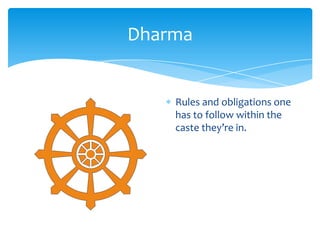
DharmaRules and obligations one has to follow within the caste they’re in.
NirvanaIn Buddhist philosophy, it means release from selfishness & pain. No more reincarnation.The word literally means "blowing out"—referring in the Buddhist context, to the blowing out of the fires of greed, hatred, and delusion.IMAGE NOT FOUND DUE TO THEINSANE AMOUNT OF BAND PHOTOSON GOOGLE.
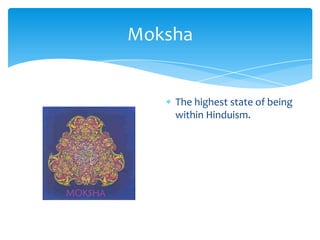
MokshaThe highest state of being within Hinduism.
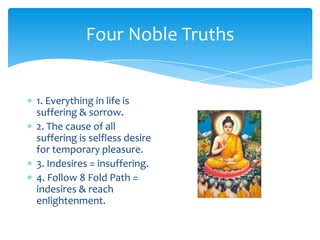
Four Noble Truths1. Everything in life is suffering & sorrow.2. The cause of all suffering is selfless desire for temporary pleasure.3. Indesires = insuffering.4. Follow 8 Fold Path = indesires & reach enlightenment.
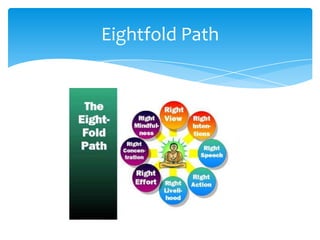
Eightfold Path
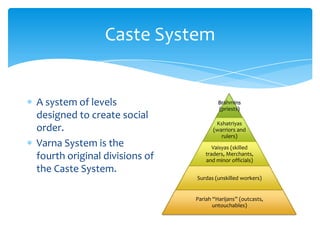
Caste SystemA system of levels designed to create social order.Varna System is the fourth original divisions of the Caste System.
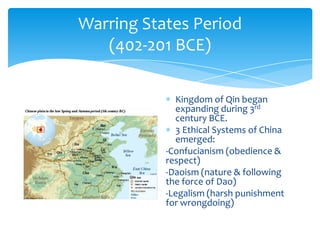
Warring States Period(402-201 BCE)Kingdom of Qin began expanding during 3rd century BCE.3 Ethical Systems of China emerged:-Confucianism (obedience & respect)-Daoism (nature & following the force of Dao)-Legalism (harsh punishment for wrongdoing)
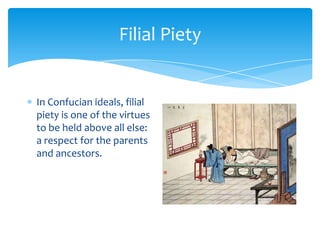
Filial PietyIn Confucian ideals, filial piety is one of the virtues to be held above all else: a respect for the parents and ancestors.
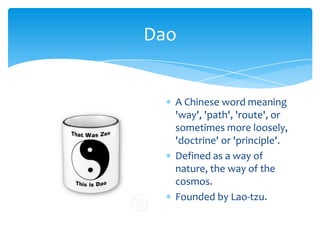
DaoA Chinese word meaning 'way', 'path', 'route', or sometimes more loosely, 'doctrine' or 'principle'.Defined as a way of nature, the way of the cosmos.Founded by Lao-tzu.
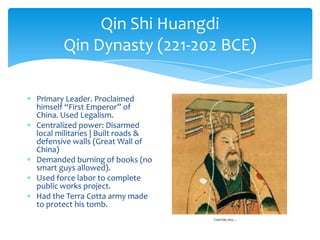
Qin Shi HuangdiQin Dynasty (221-202 BCE)Primary Leader. Proclaimed himself “First Emperor” of China. Used Legalism.Centralized power: Disarmed local militaries | Built roads & defensive walls (Great Wall of China)Demanded burning of books (no smart guys allowed).Used force labor to complete public works project.Had the Terra Cotta army made to protect his tomb.Cool hat, bro…
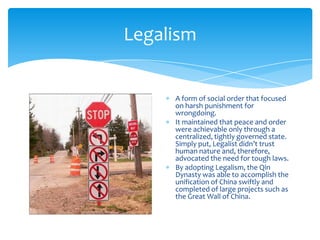
LegalismA form of social order that focused on harsh punishment for wrongdoing.It maintained that peace and order were achievable only through a centralized, tightly governed state. Simply put, Legalist didn’t trust human nature and, therefore, advocated the need for tough laws.By adopting Legalism, the Qin Dynasty was able to accomplish the unification of China swiftly and completed of large projects such as the Great Wall of China.
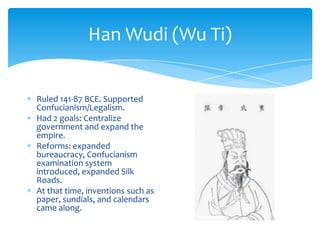
Han Wudi (Wu Ti)Ruled 141-87 BCE. Supported Confucianism/Legalism.Had 2 goals: Centralize government and expand the empire.Reforms: expanded bureaucracy, Confucianism examination system introduced, expanded Silk Roads.At that time, inventions such as paper, sundials, and calendars came along.
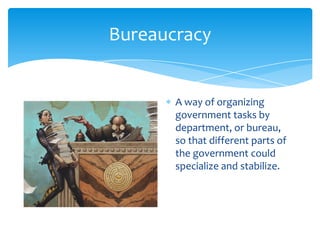
BureaucracyA way of organizing government tasks by department, or bureau, so that different parts of the government could specialize and stabilize.
Mean PeopleUnskilled people of the Zhou DynastyKind of like Untouchables.
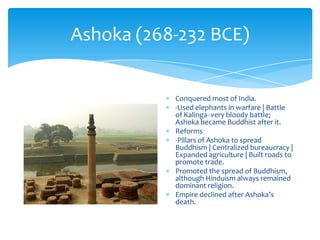
Ashoka (268-232 BCE)Conquered most of India.-Used elephants in warfare | Battle of Kalinga- very bloody battle; Ashoka became Buddhist after it.Reforms-Pillars of Ashoka to spread Buddhism | Centralized bureaucracy| Expanded agriculture | Built roads to promote trade.Promoted the spread of Buddhism, although Hinduism always remained dominant religion.Empire declined after Ashoka’s death.
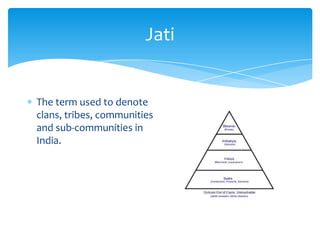
JatiThe term used to denote clans, tribes, communities and sub-communities in India.
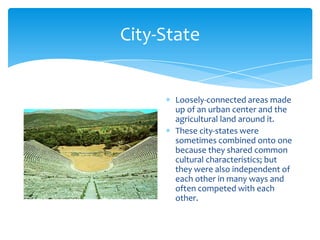
City-StateLoosely-connected areas made up of an urban center and the agricultural land around it.These city-states were sometimes combined onto one because they shared common cultural characteristics; but they were also independent of each other in many ways and often competed with each other.
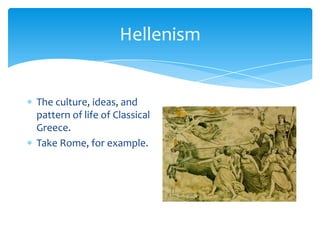
HellenismThe culture, ideas, and pattern of life of Classical Greece.Take Rome, for example.
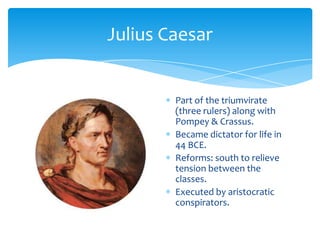
Julius CaesarPart of the triumvirate (three rulers) along with Pompey & Crassus.Became dictator for life in 44 BCE.Reforms: south to relieve tension between the classes.Executed by aristocratic conspirators.
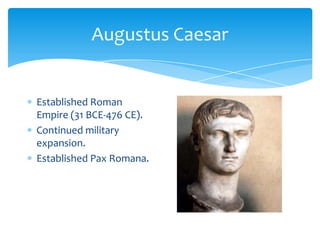
Augustus CaesarEstablished Roman Empire (31 BCE-476 CE).Continued military expansion.Established PaxRomana.
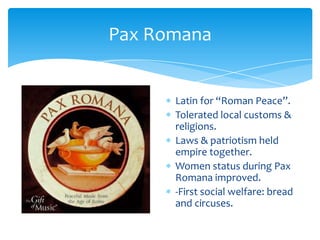
PaxRomanaLatin for “Roman Peace”.Tolerated local customs & religions.Laws & patriotism held empire together.Women status during PaxRomana improved.-First social welfare: bread and circuses.
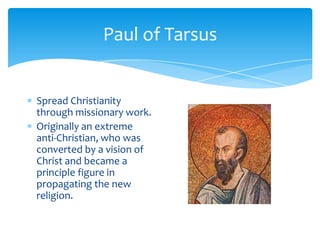
Paul of TarsusSpread Christianity through missionary work.Originally an extreme anti-Christian, who was converted by a vision of Christ and became a principle figure in propagating the new religion.
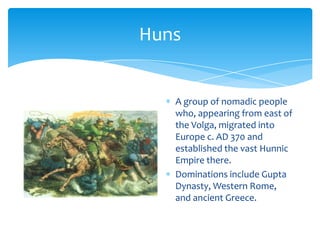
HunsA group of nomadic people who, appearing from east of the Volga, migrated into Europe c. AD 370 and established the vast Hunnic Empire there.Dominations include Gupta Dynasty, Western Rome, and ancient Greece.

Foundations Exam Key Terms

  • 1.
  • 2.
    Paleolithic AgeMeaning “oldstone age”, the Paleolithic age is the first categorized signs of human appearance.Usually involved hunter-gatherers (foraging societies), and were nomadic as well.Also began pastoral societies (domestic animals).Since there was less worry about food, people moved on to different aspects of life.
  • 3.
    Neolithic Revolution(New StoneAge)Groups of people moved from nomadic life styles to agricultural life styles and town and city life.Remained in the same place when they figured out they could cultivate plants, as long as their was good soil and a stable source of water.Eventually lead into civilizations. Started, but haven’t led to full-blown societies.
  • 4.
    AnimismThe belief thatnatural objects, natural phenomena, and the universe itself possess souls.
  • 5.
    PolytheismThe doctrine orbelief in more than one god.(Think Egyptian, Greek [Roman], Buddhism)
  • 6.
    Courage CultureFor nomadicand pastoral groups.A patriarchal culture that honors value and courage.
  • 7.
    CivilizationAn advanced stateof human society  in which a high level of culture, science, industry, and government has been reached.
  • 8.
    CuneiformOne of theearliest known forms of written expression.Emerged in Sumer around the 30th century BCE (by Mesopotamia).
  • 9.
    HammurabiFirst ruler ofMesopotamia.Ruled 43 years (BCE).Established Hammurabi’s code (which we all remember as those crazy set of laws…).*Image from Civilization computer game, not actual photo!
  • 10.
    TheocracyA form ofgovernment in which God or a deity is recognized as the supreme civil ruler, the God's or deity's laws being interpreted by the ecclesiastical authorities.Egyptians were heavily influenced by this.
  • 11.
    Mandate of HeavenHeavenchooses ruler. Ruler loses heaven’s favor = he will lose power.Developed by the Zhou Dynasty
  • 12.
    FeudalismOnce again, developedby Zhou Dynasty.A political & social system based on the exchange of land or protection for loyalty and/or military service.
  • 13.
    PatriarchalAsocial system inwhich the role of the male as the primary authority figure is central to social organization, and where fathers hold authority over women, children, and property.Classical China was heavily influenced by this. Women were expected to obey fathers, husband, and eventually sons.
  • 14.
    AryansNomadic tribes fromthe north of the Caucasus Mountains (near the Black and Caspian Seas). Easily defeated populations in the Indus Valley. Began to settle in Indus Valley.Established religious beliefs on the Indian subcontinent, in particular their belief in reincarnation.Created the basis for Hinduism, as well as the Caste System.
  • 15.
    KarmaAction, seen asbringing upon oneself inevitable results, good or bad, either in this life or in a reincarnation: in Hinduism one of the means of reaching Brahman.In other words, good or bad deeds. Determines fate after rebirth.Stairway to Heaven or Highway to Hell?It’s your choice!*Image from Fallout series.
  • 16.
    DharmaRules and obligationsone has to follow within the caste they’re in.
  • 17.
    NirvanaIn Buddhist philosophy,it means release from selfishness & pain. No more reincarnation.The word literally means "blowing out"—referring in the Buddhist context, to the blowing out of the fires of greed, hatred, and delusion.IMAGE NOT FOUND DUE TO THEINSANE AMOUNT OF BAND PHOTOSON GOOGLE.
  • 18.
    MokshaThe highest stateof being within Hinduism.
  • 19.
    Four Noble Truths1.Everything in life is suffering & sorrow.2. The cause of all suffering is selfless desire for temporary pleasure.3. Indesires = insuffering.4. Follow 8 Fold Path = indesires & reach enlightenment.
  • 20.
  • 21.
    Caste SystemA systemof levels designed to create social order.Varna System is the fourth original divisions of the Caste System.
  • 22.
    Warring States Period(402-201BCE)Kingdom of Qin began expanding during 3rd century BCE.3 Ethical Systems of China emerged:-Confucianism (obedience & respect)-Daoism (nature & following the force of Dao)-Legalism (harsh punishment for wrongdoing)
  • 23.
    Filial PietyIn Confucianideals, filial piety is one of the virtues to be held above all else: a respect for the parents and ancestors.
  • 24.
    DaoA Chinese wordmeaning 'way', 'path', 'route', or sometimes more loosely, 'doctrine' or 'principle'.Defined as a way of nature, the way of the cosmos.Founded by Lao-tzu.
  • 25.
    Qin Shi HuangdiQinDynasty (221-202 BCE)Primary Leader. Proclaimed himself “First Emperor” of China. Used Legalism.Centralized power: Disarmed local militaries | Built roads & defensive walls (Great Wall of China)Demanded burning of books (no smart guys allowed).Used force labor to complete public works project.Had the Terra Cotta army made to protect his tomb.Cool hat, bro…
  • 26.
    LegalismA form ofsocial order that focused on harsh punishment for wrongdoing.It maintained that peace and order were achievable only through a centralized, tightly governed state. Simply put, Legalist didn’t trust human nature and, therefore, advocated the need for tough laws.By adopting Legalism, the Qin Dynasty was able to accomplish the unification of China swiftly and completed of large projects such as the Great Wall of China.
  • 27.
    Han Wudi (WuTi)Ruled 141-87 BCE. Supported Confucianism/Legalism.Had 2 goals: Centralize government and expand the empire.Reforms: expanded bureaucracy, Confucianism examination system introduced, expanded Silk Roads.At that time, inventions such as paper, sundials, and calendars came along.
  • 28.
    BureaucracyA way oforganizing government tasks by department, or bureau, so that different parts of the government could specialize and stabilize.
  • 29.
    Mean PeopleUnskilled peopleof the Zhou DynastyKind of like Untouchables.
  • 30.
    Ashoka (268-232 BCE)Conqueredmost of India.-Used elephants in warfare | Battle of Kalinga- very bloody battle; Ashoka became Buddhist after it.Reforms-Pillars of Ashoka to spread Buddhism | Centralized bureaucracy| Expanded agriculture | Built roads to promote trade.Promoted the spread of Buddhism, although Hinduism always remained dominant religion.Empire declined after Ashoka’s death.
  • 31.
    JatiThe term usedto denote clans, tribes, communities and sub-communities in India.
  • 32.
    City-StateLoosely-connected areas madeup of an urban center and the agricultural land around it.These city-states were sometimes combined onto one because they shared common cultural characteristics; but they were also independent of each other in many ways and often competed with each other.
  • 33.
    HellenismThe culture, ideas,and pattern of life of Classical Greece.Take Rome, for example.
  • 34.
    Julius CaesarPart ofthe triumvirate (three rulers) along with Pompey & Crassus.Became dictator for life in 44 BCE.Reforms: south to relieve tension between the classes.Executed by aristocratic conspirators.
  • 35.
    Augustus CaesarEstablished RomanEmpire (31 BCE-476 CE).Continued military expansion.Established PaxRomana.
  • 36.
    PaxRomanaLatin for “RomanPeace”.Tolerated local customs & religions.Laws & patriotism held empire together.Women status during PaxRomana improved.-First social welfare: bread and circuses.
  • 37.
    Paul of TarsusSpreadChristianity through missionary work.Originally an extreme anti-Christian, who was converted by a vision of Christ and became a principle figure in propagating the new religion.
  • 38.
    HunsA group ofnomadic people who, appearing from east of the Volga, migrated into Europe c. AD 370 and established the vast Hunnic Empire there.Dominations include Gupta Dynasty, Western Rome, and ancient Greece.