Shang Dynasty and
Oracle Bones
By: Rachel Fisher


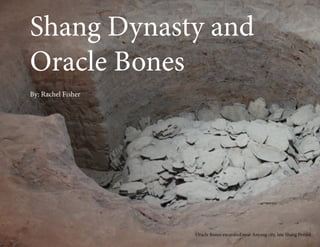
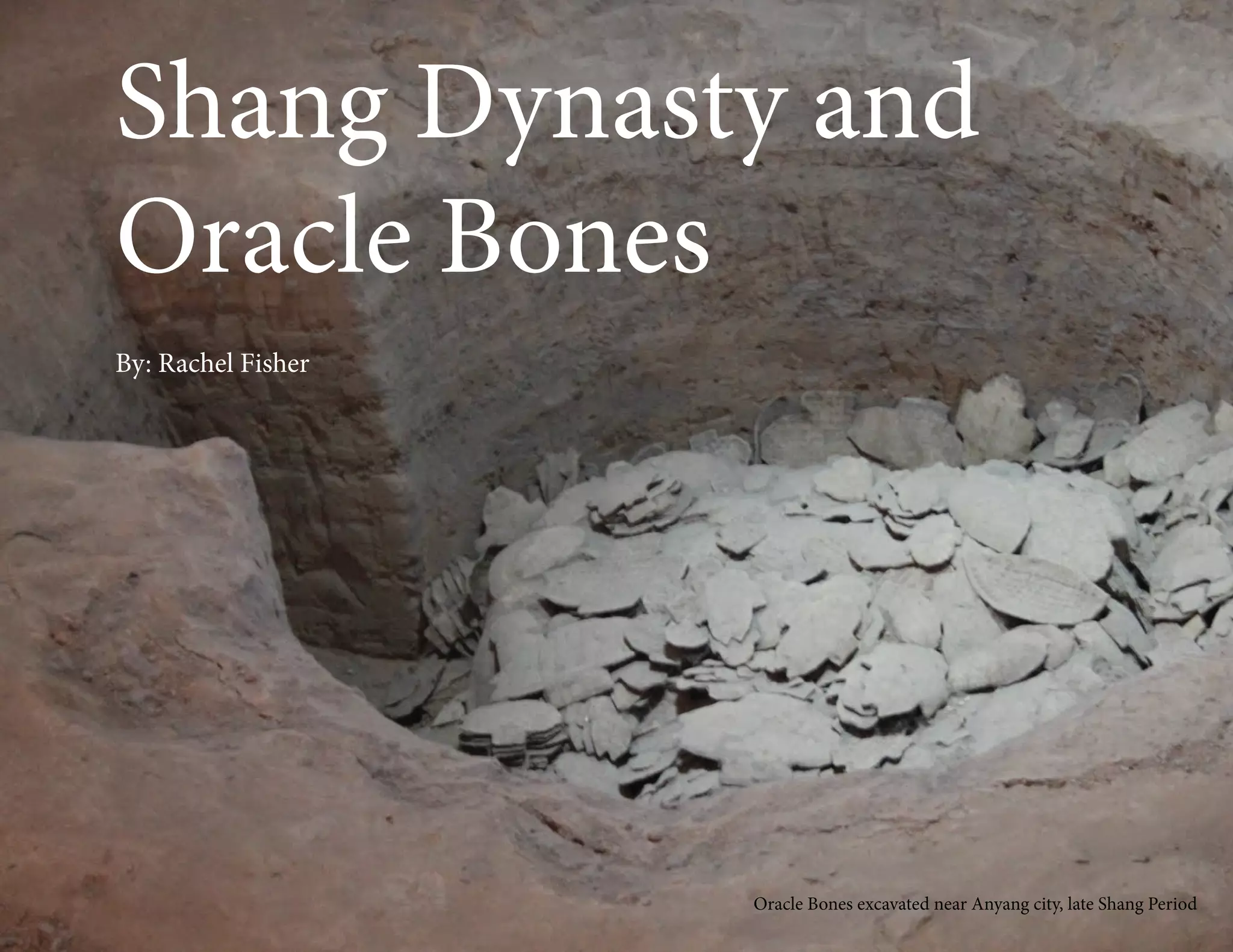
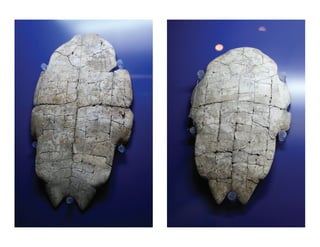
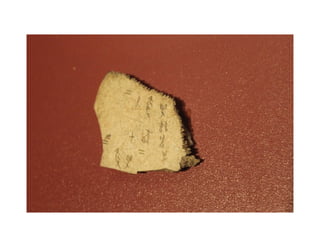
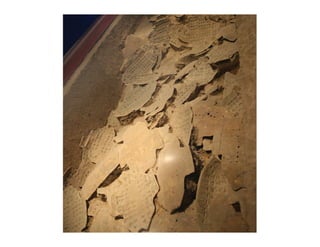
                    Oracle Bones excavated near Anyang city, late Shang Period
Shang Dynasty
2000 - 1650 BCE

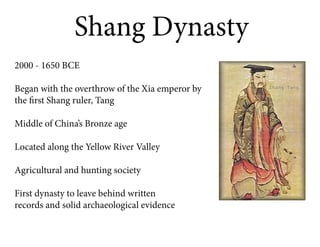
Began with the overthrow of the Xia emperor by
the first Shang ruler, Tang

Middle of China’s Bronze age

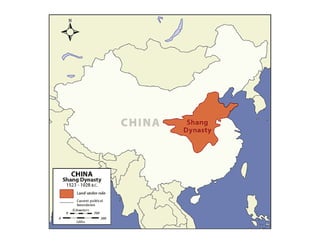
Located along the Yellow River Valley

Agricultural and hunting society

First dynasty to leave behind written
records and solid archaeological evidence
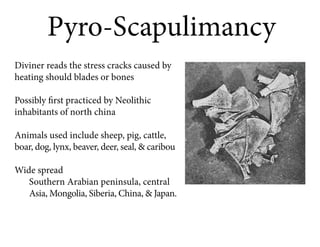
Pyro-Scapulimancy
Diviner reads the stress cracks caused by
heating should blades or bones

Possibly first practiced by Neolithic
inhabitants of north china

Animals used include sheep, pig, cattle,
boar, dog, lynx, beaver, deer, seal, & caribou

Wide spread
   Southern Arabian peninsula, central
   Asia, Mongolia, Siberia, China, & Japan.
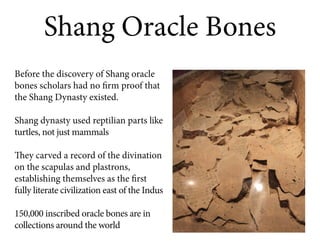
Shang Oracle Bones
Before the discovery of Shang oracle
bones scholars had no firm proof that
the Shang Dynasty existed.

Shang dynasty used reptilian parts like
turtles, not just mammals

They carved a record of the divination
on the scapulas and plastrons,
establishing themselves as the first
fully literate civilization east of the Indus

150,000 inscribed oracle bones are in
collections around the world
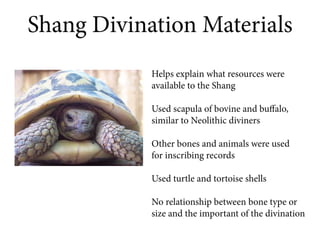
Shang Divination Materials
            Helps explain what resources were
            available to the Shang

            Used scapula of bovine and buffalo,
            similar to Neolithic diviners

            Other bones and animals were used
            for inscribing records

            Used turtle and tortoise shells

            No relationship between bone type or
            size and the important of the divination
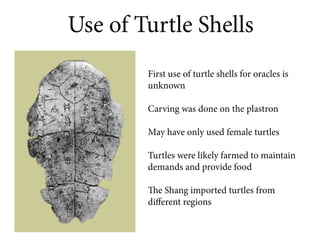
Use of Turtle Shells
        First use of turtle shells for oracles is
        unknown

        Carving was done on the plastron

        May have only used female turtles

        Turtles were likely farmed to maintain
        demands and provide food

        The Shang imported turtles from
        different regions
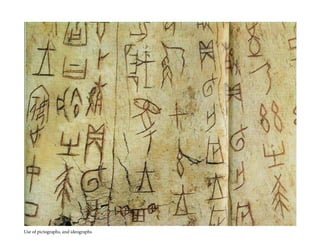
Use of pictographs, and ideographs
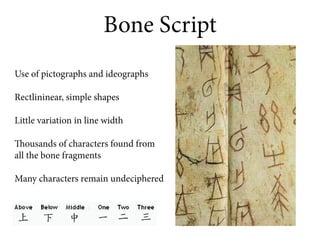
Bone Script
Use of pictographs and ideographs

Rectlininear, simple shapes

Little variation in line width

Thousands of characters found from
all the bone fragments

Many characters remain undeciphered
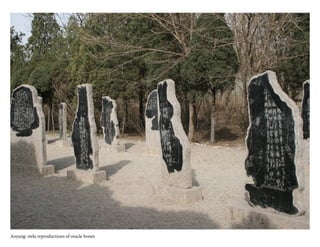
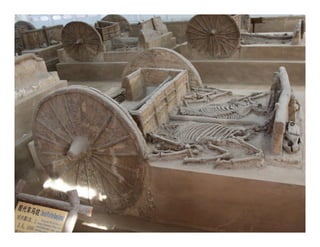
Anyang: stela reproductions of oracle bones
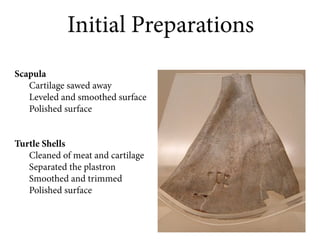
Initial Preparations
Scapula
   Cartilage sawed away
   Leveled and smoothed surface
   Polished surface


Turtle Shells
   Cleaned of meat and cartilage
   Separated the plastron
   Smoothed and trimmed
   Polished surface
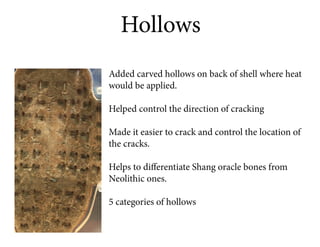
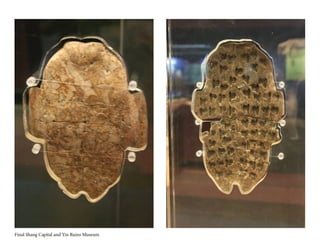
Hollows
Added carved hollows on back of shell where heat
would be applied.

Helped control the direction of cracking

Made it easier to crack and control the location of
the cracks.

Helps to differentiate Shang oracle bones from
Neolithic ones.

5 categories of hollows
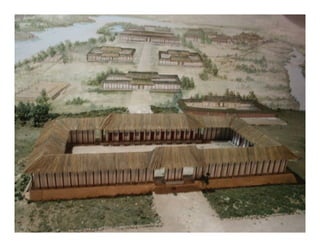
Final Shang Capital and Yin Ruins Museum
Heating
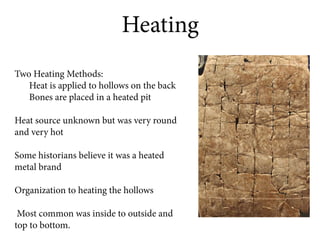
Two Heating Methods:
   Heat is applied to hollows on the back
   Bones are placed in a heated pit

Heat source unknown but was very round
and very hot

Some historians believe it was a heated
metal brand

Organization to heating the hollows

 Most common was inside to outside and
top to bottom.
Interpretations
Diviner cracked bone, interpreted it, and engraver cut a record of the
interpretation into the scapula or plastron.

Inscriptions included:
    Cyclical day of divination
    Name of diviner
    Sometimes the location
    Charge (the topic in question)
    The diviners interpretation

Divination took place on every day of the ten-day Shang week.
Verification
Sometimes a sentence would be carved into the oracle bone to say
what really happened


Almost always confirmed the divination


Often used the Chinese word meaning “really truly”


Sometimes carvings verified that a divination happened even if it was
after the time predicted
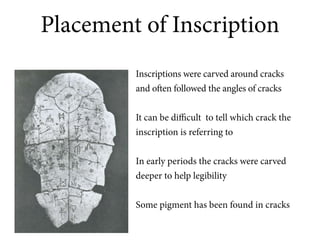
Placement of Inscription
         Inscriptions were carved around cracks
         and often followed the angles of cracks


         It can be difficult to tell which crack the
         inscription is referring to


         In early periods the cracks were carved
         deeper to help legibility

         Some pigment has been found in cracks
Oracle Questions
Sacrifices                          Military campaigns
Hunting expeditions                 Outcome of the next day/night
Weather                             Agriculture
Sickness                            Childbirth
Dreams                              Divine assistance or approval


“Will the king have a son?”
“Will it rain tomorrow?”
“If we send 3,000 men into battle, will we succeed?”
“Is the long drought caused by ancestor X?”
Shang Social Hierarchy
Monarchy where king was head of politics and religion

Very rigid social classes

Writing increased the hierarchy in government and social statuses by
allowing large scale organization and regulations.


Shang kings were constantly at war with outsiders

During later period of dynasty, kings were only diviners
Shang Culture
The Shang worshipped “Shang Ti,” a supreme god that ruled over the
lesser gods of the sun, the moon, the wind, and other forces of nature.

They believed in the after life and gave sacrifices to important ancestors

Shang documents were recorded on strips of bamboo and silk may have
decomposed, leaving mainly oracle bones and bronze inscriptions

Bone Script created a basis for modern chinese calligraphy
Fall of Shang Dynasty
Shang Dynasty ended when the Duke of Zhou invaded and conquered
the capital


Legend claims that they overthrow the Shang Dynasty because the king
was evil and heaven no longer wanted him to rule.


Mandate of Heaven


Followed by the Zhou Dynasty
Sources
Department of Asian Art. “Shang and Zhou Dynasties: The Bronze Age of China”. In
    Heilbrunn Timeline of Art History. New York: The Metropolitan Museum of Art, 2000–.
    http://www.metmuseum.org/toah/hd/shzh/hd_shzh.htm (October 2004)

“From Oracle Bone Inscriptions to Modern Language.” History - China Culture. 2007. Web.
     7 Oct. 2011. <http://history.cultural-china.com/en/181History5896.html>.

Keightley, David N., and Noel Barnard. The Origins of Chinese Civilization. Berkeley:
     University of California, 1983.

Kneightley, David N. “Sources of Shang History: The Oracle Bone Inscriptions of Bronze Age
     China.” The Origins of Writing. Berkeley: University of California, 1978.

“The Shang Dynasty, 1600 to 1050 BCE.” Stanford. Spice Digest, Fall 2007. Web. 7 Oct. 2011.
     <http://iis-db.stanford.edu/docs/117/ShangDynasty.pdf>

“Shang Dynasty.” China Culture. Ministry of Chinese Culture, 2003. Web. 9 Oct. 2011.
     <http://www.chinaculture.org/gb/en_aboutchina/2003-09/24/content_22689.htm>.


Additional Image Source
http://picasaweb.google.com/116512474184071531500/AnyangFinalShangCapitalYinRuinsMuseum?gses
sionid=9suX3m75NHY4s9Ocxk5k4A#

Shang dynasty powerpoint

  • 1.
    Shang Dynasty and OracleBones By: Rachel Fisher Oracle Bones excavated near Anyang city, late Shang Period
  • 2.
    Shang Dynasty 2000 -1650 BCE Began with the overthrow of the Xia emperor by the first Shang ruler, Tang Middle of China’s Bronze age Located along the Yellow River Valley Agricultural and hunting society First dynasty to leave behind written records and solid archaeological evidence
  • 4.
    Pyro-Scapulimancy Diviner reads thestress cracks caused by heating should blades or bones Possibly first practiced by Neolithic inhabitants of north china Animals used include sheep, pig, cattle, boar, dog, lynx, beaver, deer, seal, & caribou Wide spread Southern Arabian peninsula, central Asia, Mongolia, Siberia, China, & Japan.
  • 5.
    Shang Oracle Bones Beforethe discovery of Shang oracle bones scholars had no firm proof that the Shang Dynasty existed. Shang dynasty used reptilian parts like turtles, not just mammals They carved a record of the divination on the scapulas and plastrons, establishing themselves as the first fully literate civilization east of the Indus 150,000 inscribed oracle bones are in collections around the world
  • 6.
    Shang Divination Materials Helps explain what resources were available to the Shang Used scapula of bovine and buffalo, similar to Neolithic diviners Other bones and animals were used for inscribing records Used turtle and tortoise shells No relationship between bone type or size and the important of the divination
  • 7.
    Use of TurtleShells First use of turtle shells for oracles is unknown Carving was done on the plastron May have only used female turtles Turtles were likely farmed to maintain demands and provide food The Shang imported turtles from different regions
  • 8.
    Use of pictographs,and ideographs
  • 9.
    Bone Script Use ofpictographs and ideographs Rectlininear, simple shapes Little variation in line width Thousands of characters found from all the bone fragments Many characters remain undeciphered
  • 13.
  • 14.
    Initial Preparations Scapula Cartilage sawed away Leveled and smoothed surface Polished surface Turtle Shells Cleaned of meat and cartilage Separated the plastron Smoothed and trimmed Polished surface
  • 15.
    Hollows Added carved hollowson back of shell where heat would be applied. Helped control the direction of cracking Made it easier to crack and control the location of the cracks. Helps to differentiate Shang oracle bones from Neolithic ones. 5 categories of hollows
  • 16.
    Final Shang Capitaland Yin Ruins Museum
  • 17.
    Heating Two Heating Methods: Heat is applied to hollows on the back Bones are placed in a heated pit Heat source unknown but was very round and very hot Some historians believe it was a heated metal brand Organization to heating the hollows Most common was inside to outside and top to bottom.
  • 18.
    Interpretations Diviner cracked bone,interpreted it, and engraver cut a record of the interpretation into the scapula or plastron. Inscriptions included: Cyclical day of divination Name of diviner Sometimes the location Charge (the topic in question) The diviners interpretation Divination took place on every day of the ten-day Shang week.
  • 19.
    Verification Sometimes a sentencewould be carved into the oracle bone to say what really happened Almost always confirmed the divination Often used the Chinese word meaning “really truly” Sometimes carvings verified that a divination happened even if it was after the time predicted
  • 20.
    Placement of Inscription Inscriptions were carved around cracks and often followed the angles of cracks It can be difficult to tell which crack the inscription is referring to In early periods the cracks were carved deeper to help legibility Some pigment has been found in cracks
  • 21.
    Oracle Questions Sacrifices Military campaigns Hunting expeditions Outcome of the next day/night Weather Agriculture Sickness Childbirth Dreams Divine assistance or approval “Will the king have a son?” “Will it rain tomorrow?” “If we send 3,000 men into battle, will we succeed?” “Is the long drought caused by ancestor X?”
  • 22.
    Shang Social Hierarchy Monarchywhere king was head of politics and religion Very rigid social classes Writing increased the hierarchy in government and social statuses by allowing large scale organization and regulations. Shang kings were constantly at war with outsiders During later period of dynasty, kings were only diviners
  • 23.
    Shang Culture The Shangworshipped “Shang Ti,” a supreme god that ruled over the lesser gods of the sun, the moon, the wind, and other forces of nature. They believed in the after life and gave sacrifices to important ancestors Shang documents were recorded on strips of bamboo and silk may have decomposed, leaving mainly oracle bones and bronze inscriptions Bone Script created a basis for modern chinese calligraphy
  • 26.
    Fall of ShangDynasty Shang Dynasty ended when the Duke of Zhou invaded and conquered the capital Legend claims that they overthrow the Shang Dynasty because the king was evil and heaven no longer wanted him to rule. Mandate of Heaven Followed by the Zhou Dynasty
  • 27.
    Sources Department of AsianArt. “Shang and Zhou Dynasties: The Bronze Age of China”. In Heilbrunn Timeline of Art History. New York: The Metropolitan Museum of Art, 2000–. http://www.metmuseum.org/toah/hd/shzh/hd_shzh.htm (October 2004) “From Oracle Bone Inscriptions to Modern Language.” History - China Culture. 2007. Web. 7 Oct. 2011. <http://history.cultural-china.com/en/181History5896.html>. Keightley, David N., and Noel Barnard. The Origins of Chinese Civilization. Berkeley: University of California, 1983. Kneightley, David N. “Sources of Shang History: The Oracle Bone Inscriptions of Bronze Age China.” The Origins of Writing. Berkeley: University of California, 1978. “The Shang Dynasty, 1600 to 1050 BCE.” Stanford. Spice Digest, Fall 2007. Web. 7 Oct. 2011. <http://iis-db.stanford.edu/docs/117/ShangDynasty.pdf> “Shang Dynasty.” China Culture. Ministry of Chinese Culture, 2003. Web. 9 Oct. 2011. <http://www.chinaculture.org/gb/en_aboutchina/2003-09/24/content_22689.htm>. Additional Image Source http://picasaweb.google.com/116512474184071531500/AnyangFinalShangCapitalYinRuinsMuseum?gses sionid=9suX3m75NHY4s9Ocxk5k4A#