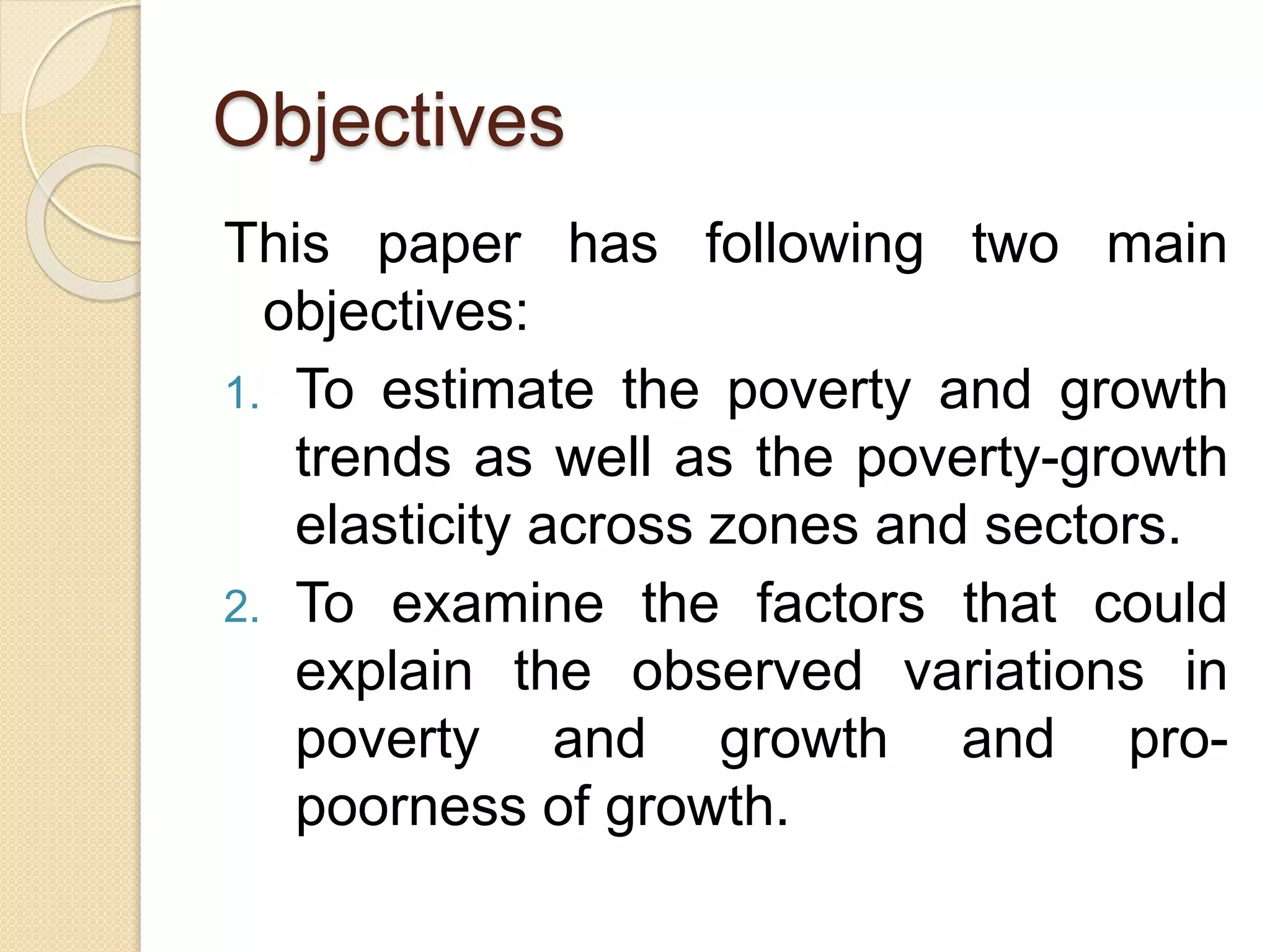
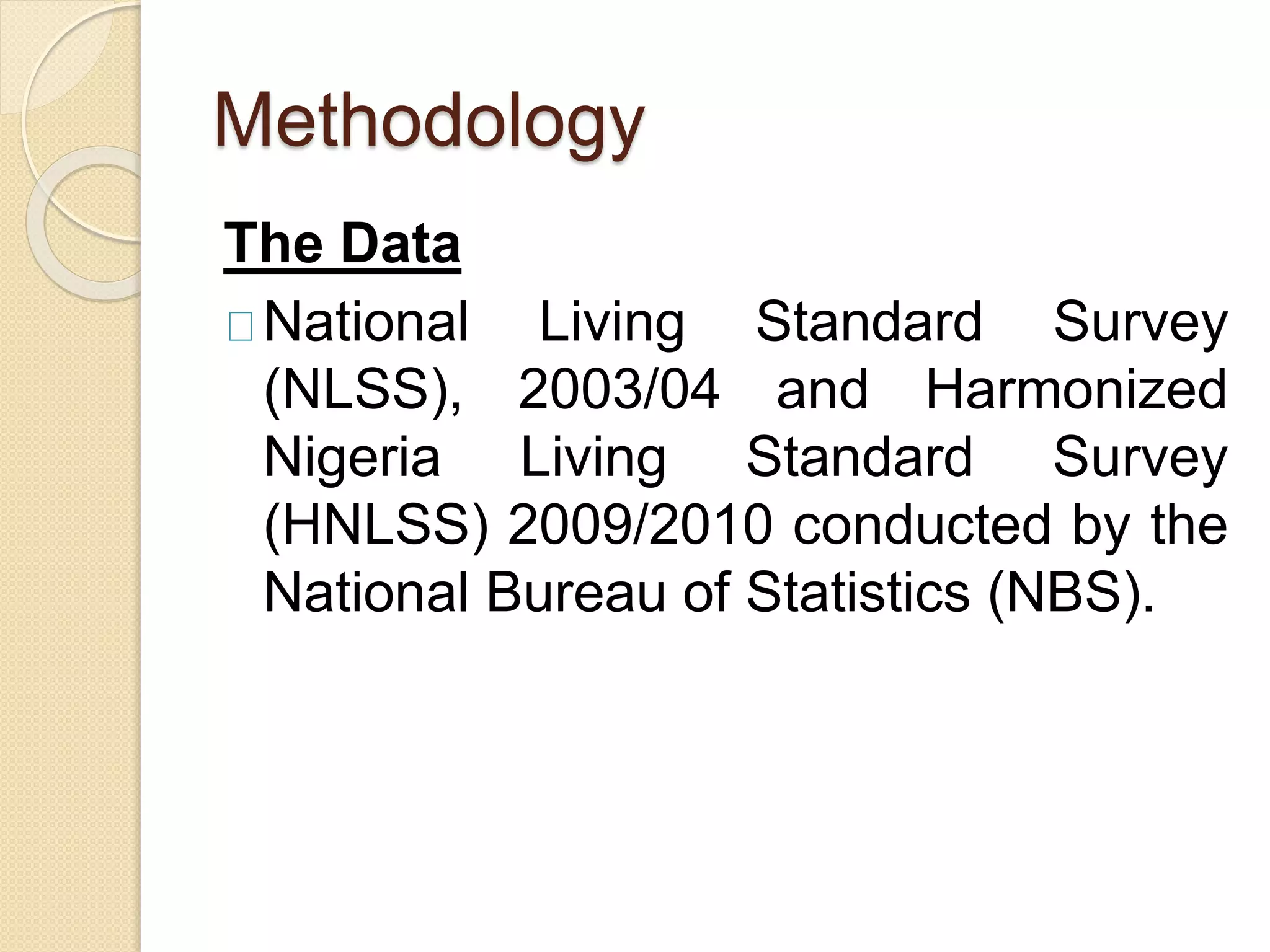
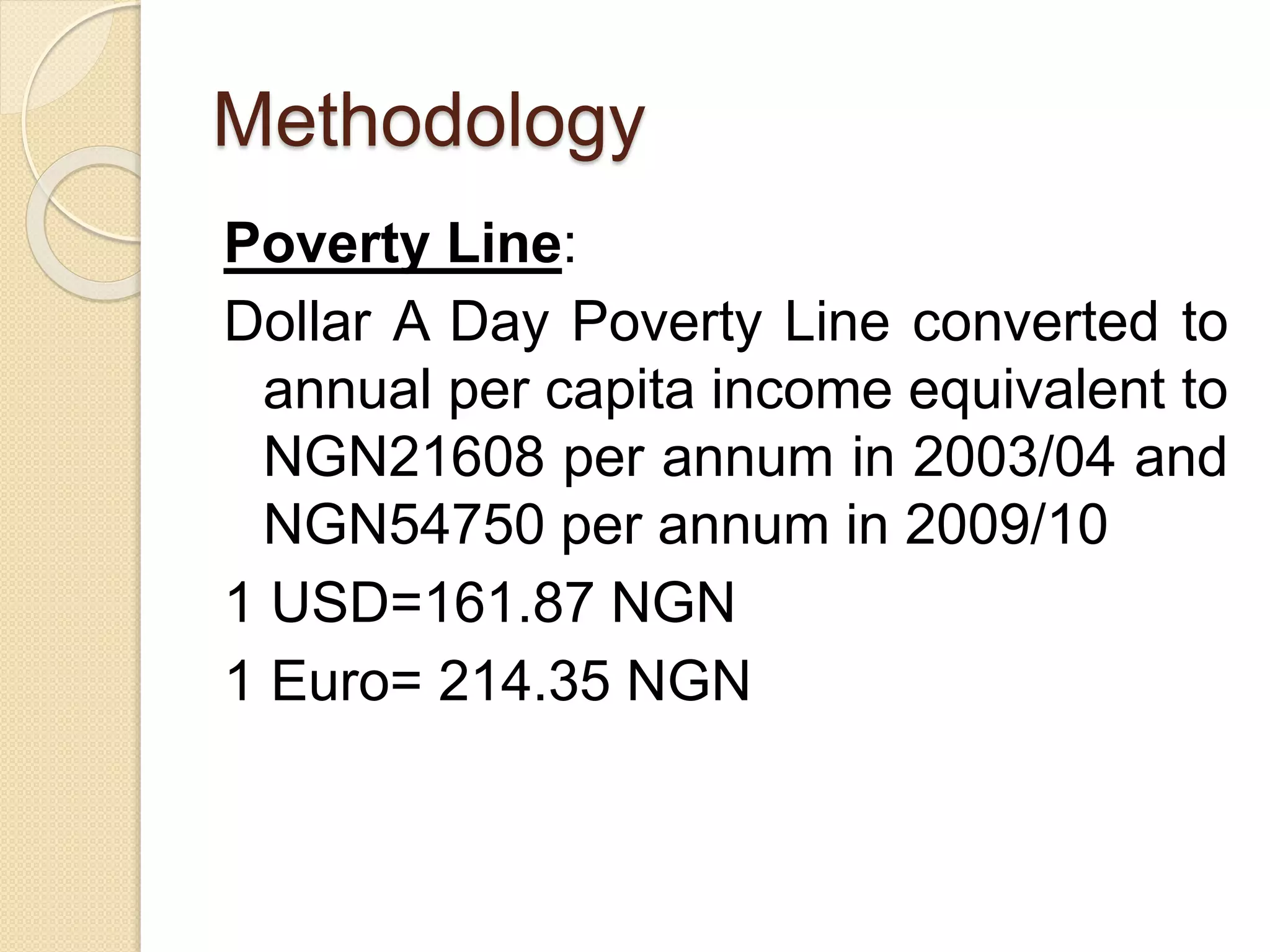
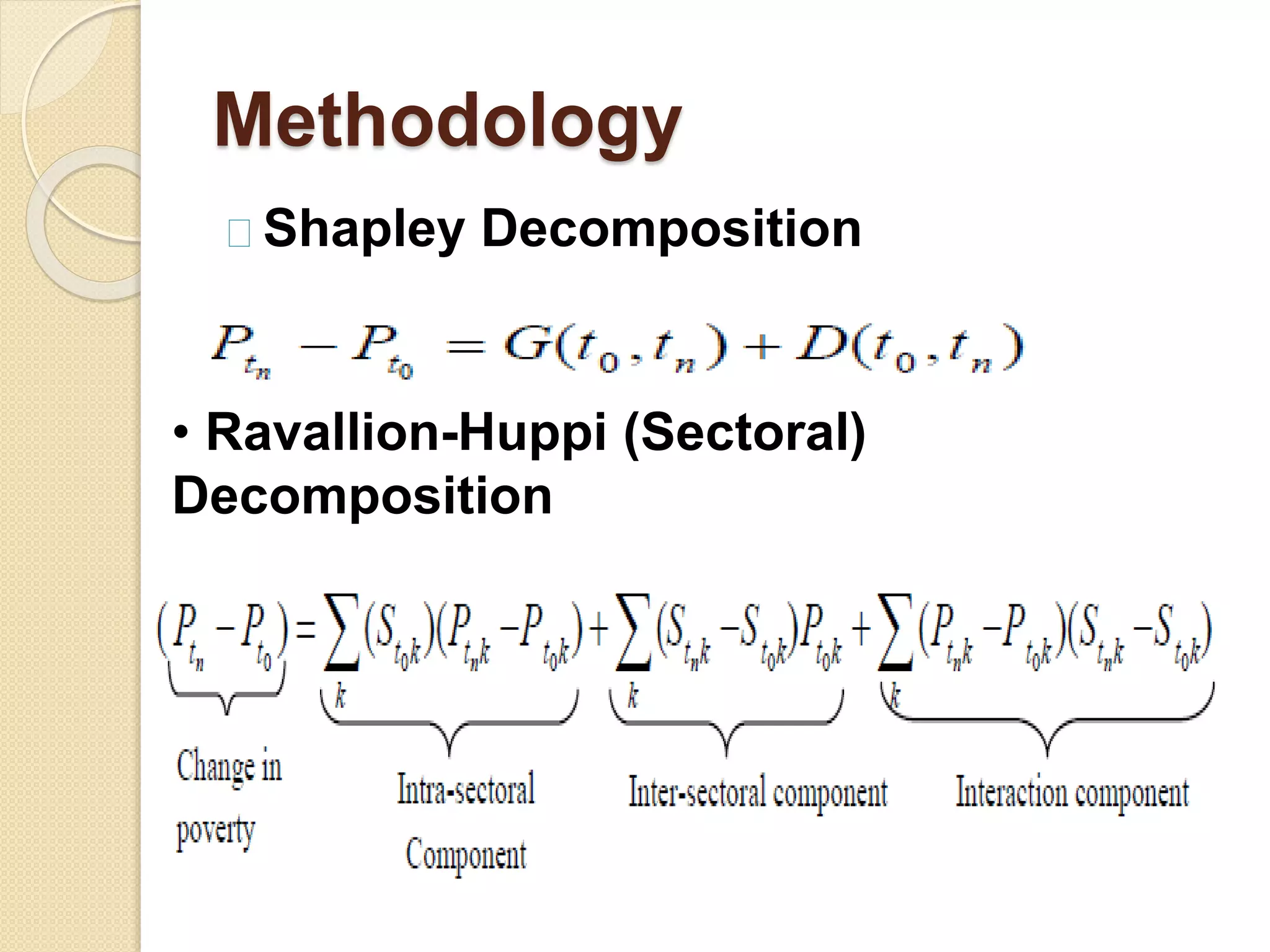
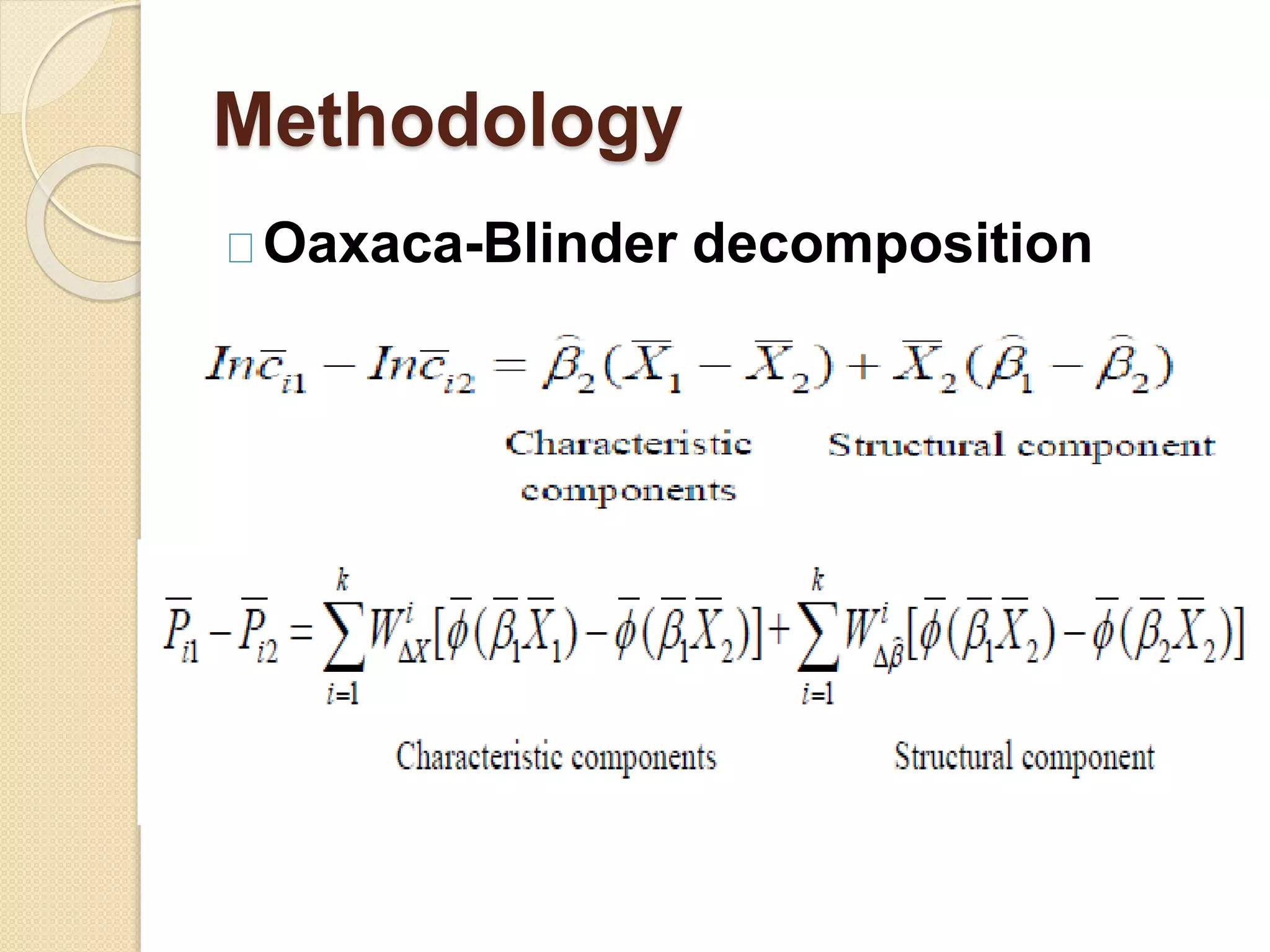
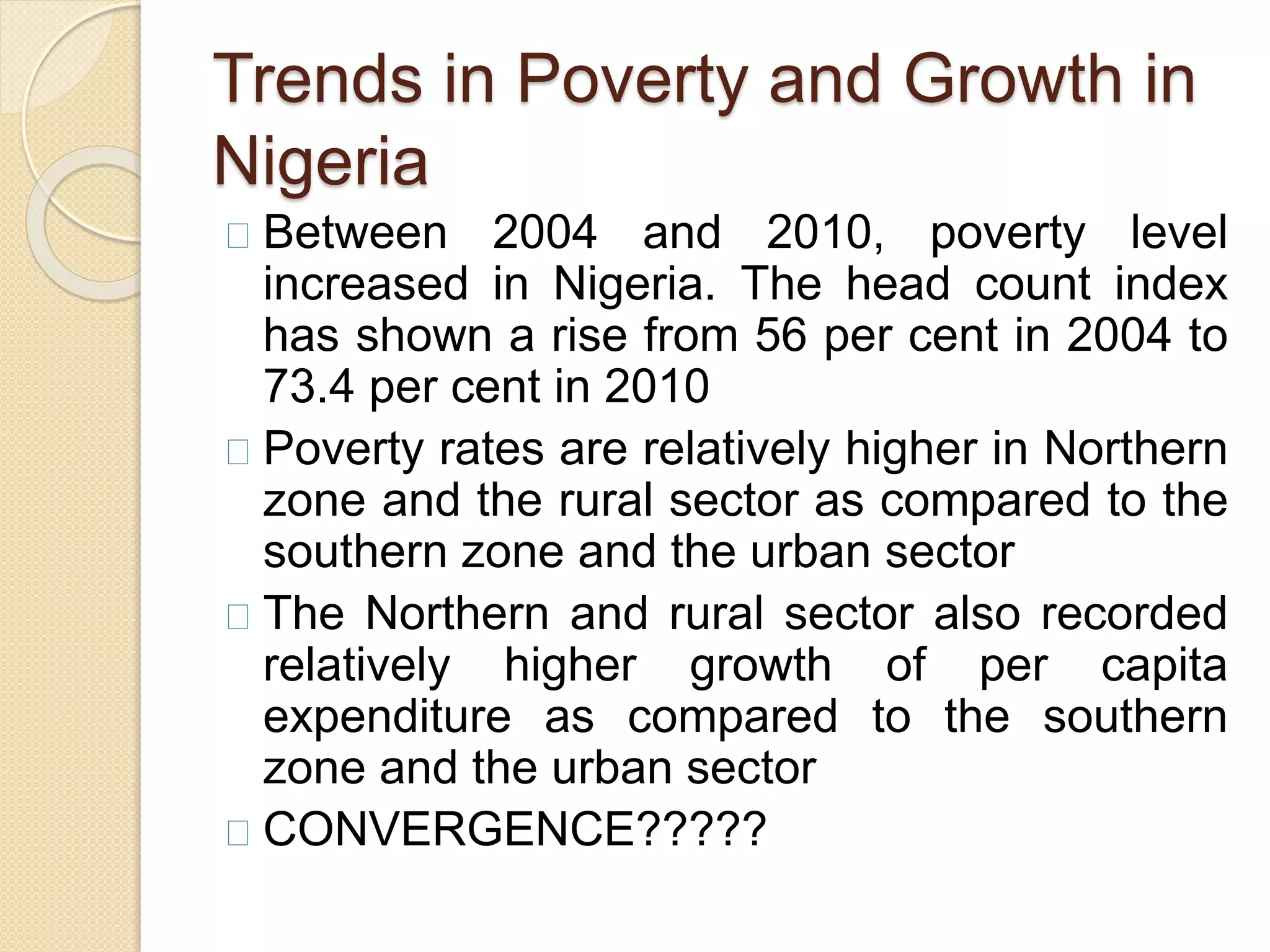
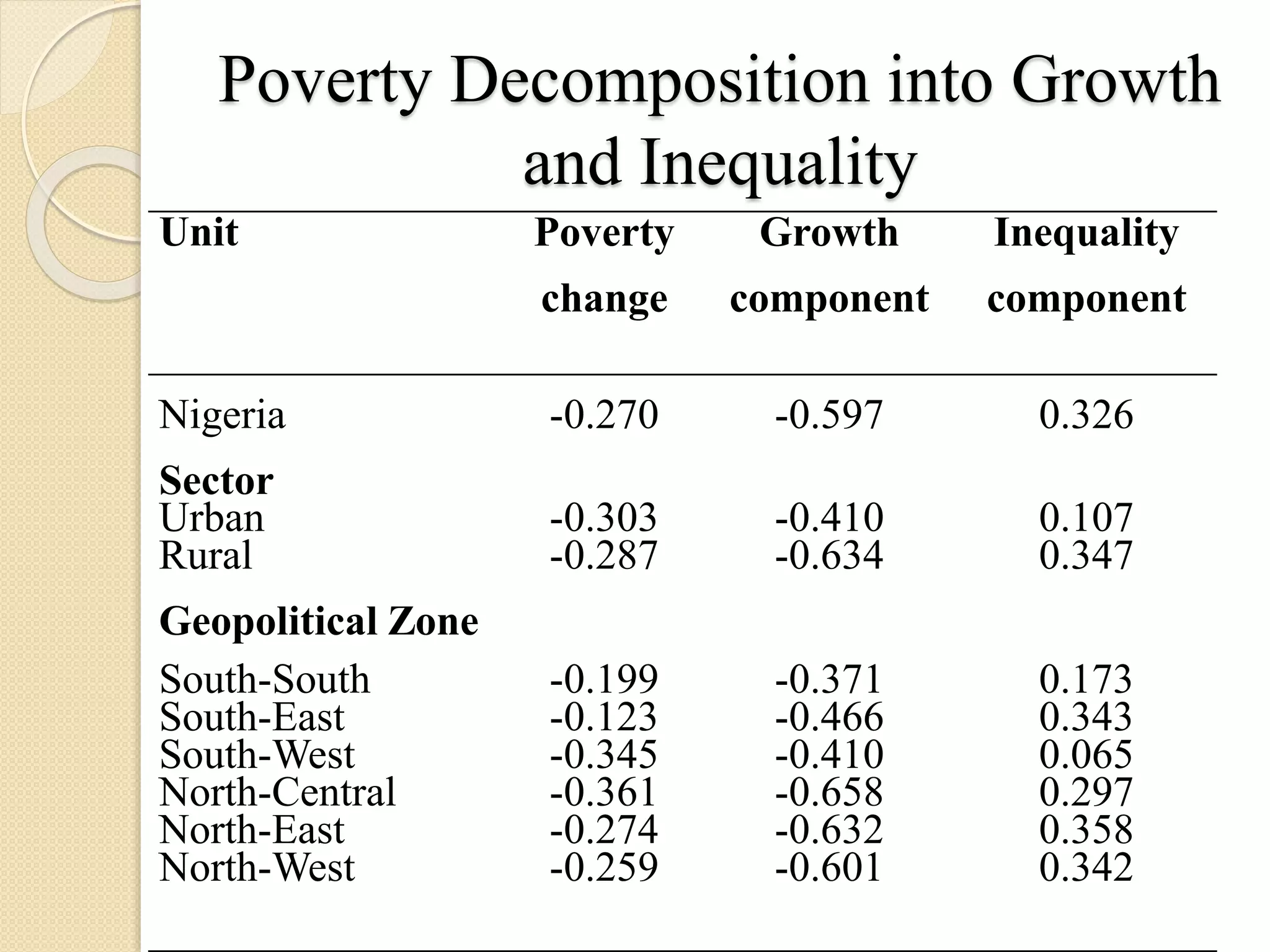
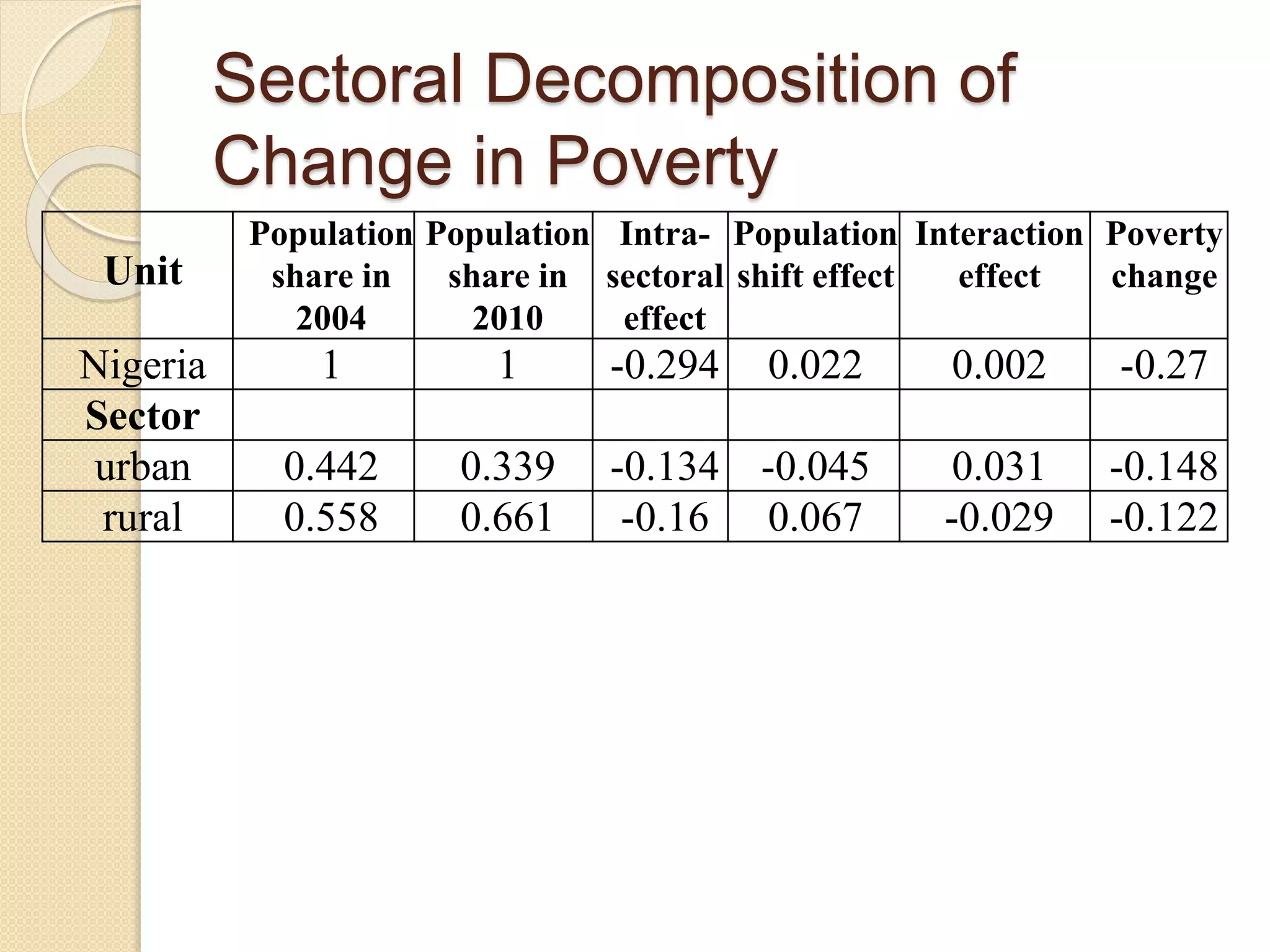
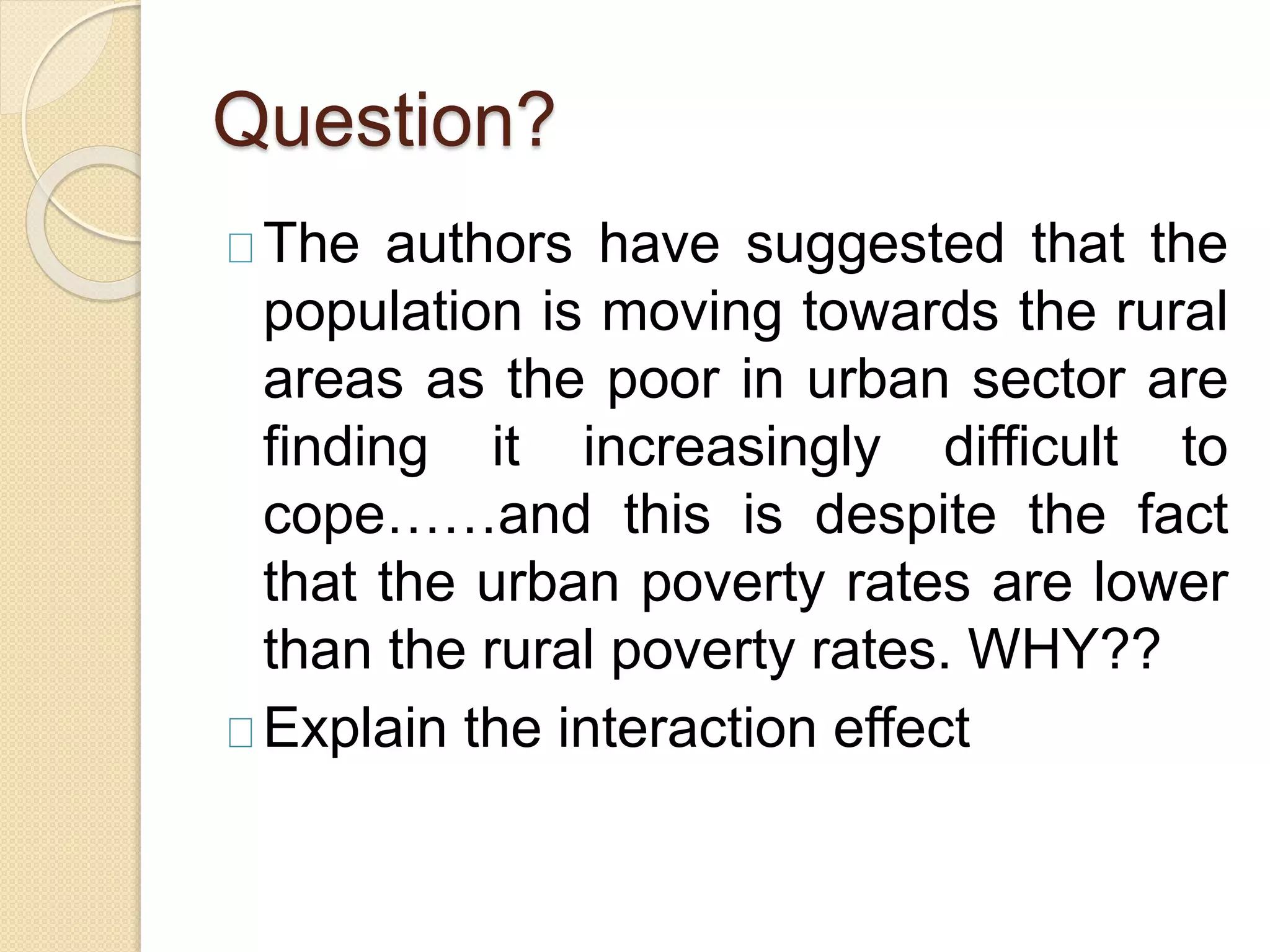
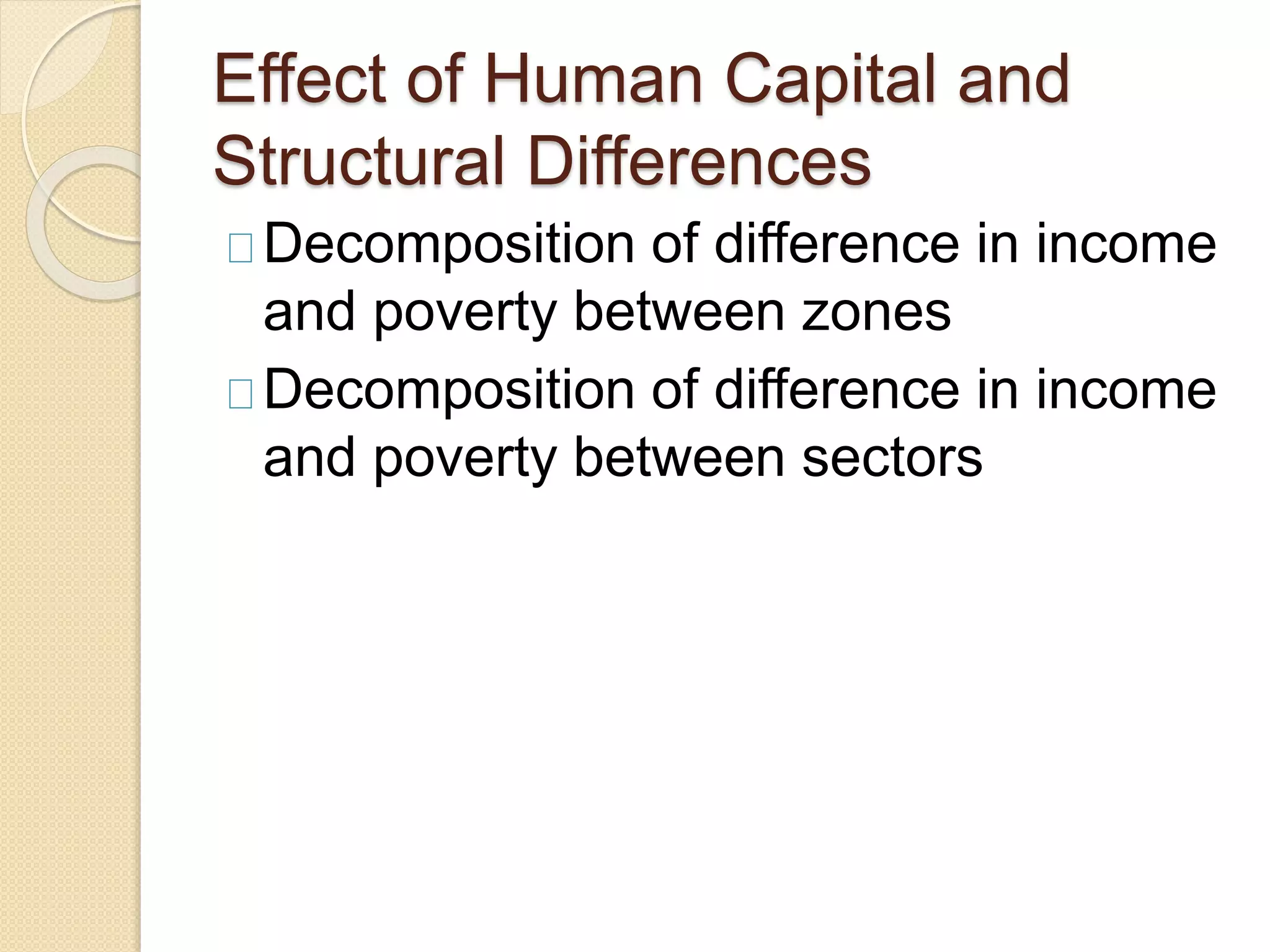
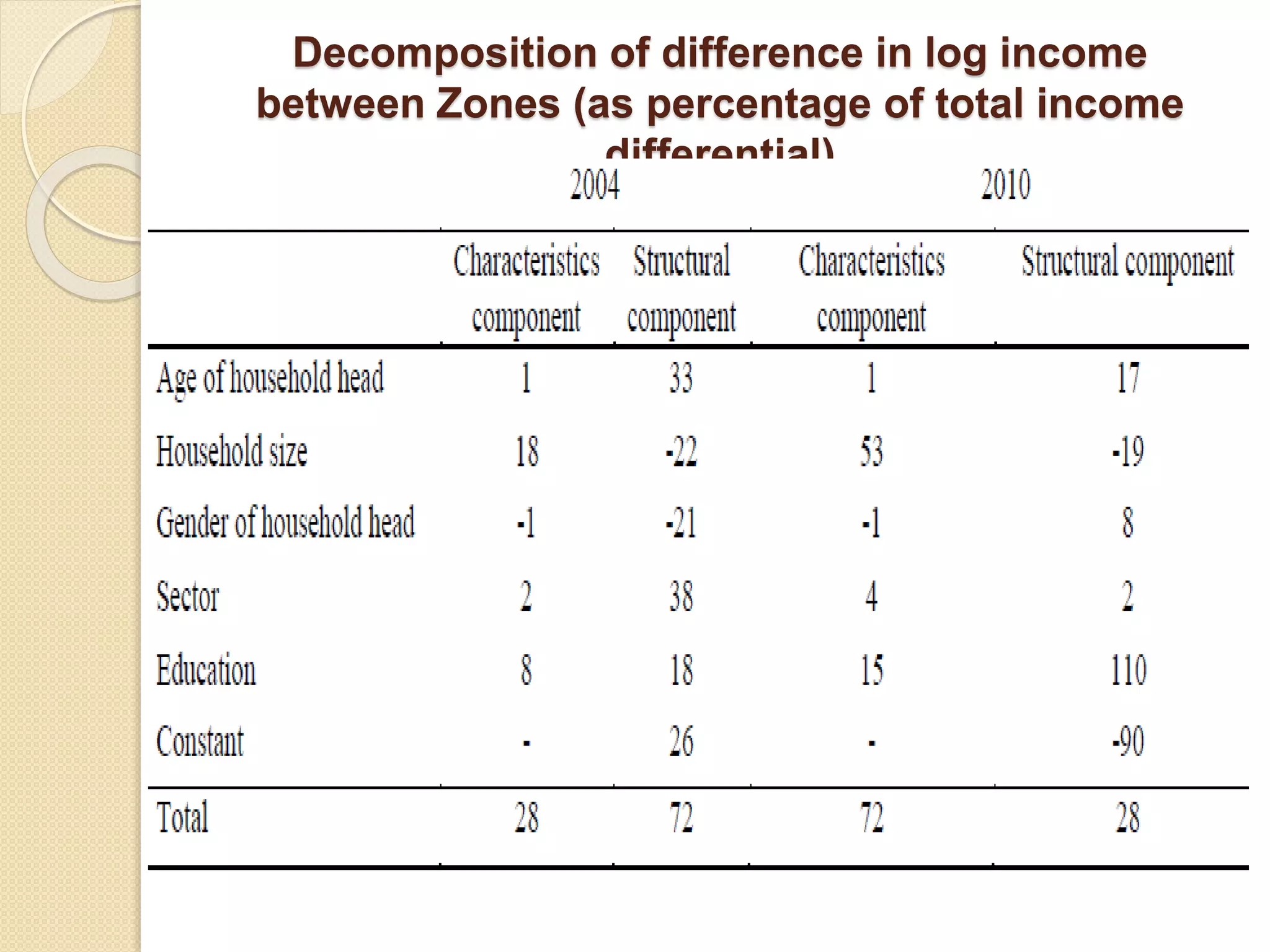
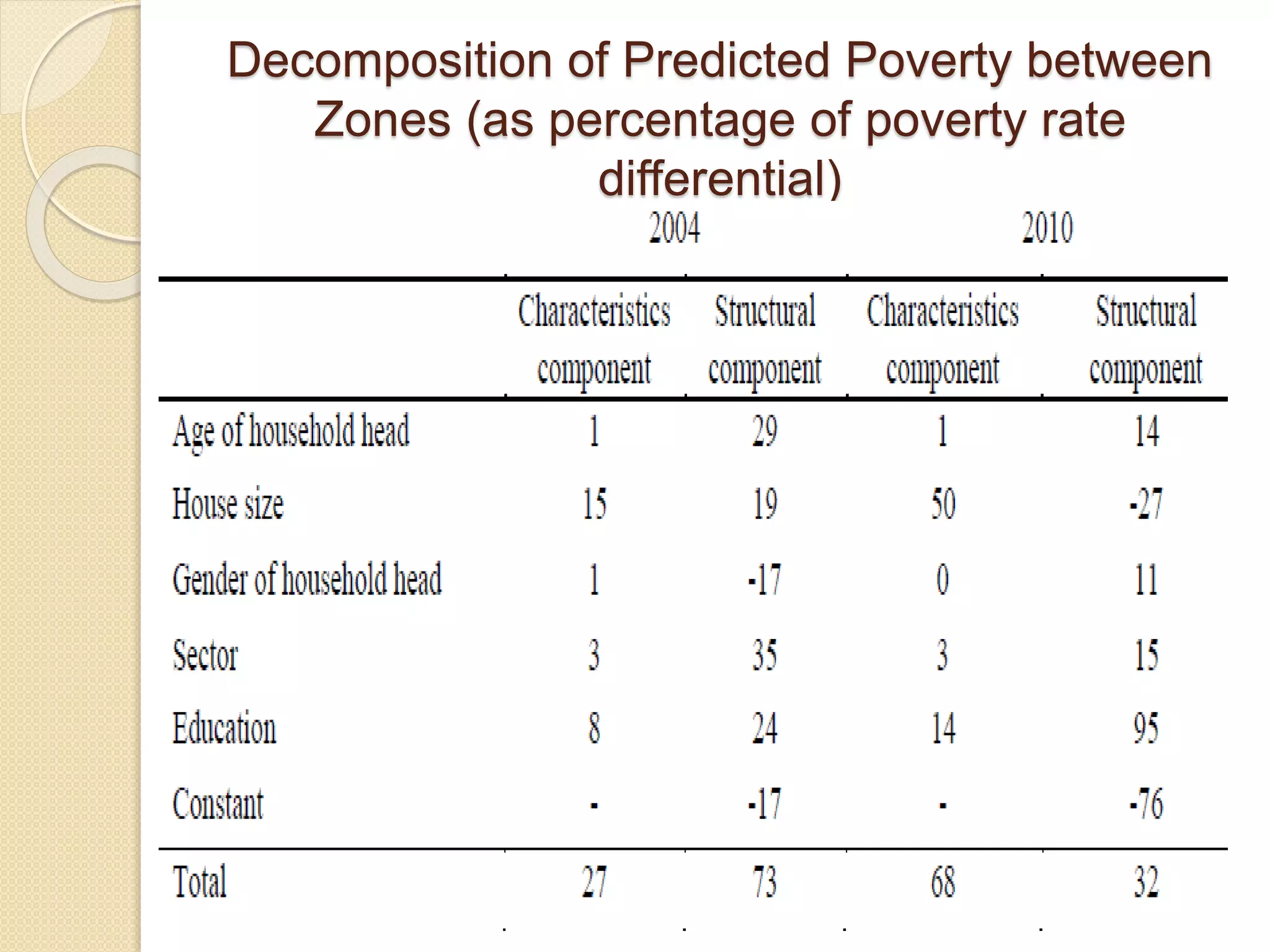
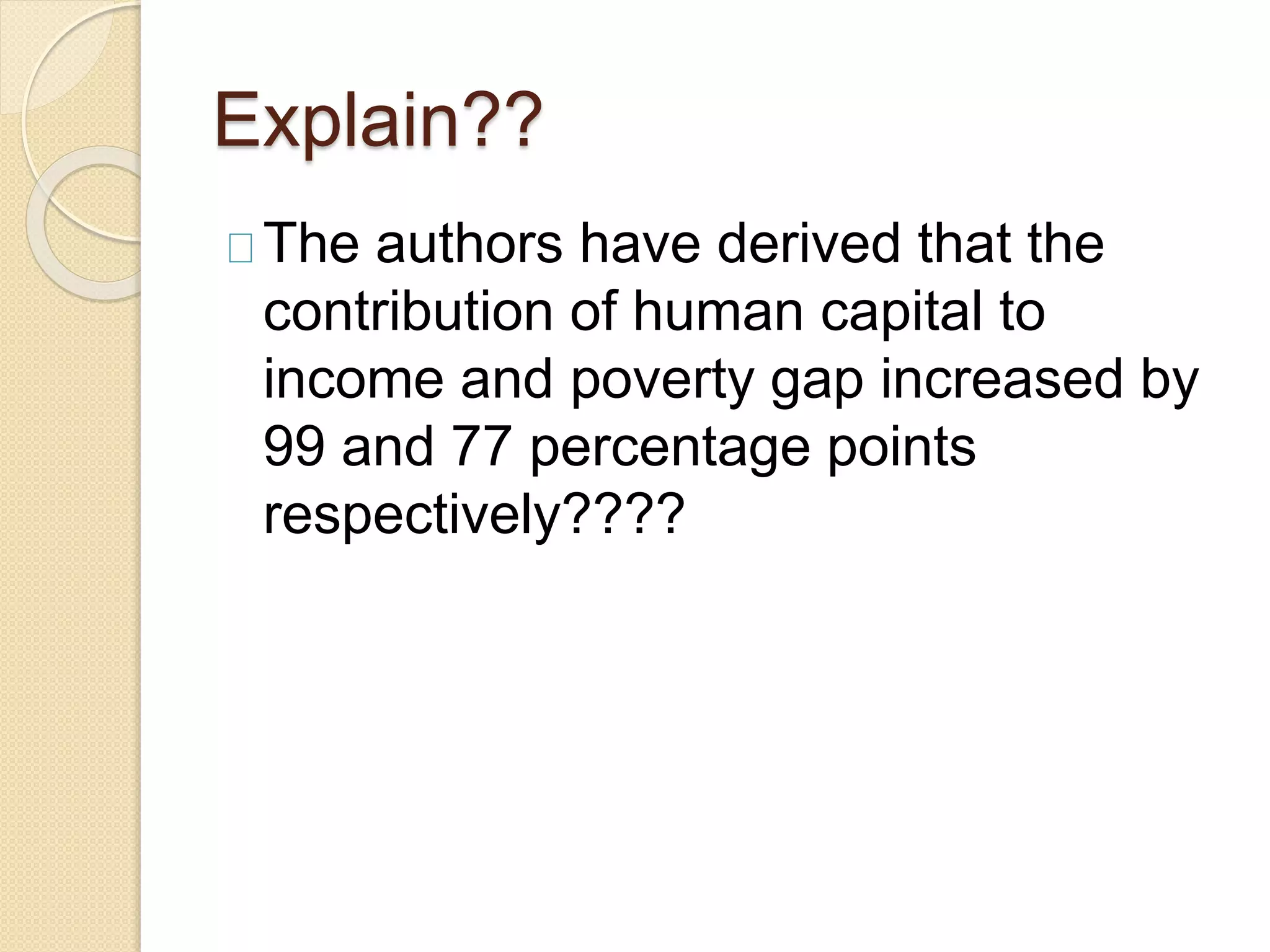
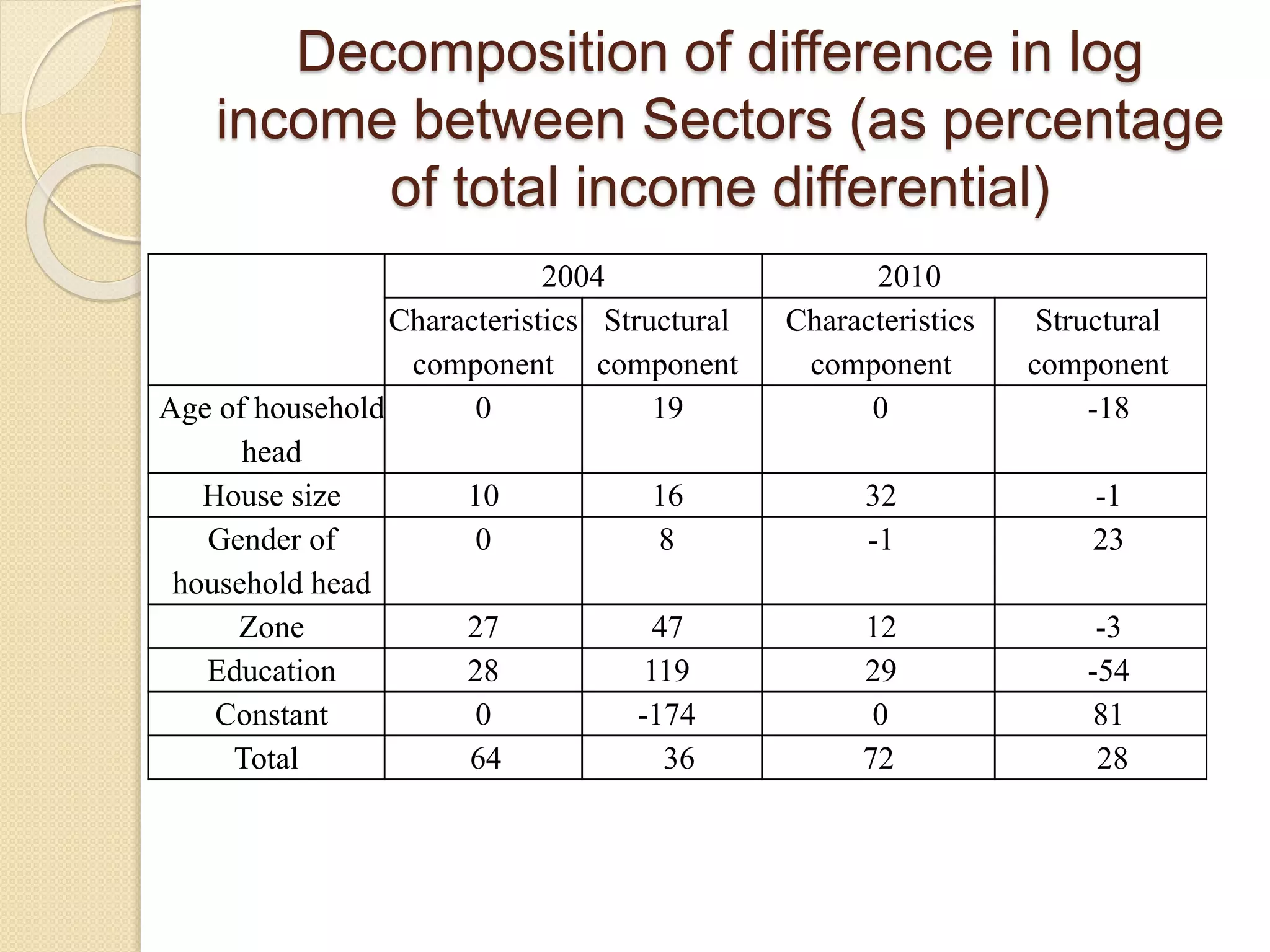
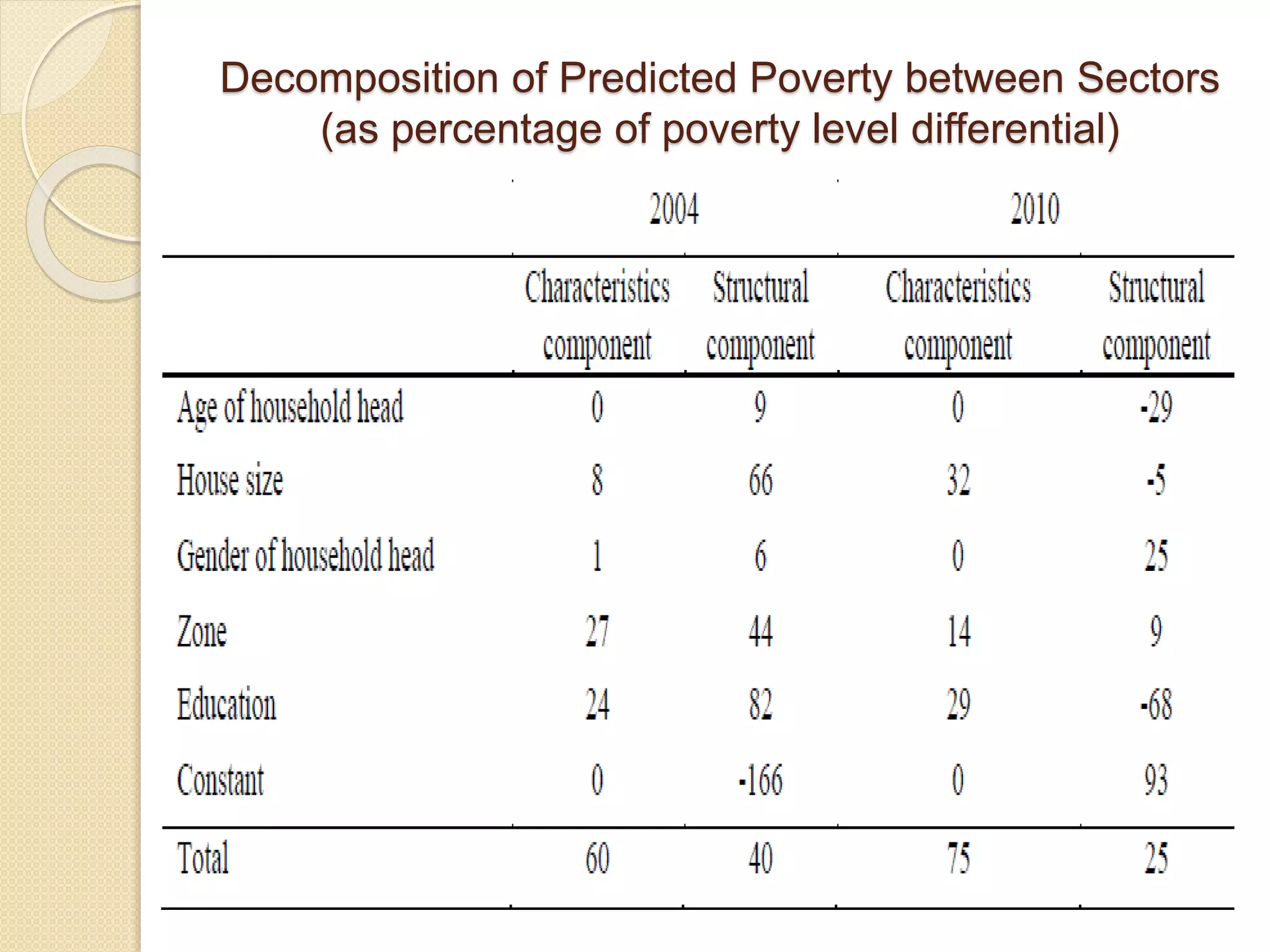
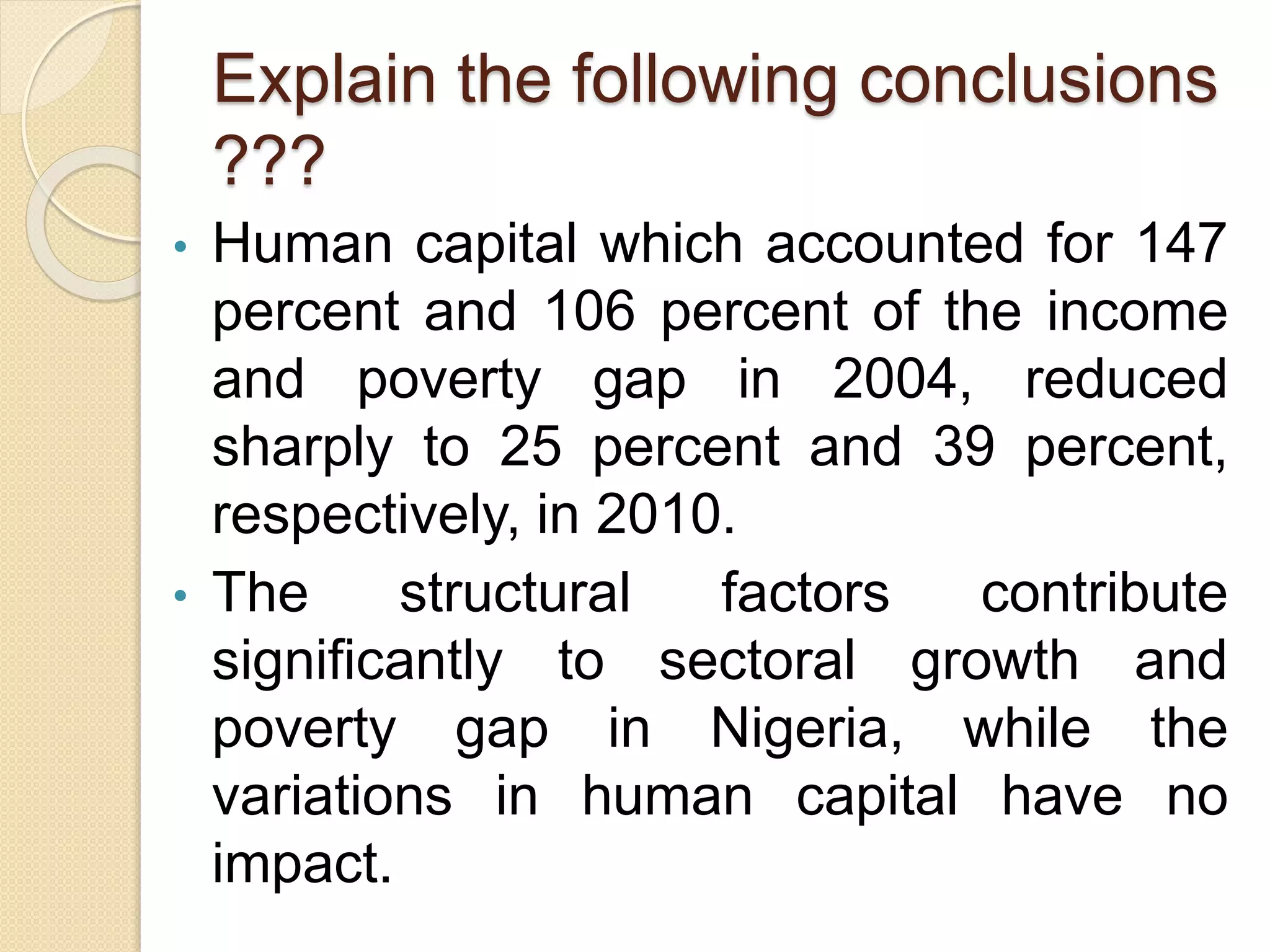
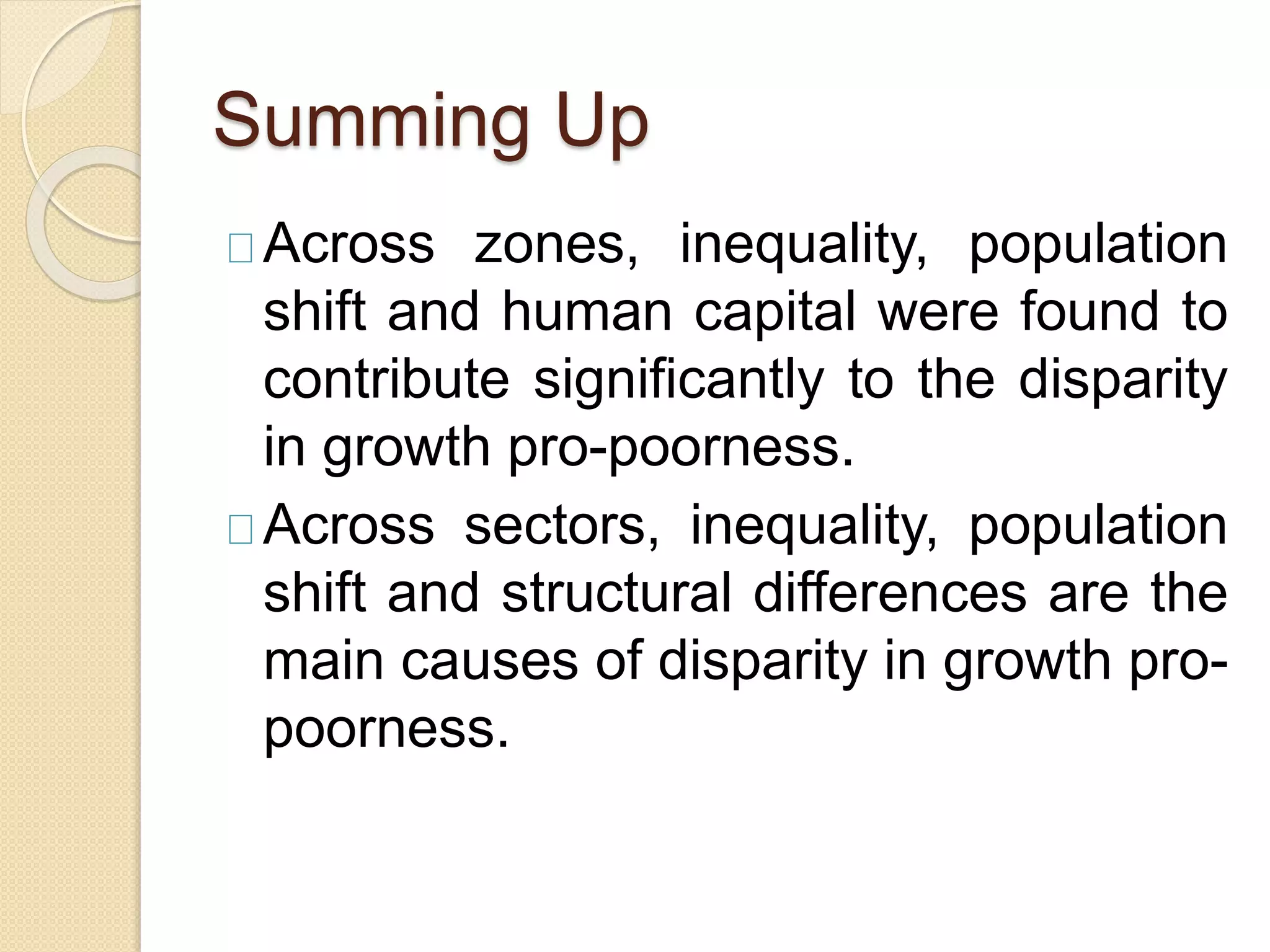
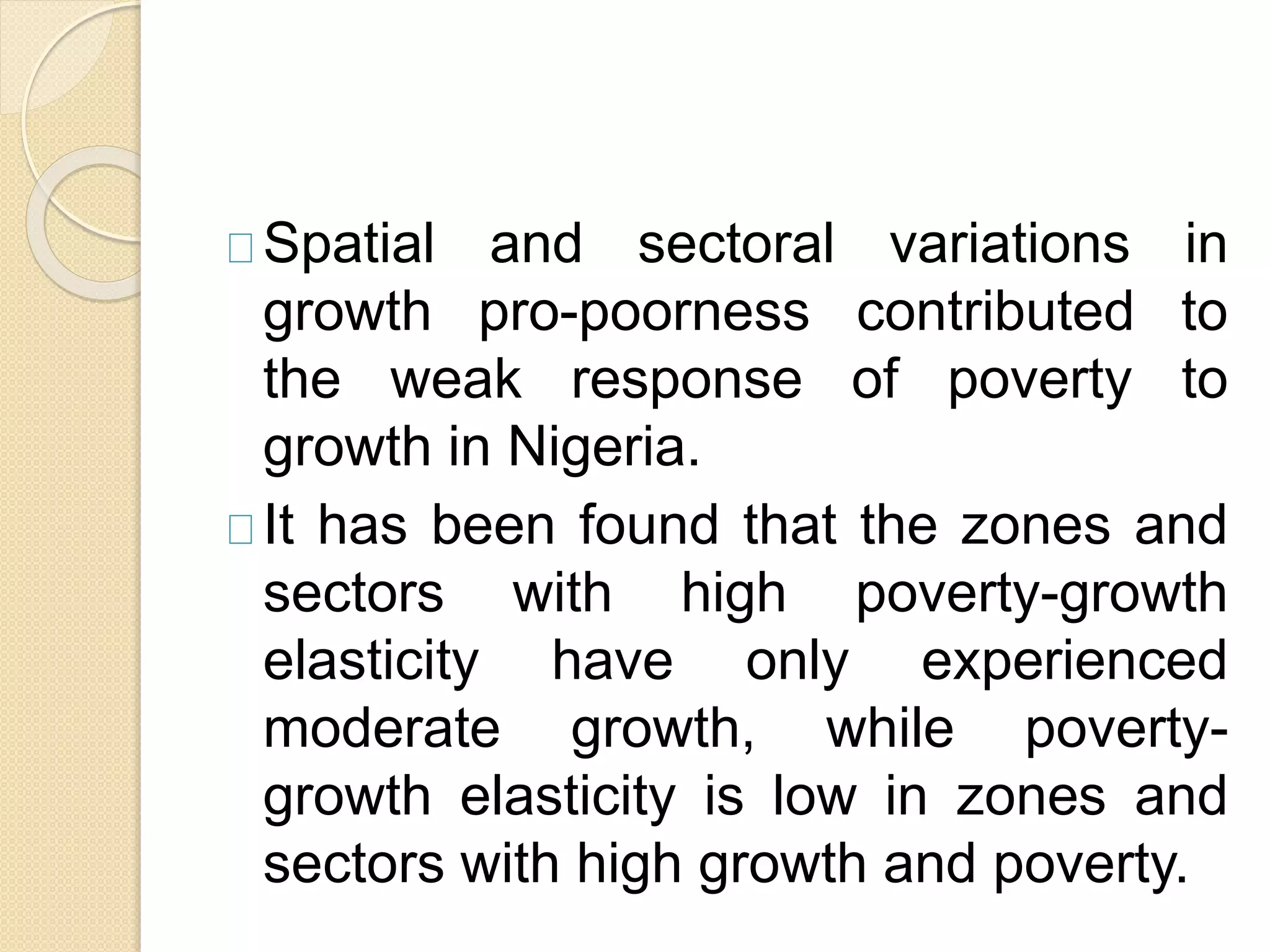

This paper analyzes poverty and growth trends across zones and sectors in Nigeria between 2004-2010. It finds that poverty increased nationwide over this period, with higher rates in northern zones and rural areas. Poverty-growth elasticity was below 1 and lower in northern/rural areas. Decomposition analyses show growth was the main factor reducing poverty, while increasing inequality weakened poverty reduction. Population shifts towards rural areas also increased poverty, particularly in northern zones. Human capital played a smaller role in explaining income/poverty differences between zones and sectors over time. Spatial and sectoral disparities in growth pro-poorness contributed to Nigeria's weak overall poverty reduction.


![Session 7 b commentson daneilkerpaperonukr&d servicelives2014iariw[1]](https://cdn.slidesharecdn.com/ss_thumbnails/pwfpecwntsmdld64j1xg-signature-6de5ee34a7e0a8be608105cfc95b1f55459403214875a488c94e063931d3b0c1-poli-140830080216-phpapp01-thumbnail.jpg?width=640&height=640&fit=bounds)


