Poverty and Inequality in a
Changing Context
Outline
1.

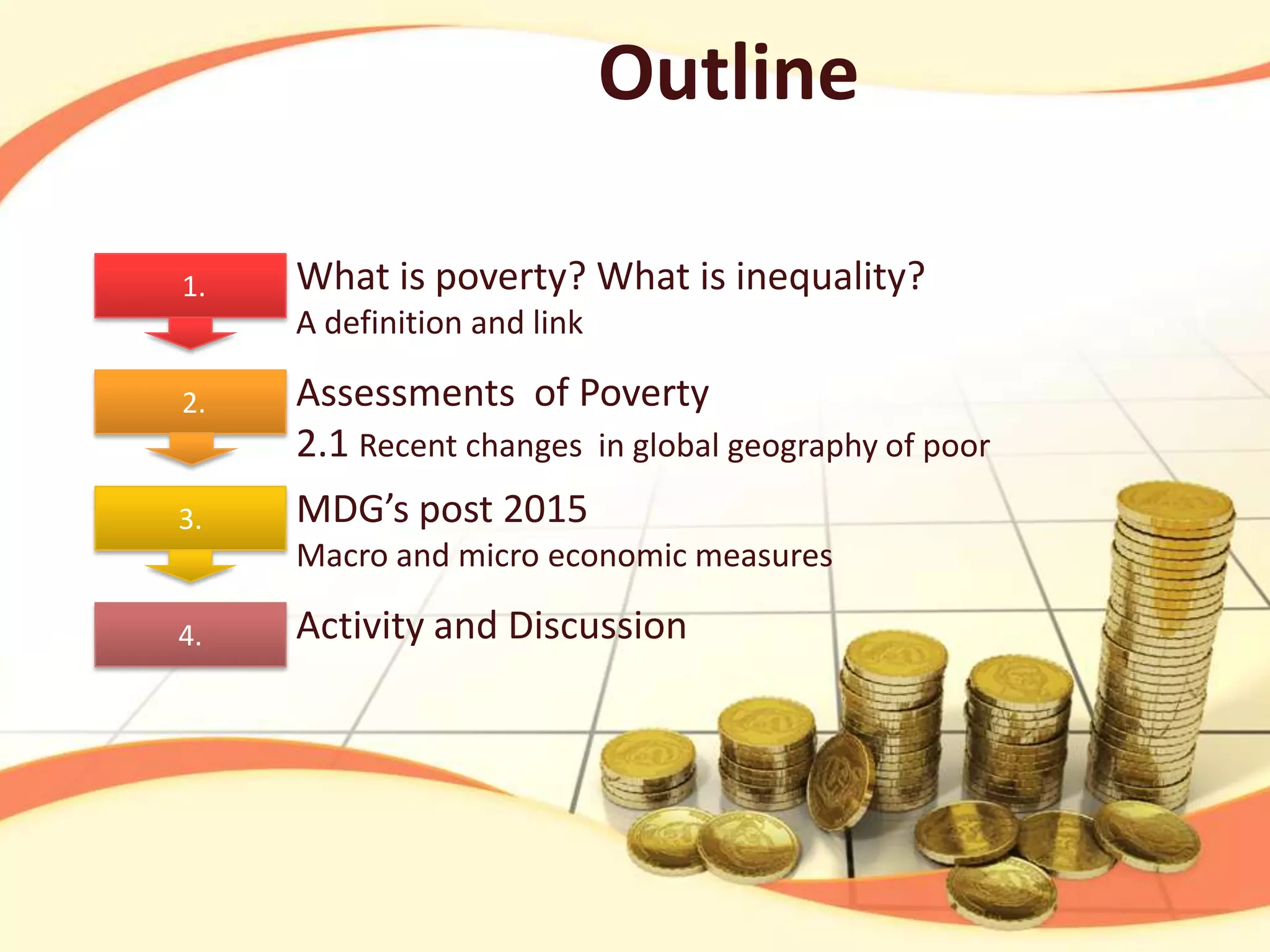
What is poverty? What is inequality?
A definition and link

2.

Assessments of Poverty
2.1 Recent changes in global geography of poor

3.

MDG’s post 2015
Macro and micro economic measures

4.

Activity and Discussion
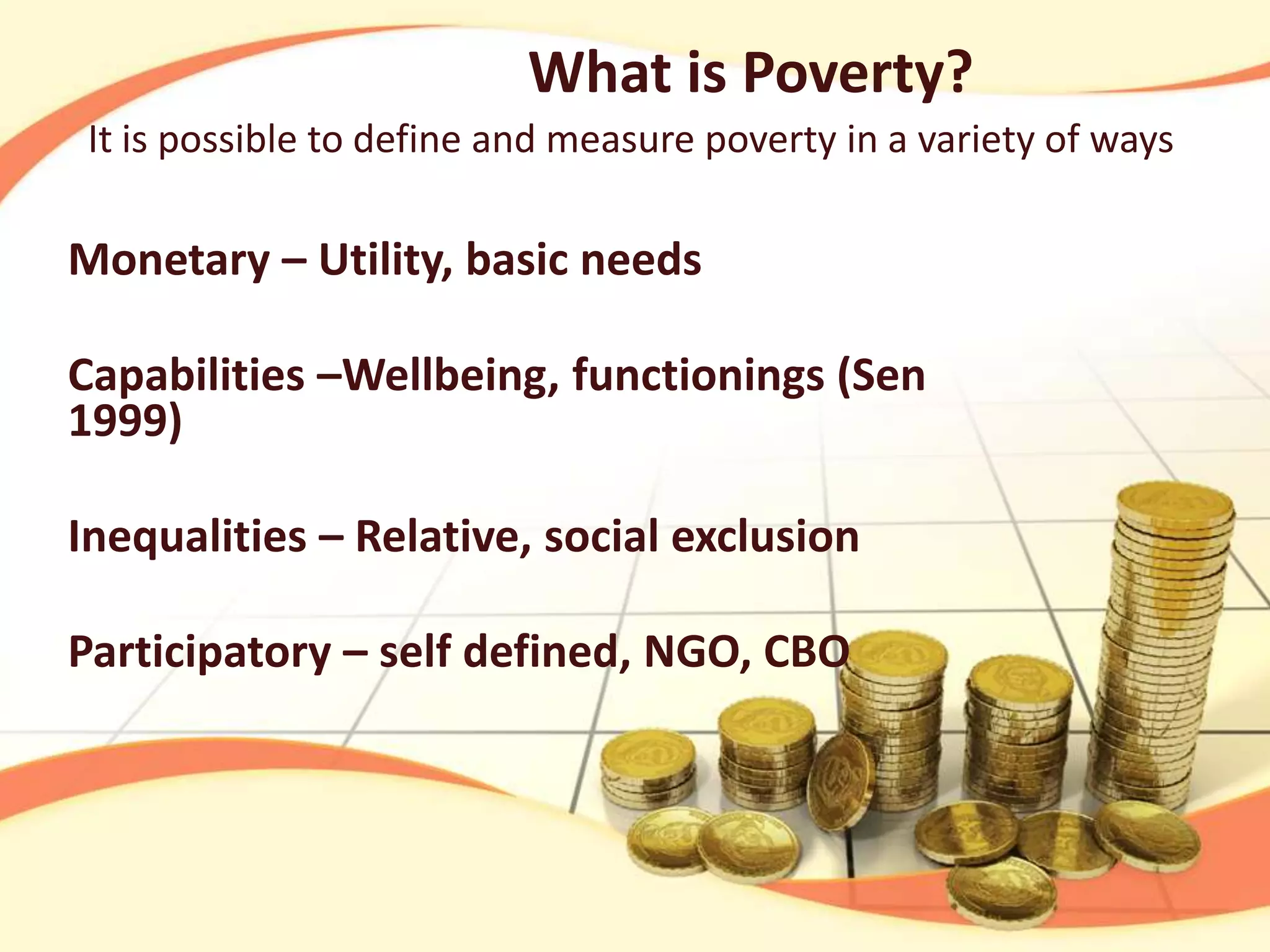
What is Poverty?
It is possible to define and measure poverty in a variety of ways

Monetary – Utility, basic needs
Capabilities –Wellbeing, functionings (Sen
1999)
Inequalities – Relative, social exclusion
Participatory – self defined, NGO, CBO
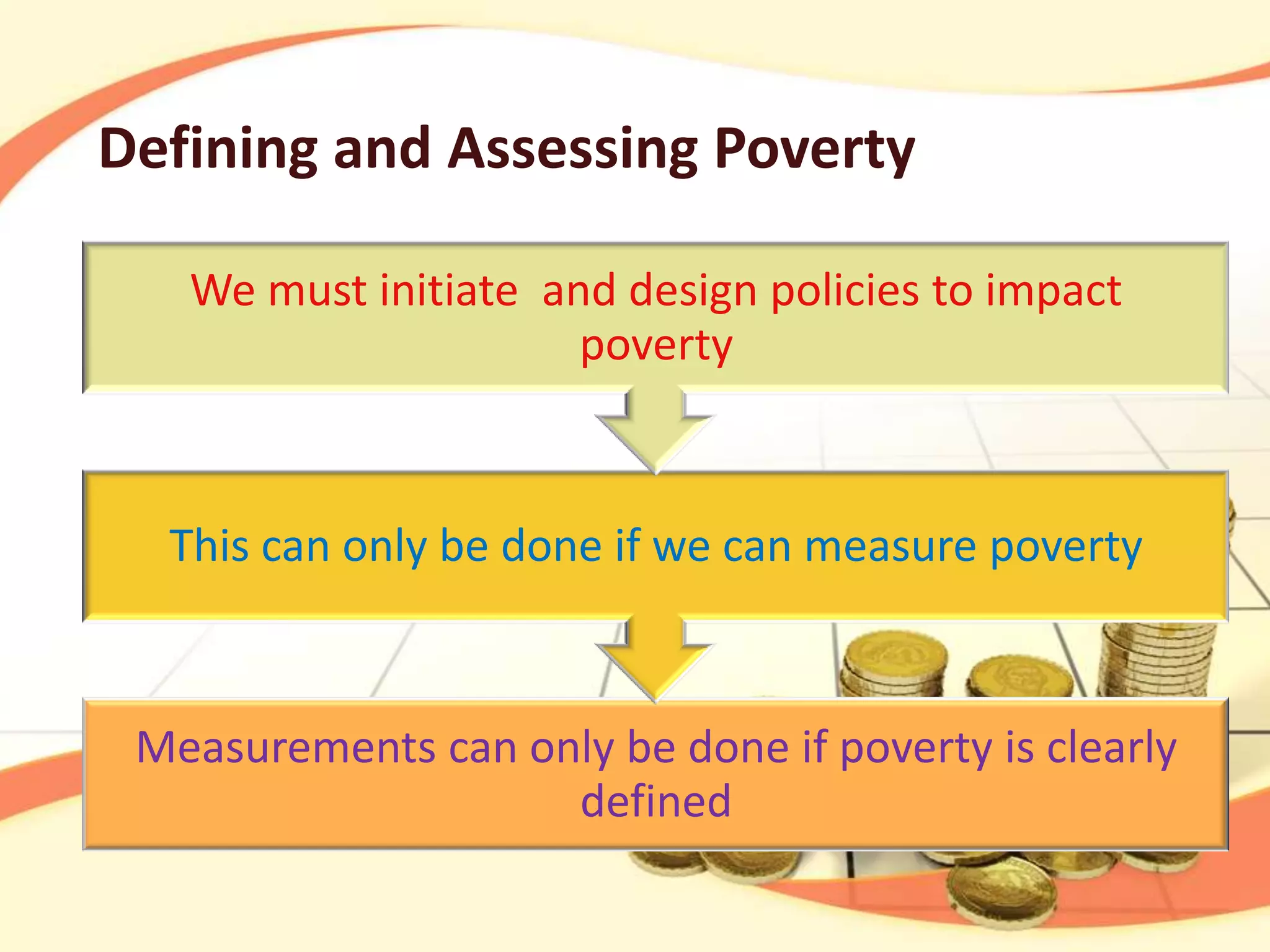
Defining and Assessing Poverty
We must initiate and design policies to impact
poverty

This can only be done if we can measure poverty

Measurements can only be done if poverty is clearly
defined
Ways of Measuring Poverty
Monetary poverty:
Consumption, Poverty line measures: definition of the
poverty line, headcount index, poverty severity
Capability:
Basic needs, mortality, literacy, water, child malnutrition
Inequality:
Income inequality, size distribution, Lorenz curve, Gini
coefficient

Participatory: Not yet adapted
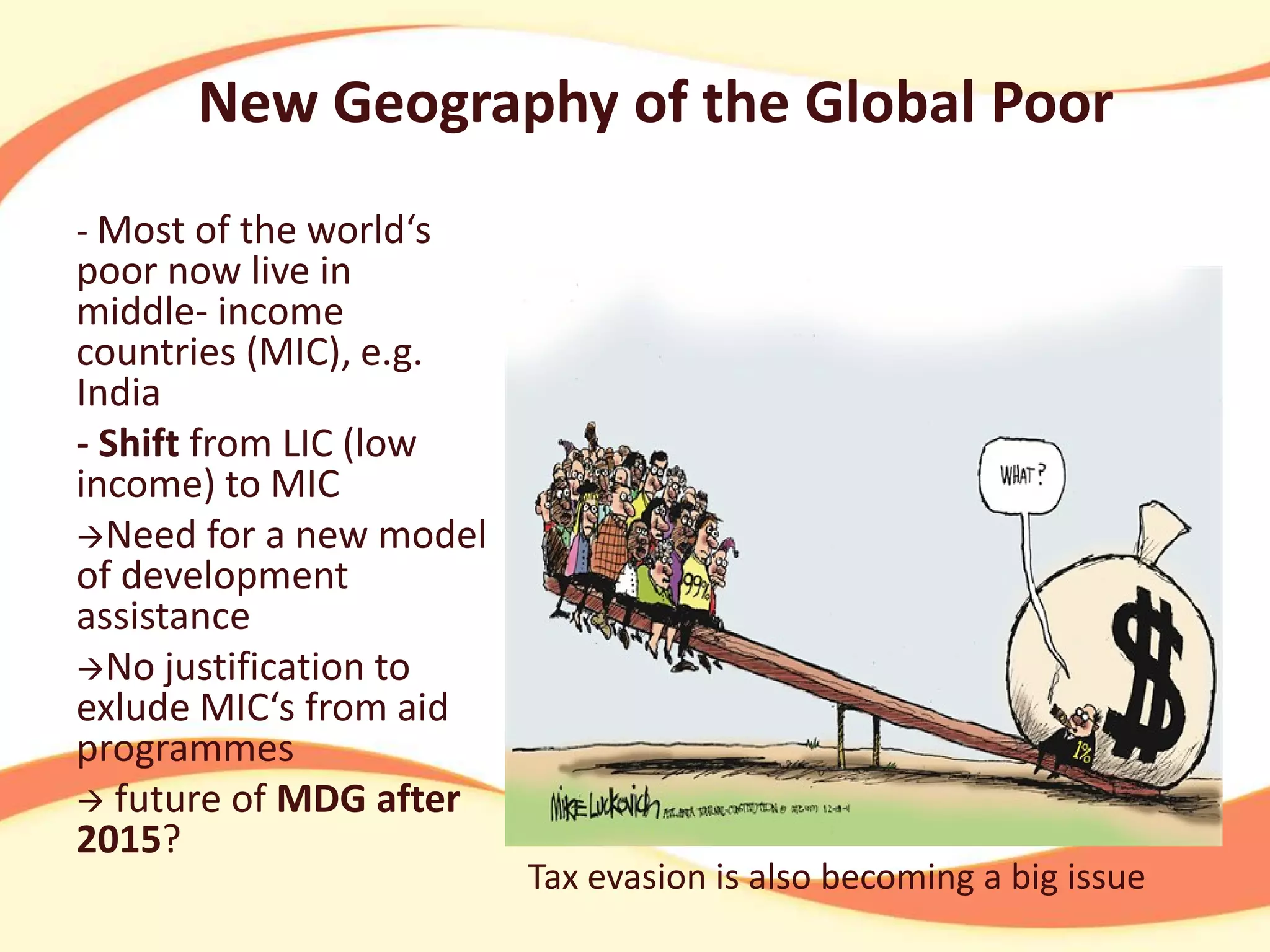
New Geography of the Global Poor
- Most of the world‘s

poor now live in
middle- income
countries (MIC), e.g.
India
- Shift from LIC (low
income) to MIC
Need for a new model
of development
assistance
No justification to
exlude MIC‘s from aid
programmes
 future of MDG after
2015?

Tax evasion is also becoming a big issue
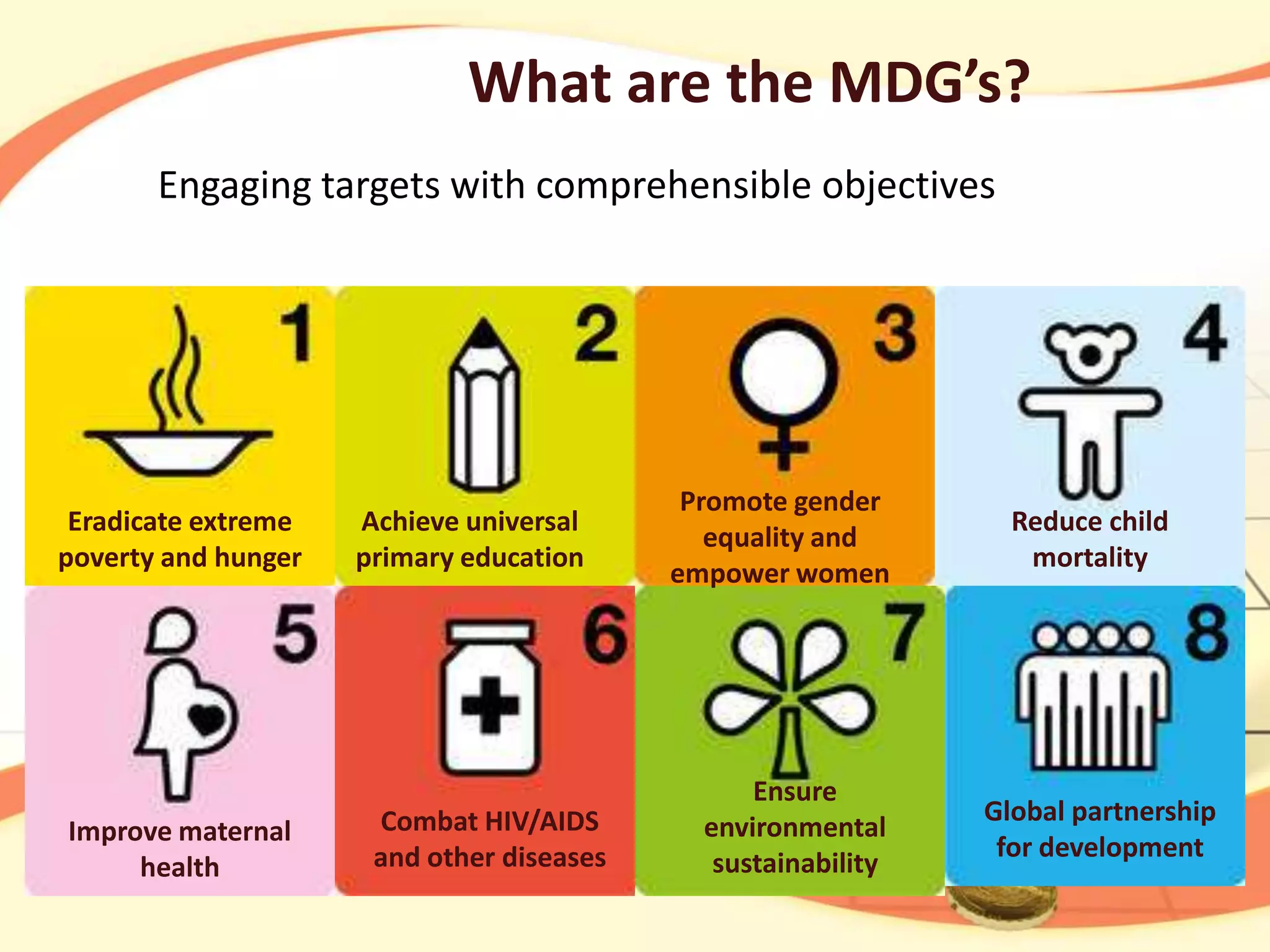
What are the MDG’s?
Engaging targets with comprehensible objectives

Eradicate extreme
poverty and hunger

Improve maternal
health

Achieve universal
primary education

Combat HIV/AIDS
and other diseases

Promote gender
equality and
empower women

Ensure
environmental
sustainability

Reduce child
mortality

Global partnership
for development
MDG’s post 2015

A new framework?
MACRO ECONOMIC

- Foreign aid eases pressure to
mobilize resources within
country
- Correctives to make existing
rules less unfair
(aid, repayment)
- Need for positive
discrimination/ affirmative
action
- More equal partnership
between developed and
developing countries
- Focus on means rather than
ends
Means
rather
than
ends

MICRO ECONOMIC

- Framework for states to
reshape policies in national
context
- Employment creation
Public provision of services i.e.
education, healthcare
- Accountability of
government people are
actors not beneficiaries
- Participatory development
MDG’s from different perspectives
1. Read the article and identify the
organisation/perspective it is
written from
2. Critically evaluate according to these
points:
•
•
•

a) Criticisms/failures
b) Positive points/successes
c) Possible solutions/new ideas

3. Identify the discourse used

4. Feedback
Any Questions?

Poverty and inequality in a changing context

  • 1.
    Poverty and Inequalityin a Changing Context
  • 2.
    Outline 1. What is poverty?What is inequality? A definition and link 2. Assessments of Poverty 2.1 Recent changes in global geography of poor 3. MDG’s post 2015 Macro and micro economic measures 4. Activity and Discussion
  • 3.
    What is Poverty? Itis possible to define and measure poverty in a variety of ways Monetary – Utility, basic needs Capabilities –Wellbeing, functionings (Sen 1999) Inequalities – Relative, social exclusion Participatory – self defined, NGO, CBO
  • 4.
    Defining and AssessingPoverty We must initiate and design policies to impact poverty This can only be done if we can measure poverty Measurements can only be done if poverty is clearly defined
  • 5.
    Ways of MeasuringPoverty Monetary poverty: Consumption, Poverty line measures: definition of the poverty line, headcount index, poverty severity Capability: Basic needs, mortality, literacy, water, child malnutrition Inequality: Income inequality, size distribution, Lorenz curve, Gini coefficient Participatory: Not yet adapted
  • 6.
    New Geography ofthe Global Poor - Most of the world‘s poor now live in middle- income countries (MIC), e.g. India - Shift from LIC (low income) to MIC Need for a new model of development assistance No justification to exlude MIC‘s from aid programmes  future of MDG after 2015? Tax evasion is also becoming a big issue
  • 7.
    What are theMDG’s? Engaging targets with comprehensible objectives Eradicate extreme poverty and hunger Improve maternal health Achieve universal primary education Combat HIV/AIDS and other diseases Promote gender equality and empower women Ensure environmental sustainability Reduce child mortality Global partnership for development
  • 8.
    MDG’s post 2015 Anew framework? MACRO ECONOMIC - Foreign aid eases pressure to mobilize resources within country - Correctives to make existing rules less unfair (aid, repayment) - Need for positive discrimination/ affirmative action - More equal partnership between developed and developing countries - Focus on means rather than ends Means rather than ends MICRO ECONOMIC - Framework for states to reshape policies in national context - Employment creation Public provision of services i.e. education, healthcare - Accountability of government people are actors not beneficiaries - Participatory development
  • 9.
    MDG’s from differentperspectives 1. Read the article and identify the organisation/perspective it is written from 2. Critically evaluate according to these points: • • • a) Criticisms/failures b) Positive points/successes c) Possible solutions/new ideas 3. Identify the discourse used 4. Feedback
  • 10.