Fisk/Grove/John-4e, Copyright © Cengage Learning. All rights reserved. 1 | 1
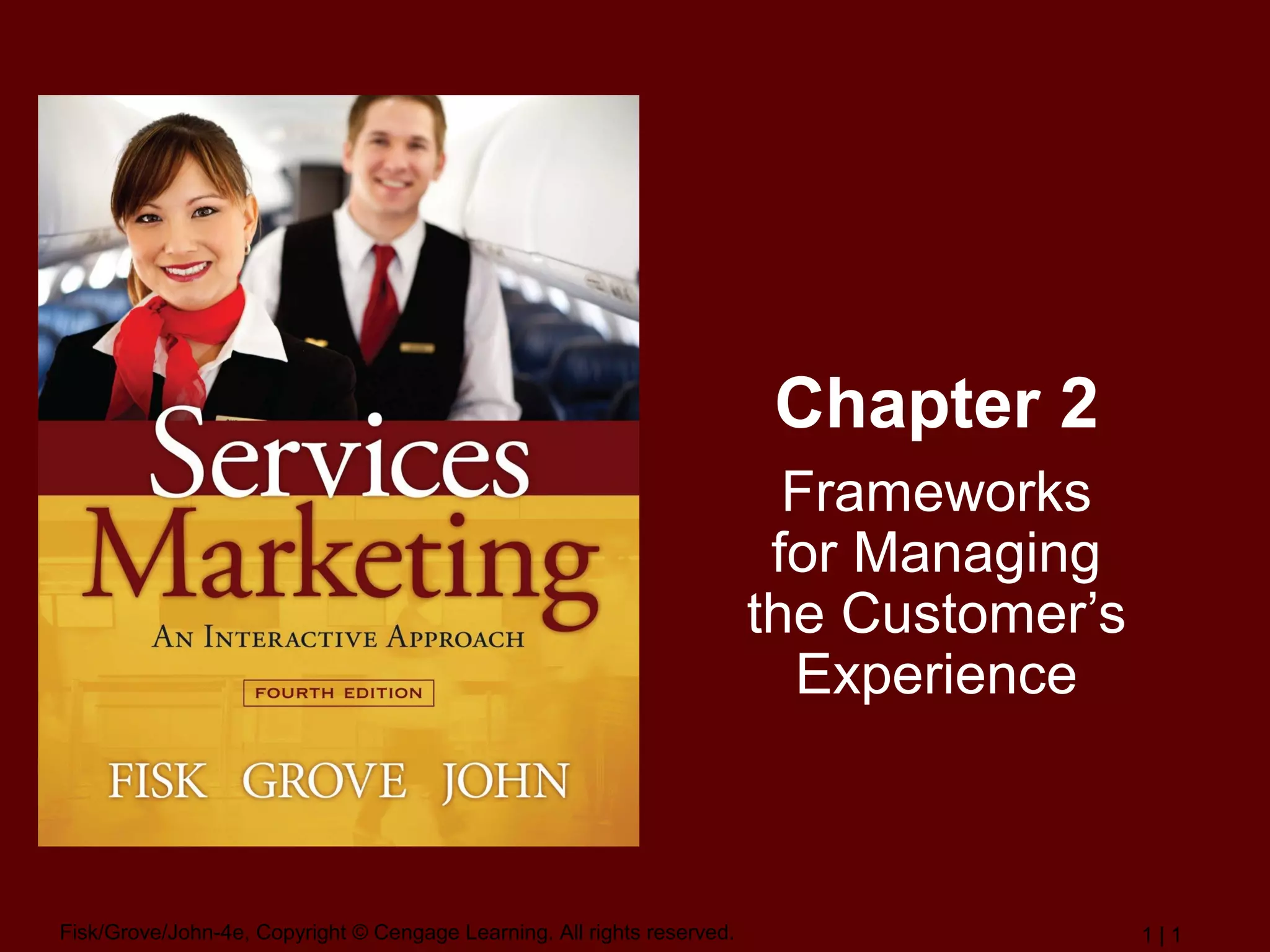
Chapter 2
Frameworks
for Managing
the Customer’s
Experience
Fisk/Grove/John-4e, Copyright © Cengage Learning. All rights reserved. 1 | 2
Objectives
1. To examine the key components of the service
experience
2. To describe three different frameworks that
capture the customer’s service experience:
– Services marketing mix
– Servuction framework
– Services theater framework
1. To provide an in-depth illustration of service as
theater
2. To discuss the emotional aspect of the service
experience
Fisk/Grove/John-4e, Copyright © Cengage Learning. All rights reserved. 1 | 3
Components of the
Service Experience
1. Service workers – Those who interact with
customers, and those who contribute to the
service delivery out of the customers' sight.
2. Service setting – The environment in which
the service is provided to the customer and
areas of the organization to which the
customer normally has little access.
Fisk/Grove/John-4e, Copyright © Cengage Learning. All rights reserved. 1 | 4
Components of the
Service Experience (cont’d)
3. Service customers – The persons receiving the
service (e.g., the diner or the depositor) and
others who share the service setting with them.
3. Service process – The sequence of activities or
events necessary to deliver the service.
Fisk/Grove/John-4e, Copyright © Cengage Learning. All rights reserved. 1 | 5
Framing the Service Experience
• Service frameworks perform several important
functions:
– Aid comprehension of service experiences by
describing their components.
– Make communicating about diverse services much
easier since a framework may include components
that are applicable to them all.
– Identify issues that should be considered in the
design of the service delivery
– Specify relationships among the four components of
the service experience
Fisk/Grove/John-4e, Copyright © Cengage Learning. All rights reserved. 1 | 6
Framing the Service
Experience (cont’d)
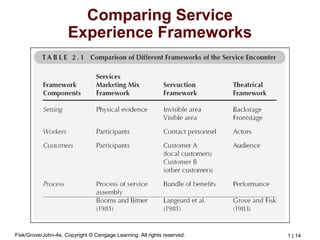
• The Services Marketing Mix (Booms and
Bitner 1981)
• The Servuction Framework (Langeard et al.
1981)
• The Services Theater Framework (Grove and
Fisk 1983)
Fisk/Grove/John-4e, Copyright © Cengage Learning. All rights reserved. 1 | 7
The Services
Marketing Mix Framework
• Adds three new Ps to the four Ps of the
traditional marketing mix:
– Participants are all people, whether customers and
workers, who are involved in the service production.
– Physical evidence means the service environment
and other tangible aspects of the service that
facilitate or communicate the nature of the service.
– Process of service assembly refers to the
procedures and flow of activities that contribute to
the delivery of the service.
• It suggests that marketing a service involves
more considerations than marketing a good.
Fisk/Grove/John-4e, Copyright © Cengage Learning. All rights reserved. 1 | 8
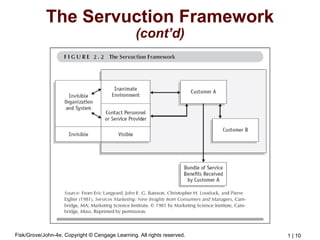
The Servuction Framework
• The term is hybrid of service and production
• The service’s invisible organization and system
– Aspects contributing to the service production
beyond the customers’ view.
• The visible elements include:
– The inanimate environment (the physical setting in
which the service is performed)
– The contact personnel (the employees who directly
interact with the customer to provide the service)
– Customer A (the customer receiving the service)
and customer B (others who may be present in the
visible area) and their interaction.
Fisk/Grove/John-4e, Copyright © Cengage Learning. All rights reserved. 1 | 9
The Servuction Framework
(cont’d)
• The bundle of service benefits a customer
receives as a result of the interaction with the
contact personnel (e.g., their courtesy and
competence),the inanimate service environment
(e.g., its comfort and decor), and other
customers (e.g., their number and behavior)
Fisk/Grove/John-4e, Copyright © Cengage Learning. All rights reserved. 1 | 10
The Servuction Framework
(cont’d)
Fisk/Grove/John-4e, Copyright © Cengage Learning. All rights reserved. 1 | 11
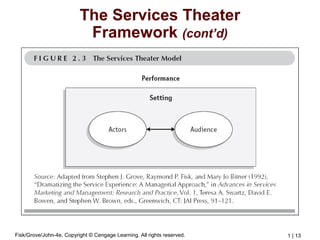
The Services Theater Framework
• Actors (service workers) are those who work
together to create the service for an Audience
(customers).
• Setting (service environment) is where the
action or service performance unfolds
(frontstage) and is supported (backstage).
• Performance is the dynamic result of the
interaction of the actors, audience, and setting.
Fisk/Grove/John-4e, Copyright © Cengage Learning. All rights reserved. 1 | 12
The Services Theater
Framework (cont’d)
• The frontstage actions that service actors
perform for the customers often relies on
significant support from the backstage
personnel and equipment.
• Much of the planning and execution of the
service experience occurs backstage, away
from the audience’s inspection.
Fisk/Grove/John-4e, Copyright © Cengage Learning. All rights reserved. 1 | 13
The Services Theater
Framework (cont’d)
Fisk/Grove/John-4e, Copyright © Cengage Learning. All rights reserved. 1 | 14
Comparing Service
Experience Frameworks

Services Marketing Chapter 2 Frameworks for Managing the Customer's Experience

  • 1.
    Fisk/Grove/John-4e, Copyright ©Cengage Learning. All rights reserved. 1 | 1 Chapter 2 Frameworks for Managing the Customer’s Experience
  • 2.
    Fisk/Grove/John-4e, Copyright ©Cengage Learning. All rights reserved. 1 | 2 Objectives 1. To examine the key components of the service experience 2. To describe three different frameworks that capture the customer’s service experience: – Services marketing mix – Servuction framework – Services theater framework 1. To provide an in-depth illustration of service as theater 2. To discuss the emotional aspect of the service experience
  • 3.
    Fisk/Grove/John-4e, Copyright ©Cengage Learning. All rights reserved. 1 | 3 Components of the Service Experience 1. Service workers – Those who interact with customers, and those who contribute to the service delivery out of the customers' sight. 2. Service setting – The environment in which the service is provided to the customer and areas of the organization to which the customer normally has little access.
  • 4.
    Fisk/Grove/John-4e, Copyright ©Cengage Learning. All rights reserved. 1 | 4 Components of the Service Experience (cont’d) 3. Service customers – The persons receiving the service (e.g., the diner or the depositor) and others who share the service setting with them. 3. Service process – The sequence of activities or events necessary to deliver the service.
  • 5.
    Fisk/Grove/John-4e, Copyright ©Cengage Learning. All rights reserved. 1 | 5 Framing the Service Experience • Service frameworks perform several important functions: – Aid comprehension of service experiences by describing their components. – Make communicating about diverse services much easier since a framework may include components that are applicable to them all. – Identify issues that should be considered in the design of the service delivery – Specify relationships among the four components of the service experience
  • 6.
    Fisk/Grove/John-4e, Copyright ©Cengage Learning. All rights reserved. 1 | 6 Framing the Service Experience (cont’d) • The Services Marketing Mix (Booms and Bitner 1981) • The Servuction Framework (Langeard et al. 1981) • The Services Theater Framework (Grove and Fisk 1983)
  • 7.
    Fisk/Grove/John-4e, Copyright ©Cengage Learning. All rights reserved. 1 | 7 The Services Marketing Mix Framework • Adds three new Ps to the four Ps of the traditional marketing mix: – Participants are all people, whether customers and workers, who are involved in the service production. – Physical evidence means the service environment and other tangible aspects of the service that facilitate or communicate the nature of the service. – Process of service assembly refers to the procedures and flow of activities that contribute to the delivery of the service. • It suggests that marketing a service involves more considerations than marketing a good.
  • 8.
    Fisk/Grove/John-4e, Copyright ©Cengage Learning. All rights reserved. 1 | 8 The Servuction Framework • The term is hybrid of service and production • The service’s invisible organization and system – Aspects contributing to the service production beyond the customers’ view. • The visible elements include: – The inanimate environment (the physical setting in which the service is performed) – The contact personnel (the employees who directly interact with the customer to provide the service) – Customer A (the customer receiving the service) and customer B (others who may be present in the visible area) and their interaction.
  • 9.
    Fisk/Grove/John-4e, Copyright ©Cengage Learning. All rights reserved. 1 | 9 The Servuction Framework (cont’d) • The bundle of service benefits a customer receives as a result of the interaction with the contact personnel (e.g., their courtesy and competence),the inanimate service environment (e.g., its comfort and decor), and other customers (e.g., their number and behavior)
  • 10.
    Fisk/Grove/John-4e, Copyright ©Cengage Learning. All rights reserved. 1 | 10 The Servuction Framework (cont’d)
  • 11.
    Fisk/Grove/John-4e, Copyright ©Cengage Learning. All rights reserved. 1 | 11 The Services Theater Framework • Actors (service workers) are those who work together to create the service for an Audience (customers). • Setting (service environment) is where the action or service performance unfolds (frontstage) and is supported (backstage). • Performance is the dynamic result of the interaction of the actors, audience, and setting.
  • 12.
    Fisk/Grove/John-4e, Copyright ©Cengage Learning. All rights reserved. 1 | 12 The Services Theater Framework (cont’d) • The frontstage actions that service actors perform for the customers often relies on significant support from the backstage personnel and equipment. • Much of the planning and execution of the service experience occurs backstage, away from the audience’s inspection.
  • 13.
    Fisk/Grove/John-4e, Copyright ©Cengage Learning. All rights reserved. 1 | 13 The Services Theater Framework (cont’d)
  • 14.
    Fisk/Grove/John-4e, Copyright ©Cengage Learning. All rights reserved. 1 | 14 Comparing Service Experience Frameworks