Customers’ Expectations and
Perceptions of Services
Customers’ Service Expectations
• It is the level of service desired by a customer
• In other words it is the belief about the service that the
customers expect to receive
• Expectations act as the reference points or standards for the
customers
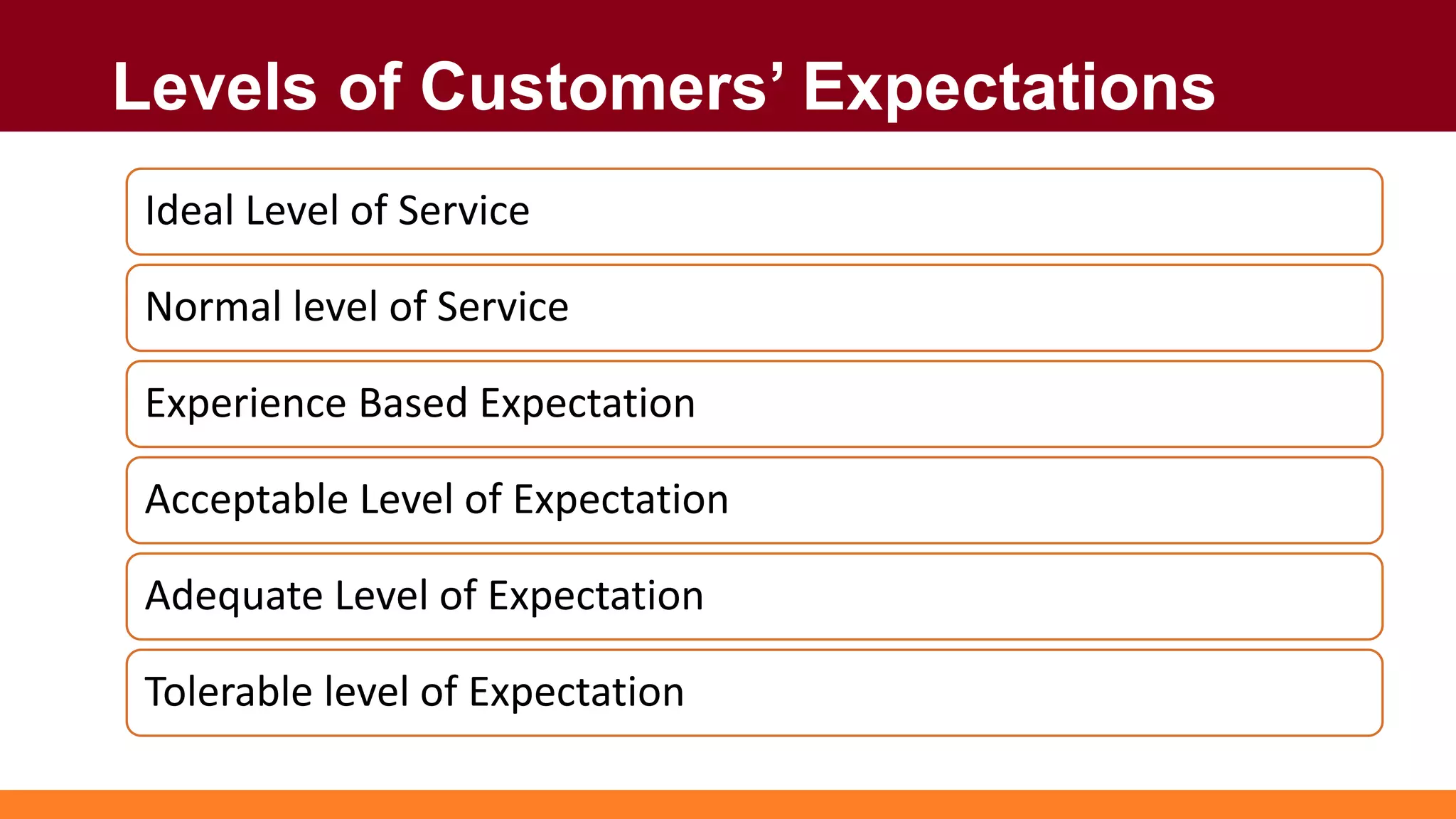
Levels of Customers’ Expectations
Ideal Level of Service
Normal level of Service
Experience Based Expectation
Acceptable Level of Expectation
Adequate Level of Expectation
Tolerable level of Expectation
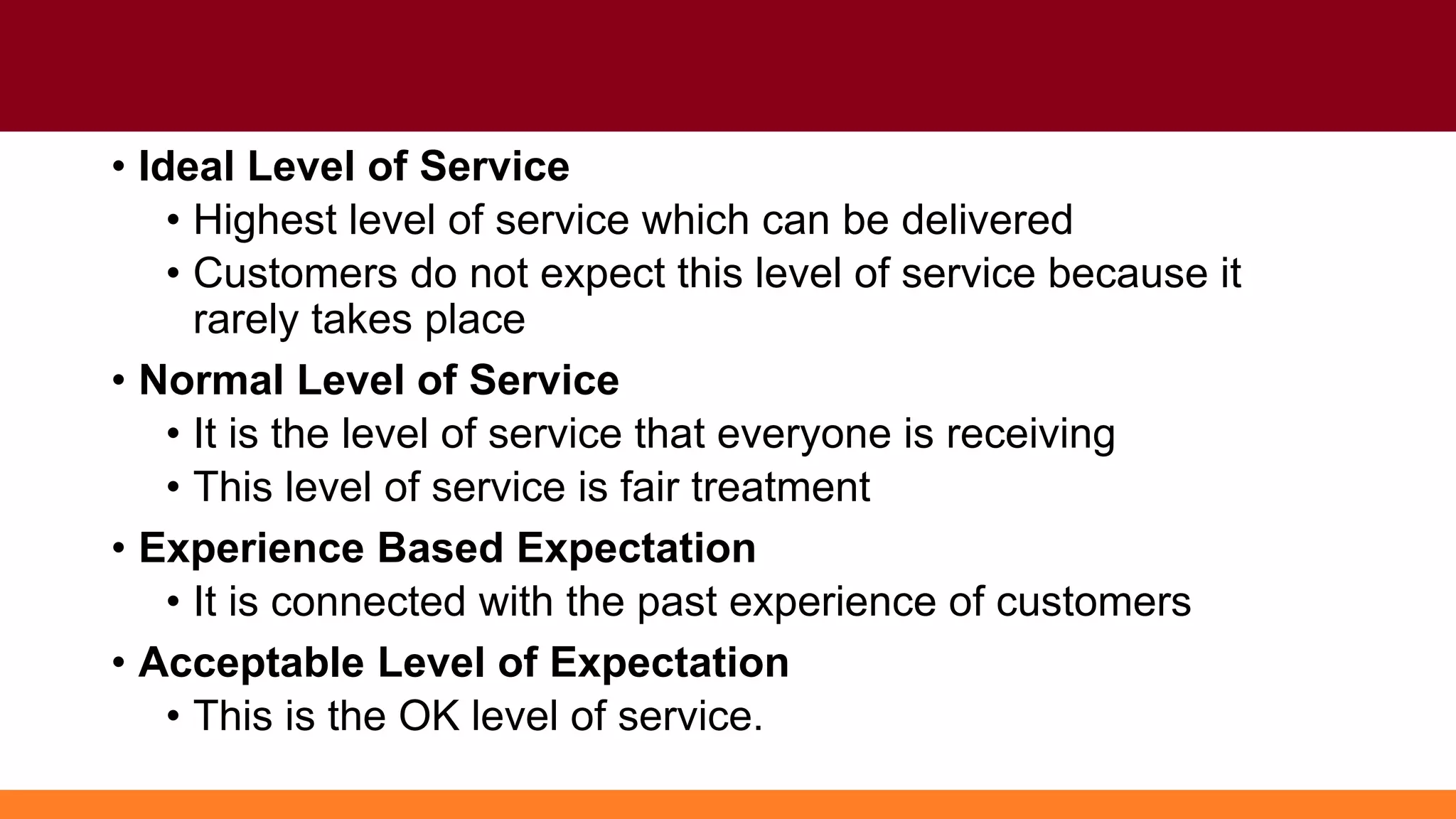
• Ideal Level of Service
• Highest level of service which can be delivered
• Customers do not expect this level of service because it
rarely takes place
• Normal Level of Service
• It is the level of service that everyone is receiving
• This level of service is fair treatment
• Experience Based Expectation
• It is connected with the past experience of customers
• Acceptable Level of Expectation
• This is the OK level of service.
• Adequate Level of Expectation
• It is the minimum level of service
• Service below this level causes negative impact
• Tolerable Level of Expectation
• It is the most minimum level of service which one can
tolerate for the 1st time
Broadly Service Expectations can be Classified as
• Desired Service Expectation
• It is the level of service that the customers expect to receive
• It is mental expectation of customers which he hopes and
wishes to receive
• Adequate level of Service Expectation
• This is the level of service that the customers will accept
• It is the minimum tolerable expectation acceptable to the
customer.
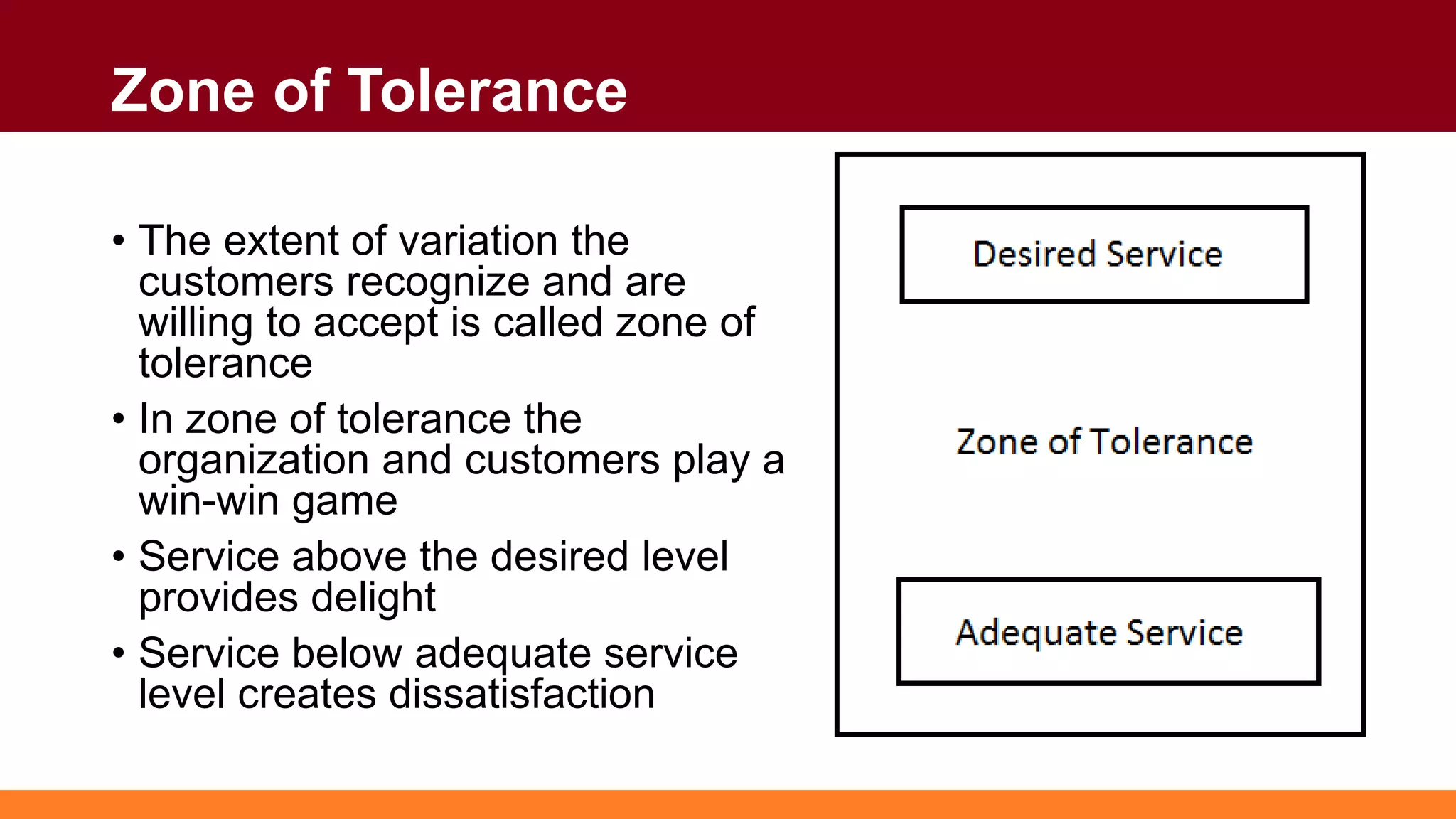
Zone of Tolerance
• The extent of variation the
customers recognize and are
willing to accept is called zone of
tolerance
• In zone of tolerance the
organization and customers play a
win-win game
• Service above the desired level
provides delight
• Service below adequate service
level creates dissatisfaction
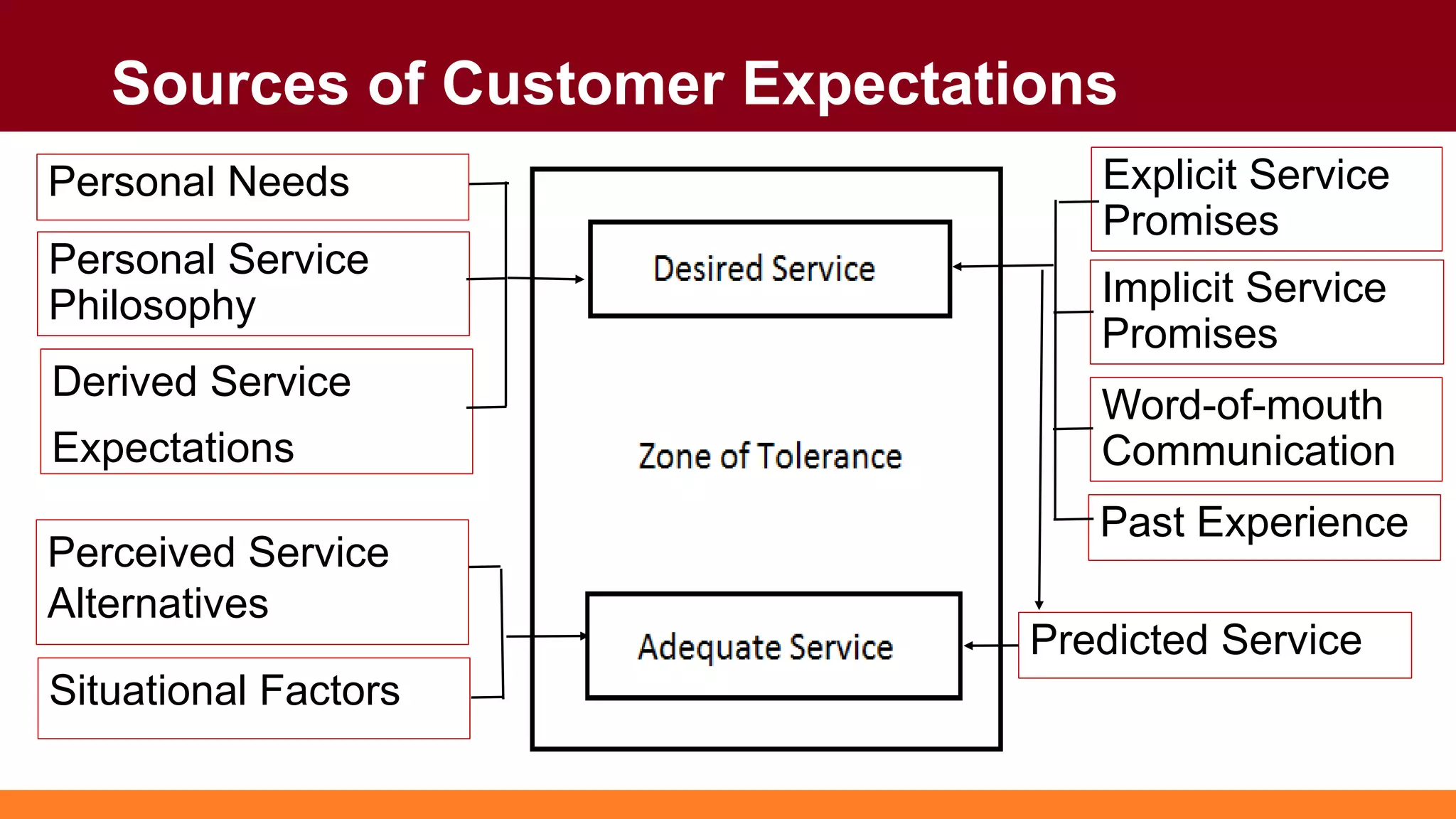
Sources of Customer Expectations
Personal Needs
Personal Service
Philosophy
Derived Service
Expectations
Perceived Service
Alternatives
Situational Factors
Explicit Service
Promises
Implicit Service
Promises
Word-of-mouth
Communication
Past Experience
Predicted Service
Sources of Desired Service Expectation
• Personal Needs
• Personal needs can be physiological, social, psychological, etc.
• Degree of need determines the desired level of service
• E.g. a person with high degree of social and dependency need
may have higher expectations for hotel’s ancillary/auxiliary
services
• Personal Service Philosophy
• It refers to the customer underlying general attitude about the
meaning of service and proper conduct of service providers
• E.g. belief that waiters should not keep customers waiting
longer than 15 minutes to take their orders
• Derived Service Expectations
• It refers to the expectations driven by other person or group
of people
• E.g. for birthday celebration a person selects a restaurant
which can service various menus that qualify for his/her
friends
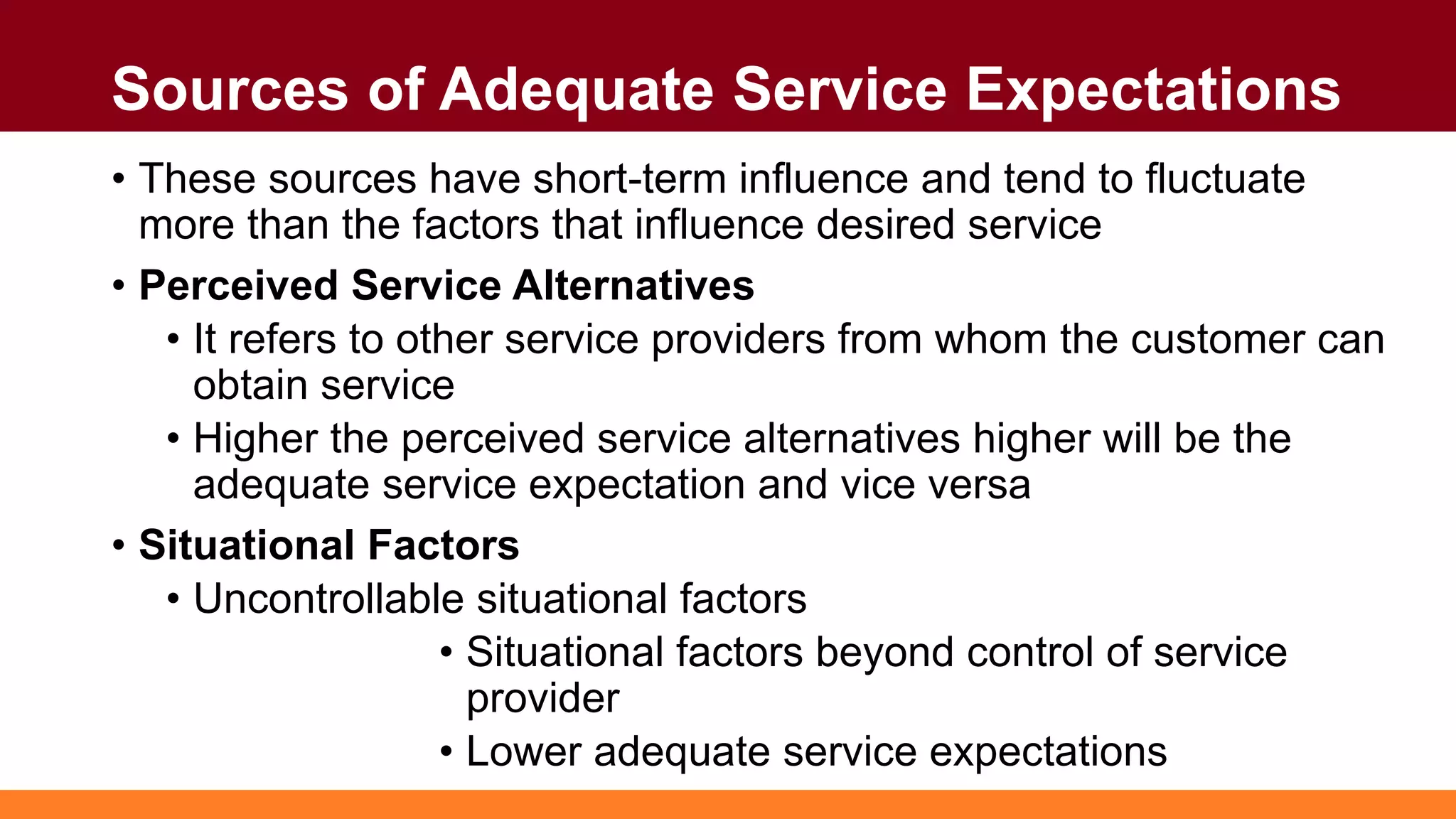
Sources of Adequate Service Expectations
• These sources have short-term influence and tend to fluctuate
more than the factors that influence desired service
• Perceived Service Alternatives
• It refers to other service providers from whom the customer can
obtain service
• Higher the perceived service alternatives higher will be the
adequate service expectation and vice versa
• Situational Factors
• Uncontrollable situational factors
• Situational factors beyond control of service
provider
• Lower adequate service expectations
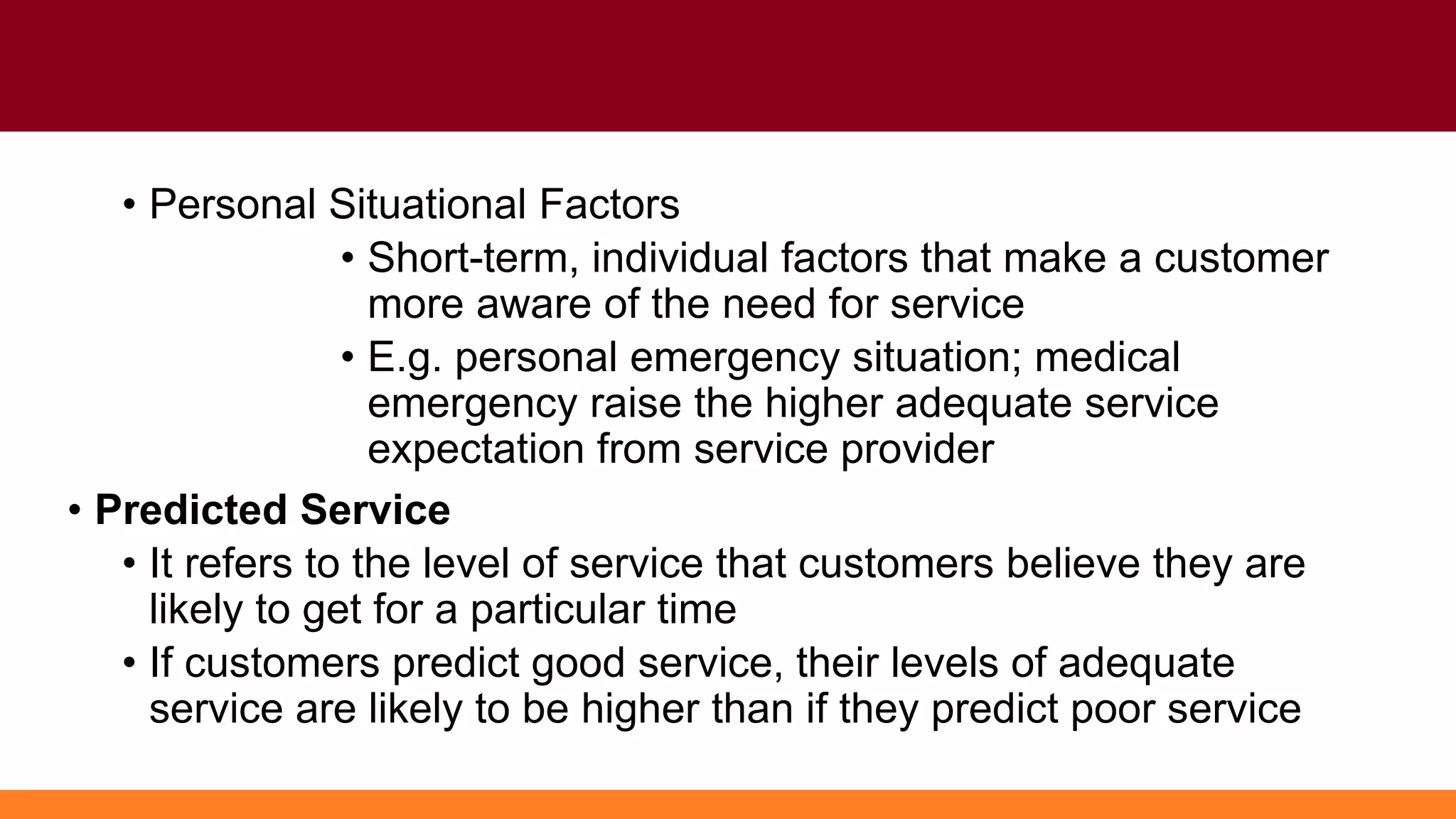
• Personal Situational Factors
• Short-term, individual factors that make a customer
more aware of the need for service
• E.g. personal emergency situation; medical
emergency raise the higher adequate service
expectation from service provider
• Predicted Service
• It refers to the level of service that customers believe they are
likely to get for a particular time
• If customers predict good service, their levels of adequate
service are likely to be higher than if they predict poor service
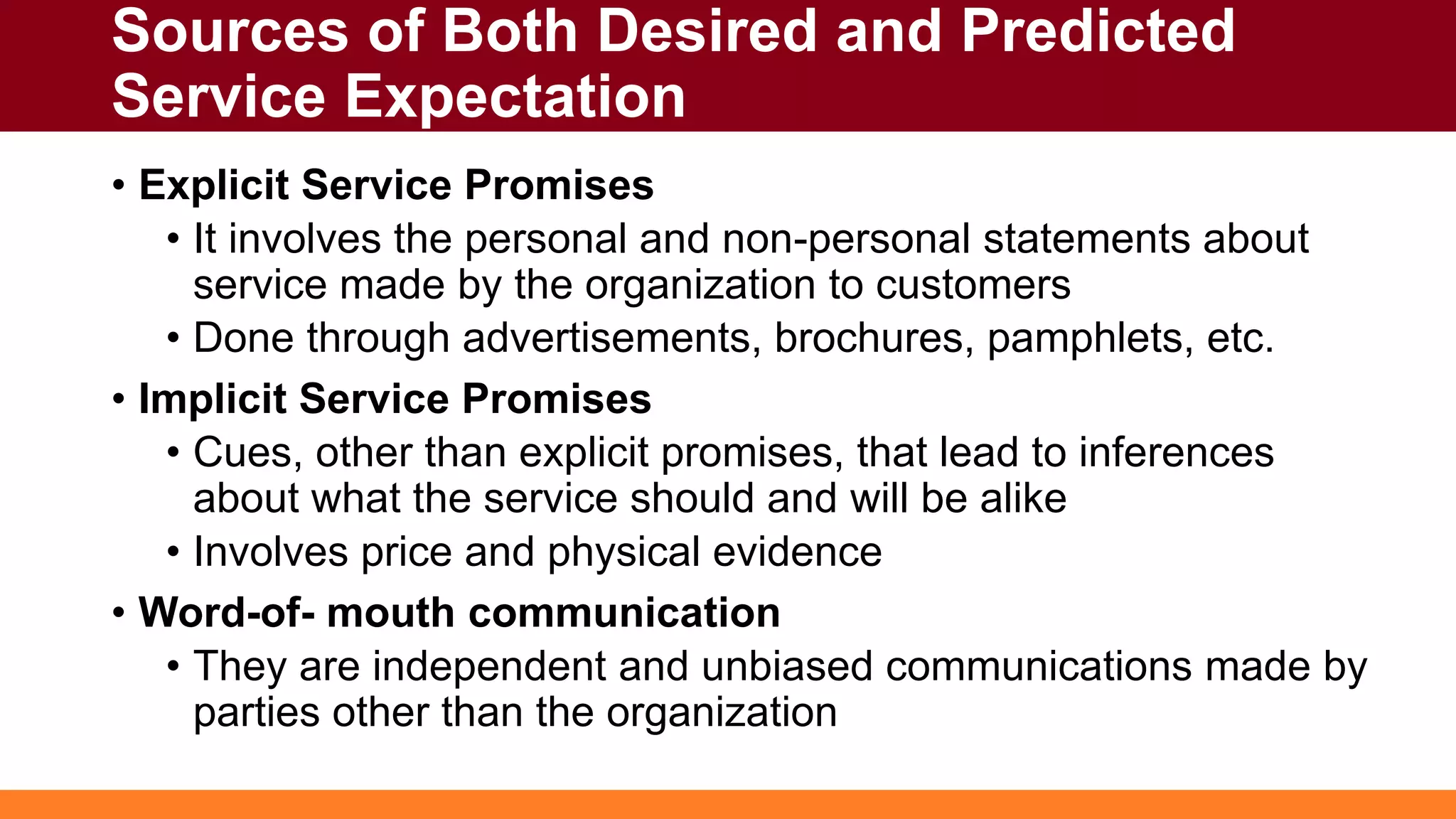
Sources of Both Desired and Predicted
Service Expectation
• Explicit Service Promises
• It involves the personal and non-personal statements about
service made by the organization to customers
• Done through advertisements, brochures, pamphlets, etc.
• Implicit Service Promises
• Cues, other than explicit promises, that lead to inferences
about what the service should and will be alike
• Involves price and physical evidence
• Word-of- mouth communication
• They are independent and unbiased communications made by
parties other than the organization
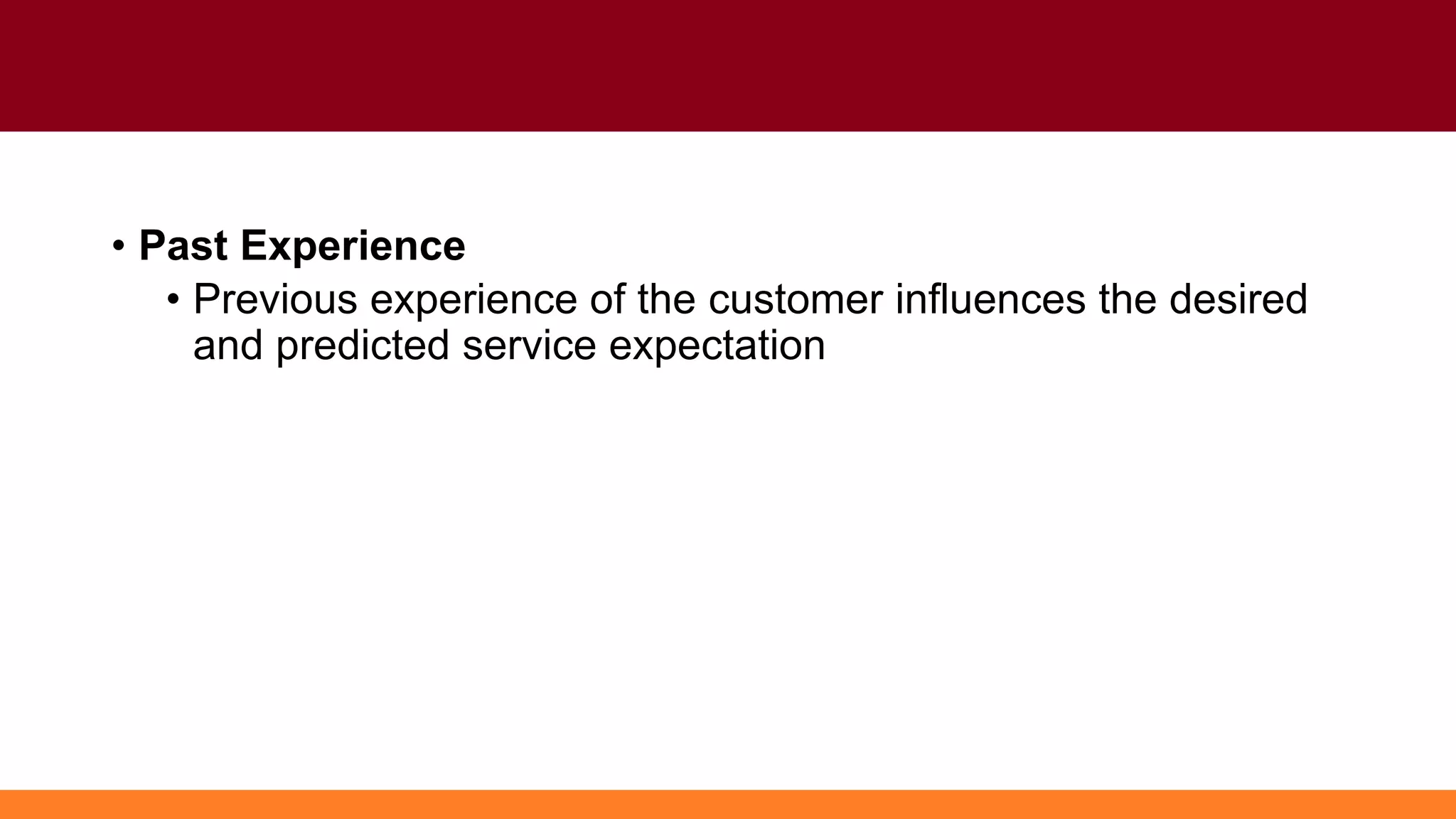
• Past Experience
• Previous experience of the customer influences the desired
and predicted service expectation
Customer’s Perceptions
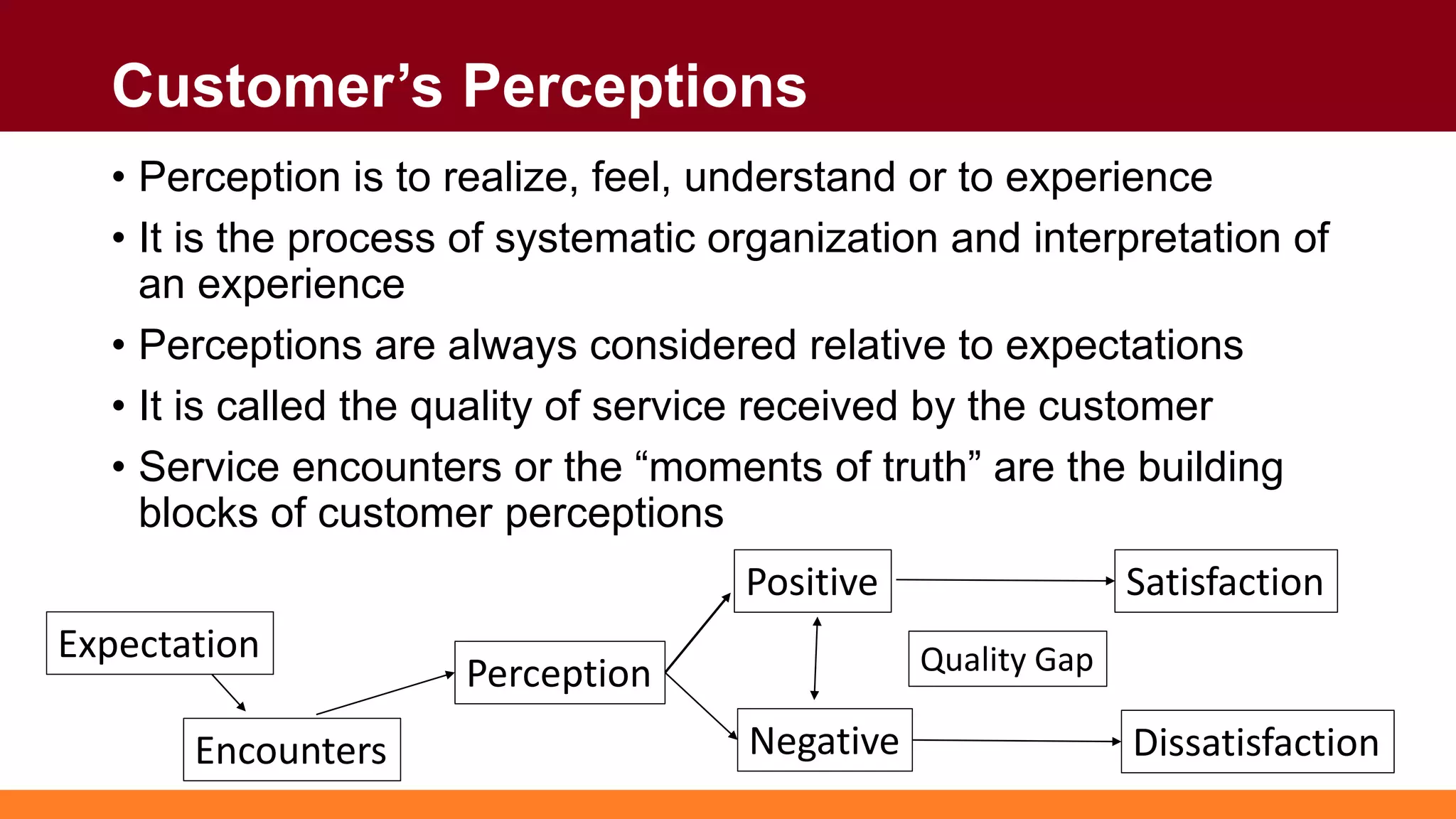
• Perception is to realize, feel, understand or to experience
• It is the process of systematic organization and interpretation of
an experience
• Perceptions are always considered relative to expectations
• It is called the quality of service received by the customer
• Service encounters or the “moments of truth” are the building
blocks of customer perceptions
Expectation
Encounters
Perception
Positive
Negative
Satisfaction
Dissatisfaction
Quality Gap
Customer Satisfaction
• Satisfaction is the consumer’s fulfillment response. It is a
judgement that a product or service feature, or product or
service itself, provides a pleasurable level of consumption-
related fulfillment.
• Satisfaction is the fulfillment of desire or expectation
• It refers to the customers positive evaluation towards
organization, product or service
• Customer Satisfaction = f(Value and Cost)
• Satisfaction and quality are different; satisfaction is the effect,
quality is the cause
Customer Perceptions of Service Quality and
Customer Satisfaction
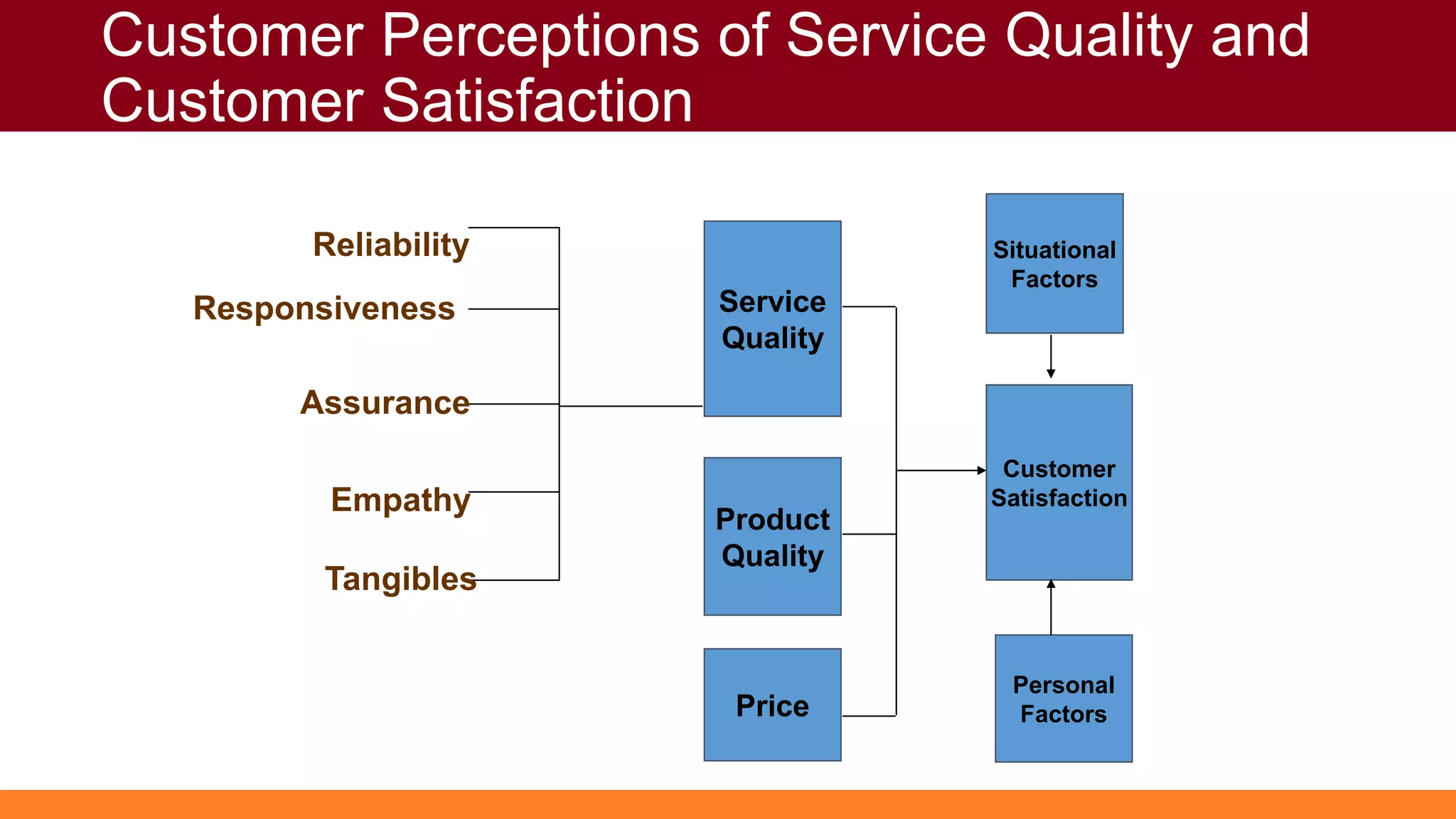
Service
Quality
Reliability
Responsiveness
Assurance
Empathy
Tangibles
Product
Quality
Price
Personal
Factors
Customer
Satisfaction
Situational
Factors
Dimensions of Service Quality
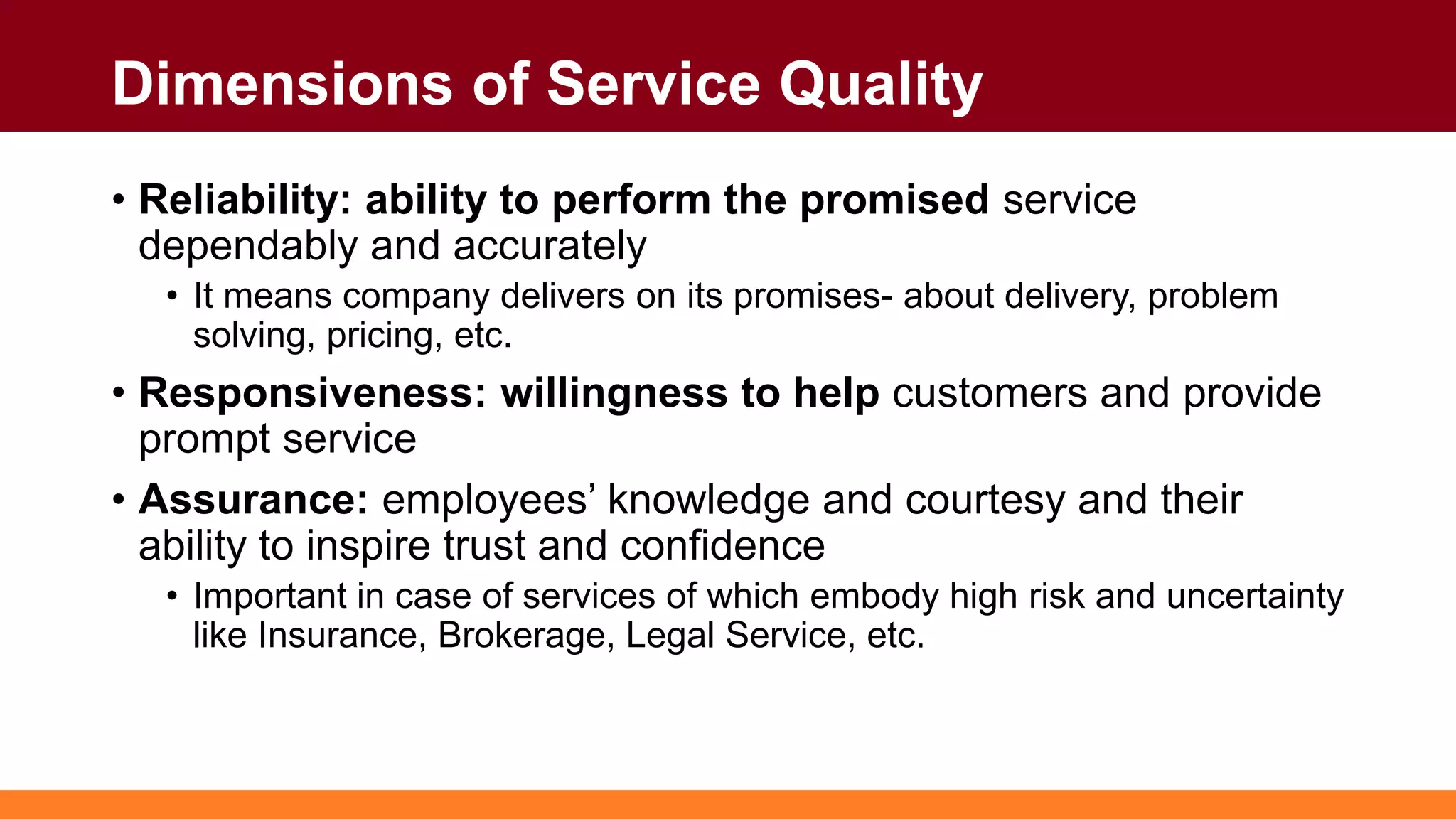
• Reliability: ability to perform the promised service
dependably and accurately
• It means company delivers on its promises- about delivery, problem
solving, pricing, etc.
• Responsiveness: willingness to help customers and provide
prompt service
• Assurance: employees’ knowledge and courtesy and their
ability to inspire trust and confidence
• Important in case of services of which embody high risk and uncertainty
like Insurance, Brokerage, Legal Service, etc.
• Empathy: caring, individualized attention given to customers
• Treating customers as individuals
• Tangibles: appearance of physical facilities, equipment
personnel, and communication materials
Determinants of Customer Satisfaction
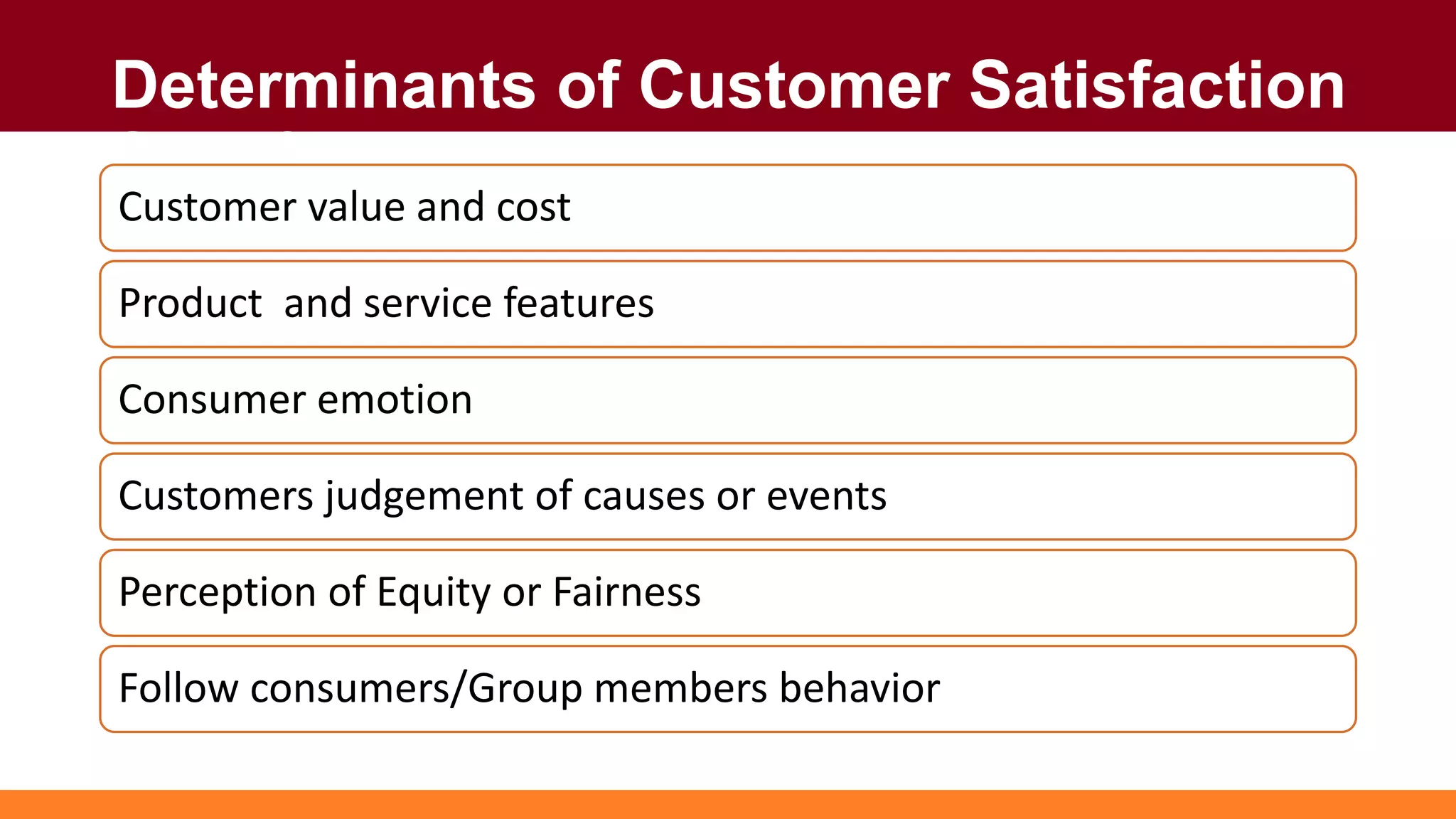
Satisfaction
Customer value and cost
Product and service features
Consumer emotion
Customers judgement of causes or events
Perception of Equity or Fairness
Follow consumers/Group members behavior
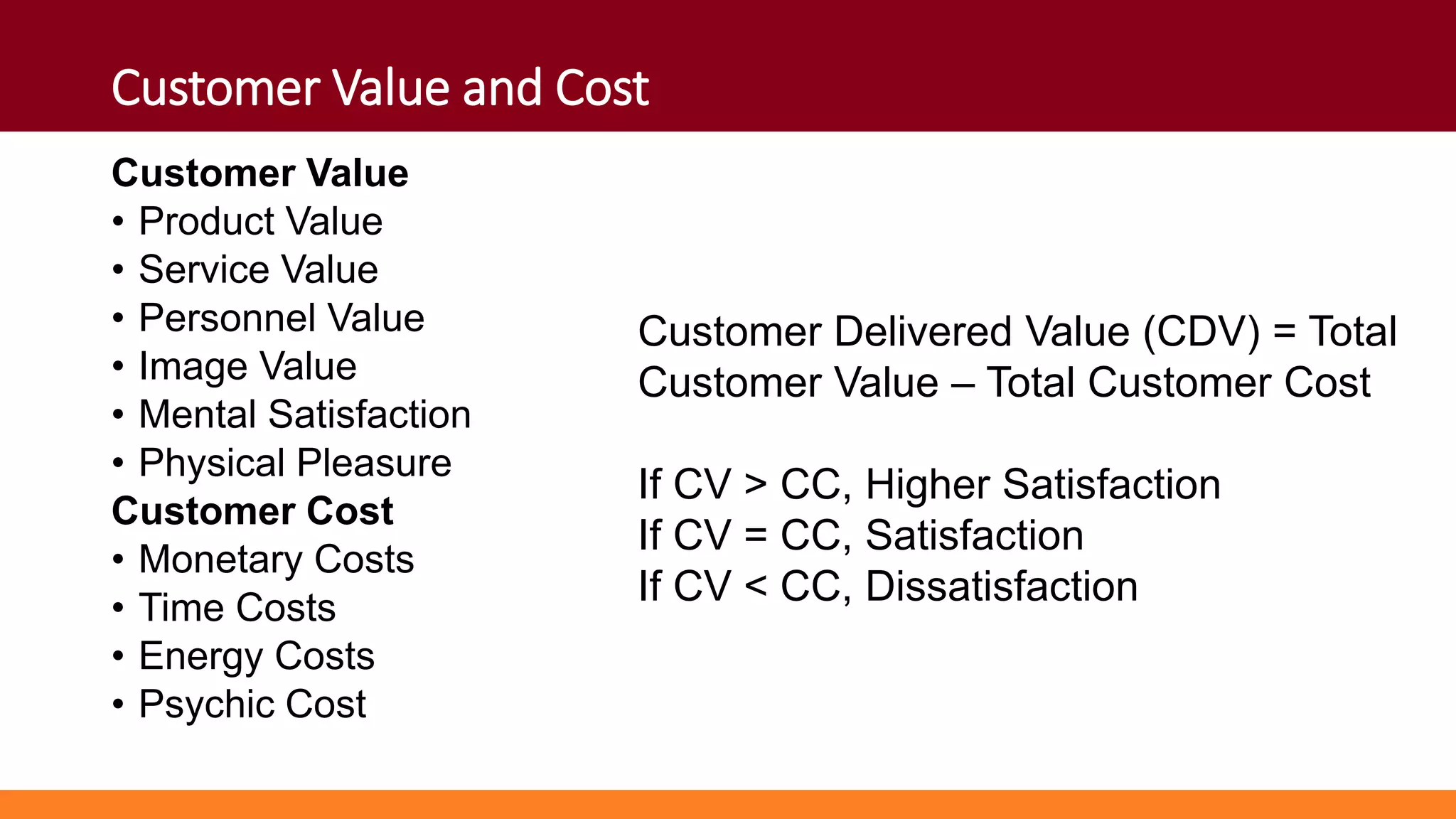
Customer Value and Cost
Customer Value
• Product Value
• Service Value
• Personnel Value
• Image Value
• Mental Satisfaction
• Physical Pleasure
Customer Cost
• Monetary Costs
• Time Costs
• Energy Costs
• Psychic Cost
Customer Delivered Value (CDV) = Total
Customer Value – Total Customer Cost
If CV > CC, Higher Satisfaction
If CV = CC, Satisfaction
If CV < CC, Dissatisfaction
Outcomes of Customer Satisfaction
Quality of life of customer
Customer loyalty
Word-of-mouth
Support the growth and continuity of business
Market price
Better economic environment
Customer's expectation & perception of customers

Customer's expectation & perception of customers

  • 1.
  • 2.
    Customers’ Service Expectations •It is the level of service desired by a customer • In other words it is the belief about the service that the customers expect to receive • Expectations act as the reference points or standards for the customers
  • 3.
    Levels of Customers’Expectations Ideal Level of Service Normal level of Service Experience Based Expectation Acceptable Level of Expectation Adequate Level of Expectation Tolerable level of Expectation
  • 4.
    • Ideal Levelof Service • Highest level of service which can be delivered • Customers do not expect this level of service because it rarely takes place • Normal Level of Service • It is the level of service that everyone is receiving • This level of service is fair treatment • Experience Based Expectation • It is connected with the past experience of customers • Acceptable Level of Expectation • This is the OK level of service.
  • 5.
    • Adequate Levelof Expectation • It is the minimum level of service • Service below this level causes negative impact • Tolerable Level of Expectation • It is the most minimum level of service which one can tolerate for the 1st time
  • 6.
    Broadly Service Expectationscan be Classified as • Desired Service Expectation • It is the level of service that the customers expect to receive • It is mental expectation of customers which he hopes and wishes to receive • Adequate level of Service Expectation • This is the level of service that the customers will accept • It is the minimum tolerable expectation acceptable to the customer.
  • 7.
    Zone of Tolerance •The extent of variation the customers recognize and are willing to accept is called zone of tolerance • In zone of tolerance the organization and customers play a win-win game • Service above the desired level provides delight • Service below adequate service level creates dissatisfaction
  • 8.
    Sources of CustomerExpectations Personal Needs Personal Service Philosophy Derived Service Expectations Perceived Service Alternatives Situational Factors Explicit Service Promises Implicit Service Promises Word-of-mouth Communication Past Experience Predicted Service
  • 9.
    Sources of DesiredService Expectation • Personal Needs • Personal needs can be physiological, social, psychological, etc. • Degree of need determines the desired level of service • E.g. a person with high degree of social and dependency need may have higher expectations for hotel’s ancillary/auxiliary services • Personal Service Philosophy • It refers to the customer underlying general attitude about the meaning of service and proper conduct of service providers • E.g. belief that waiters should not keep customers waiting longer than 15 minutes to take their orders
  • 10.
    • Derived ServiceExpectations • It refers to the expectations driven by other person or group of people • E.g. for birthday celebration a person selects a restaurant which can service various menus that qualify for his/her friends
  • 11.
    Sources of AdequateService Expectations • These sources have short-term influence and tend to fluctuate more than the factors that influence desired service • Perceived Service Alternatives • It refers to other service providers from whom the customer can obtain service • Higher the perceived service alternatives higher will be the adequate service expectation and vice versa • Situational Factors • Uncontrollable situational factors • Situational factors beyond control of service provider • Lower adequate service expectations
  • 12.
    • Personal SituationalFactors • Short-term, individual factors that make a customer more aware of the need for service • E.g. personal emergency situation; medical emergency raise the higher adequate service expectation from service provider • Predicted Service • It refers to the level of service that customers believe they are likely to get for a particular time • If customers predict good service, their levels of adequate service are likely to be higher than if they predict poor service
  • 13.
    Sources of BothDesired and Predicted Service Expectation • Explicit Service Promises • It involves the personal and non-personal statements about service made by the organization to customers • Done through advertisements, brochures, pamphlets, etc. • Implicit Service Promises • Cues, other than explicit promises, that lead to inferences about what the service should and will be alike • Involves price and physical evidence • Word-of- mouth communication • They are independent and unbiased communications made by parties other than the organization
  • 14.
    • Past Experience •Previous experience of the customer influences the desired and predicted service expectation
  • 15.
    Customer’s Perceptions • Perceptionis to realize, feel, understand or to experience • It is the process of systematic organization and interpretation of an experience • Perceptions are always considered relative to expectations • It is called the quality of service received by the customer • Service encounters or the “moments of truth” are the building blocks of customer perceptions Expectation Encounters Perception Positive Negative Satisfaction Dissatisfaction Quality Gap
  • 16.
    Customer Satisfaction • Satisfactionis the consumer’s fulfillment response. It is a judgement that a product or service feature, or product or service itself, provides a pleasurable level of consumption- related fulfillment. • Satisfaction is the fulfillment of desire or expectation • It refers to the customers positive evaluation towards organization, product or service • Customer Satisfaction = f(Value and Cost) • Satisfaction and quality are different; satisfaction is the effect, quality is the cause
  • 17.
    Customer Perceptions ofService Quality and Customer Satisfaction Service Quality Reliability Responsiveness Assurance Empathy Tangibles Product Quality Price Personal Factors Customer Satisfaction Situational Factors
  • 18.
    Dimensions of ServiceQuality • Reliability: ability to perform the promised service dependably and accurately • It means company delivers on its promises- about delivery, problem solving, pricing, etc. • Responsiveness: willingness to help customers and provide prompt service • Assurance: employees’ knowledge and courtesy and their ability to inspire trust and confidence • Important in case of services of which embody high risk and uncertainty like Insurance, Brokerage, Legal Service, etc.
  • 19.
    • Empathy: caring,individualized attention given to customers • Treating customers as individuals • Tangibles: appearance of physical facilities, equipment personnel, and communication materials
  • 20.
    Determinants of CustomerSatisfaction Satisfaction Customer value and cost Product and service features Consumer emotion Customers judgement of causes or events Perception of Equity or Fairness Follow consumers/Group members behavior
  • 21.
    Customer Value andCost Customer Value • Product Value • Service Value • Personnel Value • Image Value • Mental Satisfaction • Physical Pleasure Customer Cost • Monetary Costs • Time Costs • Energy Costs • Psychic Cost Customer Delivered Value (CDV) = Total Customer Value – Total Customer Cost If CV > CC, Higher Satisfaction If CV = CC, Satisfaction If CV < CC, Dissatisfaction
  • 22.
    Outcomes of CustomerSatisfaction Quality of life of customer Customer loyalty Word-of-mouth Support the growth and continuity of business Market price Better economic environment