Sepsis Treatment Members of the Midwest Critical Care Collaborative Led by: W. Christopher Bandy, MD Katie Burenheide, PharmD
Objectives Reviewing Sepsis Bundle Management Early Goal Directive Therapy Corticosteroids Antibiotics  ARDSnet Stress Ulcer Prophylaxis Deep Vein Thrombosis Drotrecogin alpha (Xigris  )
What is a Bundle? Group of interventions that when performed together to treat a disease process results in better outcome then when performed individually Each component of the bundle should have a level of evidence-based research supporting its inclusion
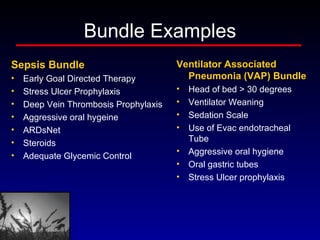
Bundle Examples Sepsis Bundle   Early Goal Directed Therapy Stress Ulcer Prophylaxis Deep Vein Thrombosis Prophylaxis Aggressive oral hygeine ARDsNet Steroids Adequate Glycemic Control Ventilator Associated Pneumonia (VAP) Bundle Head of bed > 30 degrees Ventilator Weaning  Sedation Scale Use of Evac endotracheal Tube Aggressive oral hygiene Oral gastric tubes Stress Ulcer prophylaxis
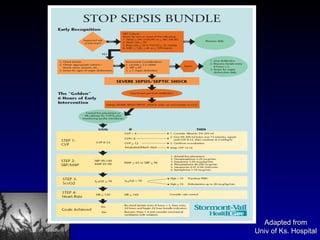
Adapted from Univ of Ks. Hospital
Early Goal Directed Therapy:  Adequate Resuscitation   The Key to Hypoperfusion/Hypotension Management due to Sepsis!
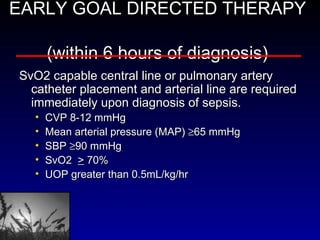
EARLY GOAL DIRECTED THERAPY  (within 6 hours of diagnosis)   SvO2 capable central line or pulmonary artery catheter placement and arterial line are required immediately upon diagnosis of sepsis. CVP 8-12 mmHg Mean arterial pressure (MAP)   65 mmHg SBP   90 mmHg SvO2  >  70% UOP greater than 0.5mL/kg/hr
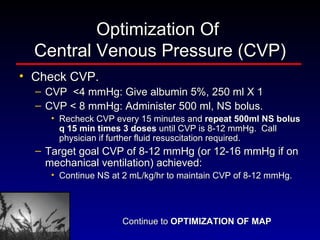
Optimization Of  Central Venous Pressure (CVP) Check CVP. CVP  <4 mmHg: Give albumin 5%, 250 ml X 1 CVP < 8 mmHg: Administer 500 ml, NS bolus. Recheck CVP every 15 minutes and  repeat 500ml NS bolus q 15 min times 3 doses  until CVP is 8-12 mmHg.  Call physician if further fluid resuscitation required. Target goal CVP of 8-12 mmHg (or 12-16 mmHg if on mechanical ventilation) achieved:  Continue NS at 2 mL/kg/hr to maintain CVP of 8-12 mmHg. Continue to  OPTIMIZATION OF MAP
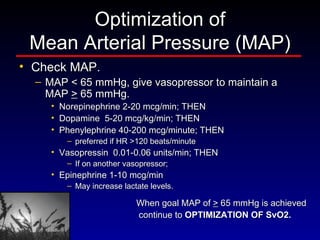
Optimization of Mean Arterial Pressure (MAP) Check MAP. MAP < 65 mmHg, give vasopressor to maintain a MAP  >  65 mmHg. Norepinephrine 2-20 mcg/min; THEN Dopamine  5-20 mcg/kg/min; THEN Phenylephrine 40-200 mcg/minute; THEN  preferred if HR >120 beats/minute Vasopressin  0.01-0.06 units/min; THEN If on another vasopressor;  Epinephrine 1-10 mcg/min  May increase lactate levels.  When goal MAP of  >  65 mmHg is achieved continue to  OPTIMIZATION OF SvO2.
Optimization of Mean Arterial Pressure (MAP) Additional Tidbits: Ask physician if next vasopressor should be added or if it replaces a previous vasopressor.  Pharmacy: Maximum concentration on all vasopressor drips.
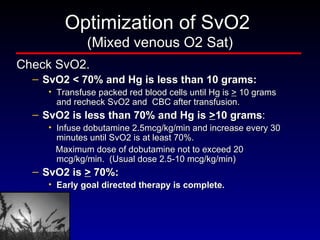
Optimization of SvO2  (Mixed venous O2 Sat) Check SvO2. SvO2 < 70% and Hg is less than 10 grams:  Transfuse packed red blood cells until Hg is  >  10 grams and recheck SvO2 and  CBC after transfusion.  SvO2 is less than 70% and Hg is  > 10 grams :  Infuse dobutamine 2.5mcg/kg/min and increase every 30 minutes until SvO2 is at least 70%.  Maximum dose of dobutamine not to exceed 20 mcg/kg/min.  (Usual dose 2.5-10 mcg/kg/min) SvO2 is  >  70%:  Early goal directed therapy is complete.
EARLY GOAL DIRECTED THERAPY  (within 6 hours of diagnosis)   Reassess Each Step Every  30 Minutes To  Maintain Optimization Goals.
Monitoring Lactate Levels  During Resuscitation
Lactate Measurements Hyperlactatemia is typically present in patients with severe sepsis or septic shock and may be secondary to anaerobic metabolism due to hypoperfusion.   The prognostic value of raised blood lactate levels has been well established in septic shock patients , particularly if the high levels persist.  http://www.ihi.org/IHI/Topics/CriticalCare/Sepsis/Changes/IndividualChanges/SerumLactateMeasured.htm
Lactate Measurements In addition, blood lactate levels have been shown to have greater prognostic value than oxygen-derived variables.    Obtaining serum lactate is essential to identifying tissue hypoperfusion in patients who are not yet hypotensive but who are at risk for septic shock. http://www.ihi.org/IHI/Topics/CriticalCare/Sepsis/Changes/IndividualChanges/SerumLactateMeasured.htm
Bundle Management: ARDSnet Ventilator Management
Rationale Patients with sepsis are at increased risk for developing acute respiratory failure, and most patients with severe sepsis and septic shock will require endotracheal intubation and mechanical ventilation.    High tidal volumes that are coupled with high plateau pressures should be avoided in acute lung injury (ALI)/ acute respiratory distress syndrome (ARDS).    http://www.ihi.org/IHI/Topics/CriticalCare/Sepsis/Changes/IndividualChanges/PreventExcessiveInspiratoryPlateauPressures.htm
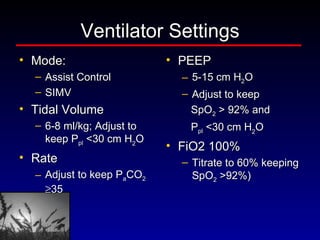
Ventilator Settings Mode:  Assist Control SIMV  Tidal Volume 6-8 ml/kg; Adjust to keep P pl  <30 cm H 2 O Rate Adjust to keep P a CO 2    35 PEEP 5-15 cm H 2 O Adjust to keep  SpO 2  > 92% and  P pl  <30 cm H 2 O FiO2 100% Titrate to 60% keeping SpO 2  >92%)
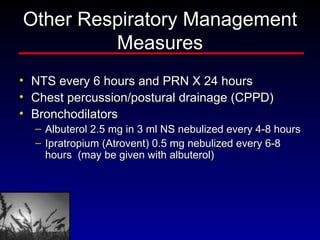
Other Respiratory Management Measures NTS every 6 hours and PRN X 24 hours  Chest percussion/postural drainage (CPPD)  Bronchodilators Albuterol 2.5 mg in 3 ml NS nebulized every 4-8 hours  Ipratropium (Atrovent) 0.5 mg nebulized every 6-8 hours  (may be given with albuterol)
Bundle Management:  Broad-Spectrum Antibiotics
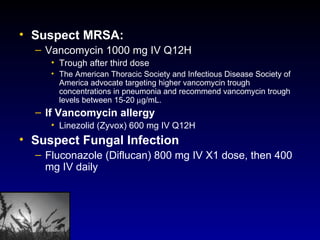
Suspect MRSA:   Vancomycin 1000 mg IV Q12H Trough after third dose The American Thoracic Society and Infectious Disease Society of America advocate targeting higher vancomycin trough concentrations in pneumonia and recommend vancomycin trough levels between 15-20   g/mL.  If Vancomycin allergy Linezolid (Zyvox) 600 mg IV Q12H Suspect Fungal Infection Fluconazole (Diflucan) 800 mg IV X1 dose, then 400 mg IV daily
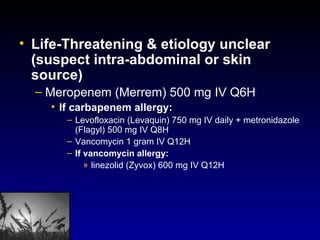
Life-Threatening & etiology unclear (suspect intra-abdominal or skin source) Meropenem (Merrem) 500 mg IV Q6H If carbapenem allergy:  Levofloxacin (Levaquin) 750 mg IV daily + metronidazole (Flagyl) 500 mg IV Q8H Vancomycin 1 gram IV Q12H If vancomycin allergy:   linezolid (Zyvox) 600 mg IV Q12H
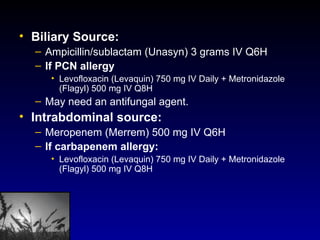
Biliary Source:  Ampicillin/sublactam (Unasyn) 3 grams IV Q6H If PCN allergy Levofloxacin (Levaquin) 750 mg IV Daily + Metronidazole (Flagyl) 500 mg IV Q8H May need an antifungal agent.  Intrabdominal source:  Meropenem (Merrem) 500 mg IV Q6H If carbapenem allergy:  Levofloxacin (Levaquin) 750 mg IV Daily + Metronidazole (Flagyl) 500 mg IV Q8H
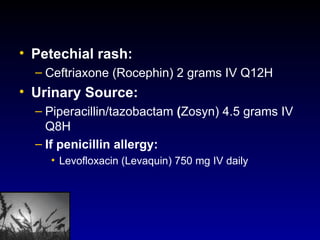
Petechial rash:  Ceftriaxone (Rocephin) 2 grams IV Q12H Urinary Source:  Piperacillin/tazobactam  ( Zosyn) 4.5 grams IV Q8H If penicillin allergy:   Levofloxacin (Levaquin) 750 mg IV daily
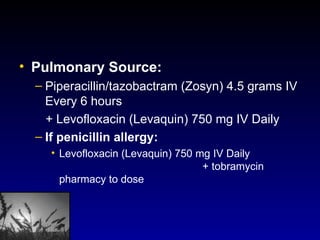
Pulmonary Source:  Piperacillin/tazobactram (Zosyn) 4.5 grams IV Every 6 hours  + Levofloxacin (Levaquin) 750 mg IV Daily If penicillin allergy:   Levofloxacin (Levaquin) 750 mg IV Daily  + tobramycin pharmacy to dose
Bundle Management: Blood Glucose Control
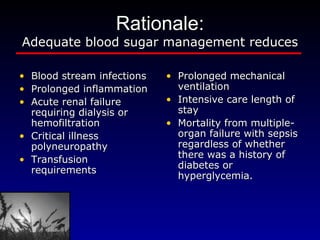
Rationale: Adequate blood sugar management reduces Blood stream infections  Prolonged inflammation Acute renal failure requiring dialysis or hemofiltration Critical illness polyneuropathy Transfusion requirements Prolonged mechanical ventilation Intensive care length of stay Mortality from multiple-organ failure with sepsis regardless of whether there was a history of diabetes or hyperglycemia.
American College Of Endocrinology And  American Diabetes Association  Consensus Statement Critically Ill patients – recommend insulin infusion and converting patient to subcutaneous insulin when able to.  “ Sliding Scale is not recommended” – especially as the sole type of insulin therapy.
American College Of Endocrinology And  American Diabetes Association  Consensus Statement Instead of sliding scale, recommend calling additional insulin needed with regular or Humalog/Novolog “correction insulin”.  Recommend basal replacement insulin with NPH, Lantus or Levemir with additional correction insulin.
Surviving Sepsis Campaign Recommends Following initial stabilization of patients with severe sepsis, blood glucose should be maintained < 150 mg/dL (8.3 mmol/L).
Bundle Management Corticosteroids
Steroids Rationale IV corticosteroids recommended in patients with septic shock who despite adequate fluid replacement require vasopressor therapy to maintain adequate blood pressure. Mineralocorticoid Effects Recommended Hydrocortisone  IV 100mg every 8 hours  Fludrocortisone  0.05mg PO/NG daily in addition to IV hydrocortisone.
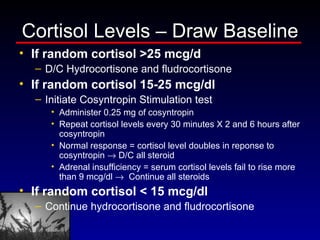
Cortisol Levels – Draw Baseline If random cortisol >25 mcg/d D/C Hydrocortisone and fludrocortisone If random cortisol 15-25 mcg/dl  Initiate Cosyntropin Stimulation test Administer 0.25 mg of cosyntropin  Repeat cortisol levels every 30 minutes X 2 and 6 hours after cosyntropin Normal response = cortisol level doubles in reponse to cosyntropin    D/C all steroid Adrenal insufficiency = serum cortisol levels fail to rise more than 9 mcg/dl     Continue all steroids If random cortisol < 15 mcg/dl  Continue hydrocortisone and fludrocortisone
Discontinue steroids once patient is off vasopressors
Bundle Management: Stress Ulcer Prophylaxis
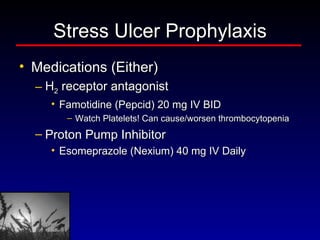
Stress Ulcer Prophylaxis Medications (Either) H 2  receptor antagonist Famotidine (Pepcid) 20 mg IV BID Watch Platelets! Can cause/worsen thrombocytopenia Proton Pump Inhibitor Esomeprazole (Nexium) 40 mg IV Daily
Bundle Management: Deep Vein Thrombosis Prophylaxis
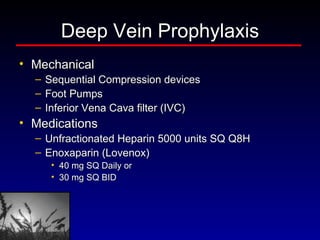
Deep Vein Prophylaxis Mechanical Sequential Compression devices Foot Pumps Inferior Vena Cava filter (IVC) Medications Unfractionated Heparin 5000 units SQ Q8H Enoxaparin (Lovenox)  40 mg SQ Daily or 30 mg SQ BID
Bundle Management: Drotrecogin alpha (Xigris  )
Drotrecogin- α Mechanism of Action Recombinant form of human activated protein C  Possesses profibrinolytic, antithrombotic, and antiinflammatory activities which may abrogate many systemic responses seen in septic patients  Activated protein C levels are reduced in septic patients
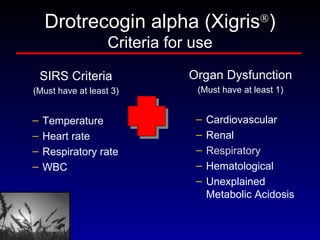
Drotrecogin alpha (Xigris  )  Criteria for use SIRS Criteria (Must have at least 3) Temperature Heart rate Respiratory rate WBC Organ Dysfunction (Must have at least 1) Cardiovascular Renal Respiratory Hematological Unexplained Metabolic Acidosis
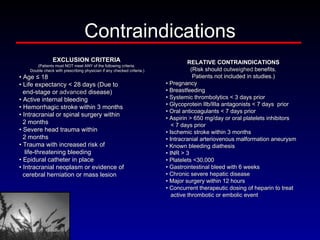
Contraindications EXCLUSION CRITERIA (Patients must NOT meet ANY of the following criteria. Double check with prescribing physician if any checked criteria.) •  Age ≤ 18 •  Life expectancy < 28 days (Due to end-stage or  advanced  disease) •  Active internal bleeding •  Hemorrhagic stroke within 3 months •  Intracranial or spinal surgery within 2 months •  Severe head trauma within 2 months •  Trauma with increased risk of life-threatening bleeding •  Epidural catheter in place •  Intracranial neoplasm or evidence of cerebral herniation or mass lesion RELATIVE CONTRAINDICATIONS (Risk should  outweighed  benefits. Patients not included in studies.) •  Pregnancy •  Breastfeeding •  Systemic thrombolytics < 3 days prior •  Glycoprotein IIb/IIIa antagonists < 7 days  prior •  Oral anticoagulants < 7 days prior •  Aspirin > 650 mg/day or oral platelets inhibitors  < 7 days prior •  Ischemic stroke within 3 months •  Intracranial arteriovenous malformation aneurysm •  Known bleeding diathesis •  INR > 3 •  Platelets <30,000 •  Gastrointestinal bleed with 6 weeks •  Chronic severe hepatic disease •  Major surgery within 12 hours •  Concurrent therapeutic dosing of heparin to treat active thrombotic or embolic event
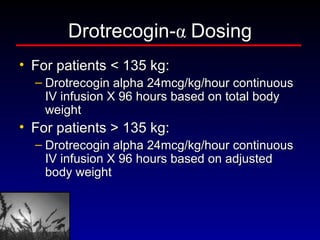
Drotrecogin- α   Dosing For patients < 135 kg: Drotrecogin alpha 24mcg/kg/hour continuous IV infusion X 96 hours based on total body weight For patients > 135 kg: Drotrecogin alpha 24mcg/kg/hour continuous IV infusion X 96 hours based on adjusted body weight
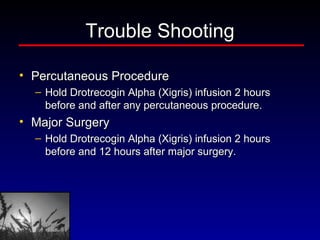
Trouble Shooting Percutaneous Procedure Hold Drotrecogin Alpha (Xigris) infusion 2 hours before and after any percutaneous procedure. Major Surgery Hold Drotrecogin Alpha (Xigris) infusion 2 hours before and 12 hours after major surgery.
Treating Sepsis Management  Time is Crucial – Just like……… Trauma Golden hour! Myocardial Infarction Time is tissue! Chain of survival Door to balloon time Neurology Time is brain! Sepsis Time is organ function! Time to  ▲  “mentality”
References Rivers E, Nguyen B, et al. Early Goal-Directed Therapy in the Treatment of Severe Sepsis and Septic Shock. The Early Goal-Directed Therapy Collaborative Group. NEJM 2001; 354-1368:1377. Rivers E, Nguyen B, et al. Stop Sepsis Tool kit.  http:// www.llu.edu/llumc/emergency/patientcare /   Angus DE  et al; Epidemiology of severe sepsis in the United States: analysis of incidence, outcome and associated costs of care. Critical Care Medicine 2001; 29:1303-1310.  Surviving Sepsis Campaign Guidelines for management of severe sepsis and septic shock  Care Med 2004 March;32(3):858-873   Kansas Critical Care Collaborative.  http://www.kscritcare.org/   Sepsis Bundle.  http://www.ihi.org/IHI/Topics/CriticalCare/Sepsis . 2005 Dellinger RP, Carlet JM, Masur H, Gerlach H, al. e. Surviving sepsis campaign guidelines for management of severe sepsis and septic shock. Crit Care Med 2004; 32:858-72.  http://www.sccm.org/professional_resources/guidelines/table_of_contents/Documents/FINAL.pdf Gilber DN, Moellering RC, Eliopoulos GM & Sande Merle A. The Sanford Guide to Antimicrobial Therapy 2006. Antimicrobial Therapy Inc.  Eli Lilly Sepsis website. http://www.sepsis.com/index.jsp Annane D, Sebille V, Charpentier C, et al. Effect of treatment with low doses of hydrocortisone and fludrocortisone on mortality in patients with septic shock. Jama 2002; 288:862-71. Bernard GR, Vincent JL, Laterre PF, et al. Efficacy and safety of recombinant human activated protein C for severe sepsis. N Engl J Med 2001; 344:699-709. Introduction to Cardiovascular Pharmacology.  http://www.orhs.org/classes/nursing/CVPharm05.pdf
References – Cont’d ACE/ADA Task Force on Inpatient Diabetes. Endocrine Practice 2006 12(4):459-468.   http://www.aace.com/meetings/consensus/IIDC/IDGC0731.pdf#search=%22american%20college%20of%20endocrinology%20consensus%20statement%202006%22 Orlando Regional HealthCare. Hyperglycemic Control in Critically Ill.  http://www.surgicalcriticalcare.net/Guidelines/glucose_control.pdf G Umpierrez & G Maynard. Glycemic Chaos (not glycemic control) still the rule for inpatient care: how do we stop the insanity?” Society of Hospital Medicine 2006 1(3): 141-144.  A Malhota. Intensive Insulin in Intensive Care. New England Journal of Medicine 2006  354(5): 516-518. JS Krinsley & RL Jones. Cost analysis of intensive glycemic control in critically ill adult patients. Chest 2006; 129:644-650.  M Brownlee & IB Hirsch. Glycemic Variability: a hemoglobin A1C-Indepented Risk Factor for diabetic complications. JAMA 2006; 295(14) 1707-1708.  G Van den Berghe, A Wilmer, et al. Intensive Insulin Therapy in the Medical ICU. 2006; 354(5): 449-61.

Sepsis Treatment

  • 1.
    Sepsis Treatment Membersof the Midwest Critical Care Collaborative Led by: W. Christopher Bandy, MD Katie Burenheide, PharmD
  • 2.
    Objectives Reviewing SepsisBundle Management Early Goal Directive Therapy Corticosteroids Antibiotics ARDSnet Stress Ulcer Prophylaxis Deep Vein Thrombosis Drotrecogin alpha (Xigris  )
  • 3.
    What is aBundle? Group of interventions that when performed together to treat a disease process results in better outcome then when performed individually Each component of the bundle should have a level of evidence-based research supporting its inclusion
  • 4.
    Bundle Examples SepsisBundle Early Goal Directed Therapy Stress Ulcer Prophylaxis Deep Vein Thrombosis Prophylaxis Aggressive oral hygeine ARDsNet Steroids Adequate Glycemic Control Ventilator Associated Pneumonia (VAP) Bundle Head of bed > 30 degrees Ventilator Weaning Sedation Scale Use of Evac endotracheal Tube Aggressive oral hygiene Oral gastric tubes Stress Ulcer prophylaxis
  • 5.
    Adapted from Univof Ks. Hospital
  • 6.
    Early Goal DirectedTherapy: Adequate Resuscitation The Key to Hypoperfusion/Hypotension Management due to Sepsis!
  • 7.
    EARLY GOAL DIRECTEDTHERAPY (within 6 hours of diagnosis) SvO2 capable central line or pulmonary artery catheter placement and arterial line are required immediately upon diagnosis of sepsis. CVP 8-12 mmHg Mean arterial pressure (MAP)  65 mmHg SBP  90 mmHg SvO2 > 70% UOP greater than 0.5mL/kg/hr
  • 8.
    Optimization Of Central Venous Pressure (CVP) Check CVP. CVP <4 mmHg: Give albumin 5%, 250 ml X 1 CVP < 8 mmHg: Administer 500 ml, NS bolus. Recheck CVP every 15 minutes and repeat 500ml NS bolus q 15 min times 3 doses until CVP is 8-12 mmHg. Call physician if further fluid resuscitation required. Target goal CVP of 8-12 mmHg (or 12-16 mmHg if on mechanical ventilation) achieved: Continue NS at 2 mL/kg/hr to maintain CVP of 8-12 mmHg. Continue to OPTIMIZATION OF MAP
  • 9.
    Optimization of MeanArterial Pressure (MAP) Check MAP. MAP < 65 mmHg, give vasopressor to maintain a MAP > 65 mmHg. Norepinephrine 2-20 mcg/min; THEN Dopamine 5-20 mcg/kg/min; THEN Phenylephrine 40-200 mcg/minute; THEN preferred if HR >120 beats/minute Vasopressin 0.01-0.06 units/min; THEN If on another vasopressor; Epinephrine 1-10 mcg/min May increase lactate levels.  When goal MAP of > 65 mmHg is achieved continue to OPTIMIZATION OF SvO2.
  • 10.
    Optimization of MeanArterial Pressure (MAP) Additional Tidbits: Ask physician if next vasopressor should be added or if it replaces a previous vasopressor. Pharmacy: Maximum concentration on all vasopressor drips.
  • 11.
    Optimization of SvO2 (Mixed venous O2 Sat) Check SvO2. SvO2 < 70% and Hg is less than 10 grams: Transfuse packed red blood cells until Hg is > 10 grams and recheck SvO2 and CBC after transfusion. SvO2 is less than 70% and Hg is > 10 grams : Infuse dobutamine 2.5mcg/kg/min and increase every 30 minutes until SvO2 is at least 70%. Maximum dose of dobutamine not to exceed 20 mcg/kg/min. (Usual dose 2.5-10 mcg/kg/min) SvO2 is > 70%: Early goal directed therapy is complete.
  • 12.
    EARLY GOAL DIRECTEDTHERAPY (within 6 hours of diagnosis) Reassess Each Step Every 30 Minutes To Maintain Optimization Goals.
  • 13.
    Monitoring Lactate Levels During Resuscitation
  • 14.
    Lactate Measurements Hyperlactatemiais typically present in patients with severe sepsis or septic shock and may be secondary to anaerobic metabolism due to hypoperfusion.  The prognostic value of raised blood lactate levels has been well established in septic shock patients , particularly if the high levels persist. http://www.ihi.org/IHI/Topics/CriticalCare/Sepsis/Changes/IndividualChanges/SerumLactateMeasured.htm
  • 15.
    Lactate Measurements Inaddition, blood lactate levels have been shown to have greater prognostic value than oxygen-derived variables.   Obtaining serum lactate is essential to identifying tissue hypoperfusion in patients who are not yet hypotensive but who are at risk for septic shock. http://www.ihi.org/IHI/Topics/CriticalCare/Sepsis/Changes/IndividualChanges/SerumLactateMeasured.htm
  • 16.
    Bundle Management: ARDSnetVentilator Management
  • 17.
    Rationale Patients withsepsis are at increased risk for developing acute respiratory failure, and most patients with severe sepsis and septic shock will require endotracheal intubation and mechanical ventilation.    High tidal volumes that are coupled with high plateau pressures should be avoided in acute lung injury (ALI)/ acute respiratory distress syndrome (ARDS).   http://www.ihi.org/IHI/Topics/CriticalCare/Sepsis/Changes/IndividualChanges/PreventExcessiveInspiratoryPlateauPressures.htm
  • 18.
    Ventilator Settings Mode: Assist Control SIMV Tidal Volume 6-8 ml/kg; Adjust to keep P pl <30 cm H 2 O Rate Adjust to keep P a CO 2  35 PEEP 5-15 cm H 2 O Adjust to keep SpO 2 > 92% and P pl <30 cm H 2 O FiO2 100% Titrate to 60% keeping SpO 2 >92%)
  • 19.
    Other Respiratory ManagementMeasures NTS every 6 hours and PRN X 24 hours Chest percussion/postural drainage (CPPD) Bronchodilators Albuterol 2.5 mg in 3 ml NS nebulized every 4-8 hours Ipratropium (Atrovent) 0.5 mg nebulized every 6-8 hours (may be given with albuterol)
  • 20.
    Bundle Management: Broad-Spectrum Antibiotics
  • 21.
    Suspect MRSA: Vancomycin 1000 mg IV Q12H Trough after third dose The American Thoracic Society and Infectious Disease Society of America advocate targeting higher vancomycin trough concentrations in pneumonia and recommend vancomycin trough levels between 15-20  g/mL. If Vancomycin allergy Linezolid (Zyvox) 600 mg IV Q12H Suspect Fungal Infection Fluconazole (Diflucan) 800 mg IV X1 dose, then 400 mg IV daily
  • 22.
    Life-Threatening & etiologyunclear (suspect intra-abdominal or skin source) Meropenem (Merrem) 500 mg IV Q6H If carbapenem allergy: Levofloxacin (Levaquin) 750 mg IV daily + metronidazole (Flagyl) 500 mg IV Q8H Vancomycin 1 gram IV Q12H If vancomycin allergy: linezolid (Zyvox) 600 mg IV Q12H
  • 23.
    Biliary Source: Ampicillin/sublactam (Unasyn) 3 grams IV Q6H If PCN allergy Levofloxacin (Levaquin) 750 mg IV Daily + Metronidazole (Flagyl) 500 mg IV Q8H May need an antifungal agent. Intrabdominal source: Meropenem (Merrem) 500 mg IV Q6H If carbapenem allergy: Levofloxacin (Levaquin) 750 mg IV Daily + Metronidazole (Flagyl) 500 mg IV Q8H
  • 24.
    Petechial rash: Ceftriaxone (Rocephin) 2 grams IV Q12H Urinary Source: Piperacillin/tazobactam ( Zosyn) 4.5 grams IV Q8H If penicillin allergy: Levofloxacin (Levaquin) 750 mg IV daily
  • 25.
    Pulmonary Source: Piperacillin/tazobactram (Zosyn) 4.5 grams IV Every 6 hours + Levofloxacin (Levaquin) 750 mg IV Daily If penicillin allergy: Levofloxacin (Levaquin) 750 mg IV Daily + tobramycin pharmacy to dose
  • 26.
    Bundle Management: BloodGlucose Control
  • 27.
    Rationale: Adequate bloodsugar management reduces Blood stream infections Prolonged inflammation Acute renal failure requiring dialysis or hemofiltration Critical illness polyneuropathy Transfusion requirements Prolonged mechanical ventilation Intensive care length of stay Mortality from multiple-organ failure with sepsis regardless of whether there was a history of diabetes or hyperglycemia.
  • 28.
    American College OfEndocrinology And American Diabetes Association Consensus Statement Critically Ill patients – recommend insulin infusion and converting patient to subcutaneous insulin when able to. “ Sliding Scale is not recommended” – especially as the sole type of insulin therapy.
  • 29.
    American College OfEndocrinology And American Diabetes Association Consensus Statement Instead of sliding scale, recommend calling additional insulin needed with regular or Humalog/Novolog “correction insulin”. Recommend basal replacement insulin with NPH, Lantus or Levemir with additional correction insulin.
  • 30.
    Surviving Sepsis CampaignRecommends Following initial stabilization of patients with severe sepsis, blood glucose should be maintained < 150 mg/dL (8.3 mmol/L).
  • 31.
  • 32.
    Steroids Rationale IVcorticosteroids recommended in patients with septic shock who despite adequate fluid replacement require vasopressor therapy to maintain adequate blood pressure. Mineralocorticoid Effects Recommended Hydrocortisone IV 100mg every 8 hours Fludrocortisone 0.05mg PO/NG daily in addition to IV hydrocortisone.
  • 33.
    Cortisol Levels –Draw Baseline If random cortisol >25 mcg/d D/C Hydrocortisone and fludrocortisone If random cortisol 15-25 mcg/dl Initiate Cosyntropin Stimulation test Administer 0.25 mg of cosyntropin Repeat cortisol levels every 30 minutes X 2 and 6 hours after cosyntropin Normal response = cortisol level doubles in reponse to cosyntropin  D/C all steroid Adrenal insufficiency = serum cortisol levels fail to rise more than 9 mcg/dl  Continue all steroids If random cortisol < 15 mcg/dl Continue hydrocortisone and fludrocortisone
  • 34.
    Discontinue steroids oncepatient is off vasopressors
  • 35.
    Bundle Management: StressUlcer Prophylaxis
  • 36.
    Stress Ulcer ProphylaxisMedications (Either) H 2 receptor antagonist Famotidine (Pepcid) 20 mg IV BID Watch Platelets! Can cause/worsen thrombocytopenia Proton Pump Inhibitor Esomeprazole (Nexium) 40 mg IV Daily
  • 37.
    Bundle Management: DeepVein Thrombosis Prophylaxis
  • 38.
    Deep Vein ProphylaxisMechanical Sequential Compression devices Foot Pumps Inferior Vena Cava filter (IVC) Medications Unfractionated Heparin 5000 units SQ Q8H Enoxaparin (Lovenox) 40 mg SQ Daily or 30 mg SQ BID
  • 39.
    Bundle Management: Drotrecoginalpha (Xigris  )
  • 40.
    Drotrecogin- α Mechanismof Action Recombinant form of human activated protein C Possesses profibrinolytic, antithrombotic, and antiinflammatory activities which may abrogate many systemic responses seen in septic patients Activated protein C levels are reduced in septic patients
  • 41.
    Drotrecogin alpha (Xigris ) Criteria for use SIRS Criteria (Must have at least 3) Temperature Heart rate Respiratory rate WBC Organ Dysfunction (Must have at least 1) Cardiovascular Renal Respiratory Hematological Unexplained Metabolic Acidosis
  • 42.
    Contraindications EXCLUSION CRITERIA(Patients must NOT meet ANY of the following criteria. Double check with prescribing physician if any checked criteria.) • Age ≤ 18 • Life expectancy < 28 days (Due to end-stage or advanced disease) • Active internal bleeding • Hemorrhagic stroke within 3 months • Intracranial or spinal surgery within 2 months • Severe head trauma within 2 months • Trauma with increased risk of life-threatening bleeding • Epidural catheter in place • Intracranial neoplasm or evidence of cerebral herniation or mass lesion RELATIVE CONTRAINDICATIONS (Risk should outweighed benefits. Patients not included in studies.) • Pregnancy • Breastfeeding • Systemic thrombolytics < 3 days prior • Glycoprotein IIb/IIIa antagonists < 7 days prior • Oral anticoagulants < 7 days prior • Aspirin > 650 mg/day or oral platelets inhibitors < 7 days prior • Ischemic stroke within 3 months • Intracranial arteriovenous malformation aneurysm • Known bleeding diathesis • INR > 3 • Platelets <30,000 • Gastrointestinal bleed with 6 weeks • Chronic severe hepatic disease • Major surgery within 12 hours • Concurrent therapeutic dosing of heparin to treat active thrombotic or embolic event
  • 43.
    Drotrecogin- α Dosing For patients < 135 kg: Drotrecogin alpha 24mcg/kg/hour continuous IV infusion X 96 hours based on total body weight For patients > 135 kg: Drotrecogin alpha 24mcg/kg/hour continuous IV infusion X 96 hours based on adjusted body weight
  • 44.
    Trouble Shooting PercutaneousProcedure Hold Drotrecogin Alpha (Xigris) infusion 2 hours before and after any percutaneous procedure. Major Surgery Hold Drotrecogin Alpha (Xigris) infusion 2 hours before and 12 hours after major surgery.
  • 45.
    Treating Sepsis Management Time is Crucial – Just like……… Trauma Golden hour! Myocardial Infarction Time is tissue! Chain of survival Door to balloon time Neurology Time is brain! Sepsis Time is organ function! Time to ▲ “mentality”
  • 46.
    References Rivers E,Nguyen B, et al. Early Goal-Directed Therapy in the Treatment of Severe Sepsis and Septic Shock. The Early Goal-Directed Therapy Collaborative Group. NEJM 2001; 354-1368:1377. Rivers E, Nguyen B, et al. Stop Sepsis Tool kit. http:// www.llu.edu/llumc/emergency/patientcare /   Angus DE et al; Epidemiology of severe sepsis in the United States: analysis of incidence, outcome and associated costs of care. Critical Care Medicine 2001; 29:1303-1310. Surviving Sepsis Campaign Guidelines for management of severe sepsis and septic shock Care Med 2004 March;32(3):858-873   Kansas Critical Care Collaborative. http://www.kscritcare.org/ Sepsis Bundle.  http://www.ihi.org/IHI/Topics/CriticalCare/Sepsis . 2005 Dellinger RP, Carlet JM, Masur H, Gerlach H, al. e. Surviving sepsis campaign guidelines for management of severe sepsis and septic shock. Crit Care Med 2004; 32:858-72. http://www.sccm.org/professional_resources/guidelines/table_of_contents/Documents/FINAL.pdf Gilber DN, Moellering RC, Eliopoulos GM & Sande Merle A. The Sanford Guide to Antimicrobial Therapy 2006. Antimicrobial Therapy Inc. Eli Lilly Sepsis website. http://www.sepsis.com/index.jsp Annane D, Sebille V, Charpentier C, et al. Effect of treatment with low doses of hydrocortisone and fludrocortisone on mortality in patients with septic shock. Jama 2002; 288:862-71. Bernard GR, Vincent JL, Laterre PF, et al. Efficacy and safety of recombinant human activated protein C for severe sepsis. N Engl J Med 2001; 344:699-709. Introduction to Cardiovascular Pharmacology. http://www.orhs.org/classes/nursing/CVPharm05.pdf
  • 47.
    References – Cont’dACE/ADA Task Force on Inpatient Diabetes. Endocrine Practice 2006 12(4):459-468. http://www.aace.com/meetings/consensus/IIDC/IDGC0731.pdf#search=%22american%20college%20of%20endocrinology%20consensus%20statement%202006%22 Orlando Regional HealthCare. Hyperglycemic Control in Critically Ill. http://www.surgicalcriticalcare.net/Guidelines/glucose_control.pdf G Umpierrez & G Maynard. Glycemic Chaos (not glycemic control) still the rule for inpatient care: how do we stop the insanity?” Society of Hospital Medicine 2006 1(3): 141-144. A Malhota. Intensive Insulin in Intensive Care. New England Journal of Medicine 2006 354(5): 516-518. JS Krinsley & RL Jones. Cost analysis of intensive glycemic control in critically ill adult patients. Chest 2006; 129:644-650. M Brownlee & IB Hirsch. Glycemic Variability: a hemoglobin A1C-Indepented Risk Factor for diabetic complications. JAMA 2006; 295(14) 1707-1708. G Van den Berghe, A Wilmer, et al. Intensive Insulin Therapy in the Medical ICU. 2006; 354(5): 449-61.