Let’s Shore Up Our Defenses
Presented by:
Carmenchu Echiverri Villavicencio, MD, DPCP, DPSMID
Slides by
Marion Priscilla A. Kwek, MD, FPCP, DPSMID
July 4, 2015
Outline
• Introduction
– History of Antibiotics
– Magnitude of the Problem
• Antimicrobial Stewardship
– Definition & Rationale
– Interpretation of Antibiogram Data
– Developing Institutional Program
– Stewardship for the primary care physician
Objectives
• Recognize the problem of antimicrobial
resistance
• Understand the benefits of an antimicrobial
stewardship program
• Apply antimicrobial stewardship in clinical
practice
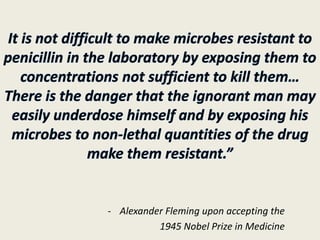
- Alexander Fleming upon accepting the
1945 Nobel Prize in Medicine
The Bad News
• Increasing resistance to available antimicrobials
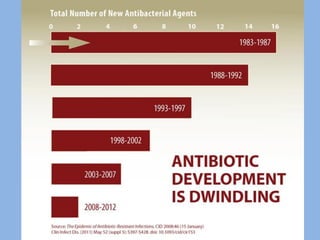
• Stagnant antibiotic development
– Investment lacking
– Slow to recognize the need and inherent delays in
finding and developing new antimicrobials
• The increasing importance of antimicrobials in
modern medical practice
– Increasing use of antimicrobials for those patients on
immunosuppressants and managed in critical care
Antibiotic Resistance
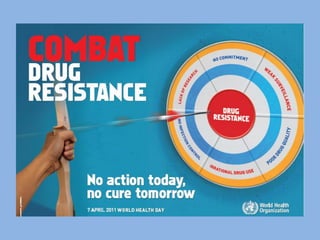
• A worldwide problem
• Can cross international boundaries and spread
with ease
• Pose a catastrophic threat to people in every
country in the world
• At least 2M people acquire serious infections
with bacteria resistant to one or more of the
antibiotics designed to treat those infections
Antibiotic Resistance Threats in the United States, 2013. Centers for Disease Control and Prevention
Antibiotic Resistance
• At least 23,000 people die each year as a direct
result of these antibiotic-resistant infections
• Many more die from other conditions that were
complicated by an antibiotic resistant infection
• Infections add considerable and avoidable costs
• Require prolonged and/or costlier treatments,
extend hospital stays, necessitate additional
doctor visits and healthcare use, and result in
greater disability and death
Antibiotic Resistance Threats in the United States, 2013. Centers for Disease Control and Prevention
Antibiotic Resistance
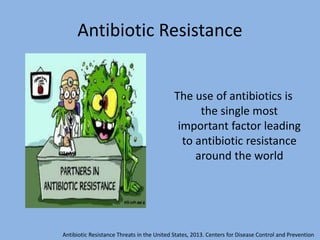
The use of antibiotics is
the single most
important factor leading
to antibiotic resistance
around the world
Antibiotic Resistance Threats in the United States, 2013. Centers for Disease Control and Prevention
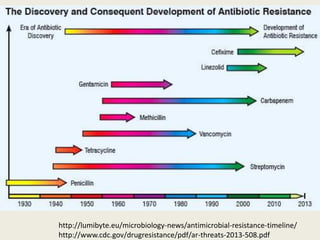
http://lumibyte.eu/microbiology-news/antimicrobial-resistance-timeline/
http://www.cdc.gov/drugresistance/pdf/ar-threats-2013-508.pdf
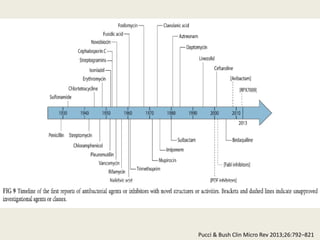
Pucci & Bush Clin Micro Rev 2013;26:792–821
What is “Collateral Damage”?
• Refer to ecological adverse effects of antibiotic
therapy; namely,
– Selection of drug-resistant organisms and
– Unwanted development of colonization or
infection with multidrug resistant organisms (eg,
Clostridium difficile Infection)
• Two antibiotic classes commonly linked to
collateral damage:
– Cephalosporins & Fluoroquinolones
Paterson DL. Clin Infect Dis. 2004;38(suppl 4):S341-S345.
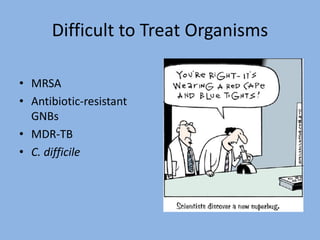
Difficult to Treat Organisms
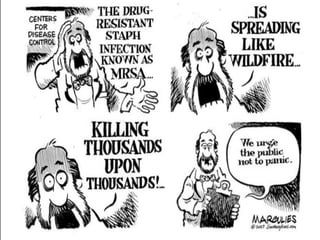
• MRSA
• Antibiotic-resistant
GNBs
• MDR-TB
• C. difficile
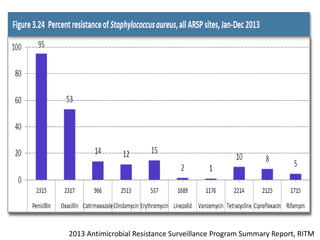
Staphylococcus aureus
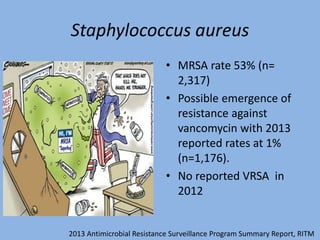
• MRSA rate 53% (n=
2,317)
• Possible emergence of
resistance against
vancomycin with 2013
reported rates at 1%
(n=1,176).
• No reported VRSA in
2012
2013 Antimicrobial Resistance Surveillance Program Summary Report, RITM
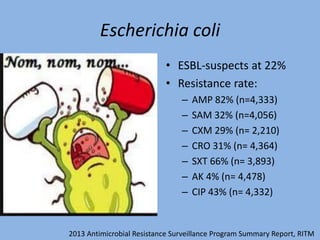
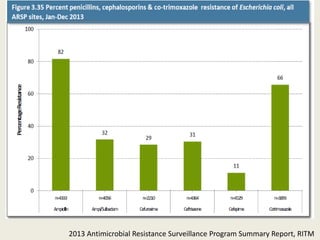
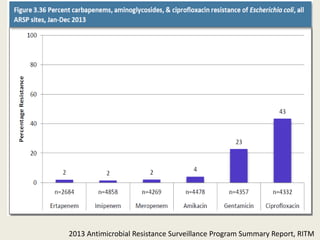
Escherichia coli
• ESBL-suspects at 22%
• Resistance rate:
– AMP 82% (n=4,333)
– SAM 32% (n=4,056)
– CXM 29% (n= 2,210)
– CRO 31% (n= 4,364)
– SXT 66% (n= 3,893)
– AK 4% (n= 4,478)
– CIP 43% (n= 4,332)
2013 Antimicrobial Resistance Surveillance Program Summary Report, RITM
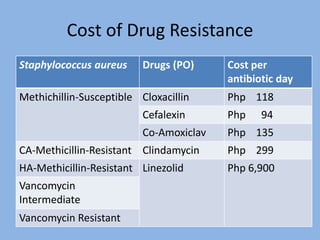
Cost of Drug Resistance
Staphylococcus aureus Drugs (PO) Cost per
antibiotic day
Methichillin-Susceptible Cloxacillin Php 118
Cefalexin Php 94
Co-Amoxiclav Php 135
CA-Methicillin-Resistant Clindamycin Php 299
HA-Methicillin-Resistant Linezolid Php 6,900
Vancomycin
Intermediate
Vancomycin Resistant
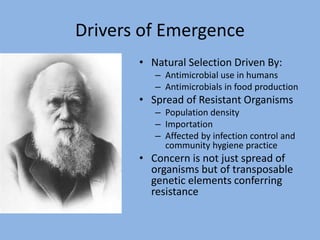
Drivers of Emergence
• Natural Selection Driven By:
– Antimicrobial use in humans
– Antimicrobials in food production
• Spread of Resistant Organisms
– Population density
– Importation
– Affected by infection control and
community hygiene practice
• Concern is not just spread of
organisms but of transposable
genetic elements conferring
resistance
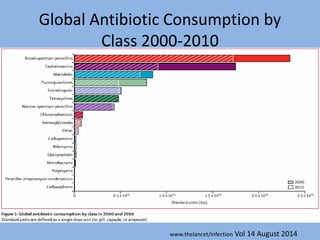
Global Antibiotic Consumption by
Class 2000-2010
www.thelancet/infection Vol 14 August 2014
Global Antibiotic Consumption by
Class 2000-2010
• Consumption of antibiotics increased by 36%
Brazil, Russia, India, China, and South Africa
accounted for 76% of this increase
• There was increased consumption of
carbapenems (45%) and polymixins (13%),
two “last-resort” classes of antibiotic drugs.
Van Boeckel et al Global antibiotic consumption 2000 to 2010: an analysis of national
pharmaceutical sales data Lancet Infect Dis 2014; 14: 742–50
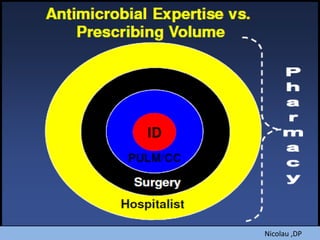
Nicolau ,DP
Perspective of Pharmaceuticals
• All pharmaceutical companies are under pressure by
shareholders to maximize returns and sustain strong
growth rates
– Chronic care medications > acute care medications
– Innovation > Me-too’s
– Specialized disease products > primary care products
• Pressures to maximize profitability do not necessarily
align with appropriate use, promotion, or consumption
of antibiotics
• Recognition of antibiotics as a finite strategic resource
is rarely compatible with corporate commercial
aspirations
Alasdair MacGowan, University of Bristol
Approach to Reducing Antimicrobial
Resistance
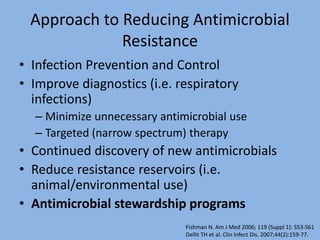
• Infection Prevention and Control
• Improve diagnostics (i.e. respiratory
infections)
– Minimize unnecessary antimicrobial use
– Targeted (narrow spectrum) therapy
• Continued discovery of new antimicrobials
• Reduce resistance reservoirs (i.e.
animal/environmental use)
• Antimicrobial stewardship programs
Fishman N. Am J Med 2006; 119 (Suppl 1): S53-S61
Dellit TH et al. Clin Infect Dis. 2007;44(2):159-77.
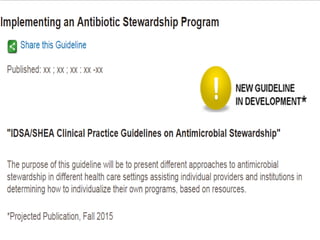
WHAT IS ANTIMICROBIAL
STEWARDSHIP?
Antimicrobial Stewardship
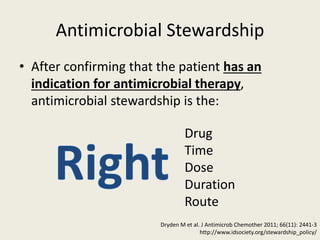
• After confirming that the patient has an
indication for antimicrobial therapy,
antimicrobial stewardship is the:
Drug
Time
Dose
Duration
Route
Dryden M et al. J Antimicrob Chemother 2011; 66(11): 2441-3
http://www.idsociety.org/stewardship_policy/
Why the Need for Antimicrobial
Stewardship?
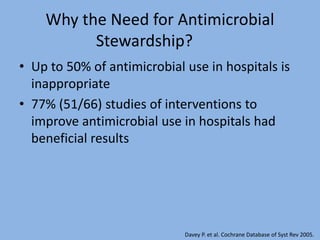
• Up to 50% of antimicrobial use in hospitals is
inappropriate
• 77% (51/66) studies of interventions to
improve antimicrobial use in hospitals had
beneficial results
Davey P. et al. Cochrane Database of Syst Rev 2005.
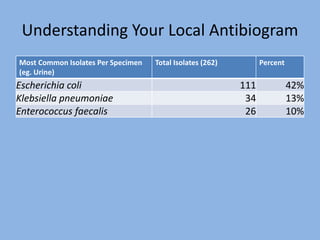
Understanding Your Local Antibiogram
Most Common Isolates Per Specimen
(eg. Urine)
Total Isolates (262) Percent
Escherichia coli 111 42%
Klebsiella pneumoniae 34 13%
Enterococcus faecalis 26 10%
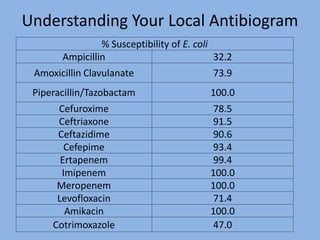
Understanding Your Local Antibiogram
% Susceptibility of E. coli
Ampicillin 32.2
Amoxicillin Clavulanate 73.9
Piperacillin/Tazobactam 100.0
Cefuroxime 78.5
Ceftriaxone 91.5
Ceftazidime 90.6
Cefepime 93.4
Ertapenem 99.4
Imipenem 100.0
Meropenem 100.0
Levofloxacin 71.4
Amikacin 100.0
Cotrimoxazole 47.0
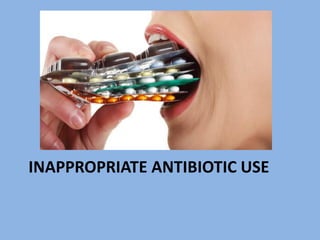
INAPPROPRIATE ANTIBIOTIC USE
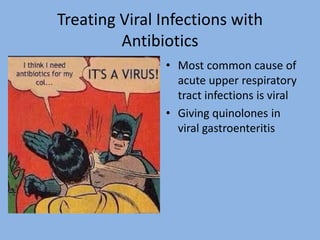
Treating Viral Infections with
Antibiotics
• Most common cause of
acute upper respiratory
tract infections is viral
• Giving quinolones in
viral gastroenteritis
Treating Colonizers
• Isolates from respiratory specimens in
patients who are clinically well or
asymptomatic
• Asymptomatic Bacteriuria
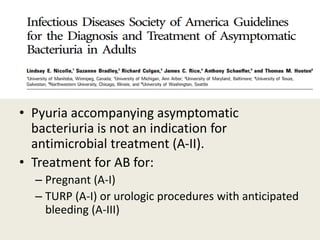
• Pyuria accompanying asymptomatic
bacteriuria is not an indication for
antimicrobial treatment (A-II).
• Treatment for AB for:
– Pregnant (A-I)
– TURP (A-I) or urologic procedures with anticipated
bleeding (A-III)
Surgical Prophylaxis
• Prolonged duration of Prophylaxis
• Timing
• Giving of prophylactic antibiotic even when
not indicated
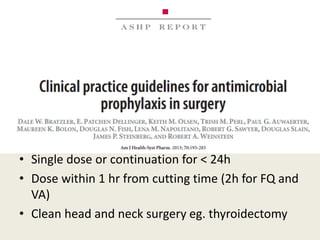
• Single dose or continuation for < 24h
• Dose within 1 hr from cutting time (2h for FQ and
VA)
• Clean head and neck surgery eg. thyroidectomy
Antimicrobial Stewardship
• Coordinated interventions to monitor and
direct antimicrobial use at a health care
institution
• Provides a standard evidence-based approach
to judicious antimicrobial use
http://www.idsociety.org/stewardship_policy/
Antimicrobial Stewardship: Goals
• Optimal clinical outcomes
• Minimize toxicity and ADRs
• Limit selection for antimicrobial resistant
strains
• Reduce costs of health care
http://www.idsociety.org/stewardship_policy/
Stewardship: Recommendations
• Multidisciplinary team
– IDS physician
– PharmD
– Clinical Microbiologist
– IT
– Infection Control Practitioner
– Hospital Epidemiologist
• Compensated
http://www.idsociety.org/stewardship_policy/
Stewardship: Recommendations
• Collaboration b/w the ff:
– Stewardship team
– Infection control
– Pharmacy/Therapeutics Committee
• Administrative/Leadership support
http://www.idsociety.org/stewardship_policy/
Examples of ASP
Strategies/Interventions
• Education
• Formulary
• Formulary restriction and preauthorization
• Selective reporting
• Prospective audit with intervention and feedback
• Guidelines and clinical pathways
• Antimicrobial order forms
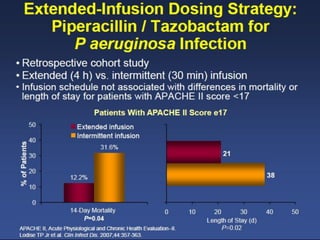
• Streamlining and de-escalation of therapy
• Dose optimization (optimize PK/PD)
• Parenteral to oral conversion
http://www.idsociety.org/stewardship_policy/
Education
• Essential
• Alone, insufficient (II-B)
• No sustained impact
• Education + Intervention (xA-III)
http://www.idsociety.org/stewardship_policy/
Formulary (A-II)
• Therapeutics Committee
• Evaluating therapeutic efficacy, toxicity and
cost
• Limit redundant new agents
http://www.idsociety.org/stewardship_policy/
Formulary Restrictions (A-II) and Pre-
authorization (B-II)
• Restriction of Antibiotics
• ID approval
• ID consult
http://www.idsociety.org/stewardship_policy/
Selective Reporting A-III
• Clinical Microbiology
• Limiting Antibiotic Susceptibility Reports in
Cultures
• Example:
– Urine E. coli isolate susceptible to ampicillin, and
all tested antibiotics
– Official culture report: E. coli susceptible to
ampicillin, cefuroxime
http://www.idsociety.org/stewardship_policy/
Prospective Audit with Intervention
and Feedback (A-I)
• Very effective
• Resource intensive
http://www.idsociety.org/stewardship_policy/
Guidelines and Clinical Pathways
• National Guidelines
• Local Guidelines
• Very Effective
Antimicrobial Order Forms (B-II)
• Automatic stop orders
• Clear communication of renewal requirements
Streamlining and de-escalation of
therapy (A-II)
• Early de-escalation once with available
microbiologic data
• For Severe Infections
– Empiric Broad Spectrum Treatment
– Re-evaluate after 3 days and streamline
• De-escalation:
– 1 agent: change to narrow spectrum
– 2 agents: change to 1 agent
– Discontinue antibiotics if no evidence of infection
Exceptions to general approach
• Do not discontinue antibiotics in a patient
who is decompensating
• Patients may be ill and require therapy,
notwithstanding negative culture results
1. Weber DJ. Int J Infect Dis. 2006;10(suppl 2):S17-S24. 2. Höffken G, Niederman MS. Chest. 2002;122:2183-2196.
3. American
Thoracic Society (ATS)/Infectious Diseases Society of America (IDSA). Am J Respir Crit Care Med. 2005;171:388-
416. 4. Singh
N et al. Am J Respir Crit Care Med. 2000;162:505-511.
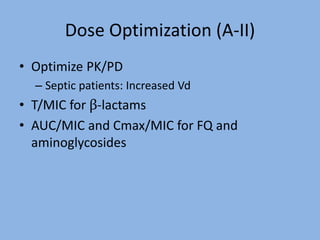
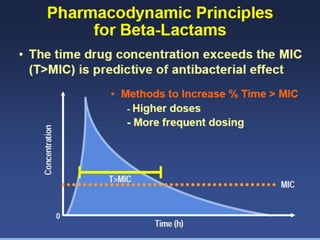
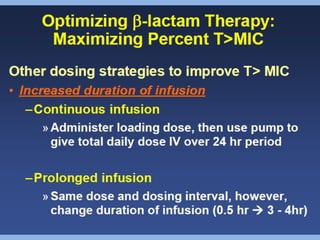
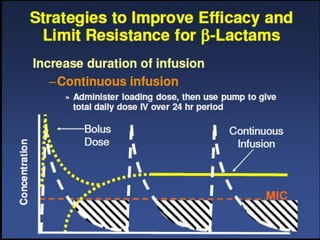
Dose Optimization (A-II)
• Optimize PK/PD
– Septic patients: Increased Vd
• T/MIC for β-lactams
• AUC/MIC and Cmax/MIC for FQ and
aminoglycosides
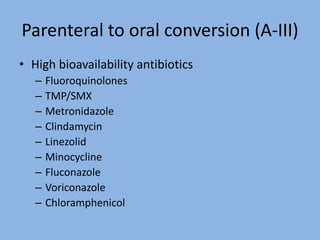
Parenteral to oral conversion (A-III)
• High bioavailability antibiotics
– Fluoroquinolones
– TMP/SMX
– Metronidazole
– Clindamycin
– Linezolid
– Minocycline
– Fluconazole
– Voriconazole
– Chloramphenicol
Stewardship: Recommendations
• Health care information technology
• Surveillance
http://www.idsociety.org/stewardship_policy/
Antibiotics in Development
• As of December 2014, an estimated 37 new
antibiotics 1 that have the potential to treat
serious bacterial infections are in clinical
development for the U.S. market.
• Success rate for drug development is low; at
best, only 1 in 5 candidates that enter human
testing will be approved for patients.
http://www.pewtrusts.org/en/multimedia/data-visualizations/2014/antibiotics-currently-in-clinical-development
Learning Points
• Antimicrobial resistance is a global concern
and needs immediate action
• Antimicrobial stewardship is one way of
combating antimicrobial resistance
• Physicians are key players in promoting or
curbing antimicrobial resistance
Learning Points
• Treatment of infections should be based on
most likely organism following local resistance
patterns
• New antibiotics are in the pipeline but
preserving available antibiotics is still vital
Antimicrobial Stewardship

Antimicrobial Stewardship

  • 1.
    Let’s Shore UpOur Defenses Presented by: Carmenchu Echiverri Villavicencio, MD, DPCP, DPSMID Slides by Marion Priscilla A. Kwek, MD, FPCP, DPSMID July 4, 2015
  • 2.
    Outline • Introduction – Historyof Antibiotics – Magnitude of the Problem • Antimicrobial Stewardship – Definition & Rationale – Interpretation of Antibiogram Data – Developing Institutional Program – Stewardship for the primary care physician
  • 3.
    Objectives • Recognize theproblem of antimicrobial resistance • Understand the benefits of an antimicrobial stewardship program • Apply antimicrobial stewardship in clinical practice
  • 6.
    - Alexander Flemingupon accepting the 1945 Nobel Prize in Medicine
  • 8.
    The Bad News •Increasing resistance to available antimicrobials • Stagnant antibiotic development – Investment lacking – Slow to recognize the need and inherent delays in finding and developing new antimicrobials • The increasing importance of antimicrobials in modern medical practice – Increasing use of antimicrobials for those patients on immunosuppressants and managed in critical care
  • 9.
    Antibiotic Resistance • Aworldwide problem • Can cross international boundaries and spread with ease • Pose a catastrophic threat to people in every country in the world • At least 2M people acquire serious infections with bacteria resistant to one or more of the antibiotics designed to treat those infections Antibiotic Resistance Threats in the United States, 2013. Centers for Disease Control and Prevention
  • 10.
    Antibiotic Resistance • Atleast 23,000 people die each year as a direct result of these antibiotic-resistant infections • Many more die from other conditions that were complicated by an antibiotic resistant infection • Infections add considerable and avoidable costs • Require prolonged and/or costlier treatments, extend hospital stays, necessitate additional doctor visits and healthcare use, and result in greater disability and death Antibiotic Resistance Threats in the United States, 2013. Centers for Disease Control and Prevention
  • 11.
    Antibiotic Resistance The useof antibiotics is the single most important factor leading to antibiotic resistance around the world Antibiotic Resistance Threats in the United States, 2013. Centers for Disease Control and Prevention
  • 12.
  • 13.
    Pucci & BushClin Micro Rev 2013;26:792–821
  • 14.
    What is “CollateralDamage”? • Refer to ecological adverse effects of antibiotic therapy; namely, – Selection of drug-resistant organisms and – Unwanted development of colonization or infection with multidrug resistant organisms (eg, Clostridium difficile Infection) • Two antibiotic classes commonly linked to collateral damage: – Cephalosporins & Fluoroquinolones Paterson DL. Clin Infect Dis. 2004;38(suppl 4):S341-S345.
  • 15.
    Difficult to TreatOrganisms • MRSA • Antibiotic-resistant GNBs • MDR-TB • C. difficile
  • 16.
    Staphylococcus aureus • MRSArate 53% (n= 2,317) • Possible emergence of resistance against vancomycin with 2013 reported rates at 1% (n=1,176). • No reported VRSA in 2012 2013 Antimicrobial Resistance Surveillance Program Summary Report, RITM
  • 17.
    2013 Antimicrobial ResistanceSurveillance Program Summary Report, RITM
  • 18.
    Escherichia coli • ESBL-suspectsat 22% • Resistance rate: – AMP 82% (n=4,333) – SAM 32% (n=4,056) – CXM 29% (n= 2,210) – CRO 31% (n= 4,364) – SXT 66% (n= 3,893) – AK 4% (n= 4,478) – CIP 43% (n= 4,332) 2013 Antimicrobial Resistance Surveillance Program Summary Report, RITM
  • 19.
    2013 Antimicrobial ResistanceSurveillance Program Summary Report, RITM
  • 20.
    2013 Antimicrobial ResistanceSurveillance Program Summary Report, RITM
  • 21.
    Cost of DrugResistance Staphylococcus aureus Drugs (PO) Cost per antibiotic day Methichillin-Susceptible Cloxacillin Php 118 Cefalexin Php 94 Co-Amoxiclav Php 135 CA-Methicillin-Resistant Clindamycin Php 299 HA-Methicillin-Resistant Linezolid Php 6,900 Vancomycin Intermediate Vancomycin Resistant
  • 22.
    Drivers of Emergence •Natural Selection Driven By: – Antimicrobial use in humans – Antimicrobials in food production • Spread of Resistant Organisms – Population density – Importation – Affected by infection control and community hygiene practice • Concern is not just spread of organisms but of transposable genetic elements conferring resistance
  • 23.
    Global Antibiotic Consumptionby Class 2000-2010 www.thelancet/infection Vol 14 August 2014
  • 24.
    Global Antibiotic Consumptionby Class 2000-2010 • Consumption of antibiotics increased by 36% Brazil, Russia, India, China, and South Africa accounted for 76% of this increase • There was increased consumption of carbapenems (45%) and polymixins (13%), two “last-resort” classes of antibiotic drugs. Van Boeckel et al Global antibiotic consumption 2000 to 2010: an analysis of national pharmaceutical sales data Lancet Infect Dis 2014; 14: 742–50
  • 25.
  • 27.
    Perspective of Pharmaceuticals •All pharmaceutical companies are under pressure by shareholders to maximize returns and sustain strong growth rates – Chronic care medications > acute care medications – Innovation > Me-too’s – Specialized disease products > primary care products • Pressures to maximize profitability do not necessarily align with appropriate use, promotion, or consumption of antibiotics • Recognition of antibiotics as a finite strategic resource is rarely compatible with corporate commercial aspirations Alasdair MacGowan, University of Bristol
  • 29.
    Approach to ReducingAntimicrobial Resistance • Infection Prevention and Control • Improve diagnostics (i.e. respiratory infections) – Minimize unnecessary antimicrobial use – Targeted (narrow spectrum) therapy • Continued discovery of new antimicrobials • Reduce resistance reservoirs (i.e. animal/environmental use) • Antimicrobial stewardship programs Fishman N. Am J Med 2006; 119 (Suppl 1): S53-S61 Dellit TH et al. Clin Infect Dis. 2007;44(2):159-77.
  • 30.
  • 32.
    Antimicrobial Stewardship • Afterconfirming that the patient has an indication for antimicrobial therapy, antimicrobial stewardship is the: Drug Time Dose Duration Route Dryden M et al. J Antimicrob Chemother 2011; 66(11): 2441-3 http://www.idsociety.org/stewardship_policy/
  • 33.
    Why the Needfor Antimicrobial Stewardship? • Up to 50% of antimicrobial use in hospitals is inappropriate • 77% (51/66) studies of interventions to improve antimicrobial use in hospitals had beneficial results Davey P. et al. Cochrane Database of Syst Rev 2005.
  • 34.
    Understanding Your LocalAntibiogram Most Common Isolates Per Specimen (eg. Urine) Total Isolates (262) Percent Escherichia coli 111 42% Klebsiella pneumoniae 34 13% Enterococcus faecalis 26 10%
  • 35.
    Understanding Your LocalAntibiogram % Susceptibility of E. coli Ampicillin 32.2 Amoxicillin Clavulanate 73.9 Piperacillin/Tazobactam 100.0 Cefuroxime 78.5 Ceftriaxone 91.5 Ceftazidime 90.6 Cefepime 93.4 Ertapenem 99.4 Imipenem 100.0 Meropenem 100.0 Levofloxacin 71.4 Amikacin 100.0 Cotrimoxazole 47.0
  • 36.
  • 37.
    Treating Viral Infectionswith Antibiotics • Most common cause of acute upper respiratory tract infections is viral • Giving quinolones in viral gastroenteritis
  • 38.
    Treating Colonizers • Isolatesfrom respiratory specimens in patients who are clinically well or asymptomatic • Asymptomatic Bacteriuria
  • 39.
    • Pyuria accompanyingasymptomatic bacteriuria is not an indication for antimicrobial treatment (A-II). • Treatment for AB for: – Pregnant (A-I) – TURP (A-I) or urologic procedures with anticipated bleeding (A-III)
  • 40.
    Surgical Prophylaxis • Prolongedduration of Prophylaxis • Timing • Giving of prophylactic antibiotic even when not indicated
  • 41.
    • Single doseor continuation for < 24h • Dose within 1 hr from cutting time (2h for FQ and VA) • Clean head and neck surgery eg. thyroidectomy
  • 42.
    Antimicrobial Stewardship • Coordinatedinterventions to monitor and direct antimicrobial use at a health care institution • Provides a standard evidence-based approach to judicious antimicrobial use http://www.idsociety.org/stewardship_policy/
  • 43.
    Antimicrobial Stewardship: Goals •Optimal clinical outcomes • Minimize toxicity and ADRs • Limit selection for antimicrobial resistant strains • Reduce costs of health care http://www.idsociety.org/stewardship_policy/
  • 44.
    Stewardship: Recommendations • Multidisciplinaryteam – IDS physician – PharmD – Clinical Microbiologist – IT – Infection Control Practitioner – Hospital Epidemiologist • Compensated http://www.idsociety.org/stewardship_policy/
  • 45.
    Stewardship: Recommendations • Collaborationb/w the ff: – Stewardship team – Infection control – Pharmacy/Therapeutics Committee • Administrative/Leadership support http://www.idsociety.org/stewardship_policy/
  • 46.
    Examples of ASP Strategies/Interventions •Education • Formulary • Formulary restriction and preauthorization • Selective reporting • Prospective audit with intervention and feedback • Guidelines and clinical pathways • Antimicrobial order forms • Streamlining and de-escalation of therapy • Dose optimization (optimize PK/PD) • Parenteral to oral conversion http://www.idsociety.org/stewardship_policy/
  • 47.
    Education • Essential • Alone,insufficient (II-B) • No sustained impact • Education + Intervention (xA-III) http://www.idsociety.org/stewardship_policy/
  • 48.
    Formulary (A-II) • TherapeuticsCommittee • Evaluating therapeutic efficacy, toxicity and cost • Limit redundant new agents http://www.idsociety.org/stewardship_policy/
  • 49.
    Formulary Restrictions (A-II)and Pre- authorization (B-II) • Restriction of Antibiotics • ID approval • ID consult http://www.idsociety.org/stewardship_policy/
  • 50.
    Selective Reporting A-III •Clinical Microbiology • Limiting Antibiotic Susceptibility Reports in Cultures • Example: – Urine E. coli isolate susceptible to ampicillin, and all tested antibiotics – Official culture report: E. coli susceptible to ampicillin, cefuroxime http://www.idsociety.org/stewardship_policy/
  • 51.
    Prospective Audit withIntervention and Feedback (A-I) • Very effective • Resource intensive http://www.idsociety.org/stewardship_policy/
  • 52.
    Guidelines and ClinicalPathways • National Guidelines • Local Guidelines • Very Effective
  • 53.
    Antimicrobial Order Forms(B-II) • Automatic stop orders • Clear communication of renewal requirements
  • 54.
    Streamlining and de-escalationof therapy (A-II) • Early de-escalation once with available microbiologic data • For Severe Infections – Empiric Broad Spectrum Treatment – Re-evaluate after 3 days and streamline • De-escalation: – 1 agent: change to narrow spectrum – 2 agents: change to 1 agent – Discontinue antibiotics if no evidence of infection
  • 55.
    Exceptions to generalapproach • Do not discontinue antibiotics in a patient who is decompensating • Patients may be ill and require therapy, notwithstanding negative culture results 1. Weber DJ. Int J Infect Dis. 2006;10(suppl 2):S17-S24. 2. Höffken G, Niederman MS. Chest. 2002;122:2183-2196. 3. American Thoracic Society (ATS)/Infectious Diseases Society of America (IDSA). Am J Respir Crit Care Med. 2005;171:388- 416. 4. Singh N et al. Am J Respir Crit Care Med. 2000;162:505-511.
  • 56.
    Dose Optimization (A-II) •Optimize PK/PD – Septic patients: Increased Vd • T/MIC for β-lactams • AUC/MIC and Cmax/MIC for FQ and aminoglycosides
  • 61.
    Parenteral to oralconversion (A-III) • High bioavailability antibiotics – Fluoroquinolones – TMP/SMX – Metronidazole – Clindamycin – Linezolid – Minocycline – Fluconazole – Voriconazole – Chloramphenicol
  • 62.
    Stewardship: Recommendations • Healthcare information technology • Surveillance http://www.idsociety.org/stewardship_policy/
  • 63.
    Antibiotics in Development •As of December 2014, an estimated 37 new antibiotics 1 that have the potential to treat serious bacterial infections are in clinical development for the U.S. market. • Success rate for drug development is low; at best, only 1 in 5 candidates that enter human testing will be approved for patients. http://www.pewtrusts.org/en/multimedia/data-visualizations/2014/antibiotics-currently-in-clinical-development
  • 65.
    Learning Points • Antimicrobialresistance is a global concern and needs immediate action • Antimicrobial stewardship is one way of combating antimicrobial resistance • Physicians are key players in promoting or curbing antimicrobial resistance
  • 66.
    Learning Points • Treatmentof infections should be based on most likely organism following local resistance patterns • New antibiotics are in the pipeline but preserving available antibiotics is still vital