SENSORS
IN
FOOD INDUSTRY
We live in a World of Sensors
1
Uploaded by : Shalini Ramalingam
What is a sensor?
There are numerous definitions as to what a sensor is but I
would like to define a sensor as an input device
which provides an output (signal) with respect to a specific
physical quantity (input).
The term “input device” in the definition of a Sensor means
that it is part of a bigger system which provides input to a
main control system (like a Processor or a Microcontroller).
It is a device that converts signals from one energy
domain to electrical domain
2
CLASSIFICATION
OF SENSORS
Active and Passive
Means of detection - Electric, Biological, Chemical,
Radioactive etc.
Analog and Digital Sensors
3
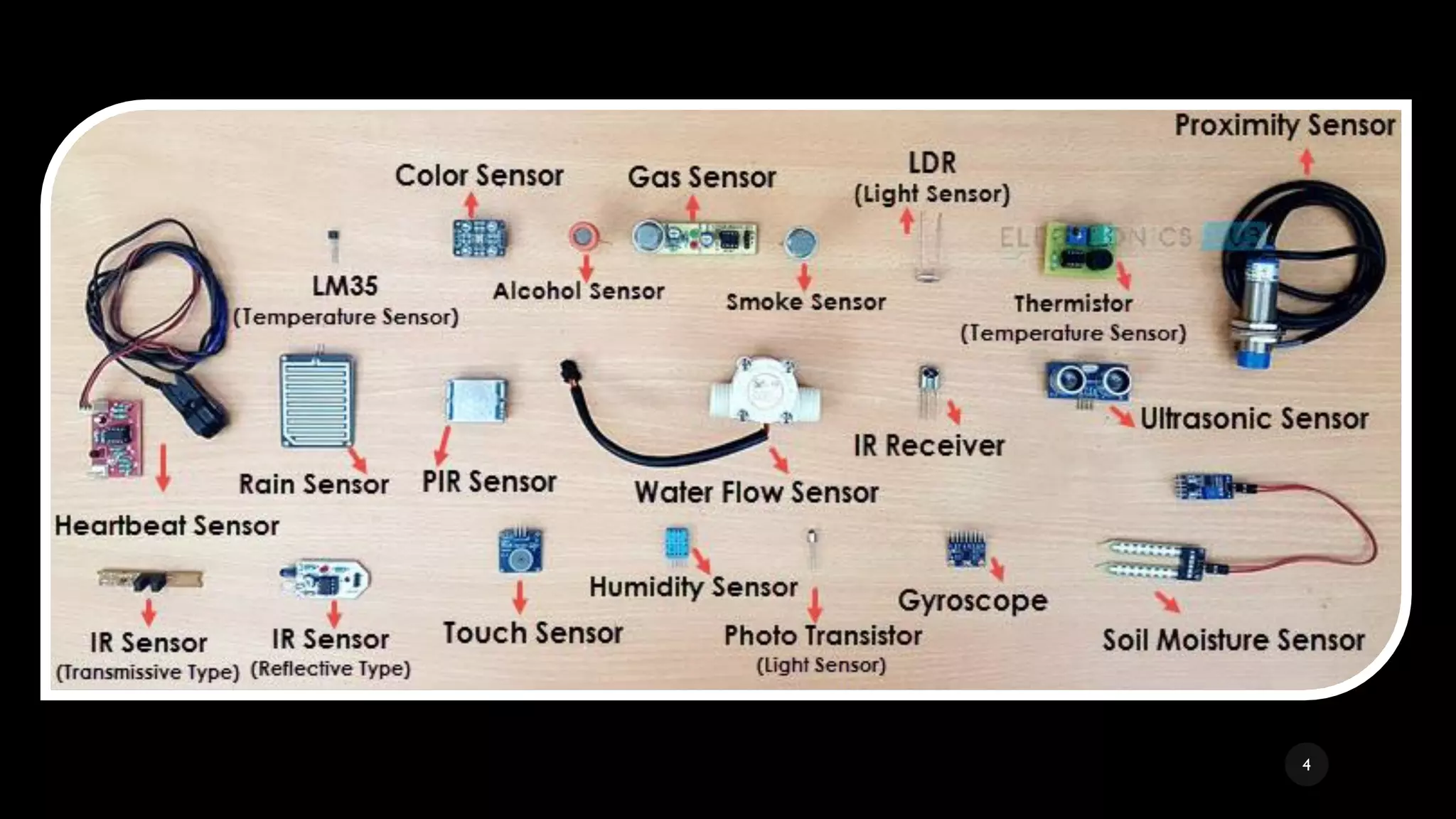
4
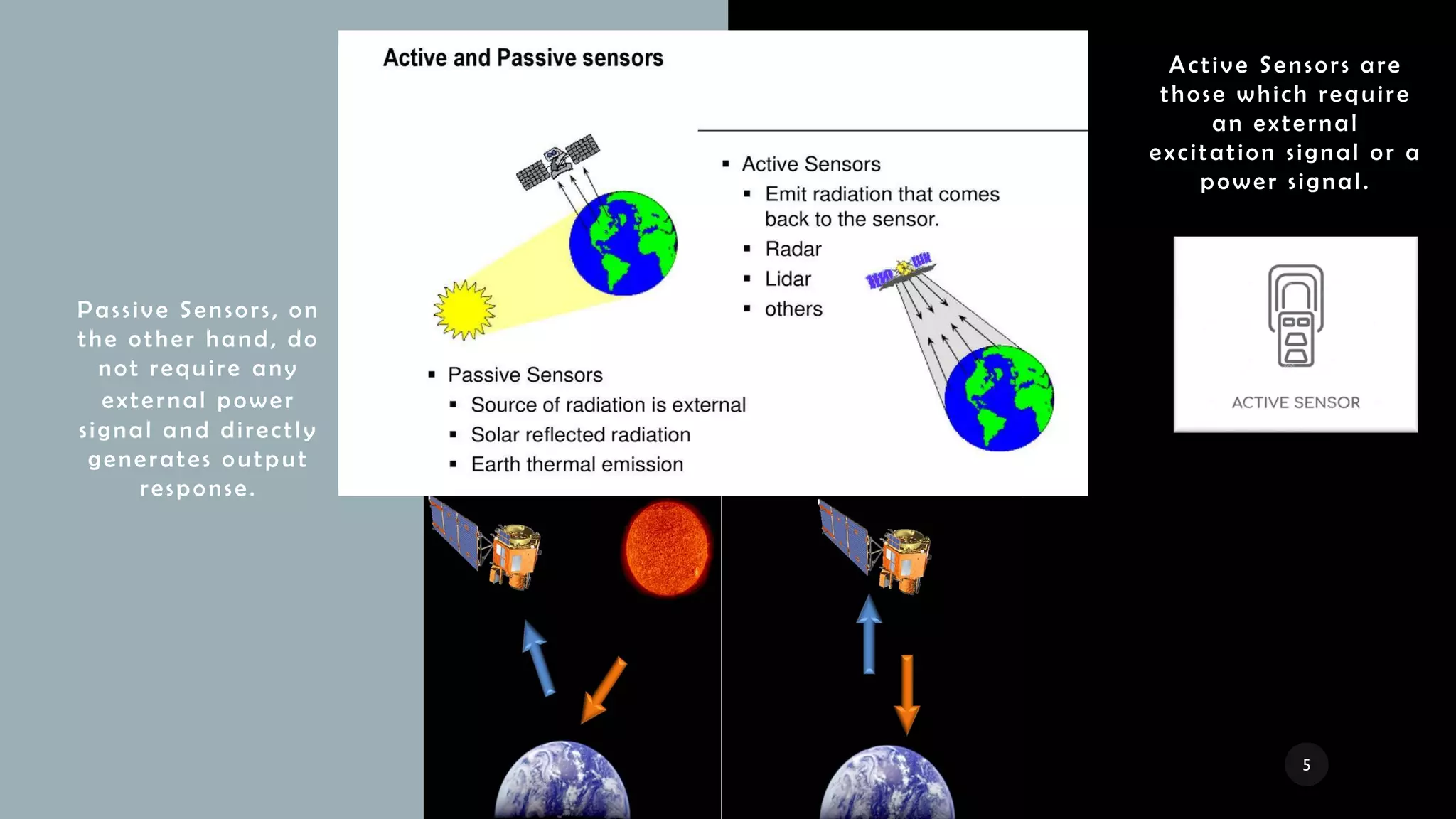
Active Sensors are
those which require
an external
excitation signal or a
power signal.
Passive Sensors, on
the other hand, do
not require any
external power
signal and directly
generates output
response.
5
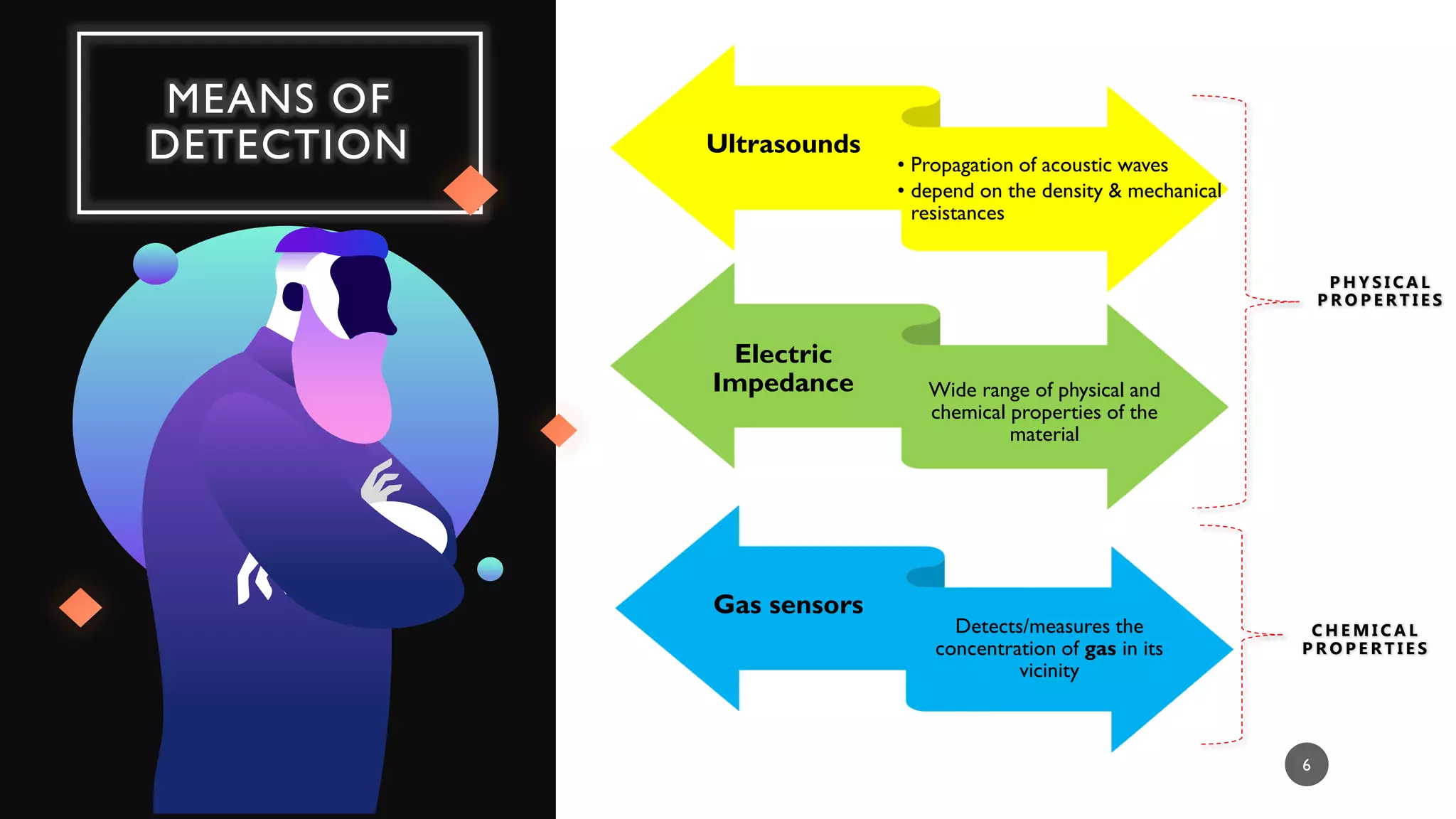
MEANS OF
DETECTION Ultrasounds
• Propagation of acoustic waves
• depend on the density & mechanical
resistances
Electric
Impedance Wide range of physical and
chemical properties of the
material
Gas sensors
Detects/measures the
concentration of gas in its
vicinity
P H Y S I C A L
P R O P E R T I E S
C H E M I C A L
P R O P E R T I E S
6
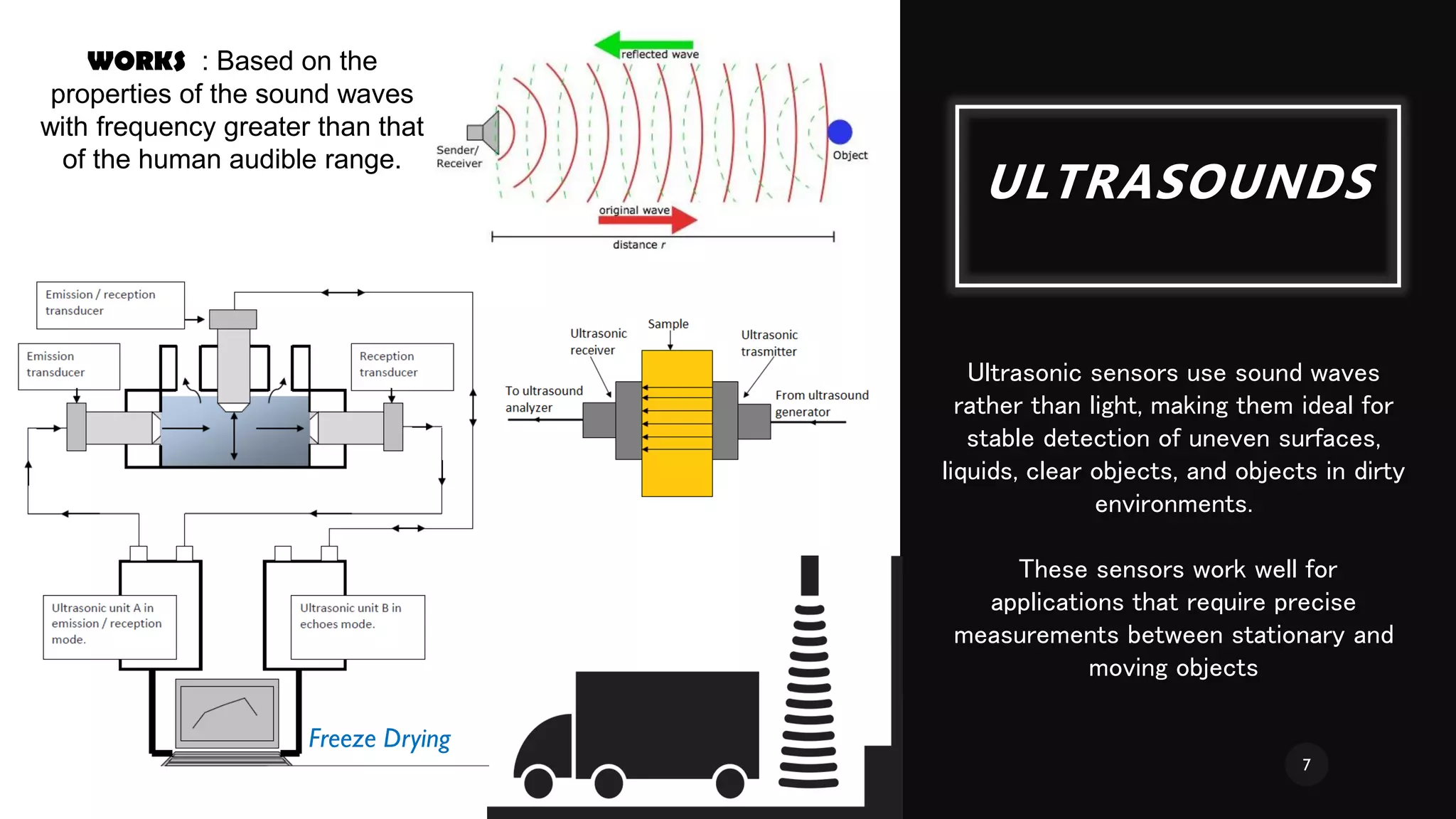
ULTRASOUNDS
WORKS : Based on the
properties of the sound waves
with frequency greater than that
of the human audible range.
Ultrasonic sensors use sound waves
rather than light, making them ideal for
stable detection of uneven surfaces,
liquids, clear objects, and objects in dirty
environments.
These sensors work well for
applications that require precise
measurements between stationary and
moving objects
Freeze Drying
7
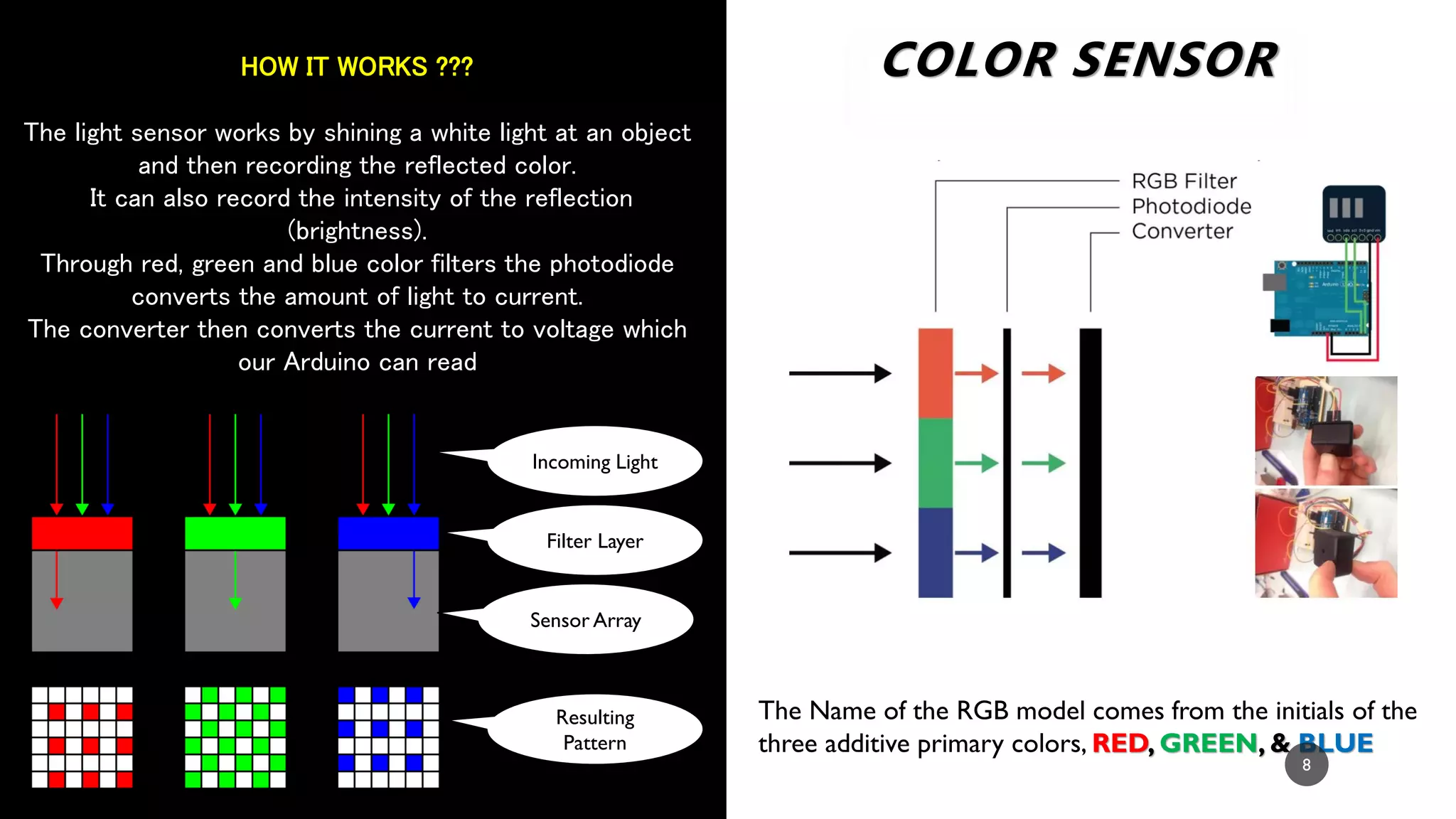
COLOR SENSORHOW IT WORKS ???
The light sensor works by shining a white light at an object
and then recording the reflected color.
It can also record the intensity of the reflection
(brightness).
Through red, green and blue color filters the photodiode
converts the amount of light to current.
The converter then converts the current to voltage which
our Arduino can read
The Name of the RGB model comes from the initials of the
three additive primary colors, RED, GREEN, & BLUE
Incoming Light
Filter Layer
Sensor Array
Resulting
Pattern
8
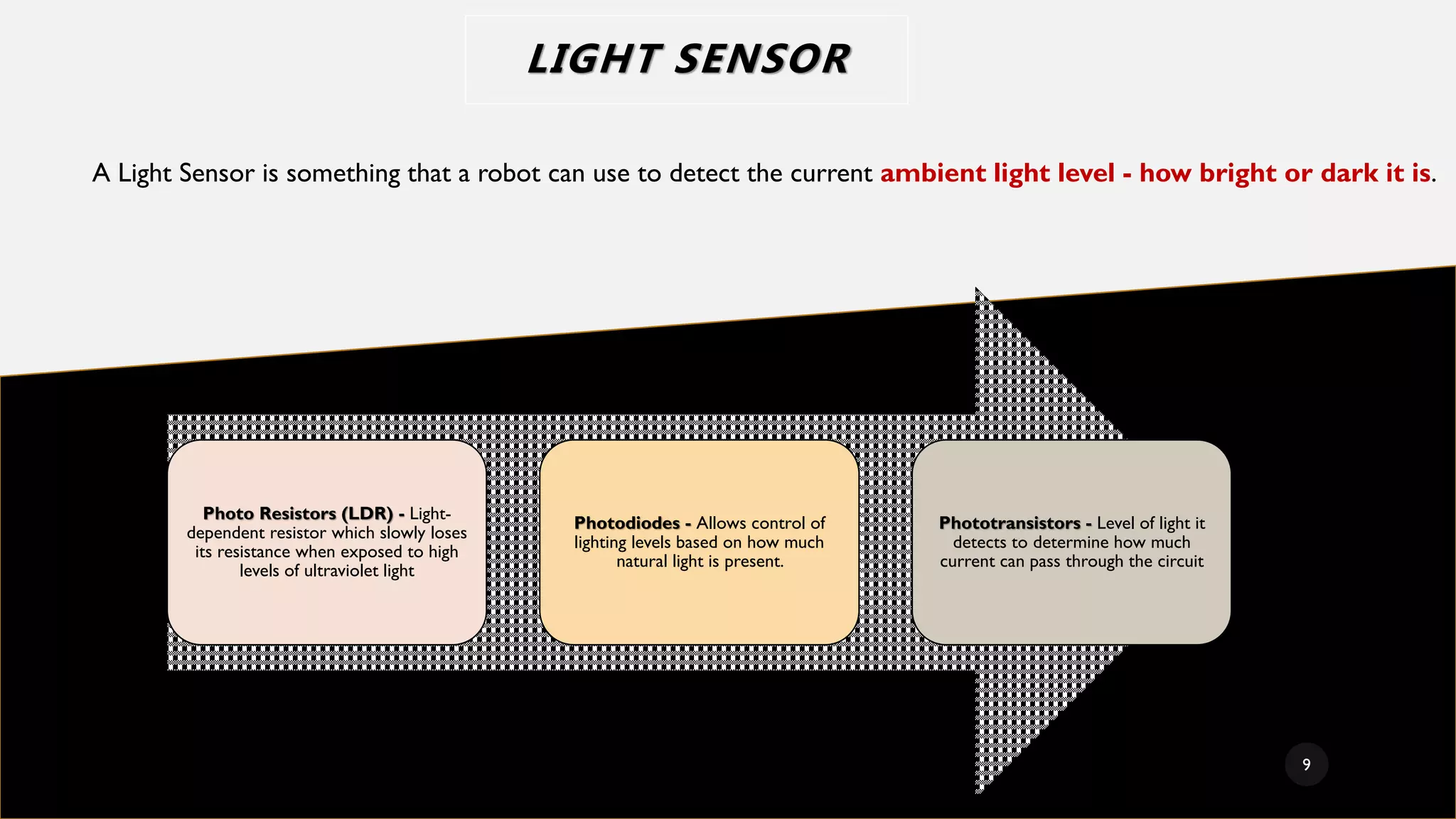
LIGHT SENSOR
A Light Sensor is something that a robot can use to detect the current ambient light level - how bright or dark it is.
Photo Resistors (LDR) - Light-
dependent resistor which slowly loses
its resistance when exposed to high
levels of ultraviolet light
Photodiodes - Allows control of
lighting levels based on how much
natural light is present.
Phototransistors - Level of light it
detects to determine how much
current can pass through the circuit
9
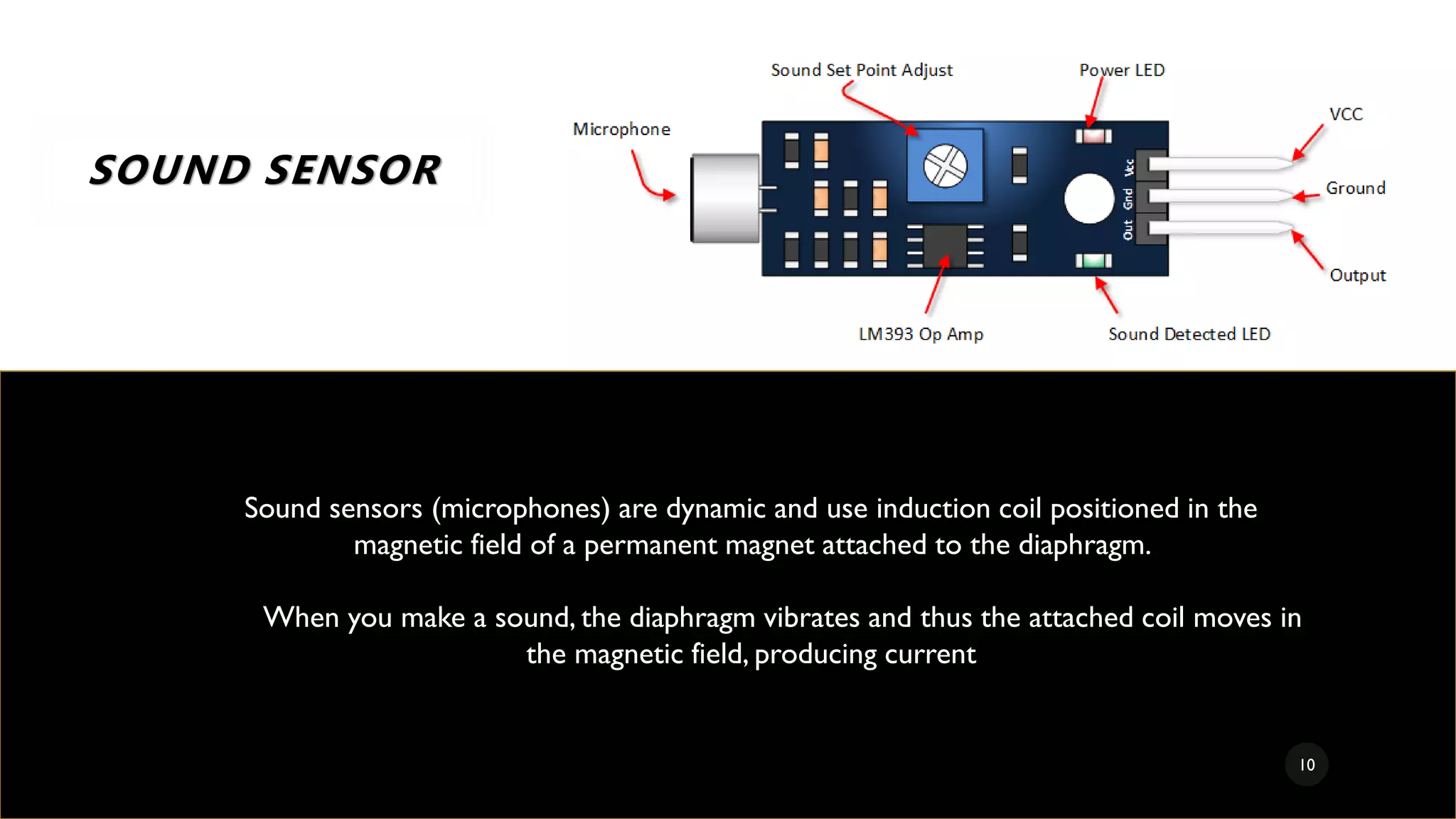
SOUND SENSOR
Sound sensors (microphones) are dynamic and use induction coil positioned in the
magnetic field of a permanent magnet attached to the diaphragm.
When you make a sound, the diaphragm vibrates and thus the attached coil moves in
the magnetic field, producing current
10
11
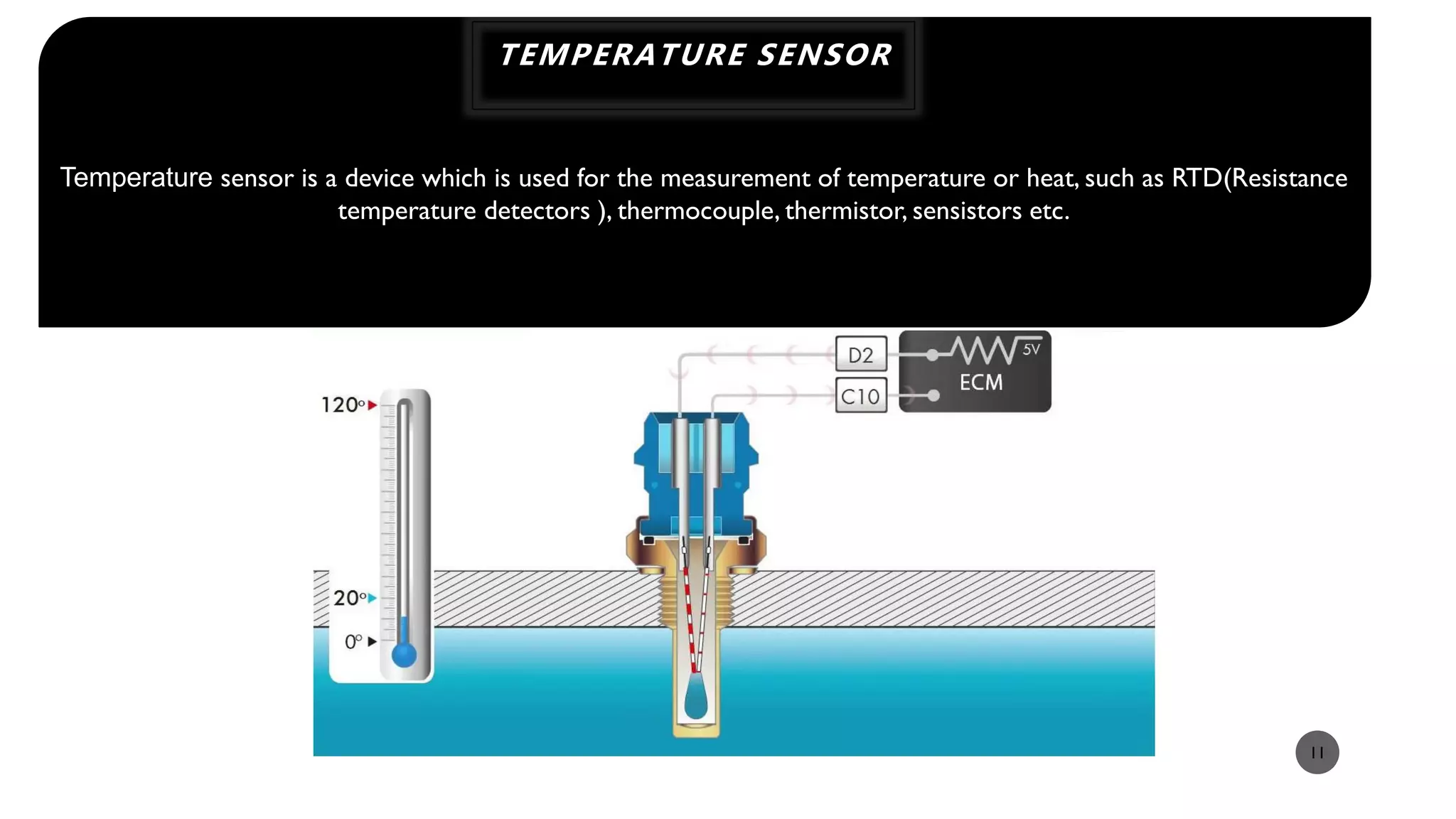
TEMPERATURE SENSOR
Temperature sensor is a device which is used for the measurement of temperature or heat, such as RTD(Resistance
temperature detectors ), thermocouple, thermistor, sensistors etc.
12
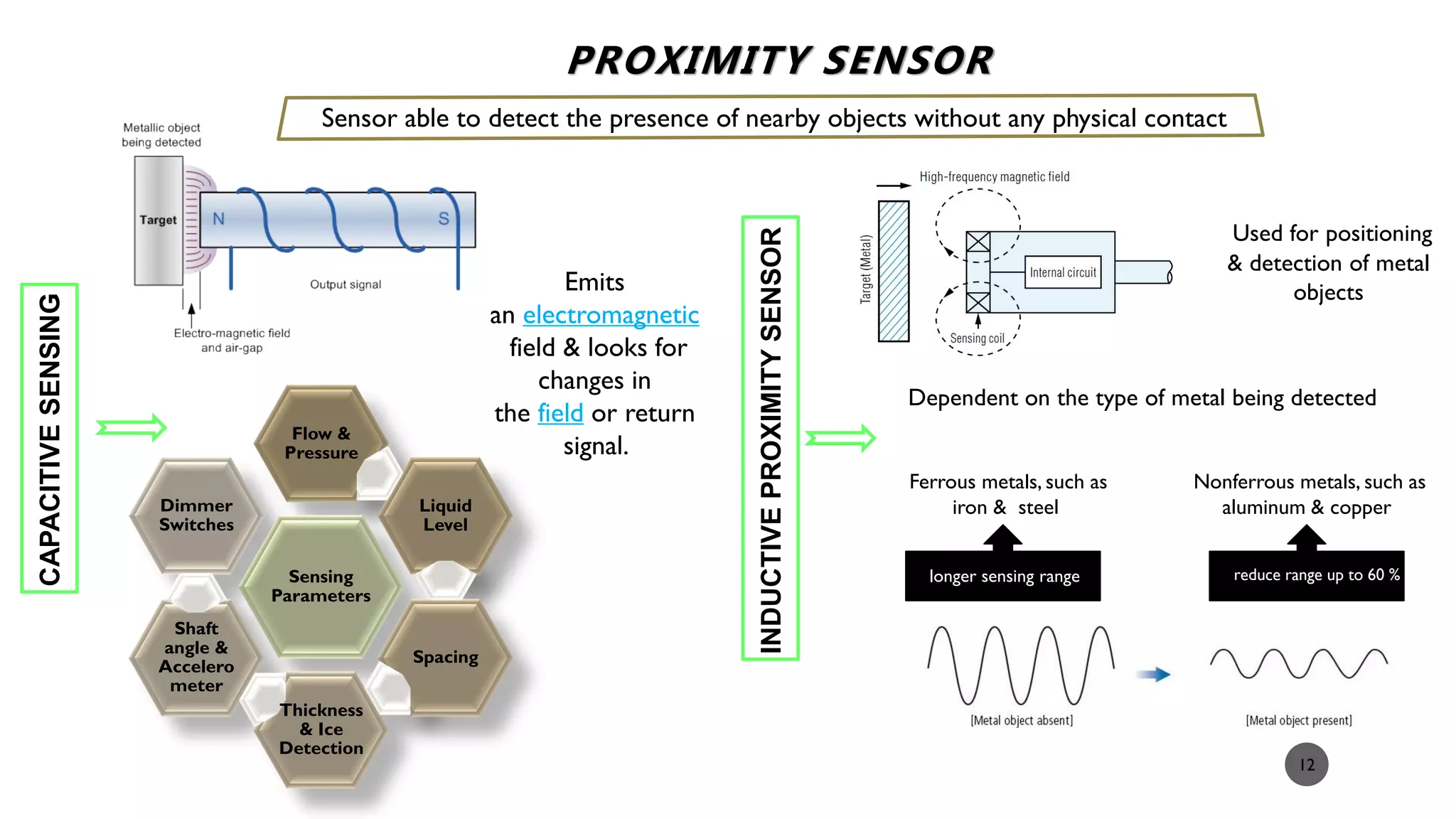
Emits
an electromagnetic
field & looks for
changes in
the field or return
signal.
Sensing
Parameters
Flow &
Pressure
Liquid
Level
Spacing
Thickness
& Ice
Detection
Shaft
angle &
Accelero
meter
Dimmer
Switches
PROXIMITY SENSOR
Sensor able to detect the presence of nearby objects without any physical contact
INDUCTIVEPROXIMITYSENSOR
CAPACITIVESENSING
Used for positioning
& detection of metal
objects
Dependent on the type of metal being detected
Ferrous metals, such as
iron & steel
Nonferrous metals, such as
aluminum & copper
longer sensing range reduce range up to 60 %
13
WATER FLOW SENSOR
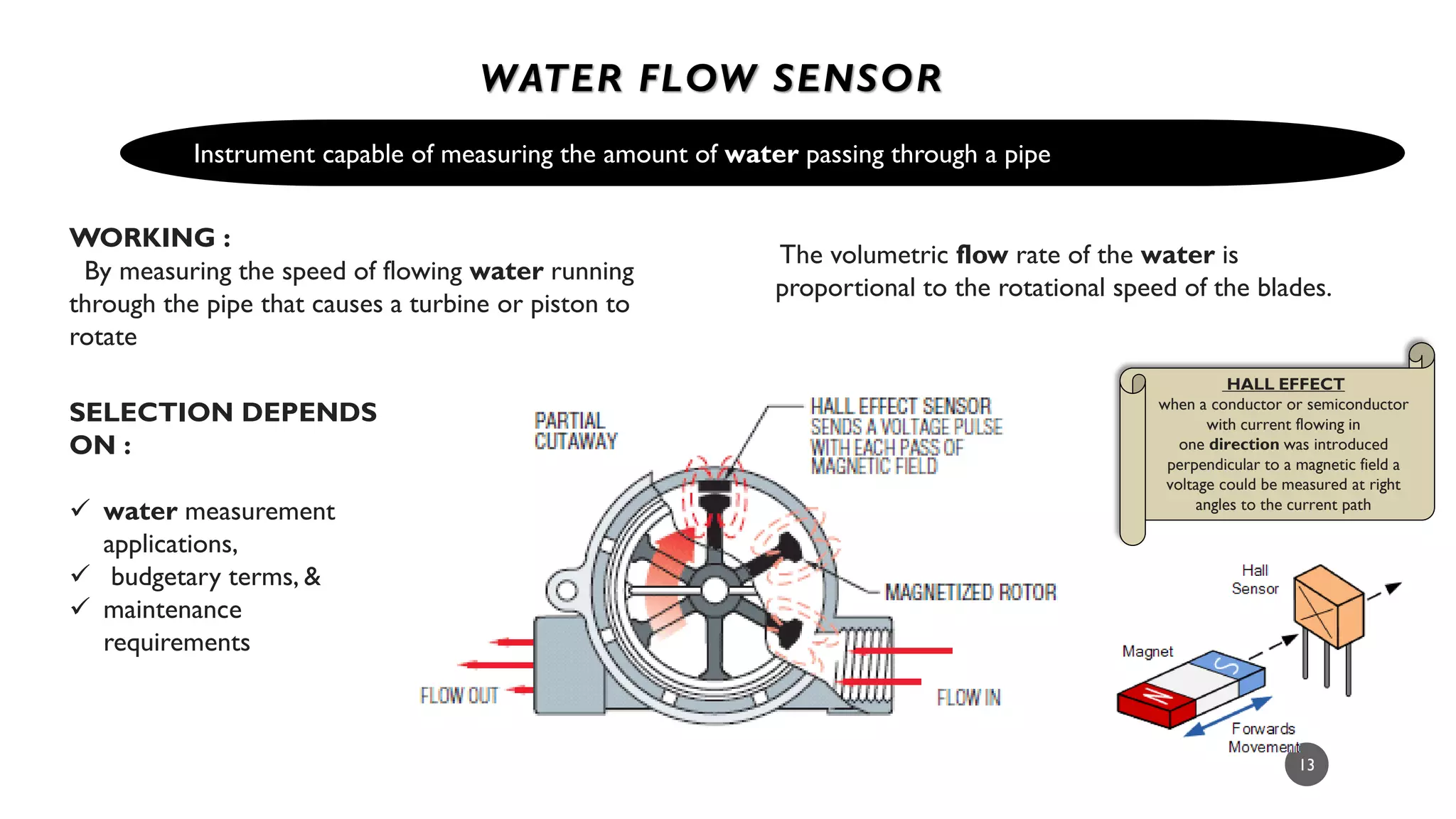
WORKING :
By measuring the speed of flowing water running
through the pipe that causes a turbine or piston to
rotate
The volumetric flow rate of the water is
proportional to the rotational speed of the blades.
Instrument capable of measuring the amount of water passing through a pipe
SELECTION DEPENDS
ON :
 water measurement
applications,
 budgetary terms, &
 maintenance
requirements
HALL EFFECT
when a conductor or semiconductor
with current flowing in
one direction was introduced
perpendicular to a magnetic field a
voltage could be measured at right
angles to the current path
14
HUMIDITY SENSOR
Detect the relative humidity of the immediate
environments in which they are placed.
Capacitive RH SENSORS – used in Food Processing sectors
• Made from an air filled capacitor as the moisture in the atmosphere
changes its permittivity
• space between the capacitor plates is usually filled with an appropriate
dielectric material (isolator), whose dielectric constant varies when it
is subjected to change in humidity
15
REFERENCE
Inductive Sensor: https://www.keyence.com/ss/products/sensor/sensorbasics/proximity/info/
Capacitive Sensor : https://automation-insights.blog/2017/06/07/what-is-a-capacitive-sensor/
Water Flow Sensor: https://www.electronicshub.org/water-level-indicator/
Humidity Sensor : https://www.electronicshub.org/humidity-sensor-types-working-principle/
Proximity Sensor: https://www.techopedia.com/definition/15003/proximity-sensor
Temperature Sensor: https://www.elprocus.com/temperature-sensors-types-working-operation/

Sensor

  • 1.
    SENSORS IN FOOD INDUSTRY We livein a World of Sensors 1 Uploaded by : Shalini Ramalingam
  • 2.
    What is asensor? There are numerous definitions as to what a sensor is but I would like to define a sensor as an input device which provides an output (signal) with respect to a specific physical quantity (input). The term “input device” in the definition of a Sensor means that it is part of a bigger system which provides input to a main control system (like a Processor or a Microcontroller). It is a device that converts signals from one energy domain to electrical domain 2
  • 3.
    CLASSIFICATION OF SENSORS Active andPassive Means of detection - Electric, Biological, Chemical, Radioactive etc. Analog and Digital Sensors 3
  • 4.
  • 5.
    Active Sensors are thosewhich require an external excitation signal or a power signal. Passive Sensors, on the other hand, do not require any external power signal and directly generates output response. 5
  • 6.
    MEANS OF DETECTION Ultrasounds •Propagation of acoustic waves • depend on the density & mechanical resistances Electric Impedance Wide range of physical and chemical properties of the material Gas sensors Detects/measures the concentration of gas in its vicinity P H Y S I C A L P R O P E R T I E S C H E M I C A L P R O P E R T I E S 6
  • 7.
    ULTRASOUNDS WORKS : Basedon the properties of the sound waves with frequency greater than that of the human audible range. Ultrasonic sensors use sound waves rather than light, making them ideal for stable detection of uneven surfaces, liquids, clear objects, and objects in dirty environments. These sensors work well for applications that require precise measurements between stationary and moving objects Freeze Drying 7
  • 8.
    COLOR SENSORHOW ITWORKS ??? The light sensor works by shining a white light at an object and then recording the reflected color. It can also record the intensity of the reflection (brightness). Through red, green and blue color filters the photodiode converts the amount of light to current. The converter then converts the current to voltage which our Arduino can read The Name of the RGB model comes from the initials of the three additive primary colors, RED, GREEN, & BLUE Incoming Light Filter Layer Sensor Array Resulting Pattern 8
  • 9.
    LIGHT SENSOR A LightSensor is something that a robot can use to detect the current ambient light level - how bright or dark it is. Photo Resistors (LDR) - Light- dependent resistor which slowly loses its resistance when exposed to high levels of ultraviolet light Photodiodes - Allows control of lighting levels based on how much natural light is present. Phototransistors - Level of light it detects to determine how much current can pass through the circuit 9
  • 10.
    SOUND SENSOR Sound sensors(microphones) are dynamic and use induction coil positioned in the magnetic field of a permanent magnet attached to the diaphragm. When you make a sound, the diaphragm vibrates and thus the attached coil moves in the magnetic field, producing current 10
  • 11.
    11 TEMPERATURE SENSOR Temperature sensoris a device which is used for the measurement of temperature or heat, such as RTD(Resistance temperature detectors ), thermocouple, thermistor, sensistors etc.
  • 12.
    12 Emits an electromagnetic field &looks for changes in the field or return signal. Sensing Parameters Flow & Pressure Liquid Level Spacing Thickness & Ice Detection Shaft angle & Accelero meter Dimmer Switches PROXIMITY SENSOR Sensor able to detect the presence of nearby objects without any physical contact INDUCTIVEPROXIMITYSENSOR CAPACITIVESENSING Used for positioning & detection of metal objects Dependent on the type of metal being detected Ferrous metals, such as iron & steel Nonferrous metals, such as aluminum & copper longer sensing range reduce range up to 60 %
  • 13.
    13 WATER FLOW SENSOR WORKING: By measuring the speed of flowing water running through the pipe that causes a turbine or piston to rotate The volumetric flow rate of the water is proportional to the rotational speed of the blades. Instrument capable of measuring the amount of water passing through a pipe SELECTION DEPENDS ON :  water measurement applications,  budgetary terms, &  maintenance requirements HALL EFFECT when a conductor or semiconductor with current flowing in one direction was introduced perpendicular to a magnetic field a voltage could be measured at right angles to the current path
  • 14.
    14 HUMIDITY SENSOR Detect therelative humidity of the immediate environments in which they are placed. Capacitive RH SENSORS – used in Food Processing sectors • Made from an air filled capacitor as the moisture in the atmosphere changes its permittivity • space between the capacitor plates is usually filled with an appropriate dielectric material (isolator), whose dielectric constant varies when it is subjected to change in humidity
  • 15.
    15 REFERENCE Inductive Sensor: https://www.keyence.com/ss/products/sensor/sensorbasics/proximity/info/ CapacitiveSensor : https://automation-insights.blog/2017/06/07/what-is-a-capacitive-sensor/ Water Flow Sensor: https://www.electronicshub.org/water-level-indicator/ Humidity Sensor : https://www.electronicshub.org/humidity-sensor-types-working-principle/ Proximity Sensor: https://www.techopedia.com/definition/15003/proximity-sensor Temperature Sensor: https://www.elprocus.com/temperature-sensors-types-working-operation/