Selection Tests


                               Catherine Reynolds
                  Careers and Employability Adviser


                   Careers and Employability Centre
Selection Tests


Types of tests
Employers’ views

Preparing to take selection tests
During the tests

Resources to help you
Types of test

Ability Tests
• taken under standardized conditions and with strict time limits
• paper and pencil or online, multiple choice questions
• marked by trained person or machine, scored against norms


Personality Questionnaires
• provide information on a person’s
preferences and personal style
• not timed, no right or wrong
• answer, usually get feedback
Ability Tests

Used as a predictor of future performance in a job
Aim to measure intellectual capabilities

Types include
• Numerical reasoning tests – assess accuracy and problem solving
• Verbal reasoning tests – assess accuracy and comprehension
• Diagrammatic reasoning
Before an Ability Test


Brush up your maths – times tables, percentages, long multiplication!

Practise as much as you can under timed conditions to simulate the real
thing – there are lots of examples online or in books

Read instructions carefully and check with the test organiser or
administrator if you need to clarify anything

Contact the employer beforehand if you require special provisions or
adjustments
Answering the Questions
in Ability Tests


• Work accurately and fast and be positive
• Avoid spending too long on questions you find difficult
• If you are uncertain about an answer, enter your best choice
• Keep working hard throughout the test
• If you have any time at the end go back to any blank answers
• Don’t worry if you don’t complete them all – you won’t
Personality Questionnaires


Used as an assessment for a particular type of job or sometimes
further training or course and focuses on individual differences

Aim to measure typical performance –no right or wrong answers

Psychological assessment of personality based on 5 global factors:
Extraversion; anxiety; tough mindedness; independence; self control
Before a Personality Questionnaire


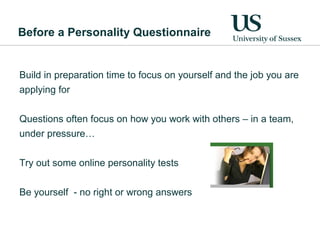
Build in preparation time to focus on yourself and the job you are
applying for

Questions often focus on how you work with others – in a team,
under pressure…

Try out some online personality tests


Be yourself - no right or wrong answers
Answering the Questions
in Personality Questionnaires


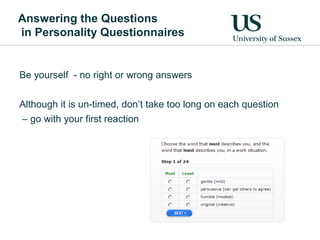
Be yourself - no right or wrong answers


Although it is un-timed, don’t take too long on each question
– go with your first reaction
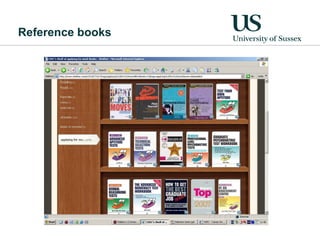
Reference books
Careers and Employability Centre


Web resources
 www.sussex.ac.uk/careers/jobs/applyingforjobs/selectiontests


Events
Bloomberg 12 December 2012
www.sussex.ac.uk/careers/newsandevents/events

Selection tests

  • 1.
    Selection Tests Catherine Reynolds Careers and Employability Adviser Careers and Employability Centre
  • 2.
    Selection Tests Types oftests Employers’ views Preparing to take selection tests During the tests Resources to help you
  • 3.
    Types of test AbilityTests • taken under standardized conditions and with strict time limits • paper and pencil or online, multiple choice questions • marked by trained person or machine, scored against norms Personality Questionnaires • provide information on a person’s preferences and personal style • not timed, no right or wrong • answer, usually get feedback
  • 4.
    Ability Tests Used asa predictor of future performance in a job Aim to measure intellectual capabilities Types include • Numerical reasoning tests – assess accuracy and problem solving • Verbal reasoning tests – assess accuracy and comprehension • Diagrammatic reasoning
  • 5.
    Before an AbilityTest Brush up your maths – times tables, percentages, long multiplication! Practise as much as you can under timed conditions to simulate the real thing – there are lots of examples online or in books Read instructions carefully and check with the test organiser or administrator if you need to clarify anything Contact the employer beforehand if you require special provisions or adjustments
  • 6.
    Answering the Questions inAbility Tests • Work accurately and fast and be positive • Avoid spending too long on questions you find difficult • If you are uncertain about an answer, enter your best choice • Keep working hard throughout the test • If you have any time at the end go back to any blank answers • Don’t worry if you don’t complete them all – you won’t
  • 7.
    Personality Questionnaires Used asan assessment for a particular type of job or sometimes further training or course and focuses on individual differences Aim to measure typical performance –no right or wrong answers Psychological assessment of personality based on 5 global factors: Extraversion; anxiety; tough mindedness; independence; self control
  • 8.
    Before a PersonalityQuestionnaire Build in preparation time to focus on yourself and the job you are applying for Questions often focus on how you work with others – in a team, under pressure… Try out some online personality tests Be yourself - no right or wrong answers
  • 9.
    Answering the Questions inPersonality Questionnaires Be yourself - no right or wrong answers Although it is un-timed, don’t take too long on each question – go with your first reaction
  • 10.
  • 11.
    Careers and EmployabilityCentre Web resources www.sussex.ac.uk/careers/jobs/applyingforjobs/selectiontests Events Bloomberg 12 December 2012 www.sussex.ac.uk/careers/newsandevents/events

Editor's Notes

  • #5 Recruiters use them to: Select on ability Reduce pile of applications Supply additional information about candidates As part of selection process – early, mid way or at assessment centre Want to be fair, so if you have a physical disability or learning disability disclose it.