Careers and Employability Centre
Effective CVs for
PhD Researchers
•Purpose of CVs
•Academic CVs & Research Statements
•PhD Repackaging
•Non Academic CVs & Employer Application Forms
•General Points
•Useful Links
Agenda
What is the purpose of your CV?
• Provides evidence that you fulfil the job requirements
• An advert of your skills, knowledge and experience
• Highlights your achievements to an employer
• Convinces the employer to interview you
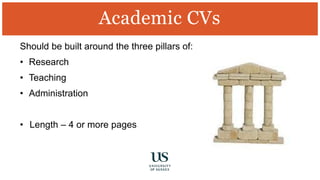
Should be built around the three pillars of:
• Research
• Teaching
• Administration
• Length – 4 or more pages
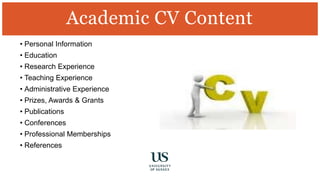
Academic CVs
• Personal Information
• Education
• Research Experience
• Teaching Experience
• Administrative Experience
• Prizes, Awards & Grants
• Publications
• Conferences
• Professional Memberships
• References
Academic CV Content
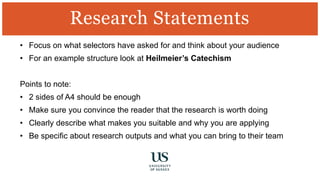
• Focus on what selectors have asked for and think about your audience
• For an example structure look at Heilmeier’s Catechism
Points to note:
• 2 sides of A4 should be enough
• Make sure you convince the reader that the research is worth doing
• Clearly describe what makes you suitable and why you are applying
• Be specific about research outputs and what you can bring to their team
Research Statements
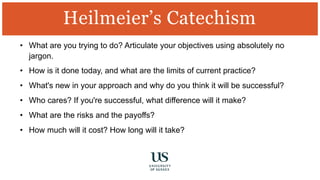
• What are you trying to do? Articulate your objectives using absolutely no
jargon.
• How is it done today, and what are the limits of current practice?
• What's new in your approach and why do you think it will be successful?
• Who cares? If you're successful, what difference will it make?
• What are the risks and the payoffs?
• How much will it cost? How long will it take?
Heilmeier’s Catechism
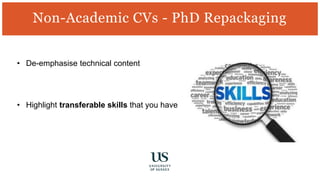
• De-emphasise technical content
• Highlight transferable skills that you have
Non-Academic CVs - PhD Repackaging
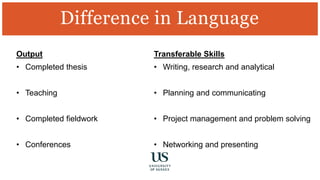
Output
• Completed thesis
• Teaching
• Completed fieldwork
• Conferences
Difference in Language
Transferable Skills
• Writing, research and analytical
• Planning and communicating
• Project management and problem solving
• Networking and presenting
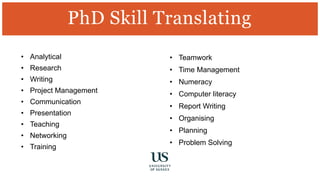
PhD Skill Translating
• Analytical
• Research
• Writing
• Project Management
• Communication
• Presentation
• Teaching
• Networking
• Training
• Teamwork
• Time Management
• Numeracy
• Computer literacy
• Report Writing
• Organising
• Planning
• Problem Solving
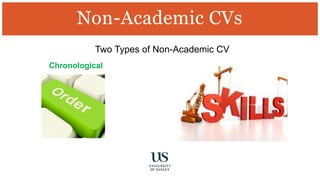
Non-Academic CVs
Chronological
Two Types of Non-Academic CV
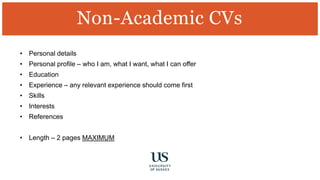
• Personal details
• Personal profile – who I am, what I want, what I can offer
• Education
• Experience – any relevant experience should come first
• Skills
• Interests
• References
• Length – 2 pages MAXIMUM
Non-Academic CVs
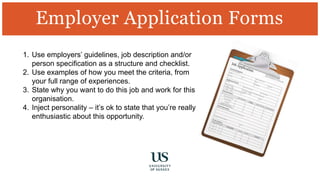
Employer Application Forms
1. Use employers’ guidelines, job description and/or
person specification as a structure and checklist.
2. Use examples of how you meet the criteria, from
your full range of experiences.
3. State why you want to do this job and work for this
organisation.
4. Inject personality – it’s ok to state that you’re really
enthusiastic about this opportunity.
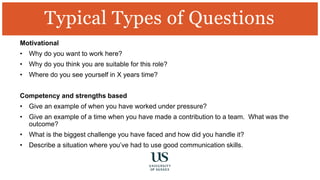
Motivational
• Why do you want to work here?
• Why do you think you are suitable for this role?
• Where do you see yourself in X years time?
Competency and strengths based
• Give an example of when you have worked under pressure?
• Give an example of a time when you have made a contribution to a team. What was the
outcome?
• What is the biggest challenge you have faced and how did you handle it?
• Describe a situation where you’ve had to use good communication skills.
Typical Types of Questions
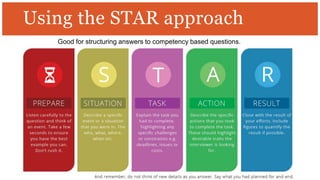
Good for structuring answers to competency based questions.
Using the STAR approach
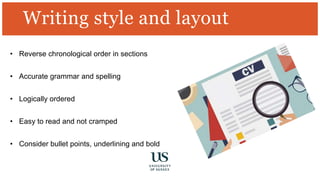
Writing style and layout
• Reverse chronological order in sections
• Accurate grammar and spelling
• Logically ordered
• Easy to read and not cramped
• Consider bullet points, underlining and bold
• University of Sussex PhD Researchers Careers Support
http://www.sussex.ac.uk/careers/aboutus/researchers
• University of Sussex Careers Website
http://www.sussex.ac.uk/careers
• Vitae Website
https://www.vitae.ac.uk/researcher-careers
Useful Support & Links

Effective CVs for PhD Researchers

  • 1.
    Careers and EmployabilityCentre Effective CVs for PhD Researchers
  • 2.
    •Purpose of CVs •AcademicCVs & Research Statements •PhD Repackaging •Non Academic CVs & Employer Application Forms •General Points •Useful Links Agenda
  • 3.
    What is thepurpose of your CV? • Provides evidence that you fulfil the job requirements • An advert of your skills, knowledge and experience • Highlights your achievements to an employer • Convinces the employer to interview you
  • 4.
    Should be builtaround the three pillars of: • Research • Teaching • Administration • Length – 4 or more pages Academic CVs
  • 5.
    • Personal Information •Education • Research Experience • Teaching Experience • Administrative Experience • Prizes, Awards & Grants • Publications • Conferences • Professional Memberships • References Academic CV Content
  • 6.
    • Focus onwhat selectors have asked for and think about your audience • For an example structure look at Heilmeier’s Catechism Points to note: • 2 sides of A4 should be enough • Make sure you convince the reader that the research is worth doing • Clearly describe what makes you suitable and why you are applying • Be specific about research outputs and what you can bring to their team Research Statements
  • 7.
    • What areyou trying to do? Articulate your objectives using absolutely no jargon. • How is it done today, and what are the limits of current practice? • What's new in your approach and why do you think it will be successful? • Who cares? If you're successful, what difference will it make? • What are the risks and the payoffs? • How much will it cost? How long will it take? Heilmeier’s Catechism
  • 8.
    • De-emphasise technicalcontent • Highlight transferable skills that you have Non-Academic CVs - PhD Repackaging
  • 9.
    Output • Completed thesis •Teaching • Completed fieldwork • Conferences Difference in Language Transferable Skills • Writing, research and analytical • Planning and communicating • Project management and problem solving • Networking and presenting
  • 10.
    PhD Skill Translating •Analytical • Research • Writing • Project Management • Communication • Presentation • Teaching • Networking • Training • Teamwork • Time Management • Numeracy • Computer literacy • Report Writing • Organising • Planning • Problem Solving
  • 11.
  • 12.
    • Personal details •Personal profile – who I am, what I want, what I can offer • Education • Experience – any relevant experience should come first • Skills • Interests • References • Length – 2 pages MAXIMUM Non-Academic CVs
  • 13.
    Employer Application Forms 1.Use employers’ guidelines, job description and/or person specification as a structure and checklist. 2. Use examples of how you meet the criteria, from your full range of experiences. 3. State why you want to do this job and work for this organisation. 4. Inject personality – it’s ok to state that you’re really enthusiastic about this opportunity.
  • 14.
    Motivational • Why doyou want to work here? • Why do you think you are suitable for this role? • Where do you see yourself in X years time? Competency and strengths based • Give an example of when you have worked under pressure? • Give an example of a time when you have made a contribution to a team. What was the outcome? • What is the biggest challenge you have faced and how did you handle it? • Describe a situation where you’ve had to use good communication skills. Typical Types of Questions
  • 15.
    Good for structuringanswers to competency based questions. Using the STAR approach
  • 16.
    Writing style andlayout • Reverse chronological order in sections • Accurate grammar and spelling • Logically ordered • Easy to read and not cramped • Consider bullet points, underlining and bold
  • 17.
    • University ofSussex PhD Researchers Careers Support http://www.sussex.ac.uk/careers/aboutus/researchers • University of Sussex Careers Website http://www.sussex.ac.uk/careers • Vitae Website https://www.vitae.ac.uk/researcher-careers Useful Support & Links