This document discusses the case study method for training. It defines a case study as a description of how employees or an organization dealt with a difficult situation. Case studies help develop skills like analysis, problem-solving, and decision making. They allow trainees to tackle problems before facing real-life situations. Effective use requires learner involvement in preparing, discussing and defending their case analysis. The process for developing a case study involves identifying a problem, gathering information, outlining the story, determining presentation details, and assembling the final case materials and questions. Sources for existing case studies include Harvard Business School and other institutions.
CASE STUDY METHOD
PRESENTEDBY,
SALMAN SADHAM SAFARULLA
MASTER OF BUSINESS ADMINISTRATION
Salman Sadham Safarulla
3.
INTRODUCTION
• Description abouthow employees or an organization dealt
with a difficult situation.
• Cases may be especially appropriate for developing higher
order intellectual skills such as analysis, synthesis and
evaluation
• Case Study method is essentially a problem identification,
problem-solving activity.
• Cases help trainees develop the willingness to take risks given
uncertain outcomes, based on their analysis of the situation
Salman Sadham Safarulla
4.
Continuation…
• There area variety of problems that could be covered by
case study method like development of team work,
difficulties, interpersonal relations, control of wastage, lack
of funds, role ambiguity, customer service, relations etc…
• This helps trainees in developing analytical and problem-
solving skills
• It is a useful method in giving participant an opportunity to
tackle difficult problems before the trainee is personally
exposed to real life frightening and confusing situations.
Salman Sadham Safarulla
5.
To Use caseseffectively…
• The learning environment must give trainees the
opportunity to prepare and discuss their case analysis.
• Face-to-face or electronic communication among trainees
must be arranged.
• Trainee involvement is critical for the effectiveness of
case method
• Learners must be willing and able to analyse the case and
then communicate and defend their positions
Salman Sadham Safarulla
6.
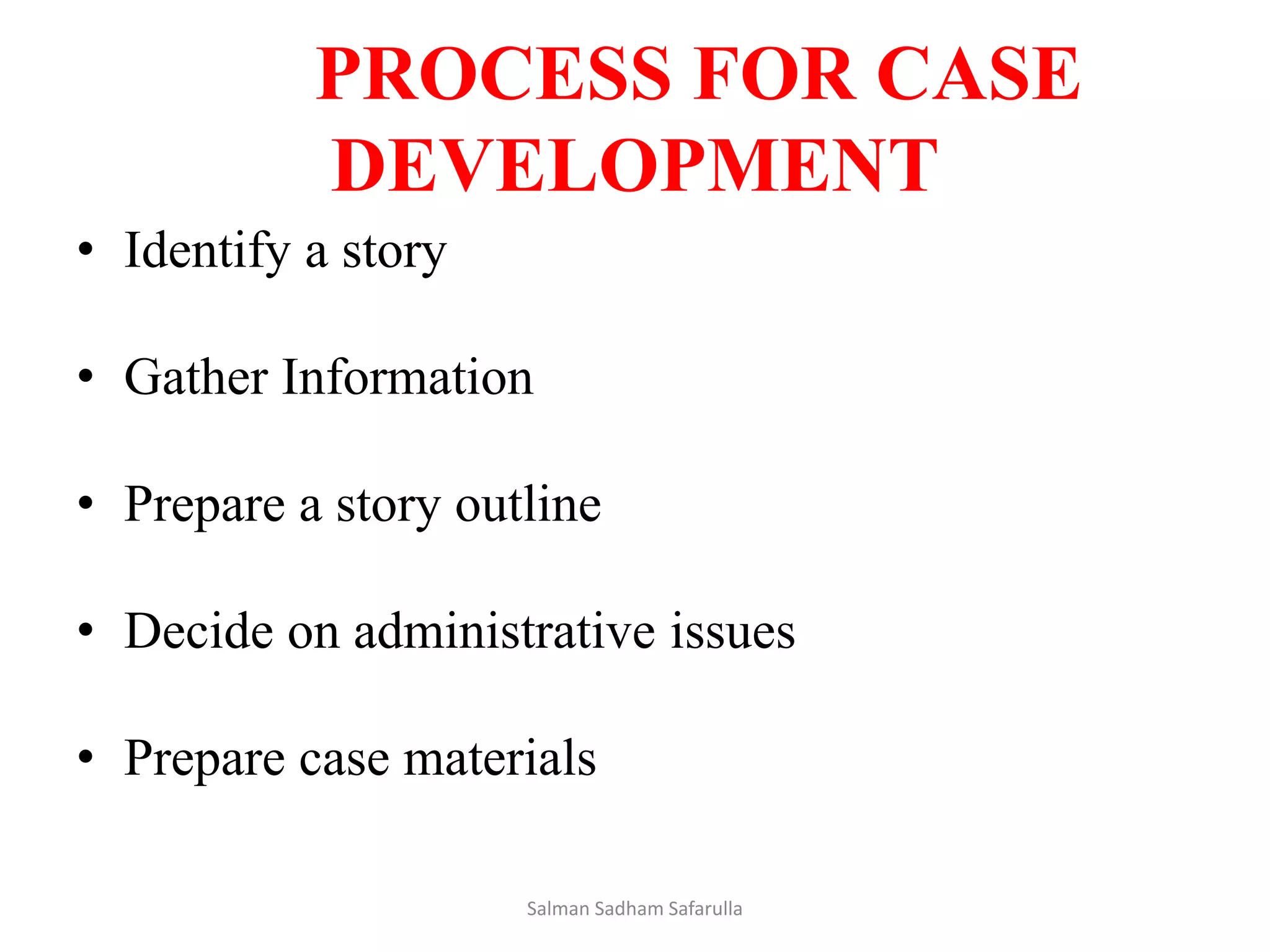
PROCESS FOR CASE
DEVELOPMENT
•Identify a story
• Gather Information
• Prepare a story outline
• Decide on administrative issues
• Prepare case materials
Salman Sadham Safarulla
7.
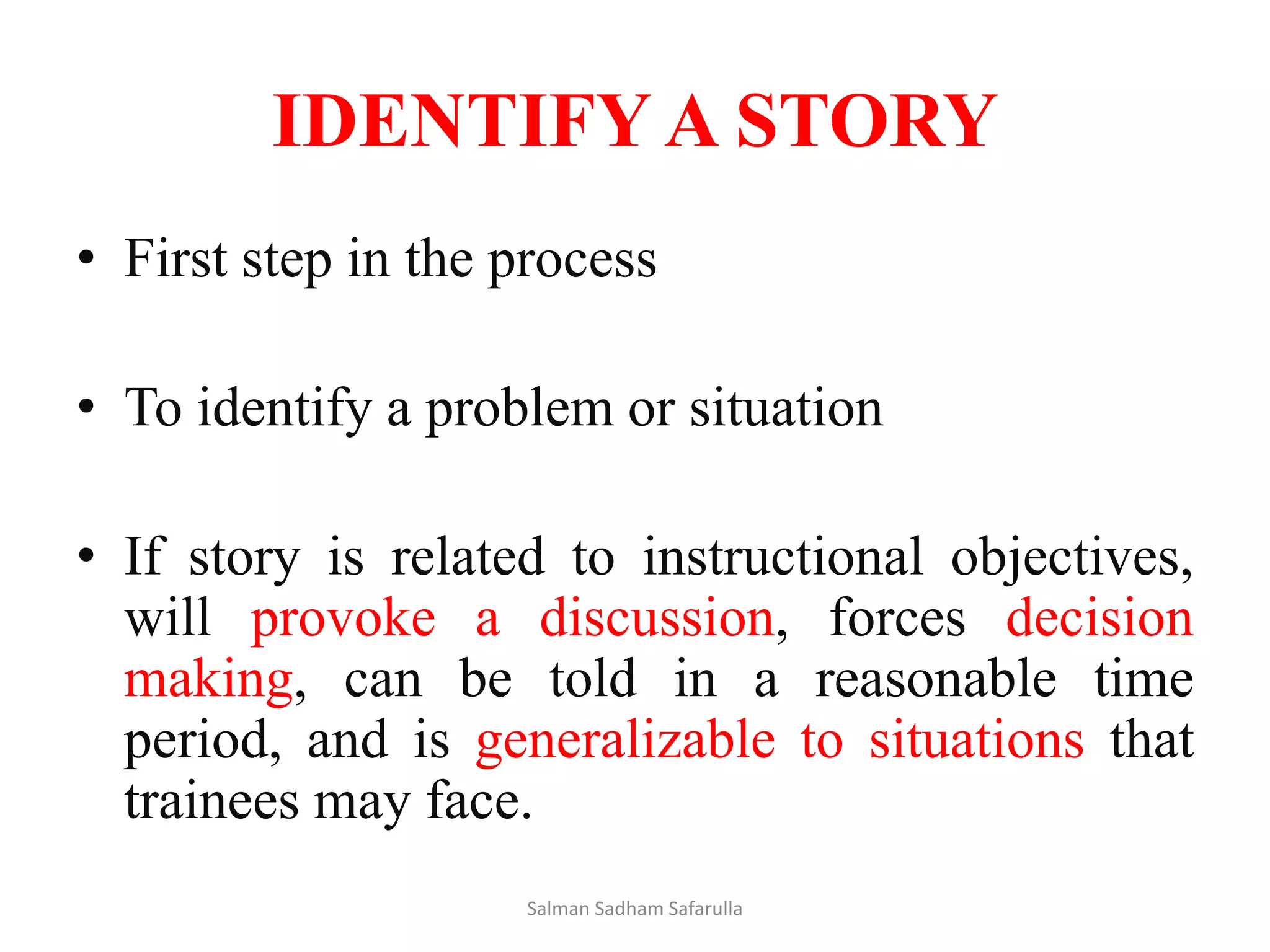
IDENTIFY A STORY
•First step in the process
• To identify a problem or situation
• If story is related to instructional objectives,
will provoke a discussion, forces decision
making, can be told in a reasonable time
period, and is generalizable to situations that
trainees may face.
Salman Sadham Safarulla
8.
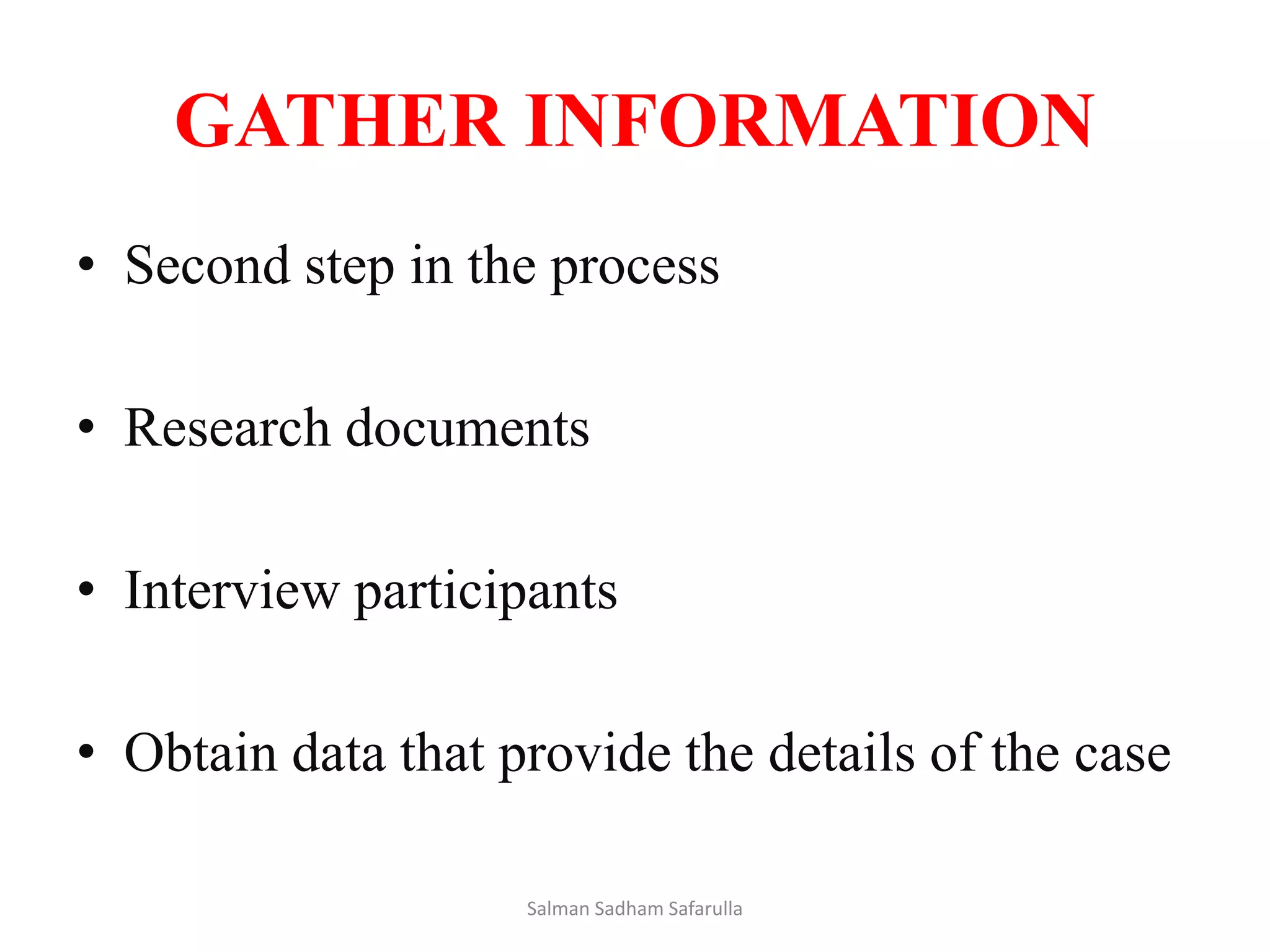
GATHER INFORMATION
• Secondstep in the process
• Research documents
• Interview participants
• Obtain data that provide the details of the case
Salman Sadham Safarulla
9.
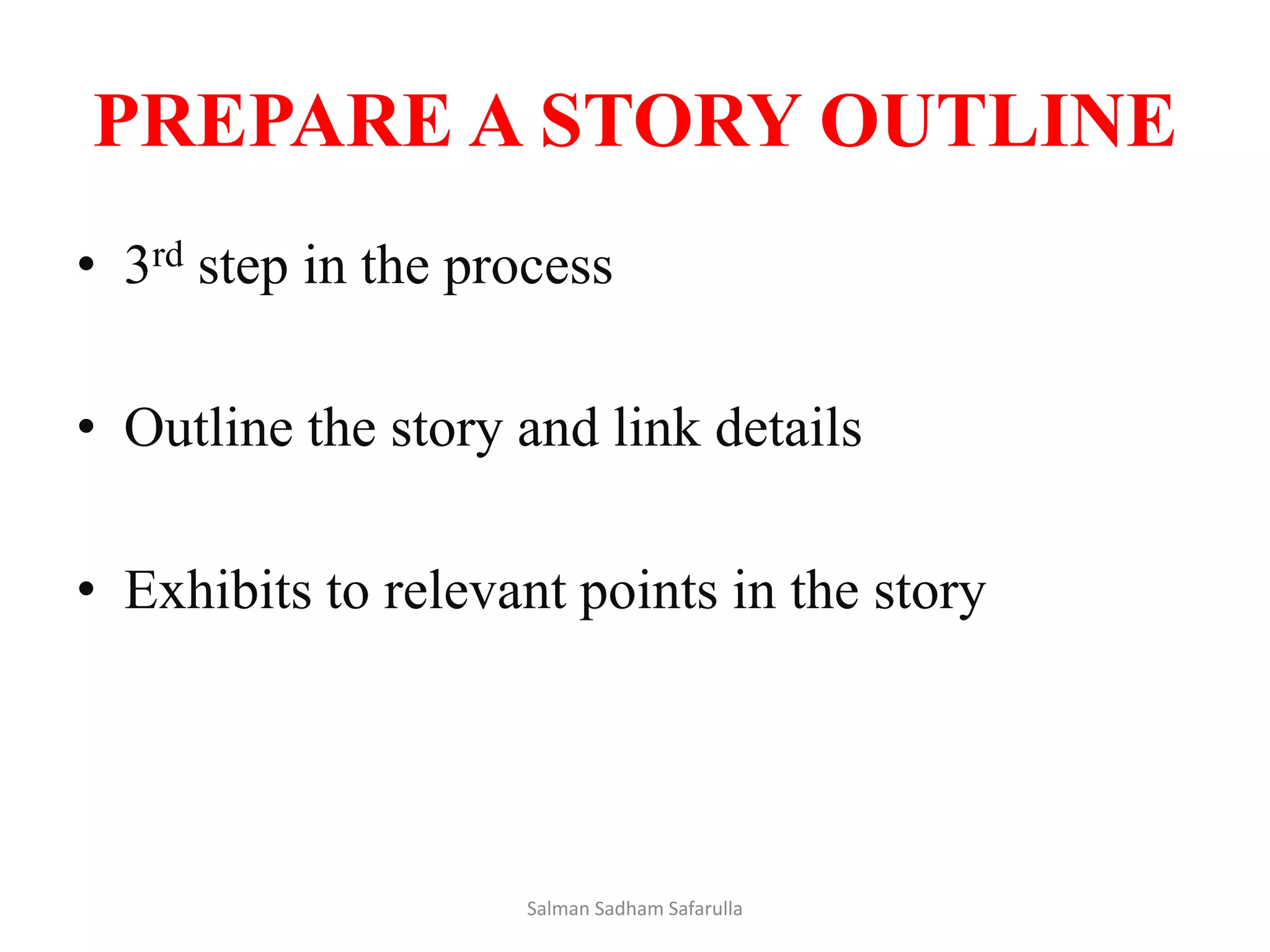
PREPARE A STORYOUTLINE
• 3rd step in the process
• Outline the story and link details
• Exhibits to relevant points in the story
Salman Sadham Safarulla
10.
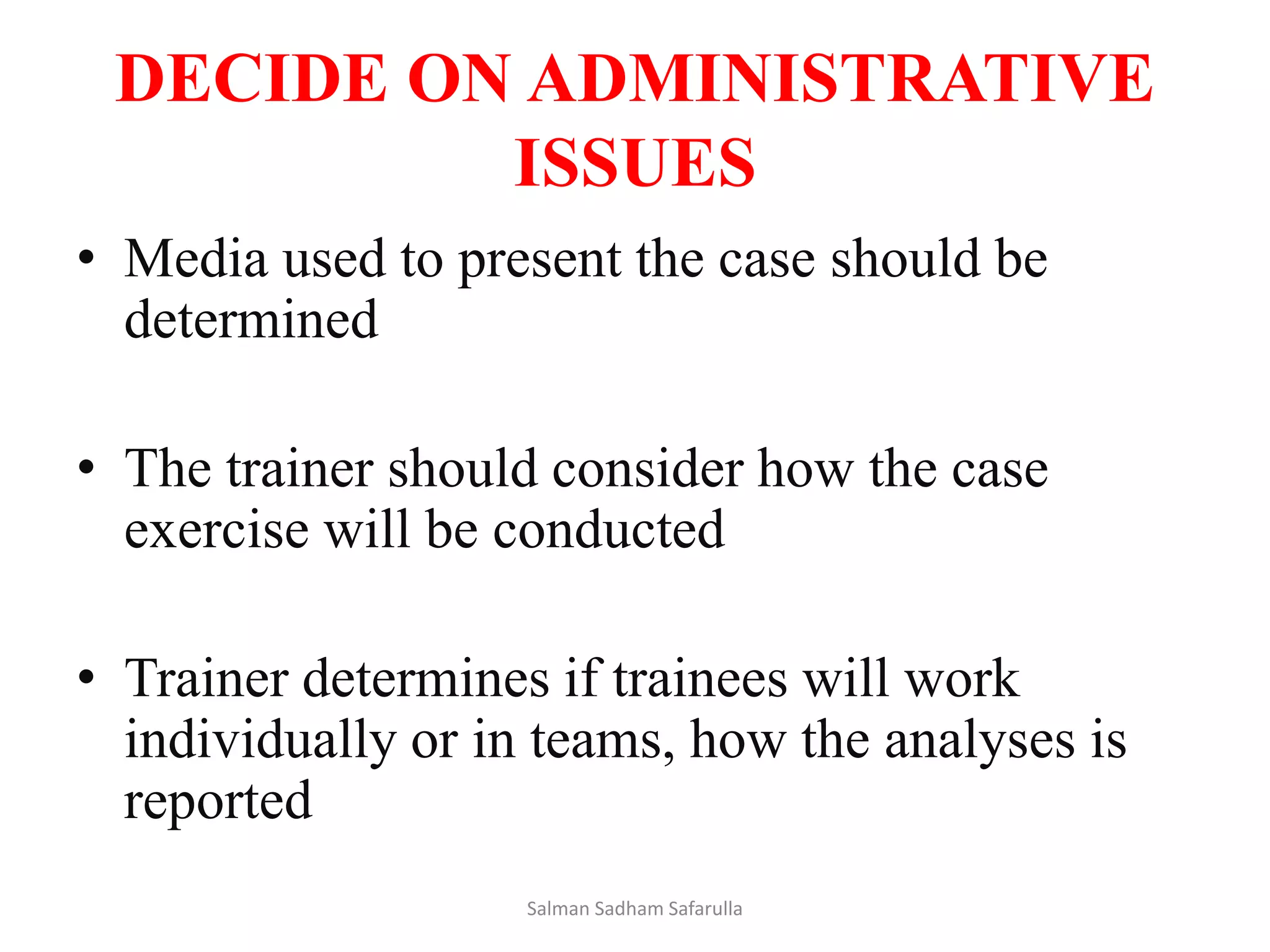
DECIDE ON ADMINISTRATIVE
ISSUES
•Media used to present the case should be
determined
• The trainer should consider how the case
exercise will be conducted
• Trainer determines if trainees will work
individually or in teams, how the analyses is
reported
Salman Sadham Safarulla
11.
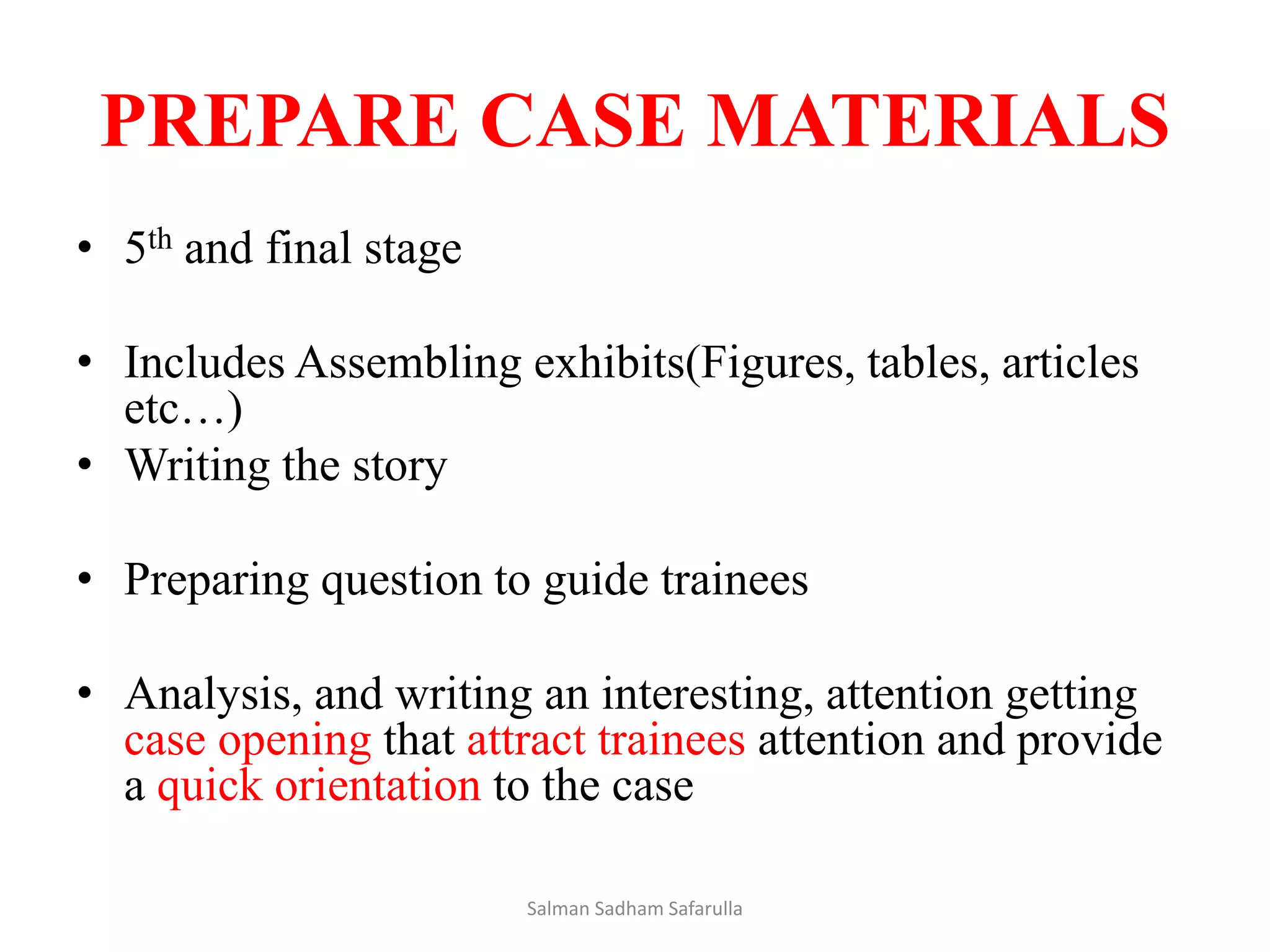
PREPARE CASE MATERIALS
•5th and final stage
• Includes Assembling exhibits(Figures, tables, articles
etc…)
• Writing the story
• Preparing question to guide trainees
• Analysis, and writing an interesting, attention getting
case opening that attract trainees attention and provide
a quick orientation to the case
Salman Sadham Safarulla
12.
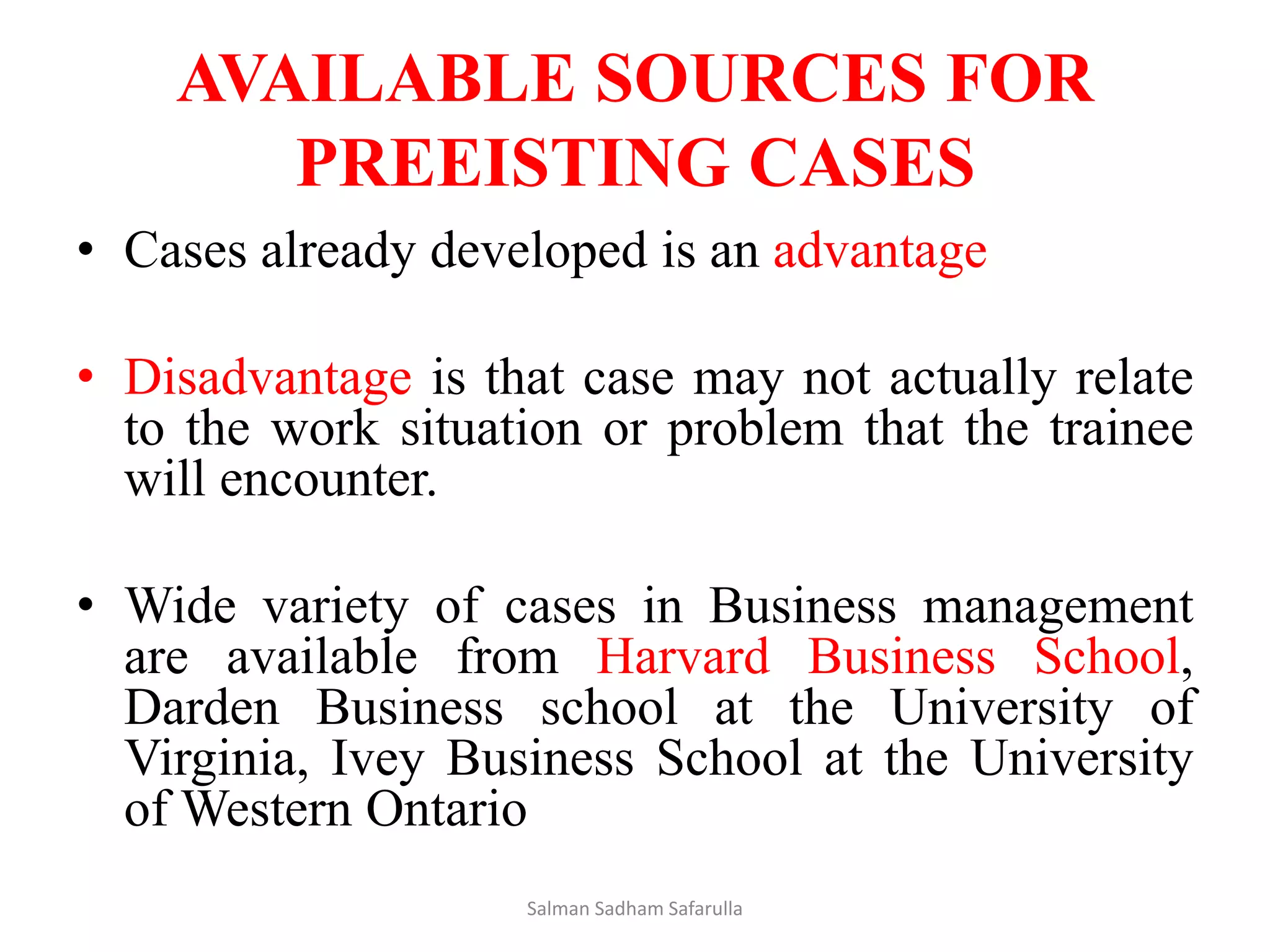
AVAILABLE SOURCES FOR
PREEISTINGCASES
• Cases already developed is an advantage
• Disadvantage is that case may not actually relate
to the work situation or problem that the trainee
will encounter.
• Wide variety of cases in Business management
are available from Harvard Business School,
Darden Business school at the University of
Virginia, Ivey Business School at the University
of Western Ontario
Salman Sadham Safarulla
13.
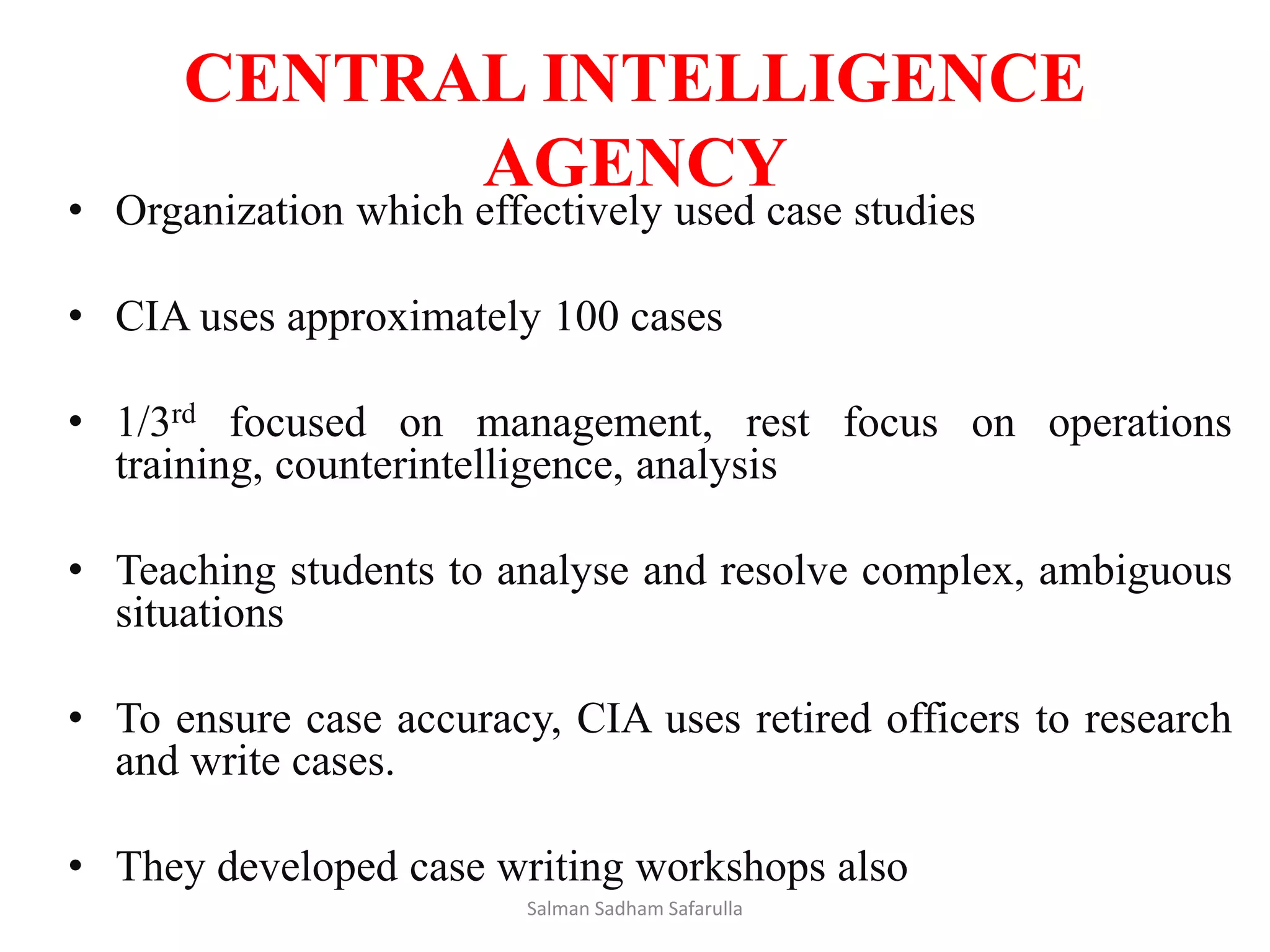
CENTRAL INTELLIGENCE
AGENCY
• Organizationwhich effectively used case studies
• CIA uses approximately 100 cases
• 1/3rd focused on management, rest focus on operations
training, counterintelligence, analysis
• Teaching students to analyse and resolve complex, ambiguous
situations
• To ensure case accuracy, CIA uses retired officers to research
and write cases.
• They developed case writing workshops also
Salman Sadham Safarulla
14.
ADVANTAGES OF CASESTUDY
METHOD
• Pooling of the knowledge and experiences of the
group of people analysing the case is possible
• Develop cooperation and interpersonal skill among
participants
• Facilitates analytical and communication skills of
participants
• Team work and presentation skills are developed
Salman Sadham Safarulla
15.
DISADVANTAGES
• More timeconsuming compared to other direct
methods
• Sometimes Lack Realism and immediate
relevance to organisational settings
• Some case studies may difficult for trainees to
imagine the situation happened when presented
in written form.
Salman Sadham Safarulla