Subject : Human Resources  Management Topic : TEST
TEST A test is designed to measure such skills and abilities in a worker as are found by job analysis to be essential for successful job performance.
Characteristics of a good test Assumption Preparation Objectivity Imprecise Validity Reliability Standardization Qualified people Usefulness
Types of tests   Intelligence tests  - Tests of general intellectual abilities or mental ability tests Aptitude tests  -Tests which measure skills and ability and measure whether an individual has the capacity to learn a job efficiently
Personality tests  - Includes traits like self confidence ,sympathy ,self confidence etc….  Interest tests  - It is used to discover a person’s areas of interest and to identify the kind of work tat will satisfy him
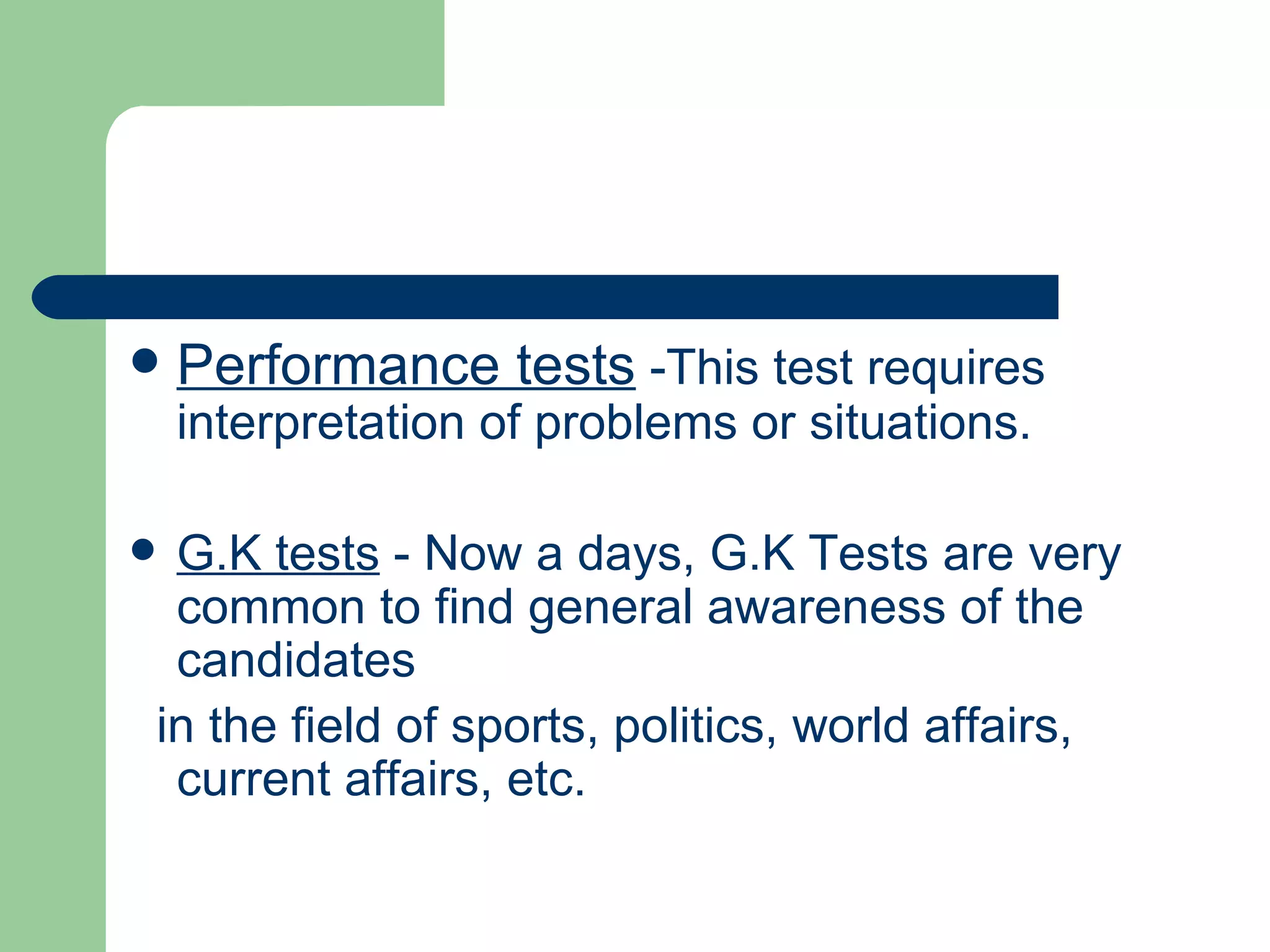
Performance tests  -This test requires interpretation of problems or situations.  G.K tests  - Now a days, G.K Tests are very common to find general awareness of the candidates in the field of sports, politics, world affairs, current affairs, etc.
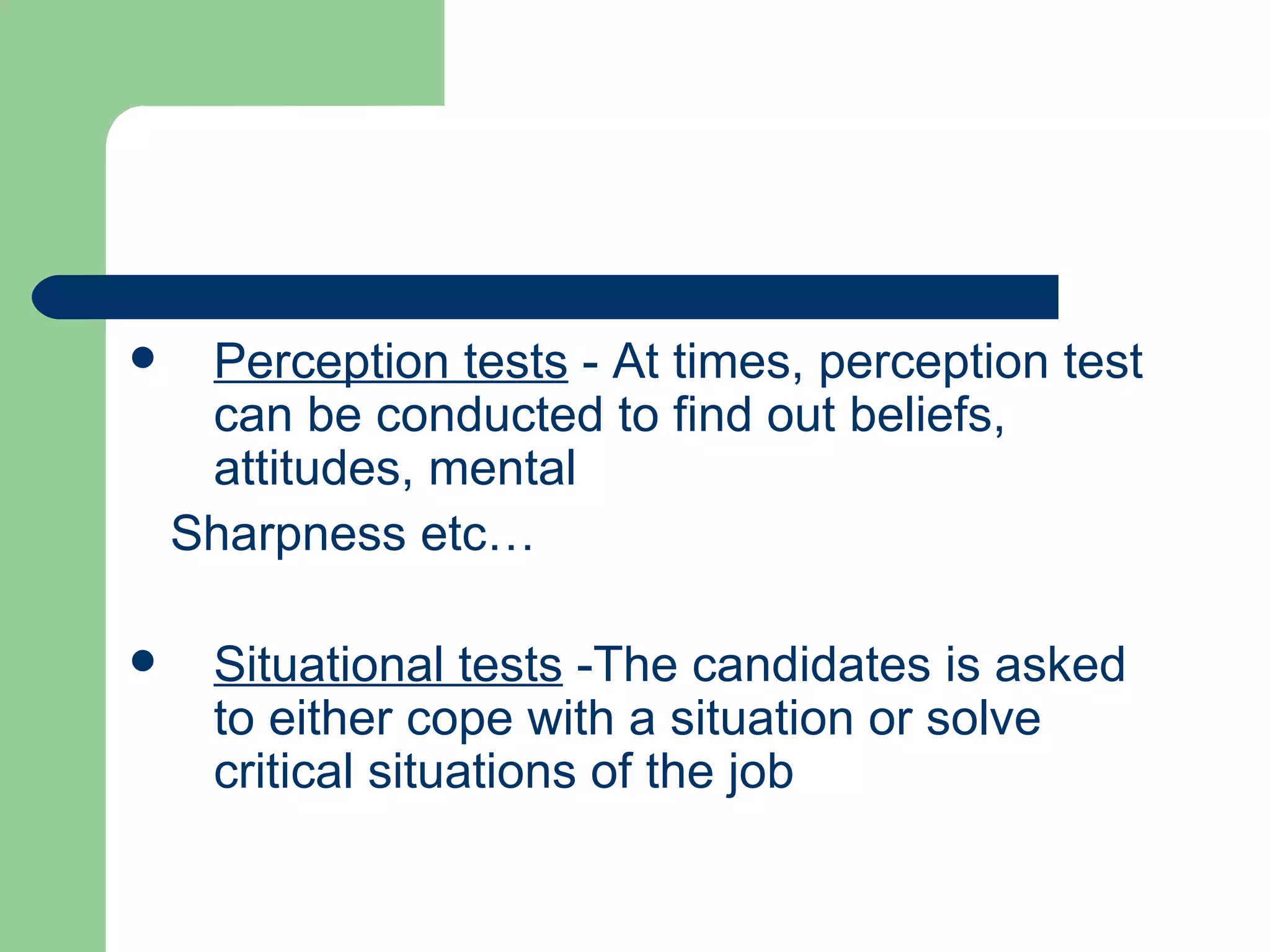
Perception tests  - At times, perception test can be conducted to find out beliefs, attitudes, mental Sharpness etc… Situational tests  -The candidates is asked to either cope with a situation or solve critical situations of the job
Achievement tests  - It is basically a measure of what a person has learned.
Advantages of tests Tests can be used to check on the reported experience of the applicant.
They can also be used as a basis for objective comparison between applicants  Tests are commonly used to judge candidates properly and can help in selecting not the best, but the most suitable candidate
Personality test can throw light on the character of the candidate  They can be used for guiding and counseling persons seeking various jobs.
If conducted properly, they can reduce the work of oral interviewers  Tests like I.Q. tests enable to find out the mental capacity of the candidate to deal with any eventuality
The tests can be used to discriminate the suitable candidates from the unsuitable ones  Tests, if systematically conducted, are more objective and reliable as compared to Other  personal assessment techniques
Developing a test programme   In order for any selection test to be useful, an employer should be fairly sure that scores on the test are related in a predictable way to performance on the job . The following steps are generally involved in establishing a sound testing programme.
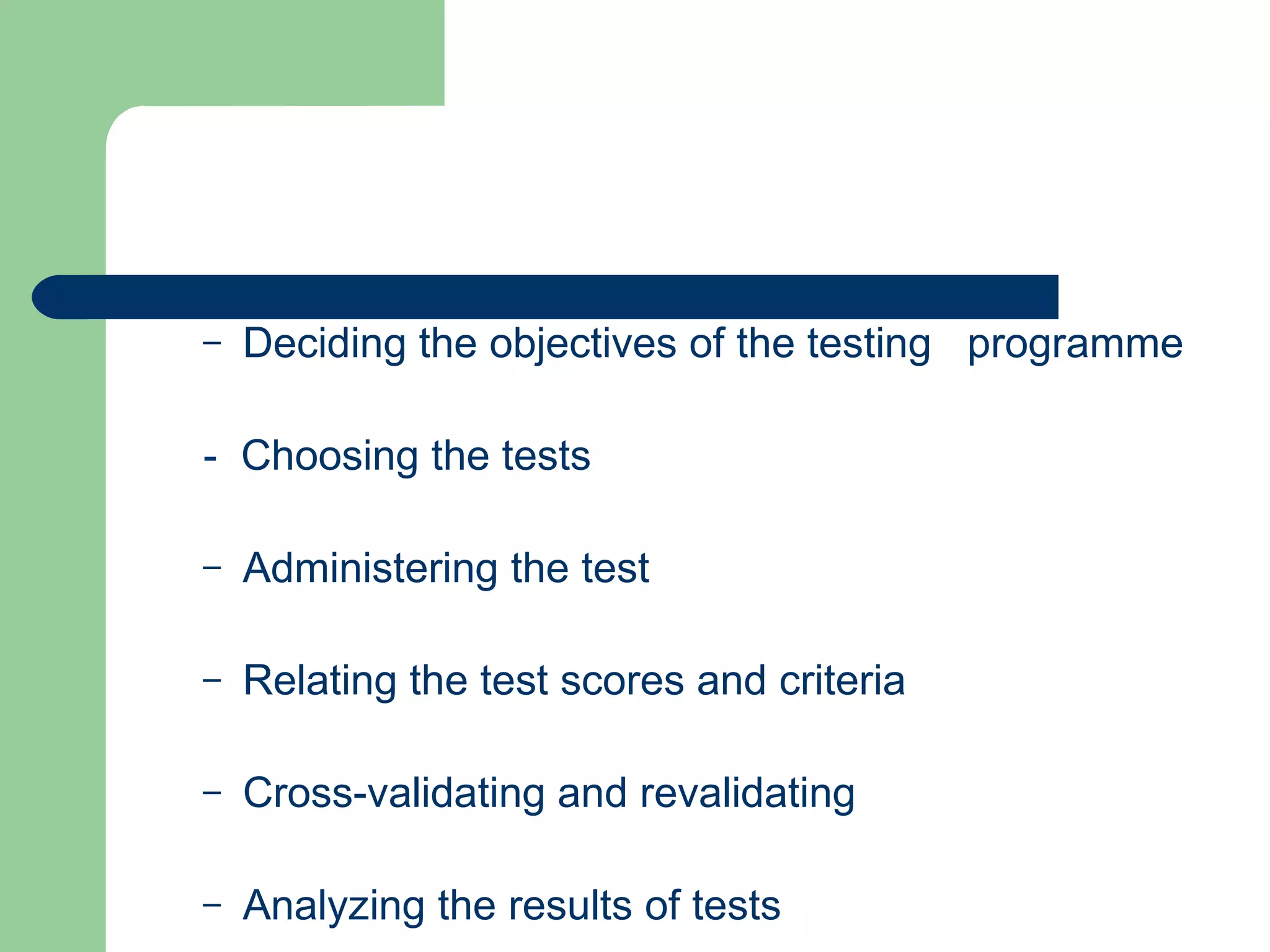
Deciding the objectives of the testing  programme -  Choosing the tests Administering the test Relating the test scores and criteria Cross-validating and revalidating Analyzing the results of tests
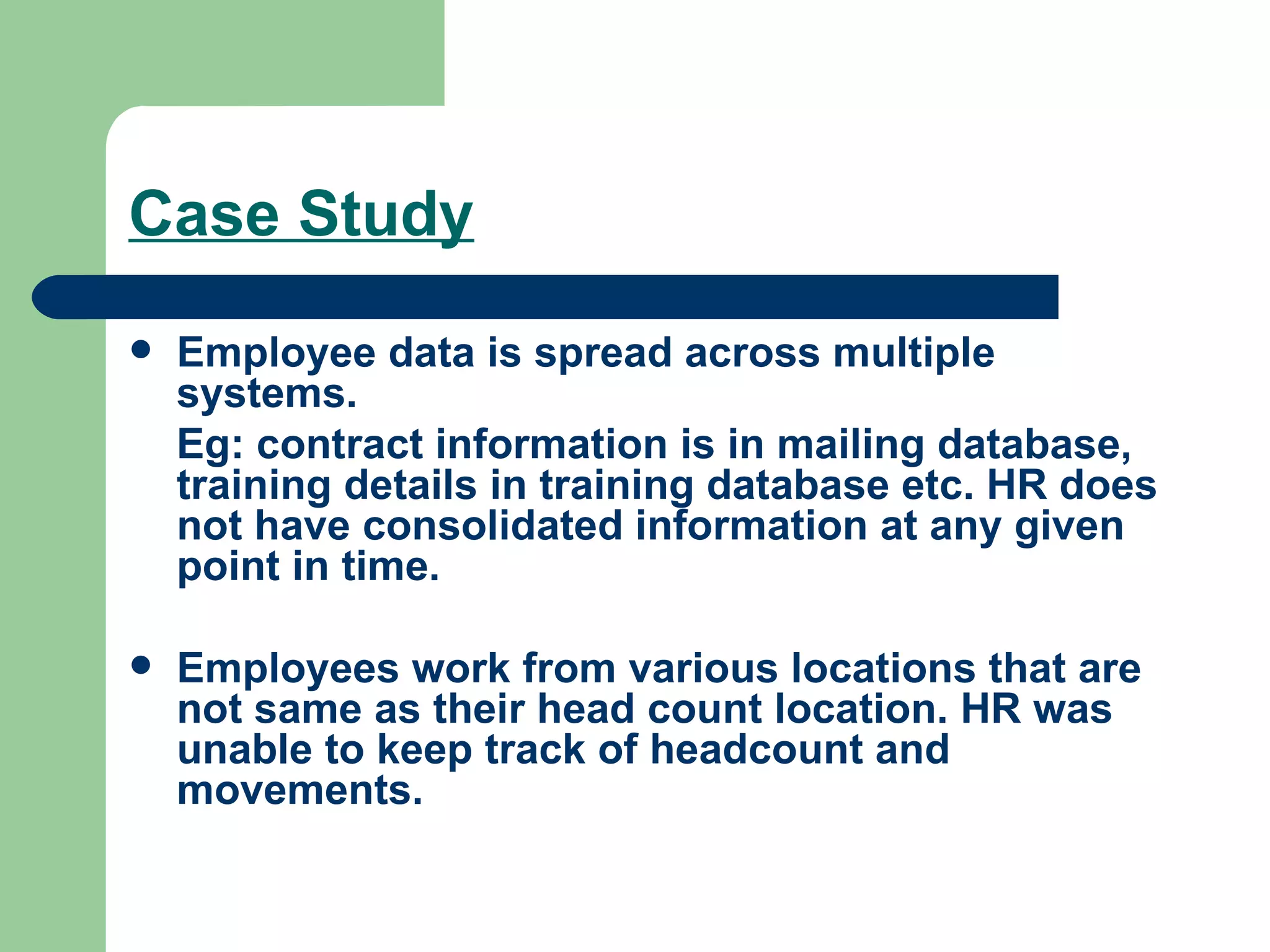
Case Study Employee data is spread across multiple systems.  Eg: contract information is in mailing database, training details in training database etc. HR does not have consolidated information at any given point in time. Employees work from various locations that are not same as their head count location. HR was unable to keep track of headcount and movements.
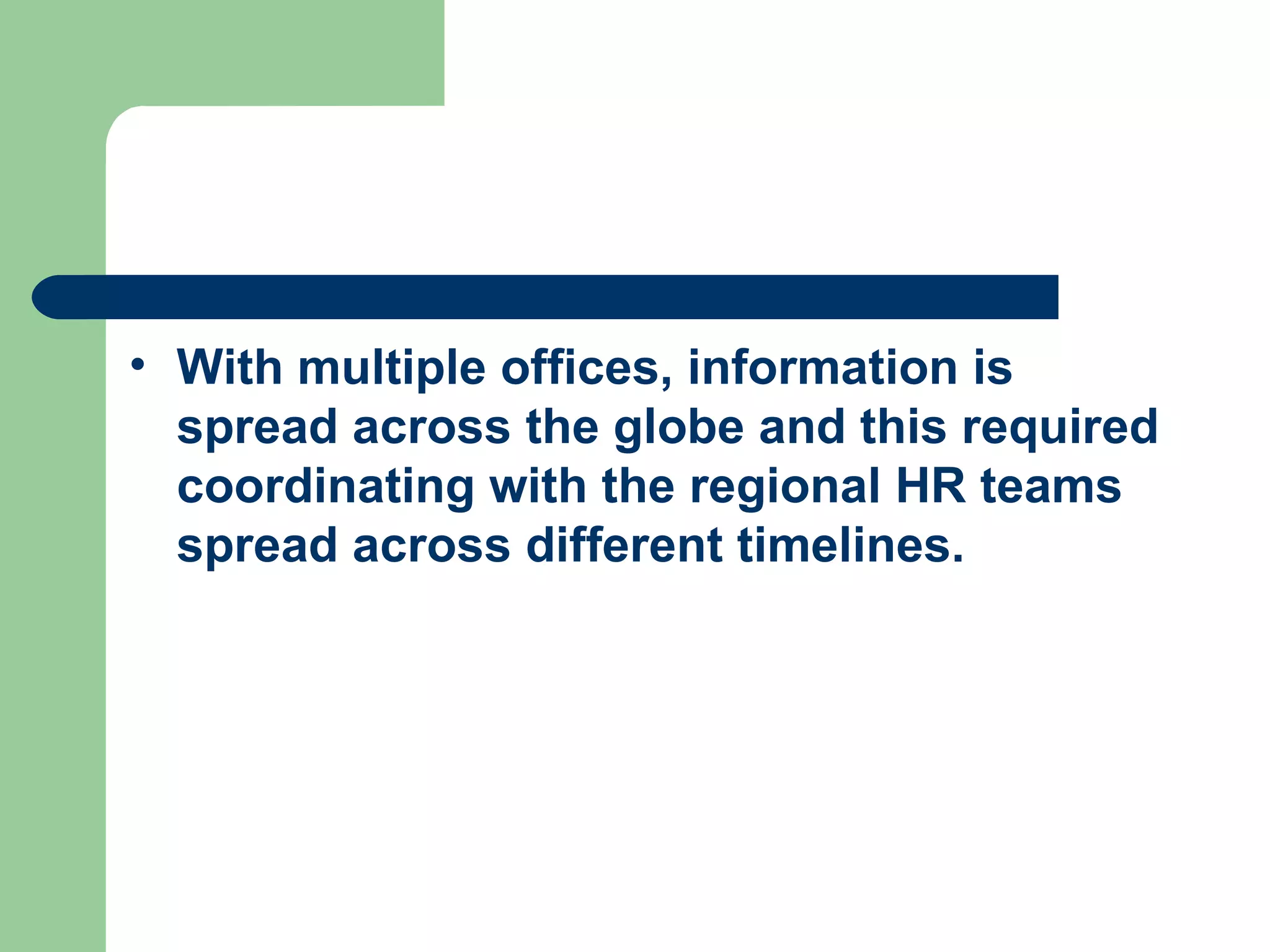
With multiple offices, information is spread across the globe and this required coordinating with the regional HR teams spread across different timelines.
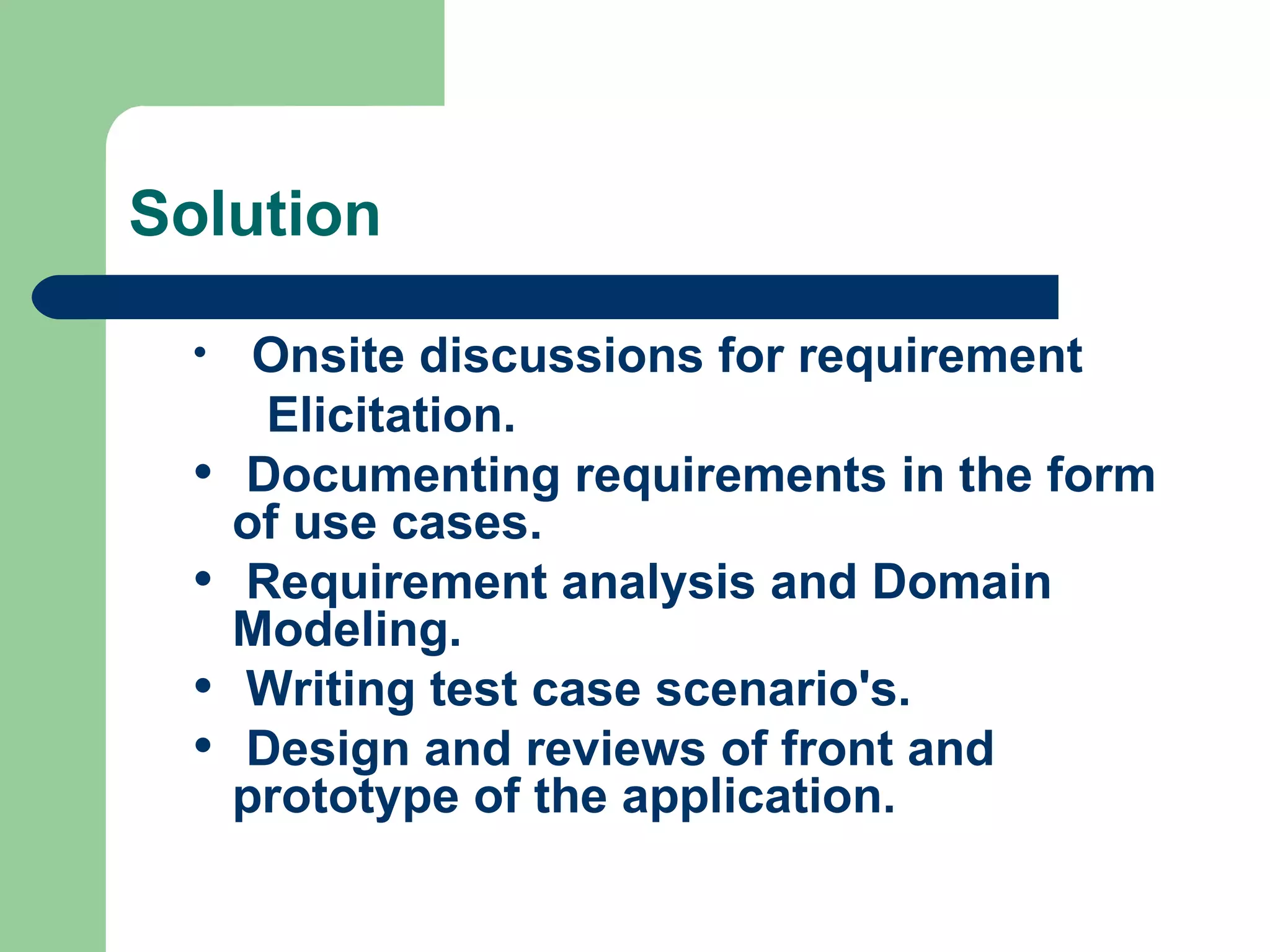
Solution Onsite discussions for requirement   Elicitation. Documenting requirements in the form of use cases. Requirement analysis and Domain Modeling. Writing test case scenario's.  Design and reviews of front and prototype of the application.

Tests

  • 1.
    Subject : HumanResources Management Topic : TEST
  • 2.
    TEST A testis designed to measure such skills and abilities in a worker as are found by job analysis to be essential for successful job performance.
  • 3.
    Characteristics of agood test Assumption Preparation Objectivity Imprecise Validity Reliability Standardization Qualified people Usefulness
  • 4.
    Types of tests Intelligence tests - Tests of general intellectual abilities or mental ability tests Aptitude tests -Tests which measure skills and ability and measure whether an individual has the capacity to learn a job efficiently
  • 5.
    Personality tests - Includes traits like self confidence ,sympathy ,self confidence etc…. Interest tests - It is used to discover a person’s areas of interest and to identify the kind of work tat will satisfy him
  • 6.
    Performance tests -This test requires interpretation of problems or situations. G.K tests - Now a days, G.K Tests are very common to find general awareness of the candidates in the field of sports, politics, world affairs, current affairs, etc.
  • 7.
    Perception tests - At times, perception test can be conducted to find out beliefs, attitudes, mental Sharpness etc… Situational tests -The candidates is asked to either cope with a situation or solve critical situations of the job
  • 8.
    Achievement tests - It is basically a measure of what a person has learned.
  • 9.
    Advantages of testsTests can be used to check on the reported experience of the applicant.
  • 10.
    They can alsobe used as a basis for objective comparison between applicants Tests are commonly used to judge candidates properly and can help in selecting not the best, but the most suitable candidate
  • 11.
    Personality test canthrow light on the character of the candidate They can be used for guiding and counseling persons seeking various jobs.
  • 12.
    If conducted properly,they can reduce the work of oral interviewers Tests like I.Q. tests enable to find out the mental capacity of the candidate to deal with any eventuality
  • 13.
    The tests canbe used to discriminate the suitable candidates from the unsuitable ones Tests, if systematically conducted, are more objective and reliable as compared to Other personal assessment techniques
  • 14.
    Developing a testprogramme In order for any selection test to be useful, an employer should be fairly sure that scores on the test are related in a predictable way to performance on the job . The following steps are generally involved in establishing a sound testing programme.
  • 15.
    Deciding the objectivesof the testing programme - Choosing the tests Administering the test Relating the test scores and criteria Cross-validating and revalidating Analyzing the results of tests
  • 16.
    Case Study Employeedata is spread across multiple systems. Eg: contract information is in mailing database, training details in training database etc. HR does not have consolidated information at any given point in time. Employees work from various locations that are not same as their head count location. HR was unable to keep track of headcount and movements.
  • 17.
    With multiple offices,information is spread across the globe and this required coordinating with the regional HR teams spread across different timelines.
  • 18.
    Solution Onsite discussionsfor requirement Elicitation. Documenting requirements in the form of use cases. Requirement analysis and Domain Modeling. Writing test case scenario's. Design and reviews of front and prototype of the application.