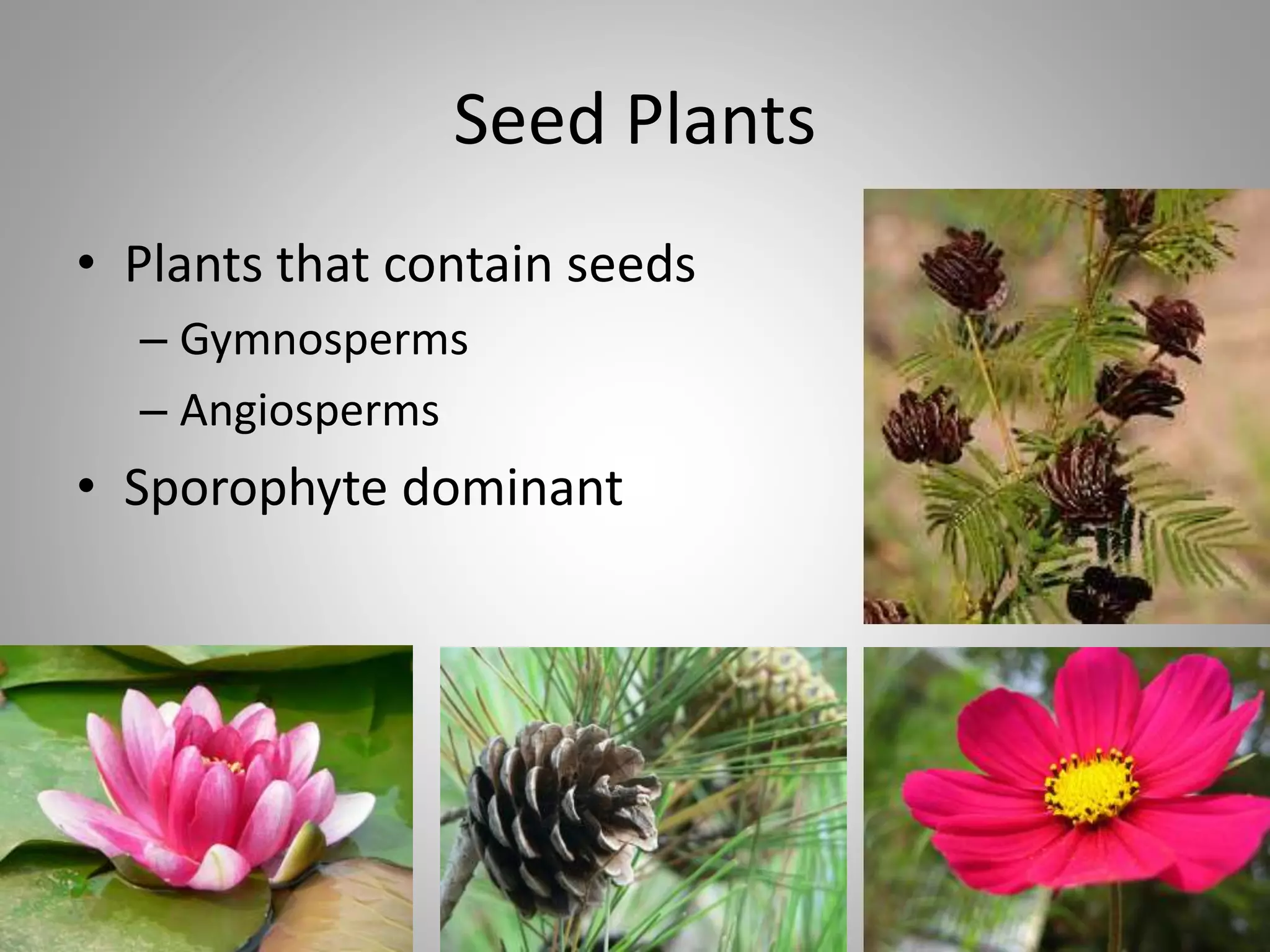
Seed Plants
• Plants that contain seeds
– Gymnosperms
– Angiosperms
• Sporophyte dominant
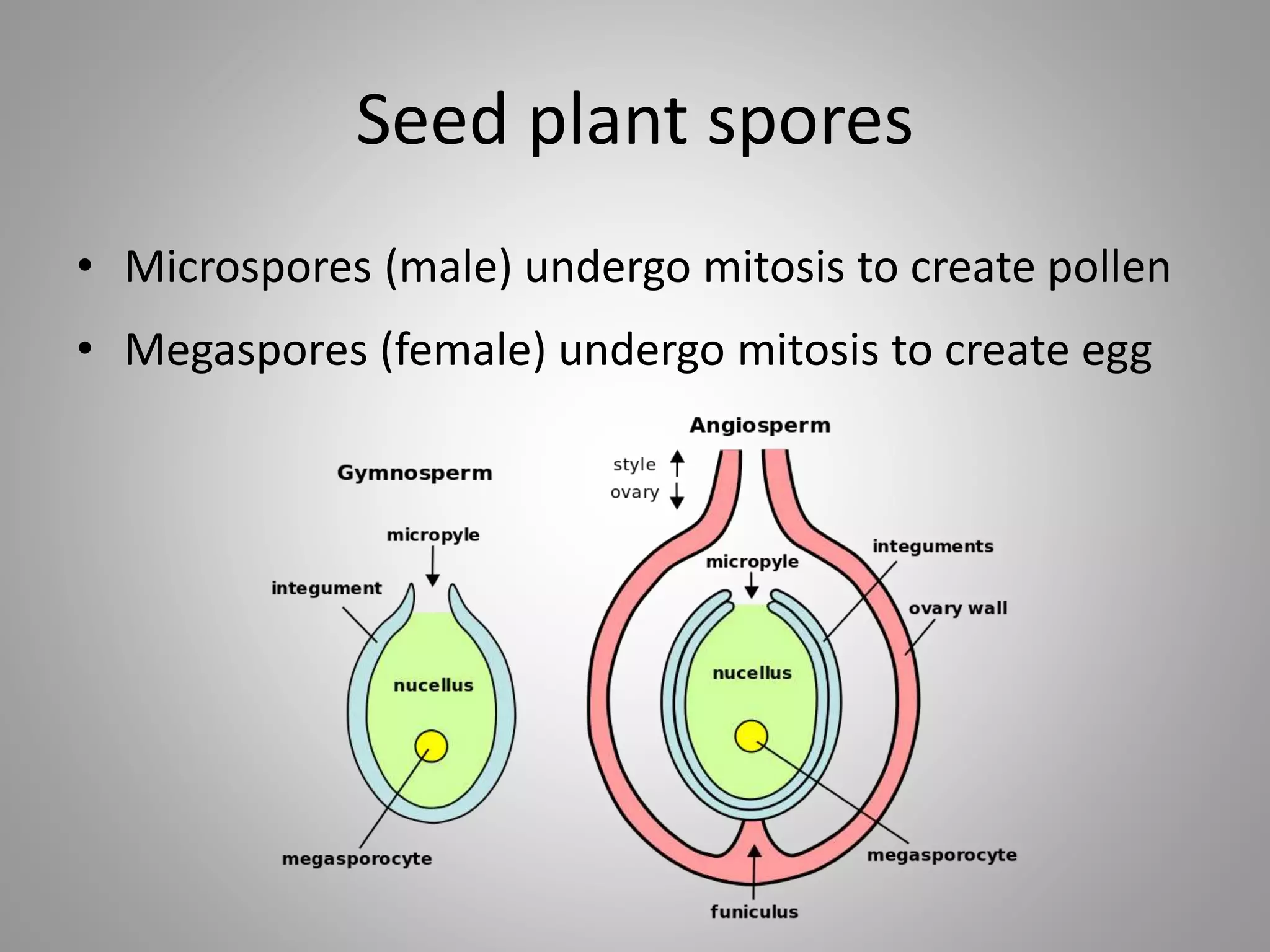
Seed plant spores
• Microspores (male) undergo mitosis to create pollen
• Megaspores (female) undergo mitosis to create egg
Alteration of Generations
Gymnosperms
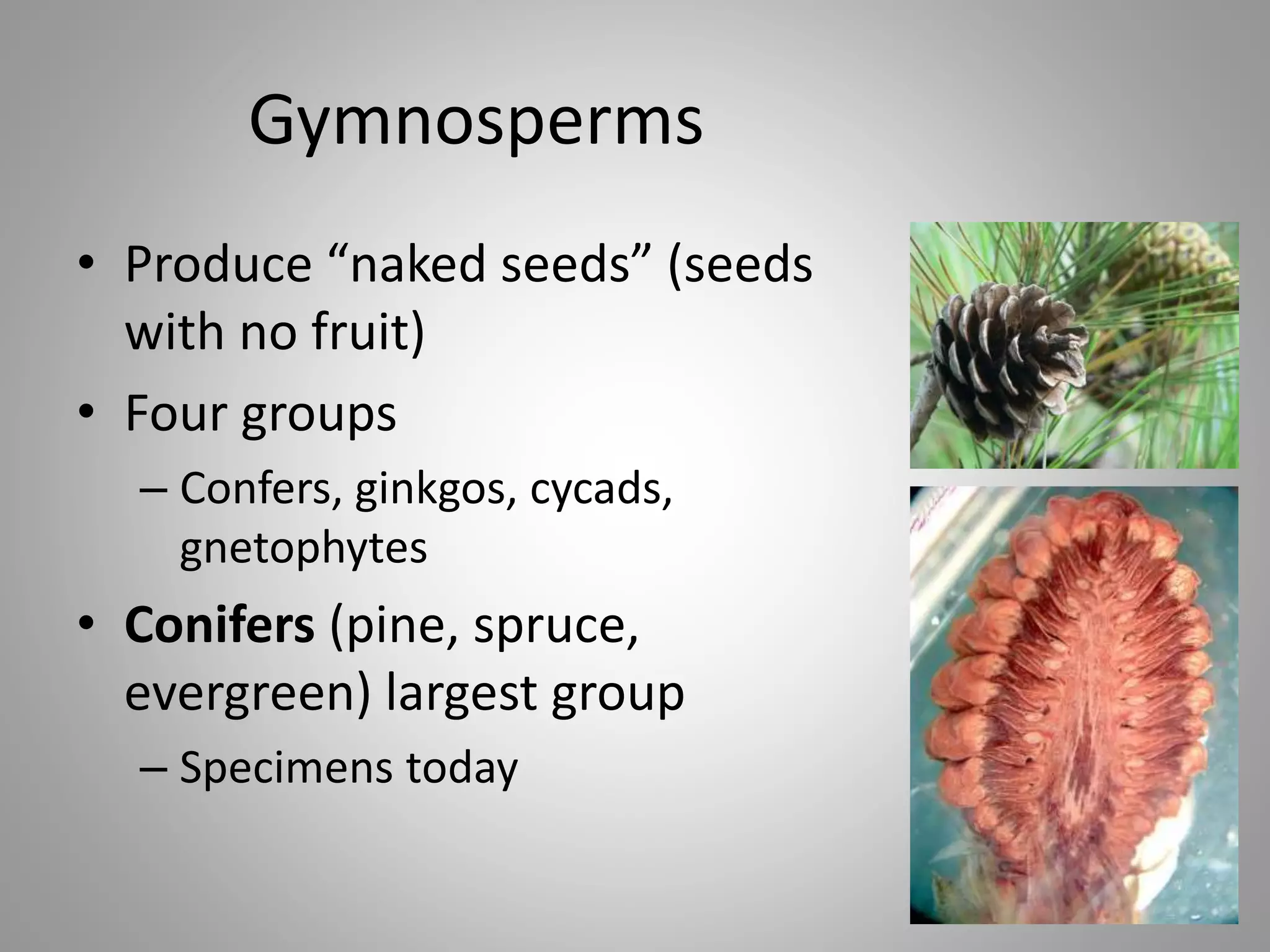
• Produce “naked seeds” (seeds
with no fruit)
• Four groups
– Confers, ginkgos, cycads,
gnetophytes
• Conifers (pine, spruce,
evergreen) largest group
– Specimens today
Gymnosperm life cycle
Male and Female pine cones
Female Male
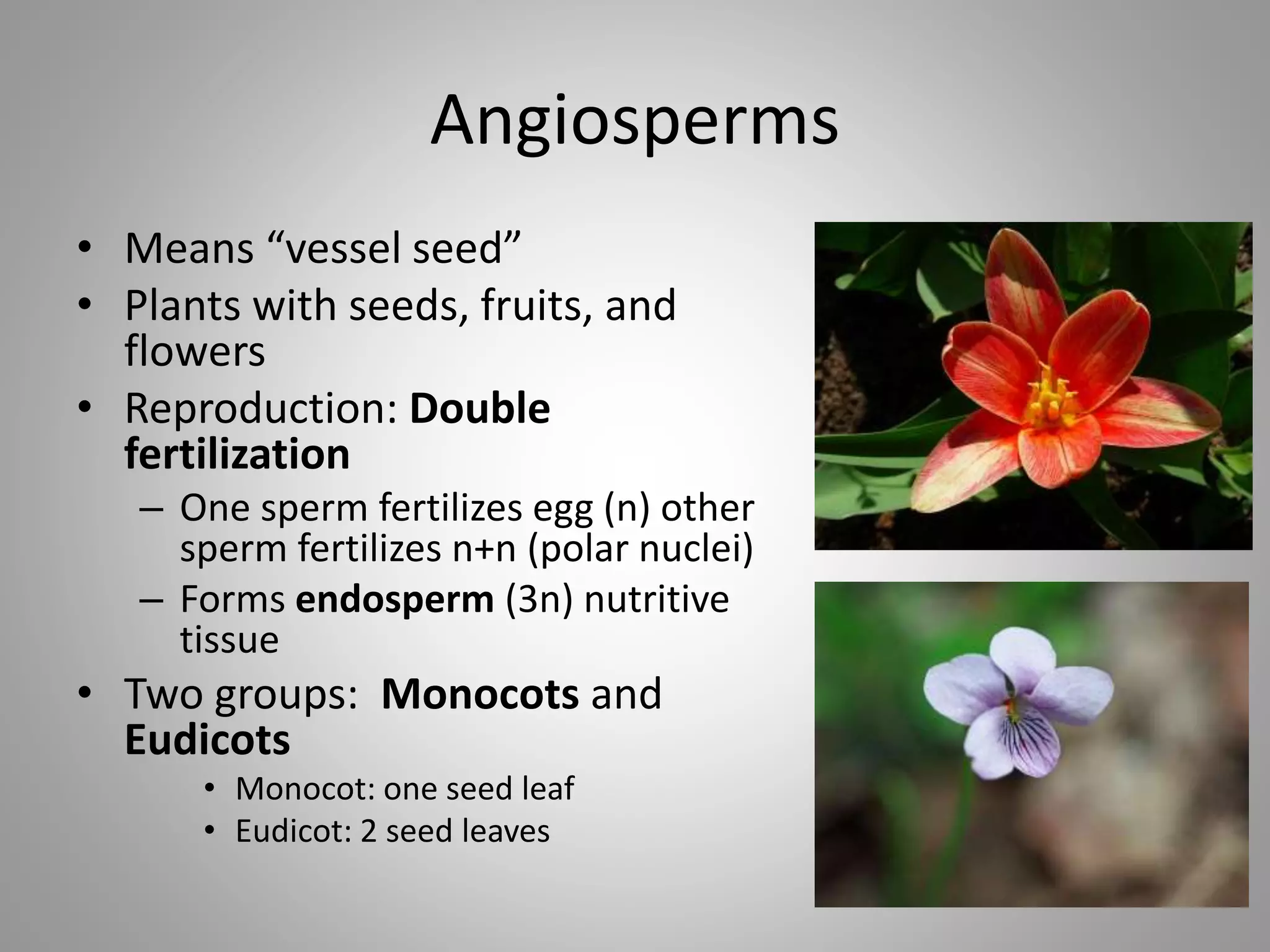
Angiosperms
• Means “vessel seed”
• Plants with seeds, fruits, and
flowers
• Reproduction: Double
fertilization
– One sperm fertilizes egg (n) other
sperm fertilizes n+n (polar nuclei)
– Forms endosperm (3n) nutritive
tissue
• Two groups: Monocots and
Eudicots
• Monocot: one seed leaf
• Eudicot: 2 seed leaves
Flower parts
• Stamen is male, carpel is female
• Look at model and dissect live flower
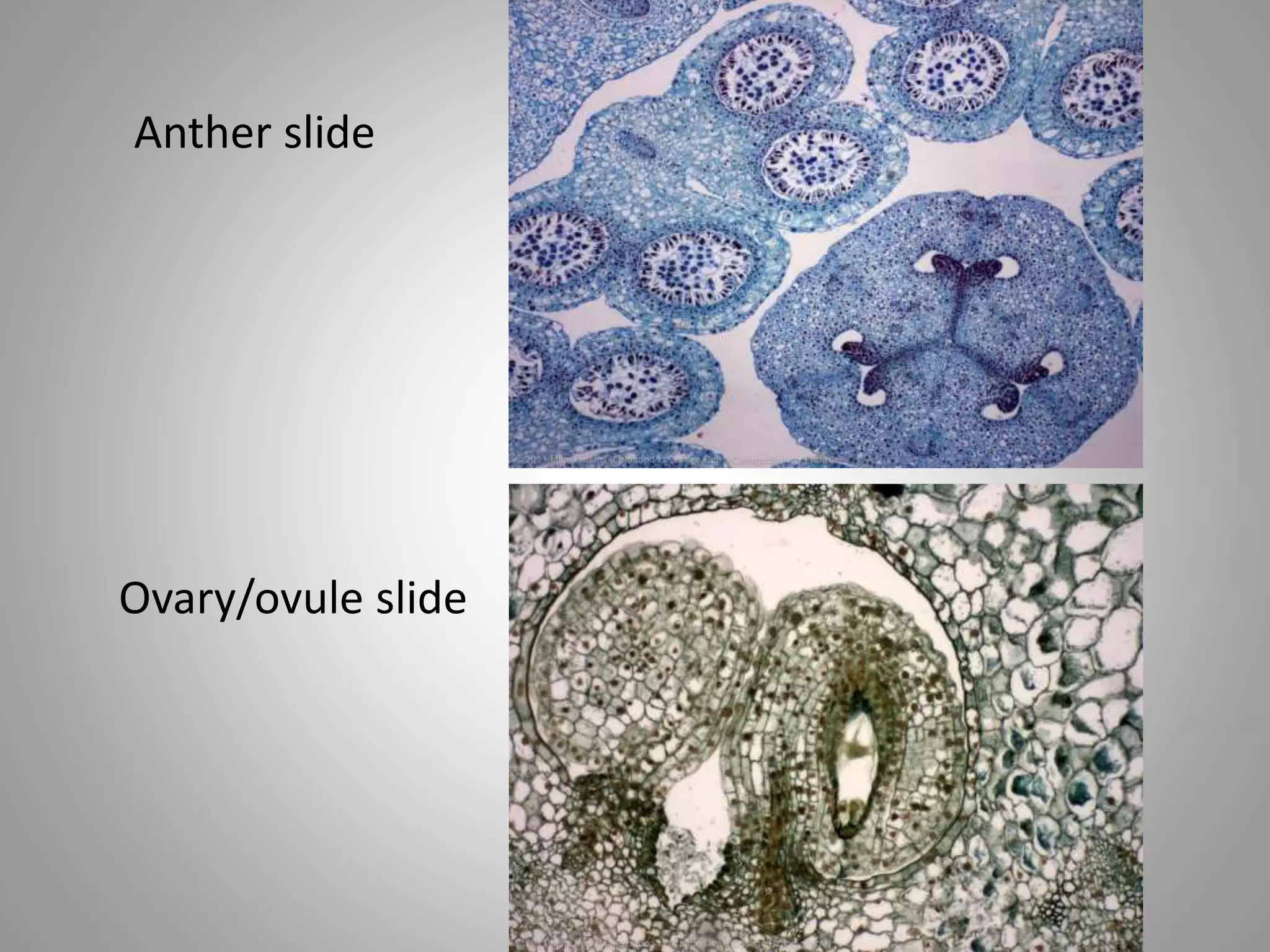
Anther slide
Ovary/ovule slide
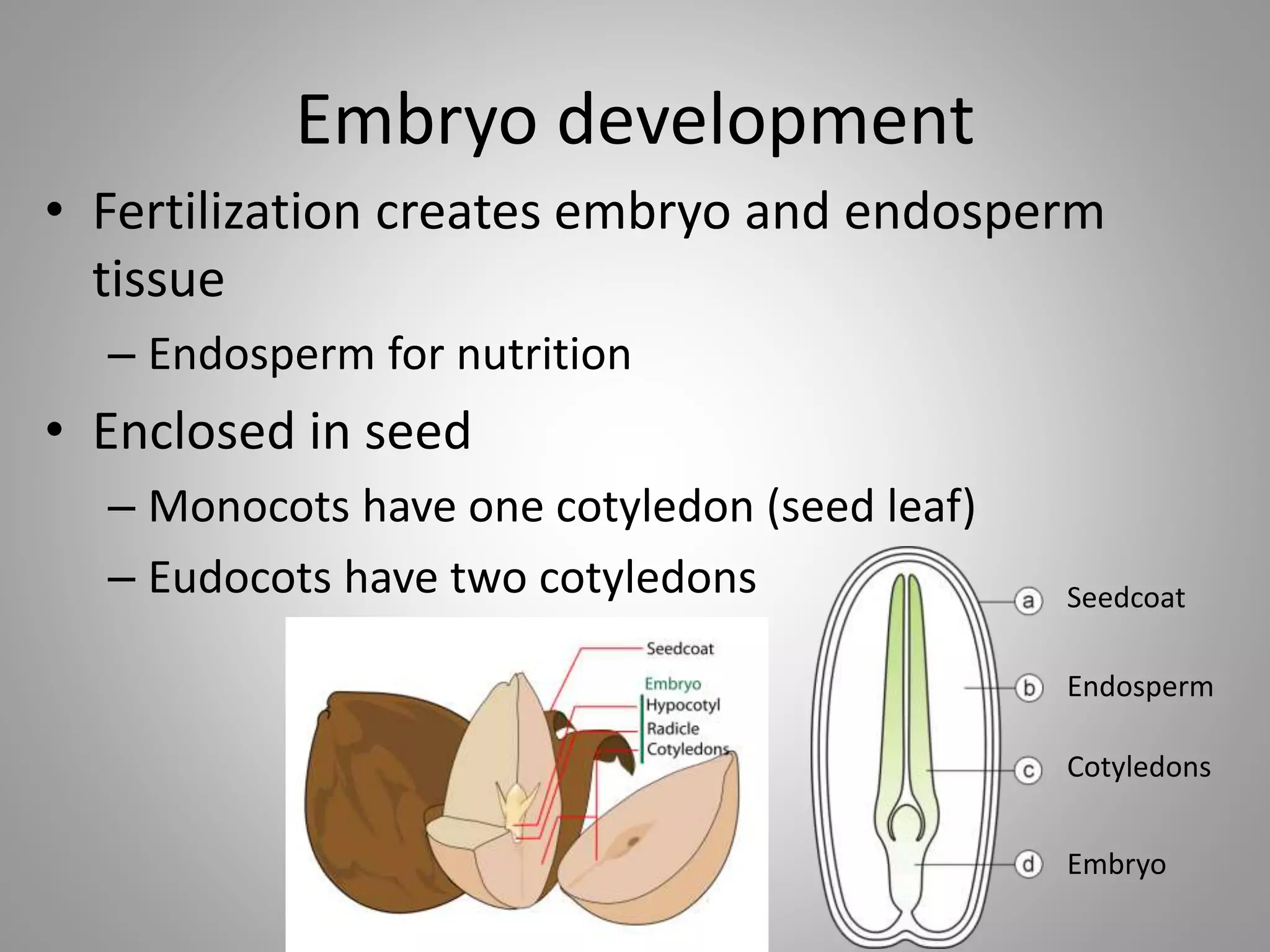
Embryo development
• Fertilization creates embryo and endosperm
tissue
– Endosperm for nutrition
• Enclosed in seed
– Monocots have one cotyledon (seed leaf)
– Eudocots have two cotyledons Seedcoat
Endosperm
Cotyledons
Embryo
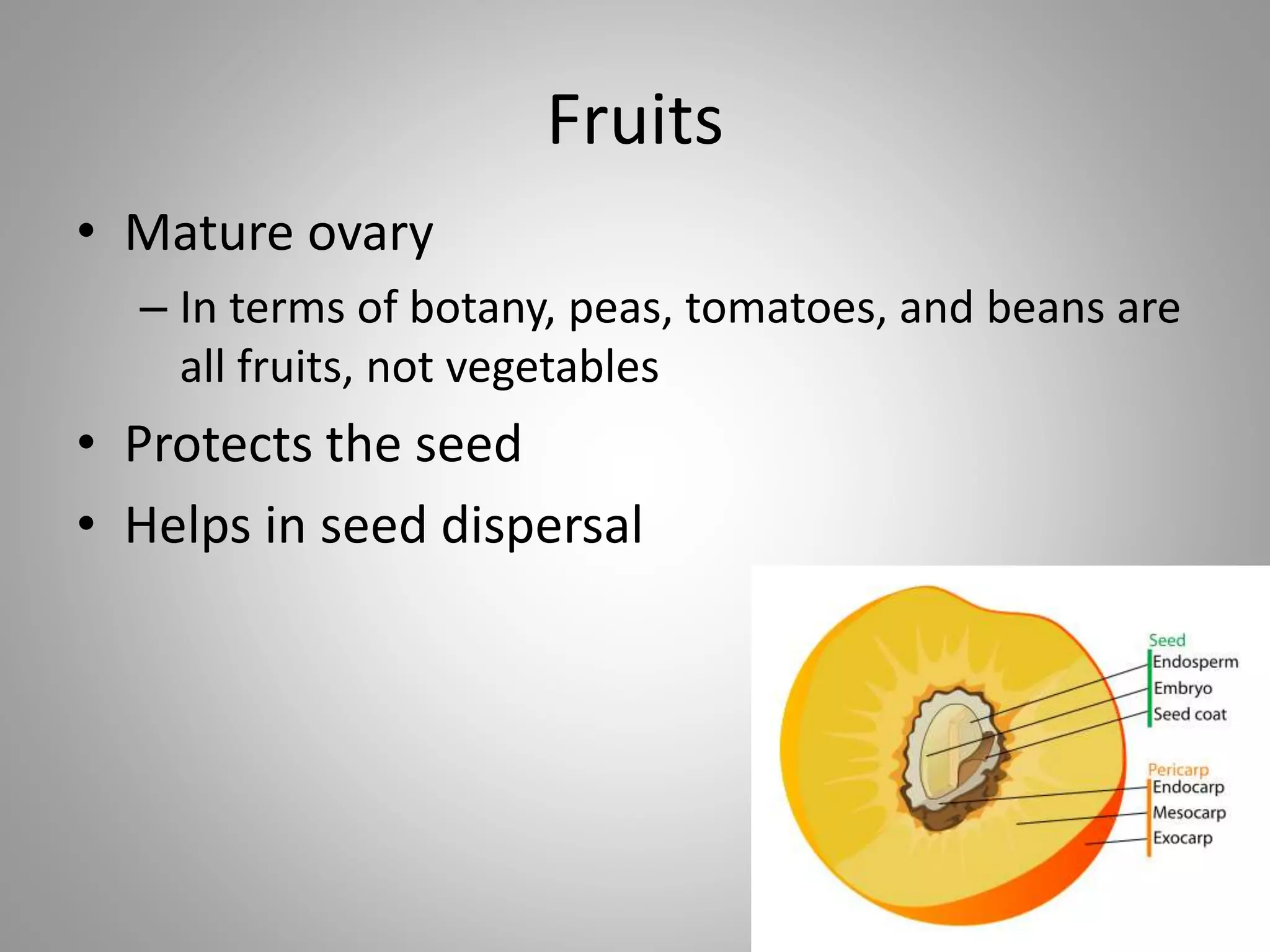
Fruits
• Mature ovary
– In terms of botany, peas, tomatoes, and beans are
all fruits, not vegetables
• Protects the seed
• Helps in seed dispersal
Types of fruits
• Simple: one ovary
– Cherry, olive, tomato, grape
• Complex fruits: more than one
ovary
– Aggregate: Many carpels on a
single flower
• Strawberry, raspberry
– Multiple fruit: carpels of many
flowers fused together
• Pineapple
• Can be fleshy or dry