SECURED COMMUNICATION
In context with the Indian Defence System.
Submitted by:
Ausaf Khalique & Dhananjay Bhatt
Deptt. of Electronics and Communication Engineering
DIT University
WHAT IS IT ABOUT?
 Secured Communication is the discipline of preventing
unauthorized interceptors from
accessing telecommunications in an intelligible form, while
still delivering content to the intended recipients.
 It can be used to protect
both classified and unclassified traffic on military
communications networks, including voice, video, and data.
 It is used for both analog and digital applications, and both
wired and wireless links.
IN THIS PRESENTATION WE ARE GOING TO DEAL
PRECISELY WITH:
Security Issues on the border of our
country.
Wireless Sensor Networks(WSN).
Our proposed plan for effective monitoring
of the LOC.
Algorithm for secured data transmission.
SECURITY ISSUES ON THE BORDER
 Due to the proclivity of India’s neighbours to
exploit India’s nation-building difficulties, the
country’s internal security challenges are
inextricably linked with border management.
 There is always a constant threat to Indian
communication networks being hacked.
 Internal damage by buried land mines along
the border.
WIRELESS SENSOR NETWORKS(WSN)
“A wireless sensor network (WSN) is a
wireless network consisting of spatially
distributed autonomous devices using
sensors to cooperatively monitor physical or
environmental conditions, such as
temperature, sound, vibration, pressure,
motion or pollutants, at different locations.”
- Wikipedia
USE OF WSN IN BORDER MONITORING
 WSNs are capable to collect environmental data with
precise sensors and are able to transmit it to the control
station effectively.
 These sensors can also neglect electromagnetic
interference from other electronic devices and are less
prone to hacking.
 With the use of border monitoring concept, the Army
Department can seamlessly monitor the Line of Control and
take immediate security measures to curb intruders from
trespassing.
WIRELESS SENSOR NETWORKS
Super Node
Links to Other networks or
Similar Super Nodes
Motes
Formed by hundreds or thousands of motes that
communicate with each other and pass data along from
one to another.
MOTES: BASIC IDEA
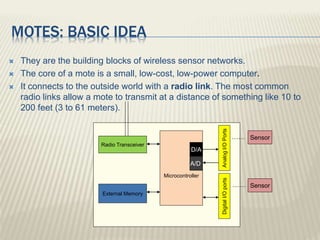
 They are the building blocks of wireless sensor networks.
 The core of a mote is a small, low-cost, low-power computer.
 It connects to the outside world with a radio link. The most common
radio links allow a mote to transmit at a distance of something like 10 to
200 feet (3 to 61 meters).
External Memory
DigitalI/Oports
Radio Transceiver
AnalogI/OPorts
Microcontroller
A/D
D/A
Sensor
Sensor
WSN CONTINUED…
Fig: System Architecture
PROPOSED PLANS:
 Reformation of MOTES: by embedding
military vehicles with sensor nodes.
 By exploiting DNA-based sequencing along
with some modification for ciphering the data
to be transmitted.
SECURE DATA TRANSMISSION USING DNA
SEQUENCING ANDFHSS
ALGORITHM
Sender CODING technique:
1. Transform the data P to data P’ by binary transform.
Using the transformation X(defined as (00)=A, (01)=C, (10)=G AND
(11)=T),
transform P to its A,T, C and G.
2. Divide the data P’ into N packets of arbitrary size where P’ijk and
P’ij(k+1) give together P’ij Similarly P’ij and P’i(j+1) give together P’i.
3. Size (size of data plus size of packet number) of each packet (which
has also undergone all the
above transformations) is inserted at the starting of each packet before
the packet number.
4. Now take two or three (Sender choice) nucleotide sequences and
perform alignment using ClustalW Tool.
5. Wherever nucleotides are different for those two or three sequences in
the alignment we replace that particular position by one bit (ATCG text)
from the P’ijk…until it is exhausted.
6. After P’ijk…is exhausted we insert packet number at next positions
where nucleotides are different.
7. The remaining positions (if any) where nucleotides are different are
replaced randomly by ATGC sequence thus making new sequence DPij.
8. Find MAC(message authentication code) corresponding to the packet
data DPij.
9. Repeat Step 4, 5, 6, 7 and 8 for each P’ijk… for all N parts. Each of
these new parts is renamed as Dpijk.
10. Send each DPijk… to the receiver in different time and with different
networks at different frequencies.
Receiver’s decoding technique: R (DP)
1.Receive each DPijk from the sender in different time and different
networks at different frequencies.
2. Perform a check on MAC corresponding to each packet. If satisfied
proceed to next step.
3. Now take the nucleotide sequences (chosen and communicated by
sender) and perform alignment
using ClustalW Tool.
4. Wherever nucleotides are different for those two or three sequences in
the alignment we extract
(ATCG text) from each DP at that particular position.
5. Size of each packet (expressed in fixed number of ATGC’s) is
extracted from the starting of each
packet.
6. Use the transformation X’(defined as (A)=00, (C)=01, (G)=10 and (T)=11)
on the data size.
7. Save the data packet up to the determined data size and reject the
remaining ATGC’s .
The packet number is extracted using X’ from the end of each packet and
the packets are ordered
and joined according to packet numbers i.e. P’ijk and P’ij(k+1) give together
P’ij Similarly P’ij and P’i(j+1)
give together P’i.
8. Now using the X’ transformation convert the A,T, C and G texture data
into text P’.
9. Transform the cipher data P’ to a data P by a inverse binary transform.
DEMONSTRATIONOF THE ALGORITHM
Let the plain text (P) be
“INDIAN ARMY CODE”
The binary text (B) corresponding to (P):
10110110110111111011111010110010110111111010110010101010
101110001011111010101011101111101101111110101100101111101
0110001101001101011111010110011
Transfer data into its ATCG from by the following transformation:
X(00)=A, X(01)=C, X(10)=G, X(11)=T,
The transformed text (P’) corresponding to (P) is:
GTCGTCTTGTTGGTAGTCTTGGTAGGGGGTGAGTTGGGGTGT
TGTCTTGGTAGTTGGTACGGCGGTTGGTAT
Break the data P’ into arbitrarily N parts.
E1=000001: GTCGTCTTGTTGGTAGTCTTGGT (Size 23)
E2:AGGGGGTGAGTTGGGGTGTTGTCTTGGTAGTTGGTACGGCGGTTG
GTAT(Size 49)
E21=001001: AGGGGGTG (Size 8)
E22: AGTTGGGGTGTTGTCTTGGTAGTTGGTACGGCGGTTGGTAT(Size
41)
E221=101001: AGTTGGGGT (Size 9)
E222=101010: GTTGTCTTGGTAGTTGGTACGGCGGTTGGTAT (Size 32)
Suppose we take the break data set as { E1, E21, E221, E222}
Now add packet size (size of data and packet number) at the starting of
each packet.
Since our data size before packet formation is 144 which can be
represented in (10010000) 8 bits we use a 8 bits (4
Sizes of each packet are given below:
E1: 26 (size of packet + size of packet number=23+3)
(26)10=(00011010)2
Using X, size is represented as ACGG
E21: 11 (size of packet + size of packet number=8+3)
(11)10= (00001011)2
Using X, size is represented as AAGT
E221: 12 (size of packet + size of packet number=9+3)
(12)10= (00001100)2
Using X, size is represented as AATA
E222: 35 (size of packet + size of packet number=32+3)
(35)10= (00100011)2
Using X, size is represented as AGAT
NOW WE GENERATE 3 NUCLEOTIDE
SEQUENCE, ALIGN THEM USING
ClustalW TOOL AND CODE THE NODES
ACCORDINGLY.
Now we get 4 coded sequence ready to be
transmitted.
DE000001:
(ACGG) GTCGTCTTGTTGGTAGTCTTGGT (AAC)
CODE 1::
ATGGATGGAGTGAACCAGAGTGACCGTTCACAGTTCCTTCTCCTG
GGGATGTCAGAGAGTCCTGAGCAGCAGCTGATCCTGTTTTGGATG
TTCCTGTCCATGTACCTGGTCACGGTGCTGGGAAATGTGCTCATCA
TCCTGGCCATCAGC
TCTGATTCCCTCCTGCACACCCCCTTGTACTTCTTCCTGGCCAACC
TCTCCTTCACTGACCTCTTCTTTGTCACCAACACAATCCCCAAGAT
GCTGGTGAACGTCCAGTCCCATAACAAAGCCATCTCCTATGCAGG
GTGTCTGACACAGCTCTACTTCCTGGTCTCCTTGGTGTCCCTGGA
CAACCTCATCCTGGCGGTGATGGCGTATGATCGCTATGTGGCCAA
CTGCTGCCCCCTCCACTAGTCCACAGCCATGAGCCCTTTGCTCTG
TGTCTTGCTCCTTTCCTTGTGTTGGGAACTCTCAGTTCTCTATGGC
CTCGTCCACACCTTCCTCGTGACCAGCGTGACCTTCTGTGGGACT
GGACAAATCCACTACTTCTTCTGTGAGATGTAATTGCTGCTGTGGA
TGGCATGTTCCAACAGCCATATTAATCACACAGGGGTGATTGCCAC
TGGCTGCTTCATCTTCCTCACACCCTTGGGTTTCATGAACATCTCC
TATGTACGTATTGTCAGACCCATCCTATAAATGCCCTCCGTCTCTAA
GAAATACAAAGCCTTCTCTACCTGTGCCTCCCATTTGGGTGTAGTC
TCCCTCTTATATGGGATGCTTCATATGGTATACCTTGAGCCCCTCCA
TACCTACTCGATGAAGGACTCAGTAGCCACAGTGATGTATGCTGTG
CTGACACCCATGATGAATCCGTTCATCTACAGACTGAGGAACAATG
ACATGCATGGGGCTCTGGGAAGACTCCTATGAATACGCTTTAAGAG
DE21=001001:
(AAGT) AGGGGGTG (AGC)
CODE 2::
ATGGATGGAGTTAACCAGAGTGACAAGTCAGAGTTCCTTCTCCTG
GGGATGTCAGAGAGTCCTGAGCAGCAGCGGATCCTGTTTTGGATG
TTCCTGTCCATGTACCTGGTCACGGTGGTGGGAAATGTGCTCATC
ATCCTGGCCATCAGC
TCTGATTCCCTCCTGCACACCCCCGTGTACTTCTTCCTGGCCAAC
CTCTCCTTCACTGACCTCTTCTTTGTCACCAACACAATCCCCAAGA
TGCTGGTGAACATCCAGTCCCAGAACAAAGCCATCTCCTATGCAG
GGTGTCTGACACAGCTCTACTTCCTGGTCTCCTTGGTGCCCCTGG
ACAACCTCATCCTGGCAGTGATGGCTTATGAGCGCTATGTGGCCA
CCTGCTGCCCCCTCCACTAATGCACAGCCATGAGCCCTAGGCTCT
GTTTCTTCCTCCTATCCTTGTGTTGGGCTCTGTCAGTTCTCTATGG
CCTCCTGCACACCATCCTCTTGACCAGGGTGACCTTCTGTGGGAC
GTGATAAATCCACTACATCTTCTGTGAGATGTACCTATTGCTGAGGT
TGGCATGTTCCAACAGCCACATTAGTCACACAGAGGTGATTGCCA
CGGGCTGCTTCATCTTCCTCAGACCCTTCGGTTTCATGAACATCTC
CTATGTACGTATTGTCAGAGCCATCCTCATAATACCCTCAGTCTCTA
AGAAATACAAAACCTTCTCTACCTGTGCCTCCCATTTGGGTGGGGT
CTCCCTCTTATATGGGAAACTTGGTATGGTCTACCTACAGCCCCTC
CATACCTACTCAATGAAGGACTCAGTAGCCACAGTGATGTATGCTG
TGCTGACACCAATGATGAAACCTTTCATCTACAGGCTGAGGAACAA
CGACATGCATGGGGCTCAGGGAAGAGTCCTAATAAAACGCTTTCA
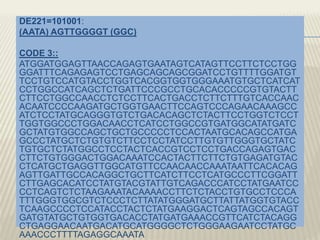
DE221=101001:
(AATA) AGTTGGGGT (GGC)
CODE 3::
ATGGATGGAGTTAACCAGAGTGAATAGTCATAGTTCCTTCTCCTGG
GGATTTCAGAGAGTCCTGAGCAGCAGCGGATCCTGTTTTGGATGT
TCCTGTCCATGTACCTGGTCACGGTGGTGGGAAATGTGCTCATCAT
CCTGGCCATCAGCTCTGATTCCCGCCTGCACACCCCCGTGTACTT
CTTCCTGGCCAACCTCTCCTTCACTGACCTCTTCTTTGTCACCAAC
ACAATCCCCAAGATGCTGGTGAACTTCCAGTCCCAGAACAAAGCC
ATCTCCTATGCAGGGTGTCTGACACAGCTCTACTTCCTGGTCTCCT
TGGTGGCCCTGGACAACCTCATCCTGGCCGTGATGGCATATGATC
GCTATGTGGCCAGCTGCTGCCCCCTCCACTAATGCACAGCCATGA
GCCCTATGCTCTGTGTCTTCCTCCTATCCTTGTGTTGGGTGCTATC
TGTGCTCTATGGCCTCCTACTCACCGTCCTCCTGACCAGAGTGAC
CTTCTGTGGGACTGGACAAATCCACTACTTCTTCTGTGAGATGTAC
CTCATGCTGAGGTTGGCATGTTCCAACAACCAAATAATTCACACAG
AGTTGATTGCCACAGGCTGCTTCATCTTCCTCATGCCCTTCGGATT
CTTGAGCACATCCTATGTACGTATTGTCAGACCCATCCTATGAATCC
CCTCAGTCTCTAAGAAATACAAAACCTTCTCTACCTGTGCCTCCCA
TTTGGGTGGCGTCTCCCTCTTATATGGGATGCTTATTATGGTGTACC
TCAAGCCCCTCCATACCTACTCTATGAAGGACTCAGTAGCCACAGT
GATGTATGCTGTGGTGACACCTATGATGAAACCGTTCATCTACAGG
CTGAGGAACAATGACATGCATGGGGCTCTGGGAAGAATCCTATGC
AAACCCTTTTAGAGGCAAATA
DE222=101010:
(TCTA) GTTGTCTTGGTAGTTGGTACGGCGGTTGGTAT (GGG)
CODE 4::
ATGGATGGAGTCAACCAGAGTGATAGTTCATAGTTCCTTCTCCTGG
GGATGTCAGAGAGTCCTGAGCAGCAGCTGATCCTGTTTTGGATGT
TCCTGTCCATGTACCTGGTCACGGTGCTGGGAAATGTGCTCATCAT
CCTGGCCATCAGCTCTGATTCCCTCCTGCACACCCCCTTGTACTTC
TTCCTGGCCAACCTCTCCTTCACTGACCTCTTCTTTGTCACCAACA
CAATCCCCAAGATGCTGGTGAACGTCCAGTCCCAGAACAAAGCCA
TCTCCTATGCAGGGTGTCTGACACAGCTCTACTTCCTGGTCTCCTT
GGTGTCCCTGGACAACCTCATCCTGGCAGTGATGGCGTATGATCG
CTATGTGGCCATCTGCTGCCCCCTCCACTAGGTCACAGCCATGAG
CCCTACGCTCTGTGTCTTGCTCCTCTCCTTGTGTTGGGGGCTTTCT
GTGCTCTATGGCCTCGTTCACACCTTCCTCGTGACCAGGGTGACC
TTCTGTGGGGCATGAGACATCCACTACATCTTCTGTGATATGTAGCT
CATGCTGAGGTTGGCATGTTCCAACAGCCAAATTATTCACACAGCG
CTGATTGCCACCGGCTGCTTCATCTTCCTCATGCCCTTAGGTTTCA
TGATCAGCTCCTATGTACGTATTGTCAGACCCATCCTTCAAATCCCC
TCAGTCTCTAAGAAATACAAAACCTTCTCCACCTGTGCCTCCCATTT
GGGTGTAGTCTCCCTCTTATATGGGAGTCTTCTTATGGTATACCTAG
AGCCCCTCCATACCTACTCATTGAAGGACTCAGTAGCCACAGTGAT
GTATGCTGTGCTGACACCAATGATGAAACCCTTCATCTACAGGCTG
AGGAACAAAGACATGCATGGGGCTCTGGGAAGATTCCTATACAAAC
CCTTTAAGAGGCCAATA
SECURITY ASPECTS OF THE
PROPOSED ALGORITHM
In the proposed algorithm, the data, ready to be sent, is broken into N
arbitrary parts. These parts are to be sent through different communication
channels at different times. As a consequence, it would be almost
impossible for any attacker to get back all those parts. Even if one gets all
the parts again it would be difficult for him/her to get the original
information by properly merging the parts because key packets have to be
recognized properly.
In our algorithm a steganographic method is used, the strength of DNA
steganography and it is mathematically infeasible to extract the whole
information from these parts in reasonable time.
CONCLUSION:
 By spreading WSNs in the monitoring
area we can eliminate the hazards caused
due to land mines.
 By using DNA based sequencing, we can
surely make our data transfer secure and
free from hacking.
REFERENCES:
 Vasudevan R. A., Abraham A and Sanyal S., "A Novel
Scheme for Secured Data Transfer over Computer
Networks", Journal of Universal Computer Science , Vol 11,
Issue 1, pp 104-121, 2005.
 Ashish Gehani, Thomas LaBean, and John Reif., “DNA-
Based Cryptography”, DIMACS DNA Based Computers V,
American Mathematical Society, 2000.
 Wireless Sensor Network for Border Monitoring by Gundu
Siva Sankar and Suresh Angadi, Final Year B.Tech, Dept. of
ECE, KL University, Vaddeswaram, AP, India Associate
Professor B.Tech, Dept. of ECE, KL University,
Vaddeswaram, AP, India.
Thank you

Secured communication

  • 1.
    SECURED COMMUNICATION In contextwith the Indian Defence System. Submitted by: Ausaf Khalique & Dhananjay Bhatt Deptt. of Electronics and Communication Engineering DIT University
  • 2.
    WHAT IS ITABOUT?  Secured Communication is the discipline of preventing unauthorized interceptors from accessing telecommunications in an intelligible form, while still delivering content to the intended recipients.  It can be used to protect both classified and unclassified traffic on military communications networks, including voice, video, and data.  It is used for both analog and digital applications, and both wired and wireless links.
  • 3.
    IN THIS PRESENTATIONWE ARE GOING TO DEAL PRECISELY WITH: Security Issues on the border of our country. Wireless Sensor Networks(WSN). Our proposed plan for effective monitoring of the LOC. Algorithm for secured data transmission.
  • 4.
    SECURITY ISSUES ONTHE BORDER  Due to the proclivity of India’s neighbours to exploit India’s nation-building difficulties, the country’s internal security challenges are inextricably linked with border management.  There is always a constant threat to Indian communication networks being hacked.  Internal damage by buried land mines along the border.
  • 5.
    WIRELESS SENSOR NETWORKS(WSN) “Awireless sensor network (WSN) is a wireless network consisting of spatially distributed autonomous devices using sensors to cooperatively monitor physical or environmental conditions, such as temperature, sound, vibration, pressure, motion or pollutants, at different locations.” - Wikipedia
  • 6.
    USE OF WSNIN BORDER MONITORING  WSNs are capable to collect environmental data with precise sensors and are able to transmit it to the control station effectively.  These sensors can also neglect electromagnetic interference from other electronic devices and are less prone to hacking.  With the use of border monitoring concept, the Army Department can seamlessly monitor the Line of Control and take immediate security measures to curb intruders from trespassing.
  • 7.
    WIRELESS SENSOR NETWORKS SuperNode Links to Other networks or Similar Super Nodes Motes Formed by hundreds or thousands of motes that communicate with each other and pass data along from one to another.
  • 8.
    MOTES: BASIC IDEA They are the building blocks of wireless sensor networks.  The core of a mote is a small, low-cost, low-power computer.  It connects to the outside world with a radio link. The most common radio links allow a mote to transmit at a distance of something like 10 to 200 feet (3 to 61 meters). External Memory DigitalI/Oports Radio Transceiver AnalogI/OPorts Microcontroller A/D D/A Sensor Sensor
  • 9.
  • 10.
    PROPOSED PLANS:  Reformationof MOTES: by embedding military vehicles with sensor nodes.  By exploiting DNA-based sequencing along with some modification for ciphering the data to be transmitted.
  • 11.
    SECURE DATA TRANSMISSIONUSING DNA SEQUENCING ANDFHSS ALGORITHM
  • 12.
    Sender CODING technique: 1.Transform the data P to data P’ by binary transform. Using the transformation X(defined as (00)=A, (01)=C, (10)=G AND (11)=T), transform P to its A,T, C and G. 2. Divide the data P’ into N packets of arbitrary size where P’ijk and P’ij(k+1) give together P’ij Similarly P’ij and P’i(j+1) give together P’i. 3. Size (size of data plus size of packet number) of each packet (which has also undergone all the above transformations) is inserted at the starting of each packet before the packet number. 4. Now take two or three (Sender choice) nucleotide sequences and perform alignment using ClustalW Tool.
  • 13.
    5. Wherever nucleotidesare different for those two or three sequences in the alignment we replace that particular position by one bit (ATCG text) from the P’ijk…until it is exhausted. 6. After P’ijk…is exhausted we insert packet number at next positions where nucleotides are different. 7. The remaining positions (if any) where nucleotides are different are replaced randomly by ATGC sequence thus making new sequence DPij. 8. Find MAC(message authentication code) corresponding to the packet data DPij. 9. Repeat Step 4, 5, 6, 7 and 8 for each P’ijk… for all N parts. Each of these new parts is renamed as Dpijk. 10. Send each DPijk… to the receiver in different time and with different networks at different frequencies.
  • 14.
    Receiver’s decoding technique:R (DP) 1.Receive each DPijk from the sender in different time and different networks at different frequencies. 2. Perform a check on MAC corresponding to each packet. If satisfied proceed to next step. 3. Now take the nucleotide sequences (chosen and communicated by sender) and perform alignment using ClustalW Tool. 4. Wherever nucleotides are different for those two or three sequences in the alignment we extract (ATCG text) from each DP at that particular position. 5. Size of each packet (expressed in fixed number of ATGC’s) is extracted from the starting of each packet.
  • 15.
    6. Use thetransformation X’(defined as (A)=00, (C)=01, (G)=10 and (T)=11) on the data size. 7. Save the data packet up to the determined data size and reject the remaining ATGC’s . The packet number is extracted using X’ from the end of each packet and the packets are ordered and joined according to packet numbers i.e. P’ijk and P’ij(k+1) give together P’ij Similarly P’ij and P’i(j+1) give together P’i. 8. Now using the X’ transformation convert the A,T, C and G texture data into text P’. 9. Transform the cipher data P’ to a data P by a inverse binary transform.
  • 16.
    DEMONSTRATIONOF THE ALGORITHM Letthe plain text (P) be “INDIAN ARMY CODE” The binary text (B) corresponding to (P): 10110110110111111011111010110010110111111010110010101010 101110001011111010101011101111101101111110101100101111101 0110001101001101011111010110011 Transfer data into its ATCG from by the following transformation: X(00)=A, X(01)=C, X(10)=G, X(11)=T, The transformed text (P’) corresponding to (P) is: GTCGTCTTGTTGGTAGTCTTGGTAGGGGGTGAGTTGGGGTGT TGTCTTGGTAGTTGGTACGGCGGTTGGTAT
  • 17.
    Break the dataP’ into arbitrarily N parts. E1=000001: GTCGTCTTGTTGGTAGTCTTGGT (Size 23) E2:AGGGGGTGAGTTGGGGTGTTGTCTTGGTAGTTGGTACGGCGGTTG GTAT(Size 49) E21=001001: AGGGGGTG (Size 8) E22: AGTTGGGGTGTTGTCTTGGTAGTTGGTACGGCGGTTGGTAT(Size 41) E221=101001: AGTTGGGGT (Size 9) E222=101010: GTTGTCTTGGTAGTTGGTACGGCGGTTGGTAT (Size 32) Suppose we take the break data set as { E1, E21, E221, E222} Now add packet size (size of data and packet number) at the starting of each packet. Since our data size before packet formation is 144 which can be represented in (10010000) 8 bits we use a 8 bits (4
  • 18.
    Sizes of eachpacket are given below: E1: 26 (size of packet + size of packet number=23+3) (26)10=(00011010)2 Using X, size is represented as ACGG E21: 11 (size of packet + size of packet number=8+3) (11)10= (00001011)2 Using X, size is represented as AAGT E221: 12 (size of packet + size of packet number=9+3) (12)10= (00001100)2 Using X, size is represented as AATA E222: 35 (size of packet + size of packet number=32+3) (35)10= (00100011)2 Using X, size is represented as AGAT
  • 19.
    NOW WE GENERATE3 NUCLEOTIDE SEQUENCE, ALIGN THEM USING ClustalW TOOL AND CODE THE NODES ACCORDINGLY. Now we get 4 coded sequence ready to be transmitted.
  • 20.
    DE000001: (ACGG) GTCGTCTTGTTGGTAGTCTTGGT (AAC) CODE1:: ATGGATGGAGTGAACCAGAGTGACCGTTCACAGTTCCTTCTCCTG GGGATGTCAGAGAGTCCTGAGCAGCAGCTGATCCTGTTTTGGATG TTCCTGTCCATGTACCTGGTCACGGTGCTGGGAAATGTGCTCATCA TCCTGGCCATCAGC TCTGATTCCCTCCTGCACACCCCCTTGTACTTCTTCCTGGCCAACC TCTCCTTCACTGACCTCTTCTTTGTCACCAACACAATCCCCAAGAT GCTGGTGAACGTCCAGTCCCATAACAAAGCCATCTCCTATGCAGG GTGTCTGACACAGCTCTACTTCCTGGTCTCCTTGGTGTCCCTGGA CAACCTCATCCTGGCGGTGATGGCGTATGATCGCTATGTGGCCAA CTGCTGCCCCCTCCACTAGTCCACAGCCATGAGCCCTTTGCTCTG TGTCTTGCTCCTTTCCTTGTGTTGGGAACTCTCAGTTCTCTATGGC CTCGTCCACACCTTCCTCGTGACCAGCGTGACCTTCTGTGGGACT GGACAAATCCACTACTTCTTCTGTGAGATGTAATTGCTGCTGTGGA TGGCATGTTCCAACAGCCATATTAATCACACAGGGGTGATTGCCAC TGGCTGCTTCATCTTCCTCACACCCTTGGGTTTCATGAACATCTCC TATGTACGTATTGTCAGACCCATCCTATAAATGCCCTCCGTCTCTAA GAAATACAAAGCCTTCTCTACCTGTGCCTCCCATTTGGGTGTAGTC TCCCTCTTATATGGGATGCTTCATATGGTATACCTTGAGCCCCTCCA TACCTACTCGATGAAGGACTCAGTAGCCACAGTGATGTATGCTGTG CTGACACCCATGATGAATCCGTTCATCTACAGACTGAGGAACAATG ACATGCATGGGGCTCTGGGAAGACTCCTATGAATACGCTTTAAGAG
  • 21.
    DE21=001001: (AAGT) AGGGGGTG (AGC) CODE2:: ATGGATGGAGTTAACCAGAGTGACAAGTCAGAGTTCCTTCTCCTG GGGATGTCAGAGAGTCCTGAGCAGCAGCGGATCCTGTTTTGGATG TTCCTGTCCATGTACCTGGTCACGGTGGTGGGAAATGTGCTCATC ATCCTGGCCATCAGC TCTGATTCCCTCCTGCACACCCCCGTGTACTTCTTCCTGGCCAAC CTCTCCTTCACTGACCTCTTCTTTGTCACCAACACAATCCCCAAGA TGCTGGTGAACATCCAGTCCCAGAACAAAGCCATCTCCTATGCAG GGTGTCTGACACAGCTCTACTTCCTGGTCTCCTTGGTGCCCCTGG ACAACCTCATCCTGGCAGTGATGGCTTATGAGCGCTATGTGGCCA CCTGCTGCCCCCTCCACTAATGCACAGCCATGAGCCCTAGGCTCT GTTTCTTCCTCCTATCCTTGTGTTGGGCTCTGTCAGTTCTCTATGG CCTCCTGCACACCATCCTCTTGACCAGGGTGACCTTCTGTGGGAC GTGATAAATCCACTACATCTTCTGTGAGATGTACCTATTGCTGAGGT TGGCATGTTCCAACAGCCACATTAGTCACACAGAGGTGATTGCCA CGGGCTGCTTCATCTTCCTCAGACCCTTCGGTTTCATGAACATCTC CTATGTACGTATTGTCAGAGCCATCCTCATAATACCCTCAGTCTCTA AGAAATACAAAACCTTCTCTACCTGTGCCTCCCATTTGGGTGGGGT CTCCCTCTTATATGGGAAACTTGGTATGGTCTACCTACAGCCCCTC CATACCTACTCAATGAAGGACTCAGTAGCCACAGTGATGTATGCTG TGCTGACACCAATGATGAAACCTTTCATCTACAGGCTGAGGAACAA CGACATGCATGGGGCTCAGGGAAGAGTCCTAATAAAACGCTTTCA
  • 22.
    DE221=101001: (AATA) AGTTGGGGT (GGC) CODE3:: ATGGATGGAGTTAACCAGAGTGAATAGTCATAGTTCCTTCTCCTGG GGATTTCAGAGAGTCCTGAGCAGCAGCGGATCCTGTTTTGGATGT TCCTGTCCATGTACCTGGTCACGGTGGTGGGAAATGTGCTCATCAT CCTGGCCATCAGCTCTGATTCCCGCCTGCACACCCCCGTGTACTT CTTCCTGGCCAACCTCTCCTTCACTGACCTCTTCTTTGTCACCAAC ACAATCCCCAAGATGCTGGTGAACTTCCAGTCCCAGAACAAAGCC ATCTCCTATGCAGGGTGTCTGACACAGCTCTACTTCCTGGTCTCCT TGGTGGCCCTGGACAACCTCATCCTGGCCGTGATGGCATATGATC GCTATGTGGCCAGCTGCTGCCCCCTCCACTAATGCACAGCCATGA GCCCTATGCTCTGTGTCTTCCTCCTATCCTTGTGTTGGGTGCTATC TGTGCTCTATGGCCTCCTACTCACCGTCCTCCTGACCAGAGTGAC CTTCTGTGGGACTGGACAAATCCACTACTTCTTCTGTGAGATGTAC CTCATGCTGAGGTTGGCATGTTCCAACAACCAAATAATTCACACAG AGTTGATTGCCACAGGCTGCTTCATCTTCCTCATGCCCTTCGGATT CTTGAGCACATCCTATGTACGTATTGTCAGACCCATCCTATGAATCC CCTCAGTCTCTAAGAAATACAAAACCTTCTCTACCTGTGCCTCCCA TTTGGGTGGCGTCTCCCTCTTATATGGGATGCTTATTATGGTGTACC TCAAGCCCCTCCATACCTACTCTATGAAGGACTCAGTAGCCACAGT GATGTATGCTGTGGTGACACCTATGATGAAACCGTTCATCTACAGG CTGAGGAACAATGACATGCATGGGGCTCTGGGAAGAATCCTATGC AAACCCTTTTAGAGGCAAATA
  • 23.
    DE222=101010: (TCTA) GTTGTCTTGGTAGTTGGTACGGCGGTTGGTAT (GGG) CODE4:: ATGGATGGAGTCAACCAGAGTGATAGTTCATAGTTCCTTCTCCTGG GGATGTCAGAGAGTCCTGAGCAGCAGCTGATCCTGTTTTGGATGT TCCTGTCCATGTACCTGGTCACGGTGCTGGGAAATGTGCTCATCAT CCTGGCCATCAGCTCTGATTCCCTCCTGCACACCCCCTTGTACTTC TTCCTGGCCAACCTCTCCTTCACTGACCTCTTCTTTGTCACCAACA CAATCCCCAAGATGCTGGTGAACGTCCAGTCCCAGAACAAAGCCA TCTCCTATGCAGGGTGTCTGACACAGCTCTACTTCCTGGTCTCCTT GGTGTCCCTGGACAACCTCATCCTGGCAGTGATGGCGTATGATCG CTATGTGGCCATCTGCTGCCCCCTCCACTAGGTCACAGCCATGAG CCCTACGCTCTGTGTCTTGCTCCTCTCCTTGTGTTGGGGGCTTTCT GTGCTCTATGGCCTCGTTCACACCTTCCTCGTGACCAGGGTGACC TTCTGTGGGGCATGAGACATCCACTACATCTTCTGTGATATGTAGCT CATGCTGAGGTTGGCATGTTCCAACAGCCAAATTATTCACACAGCG CTGATTGCCACCGGCTGCTTCATCTTCCTCATGCCCTTAGGTTTCA TGATCAGCTCCTATGTACGTATTGTCAGACCCATCCTTCAAATCCCC TCAGTCTCTAAGAAATACAAAACCTTCTCCACCTGTGCCTCCCATTT GGGTGTAGTCTCCCTCTTATATGGGAGTCTTCTTATGGTATACCTAG AGCCCCTCCATACCTACTCATTGAAGGACTCAGTAGCCACAGTGAT GTATGCTGTGCTGACACCAATGATGAAACCCTTCATCTACAGGCTG AGGAACAAAGACATGCATGGGGCTCTGGGAAGATTCCTATACAAAC CCTTTAAGAGGCCAATA
  • 24.
    SECURITY ASPECTS OFTHE PROPOSED ALGORITHM In the proposed algorithm, the data, ready to be sent, is broken into N arbitrary parts. These parts are to be sent through different communication channels at different times. As a consequence, it would be almost impossible for any attacker to get back all those parts. Even if one gets all the parts again it would be difficult for him/her to get the original information by properly merging the parts because key packets have to be recognized properly. In our algorithm a steganographic method is used, the strength of DNA steganography and it is mathematically infeasible to extract the whole information from these parts in reasonable time.
  • 25.
    CONCLUSION:  By spreadingWSNs in the monitoring area we can eliminate the hazards caused due to land mines.  By using DNA based sequencing, we can surely make our data transfer secure and free from hacking.
  • 26.
    REFERENCES:  Vasudevan R.A., Abraham A and Sanyal S., "A Novel Scheme for Secured Data Transfer over Computer Networks", Journal of Universal Computer Science , Vol 11, Issue 1, pp 104-121, 2005.  Ashish Gehani, Thomas LaBean, and John Reif., “DNA- Based Cryptography”, DIMACS DNA Based Computers V, American Mathematical Society, 2000.  Wireless Sensor Network for Border Monitoring by Gundu Siva Sankar and Suresh Angadi, Final Year B.Tech, Dept. of ECE, KL University, Vaddeswaram, AP, India Associate Professor B.Tech, Dept. of ECE, KL University, Vaddeswaram, AP, India.
  • 27.

Editor's Notes