 SANJAY . D . DHANDARE Prof. 
saniya ansari mam 
10,oct,2014 
DYPSOE PUNE
 INTRODUCTION. 
 What is protocol. 
 What is protocol mechanism. 
 What is network security. 
 Fundamentals of network security. 
 What it means? 
 Attacks on security network. 
 Mechanism for security. 
 Protocols for security. 
 Conclusion. 
 References.
What is a Sensor Network ? 
A heterogeneous system combining tiny sensors and actuators 
with general-purpose computing elements. Most consisting of 
hundreds or thousands of low-power, low-cost nodes deployed to 
monitor and affect the environment. 
What are they used for? 
 Ocean and wildlife monitoring. 
 Monitoring of manufactured machinery. 
 Building safety. 
 Earthquake monitoring. 
 Variety of military applications. 
 Medical monitoring and research.
PROTOCOL 
 “set of rules commonly employ for 
proper communication in between sender 
and receiver in every wireless sensor 
network.
 The mechanism in which different protocol 
performs their well defined task for healthy 
communication in the sensor network. 
 This is the key term used in every network to 
protect from different attacks.
Network security is nothing but the collection 
of all policies, mechanisms and services that 
afford a network which required protection 
from unauthorised access.
The network is said to be secure if it have, 
 Confidentiality. 
 Integrity. 
 Availability.
 DATA CONFIDENTIALITY – data leakage to 
neighboring networks must be prevent. 
 DATA INTEGRITY – transmission data cannot be 
modified. 
 AVAILABILITY–network able to work at any time. 
 DATA AUTHENTICATION – verification of 
sender/receiver.
Following are the different attacks on security: 
 Denial-of-service. 
 Routing attacks. 
 Data aggregation attacks. 
 Privacy attacks.
 Attempt to stop network from proper 
functioning. 
 Disturbed the service provided by the network. 
 It may occur at various layer of protocol : 
physical layer Dos. 
Data link layer Dos.
 What happen? 
 Data is forwarded along one or more routes. 
 EFFECT: 
 Traffic increases at node and as a result 
packets (data) can not reaches to destination.
 Blackhole attack. 
 Rushing attacks. 
 Sinkhole attacks. 
 Sybil attack. 
Wormhole attack
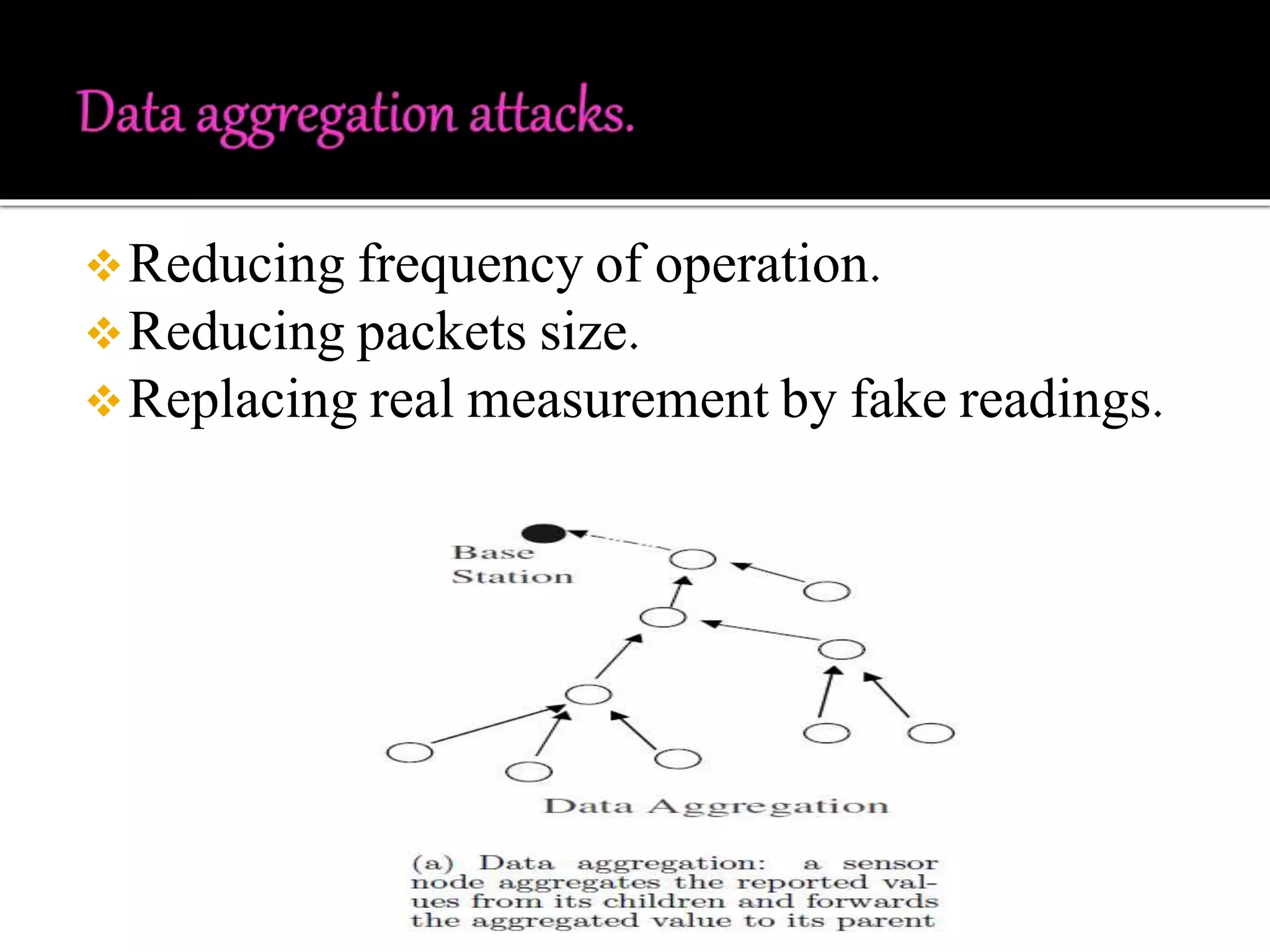
Reducing frequency of operation. 
Reducing packets size. 
Replacing real measurement by fake readings.
 May introduce by accessing the data store at 
node. 
 May occur at node which perform more 
activity. 
 The traffic analysis can be used to identify the 
important nodes.
 Cryptography : 
Cryptography is a method of storing and 
transmitting data in a particular form so that 
only those for whom it is intended can read and 
process. 
The term plaintext is often used which means 
ordinary text sometimes referred as cipher text 
called as encryption and back again called 
decryption
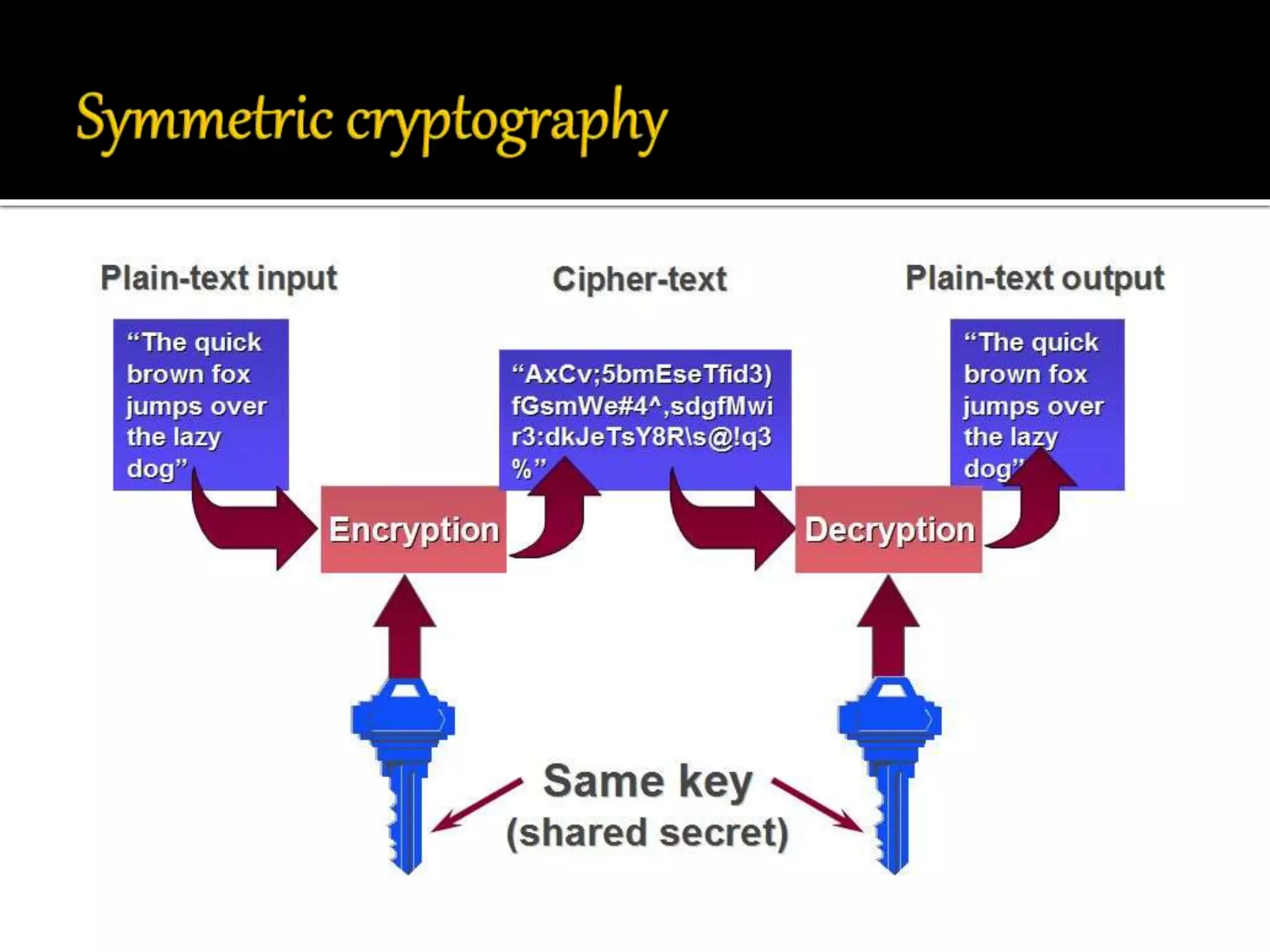
 SYMMETRIC CRYPTOGRAPHY: 
 A encryption system in which the sender and 
receiver of a messages share a single key that 
is used to encrypt and descrypt the data. 
 PUBLIC KEY CRYPTOGRAPHY; 
 It uses two keys a public key to encrypt the 
massage and a private key to descrypt them.
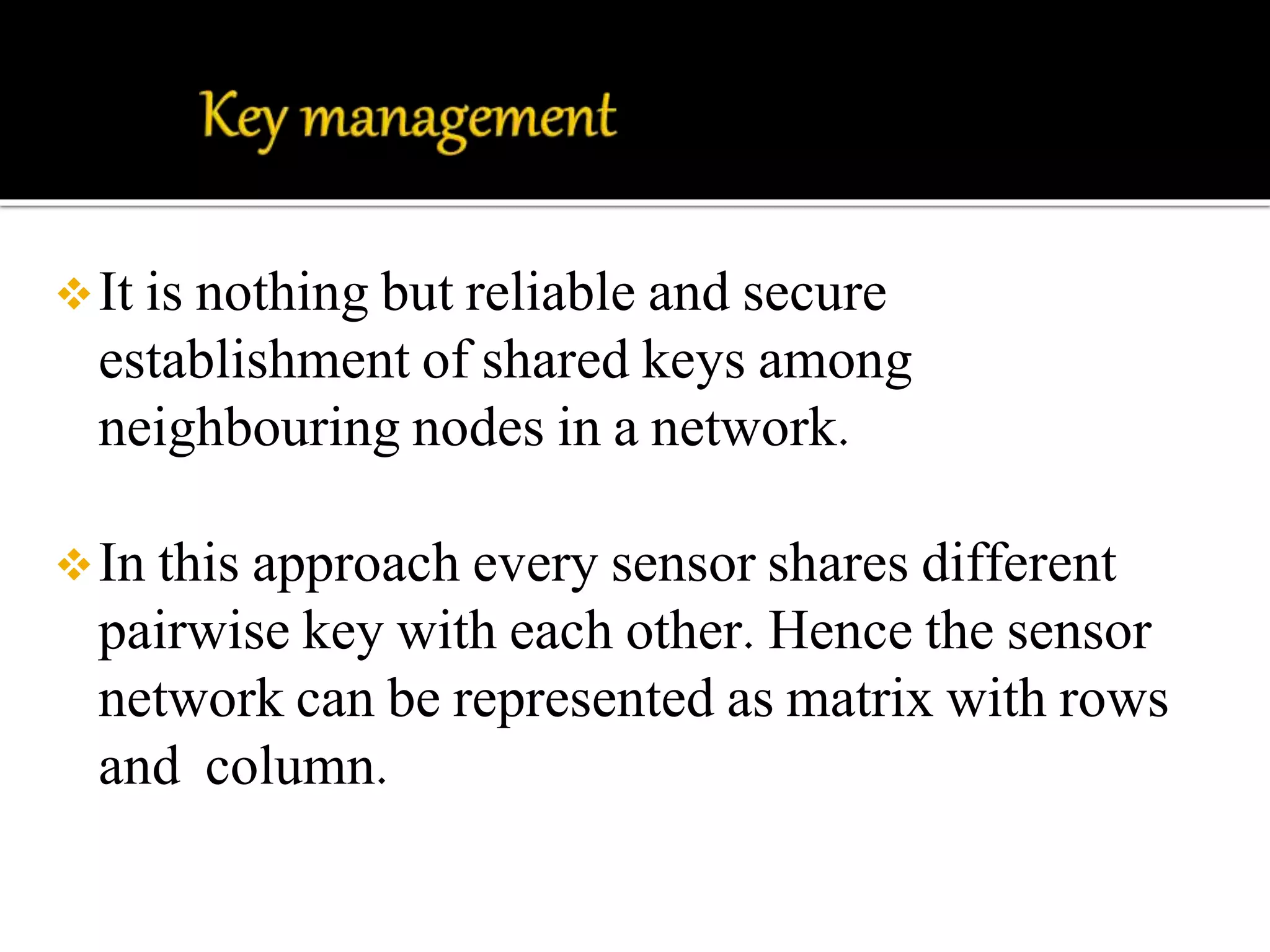
It is nothing but reliable and secure 
establishment of shared keys among 
neighbouring nodes in a network. 
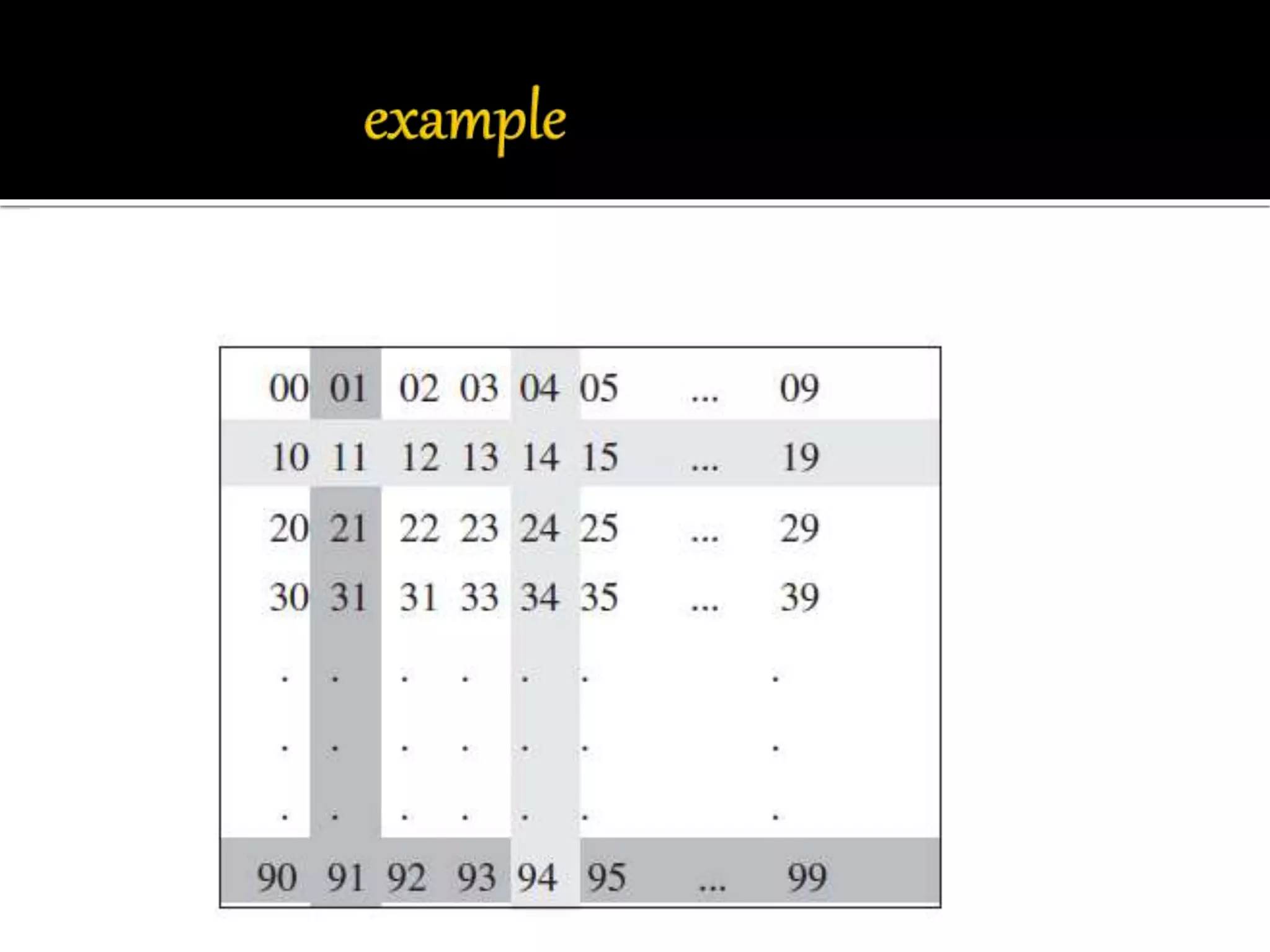
In this approach every sensor shares different 
pairwise key with each other. Hence the sensor 
network can be represented as matrix with rows 
and column.
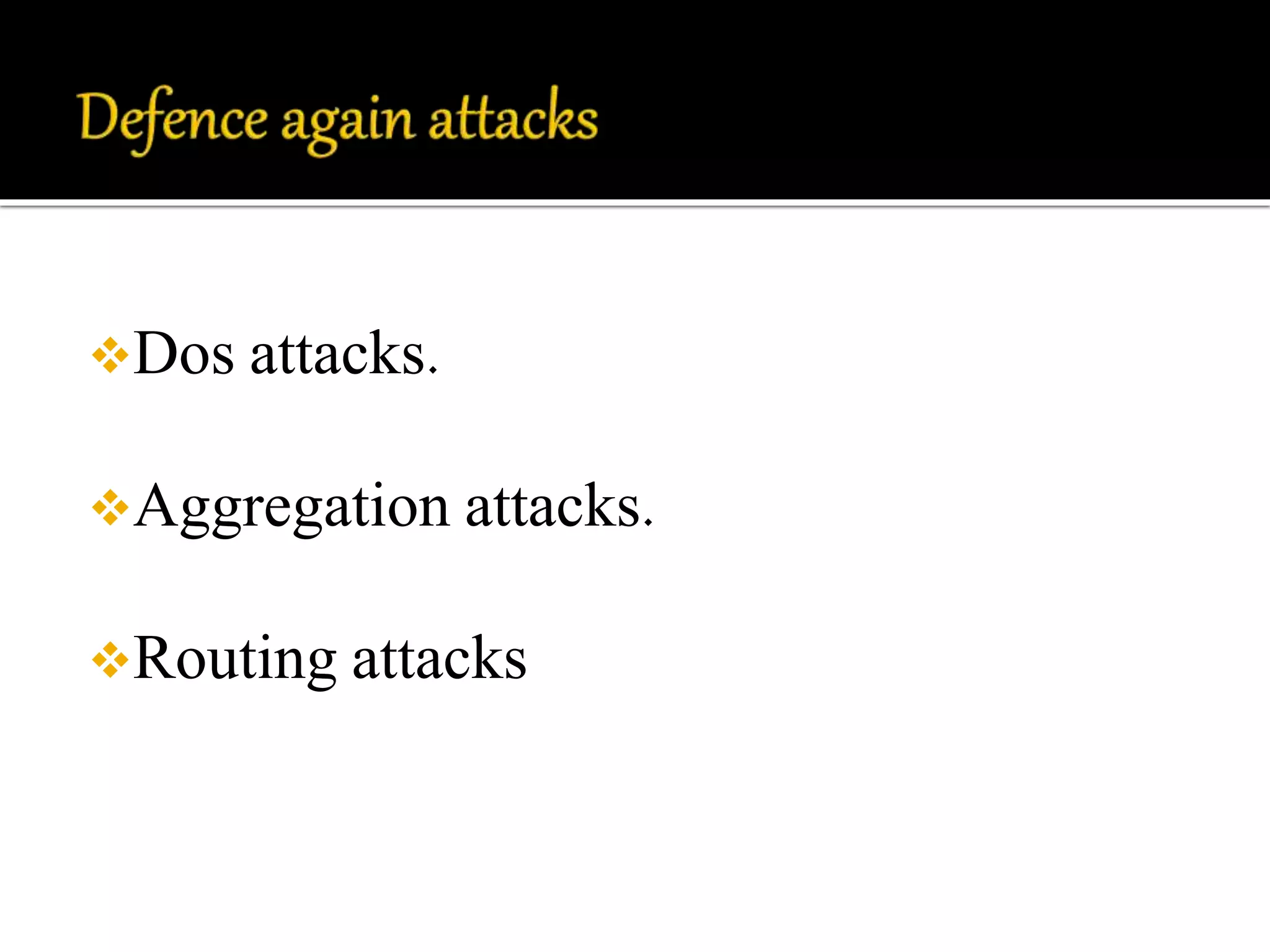
Dos attacks. 
Aggregation attacks. 
Routing attacks
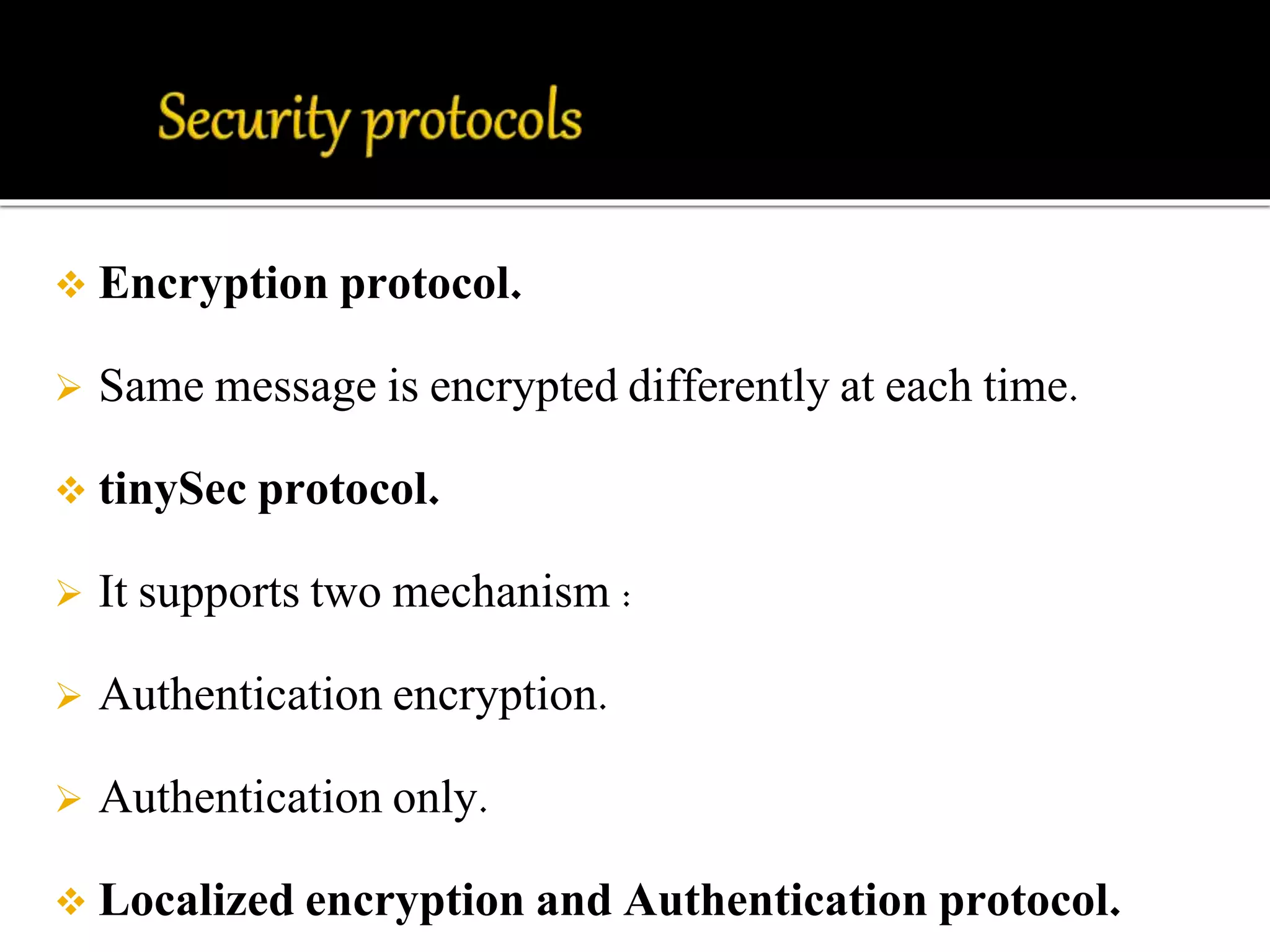
 Encryption protocol. 
 Same message is encrypted differently at each time. 
 tinySec protocol. 
 It supports two mechanism : 
 Authentication encryption. 
 Authentication only. 
 Localized encryption and Authentication protocol.
It provide four keying mechanism as follows, 
 Individual key . 
 Group key. 
 Cluster key. 
 Pairwise key.
 from above discussion we conclude that the 
security is a important issue in a wireless 
sensor network and can be introduced by using 
a standard protocol and mechanism to prevent 
unauthorised access.
 Dargie w and poellabaur fundamentals of 
wireless sensor networks :theory and practise 
john wiley and sons 2010 . 
 Protocols and architectures for wireless sensor 
networks holger karl andreas willig 2007. 
 And E-journals .
PROTOCOL MECHNISM FOR SECURITY ppt

PROTOCOL MECHNISM FOR SECURITY ppt

  • 1.
     SANJAY .D . DHANDARE Prof. saniya ansari mam 10,oct,2014 DYPSOE PUNE
  • 2.
     INTRODUCTION. What is protocol.  What is protocol mechanism.  What is network security.  Fundamentals of network security.  What it means?  Attacks on security network.  Mechanism for security.  Protocols for security.  Conclusion.  References.
  • 3.
    What is aSensor Network ? A heterogeneous system combining tiny sensors and actuators with general-purpose computing elements. Most consisting of hundreds or thousands of low-power, low-cost nodes deployed to monitor and affect the environment. What are they used for?  Ocean and wildlife monitoring.  Monitoring of manufactured machinery.  Building safety.  Earthquake monitoring.  Variety of military applications.  Medical monitoring and research.
  • 4.
    PROTOCOL  “setof rules commonly employ for proper communication in between sender and receiver in every wireless sensor network.
  • 5.
     The mechanismin which different protocol performs their well defined task for healthy communication in the sensor network.  This is the key term used in every network to protect from different attacks.
  • 6.
    Network security isnothing but the collection of all policies, mechanisms and services that afford a network which required protection from unauthorised access.
  • 7.
    The network issaid to be secure if it have,  Confidentiality.  Integrity.  Availability.
  • 8.
     DATA CONFIDENTIALITY– data leakage to neighboring networks must be prevent.  DATA INTEGRITY – transmission data cannot be modified.  AVAILABILITY–network able to work at any time.  DATA AUTHENTICATION – verification of sender/receiver.
  • 9.
    Following are thedifferent attacks on security:  Denial-of-service.  Routing attacks.  Data aggregation attacks.  Privacy attacks.
  • 10.
     Attempt tostop network from proper functioning.  Disturbed the service provided by the network.  It may occur at various layer of protocol : physical layer Dos. Data link layer Dos.
  • 11.
     What happen?  Data is forwarded along one or more routes.  EFFECT:  Traffic increases at node and as a result packets (data) can not reaches to destination.
  • 12.
     Blackhole attack.  Rushing attacks.  Sinkhole attacks.  Sybil attack. Wormhole attack
  • 13.
    Reducing frequency ofoperation. Reducing packets size. Replacing real measurement by fake readings.
  • 14.
     May introduceby accessing the data store at node.  May occur at node which perform more activity.  The traffic analysis can be used to identify the important nodes.
  • 15.
     Cryptography : Cryptography is a method of storing and transmitting data in a particular form so that only those for whom it is intended can read and process. The term plaintext is often used which means ordinary text sometimes referred as cipher text called as encryption and back again called decryption
  • 16.
     SYMMETRIC CRYPTOGRAPHY:  A encryption system in which the sender and receiver of a messages share a single key that is used to encrypt and descrypt the data.  PUBLIC KEY CRYPTOGRAPHY;  It uses two keys a public key to encrypt the massage and a private key to descrypt them.
  • 18.
    It is nothingbut reliable and secure establishment of shared keys among neighbouring nodes in a network. In this approach every sensor shares different pairwise key with each other. Hence the sensor network can be represented as matrix with rows and column.
  • 20.
    Dos attacks. Aggregationattacks. Routing attacks
  • 21.
     Encryption protocol.  Same message is encrypted differently at each time.  tinySec protocol.  It supports two mechanism :  Authentication encryption.  Authentication only.  Localized encryption and Authentication protocol.
  • 22.
    It provide fourkeying mechanism as follows,  Individual key .  Group key.  Cluster key.  Pairwise key.
  • 23.
     from abovediscussion we conclude that the security is a important issue in a wireless sensor network and can be introduced by using a standard protocol and mechanism to prevent unauthorised access.
  • 24.
     Dargie wand poellabaur fundamentals of wireless sensor networks :theory and practise john wiley and sons 2010 .  Protocols and architectures for wireless sensor networks holger karl andreas willig 2007.  And E-journals .