Second language acquisition powerpoint online final
The document discusses several theories of second language acquisition (SLA). It describes behaviorist theory which views language learning as habit formation influenced by rewards and punishments. It also discusses cognitive theories which see language learning as a cognitive process involving building knowledge and automatizing skills over time. Interactionist theories emphasize the importance of modified conversational interaction and input for SLA. Other topics covered include noticing, processing capacity limitations, and the role of interaction within a learner's zone of proximal development.
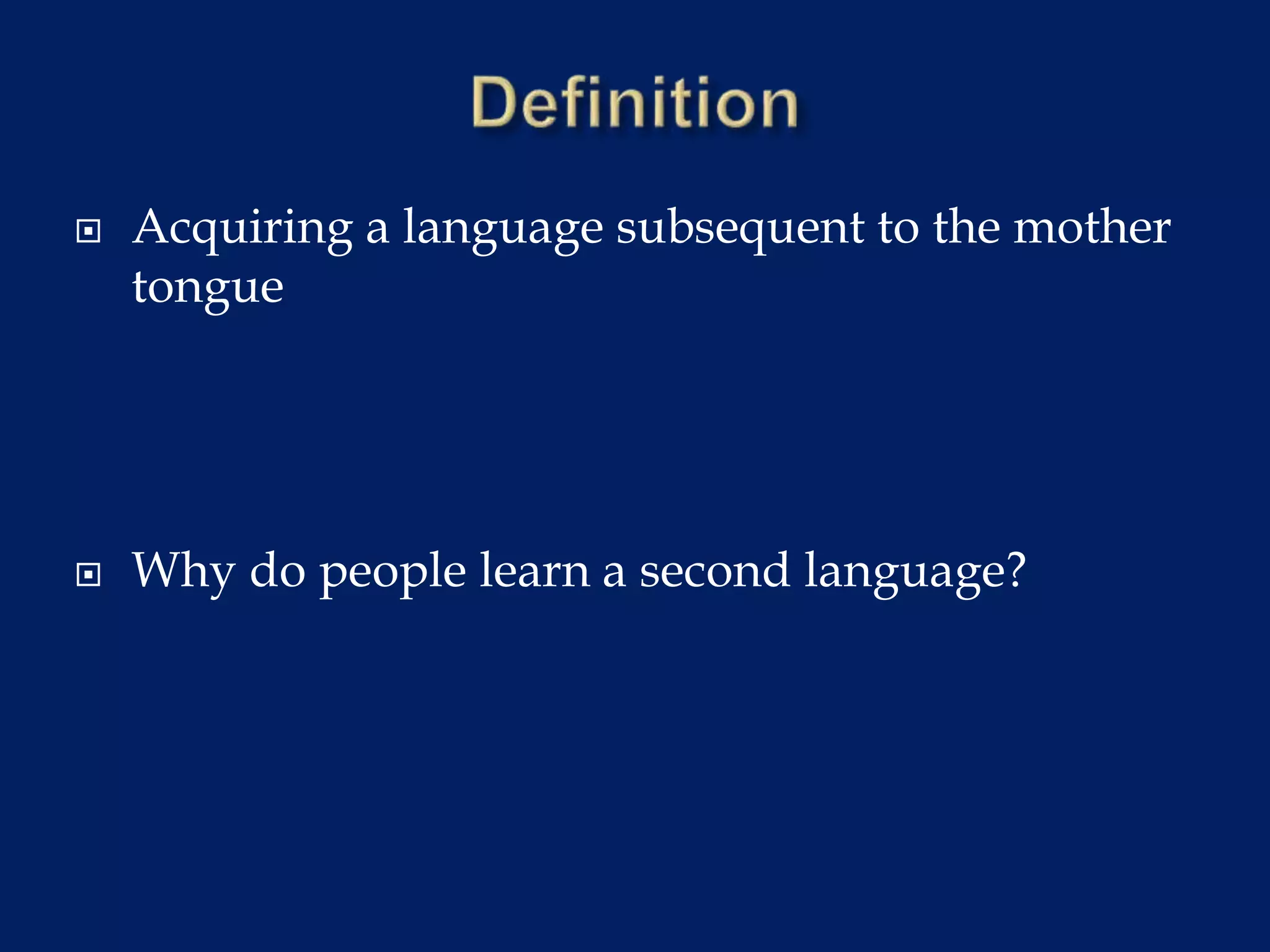
Acquiring alanguage subsequent to the mother
tongue
Why do people learn a second language?
3.
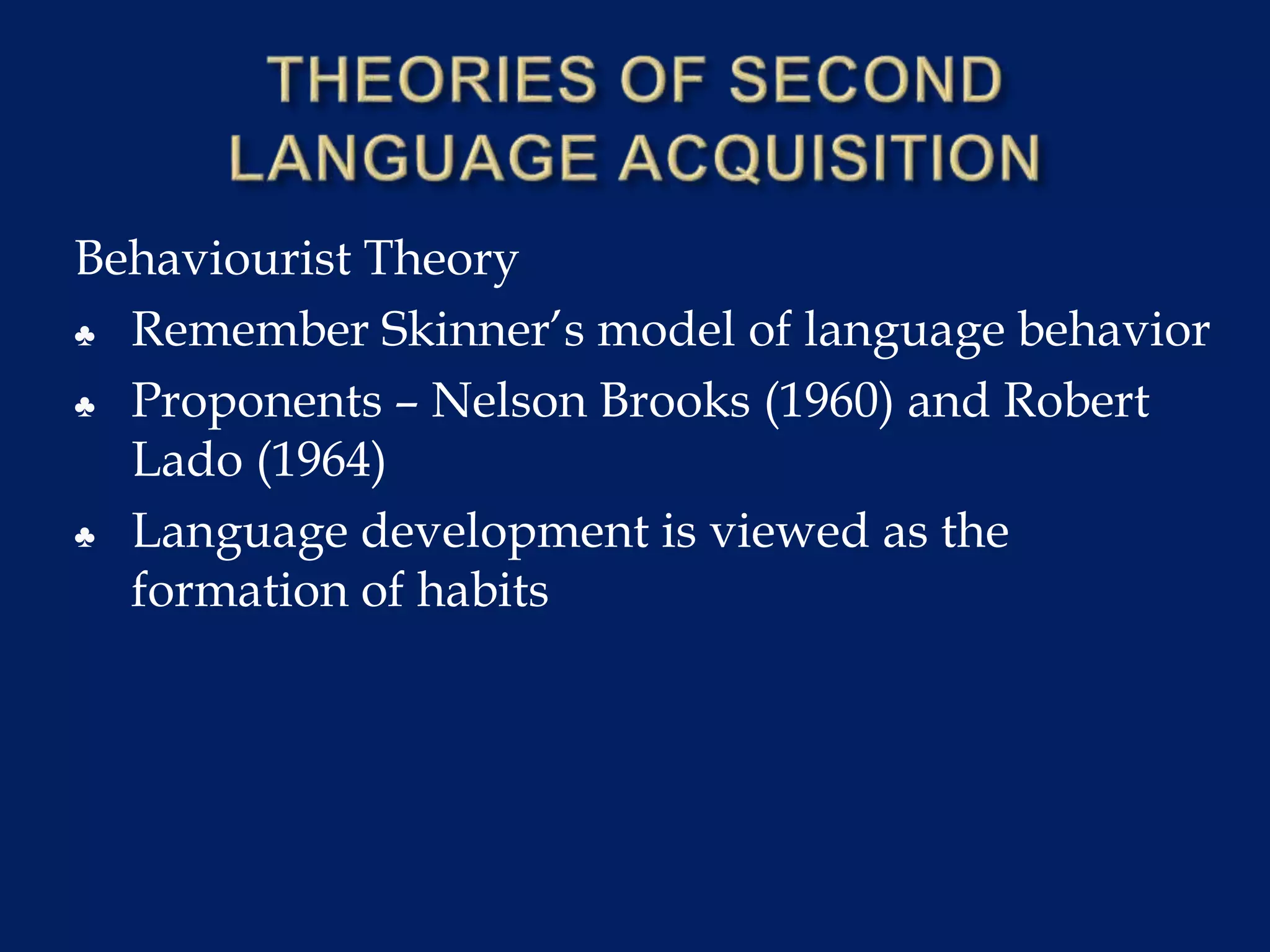
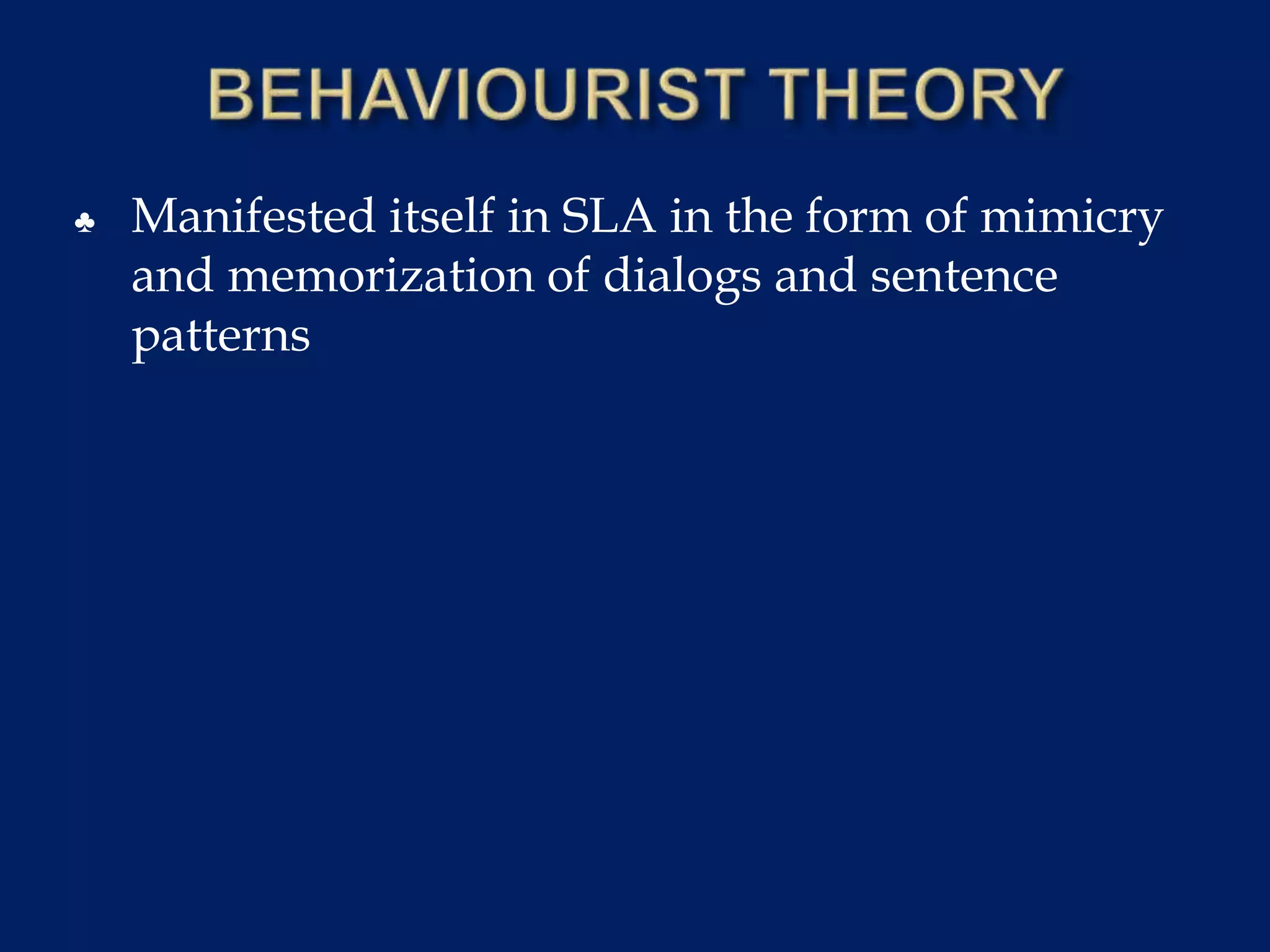
Behaviourist Theory
♣ RememberSkinner’s model of language behavior
♣ Proponents – Nelson Brooks (1960) and Robert
Lado (1964)
♣ Language development is viewed as the
formation of habits
♣ Manifested itselfin SLA in the form of mimicry
and memorization of dialogs and sentence
patterns
6.
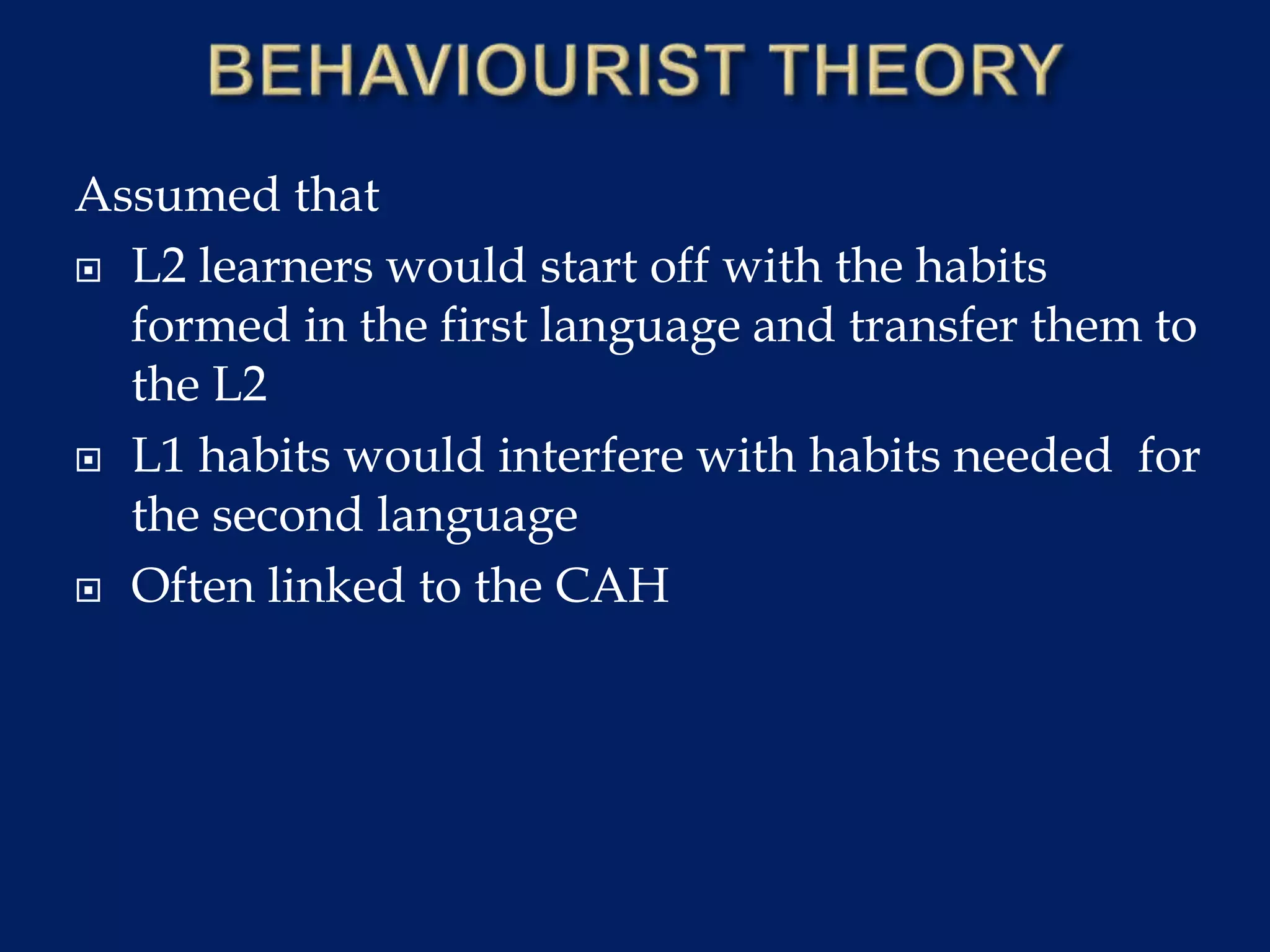
Assumed that
L2learners would start off with the habits
formed in the first language and transfer them to
the L2
L1 habits would interfere with habits needed for
the second language
Often linked to the CAH
Researchers foundthe behaviorist theory an
inadequate explanation for L2 acquisition.
10.
Remember Chomsky’sLAD
Lydia White (2003), Vivian Cook (2003)
Due to the presence of the LAD, L2 learners are
able to eventually know more about the
language than they could have learned if they
had to depend entirely on the input they are
exposed to.
Proponents -Cognitive and developmental
psychologists
Language learning is a cognitive process
18.
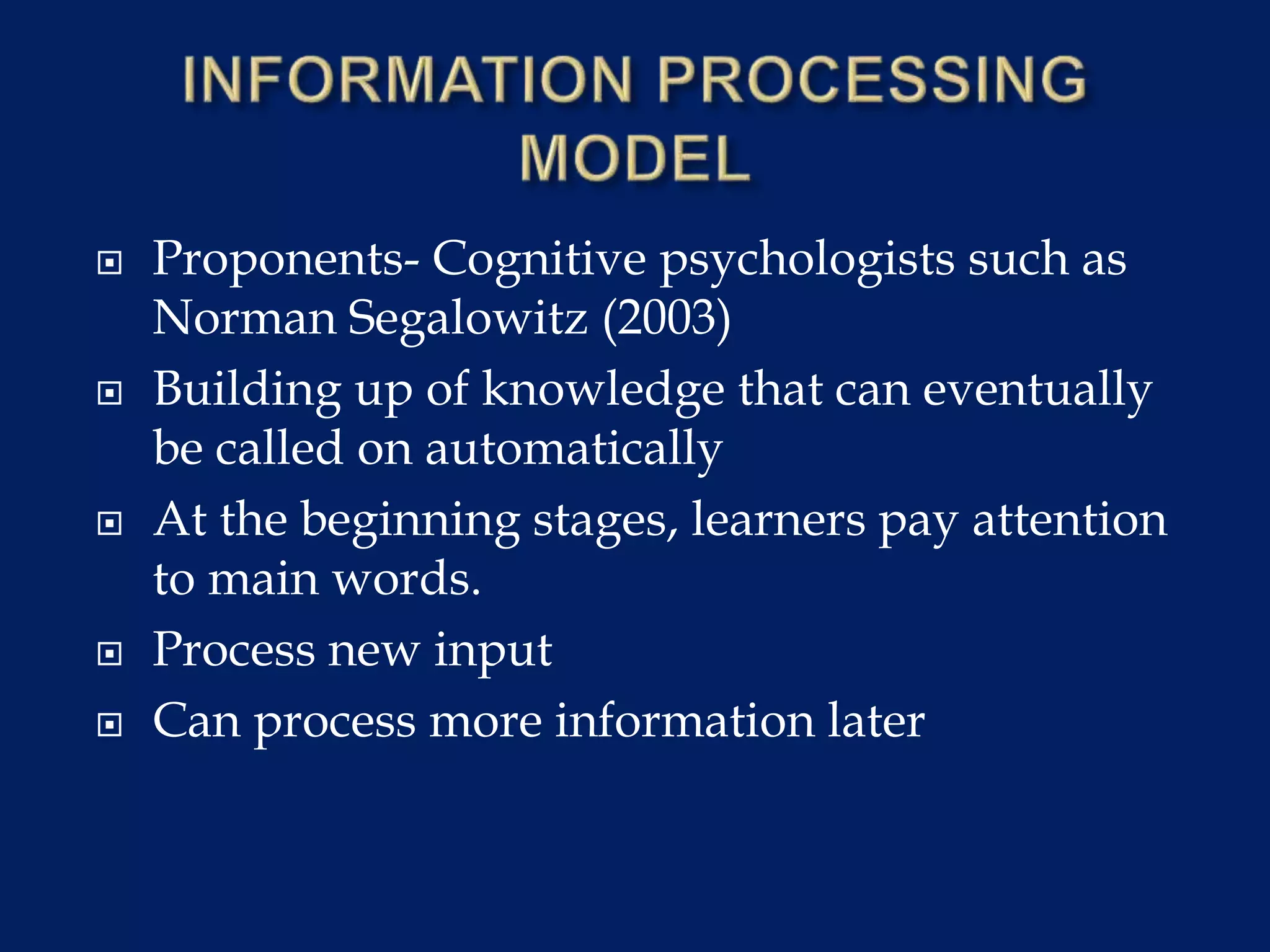
Proponents- Cognitivepsychologists such as
Norman Segalowitz (2003)
Building up of knowledge that can eventually
be called on automatically
At the beginning stages, learners pay attention
to main words.
Process new input
Can process more information later
19.
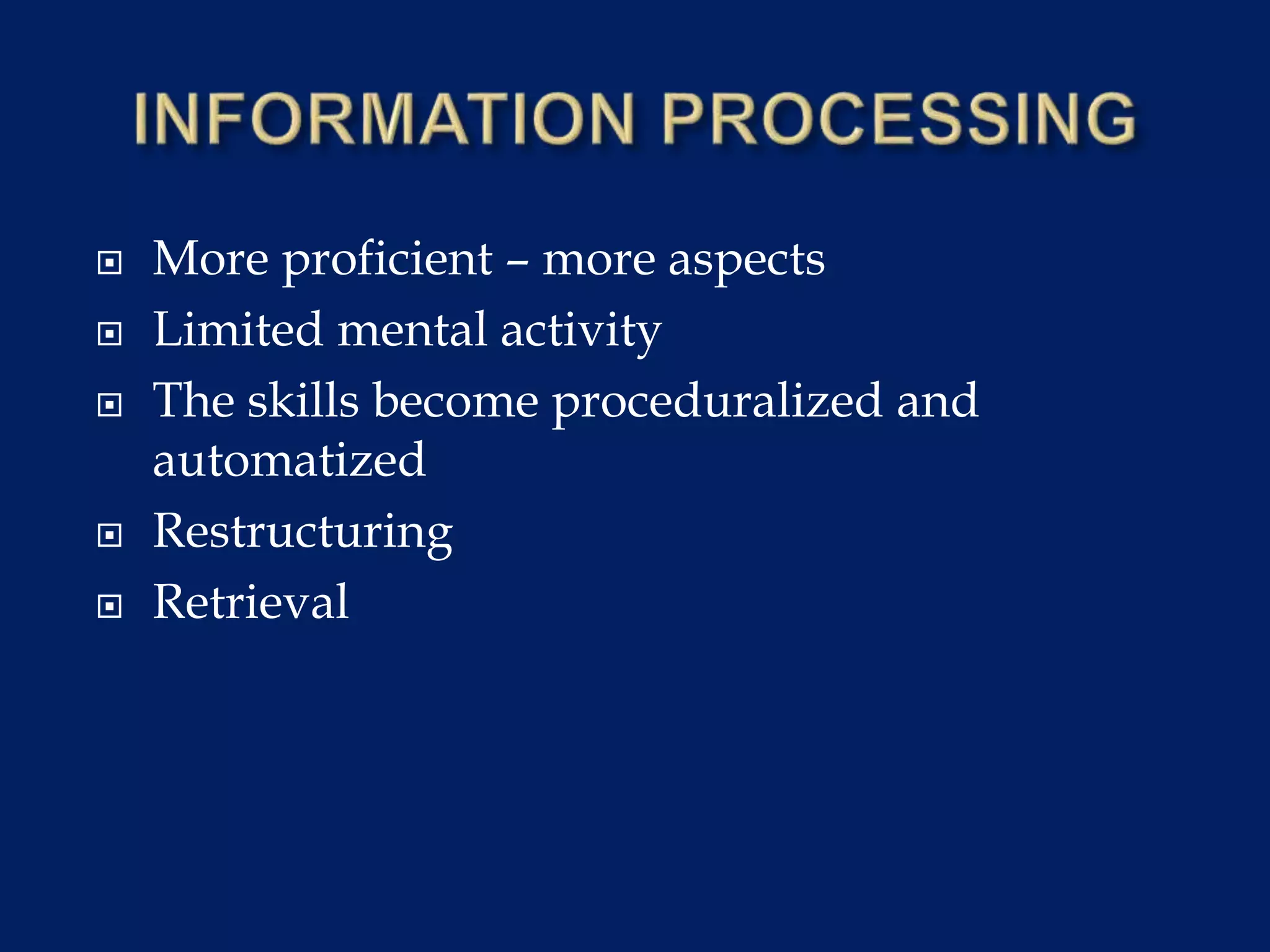
More proficient– more aspects
Limited mental activity
The skills become proceduralized and
automatized
Restructuring
Retrieval
20.
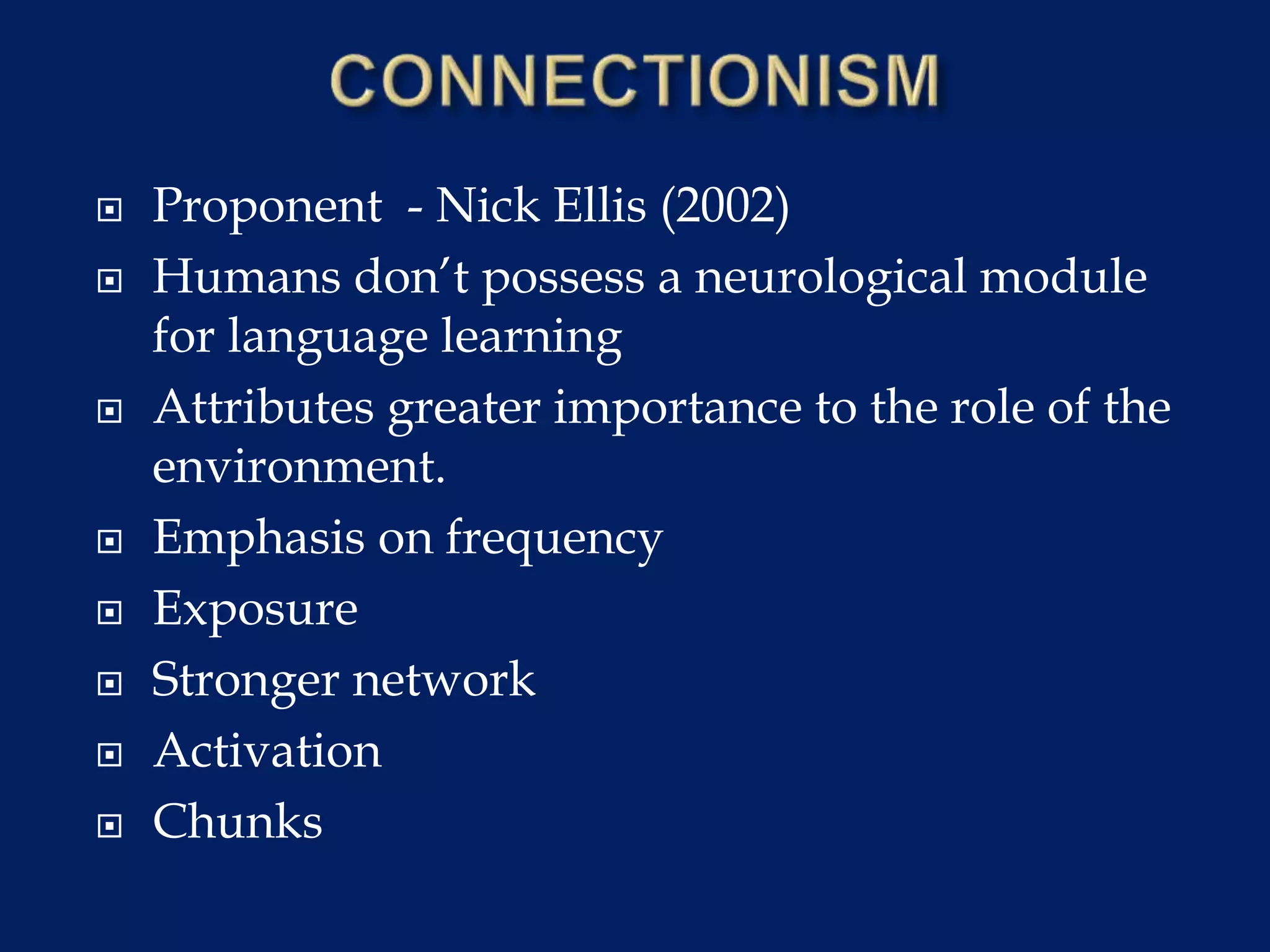
Proponent -Nick Ellis (2002)
Humans don’t possess a neurological module
for language learning
Attributes greater importance to the role of the
environment.
Emphasis on frequency
Exposure
Stronger network
Activation
Chunks
21.
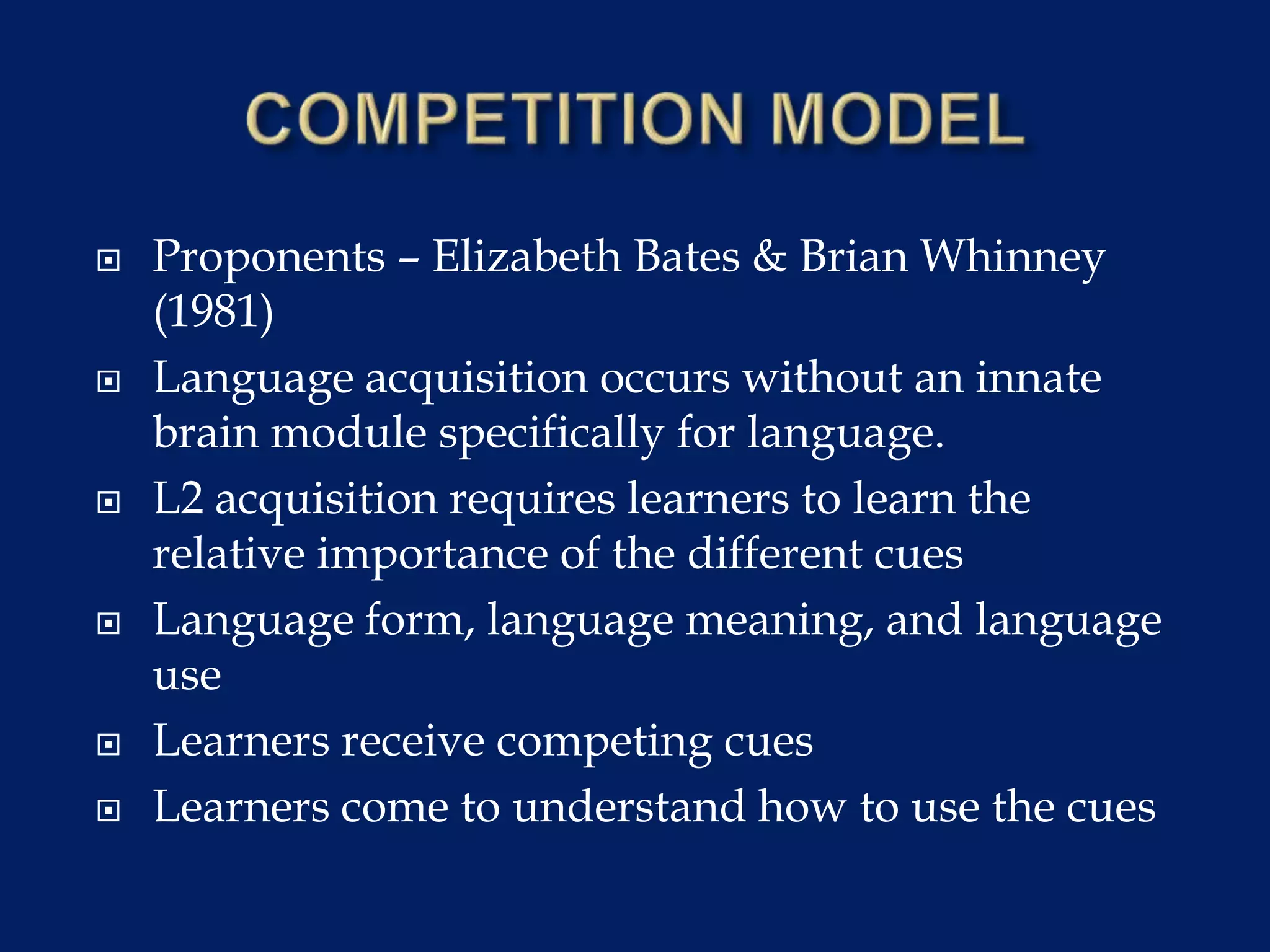
Proponents –Elizabeth Bates & Brian Whinney
(1981)
Language acquisition occurs without an innate
brain module specifically for language.
L2 acquisition requires learners to learn the
relative importance of the different cues
Language form, language meaning, and language
use
Learners receive competing cues
Learners come to understand how to use the cues
22.
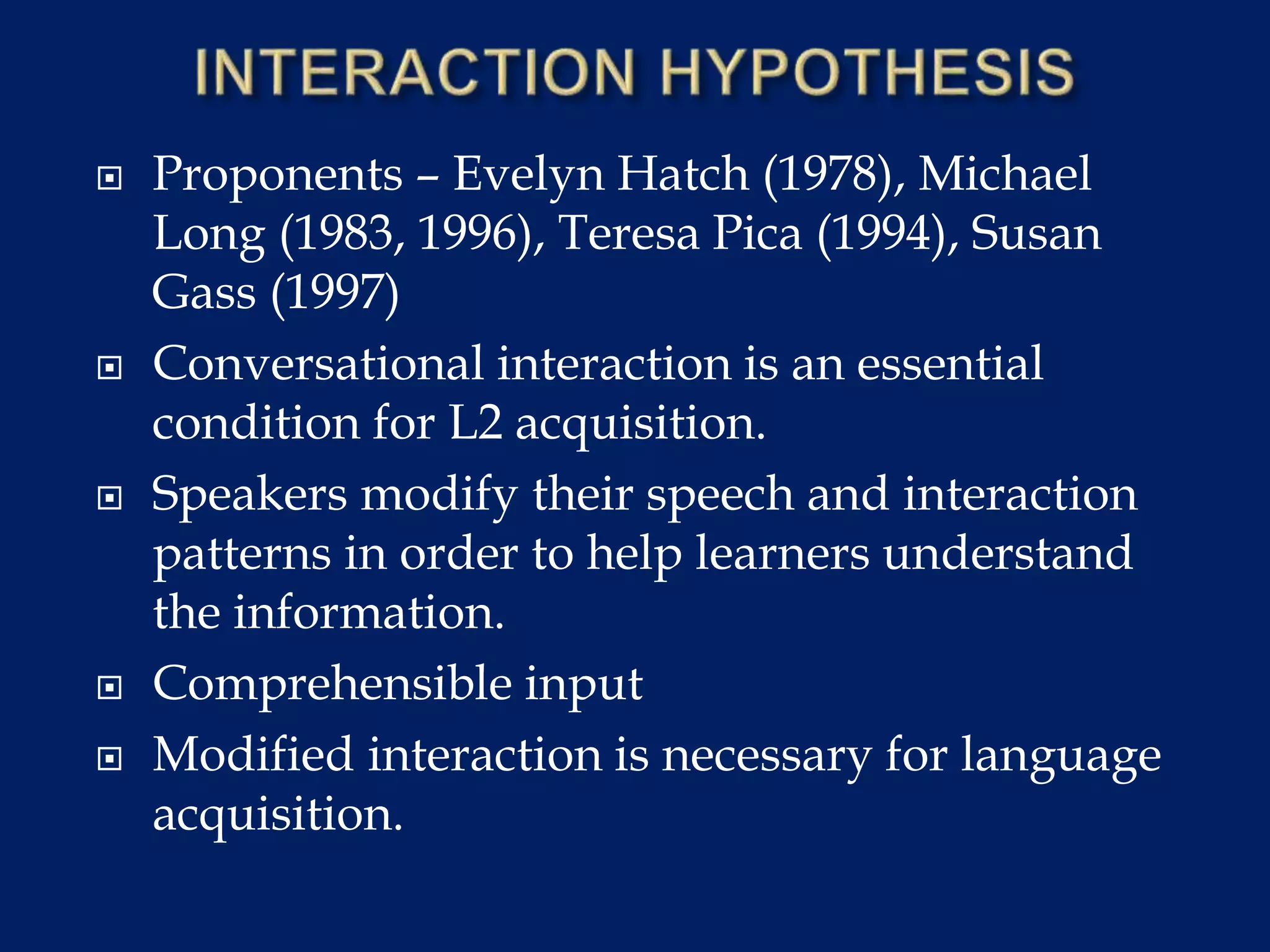
Proponents –Evelyn Hatch (1978), Michael
Long (1983, 1996), Teresa Pica (1994), Susan
Gass (1997)
Conversational interaction is an essential
condition for L2 acquisition.
Speakers modify their speech and interaction
patterns in order to help learners understand
the information.
Comprehensible input
Modified interaction is necessary for language
acquisition.
23.
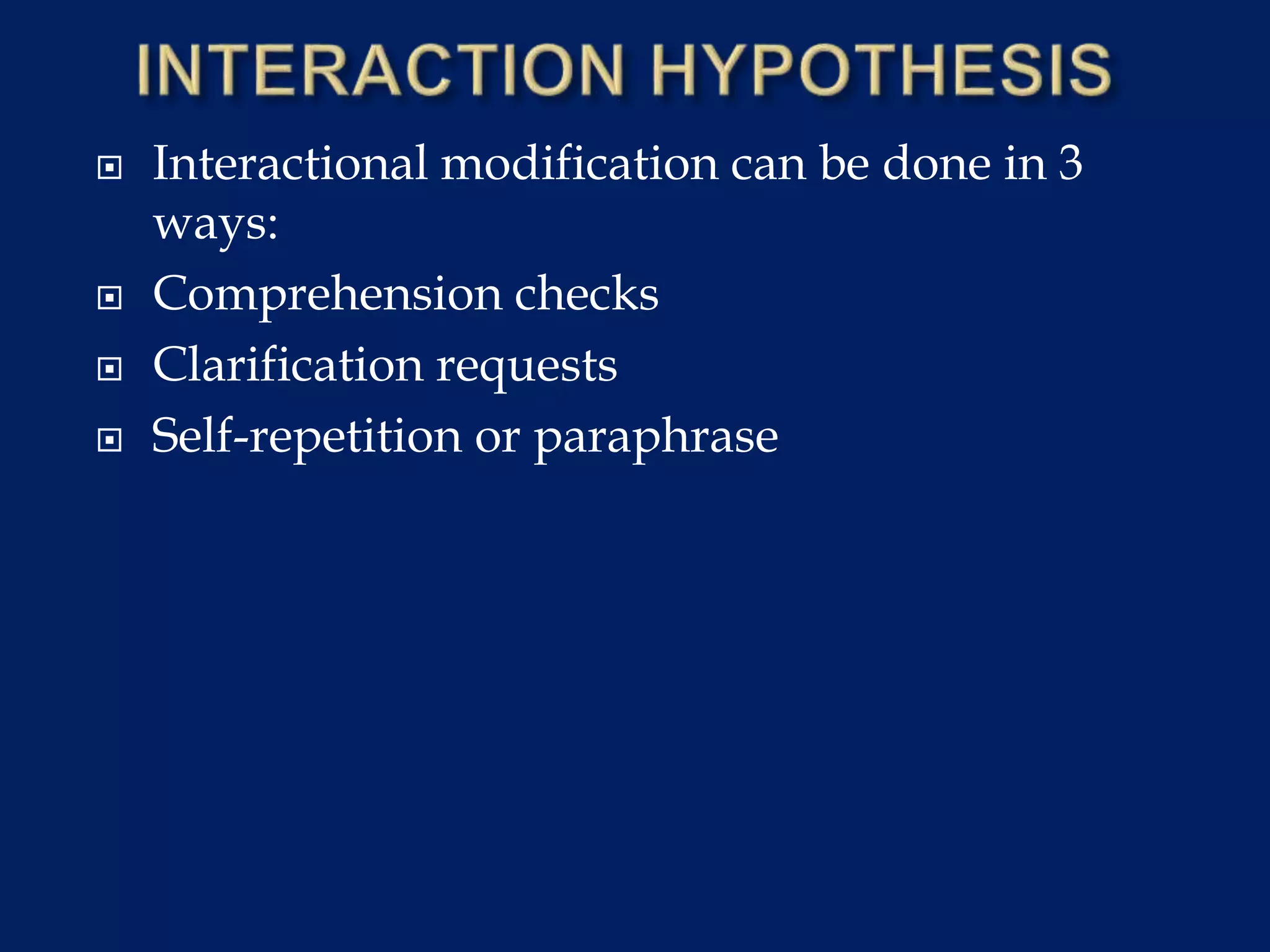
Interactional modificationcan be done in 3
ways:
Comprehension checks
Clarification requests
Self-repetition or paraphrase
24.
Richard Schmidt(1990)
Nothing is learned unless it has been noticed.
Awareness precedes acquisition.
25.
Bill VanPatten(2004)
Inability of many L2 learners to process input.
Learners have limited processing capacity
They tend to give priority to meaning.
They use the context to understand.
26.
Jütgen Meisel,Harald Clahsen, and Manfred
Pienemann (1981)
Sequence of development for features is
affected by how easy they are to process.
Ease of processing depends to a large extent on
the position of the features in a sentence.
27.
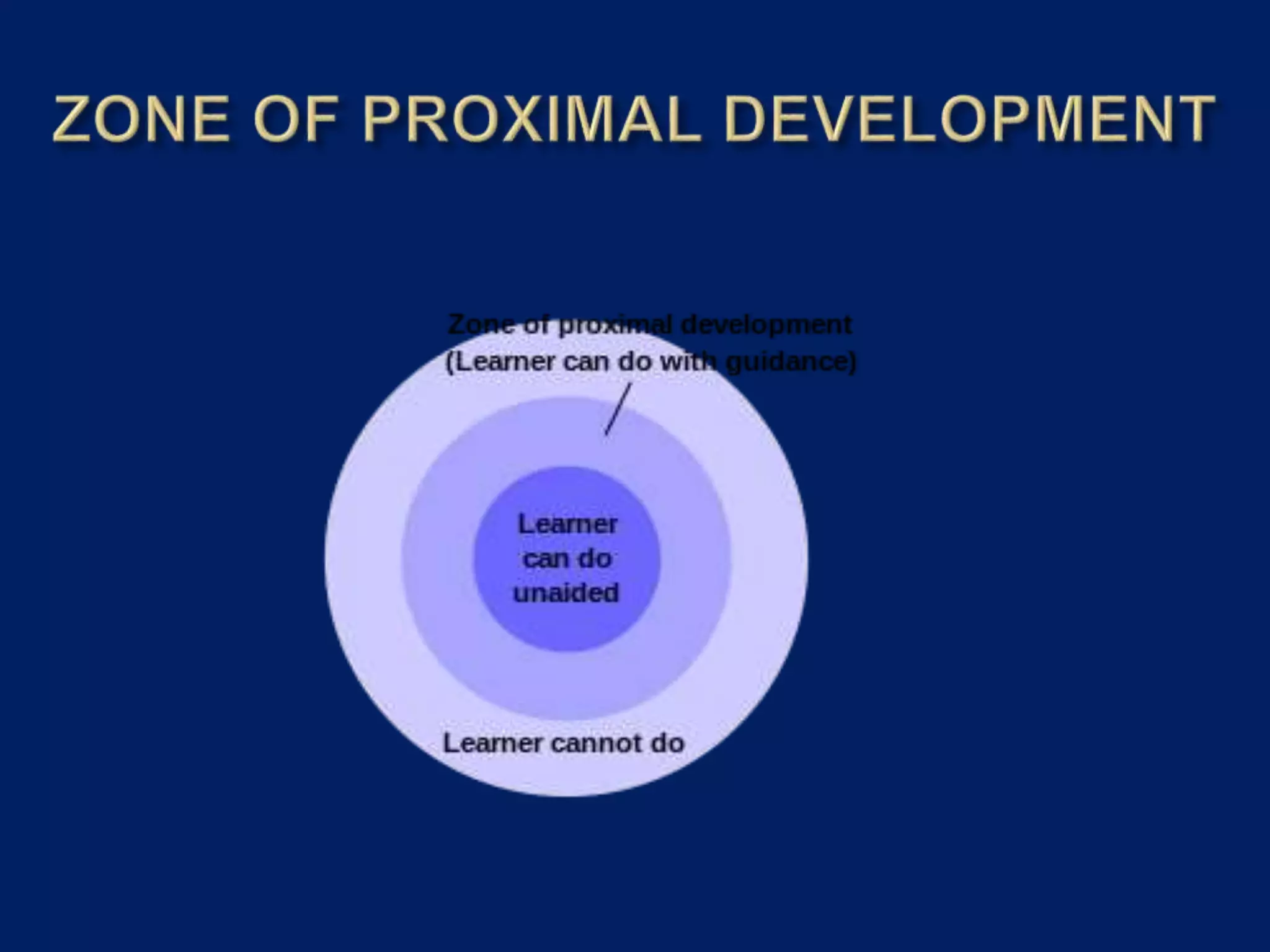
Vygotsky
Viewsthinking and speaking as tightly
interwoven
Learning occurs when the learner interacts
with an interlocutor within his or her zone of
proximal development (ZPD)