Downloaded 511 times




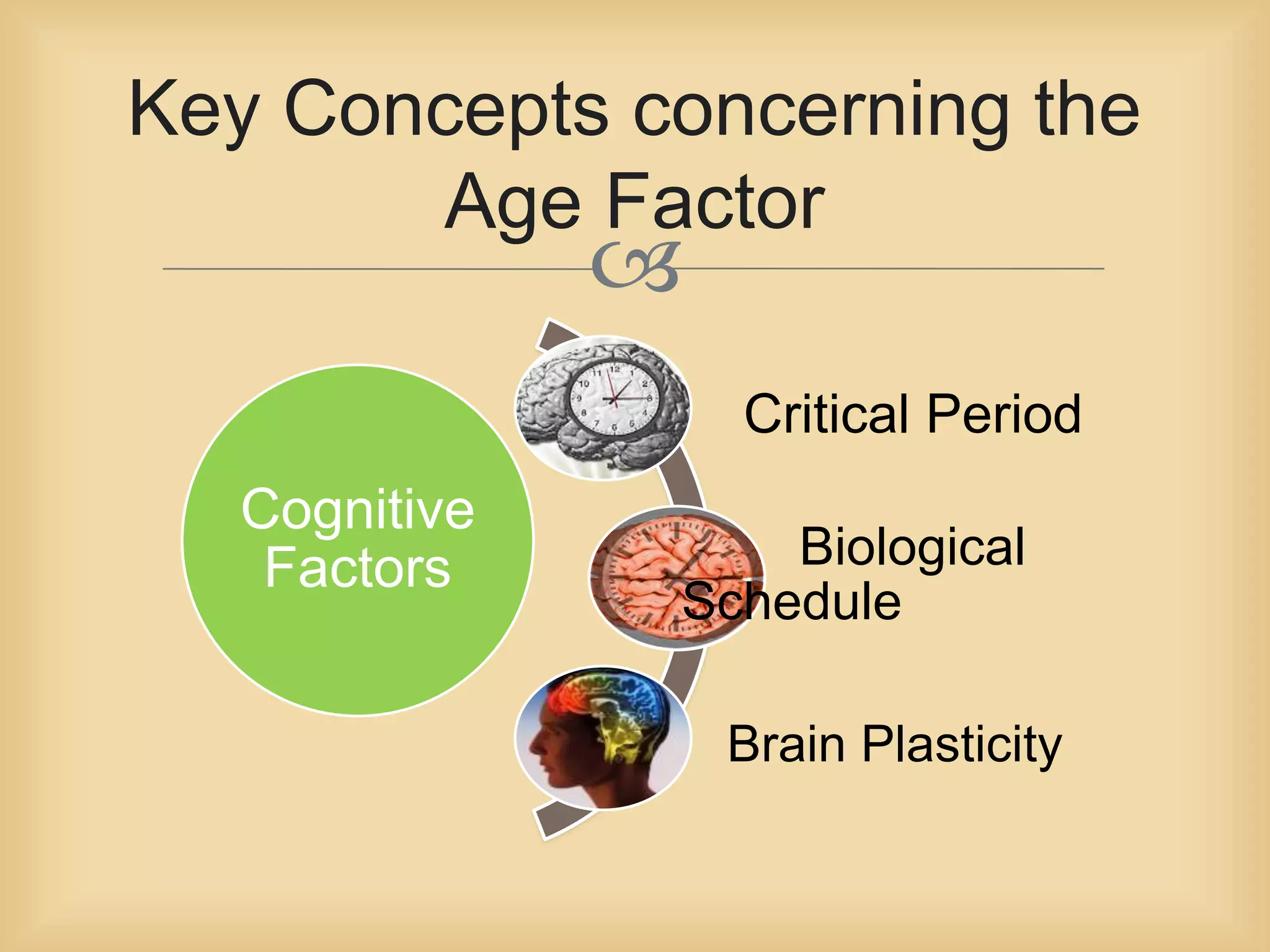

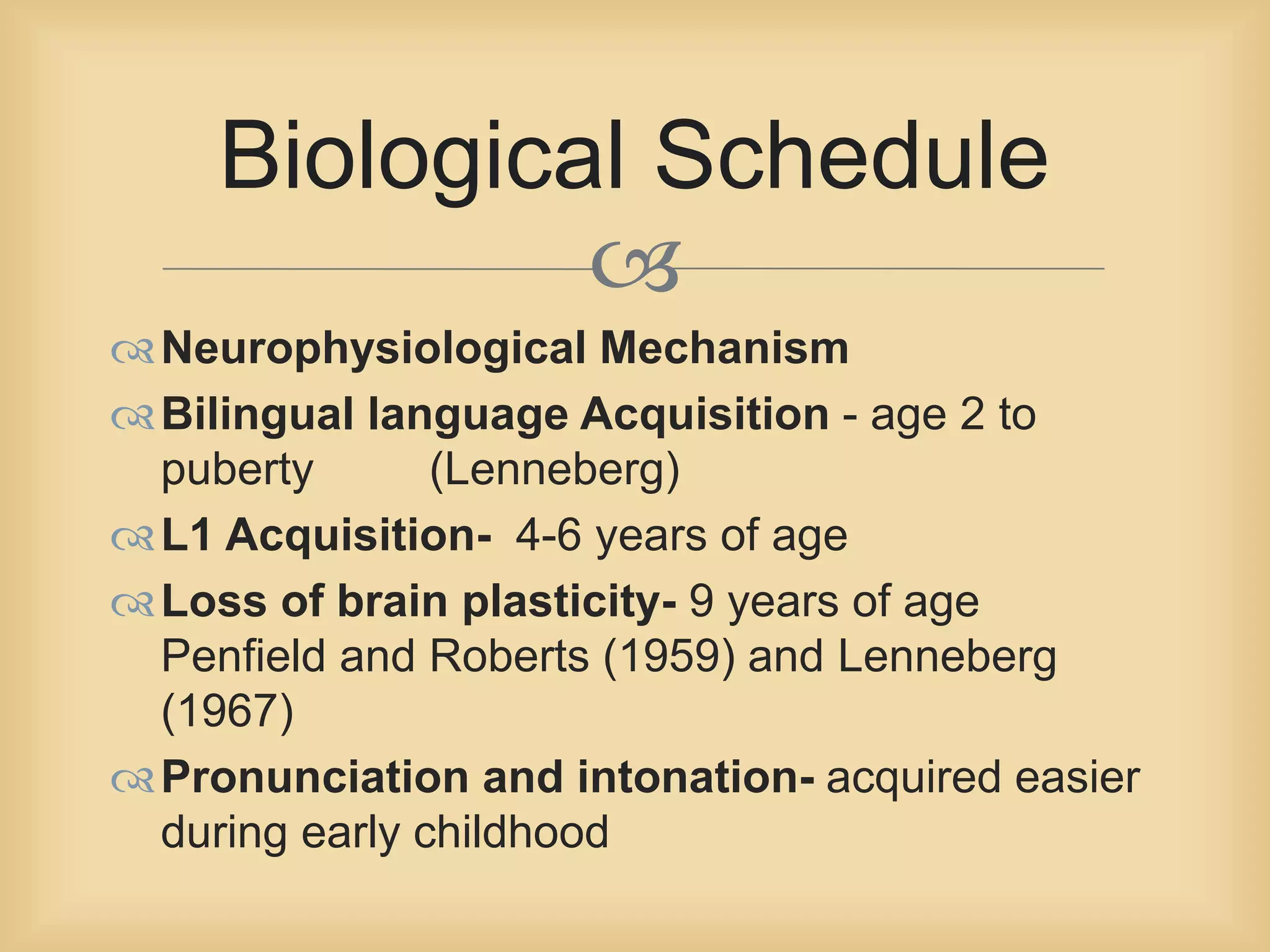
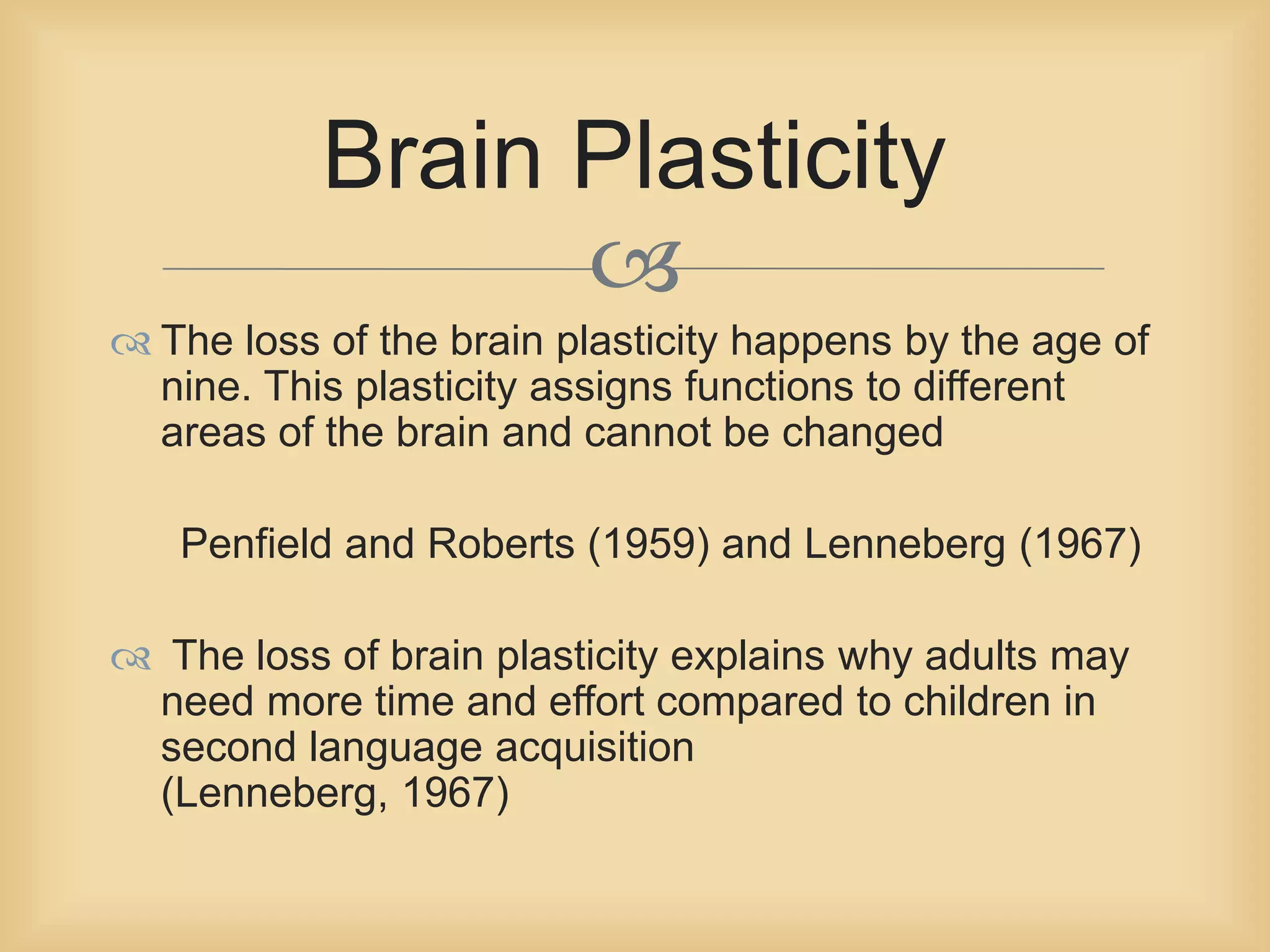


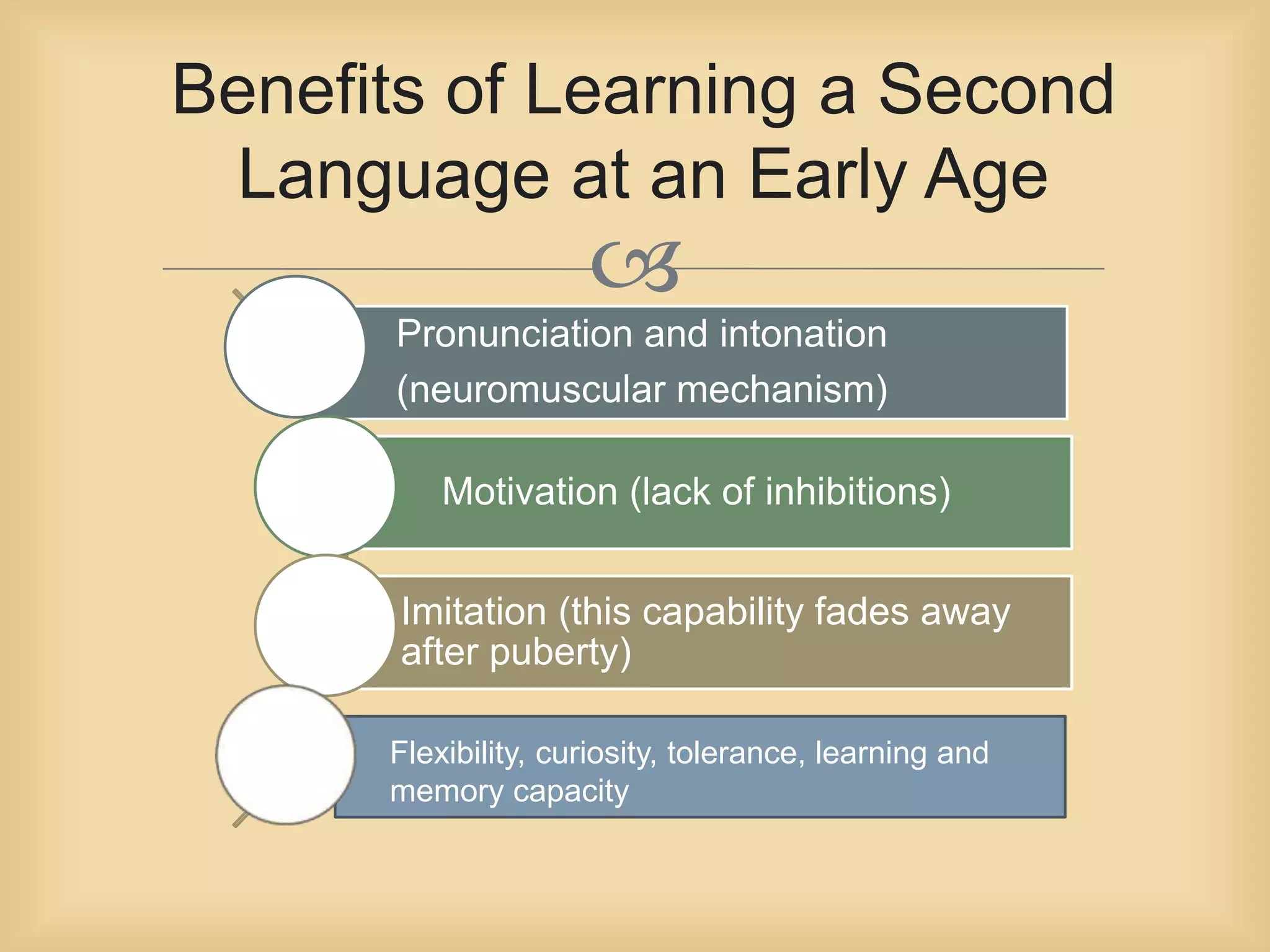




This document discusses factors that influence language learning, with a focus on age as a factor in second language acquisition. It outlines the critical period hypothesis which suggests there is an optimal time period for acquiring language. While research has found both supporting and contradictory evidence, most agree learners who begin acquiring a second language before puberty can develop near-native competence, while those starting post-puberty are less likely to reach that level. The document also discusses theories around brain plasticity, benefits of early learning, and debates around whether there are ceilings on second language attainment.


