GEL PERMEATION CHROMATOGRAPHY
BY : VISHNU PRAJAPATI
SUB : CHEMISTRY...
CONTENTS
• AIM
• INTRODUCTION
• WORKING PRINCIPLE OF INSTRUMENT
• MATERIALS AND METHOD FOR SAMPLE ANALYSIS
• APPLICATIONS
AIM :
TO STUDY ABOUT GEL PERMEATION CHROMATOGRAPHY.
INTRODUCTION
• CHROMATOGRAPHY IS A PHYSICAL METHOD OF SEPARATION IN WHICH
THE COMPONENTS TO BE SEPARATED ARE DISTRIBUTED BETWEEN TWO
PHASES, ONE OF WHICH IS STATIONARY (STATIONARY PHASE) WHILE
THE OTHER (THE MOBILE PHASE) MOVES IN A DEFINITE DIRECTION.
• TYPES OF CHROMATOGRAPHIC TECHNIQUES:
WORKING PRINCIPLE OF INSTRUMENT:
 THE SEPARATION IS BASED STRICTLY ON THE SIZE OF THE SAMPLE IN
SOLUTION.
 THERE SHOULD BE NO INTERACTION WITH THE COLUMN PACKING.
 THE MODE OF SEPARATION IS NOT BASED ON MOLECULAR WEIGHT, BUT
ON THE SIZE OF THE MATERIAL BEING ANALYZED (USUALLY A POLYMER)
IN SOLUTION.
 IN OTHER WORDS, TO DO GPC CORRECTLY, THE SAMPLE MUST BE
DISSOLVED IN A SUITABLE SOLVENT.
MATERIALS AND METHOD FOR
SAMPLE ANALYSIS
Gel
• Gels are used as stationary phase for GPC.
• The pore size of a gel must be carefully controlled in order to be able to apply the gel to a
given separation.
• Other desirable properties of the gel forming agent are the absence of ionizing groups and,
in a given solvent, low affinity for the substances to be separated.
• Commercial gels like PLgel,Sephadex,Bio-Gel (crosslinked polyacrylamide) agarose
gel and Styragel are often used based on different separation requirements.
Eluent
• The eluent (mobile phase) should be a good solvent for the polymer.
• It should permit high detector response from the polymer and should wet the packing
surface.
• The most common eluents in for polymers that dissolve at room temperature GPC
are tetrahydrofuran (THF)
SCHEMATIC OF A BASIC GEL PERMEATION CHROMATOGRAPH
This diagram illustrates how the sample is injected into the mobile phase and the path the sample takes
to the detector.
A. sample holder,
B. Column
C. Pump
D. Refractive Index Detector
E. UV-vis Detector
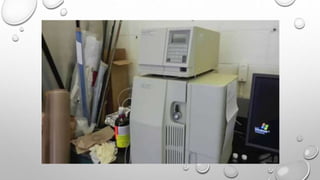
A typical Waters GPC instrument including
COMPONENTS
1. Pump
Pumps the polymer in solution through the system.
Different polymers produce solutions of different viscosities. To compare data from one analysis
to the next, the pump must deliver the same flow rates independent of viscosity differences
2. Injector
Introduces the polymer solution into the mobile phase.
The injector must be capable of small volume injections (for molecular weight determinations)
and large volume injections (if fraction collecting is desirable). The injector should not disturb
the continuous mobile phase flow. It should also be capable of automatic multiple sample
injection when the sample volume is large.
3. Column Set
Efficiently separates sample components from one another.
High efficiency columns give maximum separating capability and rapid analyses. Every
column must provide reproducible information over extended periods for both analytical and
fraction collecting purposes.
4. Detector
Monitors the separation and responds to components as they elute from the
column.
Detectors must be nondestructive to eluting components if they are to be collected
for further analysis.
The detectors must be sensitive and have a wide linear range in order to respond to
both trace amounts and large quantities of material if necessary.
5. Automatic data processing equipment
Automatically calculates, records, and report numerical values for Mz, Mw,
Mv, Mn, and MWD.
Data systems can also provide complete control of GPC systems so that large
numbers of samples can be run unattended and raw data can be automatically
processed. Today's GPC software offerings need to be able to provide special
calculations for multi-detection processing, band broadening correction, special
calibration routines and polymer branching determination, just to name a few.
GPC SEPARATION MECHANISM
POLYMER IS PREPARED AS A DILUTE SOLUTION IN THE ELUENT
AND INJECTED INTO THE SYSTEM
THE GPC COLUMN IS PACKED WITH POROUS BEADS OF
CONTROLLED POROSITY AND PARTICLE SIZE
LARGE MOLECULES ARE NOT ABLE TO PERMEATE ALL OF THE
PORES AND HAVE A SHORTER RESIDENCE TIME IN THE COLUMN
SMALL MOLECULES PERMEATE DEEP INTO THE POROUS
MATRIX AND HAVE A LONG RESIDENCE TIME IN THE COLUMN
POLYMER MOLECULES ARE SEPARATED ACCORDING TO
MOLECULAR SIZE, ELUTING LARGEST FIRST, SMALLEST LAST
APPLICATIONS
• IT IS USED TO DETERMINE THE RELATIVE MOLECULAR WEIGHT OF POLYMER
SAMPLES.
• IT IS USED TO DETERMINE THE DISTRIBUTION OF MOLECULAR WEIGHTS OF
POLYMER SAMPLES.
• SEPARATION OF SUGARS POLYPEPTIDES, PROTEINS, LIQUIDS, BUTYL RUBBERS,
POLYSTYRENES, SILICON POLYMERS.
• SEPHADEX G-25 : FOR SEPARATION OF SALTS & AMINO ACIDS FROM PROTEINS .
• SEPHADEX G-75:PURIFICATION OF PROTEINS POLYSACCHARIDES & NUCLEIC
ACIDS.
Gpc

Gpc

  • 1.
    GEL PERMEATION CHROMATOGRAPHY BY: VISHNU PRAJAPATI SUB : CHEMISTRY...
  • 2.
    CONTENTS • AIM • INTRODUCTION •WORKING PRINCIPLE OF INSTRUMENT • MATERIALS AND METHOD FOR SAMPLE ANALYSIS • APPLICATIONS
  • 3.
    AIM : TO STUDYABOUT GEL PERMEATION CHROMATOGRAPHY.
  • 4.
    INTRODUCTION • CHROMATOGRAPHY ISA PHYSICAL METHOD OF SEPARATION IN WHICH THE COMPONENTS TO BE SEPARATED ARE DISTRIBUTED BETWEEN TWO PHASES, ONE OF WHICH IS STATIONARY (STATIONARY PHASE) WHILE THE OTHER (THE MOBILE PHASE) MOVES IN A DEFINITE DIRECTION. • TYPES OF CHROMATOGRAPHIC TECHNIQUES:
  • 5.
    WORKING PRINCIPLE OFINSTRUMENT:  THE SEPARATION IS BASED STRICTLY ON THE SIZE OF THE SAMPLE IN SOLUTION.  THERE SHOULD BE NO INTERACTION WITH THE COLUMN PACKING.  THE MODE OF SEPARATION IS NOT BASED ON MOLECULAR WEIGHT, BUT ON THE SIZE OF THE MATERIAL BEING ANALYZED (USUALLY A POLYMER) IN SOLUTION.  IN OTHER WORDS, TO DO GPC CORRECTLY, THE SAMPLE MUST BE DISSOLVED IN A SUITABLE SOLVENT.
  • 7.
    MATERIALS AND METHODFOR SAMPLE ANALYSIS Gel • Gels are used as stationary phase for GPC. • The pore size of a gel must be carefully controlled in order to be able to apply the gel to a given separation. • Other desirable properties of the gel forming agent are the absence of ionizing groups and, in a given solvent, low affinity for the substances to be separated. • Commercial gels like PLgel,Sephadex,Bio-Gel (crosslinked polyacrylamide) agarose gel and Styragel are often used based on different separation requirements. Eluent • The eluent (mobile phase) should be a good solvent for the polymer. • It should permit high detector response from the polymer and should wet the packing surface. • The most common eluents in for polymers that dissolve at room temperature GPC are tetrahydrofuran (THF)
  • 8.
    SCHEMATIC OF ABASIC GEL PERMEATION CHROMATOGRAPH This diagram illustrates how the sample is injected into the mobile phase and the path the sample takes to the detector.
  • 9.
    A. sample holder, B.Column C. Pump D. Refractive Index Detector E. UV-vis Detector A typical Waters GPC instrument including
  • 10.
    COMPONENTS 1. Pump Pumps thepolymer in solution through the system. Different polymers produce solutions of different viscosities. To compare data from one analysis to the next, the pump must deliver the same flow rates independent of viscosity differences 2. Injector Introduces the polymer solution into the mobile phase. The injector must be capable of small volume injections (for molecular weight determinations) and large volume injections (if fraction collecting is desirable). The injector should not disturb the continuous mobile phase flow. It should also be capable of automatic multiple sample injection when the sample volume is large. 3. Column Set Efficiently separates sample components from one another. High efficiency columns give maximum separating capability and rapid analyses. Every column must provide reproducible information over extended periods for both analytical and fraction collecting purposes.
  • 11.
    4. Detector Monitors theseparation and responds to components as they elute from the column. Detectors must be nondestructive to eluting components if they are to be collected for further analysis. The detectors must be sensitive and have a wide linear range in order to respond to both trace amounts and large quantities of material if necessary. 5. Automatic data processing equipment Automatically calculates, records, and report numerical values for Mz, Mw, Mv, Mn, and MWD. Data systems can also provide complete control of GPC systems so that large numbers of samples can be run unattended and raw data can be automatically processed. Today's GPC software offerings need to be able to provide special calculations for multi-detection processing, band broadening correction, special calibration routines and polymer branching determination, just to name a few.
  • 12.
    GPC SEPARATION MECHANISM POLYMERIS PREPARED AS A DILUTE SOLUTION IN THE ELUENT AND INJECTED INTO THE SYSTEM THE GPC COLUMN IS PACKED WITH POROUS BEADS OF CONTROLLED POROSITY AND PARTICLE SIZE LARGE MOLECULES ARE NOT ABLE TO PERMEATE ALL OF THE PORES AND HAVE A SHORTER RESIDENCE TIME IN THE COLUMN SMALL MOLECULES PERMEATE DEEP INTO THE POROUS MATRIX AND HAVE A LONG RESIDENCE TIME IN THE COLUMN POLYMER MOLECULES ARE SEPARATED ACCORDING TO MOLECULAR SIZE, ELUTING LARGEST FIRST, SMALLEST LAST
  • 14.
    APPLICATIONS • IT ISUSED TO DETERMINE THE RELATIVE MOLECULAR WEIGHT OF POLYMER SAMPLES. • IT IS USED TO DETERMINE THE DISTRIBUTION OF MOLECULAR WEIGHTS OF POLYMER SAMPLES. • SEPARATION OF SUGARS POLYPEPTIDES, PROTEINS, LIQUIDS, BUTYL RUBBERS, POLYSTYRENES, SILICON POLYMERS. • SEPHADEX G-25 : FOR SEPARATION OF SALTS & AMINO ACIDS FROM PROTEINS . • SEPHADEX G-75:PURIFICATION OF PROTEINS POLYSACCHARIDES & NUCLEIC ACIDS.