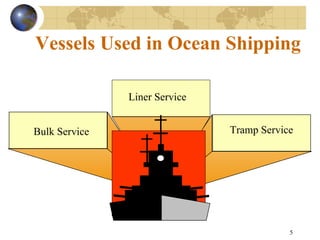
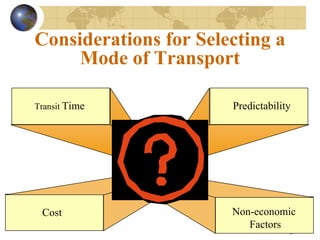
International logistics involves managing the flow of materials, services, and information internationally. It allows firms to implement cost-saving programs like JIT and EDI. International logistics managers must consider transportation infrastructure, modes of transport like ocean vessels, airfreight, and their associated costs and limitations. They must also address international inventory, packaging, storage, and documentation issues like bills of lading. Firms can utilize centralized, decentralized, or outsourced logistics management approaches. The internet impacts supply chains and requires 24/7 order and customer support. Security and environmental regulations also influence international logistics planning.