Name: ________________________________________

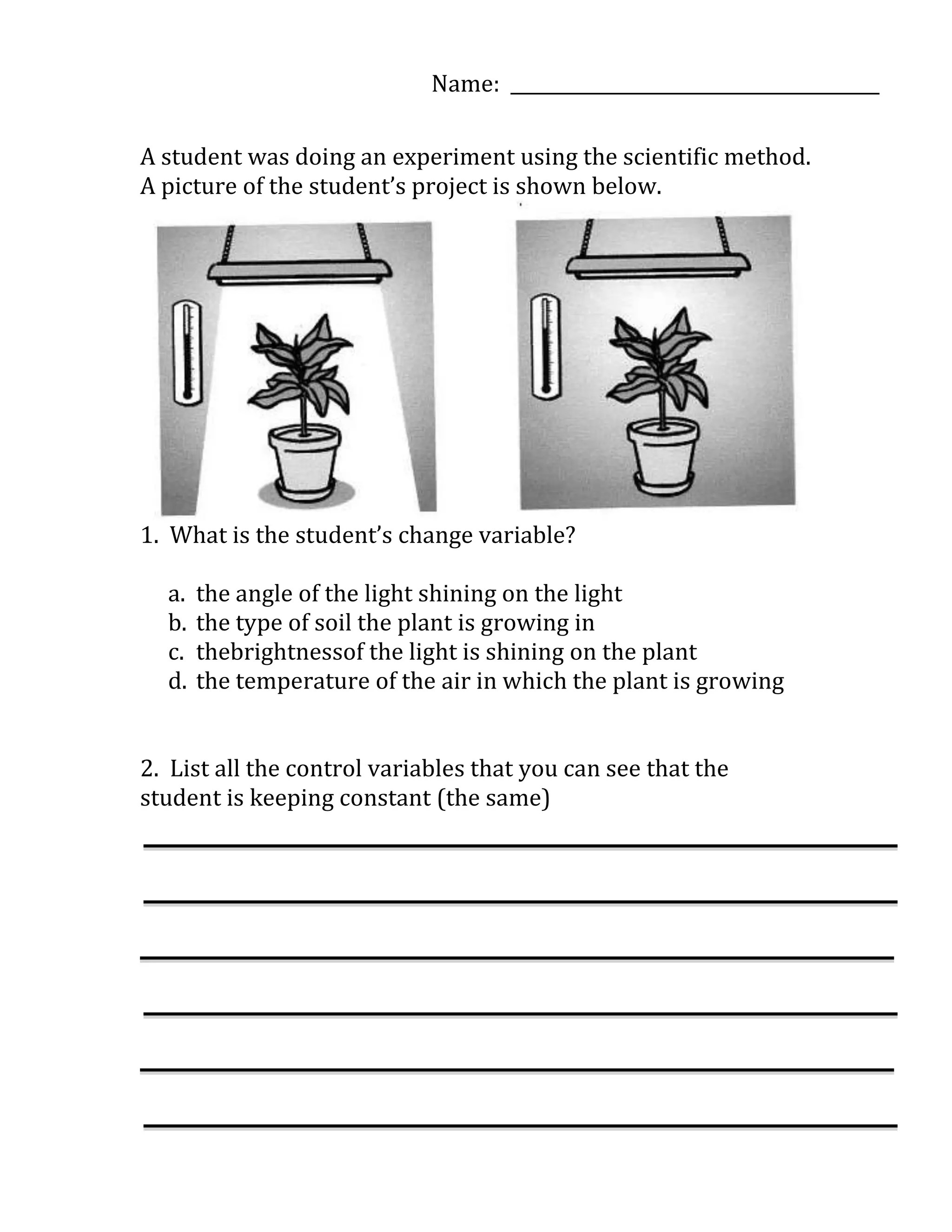
A student was doing an experiment using the scientific method.
A picture of the student’s project is shown below.


1. What is the student’s change variable?

  a.   the angle of the light shining on the light
  b.   the type of soil the plant is growing in
  c.   thebrightnessof the light is shining on the plant
  d.   the temperature of the air in which the plant is growing


2. List all the control variables that you can see that the
student is keeping constant (the same)
3. Every 3 days the student plans to count the number of green
leaves that are growing on the plant.

What is a possible hypothesis for this experiment?

  A. The plant in the bright light will grow more green leaves
     than the plant grown in the dim light.
  B. The plant in sunlight will grow more green leaves than
     the plant grown under the light bulb.
  C. The plant in the clay pot will grow more green leaves
     than the plant grown in the plastic pot.
  D. The plant in the warmer temperature will grow more
     green leaves than the plant grown in the colder
     temperature.
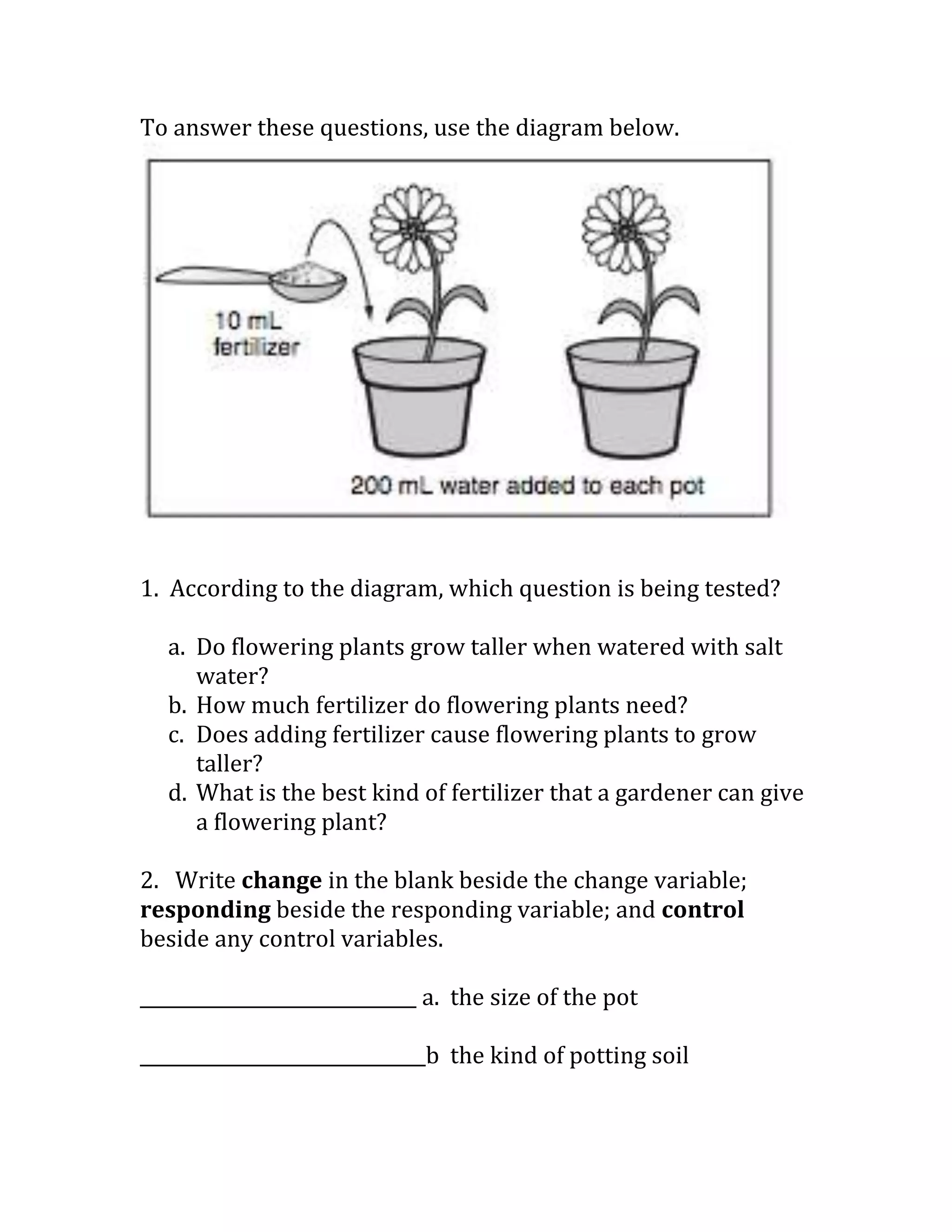
To answer these questions, use the diagram below.


1. According to the diagram, which question is being tested?

  a. Do flowering plants grow taller when watered with salt
     water?
  b. How much fertilizer do flowering plants need?
  c. Does adding fertilizer cause flowering plants to grow
     taller?
  d. What is the best kind of fertilizer that a gardener can give
     a flowering plant?

2. Write change in the blank beside the change variable;
responding beside the responding variable; and control
beside any control variables.

______________________________ a. the size of the pot

_______________________________b the kind of potting soil
_______________________________c. whether or not the plant receives
                                  fertilizer
________________________________d. the amount of water the plant
                              receives
________________________________e. the amount of light the plant
                              receives
________________________________f. how tall the plant grows

________________________________g. the temperature of the room
                              the plant is in
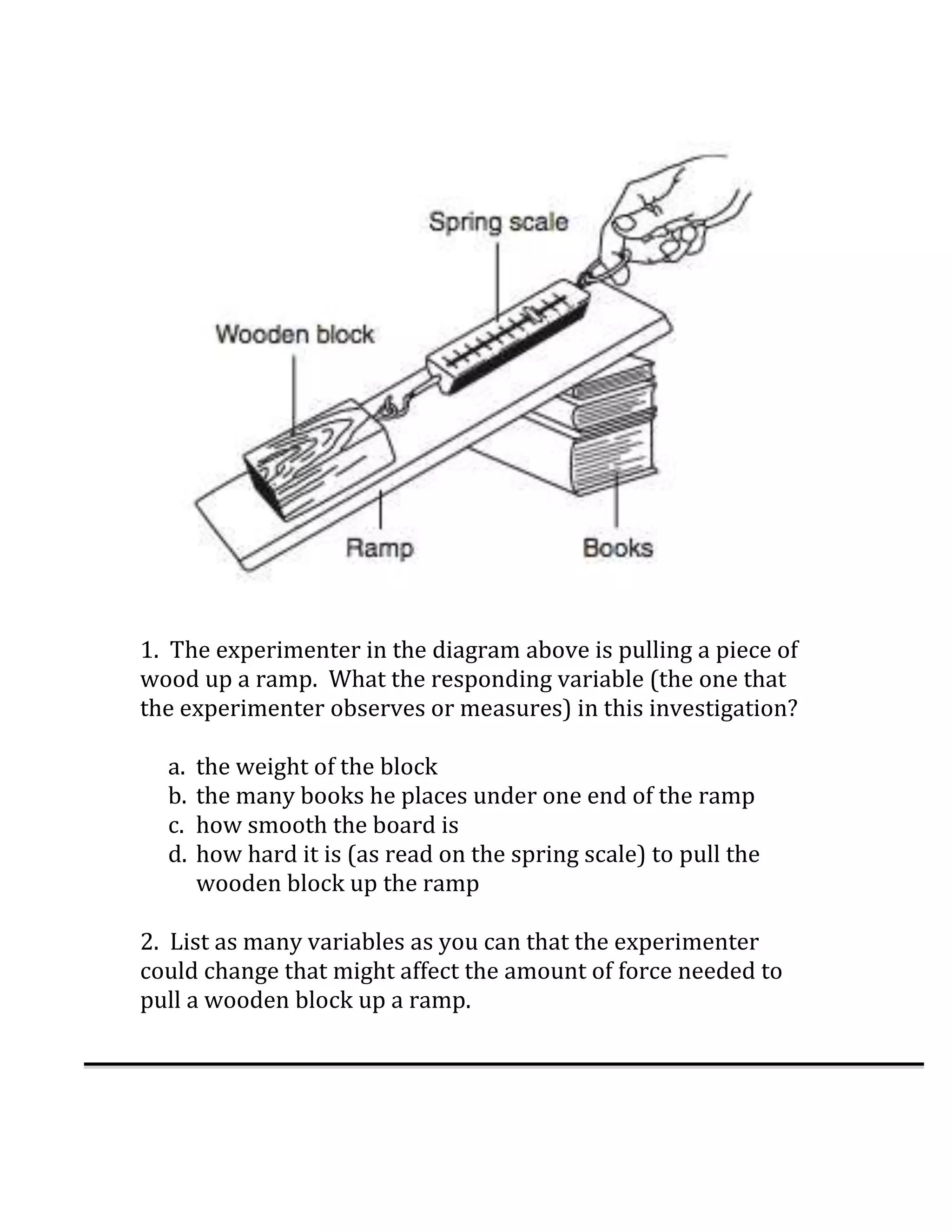
1. The experimenter in the diagram above is pulling a piece of
wood up a ramp. What the responding variable (the one that
the experimenter observes or measures) in this investigation?

  a.   the weight of the block
  b.   the many books he places under one end of the ramp
  c.   how smooth the board is
  d.   how hard it is (as read on the spring scale) to pull the
       wooden block up the ramp

2. List as many variables as you can that the experimenter
could change that might affect the amount of force needed to
pull a wooden block up a ramp.
3. Choose one of these change variables and write a problem
(a question) that this experimenter might want to ask?
For example: Would oiling the ramp make it harder to pull the
wooden block up the ramp?


4. Write an hypothesis that predicts what you think would
happen if the experimenter did this experiment?
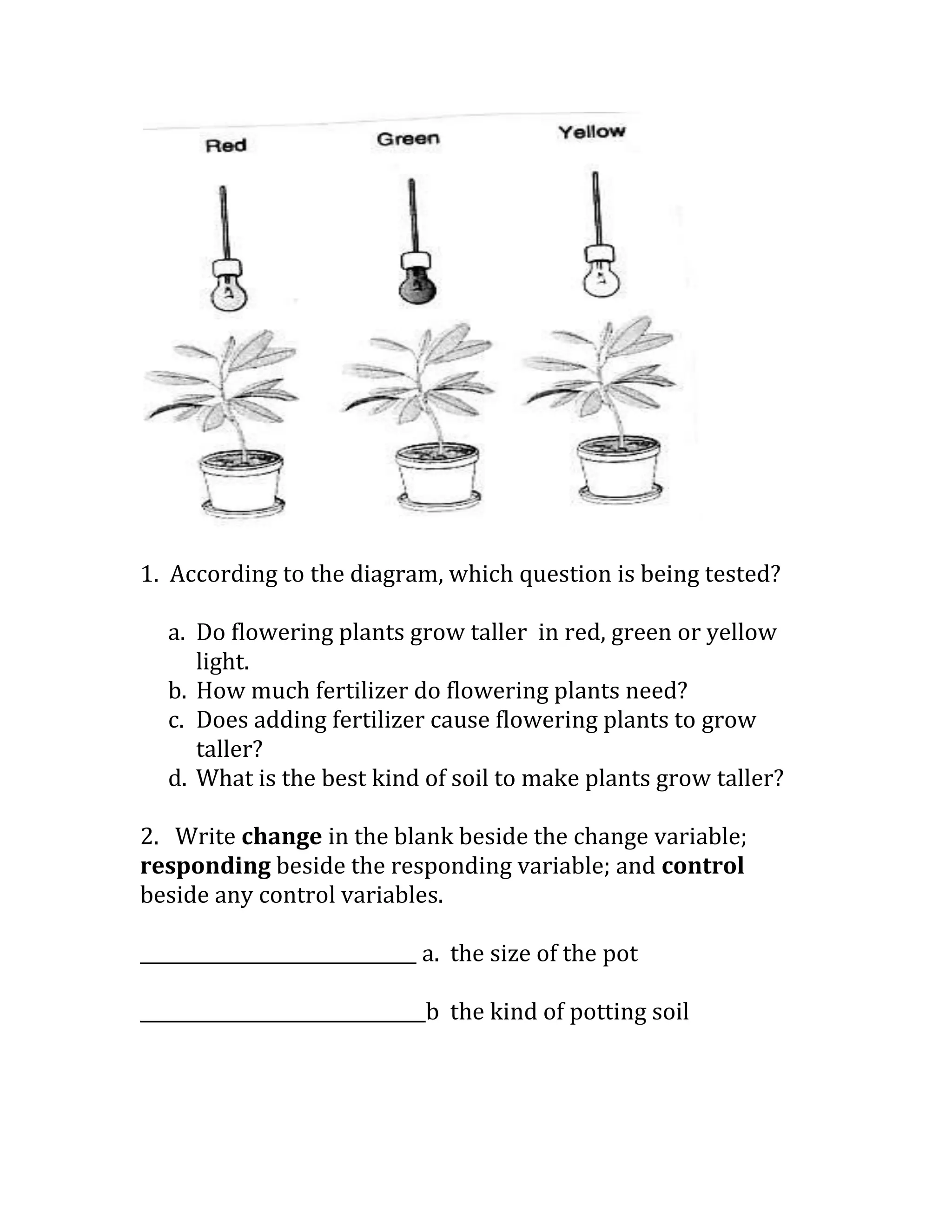
1. According to the diagram, which question is being tested?

  a. Do flowering plants grow taller in red, green or yellow
     light.
  b. How much fertilizer do flowering plants need?
  c. Does adding fertilizer cause flowering plants to grow
     taller?
  d. What is the best kind of soil to make plants grow taller?

2. Write change in the blank beside the change variable;
responding beside the responding variable; and control
beside any control variables.

______________________________ a. the size of the pot

_______________________________b the kind of potting soil
_______________________________c. whether or not the plant receives
                                  fertilizer
________________________________d. the amount of water the plant
                              receives
________________________________e. the color of light the plant
                              receives
________________________________f. how tall the plant grows

________________________________g. the temperature of the room
                              the plant is in

Scientific method variables (worksheet)

  • 1.
    Name: ________________________________________ A studentwas doing an experiment using the scientific method. A picture of the student’s project is shown below. 1. What is the student’s change variable? a. the angle of the light shining on the light b. the type of soil the plant is growing in c. thebrightnessof the light is shining on the plant d. the temperature of the air in which the plant is growing 2. List all the control variables that you can see that the student is keeping constant (the same)
  • 2.
    3. Every 3days the student plans to count the number of green leaves that are growing on the plant. What is a possible hypothesis for this experiment? A. The plant in the bright light will grow more green leaves than the plant grown in the dim light. B. The plant in sunlight will grow more green leaves than the plant grown under the light bulb. C. The plant in the clay pot will grow more green leaves than the plant grown in the plastic pot. D. The plant in the warmer temperature will grow more green leaves than the plant grown in the colder temperature.
  • 3.
    To answer thesequestions, use the diagram below. 1. According to the diagram, which question is being tested? a. Do flowering plants grow taller when watered with salt water? b. How much fertilizer do flowering plants need? c. Does adding fertilizer cause flowering plants to grow taller? d. What is the best kind of fertilizer that a gardener can give a flowering plant? 2. Write change in the blank beside the change variable; responding beside the responding variable; and control beside any control variables. ______________________________ a. the size of the pot _______________________________b the kind of potting soil
  • 4.
    _______________________________c. whether ornot the plant receives fertilizer ________________________________d. the amount of water the plant receives ________________________________e. the amount of light the plant receives ________________________________f. how tall the plant grows ________________________________g. the temperature of the room the plant is in
  • 5.
    1. The experimenterin the diagram above is pulling a piece of wood up a ramp. What the responding variable (the one that the experimenter observes or measures) in this investigation? a. the weight of the block b. the many books he places under one end of the ramp c. how smooth the board is d. how hard it is (as read on the spring scale) to pull the wooden block up the ramp 2. List as many variables as you can that the experimenter could change that might affect the amount of force needed to pull a wooden block up a ramp.
  • 6.
    3. Choose oneof these change variables and write a problem (a question) that this experimenter might want to ask? For example: Would oiling the ramp make it harder to pull the wooden block up the ramp? 4. Write an hypothesis that predicts what you think would happen if the experimenter did this experiment?
  • 7.
    1. According tothe diagram, which question is being tested? a. Do flowering plants grow taller in red, green or yellow light. b. How much fertilizer do flowering plants need? c. Does adding fertilizer cause flowering plants to grow taller? d. What is the best kind of soil to make plants grow taller? 2. Write change in the blank beside the change variable; responding beside the responding variable; and control beside any control variables. ______________________________ a. the size of the pot _______________________________b the kind of potting soil
  • 8.
    _______________________________c. whether ornot the plant receives fertilizer ________________________________d. the amount of water the plant receives ________________________________e. the color of light the plant receives ________________________________f. how tall the plant grows ________________________________g. the temperature of the room the plant is in