
Satellite Radio – a technological overviewSagar Medikeri,2BV06EC060
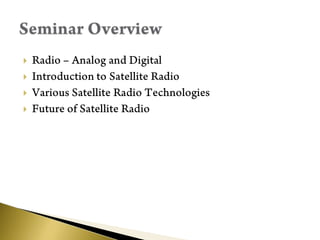
Radio – Analog and DigitalIntroduction to Satellite RadioVarious Satellite Radio TechnologiesFuture of Satellite RadioSeminar Overview
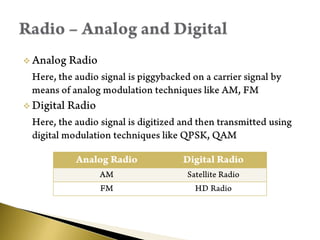
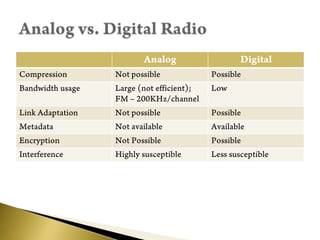
Analog RadioHere, the audio signal is piggybacked on a carrier signal by means of analog modulation techniques like AM, FMDigital RadioHere, the audio signal is digitized and then transmitted using digital modulation techniques like QPSK, QAMRadio – Analog and Digital
Analog vs. Digital Radio
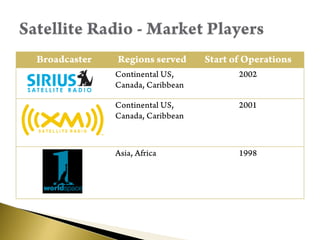
Satellite Radio - Market Players
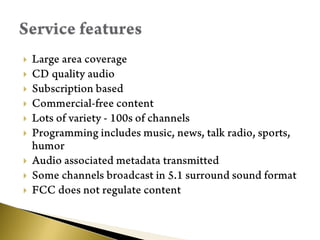
Large area coverageCD quality audioSubscription basedCommercial-free contentLots of variety - 100s of channelsProgramming includes music, news, talk radio, sports, humorAudio associated metadata transmittedSome channels broadcast in 5.1 surround sound formatFCC does not regulate contentService features
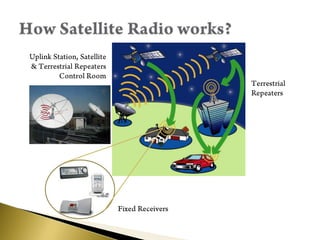
How Satellite Radio works?Uplink Station, Satellite & Terrestrial Repeaters Control RoomTerrestrial RepeatersFixed Receivers
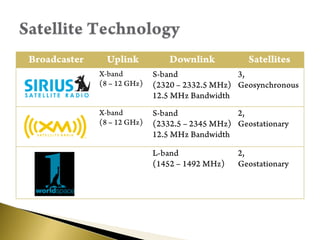
Satellite Technology
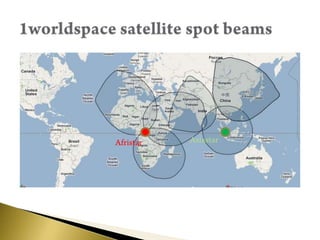
1worldspace satellite spot beamsAsiastarAfristar
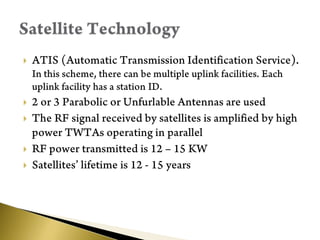
ATIS (Automatic Transmission Identification Service). In this scheme, there can be multiple uplink facilities. Each uplink facility has a station ID.2 or 3 Parabolic or Unfurlable Antennas are usedThe RF signal received by satellites is amplified by high power TWTAs operating in parallelRF power transmitted is 12 – 15 KWSatellites’ lifetime is 12 - 15 yearsSatellite Technology
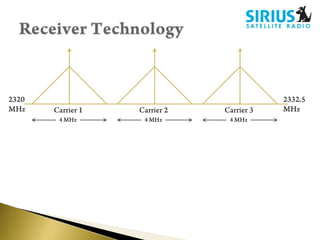
Receiver Technology2320 MHz2332.5 MHzCarrier 1Carrier 2Carrier 34 MHz4 MHz4 MHz
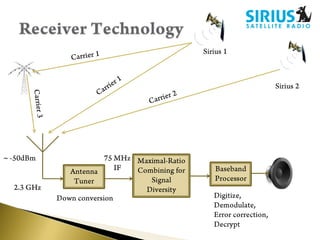
Receiver TechnologySirius 1Carrier 1Carrier 1Sirius 2Carrier 2Carrier 375 MHzIF~ -50dBmMaximal-Ratio Combining for Signal DiversityBaseband ProcessorAntenna Tuner2.3 GHzDigitize, Demodulate, Error correction, DecryptDown conversion
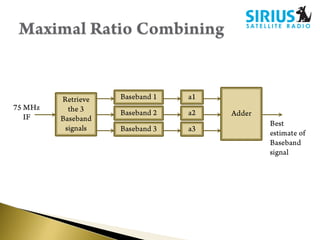
Maximal Ratio CombiningAdderBaseband 1a1Retrieve the 3 Baseband signals75 MHzIFBaseband 2a2Best estimate of Baseband signalBaseband 3a3
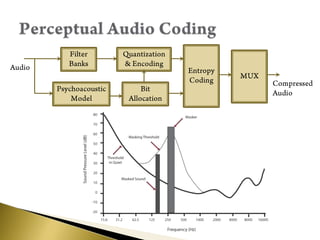
Perceptual Audio CodingEntropy CodingFilter BanksQuantization & EncodingMUXAudioCompressed AudioPsychoacoustic ModelBit Allocation
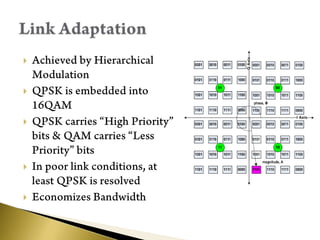
Achieved by Hierarchical ModulationQPSK is embedded into 16QAMQPSK carries “High Priority” bits & QAM carries “Less Priority” bitsIn poor link conditions, at least QPSK is resolvedEconomizes BandwidthLink Adaptation
Used to limit reception to legitimate subscribersIntegrity of contentContent ProtectionElliptical Curve Cryptography (ECC) is used for encryption. ECC provides RSA level security with a smaller key. This reduces transmission overhead.Conditional Access
Receivers ($120) and Subscriptions (>$7/month) costlyStiff competition from iPod, Internet Radio, local FMSteady Attrition RatesSirius & XM still in debtBut, the technology developed for Satellite Radio will pave the way for Satellite Digital Media Broadcasting (S-DMB)Future of Satellite Radio
Painter, T., and A. Spanias. "Perceptual coding of digital audio." Proceedings of the IEEE 88 (2000)Wikipedia entries on,	1. Sirius Radio	2. XM Radio	3. PsychoacousticsGledhill J., MacAvock P., Miles R. Whitepaper on “Hierarchical Modulation”References
Thank You !!

Satellite Radio

  • 1.
    Satellite Radio –a technological overviewSagar Medikeri,2BV06EC060
  • 2.
    Radio – Analogand DigitalIntroduction to Satellite RadioVarious Satellite Radio TechnologiesFuture of Satellite RadioSeminar Overview
  • 3.
    Analog RadioHere, theaudio signal is piggybacked on a carrier signal by means of analog modulation techniques like AM, FMDigital RadioHere, the audio signal is digitized and then transmitted using digital modulation techniques like QPSK, QAMRadio – Analog and Digital
  • 4.
  • 5.
    Satellite Radio -Market Players
  • 6.
    Large area coverageCDquality audioSubscription basedCommercial-free contentLots of variety - 100s of channelsProgramming includes music, news, talk radio, sports, humorAudio associated metadata transmittedSome channels broadcast in 5.1 surround sound formatFCC does not regulate contentService features
  • 7.
    How Satellite Radioworks?Uplink Station, Satellite & Terrestrial Repeaters Control RoomTerrestrial RepeatersFixed Receivers
  • 8.
  • 9.
    1worldspace satellite spotbeamsAsiastarAfristar
  • 10.
    ATIS (Automatic TransmissionIdentification Service). In this scheme, there can be multiple uplink facilities. Each uplink facility has a station ID.2 or 3 Parabolic or Unfurlable Antennas are usedThe RF signal received by satellites is amplified by high power TWTAs operating in parallelRF power transmitted is 12 – 15 KWSatellites’ lifetime is 12 - 15 yearsSatellite Technology
  • 11.
    Receiver Technology2320 MHz2332.5MHzCarrier 1Carrier 2Carrier 34 MHz4 MHz4 MHz
  • 12.
    Receiver TechnologySirius 1Carrier1Carrier 1Sirius 2Carrier 2Carrier 375 MHzIF~ -50dBmMaximal-Ratio Combining for Signal DiversityBaseband ProcessorAntenna Tuner2.3 GHzDigitize, Demodulate, Error correction, DecryptDown conversion
  • 13.
    Maximal Ratio CombiningAdderBaseband1a1Retrieve the 3 Baseband signals75 MHzIFBaseband 2a2Best estimate of Baseband signalBaseband 3a3
  • 14.
    Perceptual Audio CodingEntropyCodingFilter BanksQuantization & EncodingMUXAudioCompressed AudioPsychoacoustic ModelBit Allocation
  • 15.
    Achieved by HierarchicalModulationQPSK is embedded into 16QAMQPSK carries “High Priority” bits & QAM carries “Less Priority” bitsIn poor link conditions, at least QPSK is resolvedEconomizes BandwidthLink Adaptation
  • 16.
    Used to limitreception to legitimate subscribersIntegrity of contentContent ProtectionElliptical Curve Cryptography (ECC) is used for encryption. ECC provides RSA level security with a smaller key. This reduces transmission overhead.Conditional Access
  • 17.
    Receivers ($120) andSubscriptions (>$7/month) costlyStiff competition from iPod, Internet Radio, local FMSteady Attrition RatesSirius & XM still in debtBut, the technology developed for Satellite Radio will pave the way for Satellite Digital Media Broadcasting (S-DMB)Future of Satellite Radio
  • 18.
    Painter, T., andA. Spanias. "Perceptual coding of digital audio." Proceedings of the IEEE 88 (2000)Wikipedia entries on, 1. Sirius Radio 2. XM Radio 3. PsychoacousticsGledhill J., MacAvock P., Miles R. Whitepaper on “Hierarchical Modulation”References
  • 19.