
PRESENTATION BY
OMKAR TELI
NIDHI THIGALE
Location
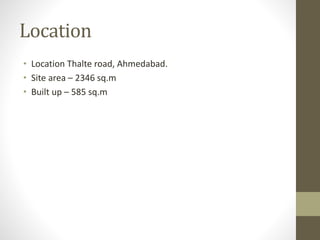
• Location Thalte road, Ahmedabad.
• Site area – 2346 sq.m
• Built up – 585 sq.m
Function
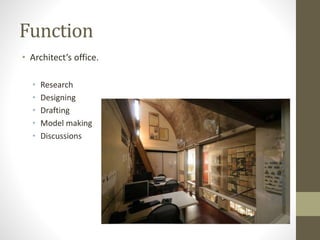
• Architect’s office.
• Research
• Designing
• Drafting
• Model making
• Discussions
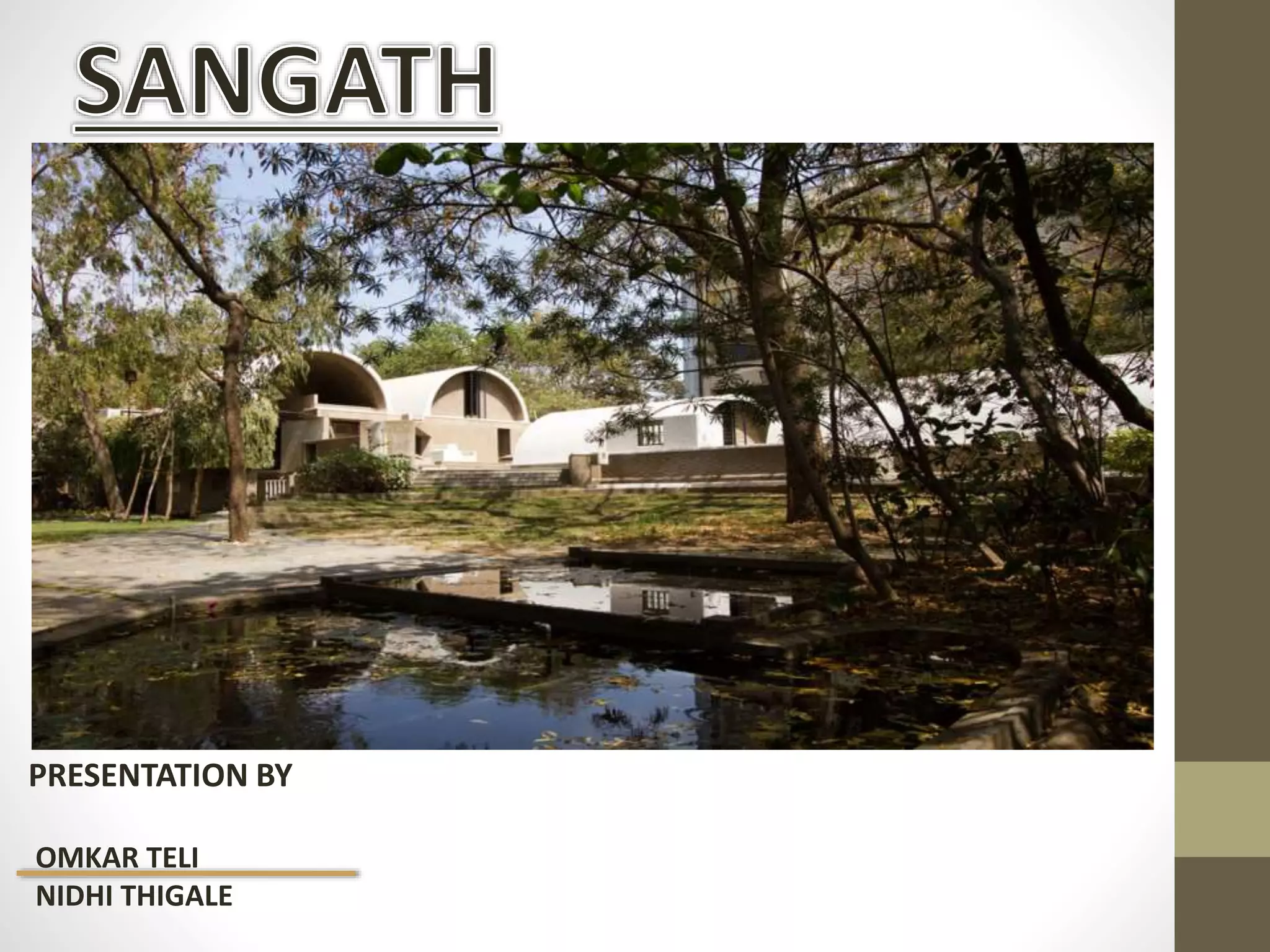
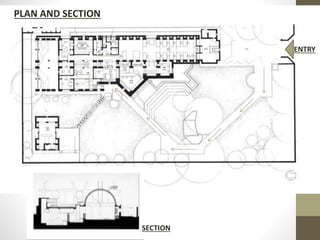
• Sangath buildings complex, a set of vaults and flat roofs at different heights.
• The building complex is built around a large courtyard terrace which is the main
entrance.
• Some of the buildings
have sunk below ground
level to certain ceilings
domes rise only to eye
level.
Concept
PLAN AND SECTION
ENTRY
SECTION
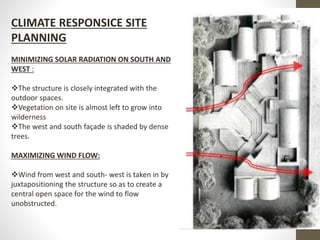
CLIMATE RESPONSICE SITE
PLANNING
MINIMIZING SOLAR RADIATION ON SOUTH AND
WEST :
The structure is closely integrated with the
outdoor spaces.
Vegetation on site is almost left to grow into
wilderness
The west and south façade is shaded by dense
trees.
MAXIMIZING WIND FLOW:
Wind from west and south- west is taken in by
juxtapositioning the structure so as to create a
central open space for the wind to flow
unobstructed.
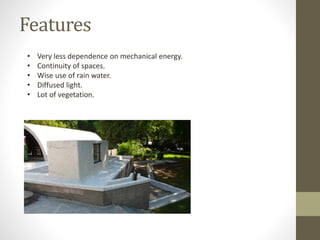
Features
• Very less dependence on mechanical energy.
• Continuity of spaces.
• Wise use of rain water.
• Diffused light.
• Lot of vegetation.
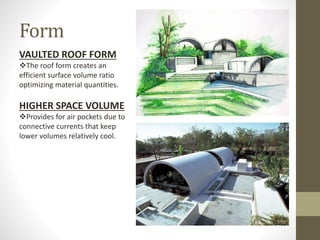
Form
VAULTED ROOF FORM
The roof form creates an
efficient surface volume ratio
optimizing material quantities.
HIGHER SPACE VOLUME
Provides for air pockets due to
connective currents that keep
lower volumes relatively cool.
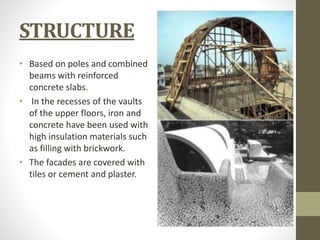
STRUCTURE
• Based on poles and combined
beams with reinforced
concrete slabs.
• In the recesses of the vaults
of the upper floors, iron and
concrete have been used with
high insulation materials such
as filling with brickwork.
• The facades are covered with
tiles or cement and plaster.
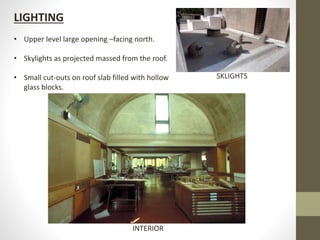
LIGHTING
• Upper level large opening –facing north.
• Skylights as projected massed from the roof.
• Small cut-outs on roof slab filled with hollow
glass blocks.
SKLIGHTS
INTERIOR
FINISHES
• The concrete of slabs and wall surfaces are
kept unplastered.
• China mosaic glazed tiles
• Enhances insulation.
• Retard heat transmission as they are
made up of clay.
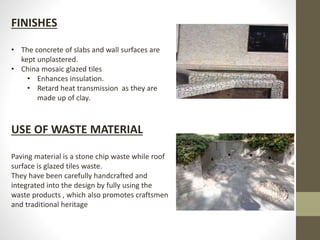
USE OF WASTE MATERIAL
Paving material is a stone chip waste while roof
surface is glazed tiles waste.
They have been carefully handcrafted and
integrated into the design by fully using the
waste products , which also promotes craftsmen
and traditional heritage
WATER CHANNELS
• Rainwater and overflow of
pumped water run through a
series of cascading tanks and
water channels to finally
culminate in a pond.
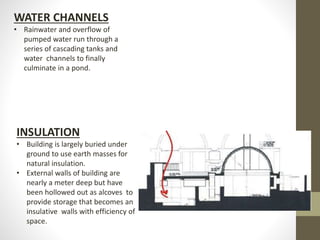
INSULATION
• Building is largely buried under
ground to use earth masses for
natural insulation.
• External walls of building are
nearly a meter deep but have
been hollowed out as alcoves to
provide storage that becomes an
insulative walls with efficiency of
space.
Scale and Proportion
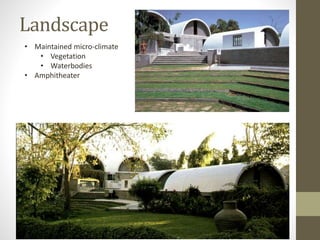
Landscape
• Maintained micro-climate
• Vegetation
• Waterbodies
• Amphitheater
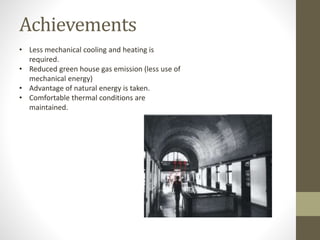
Achievements
• Less mechanical cooling and heating is
required.
• Reduced green house gas emission (less use of
mechanical energy)
• Advantage of natural energy is taken.
• Comfortable thermal conditions are
maintained.
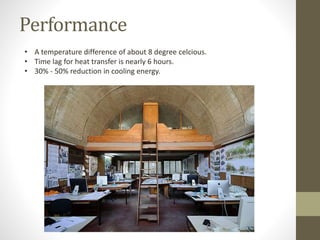
Performance
• A temperature difference of about 8 degree celcious.
• Time lag for heat transfer is nearly 6 hours.
• 30% - 50% reduction in cooling energy.
Thank you!

Sangath - B. V. Doshi's Studio

  • 1.
  • 2.
    Location • Location Thalteroad, Ahmedabad. • Site area – 2346 sq.m • Built up – 585 sq.m
  • 3.
    Function • Architect’s office. •Research • Designing • Drafting • Model making • Discussions
  • 4.
    • Sangath buildingscomplex, a set of vaults and flat roofs at different heights. • The building complex is built around a large courtyard terrace which is the main entrance. • Some of the buildings have sunk below ground level to certain ceilings domes rise only to eye level. Concept
  • 5.
  • 6.
    CLIMATE RESPONSICE SITE PLANNING MINIMIZINGSOLAR RADIATION ON SOUTH AND WEST : The structure is closely integrated with the outdoor spaces. Vegetation on site is almost left to grow into wilderness The west and south façade is shaded by dense trees. MAXIMIZING WIND FLOW: Wind from west and south- west is taken in by juxtapositioning the structure so as to create a central open space for the wind to flow unobstructed.
  • 7.
    Features • Very lessdependence on mechanical energy. • Continuity of spaces. • Wise use of rain water. • Diffused light. • Lot of vegetation.
  • 8.
    Form VAULTED ROOF FORM Theroof form creates an efficient surface volume ratio optimizing material quantities. HIGHER SPACE VOLUME Provides for air pockets due to connective currents that keep lower volumes relatively cool.
  • 9.
    STRUCTURE • Based onpoles and combined beams with reinforced concrete slabs. • In the recesses of the vaults of the upper floors, iron and concrete have been used with high insulation materials such as filling with brickwork. • The facades are covered with tiles or cement and plaster.
  • 10.
    LIGHTING • Upper levellarge opening –facing north. • Skylights as projected massed from the roof. • Small cut-outs on roof slab filled with hollow glass blocks. SKLIGHTS INTERIOR
  • 11.
    FINISHES • The concreteof slabs and wall surfaces are kept unplastered. • China mosaic glazed tiles • Enhances insulation. • Retard heat transmission as they are made up of clay. USE OF WASTE MATERIAL Paving material is a stone chip waste while roof surface is glazed tiles waste. They have been carefully handcrafted and integrated into the design by fully using the waste products , which also promotes craftsmen and traditional heritage
  • 12.
    WATER CHANNELS • Rainwaterand overflow of pumped water run through a series of cascading tanks and water channels to finally culminate in a pond. INSULATION • Building is largely buried under ground to use earth masses for natural insulation. • External walls of building are nearly a meter deep but have been hollowed out as alcoves to provide storage that becomes an insulative walls with efficiency of space.
  • 13.
  • 14.
    Landscape • Maintained micro-climate •Vegetation • Waterbodies • Amphitheater
  • 15.
    Achievements • Less mechanicalcooling and heating is required. • Reduced green house gas emission (less use of mechanical energy) • Advantage of natural energy is taken. • Comfortable thermal conditions are maintained.
  • 16.
    Performance • A temperaturedifference of about 8 degree celcious. • Time lag for heat transfer is nearly 6 hours. • 30% - 50% reduction in cooling energy.
  • 17.