Beyond Zero
Carbon Housing
exploring solutions to sustainability issues
     beyond the zero carbon agenda


2 4 th O c t o b e r 2 0 1 2 a t T h e U n i v e r s i t y o f N o t t i n g h a m
Department of Architecture and Built Environment
©
     Copyright Notice
        A l l t h e m a te r i a l i n t h e s e s l i d e s
m ay n o t b e u s e d o r re p ro d u c e d w i t h o u t t h e
     ex p re s s p e r m i s s i o n o f t h e a u t h o rs
creative empathy
     creativity and social
 rensponsibility in architecture
responsibility
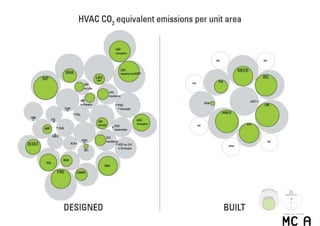
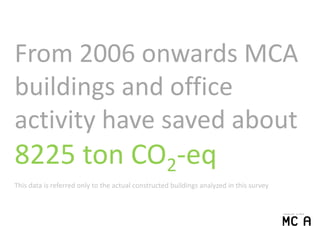
From 2006 onwards MCA
buildings and office
activity have saved about
8225 ton CO2-eq
This data is referred only to the actual constructed buildings analyzed in this survey
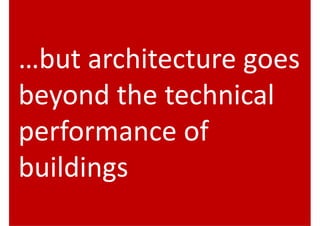
…but architecture goes
beyond the technical
performance of
buildings
Each building has the potential to redesign, not
only the internal spaces, but also the surrounding
natural, cultural and socio-economic systems.


Building can recreate the intimate relationship (the
“creative empathy”) linking places, their
inhabitants and the right use of technologies, thus
enabling the achievement of enriching and enabling
environments for life and work.
creative empathy
      the distinctive features

Low tech / high performance buildings
            empathy with the environment


  Beauty and vernacular innovation
           empathy with culture and history


Buildings as catalysts for social change
                empathy with society
Low tech / high performance buildings


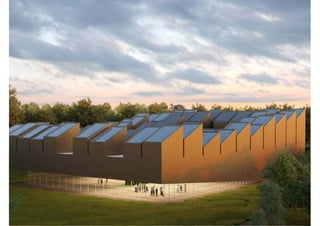
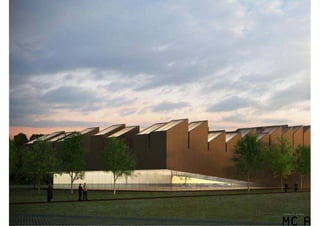
      New Headquarter for ARPA
      Agency for the protection of the environment

                     Ferrara Italy
                  (under costruction)
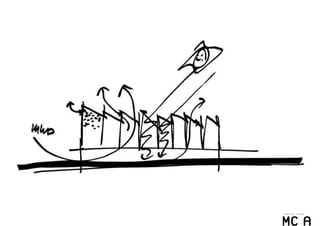
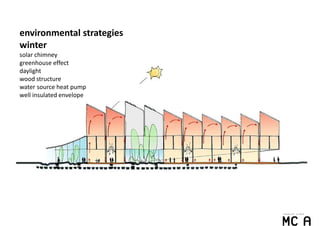
environmental strategies
winter
solar chimney
greenhouse effect
daylight
wood structure
water source heat pump
well insulated envelope
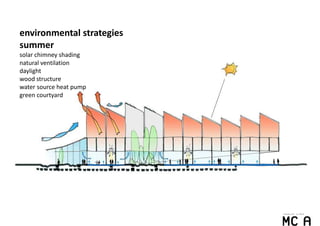
environmental strategies
summer
solar chimney shading
natural ventilation
daylight
wood structure
water source heat pump
green courtyard
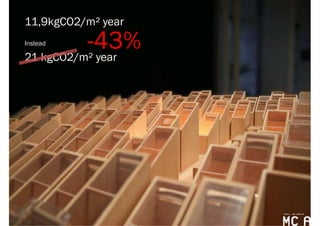
11,9kgCO2/m² year
          -43%
Instead of:

21 kgCO2/m² year
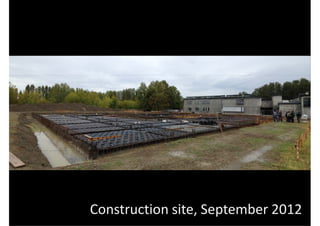
Construction site, September 2012
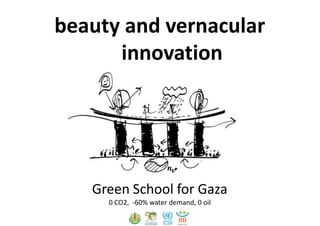
beauty and vernacular
      innovation


   Green School for Gaza
     0 CO2, -60% water demand, 0 oil
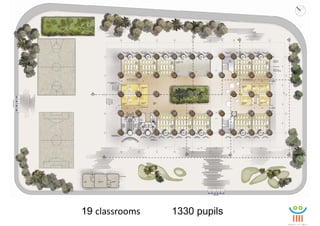
19 classrooms   1330 pupils
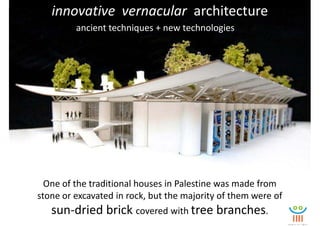
innovative vernacular architecture
         ancient techniques + new technologies


  One of the traditional houses in Palestine was made from
stone or excavated in rock, but the majority of them were of
   sun-dried brick covered with tree branches.
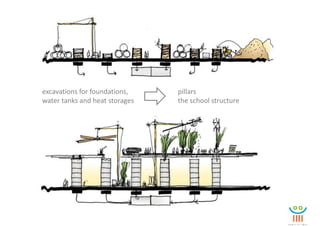
excavations for foundations,    pillars
water tanks and heat storages   the school structure
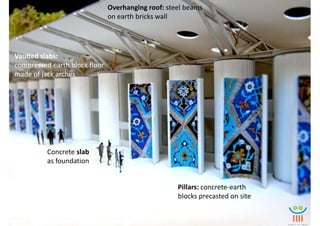
Overhanging roof: steel beams
                               on earth bricks wall


Vaulted slabs:
compressed earth block floor
made of jack arches


          Concrete slab
          as foundation


                                                    Pillars: concrete-earth
                                                    blocks precasted on site
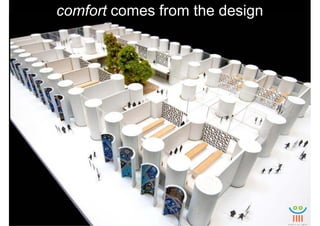
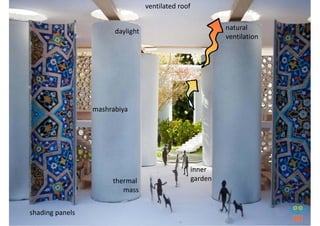
comfort comes from the design
ventilated roof


                       daylight                              natural
                                                             ventilation


                 mashrabiya


                                                    inner
                      thermal                       garden
                         mass


shading panels
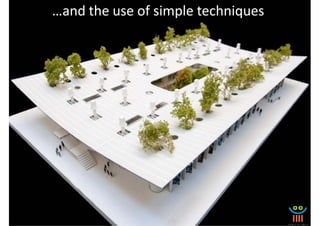
…and the use of simple techniques
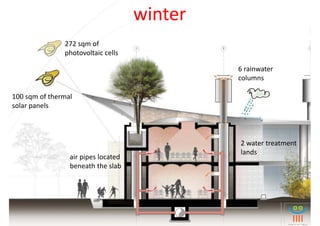
winter
               272 sqm of
               photovoltaic cells

                                              6 rainwater
                                              columns

100 sqm of thermal
solar panels


                                              2 water treatment
                                              lands
                 air pipes located
                 beneath the slab
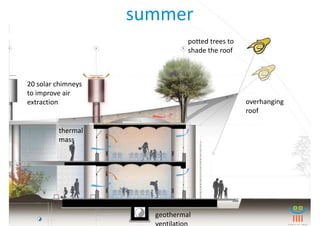
summer
                                potted trees to
                                shade the roof


20 solar chimneys
to improve air
extraction                                        overhanging
                                                  roof

         thermal
         mass


                      geothermal
                      ventilation
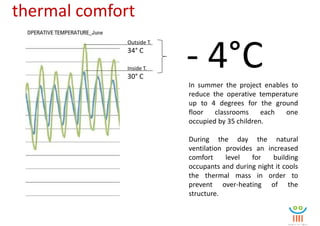
thermal comfort

                           - 4°C
              Outside T.
              34° C

              Inside T.
              30° C
                           In summer the project enables to
                           reduce the operative temperature
                           up to 4 degrees for the ground
                           floor   classrooms     each one
                           occupied by 35 children.

                           During the day the natural
                           ventilation provides an increased
                           comfort     level   for   building
                           occupants and during night it cools
                           the thermal mass in order to
                           prevent over-heating of the
                           structure.
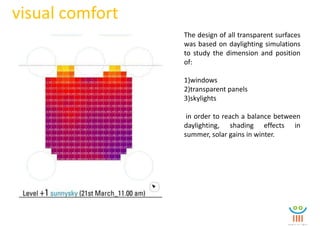
visual comfort
                 The design of all transparent surfaces
                 was based on daylighting simulations
                 to study the dimension and position
                 of:

                 1)windows
                 2)transparent panels
                 3)skylights

                  in order to reach a balance between
                 daylighting, shading effects in
                 summer, solar gains in winter.
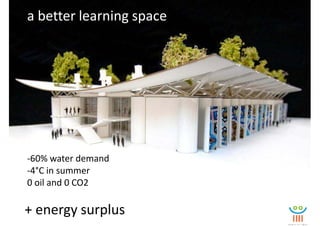
a better learning space


-60% water demand
-4°C in summer
0 oil and 0 CO2

+ energy surplus
Buildings as catalysts for
     social change/1

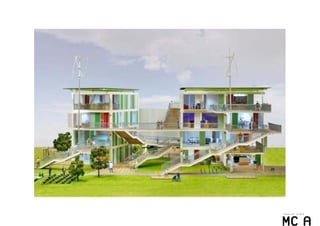
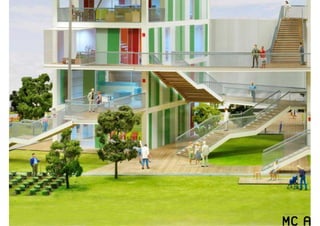
   For a new social housing plan
           ( under costruction)
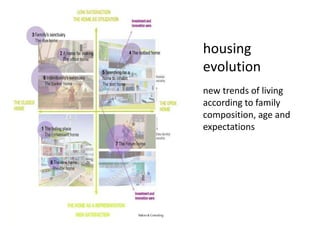
housing
evolution
new trends of living
according to family
composition, age and
expectations
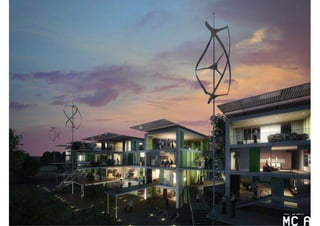
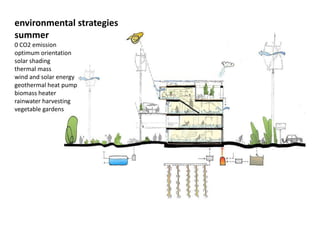
environmental strategies
summer
0 CO2 emission
optimum orientation
solar shading
thermal mass
wind and solar energy
geothermal heat pump
biomass heater
rainwater harvesting
vegetable gardens
Buildings as catalysts for
     social change/2

              Aler
       a new student housing
                 +
              retrofit
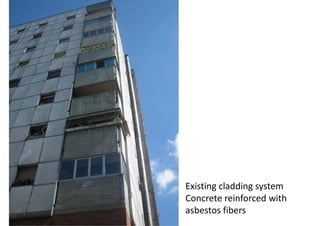
Existing cladding system
Concrete reinforced with
asbestos fibers
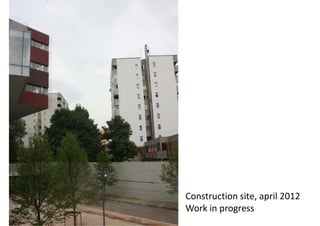
Construction site, april 2012
Work in progress
Beyond Zero Carbon Housing - Mario Cucinella

Beyond Zero Carbon Housing - Mario Cucinella

  • 1.
    Beyond Zero Carbon Housing exploringsolutions to sustainability issues beyond the zero carbon agenda 2 4 th O c t o b e r 2 0 1 2 a t T h e U n i v e r s i t y o f N o t t i n g h a m Department of Architecture and Built Environment
  • 2.
    © Copyright Notice A l l t h e m a te r i a l i n t h e s e s l i d e s m ay n o t b e u s e d o r re p ro d u c e d w i t h o u t t h e ex p re s s p e r m i s s i o n o f t h e a u t h o rs
  • 3.
    creative empathy creativity and social rensponsibility in architecture
  • 4.
  • 8.
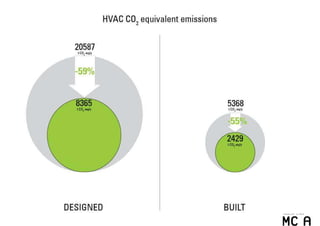
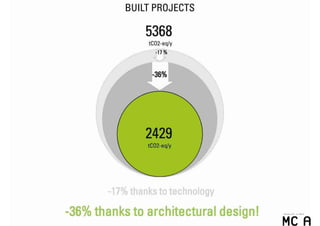
    From 2006 onwardsMCA buildings and office activity have saved about 8225 ton CO2-eq This data is referred only to the actual constructed buildings analyzed in this survey
  • 9.
    …but architecture goes beyondthe technical performance of buildings
  • 10.
    Each building hasthe potential to redesign, not only the internal spaces, but also the surrounding natural, cultural and socio-economic systems. Building can recreate the intimate relationship (the “creative empathy”) linking places, their inhabitants and the right use of technologies, thus enabling the achievement of enriching and enabling environments for life and work.
  • 11.
    creative empathy the distinctive features Low tech / high performance buildings empathy with the environment Beauty and vernacular innovation empathy with culture and history Buildings as catalysts for social change empathy with society
  • 12.
    Low tech /high performance buildings New Headquarter for ARPA Agency for the protection of the environment Ferrara Italy (under costruction)
  • 18.
    environmental strategies winter solar chimney greenhouseeffect daylight wood structure water source heat pump well insulated envelope
  • 19.
    environmental strategies summer solar chimneyshading natural ventilation daylight wood structure water source heat pump green courtyard
  • 20.
    11,9kgCO2/m² year -43% Instead of: 21 kgCO2/m² year
  • 22.
  • 23.
    beauty and vernacular innovation Green School for Gaza 0 CO2, -60% water demand, 0 oil
  • 25.
    19 classrooms 1330 pupils
  • 26.
    innovative vernacular architecture ancient techniques + new technologies One of the traditional houses in Palestine was made from stone or excavated in rock, but the majority of them were of sun-dried brick covered with tree branches.
  • 27.
    excavations for foundations, pillars water tanks and heat storages the school structure
  • 28.
    Overhanging roof: steelbeams on earth bricks wall Vaulted slabs: compressed earth block floor made of jack arches Concrete slab as foundation Pillars: concrete-earth blocks precasted on site
  • 29.
  • 30.
    ventilated roof daylight natural ventilation mashrabiya inner thermal garden mass shading panels
  • 31.
    …and the useof simple techniques
  • 32.
    winter 272 sqm of photovoltaic cells 6 rainwater columns 100 sqm of thermal solar panels 2 water treatment lands air pipes located beneath the slab
  • 33.
    summer potted trees to shade the roof 20 solar chimneys to improve air extraction overhanging roof thermal mass geothermal ventilation
  • 34.
    thermal comfort - 4°C Outside T. 34° C Inside T. 30° C In summer the project enables to reduce the operative temperature up to 4 degrees for the ground floor classrooms each one occupied by 35 children. During the day the natural ventilation provides an increased comfort level for building occupants and during night it cools the thermal mass in order to prevent over-heating of the structure.
  • 35.
    visual comfort The design of all transparent surfaces was based on daylighting simulations to study the dimension and position of: 1)windows 2)transparent panels 3)skylights in order to reach a balance between daylighting, shading effects in summer, solar gains in winter.
  • 36.
    a better learningspace -60% water demand -4°C in summer 0 oil and 0 CO2 + energy surplus
  • 37.
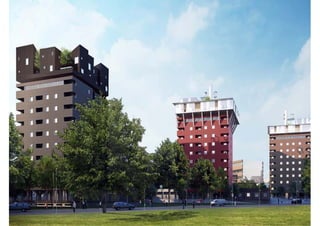
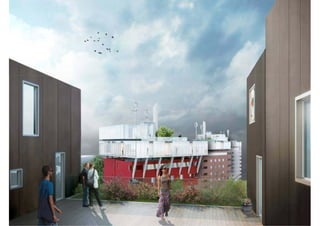
    Buildings as catalystsfor social change/1 For a new social housing plan ( under costruction)
  • 38.
    housing evolution new trends ofliving according to family composition, age and expectations
  • 44.
    environmental strategies summer 0 CO2emission optimum orientation solar shading thermal mass wind and solar energy geothermal heat pump biomass heater rainwater harvesting vegetable gardens
  • 45.
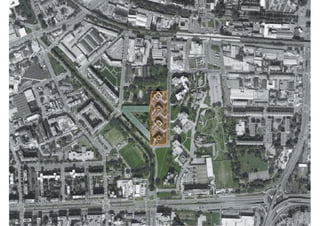
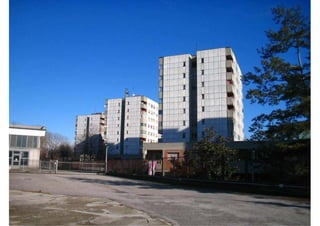
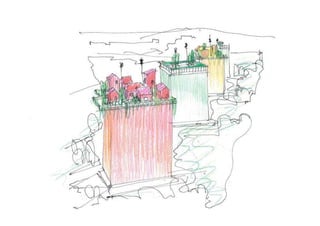
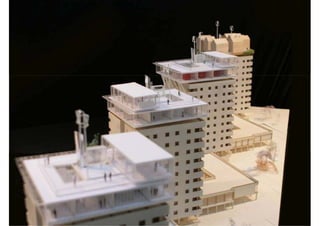
    Buildings as catalystsfor social change/2 Aler a new student housing + retrofit
  • 51.
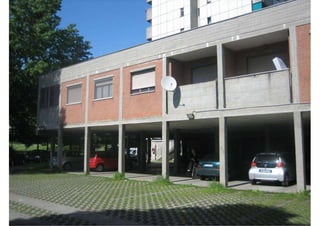
    Existing cladding system Concretereinforced with asbestos fibers
  • 52.
    Construction site, april2012 Work in progress