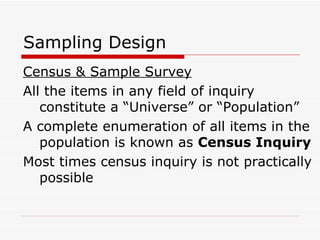
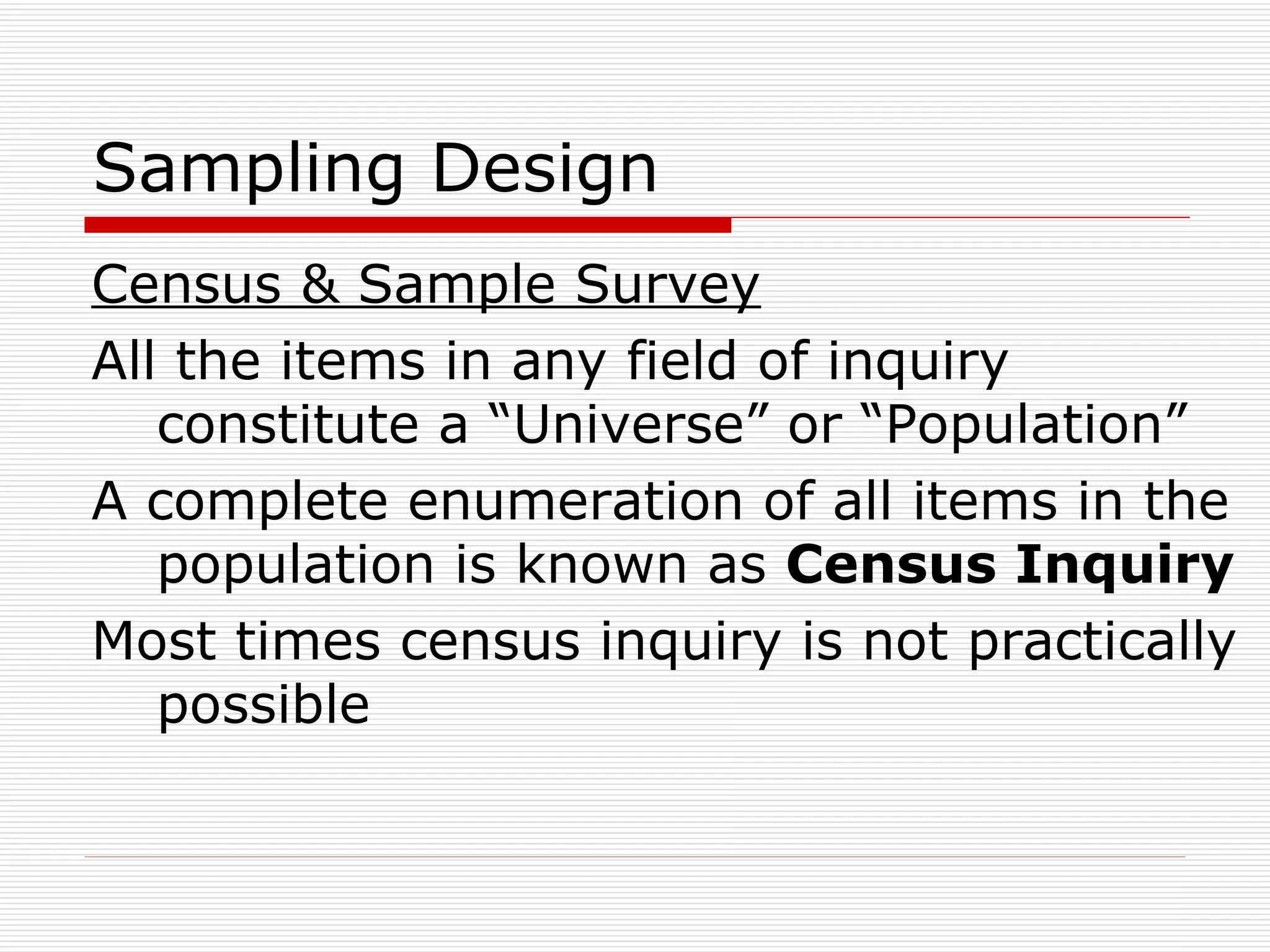
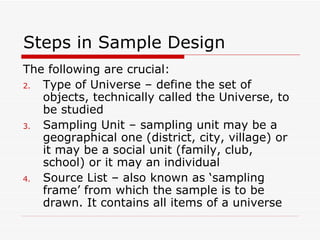
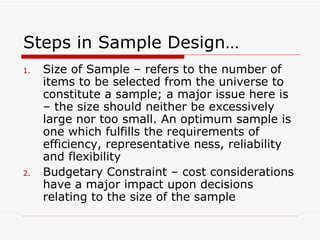
The document discusses sampling design and different types of sampling techniques. It explains that a census collects data from the entire population while a sample survey selects a sample of respondents that is representative of the total population. There are two main types of sampling designs - probability sampling, where each item has a known chance of being selected, and non-probability sampling, which does not use random selection. The key steps in developing a sampling design are determining the target population, sampling unit, sampling frame, sample size, and sampling procedure. Factors like costs and reducing bias and sampling errors must also be considered.