Safe Pipeline Pigging Procedures
Pipeline pig FAQs, use and results
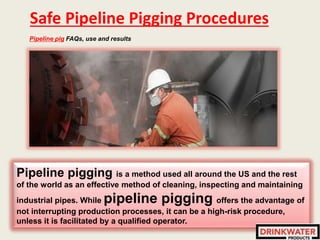
Pipeline pigging is a method used all around the US and the rest
of the world as an effective method of cleaning, inspecting and maintaining
industrial pipes. While pipeline pigging offers the advantage of
not interrupting production processes, it can be a high-risk procedure,
unless it is facilitated by a qualified operator.
Any type of pipeline pigging requires
extensive planning, and professional
assistance for either the pig
manufacturers or a qualified pipeline
cleaning service company. The key to
safe operation is to eliminate or at least
minimize ILI tool sensor liftoff. Proper
application ensures maximum results for
companies, whether they require
mechanical dry pigging or liquid pipeline
pigging with mechanical pigs.
The process involves launcher and receiving station,
which is generally a vessel that is connected parallel
to the pipeline that will be cleaned or inspected. This
method enables the operator to launch and receive
the pipeline pig, using the normal operating
pressure of the pipeline to propel it forward without
stopping production or interrupting the flow of the
liquid product.
The launcher or receiver vessel has a closure door for
safe operation, and the process involves a sequence
of valve operations combined with opening and
closing of the door. A mistake during this operation
could have dire consequences.
Pipeline Pigging Launcher and Receiver Station
Operation
Safe operation of the pipeline pigging closure door
requires that the operator follows certain safety
procedures before opening the closure:
• Drain and depressurize the vessel.
• Isolate the vessel from the process pipeline.
• If drain systems or vent headers are present, the vessel must
first be isolated.
• The vessel should not contain any toxic gasses, such as H2S.
• The vessel must be isolated when the door is open.
• The closure must be shut tightly before the launching or
receiving process commences.
Production may be interrupted if the throttle is
not opened fully before the operator isolates
the launcher or receiver station and that's why
it is so important to prevent opening the doors
when the system is under pressure.
Pipeline pigging inspections ensure that your
system is operating as it should. The pig will
measure a range of variables from the inside,
including the volume, pressure and wall
thickness. Again, this process should be
handled by a professional pipeline pigging
operator who is trained to administer the pig
and interpret the results.
When buying a pipeline pigging
system, be sure to deal with a
reputable ILI company who is able to
offer the support needed for best
results.
References
Drinkwater Products: Pipeline
Pigs, Pikotek Gaskets, Pipeline
Pigging
http://www.drinkwaterproducts.com/

Safe Pipeline Pigging Procedures

  • 1.
    Safe Pipeline PiggingProcedures Pipeline pig FAQs, use and results Pipeline pigging is a method used all around the US and the rest of the world as an effective method of cleaning, inspecting and maintaining industrial pipes. While pipeline pigging offers the advantage of not interrupting production processes, it can be a high-risk procedure, unless it is facilitated by a qualified operator.
  • 2.
    Any type ofpipeline pigging requires extensive planning, and professional assistance for either the pig manufacturers or a qualified pipeline cleaning service company. The key to safe operation is to eliminate or at least minimize ILI tool sensor liftoff. Proper application ensures maximum results for companies, whether they require mechanical dry pigging or liquid pipeline pigging with mechanical pigs.
  • 3.
    The process involveslauncher and receiving station, which is generally a vessel that is connected parallel to the pipeline that will be cleaned or inspected. This method enables the operator to launch and receive the pipeline pig, using the normal operating pressure of the pipeline to propel it forward without stopping production or interrupting the flow of the liquid product. The launcher or receiver vessel has a closure door for safe operation, and the process involves a sequence of valve operations combined with opening and closing of the door. A mistake during this operation could have dire consequences.
  • 4.
    Pipeline Pigging Launcherand Receiver Station Operation Safe operation of the pipeline pigging closure door requires that the operator follows certain safety procedures before opening the closure: • Drain and depressurize the vessel. • Isolate the vessel from the process pipeline. • If drain systems or vent headers are present, the vessel must first be isolated. • The vessel should not contain any toxic gasses, such as H2S. • The vessel must be isolated when the door is open. • The closure must be shut tightly before the launching or receiving process commences.
  • 5.
    Production may beinterrupted if the throttle is not opened fully before the operator isolates the launcher or receiver station and that's why it is so important to prevent opening the doors when the system is under pressure. Pipeline pigging inspections ensure that your system is operating as it should. The pig will measure a range of variables from the inside, including the volume, pressure and wall thickness. Again, this process should be handled by a professional pipeline pigging operator who is trained to administer the pig and interpret the results.
  • 6.
    When buying apipeline pigging system, be sure to deal with a reputable ILI company who is able to offer the support needed for best results. References Drinkwater Products: Pipeline Pigs, Pikotek Gaskets, Pipeline Pigging http://www.drinkwaterproducts.com/