rubricsmaking them work for you
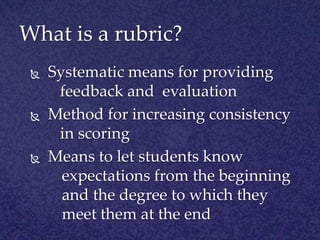
What is a rubric?Systematic means for providing 	feedback and  evaluationMethod for increasing consistency 	in scoringMeans to let students know 	expectations from the beginning 	and the degree to which they 	meet them at the end
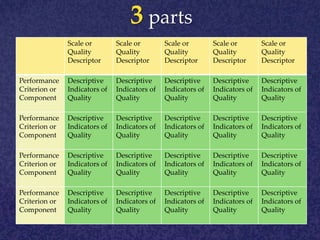
3parts
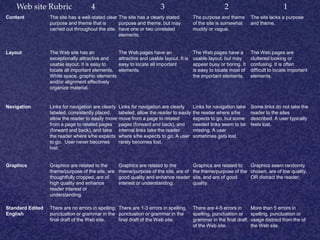
4321Web site Rubric
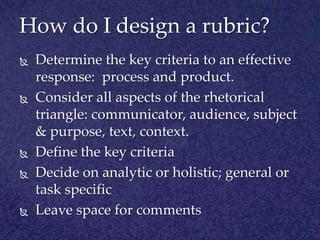
How do I design a rubric?Determine the key criteria to an effective response:  process and product.Consider all aspects of the rhetorical triangle: communicator, audience, subject & purpose, text, context.Define the key criteriaDecide on analytic or holistic; general or task specificLeave space for comments
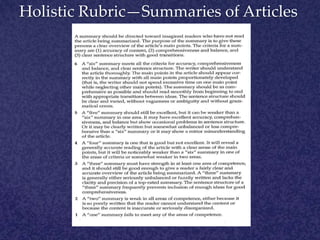
Holistic Rubric—Summaries of Articles
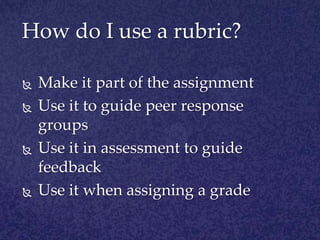
How do I use a rubric?Make it part of the assignmentUse it to guide peer response groupsUse it in assessment to guide feedback Use it when assigning a grade
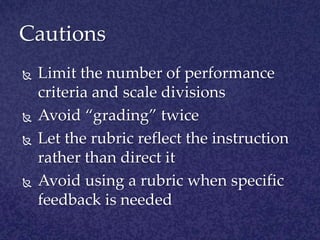
CautionsLimit the number of performance criteria and scale divisionsAvoid “grading” twiceLet the rubric reflect the instruction rather than direct itAvoid using a rubric when specific feedback is needed
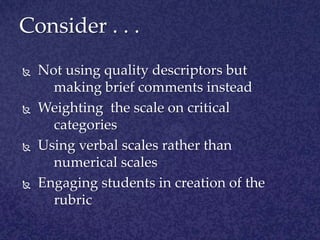
Consider . . . Not using quality descriptors but 	making brief comments insteadWeighting  the scale on critical 	categoriesUsing verbal scales rather than 	numerical scalesEngaging students in creation of the 	rubric
Engaging students in the processBill Platt, Biological Sciences
Resources for designing rubrics:definitions, examples, suggestions for rubricsrubric generator—Rubistarother generatorsguidelines for rubricsCxC template for rubric for  writing assignment

Rubric Development

  • 1.
  • 2.
    What is arubric?Systematic means for providing feedback and evaluationMethod for increasing consistency in scoringMeans to let students know expectations from the beginning and the degree to which they meet them at the end
  • 3.
  • 4.
  • 5.
    How do Idesign a rubric?Determine the key criteria to an effective response: process and product.Consider all aspects of the rhetorical triangle: communicator, audience, subject & purpose, text, context.Define the key criteriaDecide on analytic or holistic; general or task specificLeave space for comments
  • 6.
  • 7.
    How do Iuse a rubric?Make it part of the assignmentUse it to guide peer response groupsUse it in assessment to guide feedback Use it when assigning a grade
  • 8.
    CautionsLimit the numberof performance criteria and scale divisionsAvoid “grading” twiceLet the rubric reflect the instruction rather than direct itAvoid using a rubric when specific feedback is needed
  • 9.
    Consider . .. Not using quality descriptors but making brief comments insteadWeighting the scale on critical categoriesUsing verbal scales rather than numerical scalesEngaging students in creation of the rubric
  • 10.
    Engaging students inthe processBill Platt, Biological Sciences
  • 11.
    Resources for designingrubrics:definitions, examples, suggestions for rubricsrubric generator—Rubistarother generatorsguidelines for rubricsCxC template for rubric for writing assignment