RACHEL PEREZ-TULING
CLASSROOM-
BASED
ASSESSMENT
TOOLS
Activity 1: Answer the following questions
1. How do you use assessment inside the
classroom?
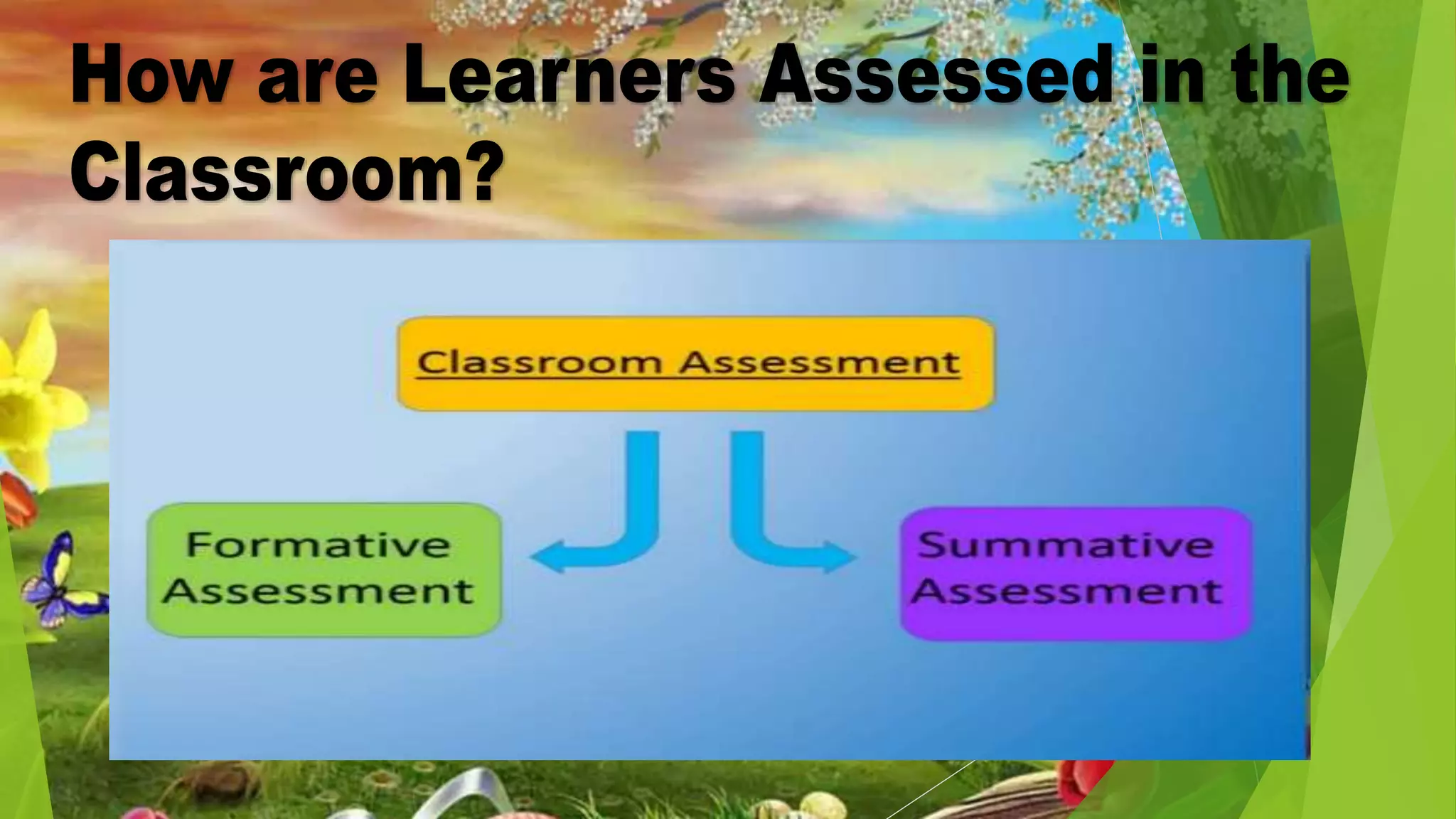
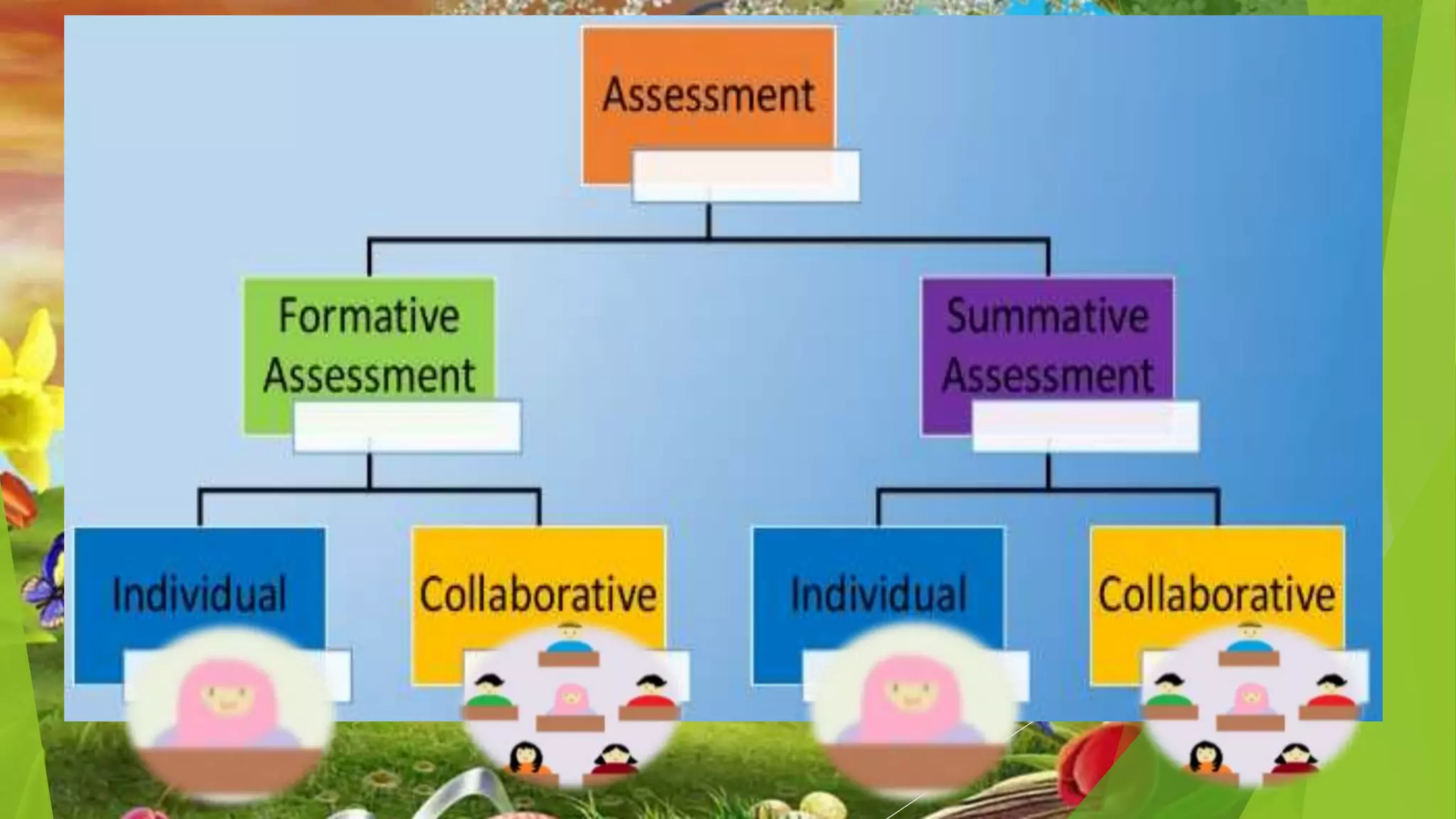
2. What are the different forms of assessment
you use when you teach?
3. What is classroom assessment?
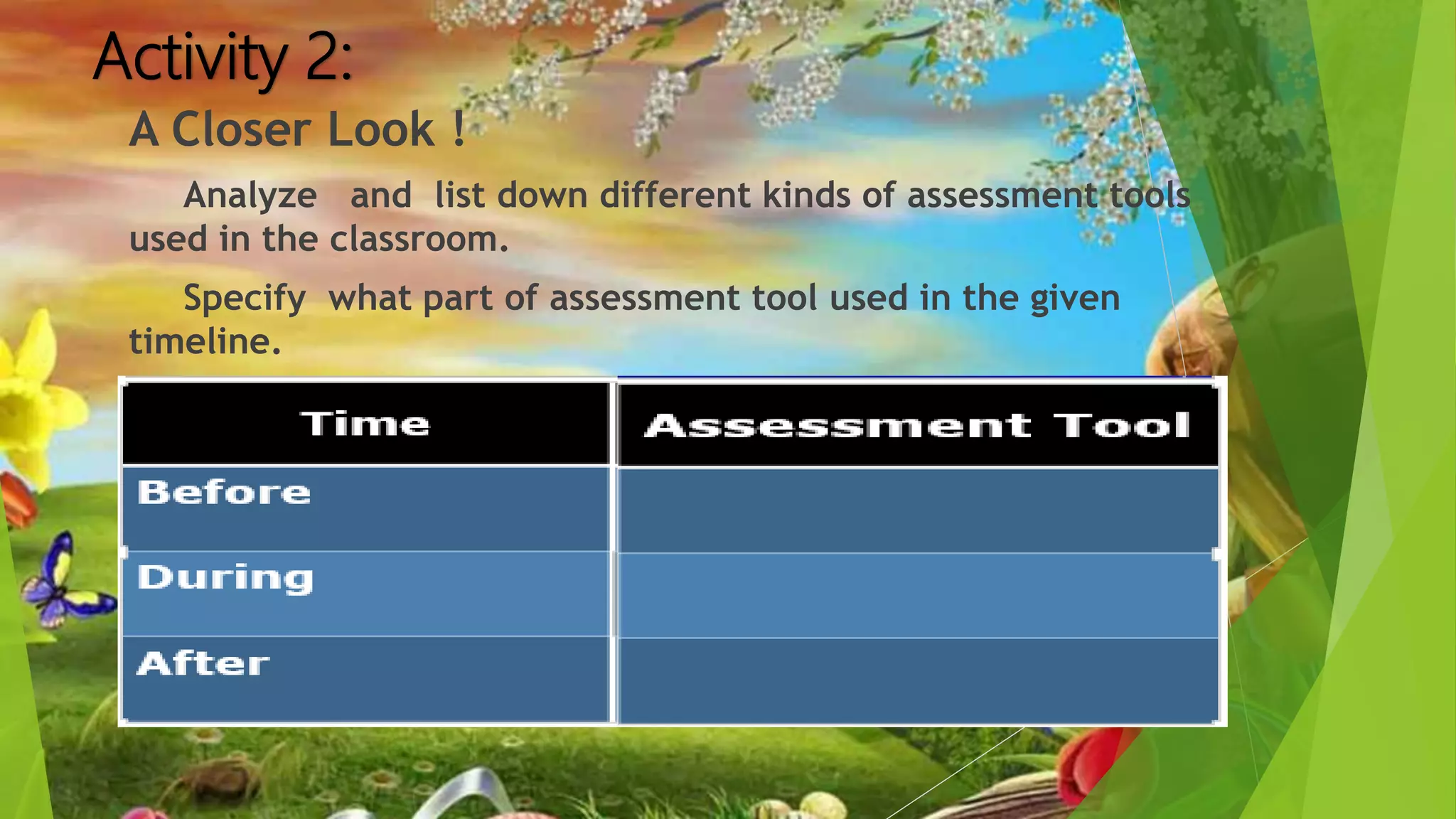
Activity 2:
A Closer Look !
Analyze and list down different kinds of assessment tools
used in the classroom.
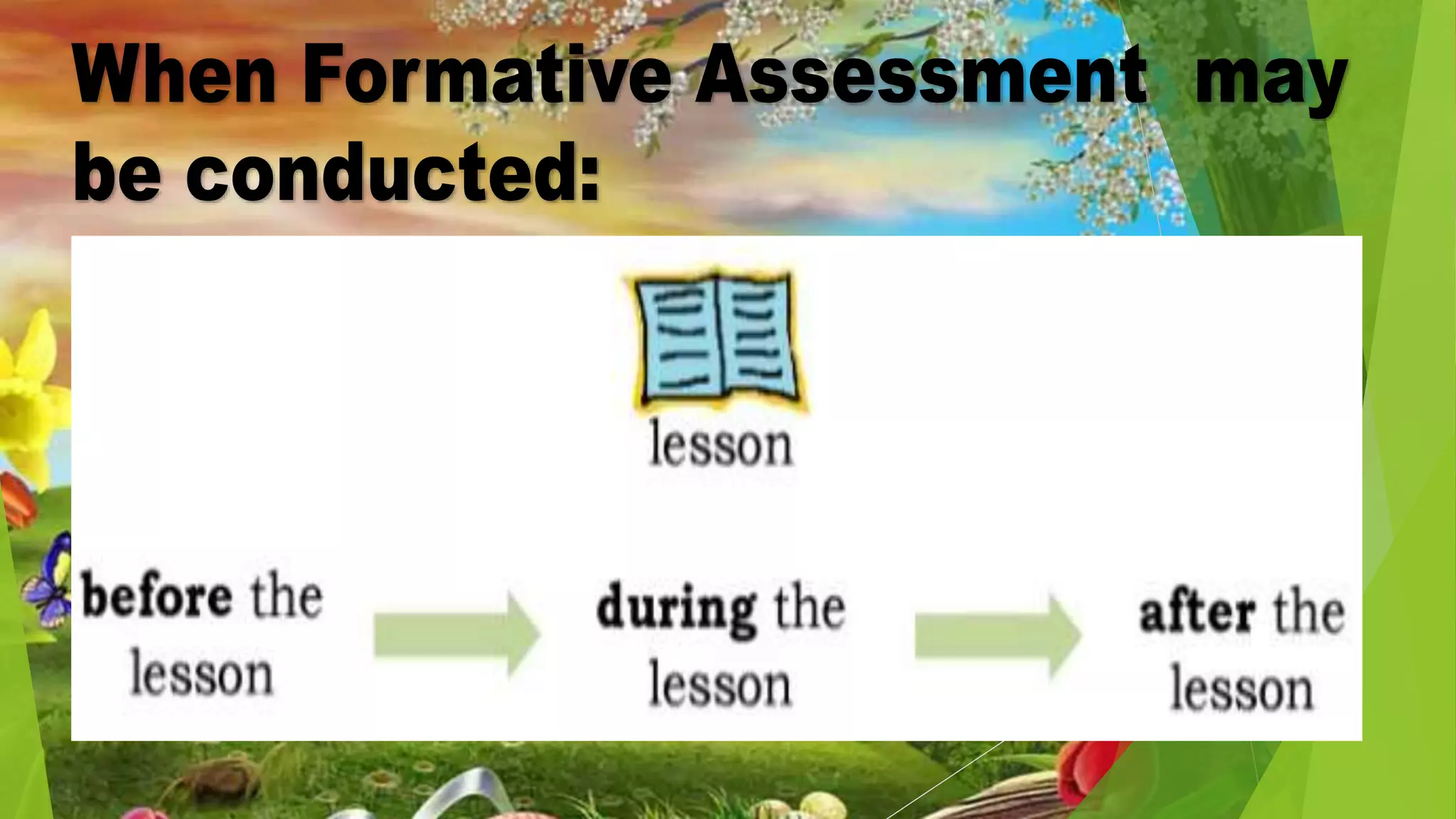
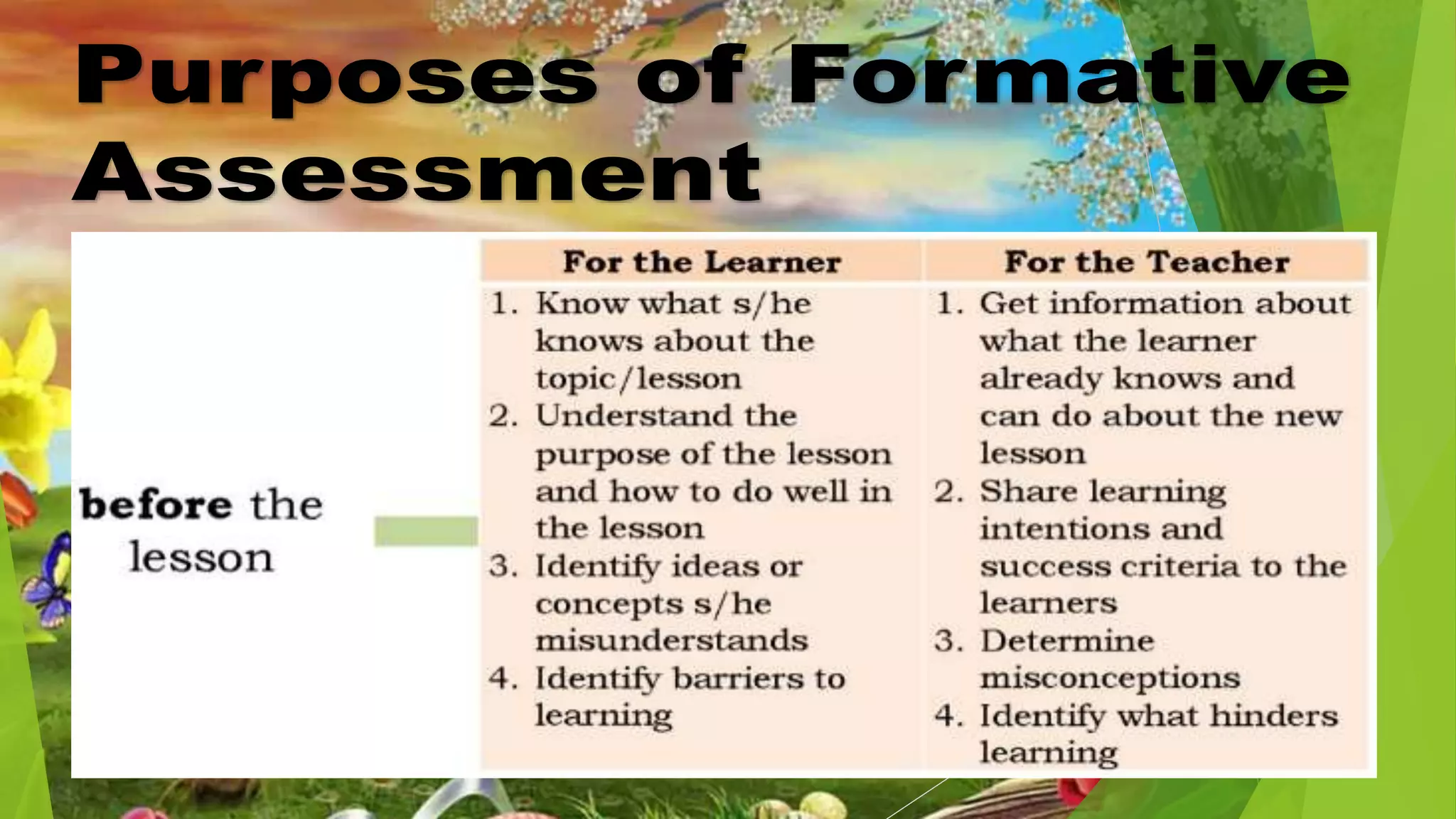
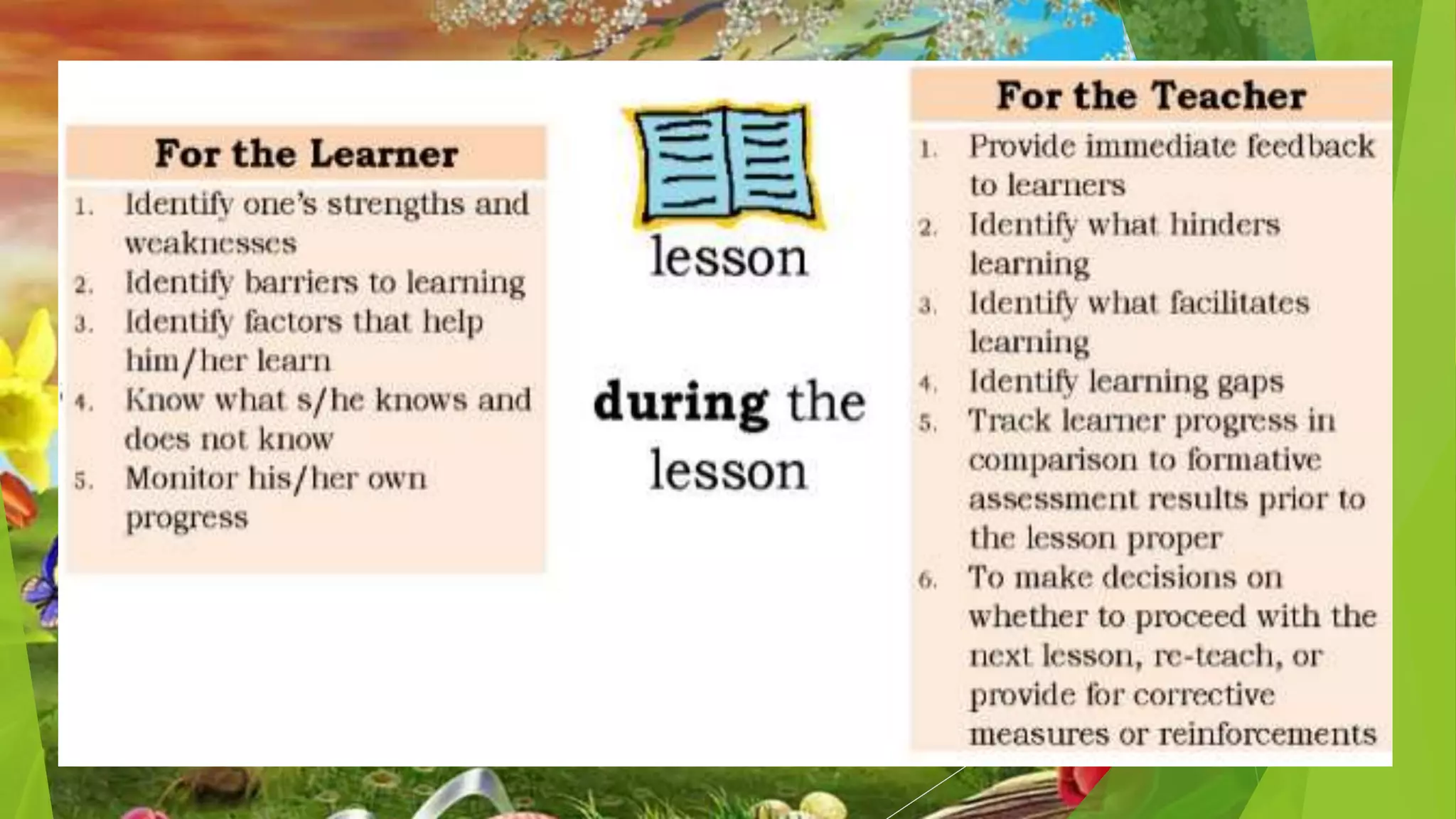
Specify what part of assessment tool used in the given
timeline.
Assessment in the K to 12 Basic
Education Program recognizes:
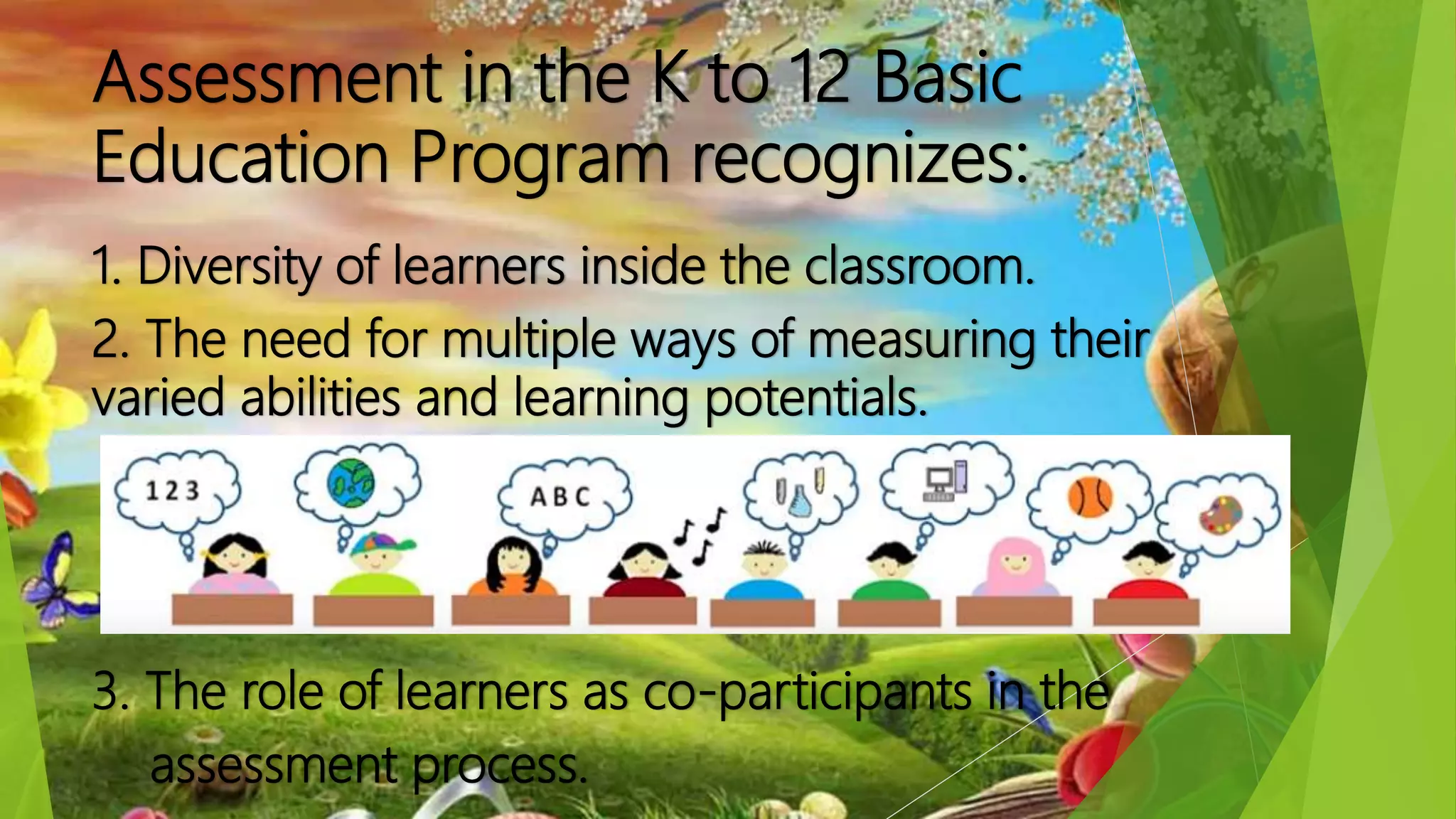
1. Diversity of learners inside the classroom.
2. The need for multiple ways of measuring their
varied abilities and learning potentials.
3. The role of learners as co-participants in the
assessment process.
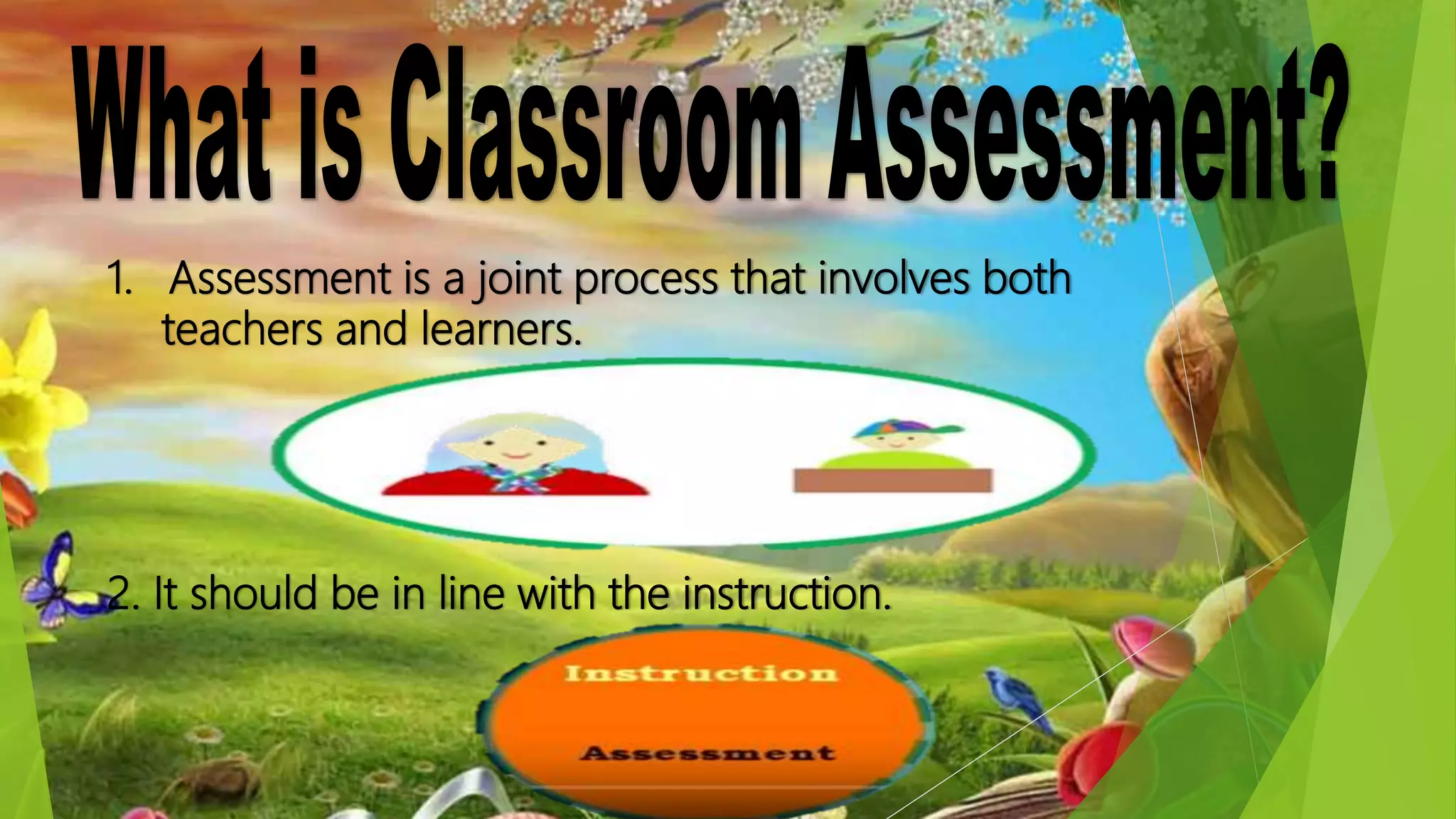
1. Assessment is a joint process that involves both
teachers and learners.
2. It should be in line with the instruction.
3. It is used to track learners` progress in
relation to learning standards and
development of 21st century skills.
4. It provides bases for the profiling of
student performances on the learning
competencies and standards of the
curriculum.
5. It promotes self-reflection and personal
accountability among students about their
own learning.
6. Classroom assessment is a process of
identifying, gathering, organizing and
interpreting quantitative and qualitative
information about what learners know and
can do.
7. Classroom assessment method shoud be
consistent with curriculum standards.
8. It measures achievement of competencies
by the learners.
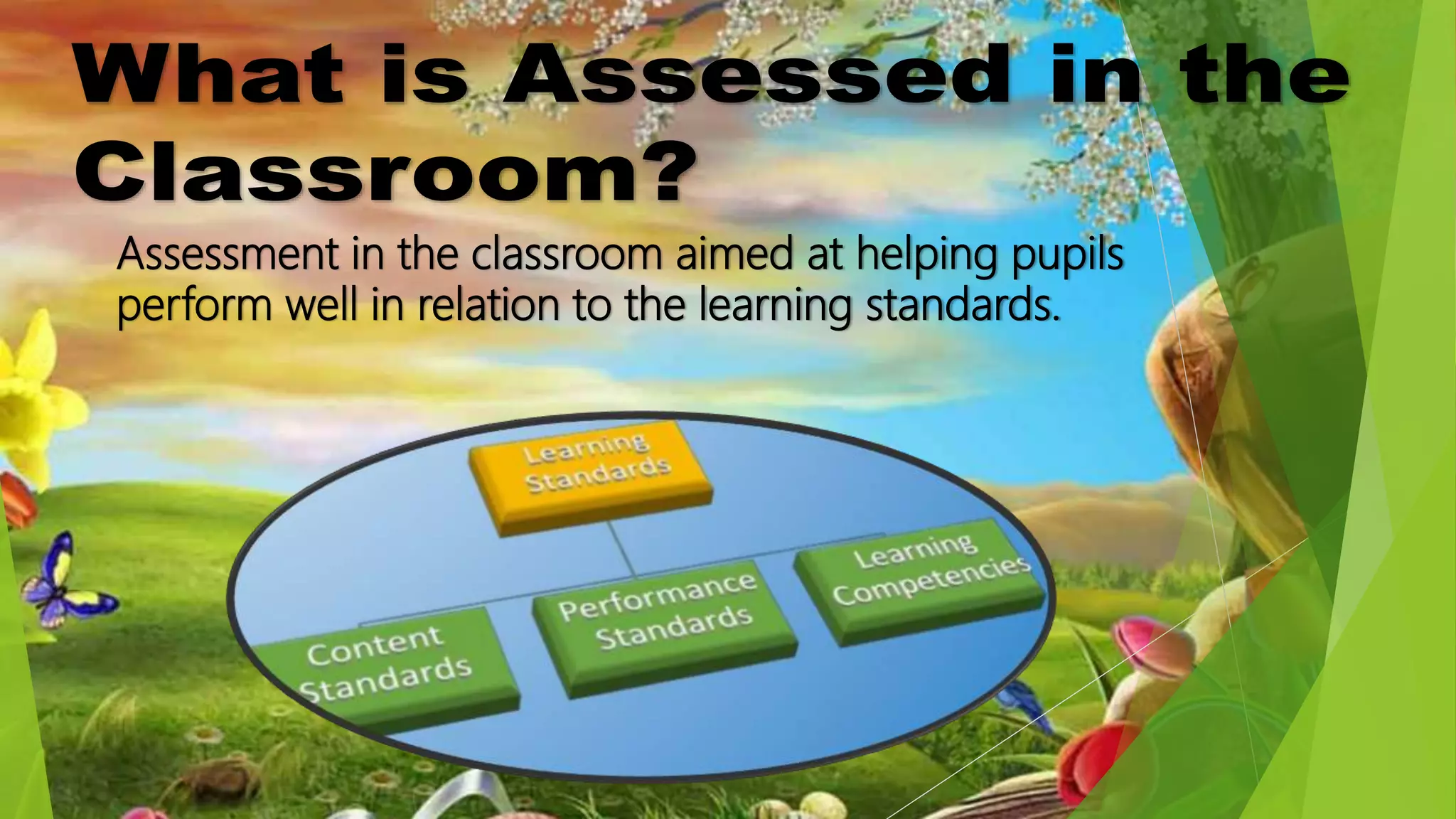
Assessment in the classroom aimed at helping pupils
perform well in relation to the learning standards.
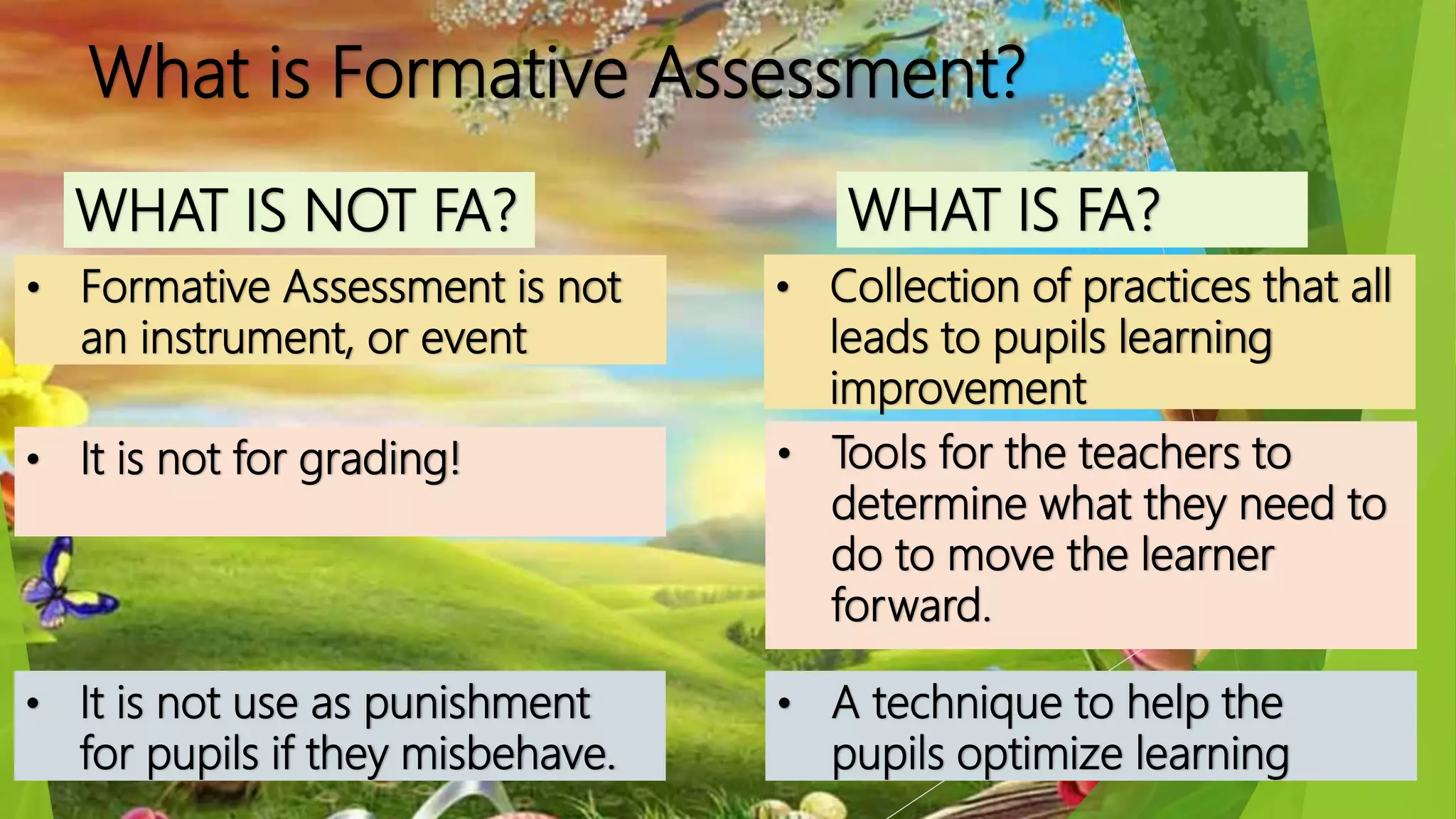
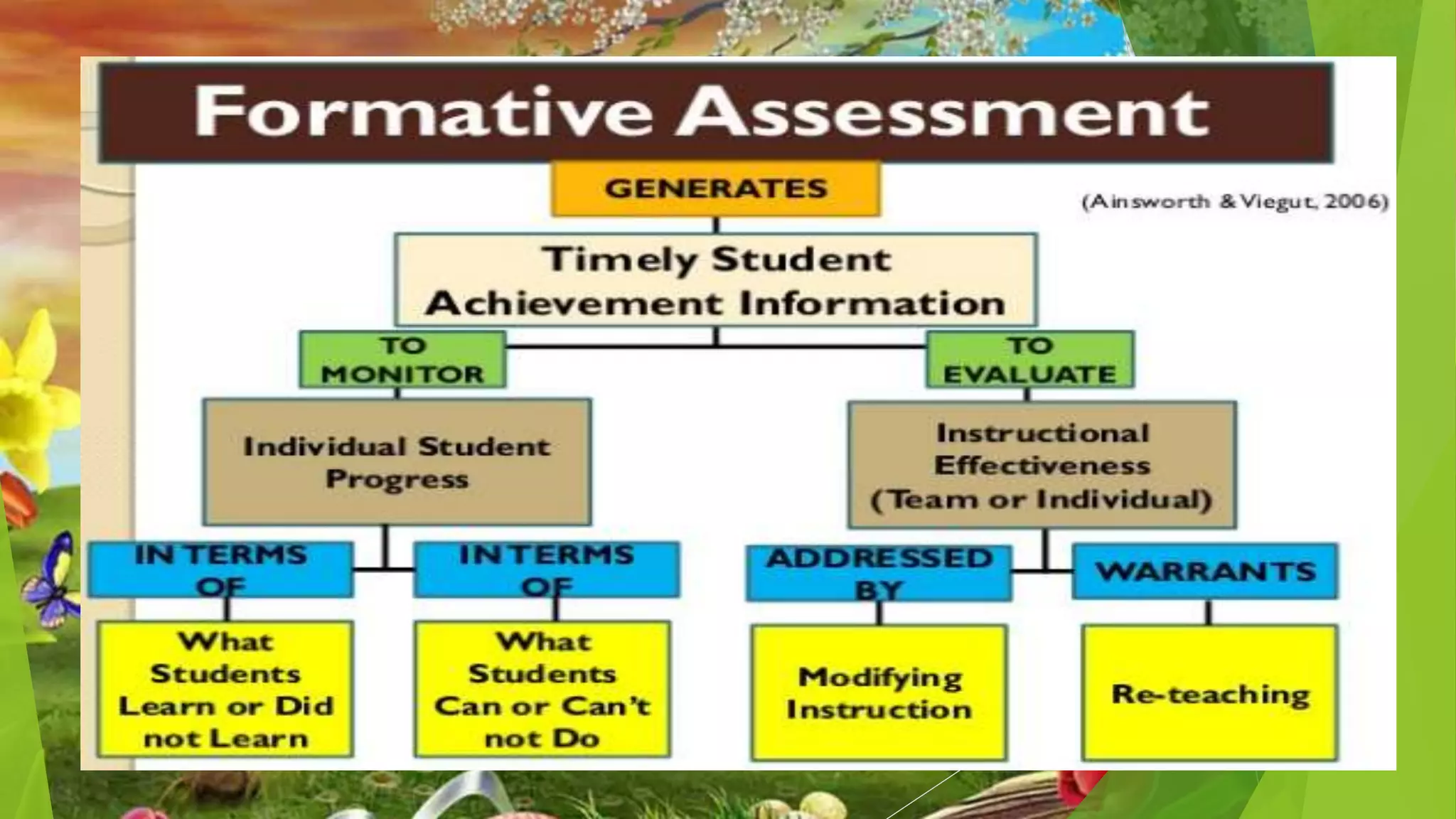
What is Formative Assessment?
WHAT IS NOT FA?
• Formative Assessment is not
an instrument, or event
• It is not for grading!
• A technique to help the
pupils optimize learning
WHAT IS FA?
• Collection of practices that all
leads to pupils learning
improvement
• Tools for the teachers to
determine what they need to
do to move the learner
forward.
• It is not use as punishment
for pupils if they misbehave.
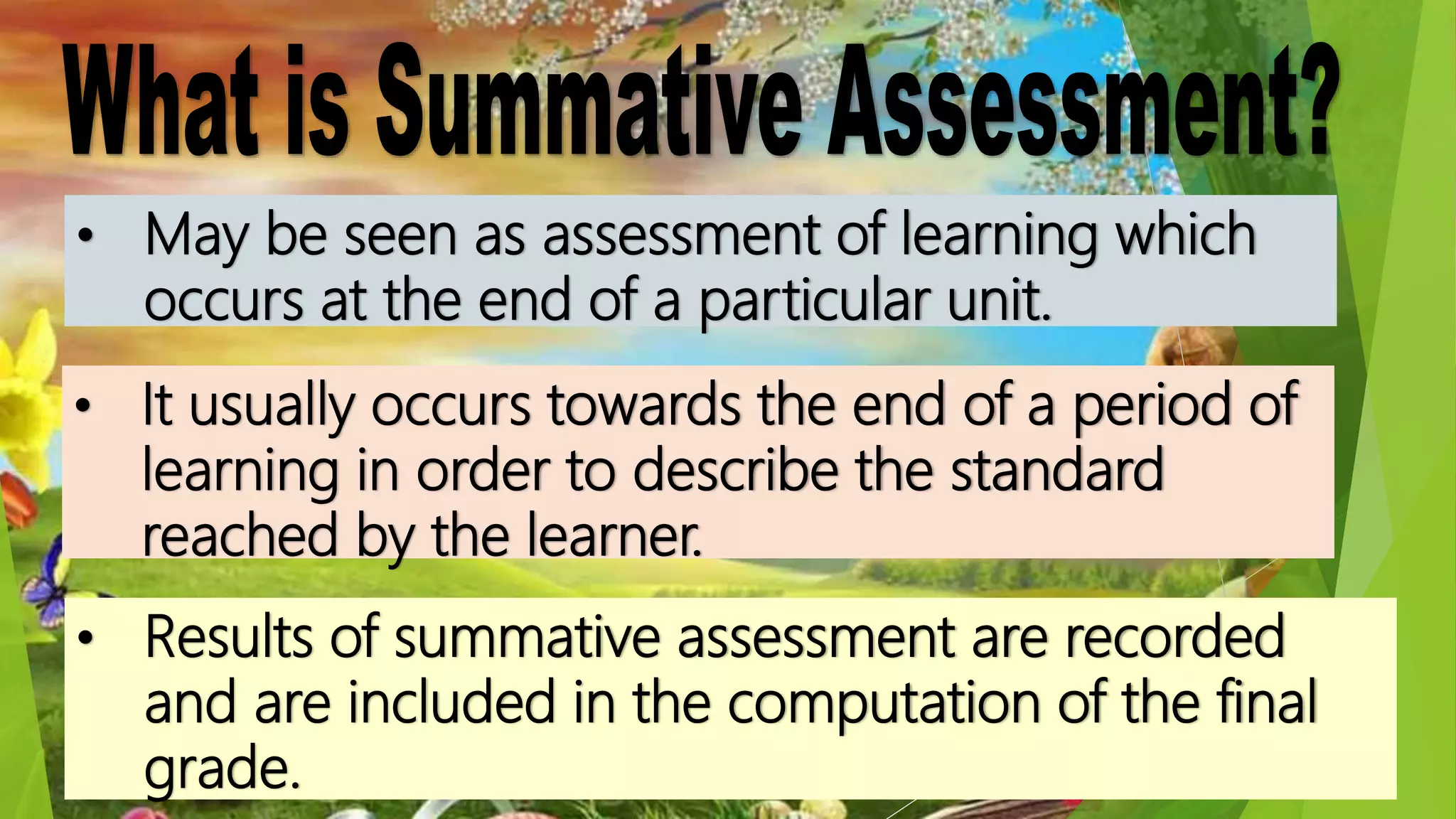
• May be seen as assessment of learning which
occurs at the end of a particular unit.
• It usually occurs towards the end of a period of
learning in order to describe the standard
reached by the learner.
• Results of summative assessment are recorded
and are included in the computation of the final
grade.
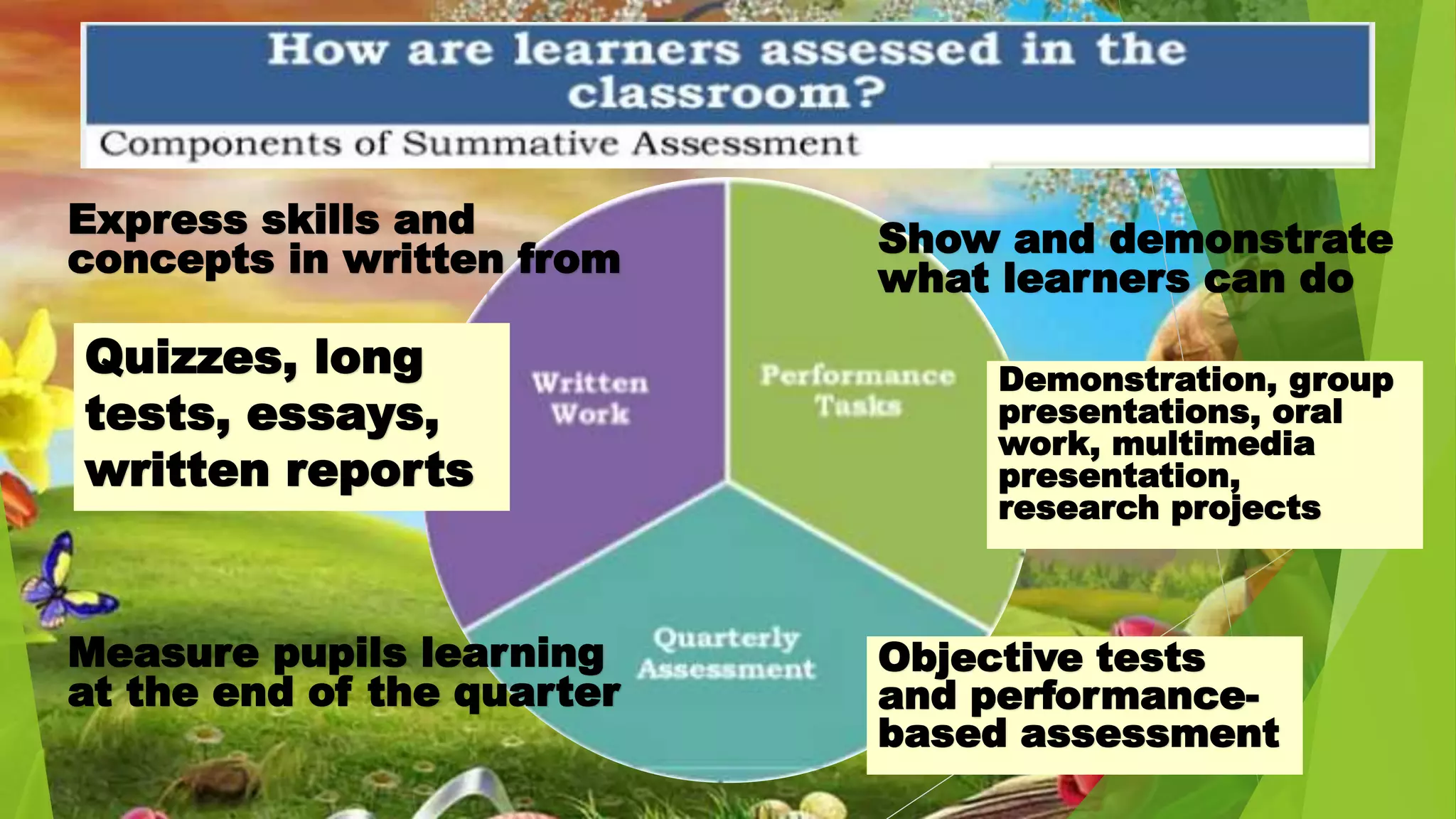
Express skills and
concepts in written from
Quizzes, long
tests, essays,
written reports
Show and demonstrate
what learners can do
Demonstration, group
presentations, oral
work, multimedia
presentation,
research projects
Measure pupils learning
at the end of the quarter
Objective tests
and performance-
based assessment
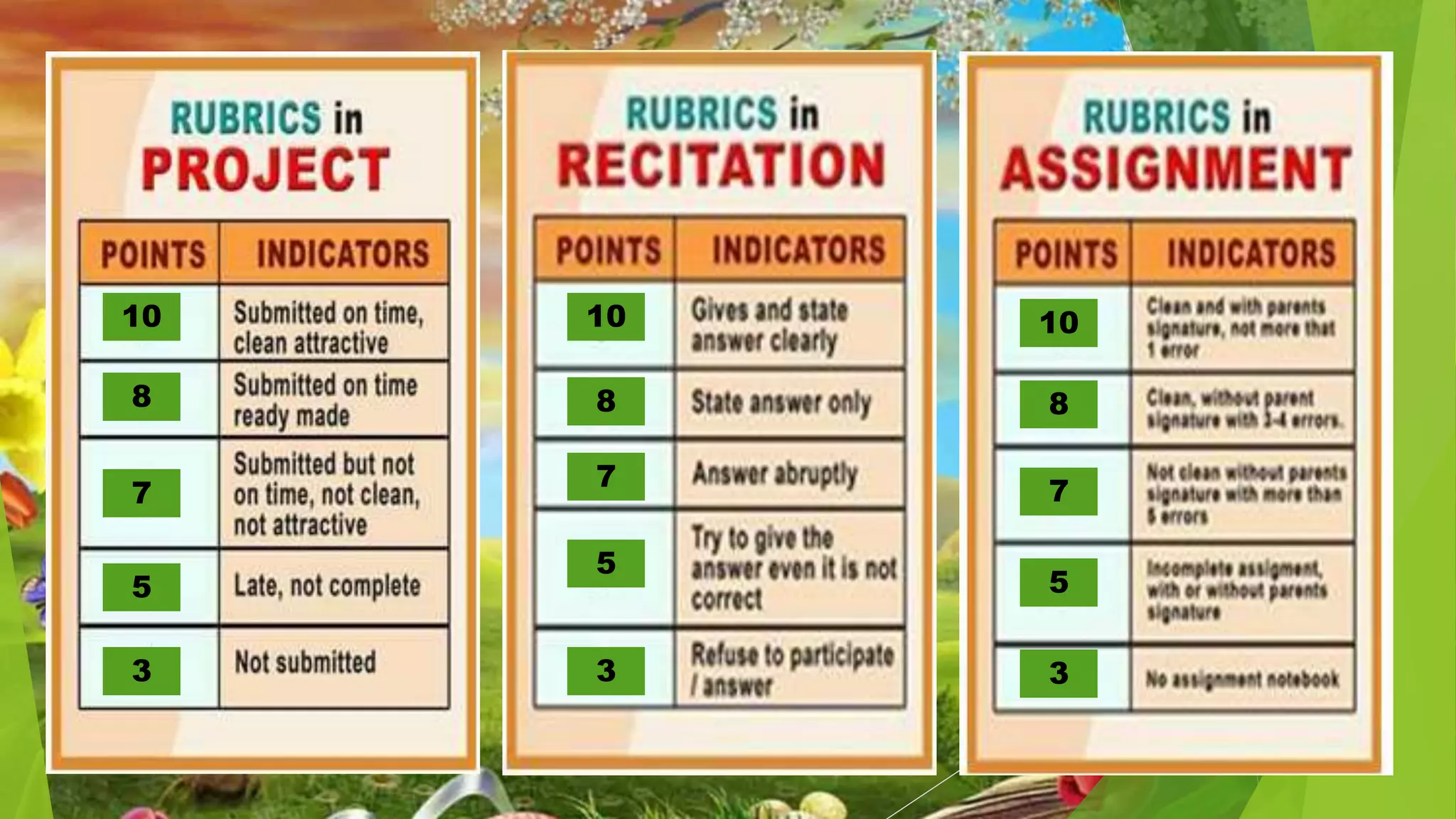
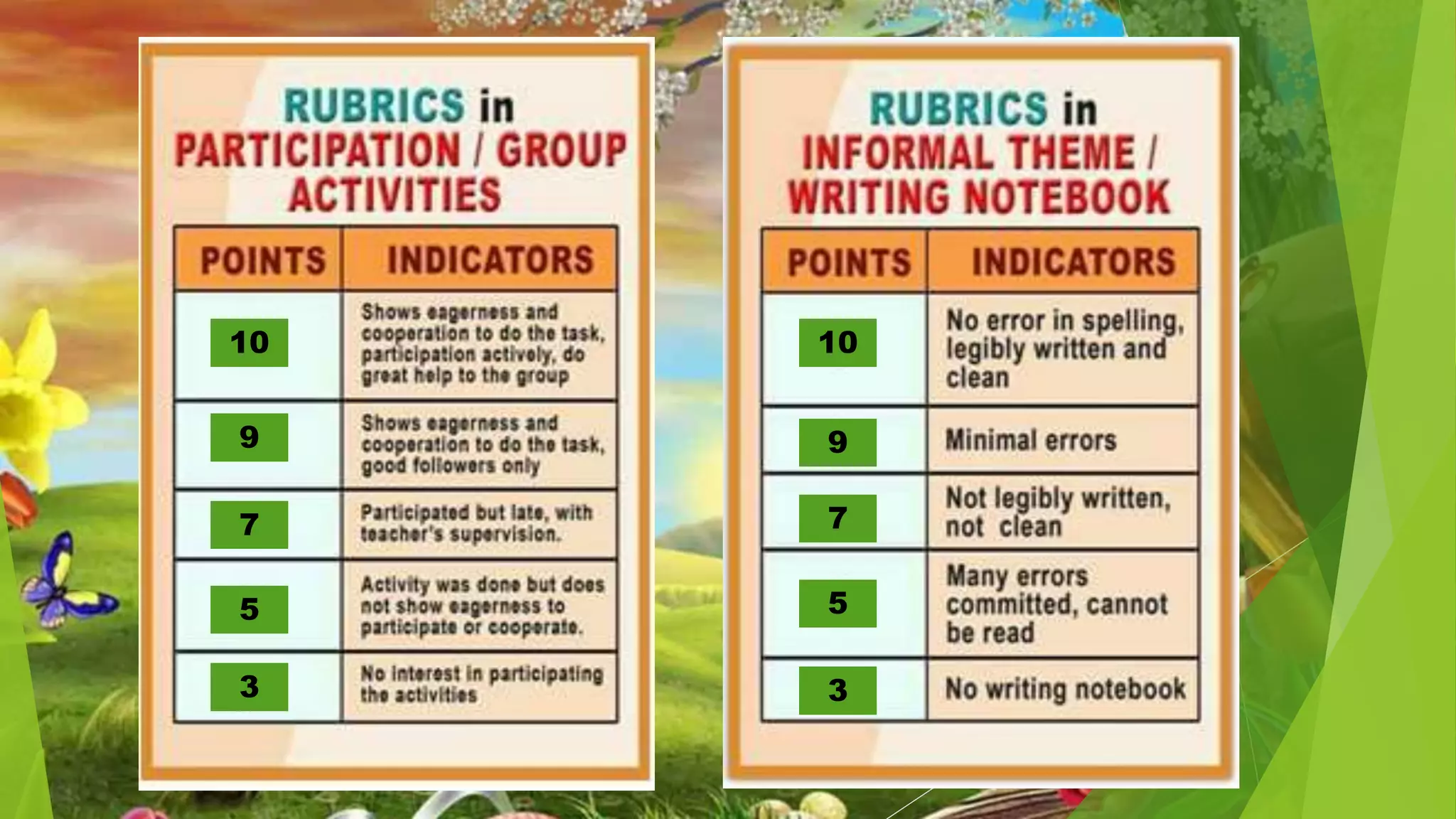
10
8
7
5
3
10 10
8 8
7 7
5
5
3 3
10
9
7
5
3
10
9
7
5
3
Write shop
Make sample assessment tool for
formative or summative assessment.
( Topics based on the curriculum guide)
Present the output by group.
“The important question is
not how assessment is
defined but whether
assessment information is
used”.
- Palomba and Banta
We should use the information we gather during the
assessment period so that we can give remediation,
enrichment or reinforcement activities. Let us all believe that
our children can perform better, soar higher and achieve
Success! The challenge is in our hands to help them realize
their dreams.
Classroom based assessment tools

Classroom based assessment tools

  • 1.
  • 2.
    Activity 1: Answerthe following questions 1. How do you use assessment inside the classroom? 2. What are the different forms of assessment you use when you teach? 3. What is classroom assessment?
  • 3.
    Activity 2: A CloserLook ! Analyze and list down different kinds of assessment tools used in the classroom. Specify what part of assessment tool used in the given timeline.
  • 5.
    Assessment in theK to 12 Basic Education Program recognizes: 1. Diversity of learners inside the classroom. 2. The need for multiple ways of measuring their varied abilities and learning potentials. 3. The role of learners as co-participants in the assessment process.
  • 6.
    1. Assessment isa joint process that involves both teachers and learners. 2. It should be in line with the instruction.
  • 7.
    3. It isused to track learners` progress in relation to learning standards and development of 21st century skills. 4. It provides bases for the profiling of student performances on the learning competencies and standards of the curriculum. 5. It promotes self-reflection and personal accountability among students about their own learning.
  • 8.
    6. Classroom assessmentis a process of identifying, gathering, organizing and interpreting quantitative and qualitative information about what learners know and can do. 7. Classroom assessment method shoud be consistent with curriculum standards. 8. It measures achievement of competencies by the learners.
  • 9.
    Assessment in theclassroom aimed at helping pupils perform well in relation to the learning standards.
  • 12.
    What is FormativeAssessment? WHAT IS NOT FA? • Formative Assessment is not an instrument, or event • It is not for grading! • A technique to help the pupils optimize learning WHAT IS FA? • Collection of practices that all leads to pupils learning improvement • Tools for the teachers to determine what they need to do to move the learner forward. • It is not use as punishment for pupils if they misbehave.
  • 18.
    • May beseen as assessment of learning which occurs at the end of a particular unit. • It usually occurs towards the end of a period of learning in order to describe the standard reached by the learner. • Results of summative assessment are recorded and are included in the computation of the final grade.
  • 19.
    Express skills and conceptsin written from Quizzes, long tests, essays, written reports Show and demonstrate what learners can do Demonstration, group presentations, oral work, multimedia presentation, research projects Measure pupils learning at the end of the quarter Objective tests and performance- based assessment
  • 20.
  • 21.
  • 22.
    Write shop Make sampleassessment tool for formative or summative assessment. ( Topics based on the curriculum guide) Present the output by group.
  • 23.
    “The important questionis not how assessment is defined but whether assessment information is used”. - Palomba and Banta
  • 25.
    We should usethe information we gather during the assessment period so that we can give remediation, enrichment or reinforcement activities. Let us all believe that our children can perform better, soar higher and achieve Success! The challenge is in our hands to help them realize their dreams.