Rapid Prototyping
A prototype is the first or original example of
something that has or will be copied or developed.
It is the model of preliminary version.
or
An approximation of a product or its
components in some form for a definite
purpose in its implementation.
Types of Prototypes
• The implementation of the prototype: From
the entire product itself or its subassemblies
and components.
• The form of prototype: from a virtual
prototype to a physical prototype.
• The degree of approximation of the
prototype from very rough representation to
exact replication of the product.
• Experimentation and learning
• Testing and proofing
• Communication and interaction
• Synthesis and integration and
• Scheduling and markets.
Roles of Prototypes
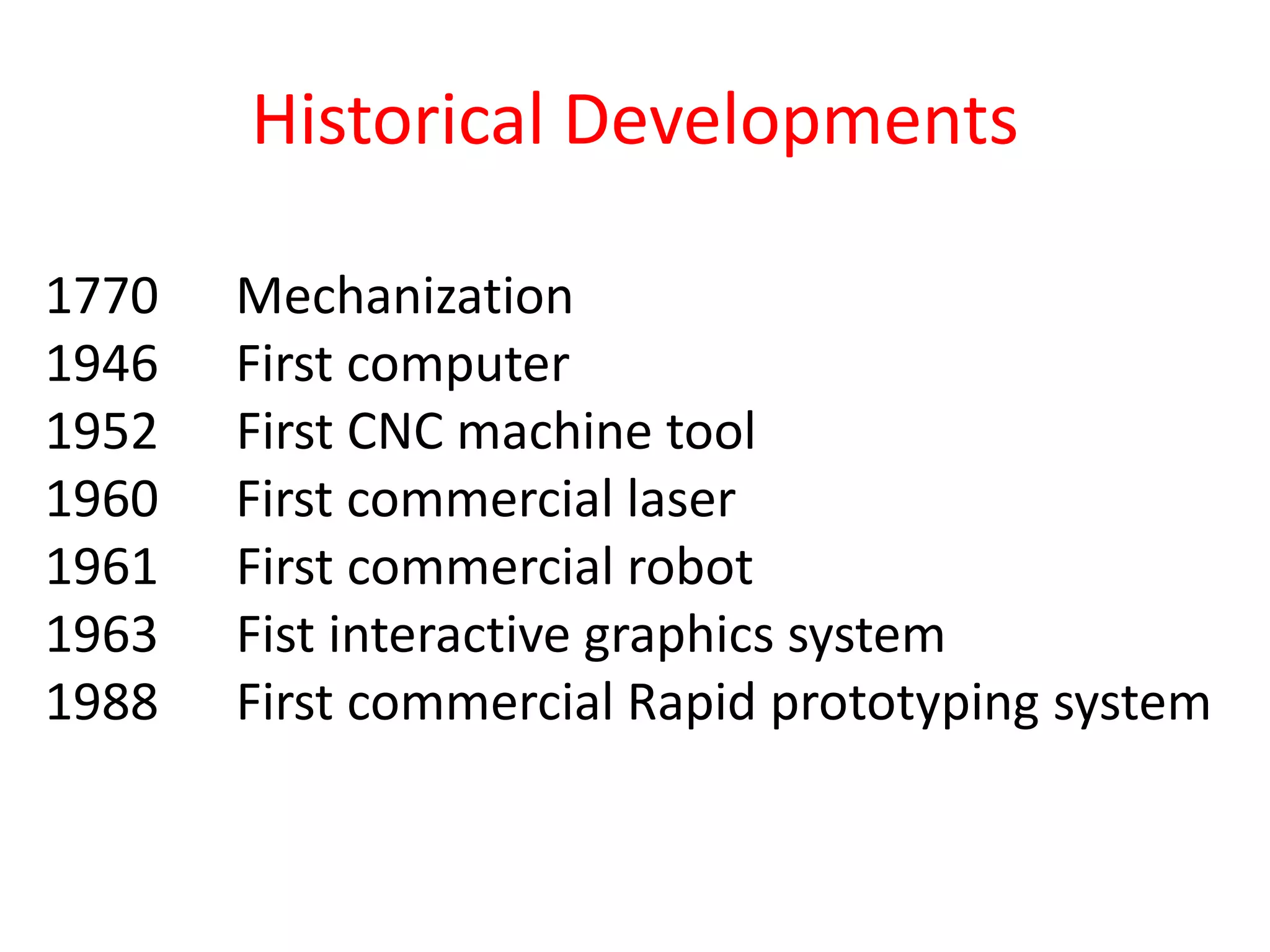
1770 Mechanization
1946 First computer
1952 First CNC machine tool
1960 First commercial laser
1961 First commercial robot
1963 Fist interactive graphics system
1988 First commercial Rapid prototyping system
Historical Developments
Three phases of development
First phase: Manual prototyping
Second phase: Soft or virtual prototyping
Third phase: Rapid prototyping
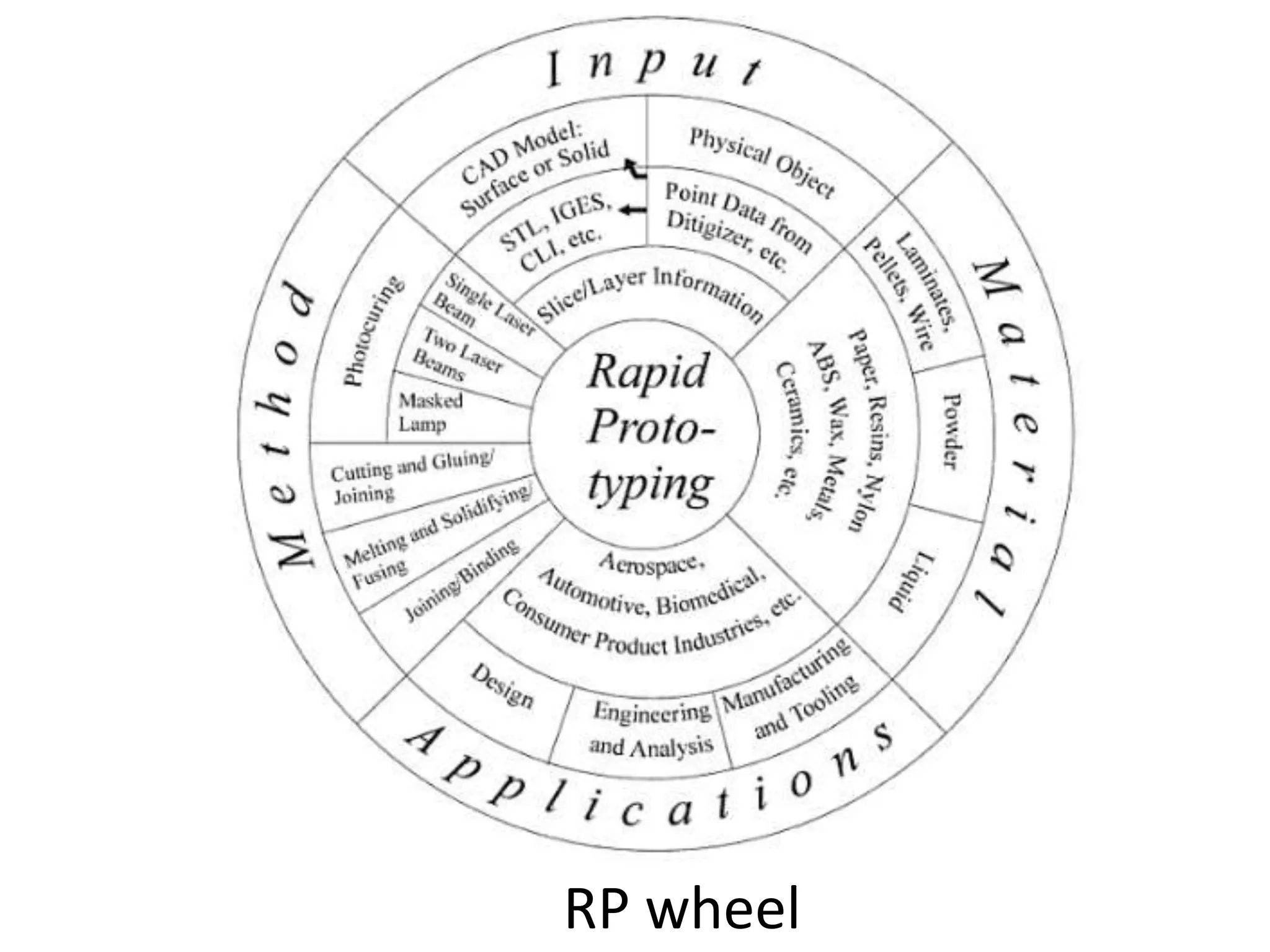
Fundamentals of Rapid Prototyping
• Input
• Material
• Method
• Application
RP wheel
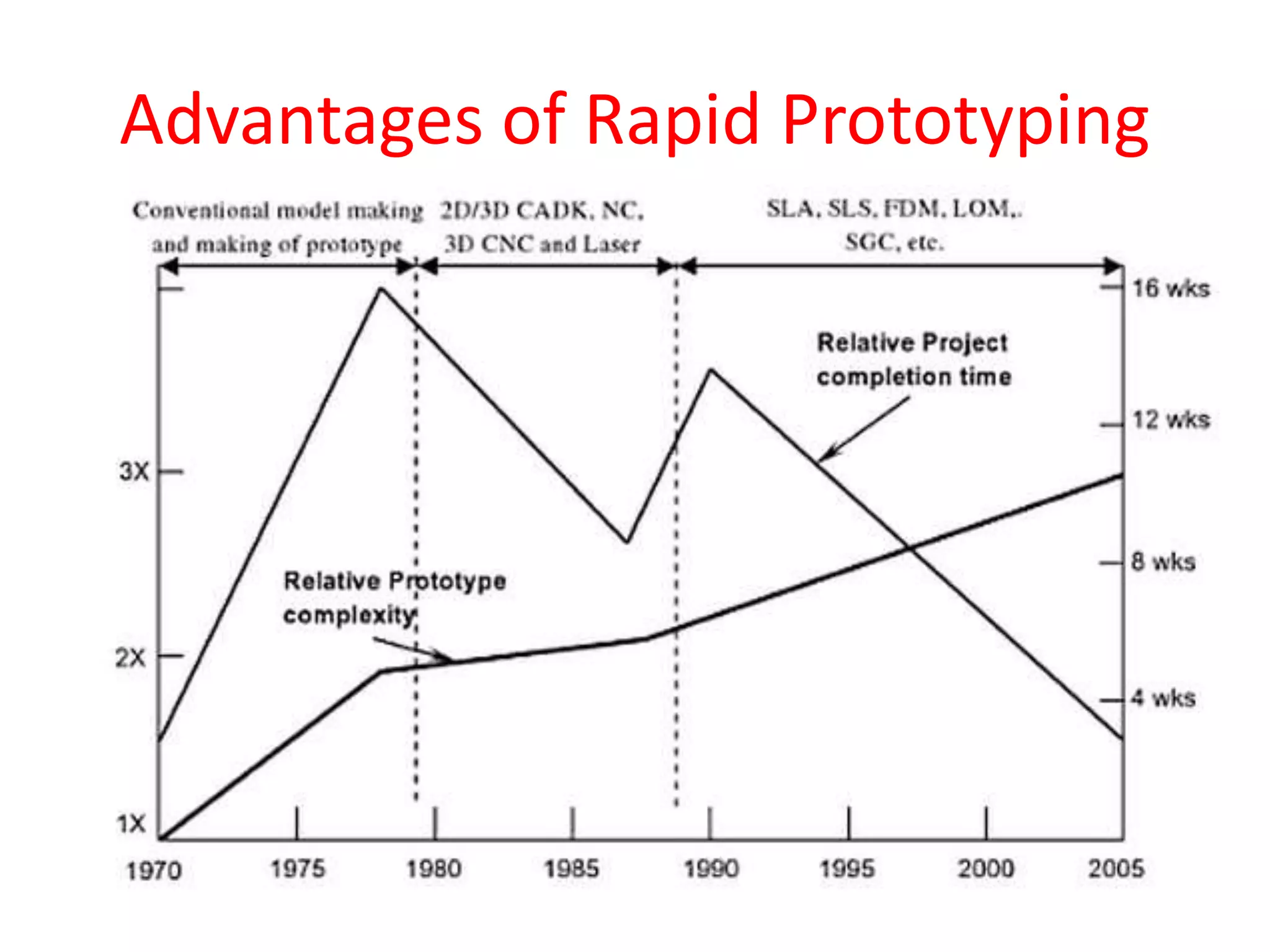
Advantages of Rapid Prototyping
Direct Benefits
Benefit to Product Designer
Benefit to the Tooling and Manufacturing
Engineer
Indirect Benefits
Benefit to Marketing
Benefit to the Consumer
Disadvantages of Rapid Prototyping
• The price of machinery and materials are
expensive.
• The surface is usually rougher than machined
surfaces.
• Some materials are brittle.
• The strength of RP-parts are weaker in z-
direction than in other.
Classification of Rapid Prototyping
Systems
• Solid based
• Liquid based and
• Powder based system
The classification is done based on the
type of material used for Prototyping.
Solid based RP systems
1. Fused Deposition Modeling (FDM) (Stratasys)
2. Bench top system (Solids cape)
3. Laminated Object Manufacturing (LOM) (Cubic
Technologies)
4. Multi-jet Modeling system (MJM) (3D Systems)
5. Paper Lamination Tech (PLT)(Kira)
6. CL 100 (CAM-LEM)
7. Offset Fabbers (Ennex Corporation)
8. Shape Deposition Manufacturing process
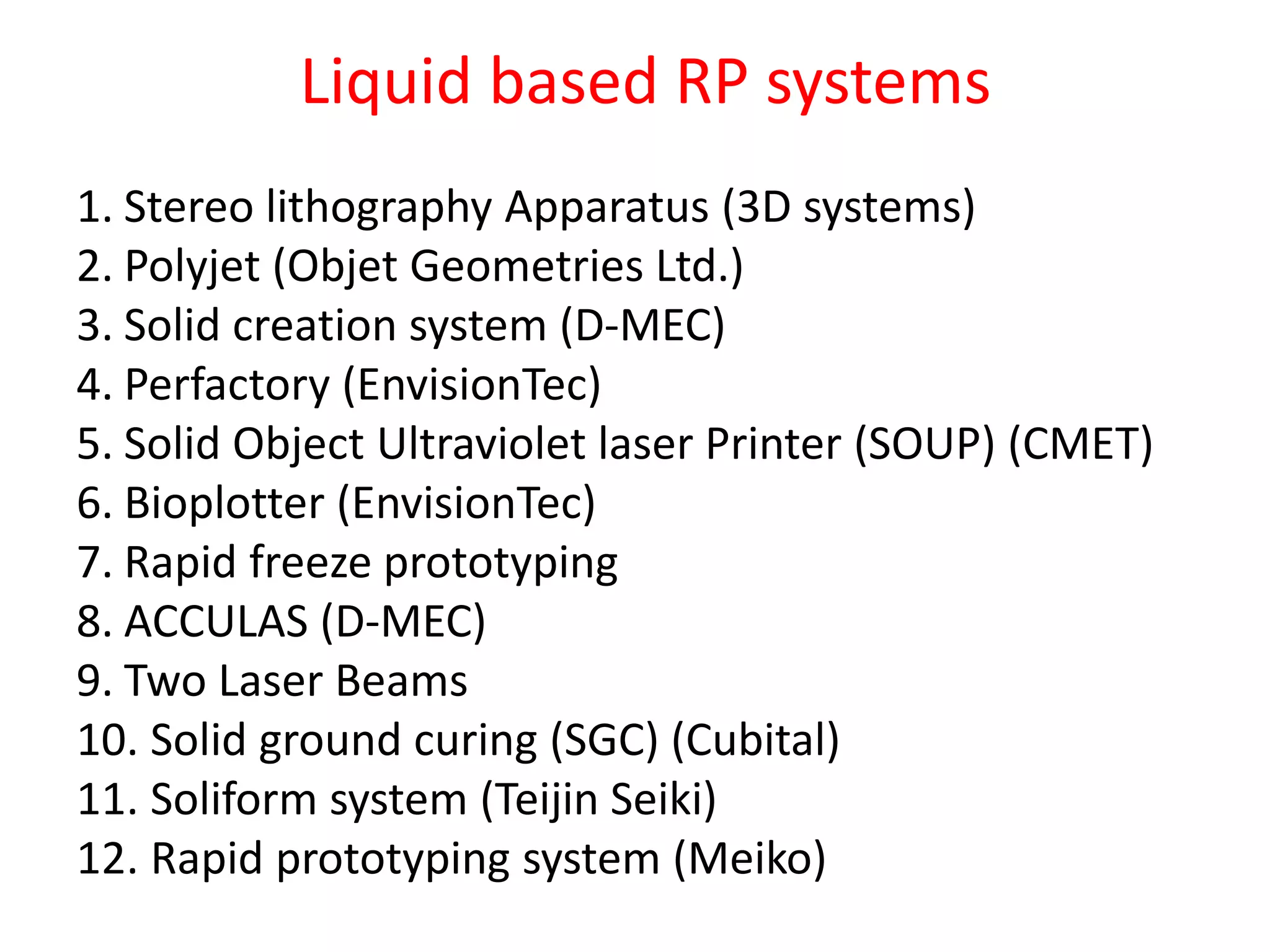
1. Stereo lithography Apparatus (3D systems)
2. Polyjet (Objet Geometries Ltd.)
3. Solid creation system (D-MEC)
4. Perfactory (EnvisionTec)
5. Solid Object Ultraviolet laser Printer (SOUP) (CMET)
6. Bioplotter (EnvisionTec)
7. Rapid freeze prototyping
8. ACCULAS (D-MEC)
9. Two Laser Beams
10. Solid ground curing (SGC) (Cubital)
11. Soliform system (Teijin Seiki)
12. Rapid prototyping system (Meiko)
Liquid based RP systems
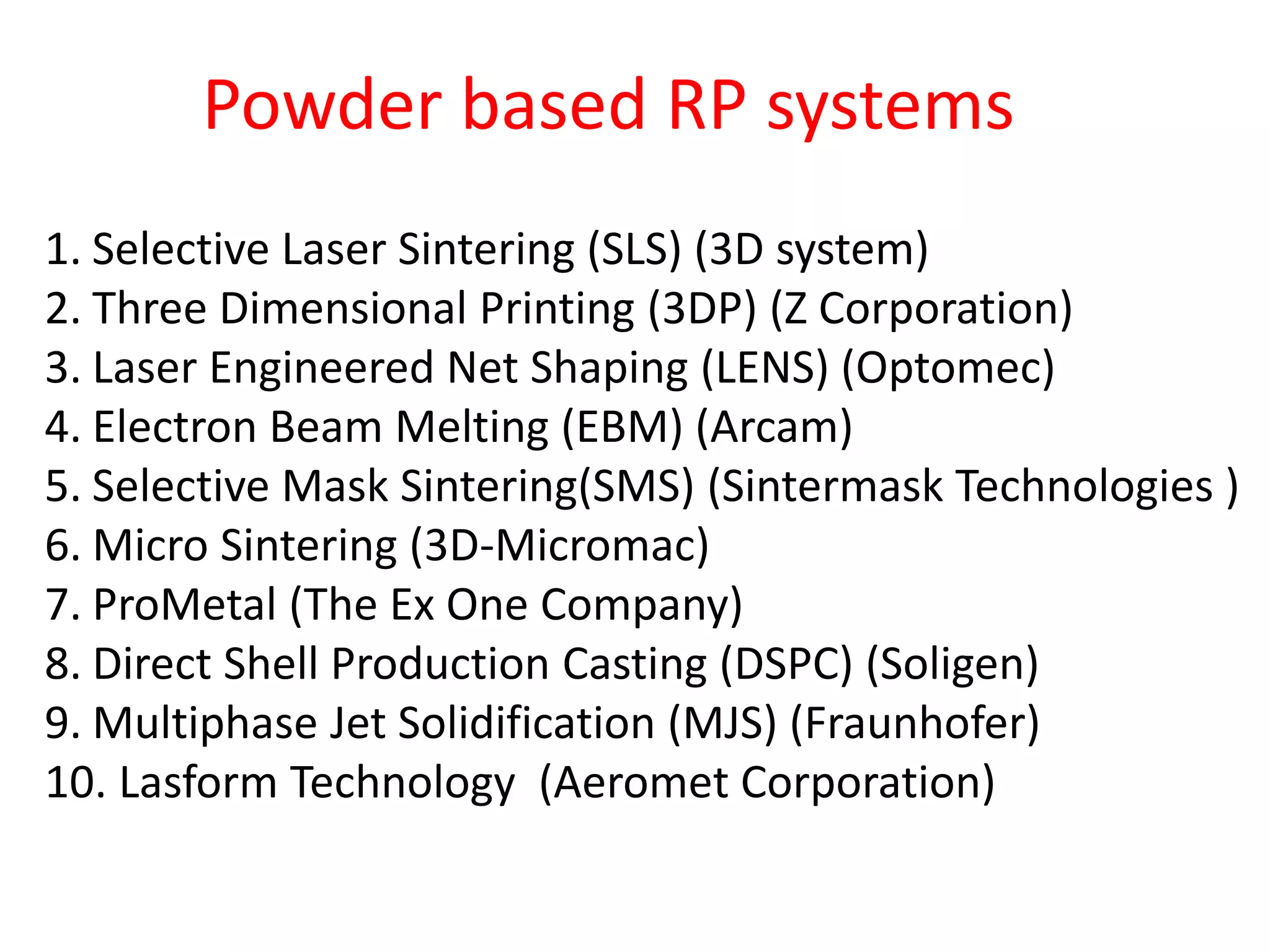
Powder based RP systems
1. Selective Laser Sintering (SLS) (3D system)
2. Three Dimensional Printing (3DP) (Z Corporation)
3. Laser Engineered Net Shaping (LENS) (Optomec)
4. Electron Beam Melting (EBM) (Arcam)
5. Selective Mask Sintering(SMS) (Sintermask Technologies )
6. Micro Sintering (3D-Micromac)
7. ProMetal (The Ex One Company)
8. Direct Shell Production Casting (DSPC) (Soligen)
9. Multiphase Jet Solidification (MJS) (Fraunhofer)
10. Lasform Technology (Aeromet Corporation)
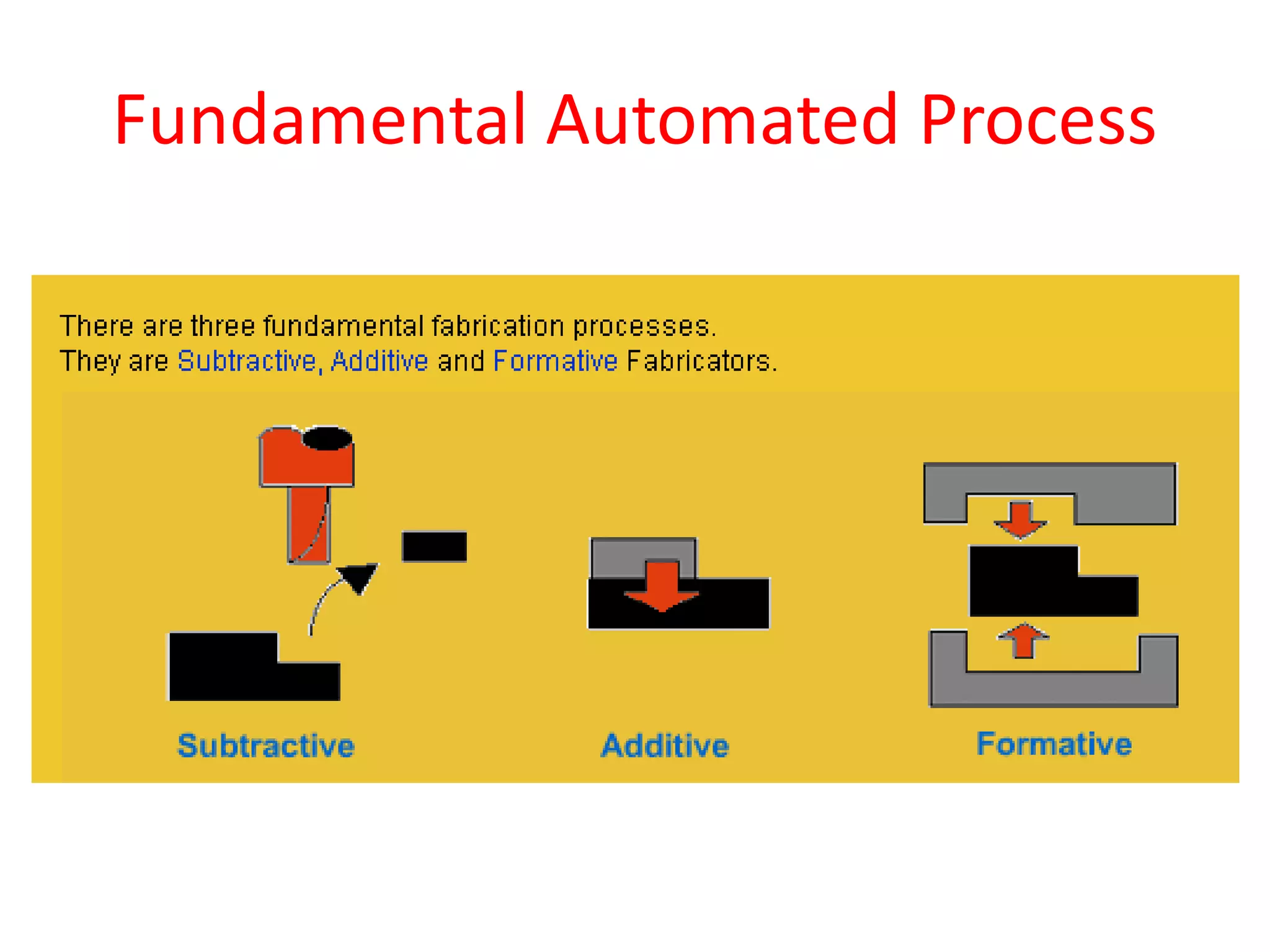
Fundamental Automated Process
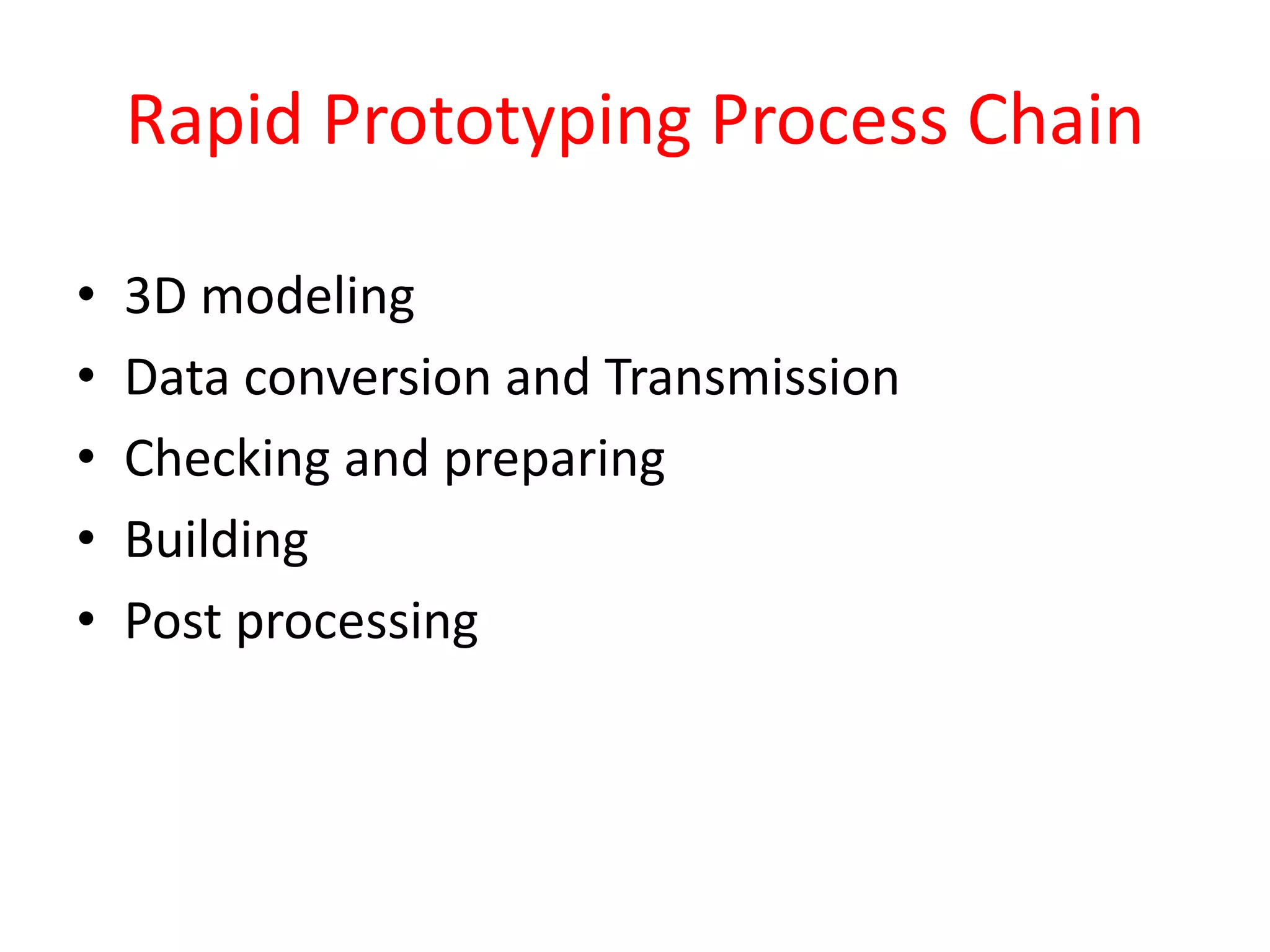
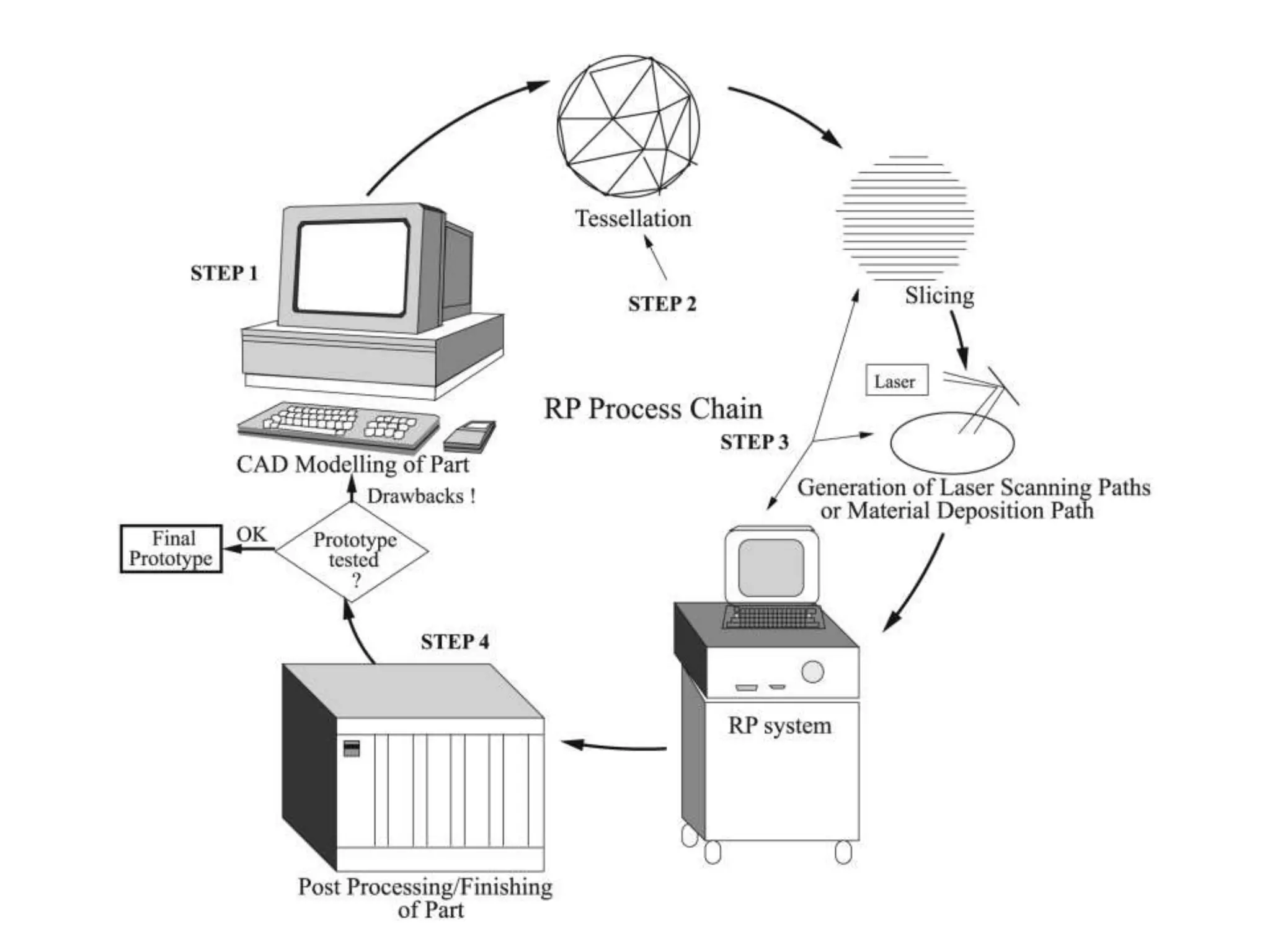
Rapid Prototyping Process Chain
• 3D modeling
• Data conversion and Transmission
• Checking and preparing
• Building
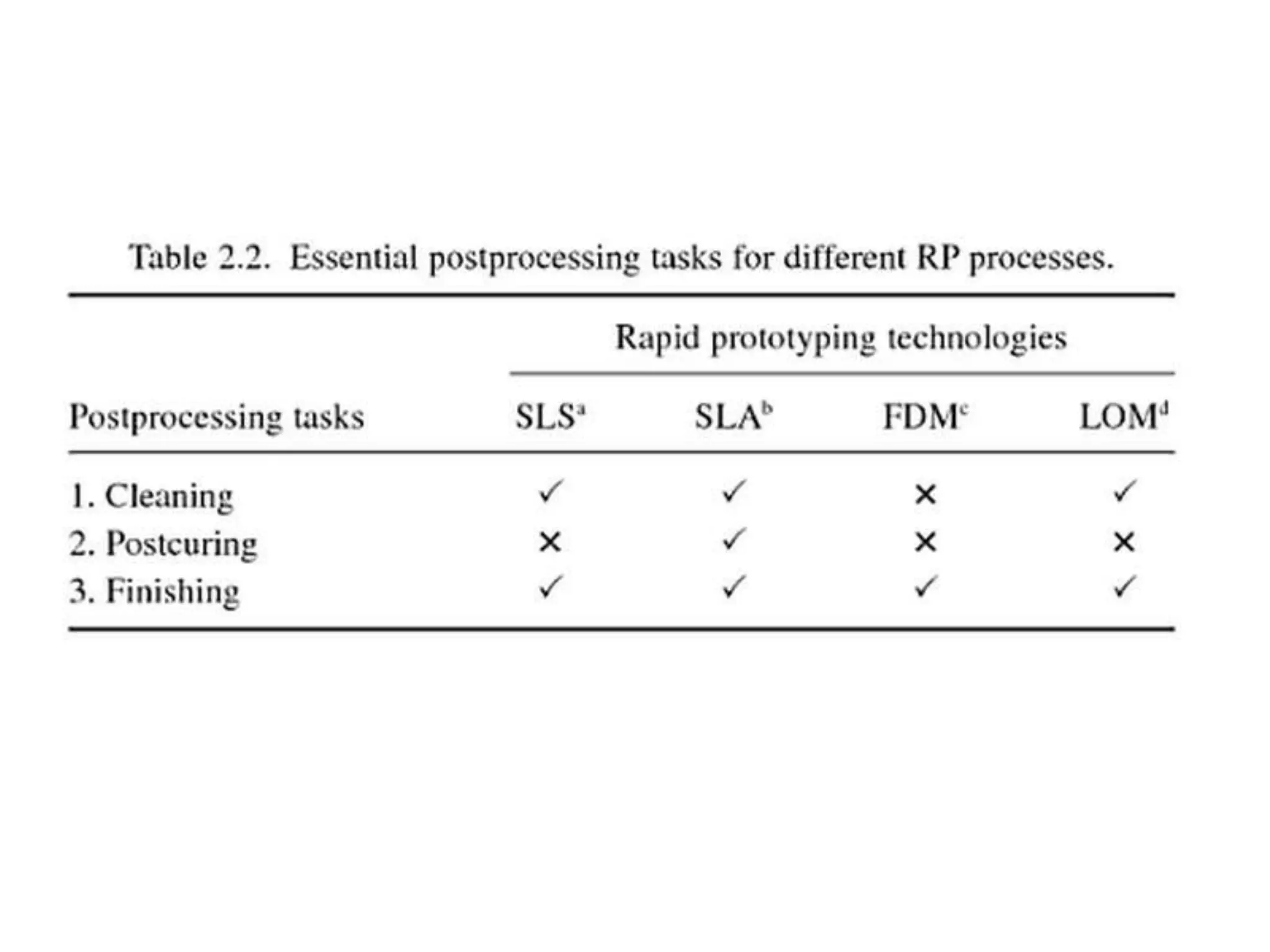
• Post processing
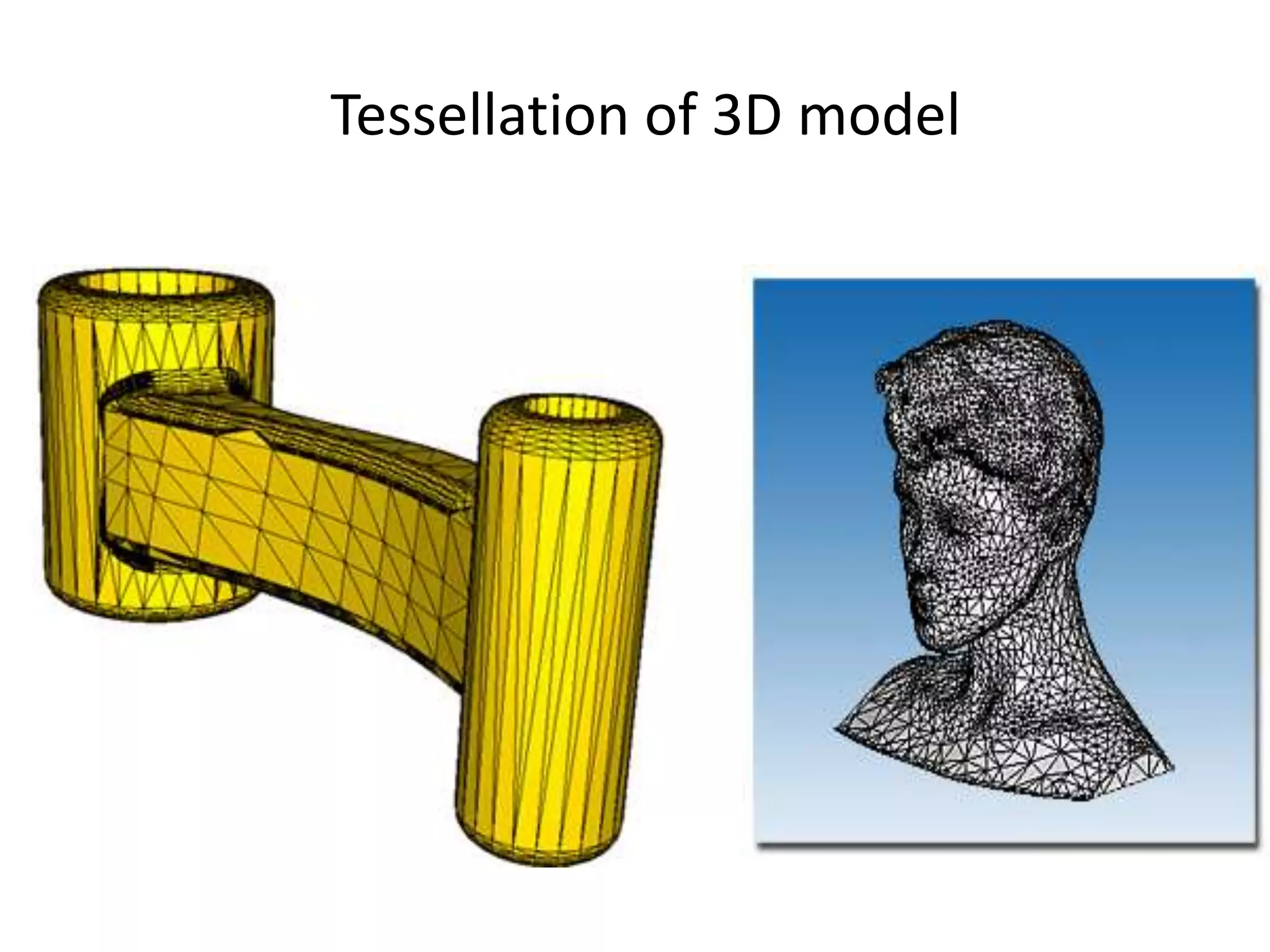
Tessellation of 3D model
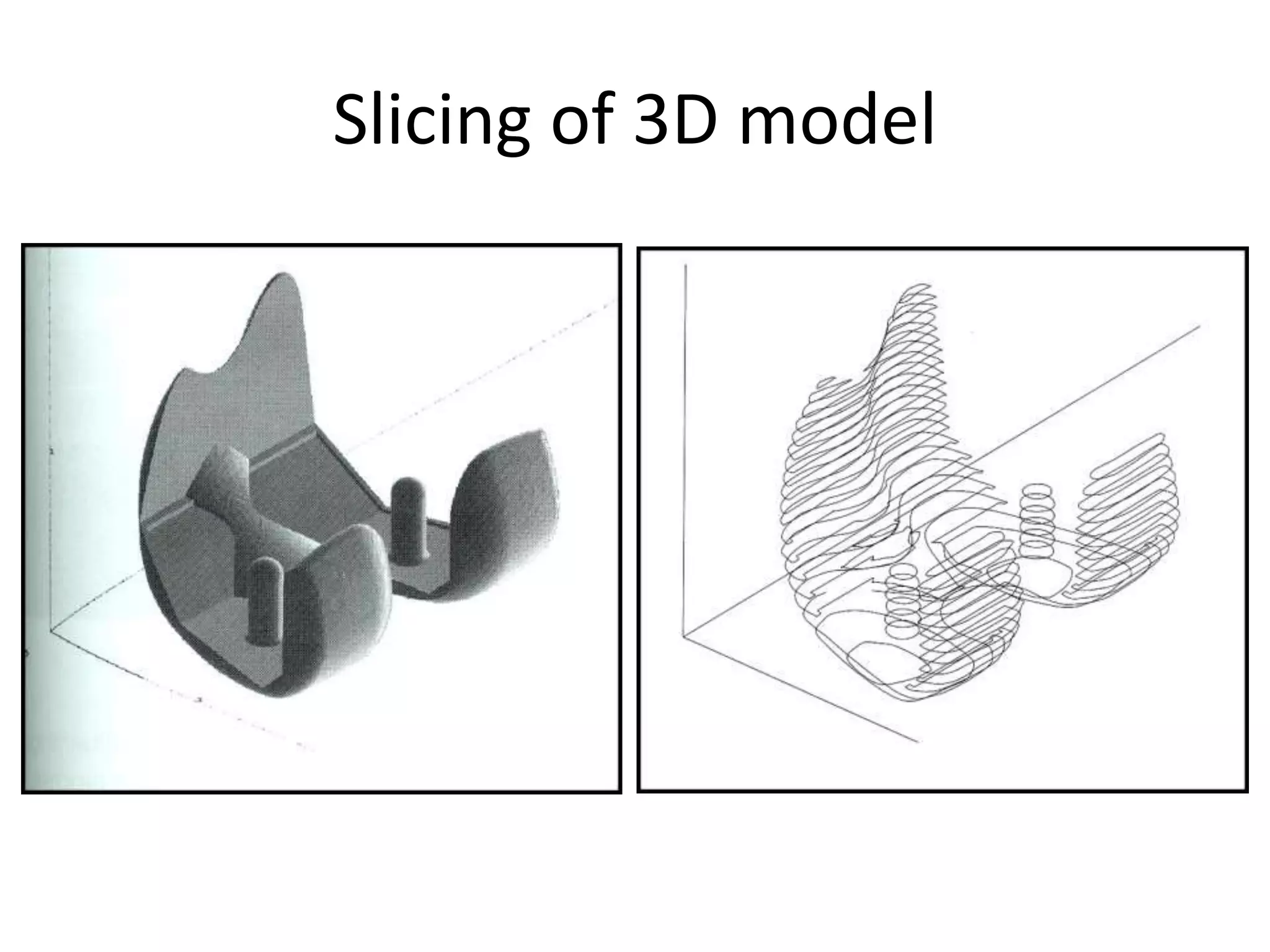
Slicing of 3D model
Rp Rapid prototyping

Rp Rapid prototyping

  • 1.
    Rapid Prototyping A prototypeis the first or original example of something that has or will be copied or developed. It is the model of preliminary version. or An approximation of a product or its components in some form for a definite purpose in its implementation.
  • 2.
    Types of Prototypes •The implementation of the prototype: From the entire product itself or its subassemblies and components. • The form of prototype: from a virtual prototype to a physical prototype. • The degree of approximation of the prototype from very rough representation to exact replication of the product.
  • 3.
    • Experimentation andlearning • Testing and proofing • Communication and interaction • Synthesis and integration and • Scheduling and markets. Roles of Prototypes
  • 4.
    1770 Mechanization 1946 Firstcomputer 1952 First CNC machine tool 1960 First commercial laser 1961 First commercial robot 1963 Fist interactive graphics system 1988 First commercial Rapid prototyping system Historical Developments
  • 5.
    Three phases ofdevelopment First phase: Manual prototyping Second phase: Soft or virtual prototyping Third phase: Rapid prototyping
  • 6.
    Fundamentals of RapidPrototyping • Input • Material • Method • Application
  • 7.
  • 8.
  • 9.
    Direct Benefits Benefit toProduct Designer Benefit to the Tooling and Manufacturing Engineer Indirect Benefits Benefit to Marketing Benefit to the Consumer
  • 10.
    Disadvantages of RapidPrototyping • The price of machinery and materials are expensive. • The surface is usually rougher than machined surfaces. • Some materials are brittle. • The strength of RP-parts are weaker in z- direction than in other.
  • 11.
    Classification of RapidPrototyping Systems • Solid based • Liquid based and • Powder based system The classification is done based on the type of material used for Prototyping.
  • 12.
    Solid based RPsystems 1. Fused Deposition Modeling (FDM) (Stratasys) 2. Bench top system (Solids cape) 3. Laminated Object Manufacturing (LOM) (Cubic Technologies) 4. Multi-jet Modeling system (MJM) (3D Systems) 5. Paper Lamination Tech (PLT)(Kira) 6. CL 100 (CAM-LEM) 7. Offset Fabbers (Ennex Corporation) 8. Shape Deposition Manufacturing process
  • 13.
    1. Stereo lithographyApparatus (3D systems) 2. Polyjet (Objet Geometries Ltd.) 3. Solid creation system (D-MEC) 4. Perfactory (EnvisionTec) 5. Solid Object Ultraviolet laser Printer (SOUP) (CMET) 6. Bioplotter (EnvisionTec) 7. Rapid freeze prototyping 8. ACCULAS (D-MEC) 9. Two Laser Beams 10. Solid ground curing (SGC) (Cubital) 11. Soliform system (Teijin Seiki) 12. Rapid prototyping system (Meiko) Liquid based RP systems
  • 14.
    Powder based RPsystems 1. Selective Laser Sintering (SLS) (3D system) 2. Three Dimensional Printing (3DP) (Z Corporation) 3. Laser Engineered Net Shaping (LENS) (Optomec) 4. Electron Beam Melting (EBM) (Arcam) 5. Selective Mask Sintering(SMS) (Sintermask Technologies ) 6. Micro Sintering (3D-Micromac) 7. ProMetal (The Ex One Company) 8. Direct Shell Production Casting (DSPC) (Soligen) 9. Multiphase Jet Solidification (MJS) (Fraunhofer) 10. Lasform Technology (Aeromet Corporation)
  • 15.
  • 16.
    Rapid Prototyping ProcessChain • 3D modeling • Data conversion and Transmission • Checking and preparing • Building • Post processing
  • 17.
  • 18.