HIGHWAY
ENGINEERING
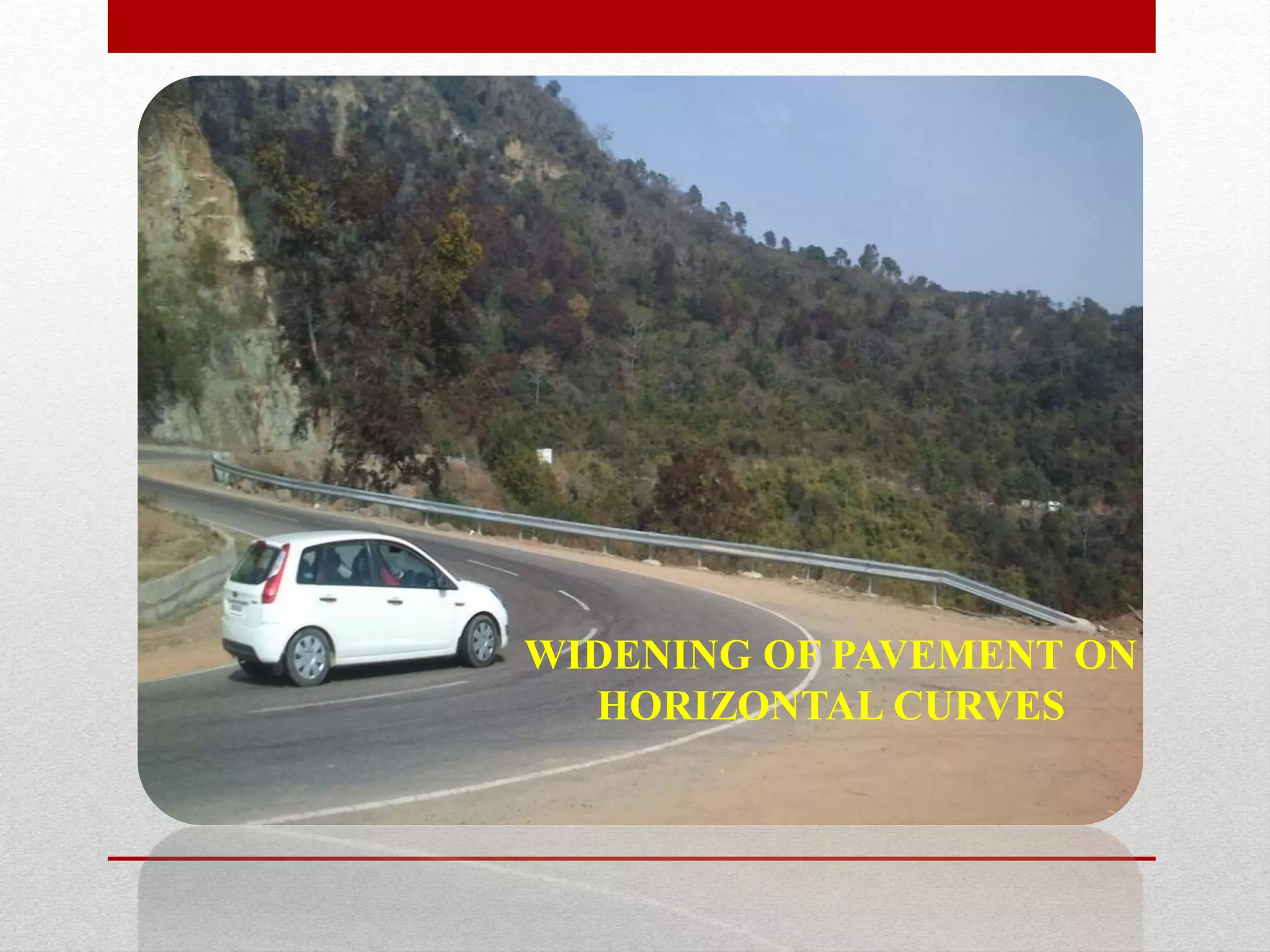
WIDENING OF PAVEMENT ON
HORIZONTAL CURVES
Objects:-
On horizontal curves , especially when they are not of very
large radius, it is a a common practice to widen the pavement slighty
more than the normal width, the object of providing Extra Widening
of pavements on horizontal curves are due to the following reasons....
(a) An automobile such as car, bus or truck has a rigid wheel base
and only the front wheels can be turned. When the vehicle takes a
turn to negotiate a horizontal curve, the rear wheels do not follow
the same path as that of the front wheels. This phenomenon is
called ‘off tracking’. The off tracking depends on
(1) the length of the wheel base of the vehicle
(2) the turning angle or the radius of the horizontal curves.
(b) At more than design speed if super elevation and lateral
friction jointly cannot counteract the centrifugal force, full
outward slipping of rear wheels may occur and thus more width
of road is covered. This condition occurs at very high speeds.
(c) At start of the curves drivers have a tendency to follow outer
edge of the pavement to have better visibility and large radius
curved path. This also necessitates extra width of the road.
(d) Trailer units require even larger extra width at curves.
Analysis of extra widening on horizontal curves
The extra widening of pavement on horizontal curves is
divided in to two parts (i) Mechanical widening and (ii)
Psychological widening.
(i) Mechanical widening :-
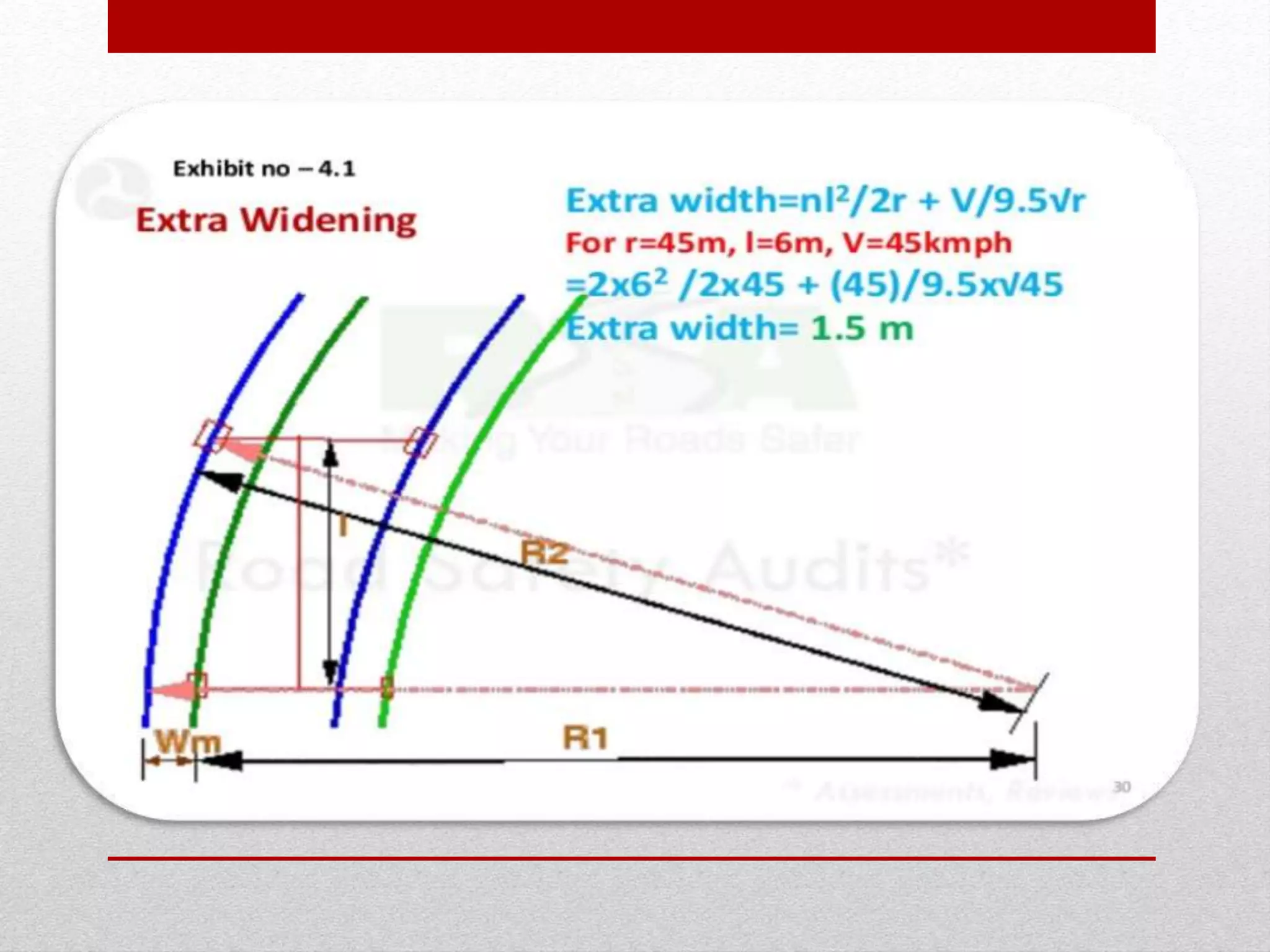
The widening required to account for the off tracking due to
the rigidity of wheel base is called ‘Mechanical widening ‘.
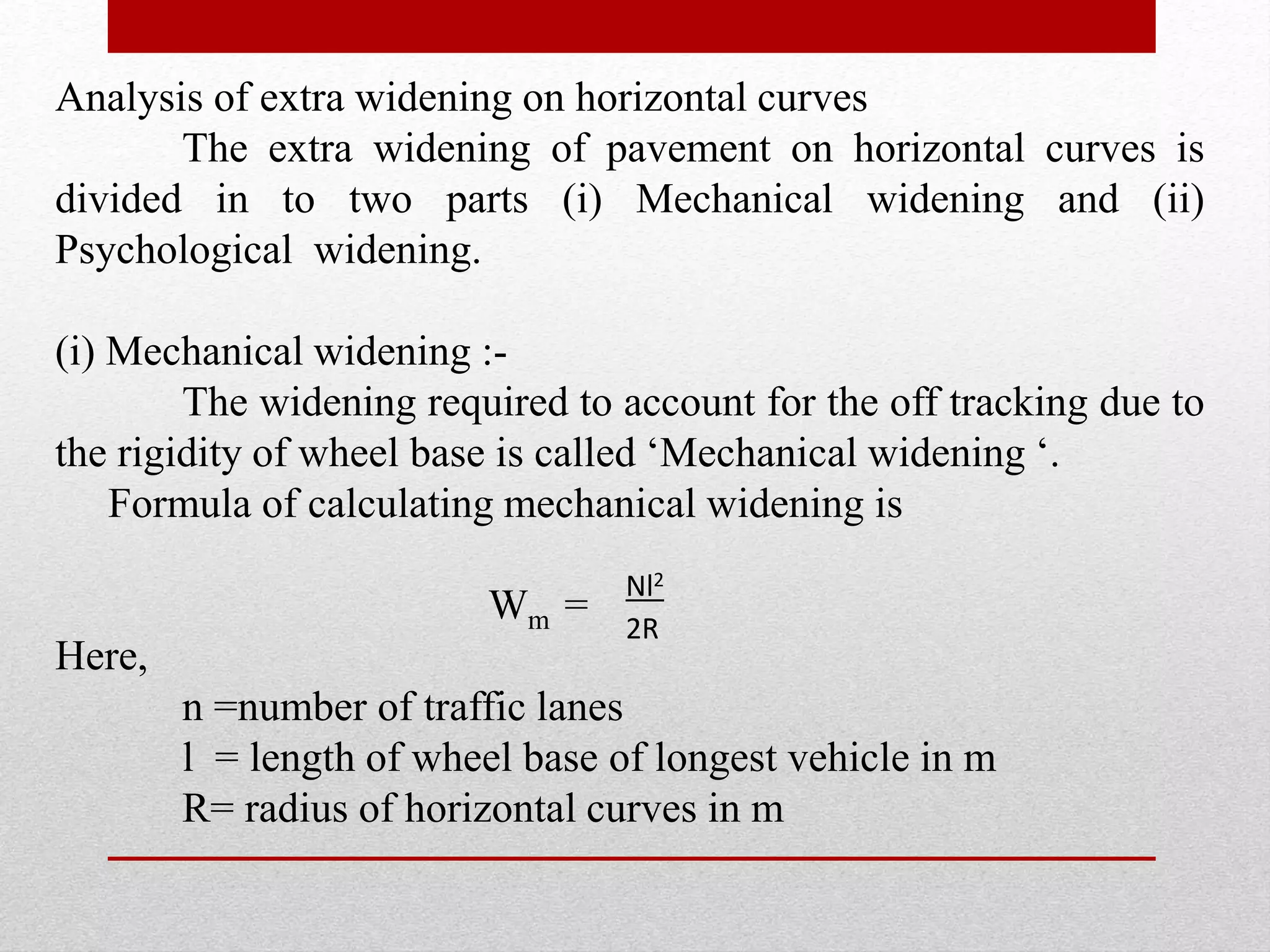
Formula of calculating mechanical widening is
Wm =
Here,
n =number of traffic lanes
l = length of wheel base of longest vehicle in m
R= radius of horizontal curves in m
Nl2
2R
(ii) Psychological widening :-
At horizontal curves driveres have a tendency to maintain a
greater clearance between the vehicles than on straight stretches of
road. Therefore an extra width of pavement is provided for
psychological reasons for greater manoeuvrability of steering at
higher speeds and to allow for the extra space requirements for the
overhangs of vehicles. Psychological widening is therefore
important in pavements with more than one lane. An empirical
formula has been recommended byt IRC for deciding the additional
psychological widening ‘Wps’ which is dependent on the design
speed, V of the vehicle and the radius. R of the curve. The
psychological widening is given by the formula:
Wps
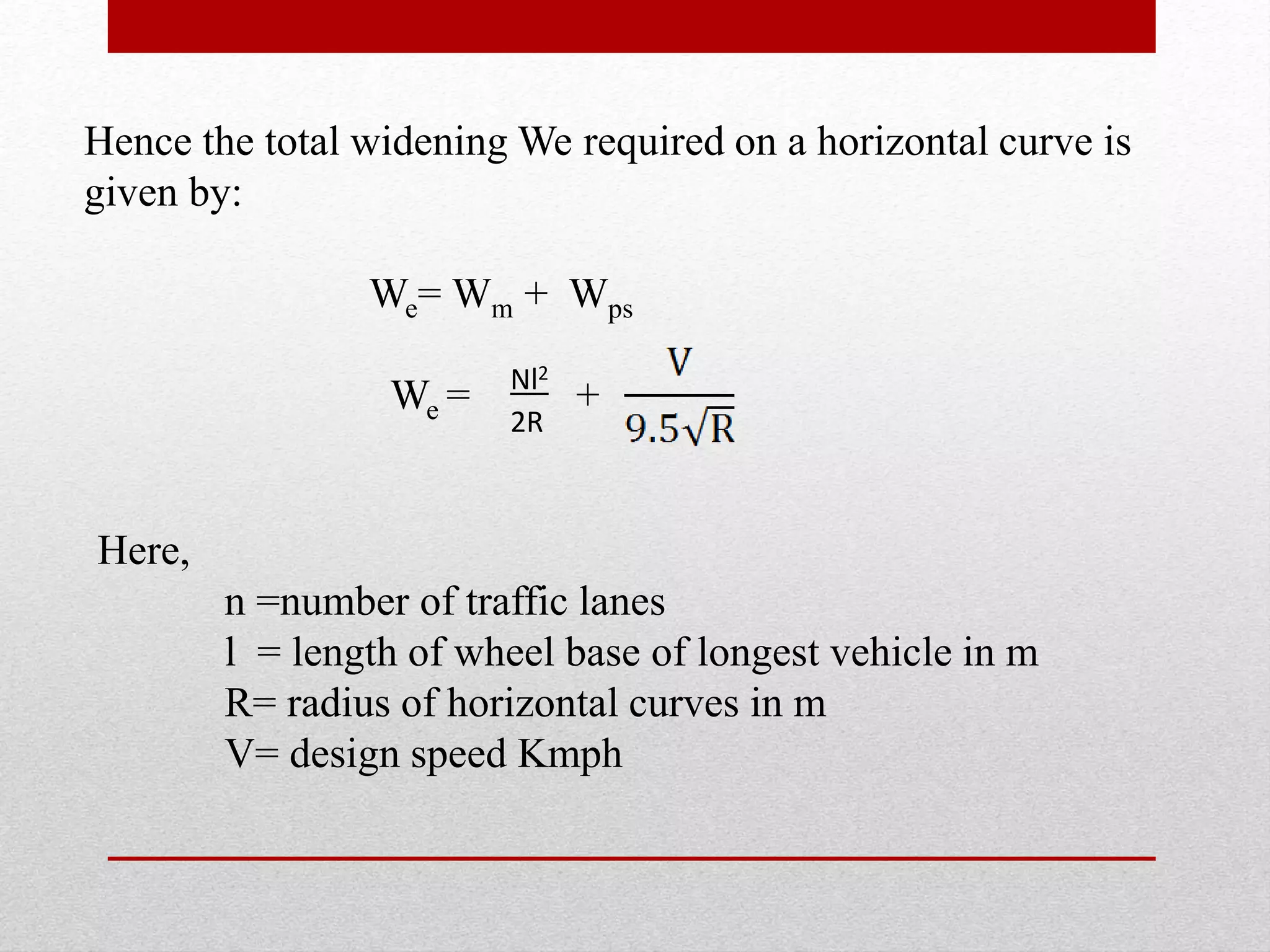
Hence the total widening We required on a horizontal curve is
given by:
We= Wm + Wps
We = +
Here,
n =number of traffic lanes
l = length of wheel base of longest vehicle in m
R= radius of horizontal curves in m
V= design speed Kmph
Nl2
2R
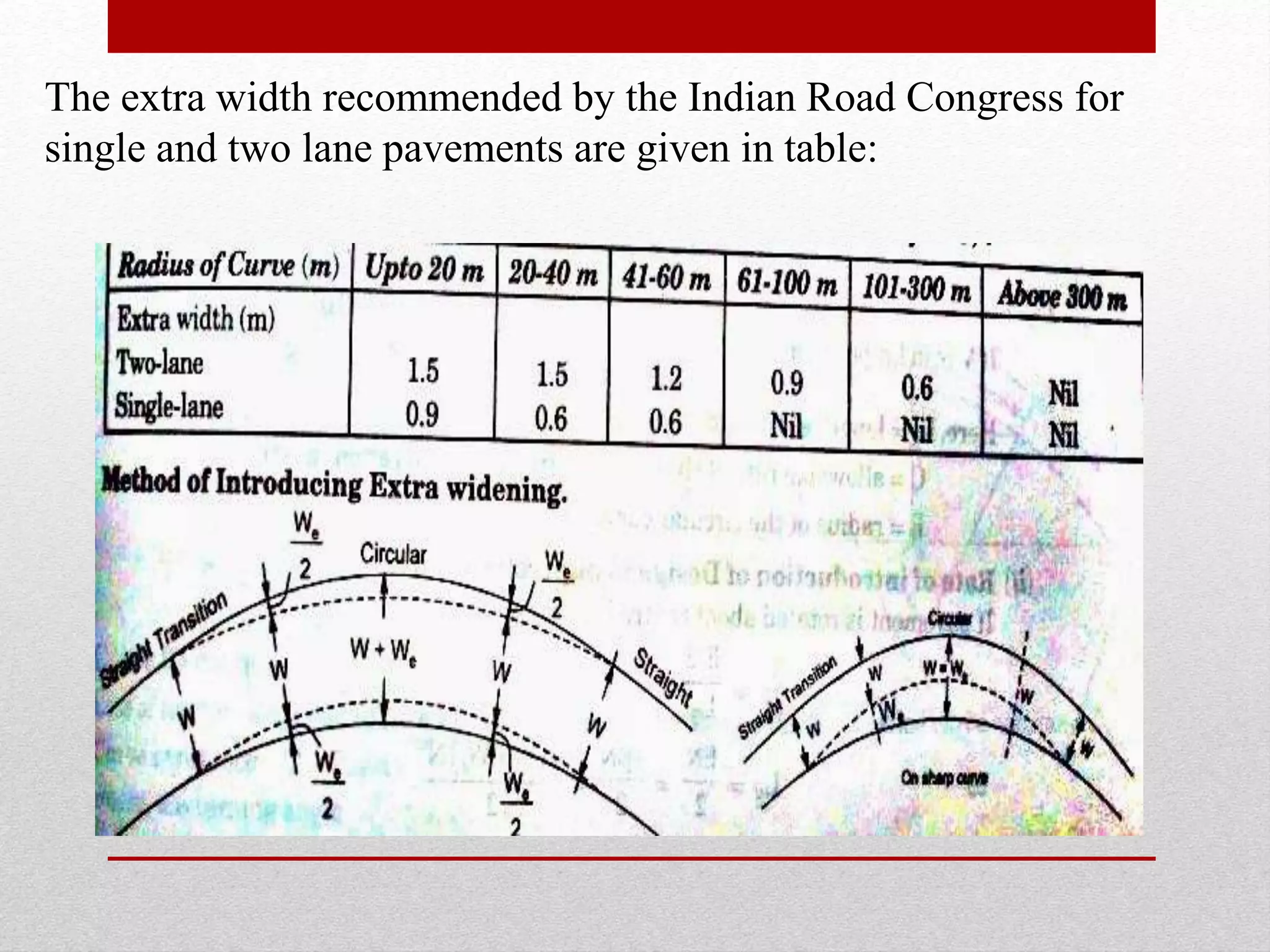
The extra width recommended by the Indian Road Congress for
single and two lane pavements are given in table:
Thank You

Widening of curve

  • 1.
  • 2.
    WIDENING OF PAVEMENTON HORIZONTAL CURVES
  • 3.
    Objects:- On horizontal curves, especially when they are not of very large radius, it is a a common practice to widen the pavement slighty more than the normal width, the object of providing Extra Widening of pavements on horizontal curves are due to the following reasons.... (a) An automobile such as car, bus or truck has a rigid wheel base and only the front wheels can be turned. When the vehicle takes a turn to negotiate a horizontal curve, the rear wheels do not follow the same path as that of the front wheels. This phenomenon is called ‘off tracking’. The off tracking depends on (1) the length of the wheel base of the vehicle (2) the turning angle or the radius of the horizontal curves.
  • 5.
    (b) At morethan design speed if super elevation and lateral friction jointly cannot counteract the centrifugal force, full outward slipping of rear wheels may occur and thus more width of road is covered. This condition occurs at very high speeds. (c) At start of the curves drivers have a tendency to follow outer edge of the pavement to have better visibility and large radius curved path. This also necessitates extra width of the road. (d) Trailer units require even larger extra width at curves.
  • 6.
    Analysis of extrawidening on horizontal curves The extra widening of pavement on horizontal curves is divided in to two parts (i) Mechanical widening and (ii) Psychological widening. (i) Mechanical widening :- The widening required to account for the off tracking due to the rigidity of wheel base is called ‘Mechanical widening ‘. Formula of calculating mechanical widening is Wm = Here, n =number of traffic lanes l = length of wheel base of longest vehicle in m R= radius of horizontal curves in m Nl2 2R
  • 7.
    (ii) Psychological widening:- At horizontal curves driveres have a tendency to maintain a greater clearance between the vehicles than on straight stretches of road. Therefore an extra width of pavement is provided for psychological reasons for greater manoeuvrability of steering at higher speeds and to allow for the extra space requirements for the overhangs of vehicles. Psychological widening is therefore important in pavements with more than one lane. An empirical formula has been recommended byt IRC for deciding the additional psychological widening ‘Wps’ which is dependent on the design speed, V of the vehicle and the radius. R of the curve. The psychological widening is given by the formula: Wps
  • 8.
    Hence the totalwidening We required on a horizontal curve is given by: We= Wm + Wps We = + Here, n =number of traffic lanes l = length of wheel base of longest vehicle in m R= radius of horizontal curves in m V= design speed Kmph Nl2 2R
  • 9.
    The extra widthrecommended by the Indian Road Congress for single and two lane pavements are given in table:
  • 10.