TRANSPORTATION
CE-311
Civil Engineering Department,
University of Engineering & Technology, Peshawa
Instructor : Engr. Manzoor Elahi
Group Member
 Ikramullah Qayyum (152)
 Furqan Wali (151)
 Syed Adnan Shah (153)
 Tahir mamoor (154)
 Salman Shahid (155)
Interchanges
 An interchange is a grade-separated intersection(one
road passes over another) with ramps to connect them.
Interchange Types
Freeway interchanges are of two general types:
 System interchange
A system interchange will connect freeway to freeway;
System interchanges are most frequently three-leg, full
cloverleaf, or directional interchanges.
 Service interchange
A service interchange will connect a freeway to a lesser
facility.Service interchanges are most frequently diamond,
cloverleaf, or partial cloverleaf interchanges.
1)Three-Leg Interchanges
Three-leg interchanges, also known as T- or Y-
interchanges, are usually provided where major
highways begin or end. Three-leg interchanges
should be considered when future expansion to the
unused quadrant is unlikely. This is due in part to the
fact that three-leg interchanges are very difficult to
expand, modify, or otherwise retrofit as a four leg
facility.
 Examples of three-leg interchanges with several
methods of providing the turning movements.
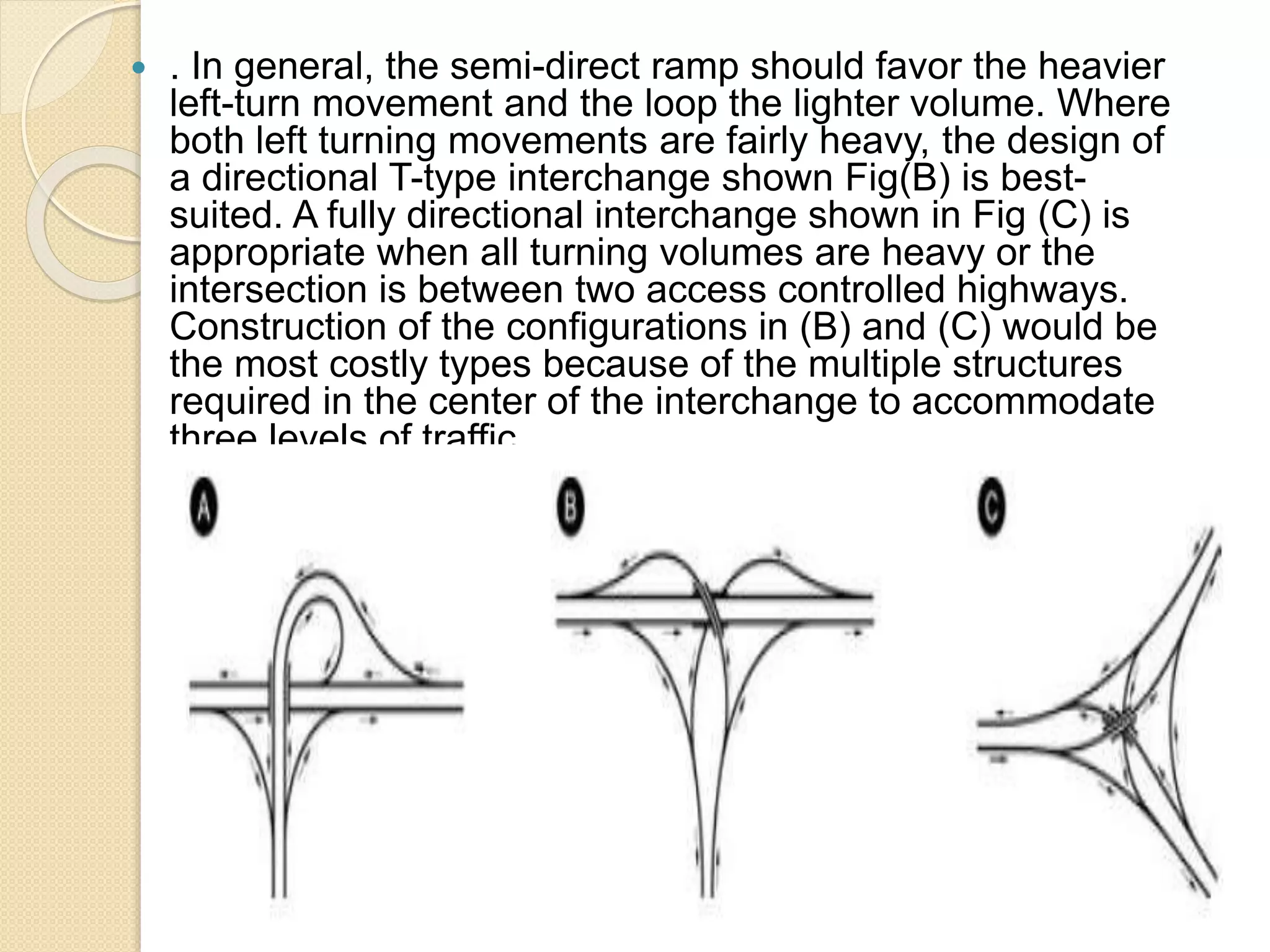
The trumpet type (with asingle structure) is shown in
Fig(A) where three of the turning movements are
accommodated with direct or semi-direct ramps and
one movement by a loop ramp.
 . In general, the semi-direct ramp should favor the heavier
left-turn movement and the loop the lighter volume. Where
both left turning movements are fairly heavy, the design of
a directional T-type interchange shown Fig(B) is best-
suited. A fully directional interchange shown in Fig (C) is
appropriate when all turning volumes are heavy or the
intersection is between two access controlled highways.
Construction of the configurations in (B) and (C) would be
the most costly types because of the multiple structures
required in the center of the interchange to accommodate
three levels of traffic
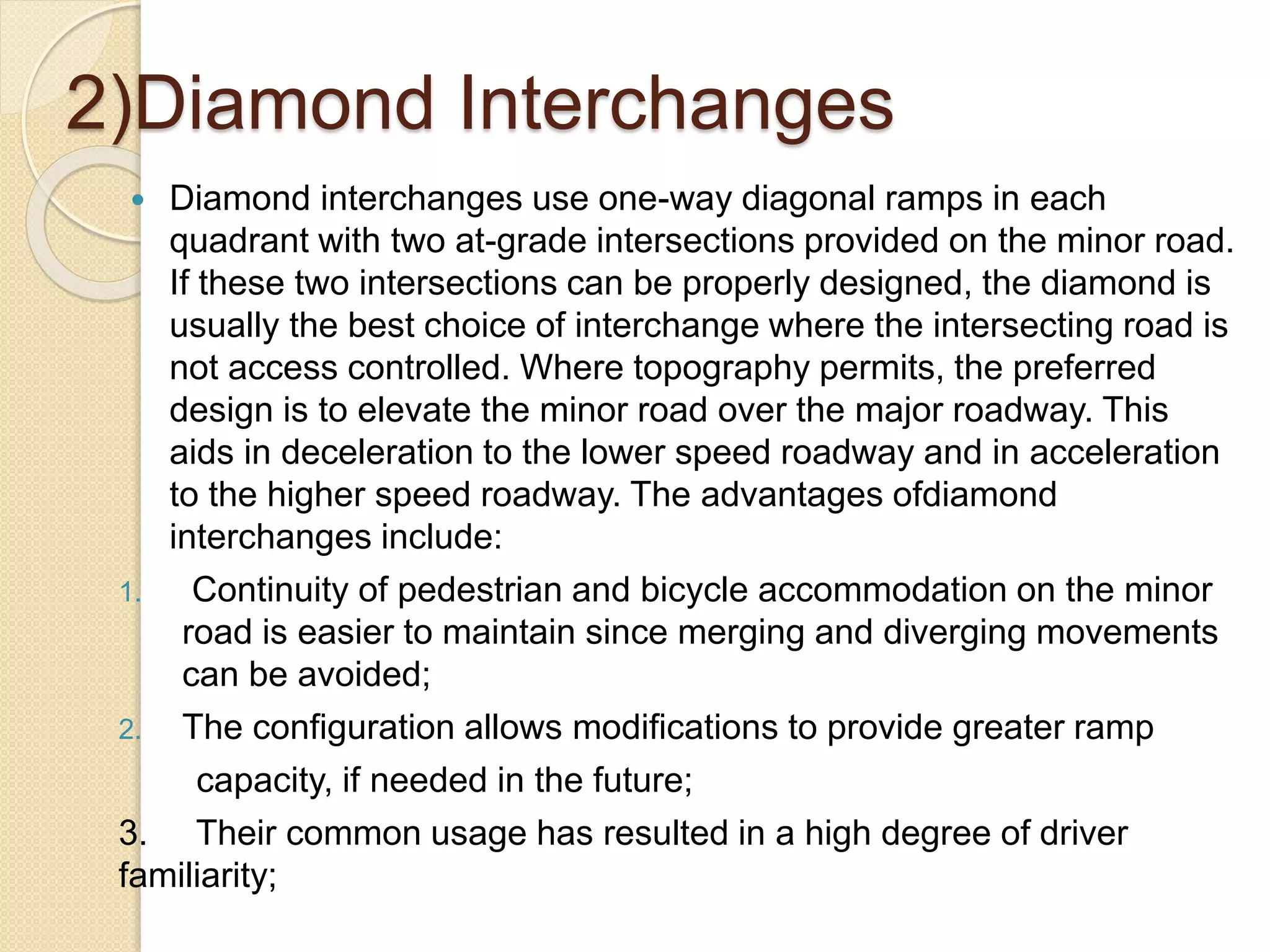
2)Diamond Interchanges
 Diamond interchanges use one-way diagonal ramps in each
quadrant with two at-grade intersections provided on the minor road.
If these two intersections can be properly designed, the diamond is
usually the best choice of interchange where the intersecting road is
not access controlled. Where topography permits, the preferred
design is to elevate the minor road over the major roadway. This
aids in deceleration to the lower speed roadway and in acceleration
to the higher speed roadway. The advantages ofdiamond
interchanges include:
1. Continuity of pedestrian and bicycle accommodation on the minor
road is easier to maintain since merging and diverging movements
can be avoided;
2. The configuration allows modifications to provide greater ramp
capacity, if needed in the future;
3. Their common usage has resulted in a high degree of driver
familiarity;
4. All traffic can enter and exit the freeway
mainline at relatively high speeds and all exits
from the freeway mainline are made before
reaching the structure;
5. Adequate sight distance can usually be
provided and the traffic maneuvers are
normally uncomplicated;
6. Left-turning maneuvers require little extra
travel distance relative to the partial cloverleaf.
The primary disadvantages of a diamond
interchange are potential operational problems
with the two closely-spaced intersections on
the minor road, and the potential for wrong-
way entry onto the ramps. For this reason, a
median is
often provided on the cross road to facilitate
proper channelization. Additional signing is
also recommended to help prevent improper
use of the ramps.
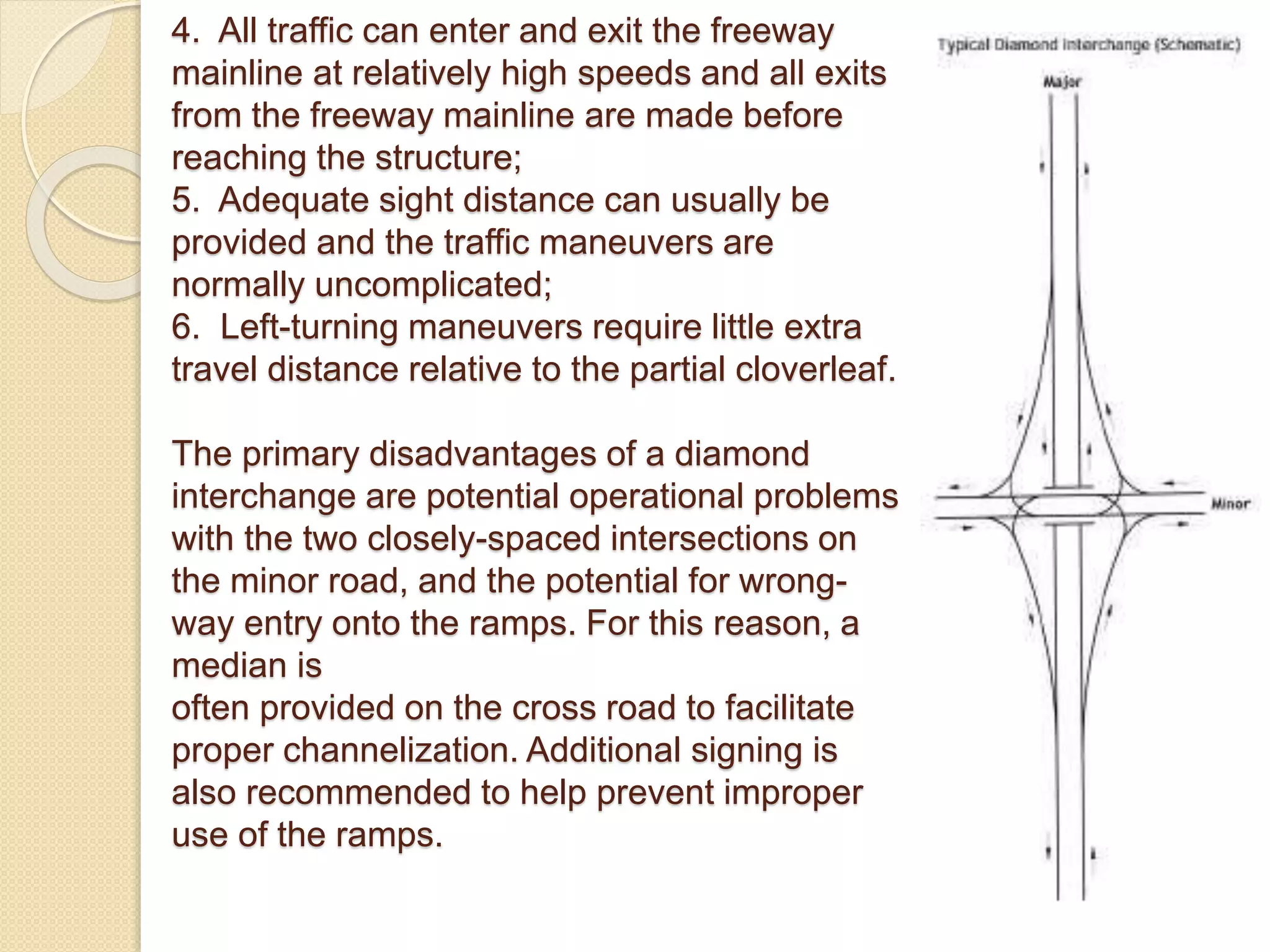
3) Cloverleafs
Cloverleaf interchanges are used at four-leg
intersections and combine the use of one-way diagonal
ramps with loop ramps to accommodate left-turn
movements. Interchanges with loops in all four
quadrants are referred to as full cloverleafs and all
others are referred to as partial cloverleafs.
 Where two access controlled highways
intersect, a full cloverleaf is the minimum type
design interchange that provides connectivity
for all movements between the highways.
However, these interchanges introduce
several undesirable operational features such
as double exits and entrances from the
mainline, weaving between entering and
 exiting vehicles, lengthy travel time and
distance for left-turning
 vehicles, and large amounts of required right-
of-way.
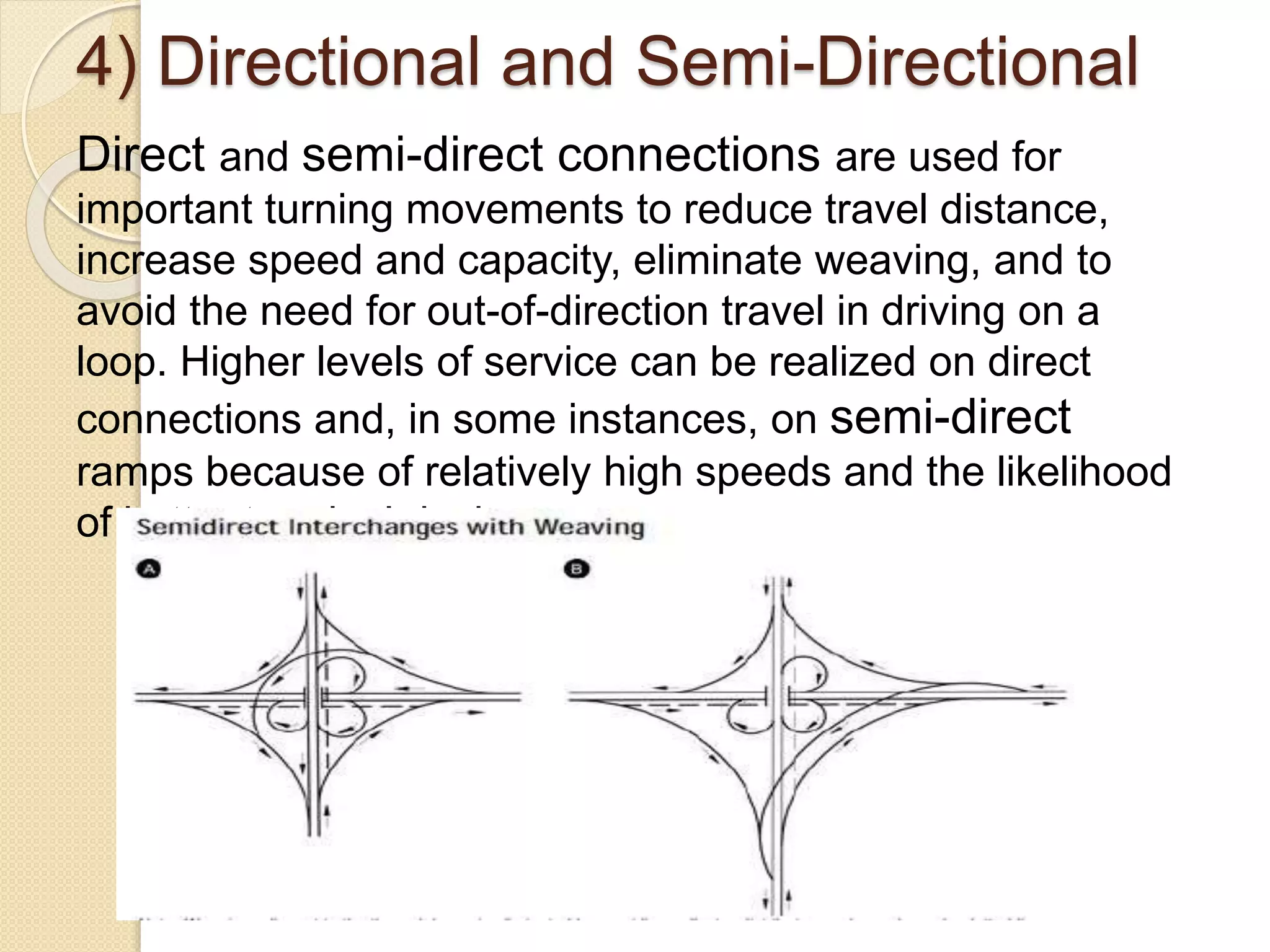
4) Directional and Semi-Directional
Direct and semi-direct connections are used for
important turning movements to reduce travel distance,
increase speed and capacity, eliminate weaving, and to
avoid the need for out-of-direction travel in driving on a
loop. Higher levels of service can be realized on direct
connections and, in some instances, on semi-direct
ramps because of relatively high speeds and the likelihood
of better terminal design.
Thank you

Interchanges and its Types of interchanges

  • 1.
    TRANSPORTATION CE-311 Civil Engineering Department, Universityof Engineering & Technology, Peshawa Instructor : Engr. Manzoor Elahi
  • 2.
    Group Member  IkramullahQayyum (152)  Furqan Wali (151)  Syed Adnan Shah (153)  Tahir mamoor (154)  Salman Shahid (155)
  • 3.
    Interchanges  An interchangeis a grade-separated intersection(one road passes over another) with ramps to connect them. Interchange Types Freeway interchanges are of two general types:  System interchange A system interchange will connect freeway to freeway; System interchanges are most frequently three-leg, full cloverleaf, or directional interchanges.  Service interchange A service interchange will connect a freeway to a lesser facility.Service interchanges are most frequently diamond, cloverleaf, or partial cloverleaf interchanges.
  • 4.
    1)Three-Leg Interchanges Three-leg interchanges,also known as T- or Y- interchanges, are usually provided where major highways begin or end. Three-leg interchanges should be considered when future expansion to the unused quadrant is unlikely. This is due in part to the fact that three-leg interchanges are very difficult to expand, modify, or otherwise retrofit as a four leg facility.  Examples of three-leg interchanges with several methods of providing the turning movements. The trumpet type (with asingle structure) is shown in Fig(A) where three of the turning movements are accommodated with direct or semi-direct ramps and one movement by a loop ramp.
  • 5.
     . Ingeneral, the semi-direct ramp should favor the heavier left-turn movement and the loop the lighter volume. Where both left turning movements are fairly heavy, the design of a directional T-type interchange shown Fig(B) is best- suited. A fully directional interchange shown in Fig (C) is appropriate when all turning volumes are heavy or the intersection is between two access controlled highways. Construction of the configurations in (B) and (C) would be the most costly types because of the multiple structures required in the center of the interchange to accommodate three levels of traffic
  • 6.
    2)Diamond Interchanges  Diamondinterchanges use one-way diagonal ramps in each quadrant with two at-grade intersections provided on the minor road. If these two intersections can be properly designed, the diamond is usually the best choice of interchange where the intersecting road is not access controlled. Where topography permits, the preferred design is to elevate the minor road over the major roadway. This aids in deceleration to the lower speed roadway and in acceleration to the higher speed roadway. The advantages ofdiamond interchanges include: 1. Continuity of pedestrian and bicycle accommodation on the minor road is easier to maintain since merging and diverging movements can be avoided; 2. The configuration allows modifications to provide greater ramp capacity, if needed in the future; 3. Their common usage has resulted in a high degree of driver familiarity;
  • 7.
    4. All trafficcan enter and exit the freeway mainline at relatively high speeds and all exits from the freeway mainline are made before reaching the structure; 5. Adequate sight distance can usually be provided and the traffic maneuvers are normally uncomplicated; 6. Left-turning maneuvers require little extra travel distance relative to the partial cloverleaf. The primary disadvantages of a diamond interchange are potential operational problems with the two closely-spaced intersections on the minor road, and the potential for wrong- way entry onto the ramps. For this reason, a median is often provided on the cross road to facilitate proper channelization. Additional signing is also recommended to help prevent improper use of the ramps.
  • 8.
    3) Cloverleafs Cloverleaf interchangesare used at four-leg intersections and combine the use of one-way diagonal ramps with loop ramps to accommodate left-turn movements. Interchanges with loops in all four quadrants are referred to as full cloverleafs and all others are referred to as partial cloverleafs.
  • 9.
     Where twoaccess controlled highways intersect, a full cloverleaf is the minimum type design interchange that provides connectivity for all movements between the highways. However, these interchanges introduce several undesirable operational features such as double exits and entrances from the mainline, weaving between entering and  exiting vehicles, lengthy travel time and distance for left-turning  vehicles, and large amounts of required right- of-way.
  • 10.
    4) Directional andSemi-Directional Direct and semi-direct connections are used for important turning movements to reduce travel distance, increase speed and capacity, eliminate weaving, and to avoid the need for out-of-direction travel in driving on a loop. Higher levels of service can be realized on direct connections and, in some instances, on semi-direct ramps because of relatively high speeds and the likelihood of better terminal design.
  • 11.